

In this article, I’ll talk about Best Non-Human Identity Management Platforms For 2026. They help organizations discover, monitor, govern and secure service accounts, API keys, workloads, machine identities, automation and AI agents. I will cover their major features, NHI approach, cloud and SaaS coverage, deployment options, integrations, pricing, strengths and best use cases.
What Are Non-Human Identity Management Platforms?
Non-Human Identity Management Platforms are security solutions that discover, monitor, govern and protect identities without direct human interaction. These identities include service accounts, API keys, access tokens, workloads, applications, bots, automation accounts, machine identities and AI agents.
Traditional IAM tools primarily manage employees and users, while NHI platforms focus on understanding machine-to-machine access, ownership, permissions, credentials and lifecycle activity. They help security teams identify unknown or excessive access, reduce standing privileges, manage credentials, enforce least-privilege policies, and improve visibility across cloud, SaaS, DevOps and hybrid environments.
How We Ranked These Platforms
| Ranking Criteria | What We Evaluated | Importance |
|---|---|---|
| NHI Discovery | Ability to discover service accounts, API keys, tokens, workloads, machine identities, and other non-human identities across the environment. | High |
| NHI Visibility | How effectively each platform provides an inventory of identities, owners, permissions, relationships, and activity. | High |
| Risk Detection | Ability to identify orphaned, inactive, overprivileged, exposed, or otherwise risky NHIs. | High |
| Least-Privilege Controls | Support for reducing excessive permissions and applying appropriate access policies to non-human identities. | High |
| Lifecycle Management | Capabilities covering identity creation, ownership, monitoring, credential rotation, access changes, and retirement. | High |
| Credential & Secrets Security | Protection, rotation, monitoring, and governance of API keys, tokens, passwords, certificates, and other machine credentials. | High |
| AI Agent Security | Support for emerging AI-agent identities, authentication, authorization, permissions, and activity controls. | High |
| Cloud & SaaS Coverage | Coverage across AWS, Azure, Google Cloud, Kubernetes, SaaS applications, APIs, and hybrid infrastructure. | High |
| Deployment Options | Availability of SaaS, cloud-native, agent-based, API-based, self-hosted, or hybrid deployment models. | Medium |
| Integrations | Compatibility with IAM, PAM, SIEM, DevOps, CI/CD, secrets managers, cloud platforms, and security tools. | Medium |
| Automation & Remediation | Ability to automatically enforce policies, remove unnecessary access, rotate credentials, or remediate NHI risks. | High |
| Enterprise Scalability | Suitability for organizations managing large and complex NHI environments across multiple teams and technologies. | Medium |
| Pricing & Value | Pricing transparency, available plans, enterprise licensing, and the overall value of capabilities offered. | Medium |
| Overall NHI Focus | How comprehensively the platform addresses discovery, governance, protection, monitoring, and lifecycle management of NHIs. | Highest |
Key Points
| Platform | Key Strength |
|---|---|
| Astrix Security | Comprehensive NHI discovery and governance across SaaS and cloud environments |
| Oasis Security | Full lifecycle management for non-human identities |
| Entro Security | Unified NHI and secrets security platform |
| Token Security | Identity-centric security for machine identities and AI agents |
| Aembit | Secretless workload and machine-to-machine access management |
| CyberArk | Enterprise-grade machine identity and privileged access security |
| Venafi | Certificate and machine identity lifecycle management |
| Silverfort | Identity protection and NHI visibility across hybrid environments |
| GitGuardian Platform | Secrets detection and exposure management for NHIs |
| Britive | Just-in-time privilege management for cloud-native identities |
1. Astrix Security
Founded in 2021, Astrix Security is focused on NHI discovery, governance and AI-agent security, helping organizations discover machine identities, credentials, service accounts, integrations and their access relationships.
Its NHI approach focuses on centralized visibility, risk analysis, ownership and lifecycle controls across modern environments. Coverage for cloud and SaaS includes leading cloud services, applications, APIs and identity systems. Deployment is predominantly cloud-based with integrations into existing security and identity workflows.
The pricing is enterprise and typically requires a custom quote. Strength: Asstrix is especially powerful for organizations that require dedicated NHI visibility and security for AI agents. Astrix joined Cisco in 2026, ending new-license sales as a separate entity.
Best For Astrix Security
- Enterprise Security Teams — Recommended for larger organizations that want to build dedicated NHI controls into their current security programs.
- NHI Discovery – Ideal for organizations seeking to discover and inventory unknown machine identities, service accounts, tokens, and third-party integrations.
- NHI Governance – Best for security teams wanting centralized visibility into ownership, permissions, usage, and identity risk.
- AI Agent Security – Best for teams managing a growing number of AI agents and how they access applications, APIs, and data.
- Identity Risk Management — A good way to find excessive, unused, orphaned or risky non-human access.
Astrix Security — Key Strength
| Key Strength | Details |
|---|---|
| NHI Discovery | Identifies machine identities, service accounts, API credentials, and integrations across the environment. |
| Identity Visibility | Creates visibility into how non-human identities connect with applications, systems, and data. |
| Risk Analysis | Helps security teams identify excessive, unused, and potentially risky NHI access. |
| Ownership Mapping | Connects machine identities and integrations with responsible teams and owners. |
| AI-Agent Security | Provides capabilities for understanding and governing identities used by AI agents. |
2. Oasis Security
Founded in 2022, Oasis Security offers an NHI-centric platform to find, govern, protect and manage non-human identities across hybrid environments. Its NHI approach manages service accounts, secrets, tokens, keys, IAM roles and other machine identities through inventory, posture management, vaulting, rotation and policy controls.
Cloud and SaaS coverage includes AWS, Azure, GCP, GitHub, Salesforce, Snowflake, Databricks and other enterprise systems. Deployment is cloud-based and works with existing identity and security infrastructure. Pricing is custom-quote/enterprise. Strength: Oasis combines NHI discovery, lifecycle governance and automated security workflows. In 2026, Oasis was acquired by Cyera.
Best For Oasis Security
- NHI Lifecycle Management — Perfect for organizations looking to manage NHIs from discovery to governance to protection to rotation and retirement.
- Hybrid Environments — Ideal for organizations that span multiple clouds, SaaS applications, and on-premises systems.
- Service Account Governance – Useful to discover service accounts, understand ownership and control their permissions.
- Enterprise NHI Security — Built for security teams managing large and complex NHI environments.
Automated Remediation — Best for teams that want to automate their response to risky credentials and excessive machine access.
Oasis Security — Key Strength
| Key Strength | Details |
|---|---|
| NHI Lifecycle | Manages non-human identities from discovery through governance, protection, and retirement. |
| Centralized Inventory | Provides a consolidated view of service accounts, credentials, tokens, and machine identities. |
| Access Governance | Helps organizations understand and control permissions associated with NHIs. |
| Automated Protection | Supports security workflows for addressing risky credentials and identities. |
| Enterprise Coverage | Designed to provide NHI visibility across complex cloud, SaaS, and enterprise environments. |
3. Entro Security
Entro Security was founded in 2022 and focuses on protecting non-human identities, secrets and AI agents through discovery, ownership attribution, risk analysis and ongoing surveillance. Its NHI approach ties identities to their credentials, permissions, applications and usage context to figure out abandoned, excessive, or risky access.
Coverage for cloud and SaaS includes AWS, Azure, OCI, Kubernetes, GitHub, Salesforce, Snowflake, Okta, Microsoft Entra ID, Jira, ServiceNow, Splunk, and many DevOps platforms. It can be deployed on cloud, SaaS, on-premises and hybrid environments. Pricing is typically custom enterprise pricing. Strengths: broad integration, single view of NHI + secrets.
Best For – Entro Security
- NHI Discovery — Best for discovering machine identities, credentials, secrets and service accounts in complex environments.
- Secrets Security — Best for organizations wanting NHI governance and secrets discovery and protection.
- Cloud Security Teams – For teams that manage identities across AWS, Azure, GCP, Kubernetes and other cloud environments.
- Ownership Mapping — Very good at mapping non-human identities to applications, teams and responsible owners.
DevSecOps — Great for security teams who want visibility into development, cloud, CI/CD, and production environments.
Entro Security — Key Strength
| Key Strength | Details |
|---|---|
| NHI Discovery | Finds machine identities and credentials across cloud, SaaS, DevOps, and infrastructure environments. |
| Secrets Visibility | Combines NHI security with discovery and monitoring of secrets and credentials. |
| Ownership Attribution | Helps determine which application, team, or individual is responsible for an identity. |
| Risk Prioritization | Correlates identity usage and permissions to highlight higher-risk NHIs. |
| Broad Integrations | Connects with cloud, identity, development, security, and enterprise platforms. |
4. Token Security
Token Security takes a specific approach to NHI and AI-agent identity security that is focused on continuous discovery, identity posture, access governance, ownership, risk scoring, and compliance.
Its platform helps security teams uncover NHI sprawl and unused or excessive access while addressing service accounts, tokens, API credentials, machine identities and AI-agent identities. Coverage for Cloud and SaaS built for today’s cloud native, DevOps and AI environments.
The deployment is SaaS-based and connects with identity, cloud, development and security ecosystems. Pricing is mostly enterprise/custom quote. Strength: Token is unique in its integration of NHI governance, AI-agent security, continuous posture scoring, and compliance mapping.
Best For:Token Security
- NHI Posture Management — Ideal for organizations that need continuous visibility into NHI risks, permissions, and security posture.
- AI Agent Security — Right for organizations that want to protect AI agents and their access to enterprise applications and resources.
Identity Governance — Assists in discovering unmanaged, excessive, unused or poorly governed machine identities. - Enterprise Security – For security teams needing centralized NHI governance in large environments.
- Compliance Programs — Useful for organizations that require more rigorous controls, monitoring and accountability for non-human access.
Token Security — Key Strength
| Key Strength | Details |
|---|---|
| NHI Posture Management | Continuously assesses the security posture of non-human identities and associated access. |
| Identity Inventory | Provides visibility into machine identities, credentials, and other automated identities. |
| Risk Assessment | Helps identify excessive permissions, unmanaged identities, and other NHI weaknesses. |
| AI Identity Security | Addresses emerging security requirements around AI agents and automated identities. |
| Governance | Supports centralized policies and controls for managing NHI access and accountability. |
5. Aembit
Aembit founded in 2021 provides Workload IAM and Agentic AI IAM for Applications, Services, Workloads and AI Agents. It provides identity-based, policy-controlled access to the NHI using dynamic credentials, workload attestation, and conditional access instead of long-lived credentials.
Cloud and SaaS coverage includes AWS, Azure, GCP, Kubernetes, identity providers, vaults, SaaS apps and AI platforms like OpenAI, Claude,
Gemini and LangChain. Aembit Cloud plus Edge components can be deployed as Kubernetes sidecars, agents, serverless extensions or VMs for deployment. It costs $20 a month per workload or $20 a month per agent, and there are free tiers. ** Strength: workload with no secrets and access to AI agents.
Best For: Aembit
- Workload Identity — Ideal for applications, services, containers and workloads that need to access resources dynamically.
- AI Agent Access — Great choice for managing how AI agents authenticate and access enterprise tools and data.
- Cloud Native Apps — Great for Kubernetes and cloud workloads, DevOps pipelines, and distributed applications.
- Just-in-Time Access — Ideal for teams that don’t want to store credentials, but want to enable temporary access based on policy
Aembit — Key Strength
| Key Strength | Details |
|---|---|
| Secretless Access | Reduces dependence on static credentials by providing identity-based access to workloads and applications. |
| Workload Identity | Gives applications and workloads their own identities for controlled resource access. |
| Just-in-Time Access | Enables temporary access based on defined policies and workload requirements. |
| AI Agent Access | Supports controlled authentication and authorization for AI agents accessing enterprise resources. |
| Cloud-Native Security | Fits modern Kubernetes, cloud, DevOps, and distributed application environments. |
6. CyberArk
Founded in 1999, CyberArk’s approach to NHI security is part of its broader machine identity security and privileged access ecosystem, which includes certificates, SSH keys, workloads, applications, service accounts and other machine credentials.
Its NHI approach includes lifecycle management, credential protection, privileged access, authentication, rotation and machine identity governance. SaaS and Cloud coverage includes enterprise infrastructure, cloud environments, applications, and development systems.
Deployment options include SaaS and self-hosted, depending on the product. Integrations with identity, security, cloud, devops and infrastructure technologies. Pricing is usually custom enterprise pricing. Strength: CyberArk is particularly strong for organizations looking for NHI protection and have mature PAM and machine-identity capabilities.
Best For: CyberArk
- Privileged Access Management — Good for enterprises needing NHI security with mature privileged control of access.
- Machine Identity Security — For organizations managing certificates, keys, workloads and machine credentials at scale.
Enterprise Security — Suitable for large organizations with complex identity infrastructures and strong security requirements. - Credential Protection — Useful for securing privileged credentials, service accounts, and sensitive machine access.
- Identity Consolidation — Best for companies seeking broader identity, privileged-access, and machine-identity capabilities from one security ecosystem.
CyberArk — Key Strength
| Key Strength | Details |
|---|---|
| Privileged Access | Strong controls for protecting privileged accounts, credentials, applications, and machine identities. |
| Machine Identity Security | Helps secure certificates, keys, workloads, service accounts, and other machine credentials. |
| Credential Protection | Provides mature capabilities for securing and managing sensitive credentials. |
| Enterprise Scale | Built for large organizations with complex identity and security infrastructures. |
| Broad Identity Platform | Combines NHI-related controls with privileged access and wider identity security capabilities. |
7. Venafi
Founded in 2004 and now a part of CyberArk, Venafi focuses on machine identity management including certificates, keys, TLS identities, SSH keys, code-signing identities, and workload authentication.
Its NHI approach is more focused on machine identity and cryptography than on broad NHI governance, and is well suited for organizations that manage large certificate and key estates. It is built for enterprise cloud and data center environments and integrates with infrastructure, applications, development tools and security workflows.
Deployment options are SaaS and on-premise products. Pricing is typically custom enterprise pricing. Strength: Venafi excels when certificate lifecycle, machine authentication, cryptographic identity, and avoiding certificate-related outages are top of mind.
Best for: Venafi
- Machine Identity Management — Best for organizations managing large numbers of certificates, keys, and machine identities.
- Certificate Lifecycle Management — Suitable for preventing certificate expiration, misconfiguration, and authentication failures.
- TLS Security — Strong choice for organizations requiring visibility and governance over TLS certificates.
- Cryptographic Identity — Useful for companies handling machine authentication and cryptographic credentials.
- Large Enterprises — Best for organizations with complex infrastructure and extensive certificate estates.
Venafi — Key Strength
| Key Strength | Details |
|---|---|
| Machine Identity | Specializes in securing machine identities used by applications, systems, and workloads. |
| Certificate Management | Provides strong visibility and lifecycle control for digital certificates. |
| Key Protection | Helps organizations discover and govern cryptographic keys and machine credentials. |
| TLS Security | Helps reduce certificate-related outages and authentication risks. |
| Enterprise Scale | Particularly strong for organizations managing large and complex certificate environments. |
8. Silverfort
Silverfort was founded in 2016 and offers an identity security platform with dedicated NHI Security and AI Agent Security capabilities. Its NHI approach finds non-human identities and service accounts, mapping how they are used, and applying purpose-based policies, least privilege, virtual fencing, and dynamic control of access.
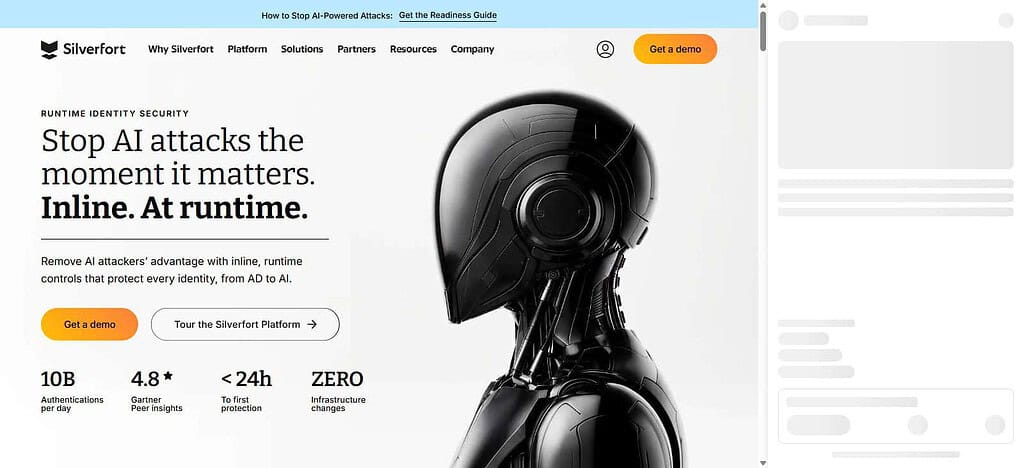
Coverage for cloud and SaaS covers on-premises, cloud & hybrid environments. Deployment supports these environments without requiring organizations to replace their existing identity infrastructure. Integrations connect identity, security, SIEM, XDR and enterprise systems.
Pricing is quote-based and organization-based. NHI Security is included in the Plus package. Strength: strong runtime identity protection with NHI, ITDR, MFA and PAM.
Best For: Silverfort
- Identity-Based Security — Best for organizations wanting to protect human and non-human identities through centralized identity security.
- Service Account Protection — Suitable for identifying unusual service-account behavior and controlling risky access.
- Hybrid Environments — Strong fit for organizations operating across on-premises infrastructure, cloud platforms, and legacy systems.
- Least-Privilege Enforcement — Useful for reducing excessive permissions and controlling identity-based access.
- Enterprise Identity Security — Best for companies looking to combine NHI security with ITDR, authentication, and broader identity protection.
Silverfort — Key Strength
| Key Strength | Details |
|---|---|
| Identity Security | Protects identities across cloud, on-premises, and hybrid environments. |
| Service Account Protection | Helps identify and control risky service-account behavior and access. |
| Runtime Controls | Enables identity-based access controls that can respond to contextual risk. |
| Least Privilege | Helps organizations reduce excessive permissions associated with identities. |
| Unified Security | Combines NHI security with capabilities such as ITDR, authentication, and broader identity protection. |
9. GitGuardian
Established in 2017, GitGuardian combines secret detection, secret management and NHI management to protect machine identities throughout the development lifecycle. Its NHI approach inventories identities, maps ownership, detects duplicated or reused secrets, detects risky credentials and links NHI governance with leaked-secret monitoring.
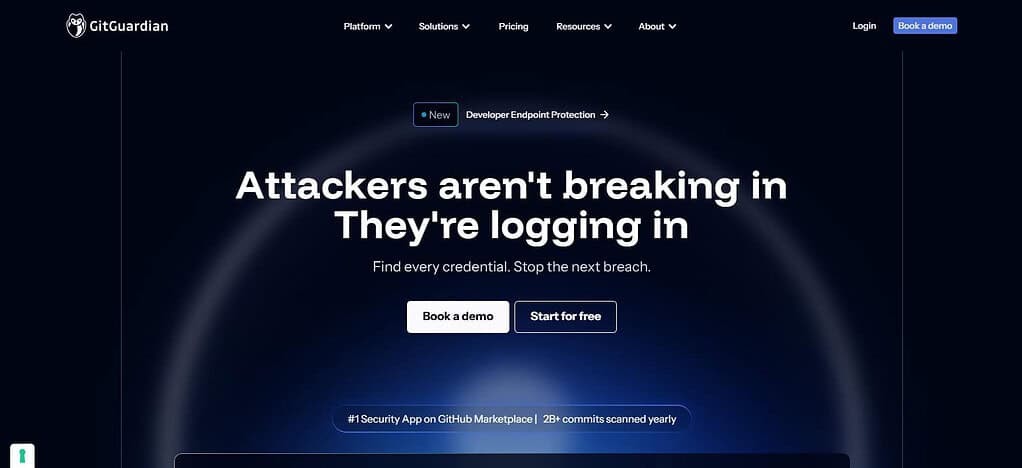
Coverage includes code repositories, CI/CD systems, containers, collaboration tools, vaults and enterprise data sources. Deployment supports SaaS and self-hosted options via GitGuardian Bridge.
Integrations include secrets managers, git repositories, CI/CD, slack, Jira, ServiceNow and other developer systems. Pricing starts with free plans to enterprise custom pricing. Strength: good for organizations connecting secret security with NHI governance.
Best For: GitGuardian
- Secrets Detection — Best for discovering exposed API keys, credentials, tokens, and other secrets in development environments.
- NHI Governance — Suitable for organizations wanting to connect secrets management with broader NHI visibility.
- Developer Security — Strong choice for securing source code, repositories, CI/CD pipelines, and developer workflows.
- Credential Leak Prevention — Useful for identifying and responding to credentials accidentally exposed in code or collaboration systems.
- DevSecOps Teams — Best for organizations integrating secrets security directly into software development and deployment processes.
GitGuardian Platform — Key Strength
| Key Strength | Details |
|---|---|
| Secrets Detection | Detects exposed API keys, tokens, passwords, and other credentials across development environments. |
| Credential Protection | Helps identify and remediate credentials accidentally exposed in source code. |
| Developer Integration | Integrates security controls directly into developer and DevSecOps workflows. |
| NHI Visibility | Connects secrets discovery with broader visibility into machine identities and credentials. |
| CI/CD Security | Helps monitor credentials throughout repositories, pipelines, and software delivery processes. |
10. Britive
Britive provides cloud-native privileged access management with growing NHI and AI-agent runtime access capabilities. Its NHI approach delivers service accounts, workloads, pipelines and automation with just-in-time, ephemeral access that is automatically revoked after use, removing standing privileges.
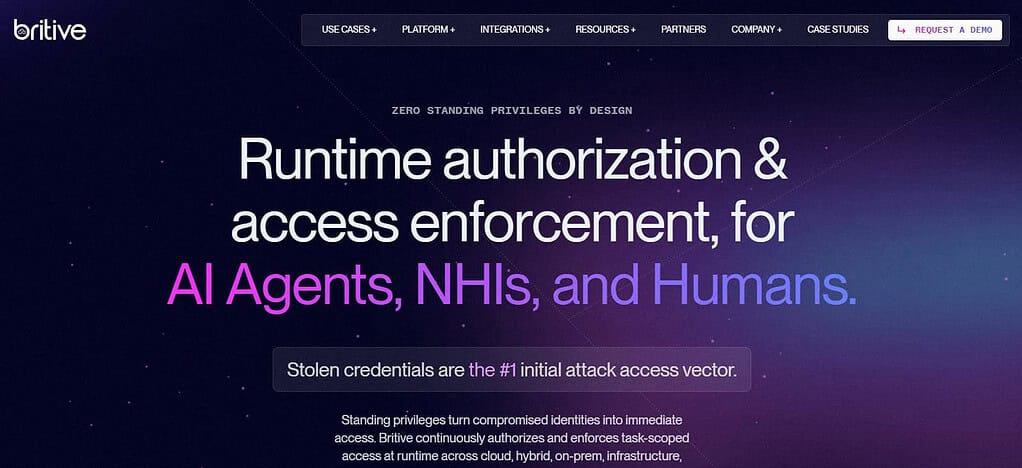
Cloud and SaaS coverage includes AWS, Azure, GCP, OCI, Kubernetes, databases, servers, SaaS applications and on-premises infrastructure. Deployment is SaaS and API-first with lightweight connectors where needed.
It integrates with GitHub, GitLab, Terraform, Salesforce, Snowflake, Microsoft 365, Jira and the big cloud providers. Pricing Custom (by identities, cloud providers, integrations) Strength: runtime access, zero-standing privilege.
Best For: Britive
- Zero Standing Privilege — Best for organizations wanting to eliminate permanently assigned privileges for workloads and machine identities.
- Just-in-Time Access — Suitable for providing temporary access based on policies, context, and workload requirements.
- Cloud Privileged Access — Strong choice for managing privileged access across AWS, Azure, GCP, and other cloud environments.
- DevOps Security — Useful for securing CI/CD pipelines, automation, infrastructure-as-code, and cloud workloads.
- Runtime Access Control — Best for organizations seeking dynamic permissions that automatically expire after the required task is completed.
Britive — Key Strength
| Key Strength | Details |
|---|---|
| Zero Standing Privilege | Removes unnecessary permanent privileges by providing access only when required. |
| Just-in-Time Access | Grants temporary permissions based on policies and automatically removes them afterward. |
| Cloud Privileged Access | Strong focus on managing privileged access across major cloud environments. |
| Workload Security | Helps control permissions for workloads, automation, service accounts, and applications. |
| Dynamic Authorization | Provides context-aware access rather than relying on permanently assigned privileges. |
Conclusion
As organizations increasingly depend on cloud workloads, APIs, service accounts, automation and AI agents, managing non-human identities has become an important aspect of modern security.
The platforms in this list take a different approach to it, encompassing NHI discovery and governance, secrets protection, machine identity management, privileged access, and secretless authentication. NHI visibility and governance is underlined by Astrix, Oasis, Entro, Token Security and GitGuardian and Aembit and Britive have a strong focus on dynamic workload access.
CyberArk, Venafi and Silverfort add more identity and privileged-access features. Ultimately the right choice will depend on your infrastructure, NHI volume, security requirements, existing tools and automation goals.
FAQ
What are non-human identity management platforms?
Non-human identity management platforms help organizations discover, monitor, govern, and secure identities used by applications, workloads, APIs, service accounts, bots, automation tools, and AI agents.
Why is NHI management important in 2026?
NHI environments are expanding rapidly as organizations adopt cloud services, APIs, DevOps automation, and AI agents. Unmanaged credentials and excessive permissions can create significant security and compliance risks.
What is the difference between NHI management and IAM?
Traditional IAM primarily manages human identities and their access. NHI management focuses on machine-driven identities such as service accounts, workloads, API credentials, tokens, applications, and AI agents.
Which NHI platform is best for enterprises?
There is no single best platform for every enterprise. CyberArk and Silverfort can suit organizations seeking broader identity security, while platforms such as Astrix, Oasis, Entro, and Token Security focus more specifically on NHI visibility and governance.
Can NHI platforms manage AI agent identities?
Yes. Several modern NHI platforms increasingly support AI-agent identities, including controls for authentication, authorization, permissions, activity monitoring, and lifecycle management.