




In this article, I will be talking about the best PlayHT alternatives for voice cloning in 2026. We’ll compare popular AI voice platforms on voice-cloning quality, voice options, languages, pricing, APIs, customization and overall usability. If you’re a content creator, developer, marketer or business, these alternatives can help you find the right solution for your voice-generation needs.
What Is PlayHT Competitors?
PlayHT alternatives are other AI voice generation platforms that offer similar or different solutions for text-to-speech, voice cloning, voice overs, dubbing, and speech synthesis. These platforms enable users to create genuine AI voices for videos, podcasts, e-learning, marketing, audiobooks, apps and other digital content.
Features may include instant voice cloning, multilingual speech, voice customization, real-time generation, APIs, and commercial usage rights, depending on the provider.
Other popular alternatives include ElevenLabs, Speechify Studio, Resemble AI, Murf AI, LOVO AI, Fliki, WellSaid Labs, Speechify API, Uberduck, Amazon Polly. Each platform has different pricing models, voice libraries, cloning requirements, language support, technical capabilities and workflows, so it’s important to compare before choosing an alternative.
Benefits Of PlayHT Competitors for Voice Cloning
Multiple Voice Cloning Options: Different platforms provide different cloning methods. Users can choose quick cloning, professional quality cloning or custom voice creation.
Better Voice Quality: Competitors can offer very expressive and natural sounding voices with controls for emotion, pacing, pronunciation, pitch and speaking style.
More language support: Many of the alternatives offer support for multiple languages and accents, which can be useful for multilingual content, localization and international audiences.
Flexible Pricing: Users can see different pricing options among competitors such as free tiers, subscriptions, character-based billing, and enterprise plans.
Greater Customization: Some alternatives offer detailed controls over pauses, pronunciation, emphasis, speed, pitch and voice characteristics for more personalized audio.
Voice Generation in Real Time: Some platforms provide low-latency or real-time speech generation which can be helpful for voice assistants, games, interactive apps and conversational agents.
Differing Content Workflows: Competitors include creator-focused video editors, enterprise voice platforms, developer APIs, providing users with more options to match their needs.
Key Points
| PlayHT Competitor | Best For | Voice Cloning Highlights |
|---|---|---|
| ElevenLabs | Overall voice cloning quality | Instant and professional voice cloning, highly natural speech, emotional control, multilingual support, and developer API access. |
| Speechify Studio | Teams and content creators | Voice cloning, AI dubbing, collaboration tools, timeline editor, and support for 1,000+ AI voices. |
| Resemble AI | Developers and real-time applications | Real-time voice cloning API, emotion controls, and scalable voice generation for apps and services. |
| Murf AI | Marketing and training content | AI voiceovers, studio-style editing, enterprise features, and voice-cloning capabilities on selected plans. |
| LOVO AI | Expressive voiceovers | Voice cloning, emotional speech control, AI script writing, and multilingual voice generation. |
| Fliki | Text-to-video creators | Voice cloning combined with text-to-video generation, multilingual voices, and automated content creation. |
| WellSaid Labs | Enterprise and corporate training | Professional AI voices, team collaboration, governance controls, and enterprise-grade workflows. |
| Speechify API | Developers seeking TTS APIs | Pay-as-you-go speech generation, voice cloning, SDK support, and scalable API access. |
| Uberduck | Creative and character voices | Voice cloning, singing and rap voice generation, large voice library, and API access. |
| Amazon Polly | AWS-based applications | Scalable cloud text-to-speech platform with API integration for production environments. |
1. Eleven Labs
ElevenLabs is a leading AI voice platform for highly natural text-to-speech, voice cloning, dubbing and conversational voice applications. Founded in 2022. Its voice-cloning system can take speech samples that you upload and use them to reproduce distinctive vocal characteristics in the narration it generates.
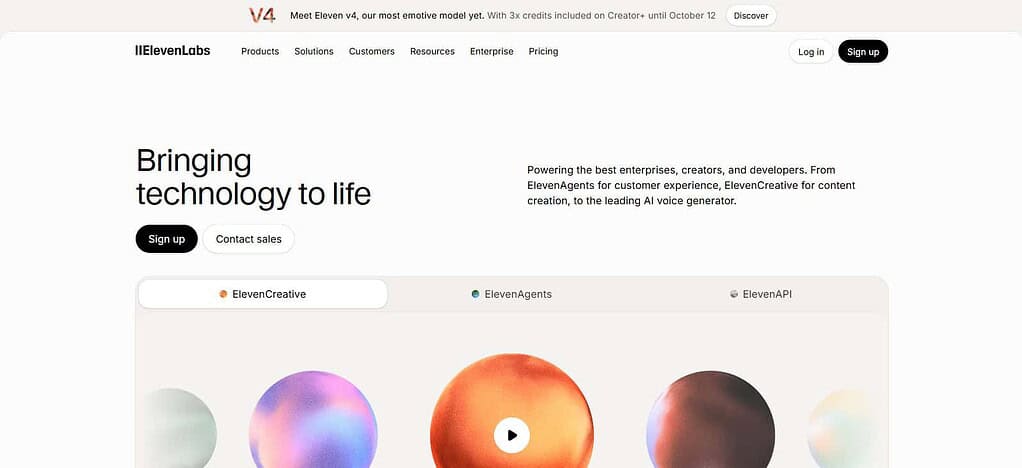
Elevenlabs currently sells its voice-generation product in 74 languages and has APIs for developers creating voice applications. You can get started with the free tier, and then upgrade to paid plans like Starter ($6/month), Creator ($22/month), and Pro ($99/month). Professional cloning and commercial use options vary by plan.
ElevenLabs – Features
- Natural and expressive AI Voice with advanced text-to-speech.
- Instant, Professional Voice Cloning from short and long audio clips.
- Multilingual voice synthesis and cloning for a large variety of languages.
- REST API for app integration with Python and TypeScript SDK.
- Speech-to-text, conversational agents, voice dubbing, voice design, and generative audio tools
| Pros | Cons |
|---|---|
| Highly natural and expressive AI voice generation. | Higher usage can become expensive at scale. |
| Strong instant and professional voice-cloning capabilities. | Advanced capabilities may require higher-tier plans. |
| Supports multilingual speech and multiple voice-generation models. | Different models have different language and character limits. |
| REST API with Python and TypeScript SDKs. | Large-scale API usage requires careful cost management. |
| Includes dubbing, voice changing, speech-to-text, sound effects, and voice agents. | Broad feature set can make the platform more complex for beginners. |
2. Speechify Studio
Speechify Studio from Speechify is meant for AI voiceovers, dubbing, voice changing and content production, not plain old text-to-speech. The paid Studio plans come with voice cloning, while the free plan offers over 1,000 voices but no cloning or commercial rights.
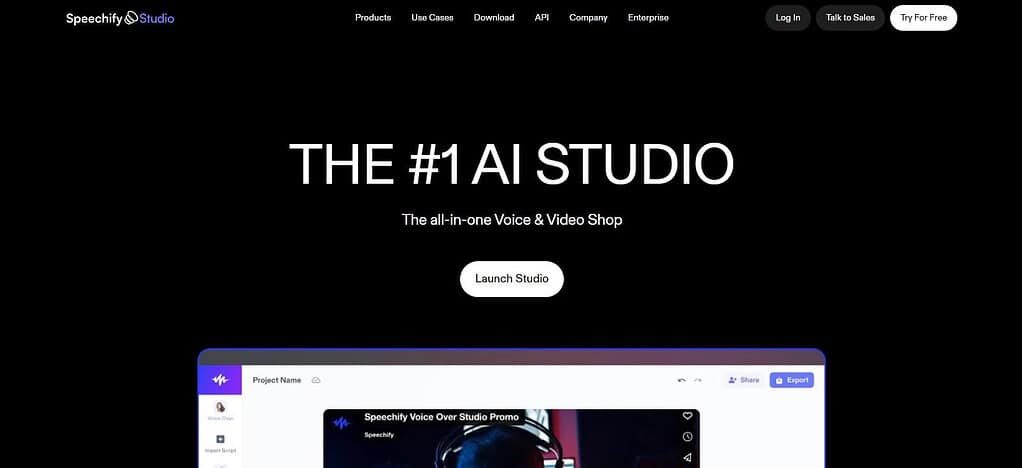
Speechify Studio is a visual workflow for making narrated videos and audio content, making it particularly relevant for creators and publishers. The Studio Starter is $100/year and the Studio Creator is $300/year In addition, the platform has a dedicated Speechify developer API that can be used by applications that need programmable speech generation and cloning.
Speechify Studio – Features
- Creating AI voice overs for videos, podcasts, presentations and other content.
- Voice cloning to produce customized synthetic voices.
AI Dubbing and Multilingual Content Creation
(SOUND of a light, rhythmic tapping, as though fingers on a table) - Studio-based workflow for integrating AI narration into video and audio projects.
| Pros | Cons |
|---|---|
| Large collection of AI voices for content creation. | Voice cloning is not included in the free Studio plan. |
| Supports voiceovers, dubbing, and video/audio production. | Studio pricing is less straightforward than simple character-based TTS pricing. |
| Creator-friendly interface requires limited technical knowledge. | Heavy dubbing and avatar usage can consume credits quickly. |
| Useful for videos, podcasts, presentations, and narration. | Advanced developer requirements may require the separate Speechify API. |
| Provides voice customization and content-production tools. | Less API-centric than developer-first platforms. |
3. Resemble AI
Resemble AI (est. 2019) is focused on custom voice creation, voice cloning, speech generation, and enterprise voice applications. Its cloning technology can create a working clone from about 10 seconds to three minutes of audio, and the training is built to finish fast.
Resemble AI supports 23 languages for multilingual cloning, so a voice can retain its vocal characteristics in a different language. Its API supports voice creation, datasets, callbacks, and programmatic synthesis. Voice cloning requires a Business plan or higher. It’s a great platform for gaming, podcasts, audio books, video production, voice agents and production apps that need custom voices.
Resemble AI – Features
- AI voice cloning with small samples of audio, around 10 seconds of audio needed to clone.
- Custom voices for text to speech generation, sound natural.
- Live voice generation & streaming
- Speech to speech and voice conversion functionality.
- Developer APIs and SDKs to add custom voices to applications, games, media and voice agents.
| Pros | Cons |
|---|---|
| Supports rapid voice cloning from short recordings. | Advanced voice-cloning capabilities can require higher plans. |
| Offers real-time speech generation and streaming. | Enterprise features can require contacting sales. |
| Provides voice conversion and custom voice creation. | Pricing can be more complex for large production deployments. |
| Strong API and SDK support for developers. | Better suited to technical users than simple casual creators. |
| Supports applications including games, voice agents, and media. | Choosing between cloud and deployment options can add complexity. |
4. Murf AI
Murf AI was founded in October 2020 and offers AI voiceover, dubbing, text-to-speech and developer APIs for businesses and creators. Its API currently supports 200+ voices, 40+ languages and accents, and 20+ expressive styles, depending on the model.
Murf AI has streaming APIs, rate-limit controls, dubbing APIs, translation APIs, and voice-changer capabilities. It has a free trial with $10 free usage per month and its pay-as-you-go Falcon generation is priced at $0.01 per 1,000 characters. Murf is ideal for business voice applications including presentations, training, marketing, localization and more.
Murf AI – Features
- AI Text-To-Speech, with hundreds of natural voices.
Voice cloning for making your own digital voice twins. - Pitch, speed, stress, pauses, pronunciation and emotional tone controls.
AIdubbing, translation for multi-lingual content. - API integration and tools for creating video, e-learning, podcasts, marketing content and presentations.
| Pros | Cons |
|---|---|
| Large library of professional AI voices. | Personal/custom voice cloning is not its primary low-tier feature. |
| Strong controls for pitch, speed, emphasis, and pronunciation. | Advanced features require higher subscription levels. |
| Useful for business presentations, training, e-learning, and marketing. | High-volume production can require a larger plan. |
| Provides APIs and developer integration options. | Creator and API pricing are handled through different usage structures. |
| Supports dubbing and multilingual content production. | Users seeking highly specialized cloning may need enterprise capabilities. |
5. LOVO AI
LOVO AI is an AI voice generator platform for voiceovers, content creation, voice cloning, and multimedia production. Its voice technology is built for creators who make videos, ads, educational material, podcasts, and other narrated content.
LOVO AI is more than a developer API, it’s a fuller content production workflow with text-to-speech, empowering users to create voiceovers. It can clone a user’s voice from provided recordings and has a voice library with multiple languages and styles. Pricing is subscription-based and can be free or trial depending on the current offer. Higher plans offer more generation capacity and features geared toward commercial use.
LOVO AI – Features
- Wide selection of voices and speaking styles for AI voice to text.
- Voice cloning to generate personalized AI voices from recordings.
- Genny platform is a combination of voice generation and AI video creation.
- Personalize voice for various tones, emotions, speed and delivery styles
- Assists you in creating content for YouTube, advertising, e-learning, podcasts, marketing, and social media.
| Pros | Cons |
|---|---|
| Combines AI voice generation with video-production tools. | Large projects can consume voice-generation allowances quickly. |
| Supports voice cloning for personalized content. | Some advanced capabilities are limited to paid plans. |
| Large selection of voices, languages, and speaking styles. | More focused on creators than infrastructure-heavy API deployments. |
| Useful for YouTube, advertising, training, and social media. | Voice quality can vary between individual voices and languages. |
| Provides an integrated content-creation workflow. | Users needing highly specialized developer infrastructure may prefer API-first platforms. |
6. Fliki
Fliki combines AI text-to-speech and text-to-video, making it a perfect tool for creators who want voice cloning and full video creation in a single workflow. It can clone a custom voice from about a 30-second recording and the cloned voice can be used over and over again for projects.
Fliki supports 30+ languages for voice cloning and 80+ languages for its broader voice platform with over 100 dialects. Its API provides programmatic access to voices, language and dialect information. Fliki also includes a free plan that gives you 5 minutes of audio/video generation each month, while paid plans offer increased usage and advanced features.
Fliki – Features
- AI Text to Speech with 2000+ voices, 80+ Languages and 100+ accents.
Voice cloning from a short recording including cross-language voice cloning
AI video creation with AI voiceovers, subtitles, images and music. - AI dubbing & video translation in 80+ languages
- One editing workflow for videos, podcasts, audiobooks, ads, and personal-brand content.
| Pros | Cons |
|---|---|
| Combines AI voice generation with text-to-video creation. | Primarily designed around content creation rather than standalone voice infrastructure. |
| Supports short-sample voice cloning. | Generation limits depend on the selected plan. |
| Offers multilingual and cross-language voice cloning. | Heavy video generation can consume credits quickly. |
| Includes subtitles, visuals, music, and AI video features. | Less suitable for developers seeking a deeply customizable TTS API. |
| Useful for YouTube, podcasts, ads, and social content. | Advanced commercial capabilities require checking the applicable plan. |
7. WellSaid Labs
WellSaid Labs is a professional AI voiceover provider for business, learning content, marketing and enterprise communications. WellSaid Labs isn’t focused on voice cloning as its only capability but rather curated AI voices and the controls to change the tone, pitch and emotion of the voice.
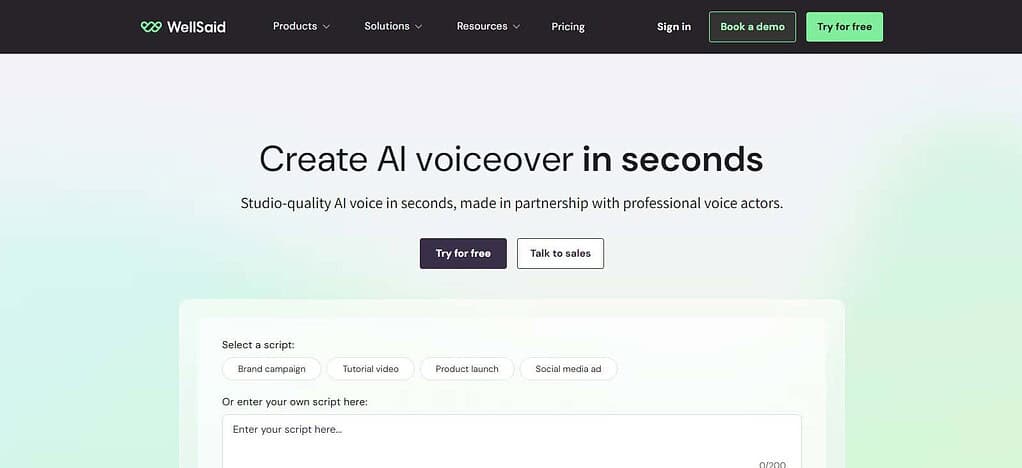
Its Studio has paid plans with commercial-use options, and is built for consistently producing professional narration. Current pricing is $19/mo Starter plan. The Pro plan is listed at $396/year and includes 2,160 downloaded minutes per year, unlimited generation, all English voices, and commercial rights. Its best use case is polished English-language business and training narration.
WellSaid Labs – Features
- Business and enterprise content with professional AI voiceovers
- Library of natural sounding voice with various professional speaking styles.
Voice controls for pronunciation, pacing, emphasis and delivery. - API features to embed AI speech in business apps
Good for e-learning, training, marketing, accessibility, presentation, corporate communication
| Pros | Cons |
|---|---|
| Professional AI voices designed for business content. | Less focused on personal voice cloning than specialist cloning platforms. |
| Strong pronunciation and voice-control features. | Some multilingual capabilities are concentrated in higher-tier offerings. |
| Suitable for e-learning, training, marketing, and corporate narration. | Pricing can be relatively high for individual creators. |
| Provides API access for business applications. | Downloaded-minute allowances can matter for frequent users. |
| Commercial and enterprise-oriented workflows are well supported. | Less suited to experimental character-voice or entertainment workflows. |
8. Speechify API
Speechify API is the developer version for apps that need programmable text-to-speech and voice cloning. Its API currently supports voice synthesis, streaming, SSML, catalog voices and cloned voices. The Speechify API enables cloning from a 10-30 second voice sample with verified speaker consent.
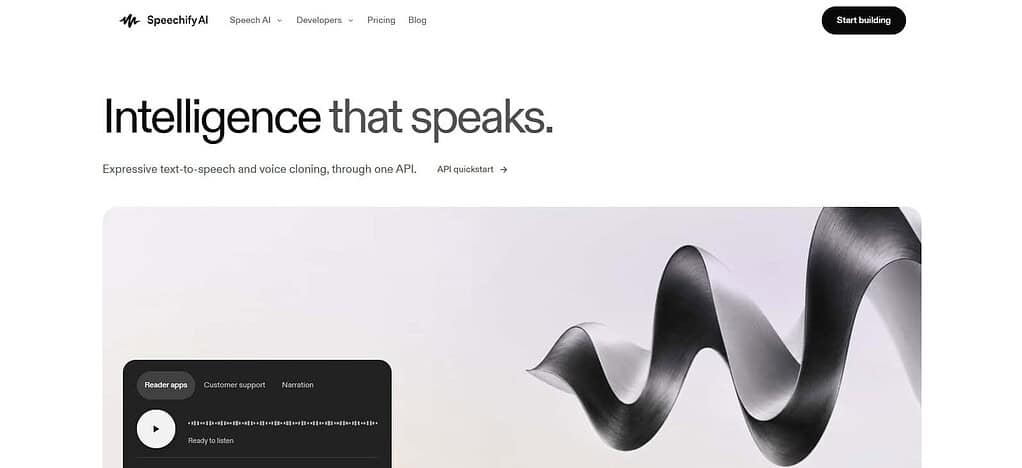
Developers are able to then generate speech from the voice ID that has been created. Its self-serve multilingual Simba 3.0 offering supports six languages, with more coverage available via sales. Pricing begins with 500,000 free characters/month then a $10/month Starter plan for 1.9 million characters, with higher Pro and Scale plans aimed at production workloads.
Speechify API – Features
- Voice cloning from a 10-30 second sample with explicit speaker permission.
Voice IDs let developers reuse cloned voices for generating speech. - API support for speech synthesis and streaming pipelines.
Voice-cloning has built-in consent verification.
| Pros | Cons |
|---|---|
| Developer-first API for integrating speech into applications. | Voice cloning is available on paid plans rather than the free tier. |
| Supports voice cloning with a short reference recording. | Self-serve multilingual cloning has narrower coverage than some competitors. |
| Provides streaming and SSML capabilities. | Developers need API knowledge for full customization. |
| Character-based pricing can work well for scalable applications. | High-volume projects still require careful usage-cost planning. |
| Includes consent verification for voice cloning. | Enterprise requirements may require custom arrangements. |
9. Uberduck
Uberduck is an AI voice platform that has synthetic speech, custom voices, creative voice applications and developer friendly generation.
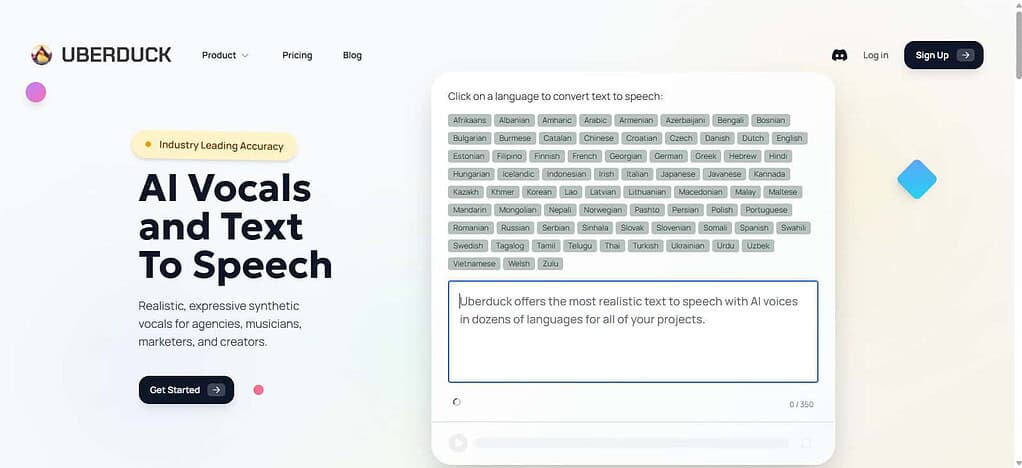
Rather than restricting itself to business narration, its platform has stressed experimentation, character voices, music-related applications and programmable voice generation. For creative voice workflows, Uberduck is a PlayHT alternative you might want to check out, but be sure to carefully evaluate its capabilities and pricing against the specific cloning needs of your project.
Its API-based approach makes it relevant to developers and creators can use the generated voices to experiment with multimedia. For commercial projects, please consult the relevant voice licensing, cloning permissions, usage limitations, and current subscription terms prior to production deployment.
Uberduck – Features
- Creative voice-generation and AI text-to-speech generators.
- Custom voice and voice cloning.
- Voice conversion to convert recorded speech to other voice.
- Creative uses of characters, music, entertainment and social content.
- API capabilities for developers who want to embed AI-generated voices into apps.
| Pros | Cons |
|---|---|
| Strong focus on creative and experimental AI voice generation. | Less focused on conventional enterprise narration workflows. |
| Supports custom voices and voice-related creative tools. | Licensing can vary according to voice and subscription type. |
| Useful for characters, entertainment, music, and social content. | Developer/API capabilities are not the main focus of every plan. |
| Offers voice conversion and other creative audio capabilities. | Output suitability can vary significantly between voices. |
| Low-cost entry options can appeal to casual creators. | Enterprise users may require more specialized controls and support. |
10. Amazon Polly
Amazon Polly Polly is not a consumer voice-cloning studio but AWS’s managed text-to-speech service. It was launched in 2016. It offers Standard, Neural, Long-Form and Generative voices, including 36 Neural language variants and a growing portfolio of Generative voices.
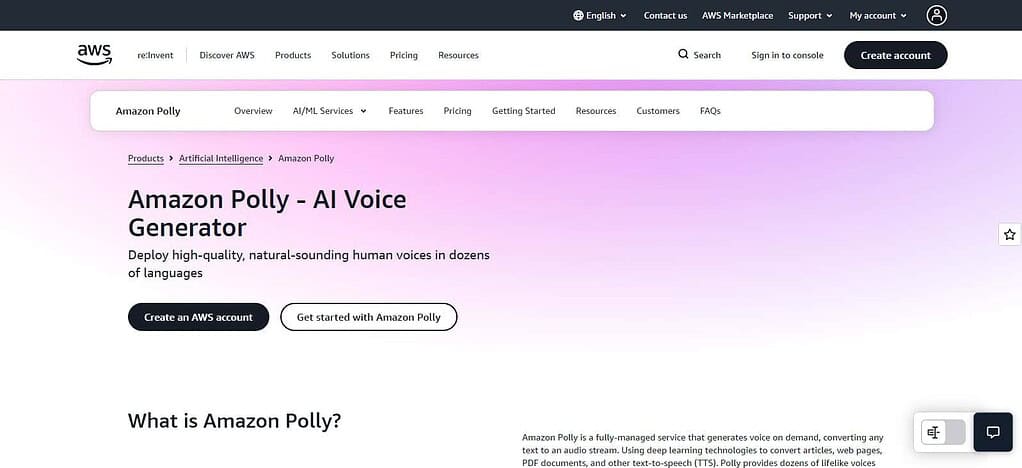
Amazon Polly APIs, SDK access, SSML support, real-time and asynchronous synthesis, and streaming (including bidirectional streaming for its Generative engine) Pricing currently is usage-based, with Standard $4 per 1 million characters, Neural $16, Long-Form $100 and Generative $30 outside of applicable free tiers. Its strength is scalable developer infrastructure not personal voice cloning.
Amazon Polly – Features
- Cloud-based text-to-speech service with Standard, Neural, Long-Form and Generative voices.
- Speech synthesis for applications and services based on API.
- A wide selection of voices and supported languages and regional variants.
- SSML control over pronunciation, pauses, emphasis, and speech characteristics.
- Audio streaming and common formats like MP3 for embedding generated speech into applications.
| Pros | Cons |
|---|---|
| Mature AWS infrastructure for scalable speech synthesis. | Not primarily designed for personal voice cloning. |
| Offers Standard, Neural, Long-Form, and Generative voices. | AWS configuration can be technical for beginners. |
| Supports APIs, SDKs, SSML, and audio streaming. | Creator-oriented editing tools are limited compared with dedicated platforms. |
| Usage-based pricing can suit high-volume applications. | Different voice types have substantially different pricing. |
| Integrates naturally with the wider AWS ecosystem. | Less focused on expressive personal voice identity and cloning workflows. |
Conclusion
Choosing a PlayHT alternative in 2026 isn’t just about the voice quality. ElevenLabs and Resemble AI are centered on voice cloning and realistic speech, while Speechify Studio and Fliki offer AI voices with production workflows for creators. For developers looking to integrate with your app, Speechify API and Amazon Polly are good options.
For professional business narration, Murf AI and WellSaid Labs are good options. LOVO AI, Uberduck, provide more creative voice generation tools.
Evaluate cloning requirements, language support, API capabilities, cost, commercial rights, generation limits and privacy settings before switching. Ultimately, the best choice depends on whether your priority is content creation, voice cloning, application development, localization or enterprise-scale deployment.
FAQ
What are the best PlayHT competitors for voice cloning?
ElevenLabs, Resemble AI, Speechify Studio, Murf AI, LOVO AI, and Fliki are notable alternatives for users looking for AI voice generation and cloning capabilities.
Which PlayHT alternative is best for realistic voice cloning?
ElevenLabs and Resemble AI are focused heavily on natural-sounding synthetic voices and custom voice cloning, making them relevant options for realistic narration and conversational applications.
Which PlayHT alternatives offer voice-cloning APIs?
ElevenLabs, Resemble AI, Murf AI, Speechify API, and other developer-focused platforms provide APIs for integrating AI-generated speech and, depending on the service and plan, custom or cloned voices.
Which alternative is suitable for AI voiceovers?
Murf AI, ElevenLabs, LOVO AI, Speechify Studio, and WellSaid Labs are designed for voiceover workflows covering videos, presentations, training materials, marketing content, podcasts, and other narrated media.
Can I use a PlayHT alternative for commercial projects?
Yes, several platforms provide commercial-use rights through paid plans. However, licensing terms differ, so users should check the specific plan’s commercial permissions before publishing or monetizing generated content.