

In this article, I’ll talk about the Best Machine Identity Management Platforms for securing certificates, secrets, workloads, APIs, applications and other machine identities. We will compare their features, lifecycle management, automation, integrations, deployment options, pricing, security capabilities, and AI-agent support to help enterprises choose the right solutions to manage increasing machine identity risks across modern cloud, hybrid, and enterprise environments.
What Is Machine Identity Management Platforms?
Machine identity management platforms are security solutions that discover, authenticate, monitor, protect, and manage identities used by non-human entities such as applications, APIs, workloads, servers, devices, containers, service accounts, and AI agents.
They help organizations manage machine credentials, certificates, secrets, keys and access permissions throughout their lifecycle. These platforms can automate identity provisioning, certificate renewal, credential rotation, policy enforcement, risk detection and revocation, closing security gaps caused by expired, exposed, unused or overprivileged machine identities. In today’s cloud and hybrid environments, they offer centralized visibility and automated controls for machine-to-machine communication and access.
Key Points
| Platform | Key Strength |
|---|---|
| Venafi (CyberArk) | Enterprise machine identity security leader |
| Keyfactor | PKI and certificate lifecycle management |
| DigiCert Trust Lifecycle Manager | Certificate and digital trust automation |
| AppViewX CERT+ | Certificate lifecycle orchestration |
| HashiCorp Vault PKI | Cloud-native identity and secrets management |
| Sectigo Certificate Manager | Automated certificate lifecycle management |
| Entrust | High-assurance PKI and digital trust |
| Aembit | Workload identity and machine-to-machine access |
| Akeyless | Unified secrets and machine identity platform |
| Smallstep | Modern cloud-native certificate management |
1. Venafi (CyberArk)
Venafi (now part of CyberArk) was founded in 2004 and is based in Salt Lake City, Utah. It’s on enterprise machine identity security, including certificates, PKI, workloads, applications, containers, IoT devices, code signing and SSH.
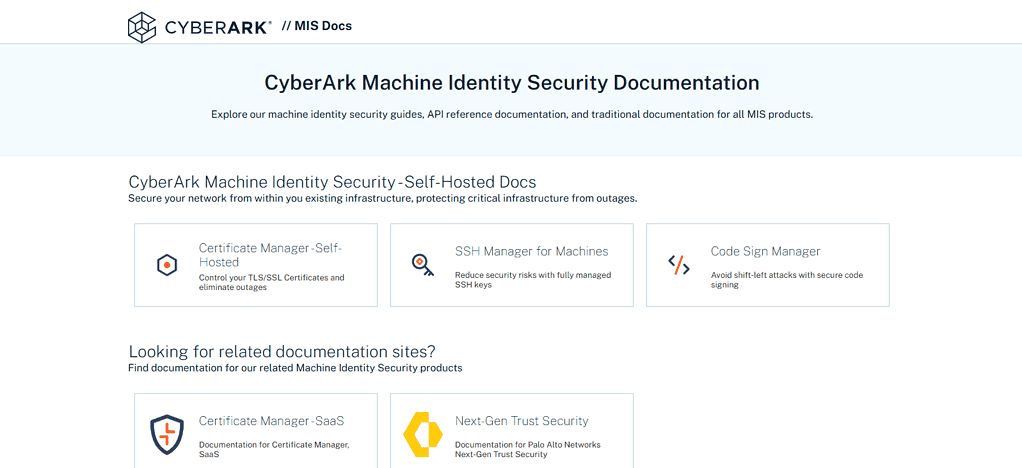
Lifecycle management encompasses discovery, issuance, renewal, rotation, policy enforcement and revocation. CyberArk’s integration provides more comprehensive secrets management capabilities that help organizations secure machine credentials in addition to identities.
Venafi offers broad automation and integrations for cloud, hybrid and enterprise environments. CyberArk’s broader machine and non-human identity strategy is increasingly covering AI-agent security. Pricing is mostly enterprise and quote-based.
Venafi (CyberArk) Features, Pros & Cons
| Features | Details |
|---|---|
| Machine Identity Security | Manages certificates, SSH keys, code-signing identities, and workload identities across enterprise environments. |
| Certificate Lifecycle | Supports discovery, issuance, renewal, deployment, monitoring, and revocation. |
| Workload Identity | Provides tools for issuing machine identities to workloads and cloud-native applications. |
| Automation | APIs, automation tools, and workflows help reduce manual certificate operations. |
| Deployment | Supports SaaS and self-hosted machine identity products. |
| Integrations | Connects with cloud, data-center, DevOps, PKI, and security environments. |
| AI/Non-Human Identity | CyberArk’s broader identity security strategy extends toward machine and non-human identities. |
| Pros | Cons |
|---|---|
| Strong enterprise machine identity capabilities | Can be complex for smaller organizations |
| Broad certificate lifecycle management | Enterprise-oriented implementation |
| Strong automation and API capabilities | Pricing is generally sales-led |
| SaaS and self-hosted options | Broader platform capabilities may require additional CyberArk products |
2. Keyfactor
Keyfactor was founded in 2001 and is headquartered in Independence, Ohio. Keyfactor’s core focus is in digital trust, PKI, certificate lifecycle management and machine identity security. It provides lifecycle features for automated discovery, enrollment, issuance, renewal, provisioning, rotation and revocation across public and private CAs.
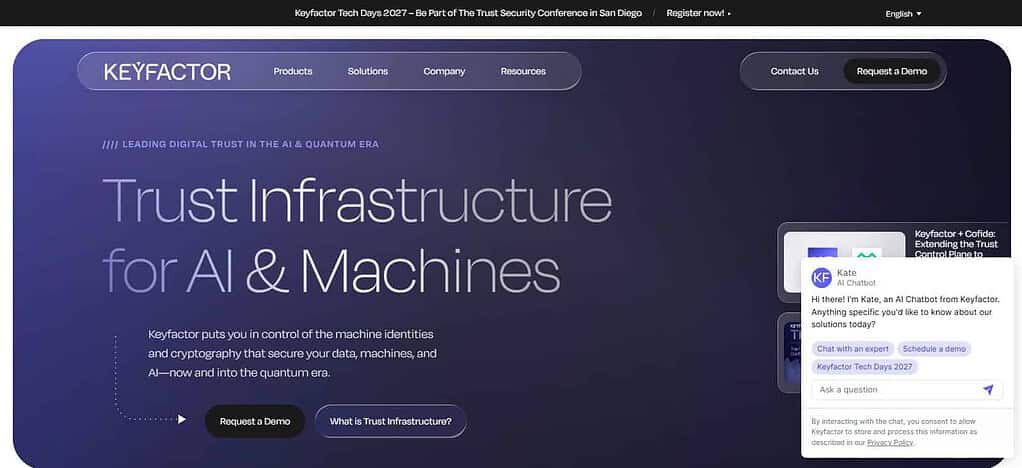
Keyfactor supports identities for workloads, devices, applications and artificial intelligence systems, and its broader platform features cryptographic risk management and automation. Integrations include DevOps tools, Kubernetes, service meshes, cloud environments and existing PKI infrastructure. Deployment models are SaaS, on-premises and hybrid environments. Pricing is usually customized for enterprise needs.
Keyfactor Features, Pros & Cons
| Features | Details |
|---|---|
| Certificate Lifecycle | Discovers, manages, issues, renews, and automates certificates throughout their lifecycle. |
| PKI Management | Supports enterprise PKI and certificate authority infrastructure. |
| Machine Identity | Designed to protect and automate machine identities across digital environments. |
| Device Identity | Supports device identity provisioning and certificate-based authentication. |
| Automation | Automates certificate operations to reduce manual processes and expiration risks. |
| Integrations | Supports more than 100 technology integrations across enterprise environments. |
| Deployment | Supports enterprise, cloud, and hybrid use cases. |
| Pros | Cons |
|---|---|
| Strong machine identity focus | Primarily enterprise-oriented |
| Comprehensive certificate automation | May require specialist PKI knowledge |
| Broad integration ecosystem | Pricing is generally customized |
| Strong device and PKI capabilities | Can be more than smaller teams need |
3. DigiCert Trust Lifecycle Manager
DigiCert Trust Lifecycle Manager is part of DigiCert’s digital trust portfolio, and focuses on centralized certificate and PKI lifecycle management. It provides discovery, inventory, issuance, monitoring, renewal, revocation, policy enforcement and certificate automation for servers, devices, users, APIs and cloud workloads.
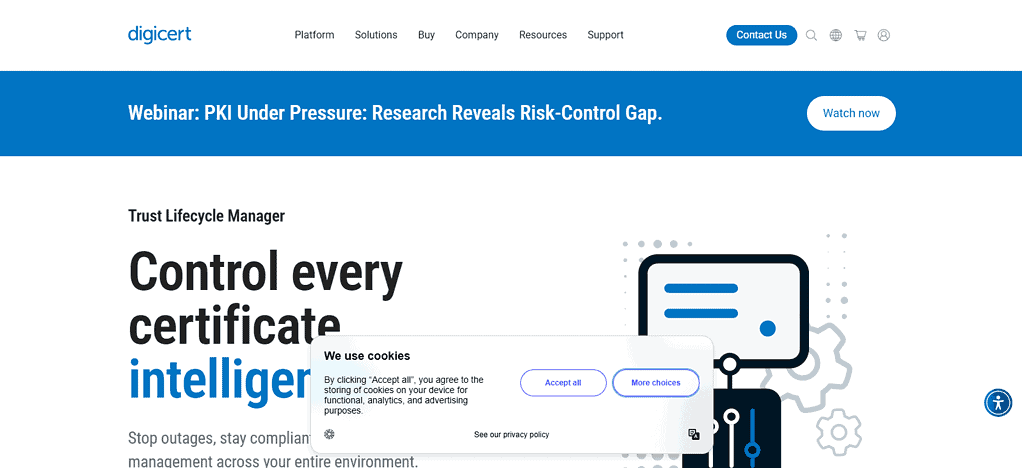
It does, however, integrate with secrets and identity infrastructure, and is especially good at certificate-centric machine identity management rather than general secrets management.
The integrations include AWS Private CA, Entrust, Sectigo, Microsoft CA, HashiCorp Vault, CyberArk, Kubernetes, Terraform and others. It is primarily delivered via DigiCert ONE SaaS. Pricing is published for an Essentials option starting at $40 per managed certificate seat (minimum 25 seats) and higher tiers are sales-led.
DigiCert Trust Lifecycle Manager Features, Pros & Cons
| Features | Details |
|---|---|
| Certificate Discovery | Finds certificates across networks, clouds, endpoints, trust stores, and other environments. |
| Lifecycle Management | Covers certificate issuance, renewal, monitoring, notification, and revocation workflows. |
| PKI | Supports private certificate issuance and CA hierarchy management. |
| Governance | Provides policies for algorithms, key sizes, certificate lifetimes, and access controls. |
| Automation | Supports ACME, SCEP, Windows autoenrollment, APIs, and automated workflows. |
| Integrations | Connects with CAs, ITSM, cloud, IAM, DevOps, Kubernetes, and security infrastructure. |
| Deployment | Supports cloud, on-premises, and hybrid environments. |
| Pros | Cons |
|---|---|
| Strong certificate discovery and visibility | Primarily certificate-focused |
| Broad PKI capabilities | Advanced capabilities may require higher tiers |
| Strong automation options | Enterprise features can be sales-led |
| Supports hybrid infrastructure | Less focused on general secrets management |
4. CERT+ from AppViewX
AppViewX CERT+ is a New York based company founded in 2008. Certificate lifecycle management, PKI automation, machine identity protection, cryptographic governance and network automation are the main focus.
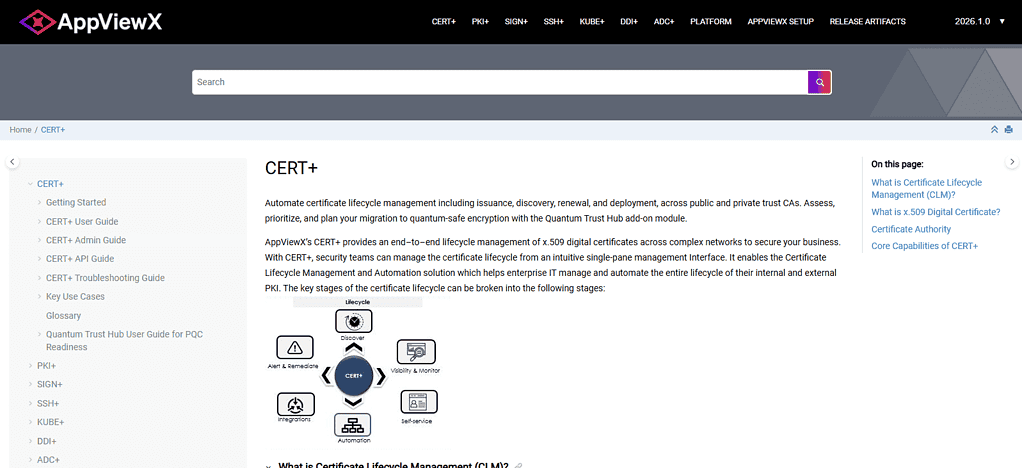
The platform provides discovery, enrollment, renewal, deployment, policy control and automated lifecycle workflows across enterprise infrastructure. It supports cloud and on-premises deployments, and is available in SaaS, PKIaaS and on-premises editions.
AppViewX also emphasizes workflow automation and integrations for network infrastructure, certificate authorities, DevSecOps and enterprise security environments. This is not primarily a secrets-management category, nor is its AI-agent support as mature as dedicated workload-identity platforms. Contact-based pricing and free trial available.
AppViewX CERT+ Features, Pros & Cons
| Features | Details |
|---|---|
| Certificate Management | Centralizes certificate discovery, monitoring, issuance, renewal, and deployment workflows. |
| PKI Automation | Automates repetitive certificate and PKI processes. |
| Workflow Automation | Provides orchestration for certificate-related operational processes. |
| Infrastructure Support | Designed for enterprise infrastructure and complex IT environments. |
| Integrations | Connects certificate workflows with infrastructure, DevOps, and security systems. |
| Deployment | Supports enterprise deployment models including cloud-oriented environments. |
| Enterprise Management | Provides centralized visibility and policy-driven certificate operations. |
| Pros | Cons |
|---|---|
| Strong certificate workflow automation | Can be complex for smaller teams |
| Useful for enterprise environments | Less focused on secrets management |
| Good orchestration capabilities | Pricing generally requires vendor contact |
| Helps reduce manual certificate operations | AI-agent identity is not its primary specialization |
5. HashiCorp Vault PKI
HashiCorp Vault PKI is a part of HashiCorp Vault mainly focused on secrets management, machine authentication, PKI, dynamic credentials and secure access to infrastructure. HashiCorp, born from Mitchell Hashimoto and Armon Dadgar, has grown beyond its cloud infrastructure automation origins.
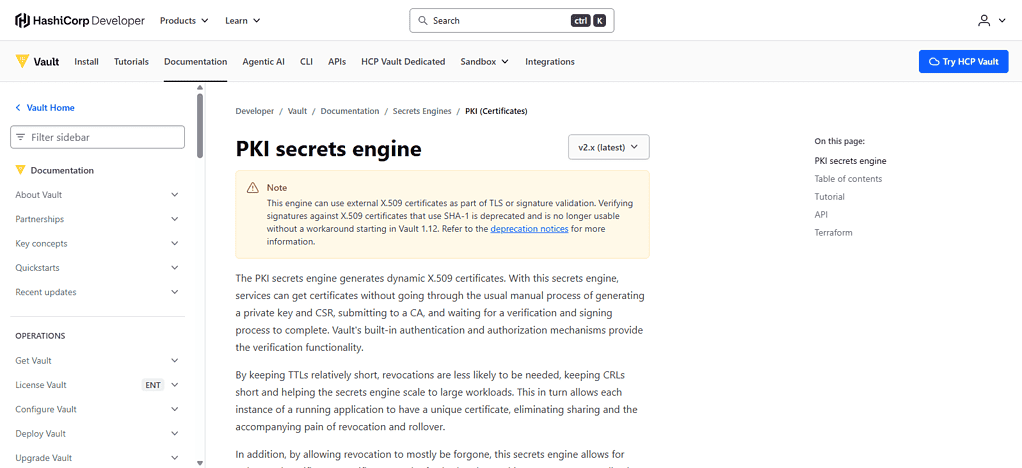
Vault PKI can act as a certificate authority and automate the issuance and renewal of certificates for applications, services, workloads, and machines. Its main strength is the combination of PKI with secrets, tokens, dynamic credentials, and policy-based access.
Integrates with Kubernetes, cloud platforms, CI/CD, Terraform and enterprise infrastructure. Vault can be deployed in cloud and self-managed models. Prices depend on the edition and deployment model of the Vault; for enterprise capabilities they are typically sales-led.
HashiCorp Vault PKI Features, Pros & Cons
| Features | Details |
|---|---|
| Dynamic Certificates | Generates dynamic X.509 certificates for applications and services. |
| Secrets Management | Combines PKI with centralized secrets and credential management. |
| Short-Lived Identity | Supports short-lived certificates that reduce long-term credential exposure. |
| Authentication | Uses Vault authentication and authorization mechanisms to control certificate issuance. |
| Automation | Applications can obtain certificates programmatically without manual CA processes. |
| Workload Security | Particularly useful for cloud-native workloads, applications, and services. |
| Deployment | Available through cloud and self-managed Vault environments. |
| Pros | Cons |
|---|---|
| Excellent combination of PKI and secrets management | Requires Vault expertise |
| Dynamic and short-lived credentials | Setup can be complex |
| Strong API and automation capabilities | Not a simple certificate-only tool |
| Good fit for cloud-native infrastructure | Enterprise capabilities can increase cost and complexity |
6. Sectigo Certificate Manager
Sectigo Certificate Manager is built for consolidated certificate lifecycle management and digital trust in enterprise environments. Its platform provides discovery, issuance, enrollment, renewal, revocation, monitoring and policy-based management of SSL/TLS, device, client, code-signing and other certificates.
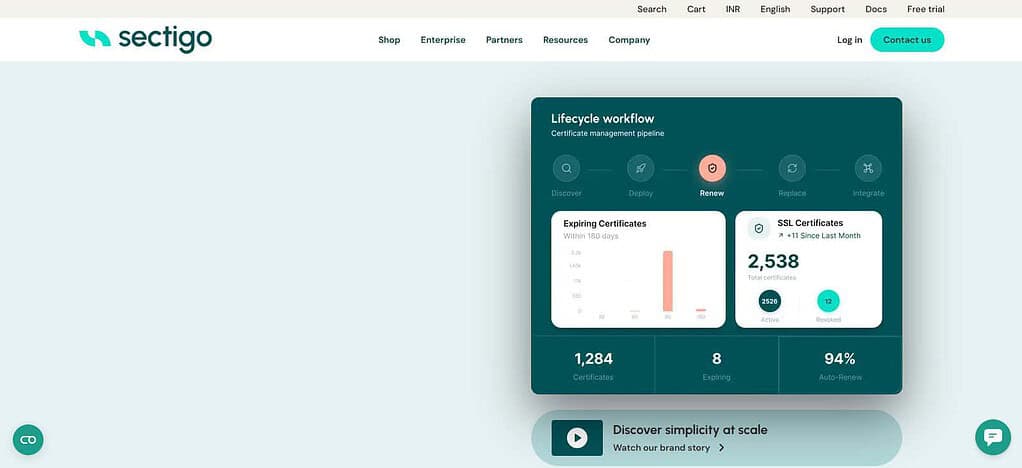
One of the biggest advantages is that it’s CA-agnostic, which means organizations can manage certificates from Sectigo and other certificate authorities through a single interface. The deployment is predominantly in the cloud, and integrations support enterprise identity, infrastructure and certificate management workflows.
It does not handle secrets management, nor is it focused on AI-agent identity, but certificates can be used to support machine and workload authentication. Pricing is generally based on certificate volume, deployment requirements and enterprise needs.
Sectigo Certificate Manager Features, Pros & Cons
| Features | Details |
|---|---|
| Certificate Discovery | Automatically discovers and inventories certificates across environments. |
| Lifecycle Management | Handles issuance, deployment, renewal, replacement, and revocation. |
| CA-Agnostic Management | Allows organizations to manage certificates from Sectigo and other certificate authorities. |
| Private PKI | Supports private PKI for internal applications, systems, and devices. |
| DevOps Automation | Supports ACME, SCEP, EST, CI/CD, and DevOps workflows. |
| Certificate Types | Supports SSL/TLS, device, client, S/MIME, and code-signing certificates. |
| AI Integration | Provides an MCP server for certificate management through AI agents. |
| Pros | Cons |
|---|---|
| Strong CA-agnostic capabilities | Primarily focused on certificates |
| Broad certificate coverage | Secrets management is not its main purpose |
| Extensive automation | Advanced enterprise functionality may require higher plans |
| Strong enterprise integrations | Some organizations may need separate workload IAM tools |
7. Entrust
Entrust, headquartered in Minneapolis, Minnesota, traces its roots to Datacard, founded in 1969. The company’s wider security portfolio includes digital identity, authentication, PKI, certificates, cryptographic keys, HSMs and identity lifecycle management.
Entrust offers certificate and PKI capabilities for machine identities to enable authentication for devices, applications, infrastructure and workloads. Lifecycle management can include issuance, renewal, policy controls and certificate administration .
HSM and key-management technologies enhance cryptographic protection . Secrets management is not its primary category and AI-agent identity is not its primary differentiator. Entrust supports enterprise, hybrid and cloud environments, with integrations across identity, PKI and security infrastructure. Pricing for enterprise deployments is typically custom.
Entrust Features, Pros & Cons
| Features | Details |
|---|---|
| Machine Identity | Secures machine identities across devices, workloads, and enterprise infrastructure. |
| Certificate Management | Provides certificate discovery, issuance, renewal, monitoring, and revocation. |
| PKI | Offers enterprise PKI for authentication, encryption, and digital identity. |
| Cryptographic Security | Supports keys, certificates, and broader cryptographic infrastructure. |
| Deployment | Offers on-premises, managed, and as-a-service PKI options. |
| Automation | Automates certificate lifecycle processes and reduces manual administration. |
| Enterprise Security | Designed for large organizations requiring centralized machine identity governance. |
| Pros | Cons |
|---|---|
| Strong enterprise PKI heritage | Can be complex to implement |
| Broad machine identity capabilities | Primarily enterprise-focused |
| Multiple deployment options | Pricing is typically customized |
| Strong certificate governance | May require specialist PKI skills |
8. Aembit.
Aembit was founded in 2021 and is based in Silver Spring, Maryland. It is a departure from traditional certificate-management platforms in that the emphasis is on workload identity and access management for non-human identities such as applications, services, containers, workloads, and AI agents.
It does this by using trust providers, policy enforcement, short-lived credentials, and real-time authorization to allow identity-based access without storing long-lived credentials on the workload. Especially interesting are its AI-agent capabilities, such as MCP identity and authorization controls.
It integrates with human identity providers, AWS, Azure Key Vault, HashiCorp Vault, SIEM platforms, and security tools. Aembit is SaaS. The pricing includes a free tier, Teams at $20 per workload or AI agent per month and Enterprise pricing is custom.
Aembit Features, Pros & Cons
| Features | Details |
|---|---|
| Workload Identity | Provides identity-based access management for applications, services, scripts, APIs, and other workloads. |
| AI Agent Identity | Treats AI agents as workloads and applies identity-based access controls to them. |
| Short-Lived Credentials | Issues short-lived credentials instead of relying on persistent secrets. |
| Access Policies | Controls which workloads can access specific resources. |
| Blended Identity | Can combine a human user’s identity with an AI agent’s workload identity. |
| Integrations | Connects workloads with cloud, SaaS, databases, APIs, and other resources. |
| Deployment | Cloud-native platform supporting cloud, on-premises, and SaaS environments. |
| Pros | Cons |
|---|---|
| Strong workload identity specialization | Newer category compared with traditional PKI platforms |
| Strong AI-agent security focus | Not primarily a full PKI platform |
| Reduces long-lived credentials | Best suited to modern workload environments |
| Identity-first access model | Traditional certificate-heavy organizations may need complementary tools |
9. Akeyless
Akeyless was founded in 2018 and is headquartered in New York with roots in Israel. The core is secrets management, machine identity, certificate lifecycle management, encryption, KMS and access governance via a SaaS platform.
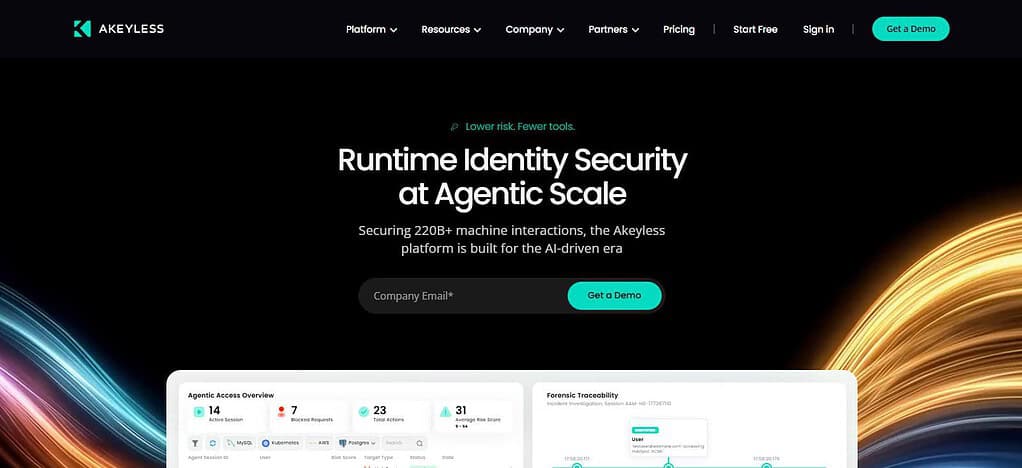
Akeyless supports identity-based authentication, dynamic and rotated secrets, certificate issuance and renewal, discovery, PKI, and workload authentication across cloud and Kubernetes environments. Its platform also directly addresses AI-agent identity security, enabling organizations to govern machine, human and AI identities via centralized policies.
Integrations include AWS, Azure, GCP, Kubernetes, Terraform, Jenkins, HashiCorp Vault and external HSMs. Deployment is SaaS cloud native. Pricing is custom, but there is a free tier that supports a small number of clients, secrets and certificates.
Akeyless Features, Pros & Cons
| Features | Details |
|---|---|
| Secrets Management | Centralizes secrets, credentials, keys, and other sensitive machine-access information. |
| Machine Identity | Supports machine and workload authentication through identity-based access. |
| Dynamic Secrets | Helps provide temporary credentials instead of long-lived secrets. |
| PKI | Supports certificate and PKI-related machine identity use cases. |
| Cloud Security | Designed for multi-cloud and cloud-native environments. |
| Automation | Automates credential access, rotation, provisioning, and policy enforcement. |
| Integrations | Works with cloud, Kubernetes, DevOps, infrastructure, and security tools. |
| Pros | Cons |
|---|---|
| Combines secrets and machine identity | Broader platform can require configuration expertise |
| Strong cloud-native architecture | Less certificate-specialized than dedicated CLM platforms |
| Useful for dynamic credentials | Enterprise capabilities may require custom pricing |
| Centralized security model | Teams may need time to learn its architecture |
10. Smallstep
Smallstep focuses on certificate authority, workload identity, device identity, SSH and automated certificate management—not traditional secrets management.
Its platform authenticates machines, devices, workloads, and services in cloud-native and enterprise environments using certificates and cryptographic identity. Lifecycle automation includes certificate issuance, renewal, distribution and device identity, with support for ACME, SCEP, device attestation, TPM-based identity and certificate-based Wi-Fi, VPN and application access.
If your infrastructure team wants modern PKI and workload identity without the complexity of maintaining legacy systems, Smallstep is especially relevant. Its core competence is not AI-agent identity. Pricing is primarily sales-led for enterprise deployments with bundles and bespoke solutions available.
Smallstep Features, Pros & Cons
| Features | Details |
|---|---|
| Certificate Authority | Provides modern CA capabilities for issuing machine and workload certificates. |
| Workload Identity | Uses cryptographic identities to authenticate services and workloads. |
| Device Identity | Supports device identity and certificate-based authentication. |
| Certificate Automation | Automates certificate issuance and renewal for infrastructure. |
| SSH Security | Provides certificate-based SSH identity and access capabilities. |
| Cloud-Native Support | Designed for modern infrastructure, applications, services, and workloads. |
| PKI | Simplifies deployment of private PKI and certificate-based trust infrastructure. |
| Pros | Cons |
|---|---|
| Modern approach to PKI | More specialized than broad identity platforms |
| Strong workload identity capabilities | Not primarily a secrets-management platform |
| Good automation for certificates | Large enterprises may need additional governance tools |
| Developer-friendly approach | AI-agent management is not its main focus |
Conclusion
As organizations struggle to manage growing numbers of workloads, applications, APIs, certificates, secrets, cloud services and AI agents, machine identity management has become a must. The platforms listed here take different approaches ranging from certificate lifecycle management and PKI to secrets management and workload identity.
Venafi, Keyfactor, DigiCert and Sectigo are good choices for certificate-centric environments, while HashiCorp Vault and Akeyless provide broader secrets and machine-credential capabilities. Aembit is known for workload and AI-agent identity, and Smallstep is focused on modern certificate-based infrastructure. Ultimately, your identity types, infrastructure, automation needs, integrations, deployment preferences, and security objectives will dictate the right platform.
FAQ
What is machine identity management?
Machine identity management is the process of discovering, authenticating, securing, monitoring, rotating, and retiring identities used by machines, applications, APIs, workloads, devices, and other non-human systems.
Why is machine identity management important in 2026?
Organizations now operate large numbers of cloud workloads, APIs, containers, certificates, service accounts, and AI agents. Machine identity management helps reduce credential exposure, identity sprawl, unauthorized access, and expired or unmanaged credentials.
What types of machine identities can these platforms manage?
Depending on the platform, machine identities can include workloads, applications, APIs, service accounts, certificates, SSH keys, secrets, cloud identities, Kubernetes workloads, devices, bots, and AI agents.
What is the difference between machine identity and human identity?
Human identity management primarily controls people and their access to applications. Machine identity management focuses on non-human systems that authenticate and communicate automatically, often without direct human interaction.
Do machine identity platforms manage secrets?
Some platforms provide native secrets management, while others concentrate mainly on certificates and PKI. HashiCorp Vault, Akeyless, and CyberArk/Venafi provide broader capabilities involving machine credentials and secrets.