


In this article, I will go through the Best AI API Platforms for Developers and compare top options based on pricing, latency, model quality, API support, tool calling, structured outputs, scalability, integrations and developer experience.
This guide helps developers to understand the critical differences between AI API platforms and how to choose the right options for building reliable AI-powered applications for a variety of use cases and technical requirements.
What Is AI API Platforms for Developers?
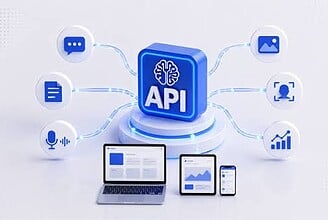
AI API platforms for developers are services that let application developers connect to artificial intelligence models using application programming interfaces (APIs). These platforms allow developers to add capabilities like text generation, reasoning, coding, image analysis, speech, embeddings, search and AI agents without having to build models from scratch.
These platforms usually offer API keys, SDKs, documentation, model endpoints, usage controls, and monitoring tools. Tool calling, structured outputs, streaming, fine-tuning, caching and multimodal support are also available depending on the provider, simplifying the integration of AI features into web, mobile, enterprise and software applications for developers.
Key Points
| AI API Platform | Key Point |
|---|---|
| OpenAI API | Offers advanced multimodal models, agent-building tools, Responses API, web search integration, file search, and SDKs for building production AI applications. |
| Anthropic Claude API | Provides access to Claude models, managed agents, tool use, structured outputs, file handling, and large-context AI workflows through a REST API. |
| Google Gemini API | Supports text, image, audio, video, multimodal reasoning, function calling, managed agents, and built-in Google tools through a unified API. |
| Cohere Platform | Enterprise-focused AI platform offering generative models, embeddings, reranking, retrieval, multilingual AI, and private deployment options. |
| Mistral API | Developer platform featuring text, multimodal, OCR, audio, embedding, and agentic AI models accessible through a unified API and SDK ecosystem. |
| Microsoft Azure AI Foundry | Provides access to foundation models, enterprise AI services, security controls, and seamless integration with Azure cloud infrastructure. |
| Amazon Bedrock | Enables developers to build generative AI applications using multiple foundation models through a managed AWS service. |
| Together AI | Offers inference APIs for open-source AI models, fast deployment, model fine-tuning, and scalable GPU infrastructure. |
| Replicate | Simplifies access to hundreds of AI models through a single API for image generation, video creation, speech, and language tasks. |
| GroqCloud | Delivers ultra-low-latency AI inference for popular open-source models, making it ideal for real-time AI applications. |
1. API de OpenAI
OpenAI API provides models for reasoning, text, coding, multimodal, embeddings, and agent workflows. Pricing depends on usage and differs based on model, input/output tokens, and caching and processing choices. Latency. Latency depends on the model you choose, the size of the request, and whether you use streaming. Model quality refers to general purpose reasoning and production use cases.
API compatibility covers REST APIs and official SDKs. Tool Calling lets models interact with external functions and services, and Structured Outputs can enforce developer-defined JSON schemas for reliable application data. It also provides scalable infrastructure, streaming, batch processing, and developer-focused tooling for production AI applications.
API de OpenAI Features
- Text generation and coding models, advanced reasoning
Multimodal capabilities for text, image and audio applications - Function calls and structured outputs
- Streaming, embeddings, batch processing and caching
- APIs and SDKs to build scalable appsAnthropic Claude API
| Pros | Cons |
|---|---|
| Strong reasoning, coding, and general AI capabilities | Premium models can become expensive at high usage |
| Broad multimodal support | Costs vary significantly by model and workload |
| Tool calling and Structured Outputs | Model and API changes require ongoing maintenance |
| Mature SDK and API ecosystem | High-demand workloads require careful rate-limit planning |
| Suitable for production-scale applications | Provider dependence can increase vendor lock-in |
2. API Anthropic Claude
The Anthropic Claude API gives you access to models that are optimized for reasoning, coding, analysis, document processing, and agent applications. The Pricing depends on the token rates for input and output for each model, and caching and processing options may affect the overall cost.
Latency is dependent on model size, length of the prompt, output requirements, and the configuration of the request. Model quality is about complex reasoning, coding, long-context tasks, and enterprise workflows. API compatibility is offered through Anthropic’s API and developer SDKs.
With Tool Calling, Claude can interact with external functions and services, and structured tool definitions enable developers to control parameters and application workflows. The API supports streaming and production-scale integration as well.
Anthropic Claude API Features
- Long context handling for documents and complex prompts
- Reasoning, coding and analytics with Claude models
- Using tools and calling functions
- Streaming responses, for interactive applications
*Structured tool inputs *API capabilities focused on production
| Pros | Cons |
|---|---|
| Strong reasoning and coding capabilities | Pricing varies considerably across Claude models |
| Effective for long-context applications | Some advanced capabilities depend on specific models |
| Powerful tool-use functionality | Migration can require API-specific adjustments |
| Streaming supports interactive applications | Rate limits vary by account and usage tier |
| Good fit for complex document workflows | Fewer model-family choices than multi-provider platforms |
3. Google Gemini API
Google Gemini API includes models for text, reasoning, coding, images, audio, video and other multimodal applications. The price depends on the model, number of input and output tokens, caching, batch processing, and service tier, and differs for standard, batch, and priority processing.

Latency is affected by model selection, prompt complexity, traffic, and processing mode, and streaming is appropriate for responsive applications. Quality of the model concerns multimodal understanding and workloads of large contexts.
API compatibility is via Gemini APIs and Google-supported SDKs. Tool Calling enables function-based integrations and Structured Outputs assists developers to get predictable machine-readable responses for application workflows.
Google Gemini API Features
- Multimodal text, image, audio and video abilities
- Large context processing for complex applications
- Function calls and JSON structured replies
Streaming and async processing
APIs and SDKs for agent and application development
| Pros | Cons |
|---|---|
| Strong multimodal capabilities | Features can differ between Gemini models |
| Supports large-context applications | Pricing can be complex across usage options |
| Function calling and structured responses | Developers must track model-specific limitations |
| Suitable for text, image, audio, and video workloads | API changes may require application updates |
| Integrates well with Google services | Performance can vary by model and workload |
4. Cohere Platform
The Cohere Platform provides language models and APIs for generation, retrieval, embeddings, reranking, and enterprise AI use cases. Pricing depends on the model and service. For generation models, you are charged based on input and output tokens.

For embeddings and reranking, there are separate usage metrics. Latency depends on the model, request size, deployment, and workload. Model quality has a heavy emphasis on enterprise language, retrieval and grounded application workflows.
API compatibility Cohere APIs, SDKs, and an option to use an API compatible with OpenAI’s API. Tool Calling supports external functions and multi-step agent workflows. Structured Outputs can enforce JSON schemas and strict tool parameters, helping applications receive consistent data formats.
Cohere Platform Features
- Generative AI Models for Business Applications
- Embedding for semantic search and retrieval.
- Reranking for better search and RAG results
Tool for automating workflows and agents - Deployment options oriented toward enterprises and structured outputs
| Pros | Cons |
|---|---|
| Strong focus on enterprise AI and retrieval | Smaller model ecosystem than some major providers |
| Powerful embeddings and reranking capabilities | Best suited to particular enterprise workloads |
| Useful for RAG and search applications | Pricing differs across individual services |
| Supports tool calling and structured outputs | Less focused on broad consumer-oriented multimodal use |
| Enterprise deployment options | Developers may need multiple Cohere services for complete workflows |
5. API Mistral
Models available on Mistral API cover general text generation, reasoning, coding, multimodal, and agent workflows. Pricing is usage-based, with token costs varying by model type and processing options that can impact overall spend. Latency varies with model size, workload, context length and tier selection.
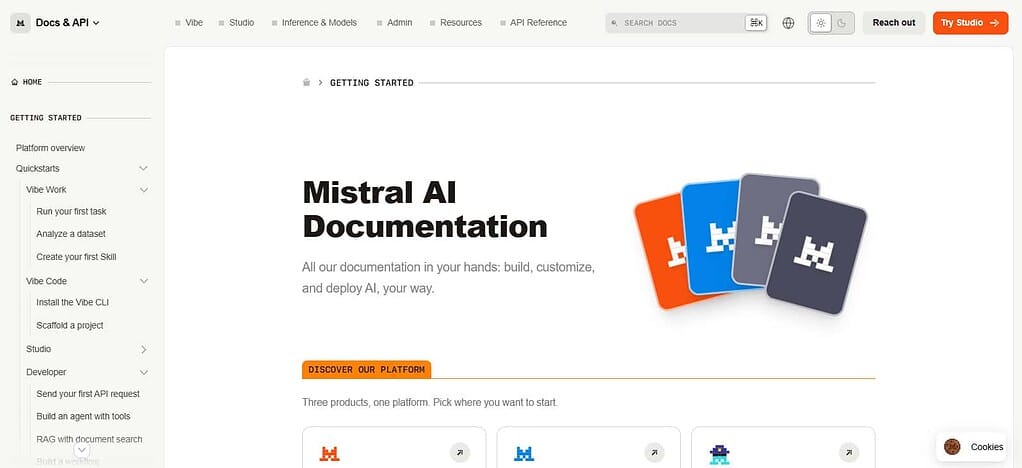
Model quality varies from lightweight models to more capable reasoning and coding models, enabling developers to tailor performance to application requirements. API compatibility includes developer APIs and SDK ecosystem for Mistral.
Tool Calling allows models to call external functions and application services, and structured responses help developers build predictable data for downstream systems. Production applications are further supported by streaming, batch processing, and scalable inference.
API Mistral Features
- Reasoning and coding models for general purpose
Multimodal capabilities with supported models - AI agents calling tools and functions
Application integration answers in structured format - Streaming, batch processing and scalable inference
| Pros | Cons |
|---|---|
| Offers multiple models for different workloads | Capability varies considerably by model |
| Strong options for coding and reasoning | Smaller ecosystem than the largest AI providers |
| Competitive usage-based pricing options | Developers need to compare models carefully |
| Supports function and tool calling | Some advanced features are model-dependent |
| Provides streaming and batch processing | Documentation and tooling may require more platform-specific learning |
6. Microsoft Azure AI Foundry
Azure AI Foundry is an enterprise development environment where you can access, evaluate, customize, and deploy AI models using Azure infrastructure. Pricing is based on the model you choose, your deployment setup, token usage, and Azure services you use. Latency Varies by model, region, capacity, networking and deployment type.
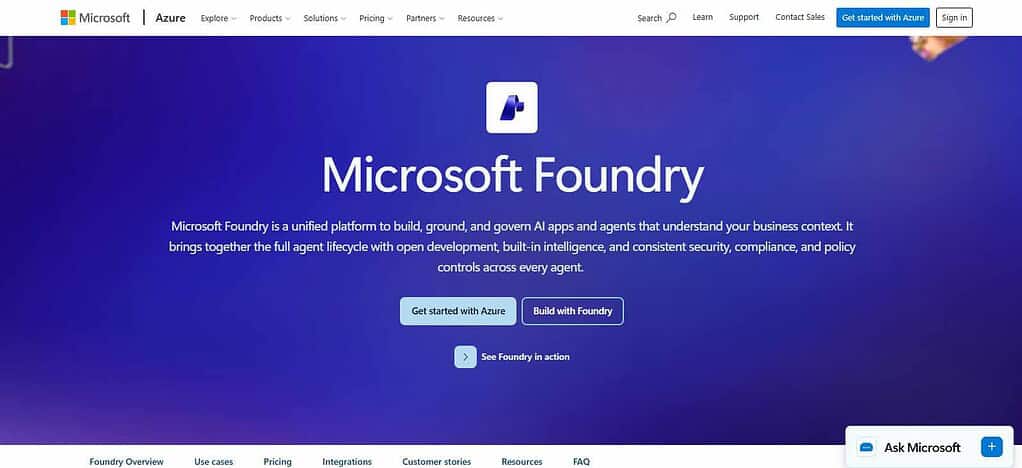
Model Quality: Foundry provides access to multiple providers and model types and therefore the quality of the models varies across the different model families available. API compatibility depends on the model and endpoint you choose – and you can use Azure SDKs and APIs in your development.
Tool Calling and Structured Outputs require model capability and supported interfaces. Other platform capabilities are enterprise identity, governance, monitoring, security, and cloud integration.
Microsoft Azure AI Foundry Features
- Multiple AI model families access
- Tools for model evaluation, tuning and deployment
Enterprise security, governance and identity integration - Agent, tool invocation and application development abilities
- Smooth integration into the larger Azure cloud ecosystem
| Pros | Cons |
|---|---|
| Access to multiple model families | Azure pricing can be complex |
| Strong enterprise security and governance | Platform has a steeper learning curve |
| Integrates with Microsoft and Azure services | Configuration can require substantial cloud knowledge |
| Supports model evaluation and deployment workflows | Costs can extend beyond model-token charges |
| Useful for enterprise-scale AI projects | Some capabilities vary between models and deployments |
7. Amazon Bedrock
Amazon Bedrock offers access to a variety of foundation-model providers on top of managed AWS infrastructure. Pricing varies by model, token usage, inference method, and processing configuration, so it varies between model families.
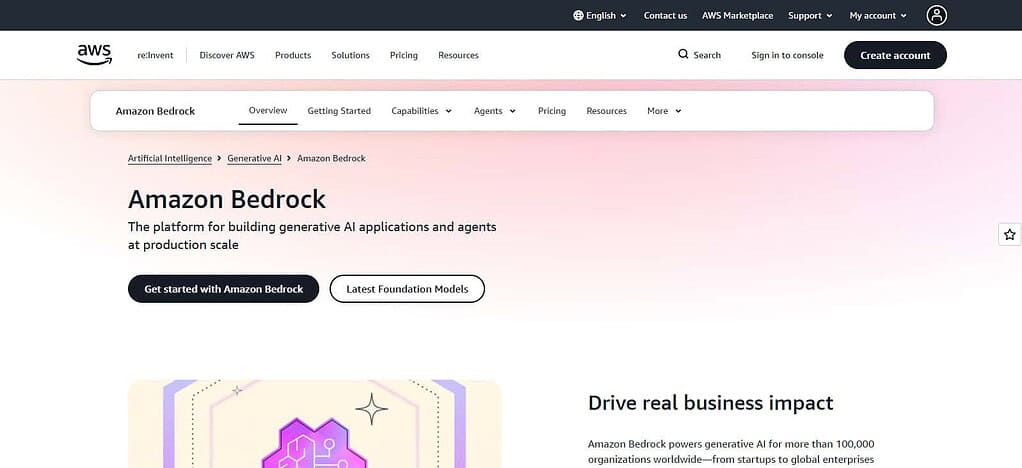
Latency varies with model, AWS region, request size, traffic, and capacity configuration. The quality of the model varies, since the developers are able to choose models from different providers depending on the needs of their application.
API compatibility encompasses Bedrock APIs such as model invocation and conversational APIs. The supported models can call functions in the application or external services through Tool Calling, and generate schema-governed responses through Structured Outputs. AWS security, scalability, monitoring and integration capabilities benefit enterprise deployments.
Amazon Bedrock Features
- Multiple providers offering foundation models
- Single APIs for model inference and conversations
- Features for Tool Calling and Agent Development
- Models with structured outputs supported
- Security, scalability, monitoring and integrations with AWS
| Pros | Cons |
|---|---|
| Access to models from multiple providers | AWS configuration can be complex for beginners |
| Strong integration with AWS infrastructure | Pricing differs between models and inference options |
| Enterprise security and access controls | Features vary depending on the selected model |
| Supports agents and tool-based workflows | Developers may need AWS-specific knowledge |
| Suitable for scalable cloud deployments | Switching between models may require capability adjustments |
8. Together AI
Together AI is an inference platform that focuses on a wide variety of open and open-weight models. Pricing is based on model selected and usage. Developers are able to select different combinations of cost and performance.
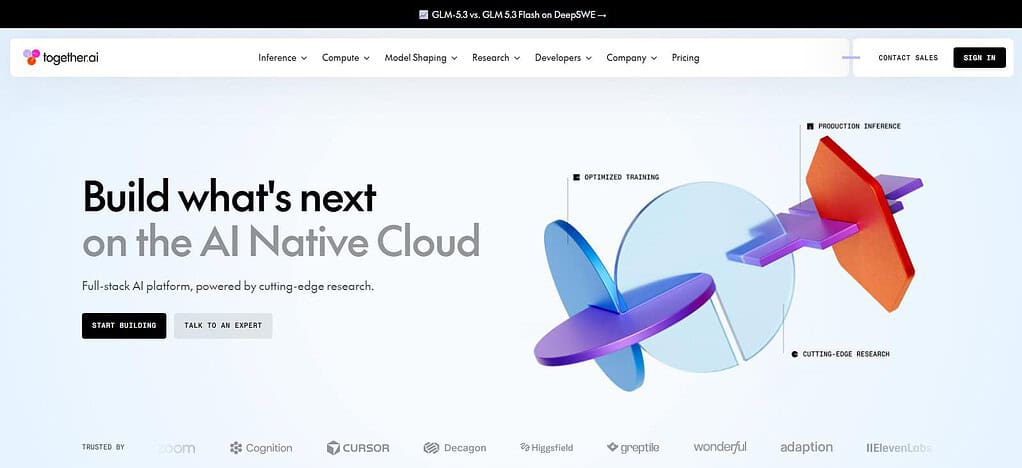
Latency will vary depending on model size, hardware, traffic, length of request and inference configuration. Model quality: available models for reasoning, coding, chat, and other workloads vary, rather than relying on a single proprietary model family.
API compatibility supports common AI application patterns and developer integrations, including OpenAI-style workflows for supported endpoints. Tool Calling and Structured Outputs depend on the capabilities of the chosen model and endpoint. Streaming, fine-tuning and scalable inference further help with application development.
Together AI Features
- Huge selection of open and open-weight AI models
High-performance inference infrastructure - Reasoning, coding, and generative workloads supported
- Ability to customize and fine-tune models
- API access with streaming and developer-focused integrations
| Pros | Cons |
|---|---|
| Broad selection of open and open-weight models | Model quality varies across the catalog |
| Flexible options for different AI workloads | Developers must evaluate individual models |
| Useful for experimenting with open models | Feature support can differ by model |
| Supports scalable inference and customization | Pricing depends on model and usage |
| Developer-friendly API approach | Enterprise capabilities may differ from major cloud platforms |
9. Replicate
Replicate is an API platform that allows you to run thousands of machine-learning and generative AI models without having to manage the inference infrastructure. Pricing Pricing is model and hardware configuration dependent, with costs driven by runtime or model-specific usage. Latency depends on model size, hardware, cold starts, and workload, and can vary significantly.
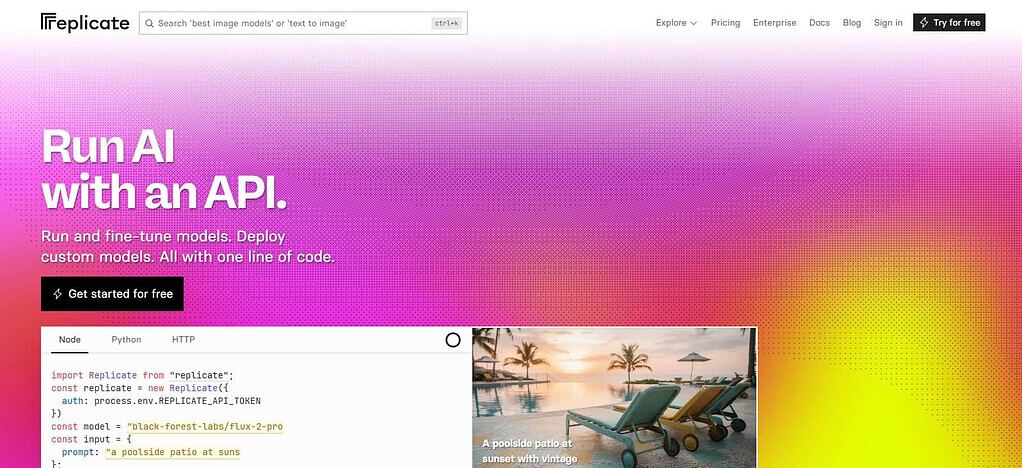
Model quality is not a property of a centralized model family but of the individual chosen model. API compatibility provides prediction APIs and developer tools for embedding models into applications. Tool use and Structured Outputs are implementation and capability dependent on each model. Its wide model catalog also enables experimentation, customization, image generation, video generation, audio, and other AI workloads.
Replicate Features
- Comprehensive catalog of machine learning and artificial intelligence models
- Model execution via API, no infrastructure management
- Support for image, video, audio and language workloads
- Flexible model deployment and experimentation
- Integration of Model with Prediction APIs for Apps
| Pros | Cons |
|---|---|
| Large and diverse model catalog | Quality varies between individual models |
| Easy API access to many AI models | Pricing can differ substantially by model |
| Useful for rapid experimentation | Cold starts can affect latency |
| Supports image, video, audio, and language models | API behavior can vary across model implementations |
| Reduces infrastructure management | Production consistency depends on the selected model and deployment setup |
10. GroqCloud
GroqCloud is an inference platform built for speed when running supported AI models. Pricing varies by model and service configuration, so developers are able to choose models that meet their workloads and cost requirements.
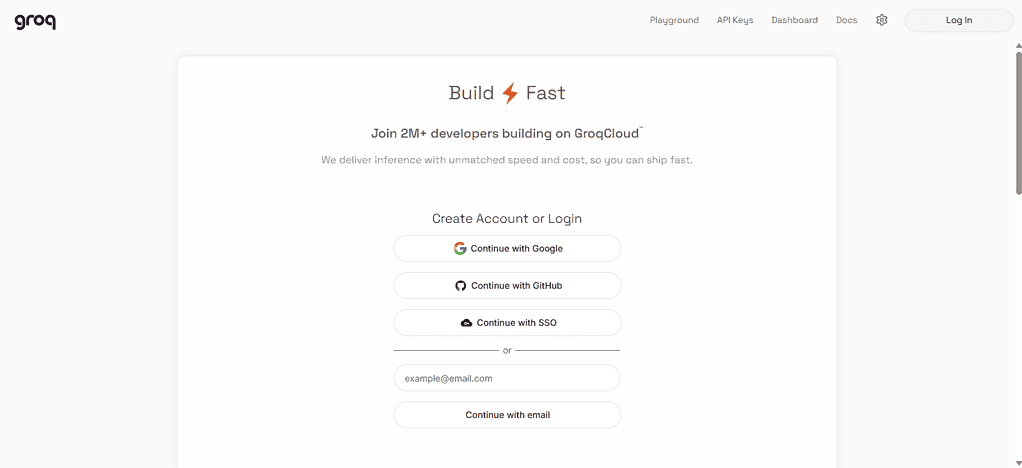
Latency is an important platform consideration, and can be measured by metrics like time to first token, total request latency and generation speed. Model quality is dependent on the hosted model chosen, so capabilities vary across available models.
API compatibility – We provide an OpenAI-compatible API to make it easier to migrate and integrate with applications that already use similar APIs. Tool Calling supports functions and supported external tools. Structured Outputs can return schema-based responses if supported by the model you choose.
Groq Cloud Features
- Support for multi-language and multi-reasoning model
- API compatible with OpenAI for easier integration
- Supported external tool capabilities and tool calling
- Streaming and Structured Outputs for models that support them
| Pros | Cons |
|---|---|
| Designed for very fast AI inference | Model selection is more limited than broad model marketplaces |
| Low-latency workloads can benefit from its infrastructure | Performance depends on the selected model |
| OpenAI-compatible API simplifies integration | Advanced features can vary by model |
| Supports tool calling and Structured Outputs for supported models | High-throughput requirements may require capacity planning |
| Useful for real-time AI applications | Speed does not automatically mean every model is suitable for every workload |
Conclusion
The AI API platform to choose in 2026 will depend on your application requirements, budget, performance goals, and development processes. Cohere focuses on robust enterprise retrieval and language use cases, while OpenAI, Anthropic, and Google Gemini provide general model capabilities. Mistral and Together AI have flexibility for developers exploring open models, while Azure AI Foundry and Amazon Bedrock have enterprise cloud integration.
Replicate — Access to a wide range of models through APIs. GroqCloud — Optimized for fast inference. Before choosing a platform, developers should evaluate the pricing, latency, model quality, API compatibility, calling tools, structured outputs, scalability, security, and integration requirements for their project.
FAQ
What is an AI API platform?
An AI API platform allows developers to integrate AI models into applications through APIs instead of building and hosting models themselves. These platforms can provide text generation, reasoning, coding, vision, audio, embeddings, and agent capabilities.
Which factors should developers compare when choosing an AI API?
Developers should compare pricing, latency, model quality, API compatibility, context length, tool calling, structured outputs, SDK support, rate limits, scalability, security, and integration options before selecting a platform.
What is the difference between AI API pricing models?
AI API pricing commonly depends on input tokens, output tokens, model selection, cached tokens, processing modes, or compute usage. Some platforms also provide free credits, batch pricing, or enterprise pricing.
Why is API compatibility important for developers?
API compatibility can reduce migration and development effort. Platforms offering familiar API formats, SDKs, authentication methods, streaming, and structured response formats can make it easier to integrate AI into existing applications.
What is tool calling in an AI API?
Tool calling allows an AI model to request external functions or services during a response. Developers can connect models to databases, APIs, calculators, search systems, business applications, and other software tools.