




This article presents the top Generative AI Tools for Translating App Codebases. These tools assist developers in translating applications from one programming language to another, modernizing legacy software, and expediting migration initiatives.
These tools leverage AI to improve coding, reduce manual work, improve the quality of the converted code, and facilitate easier and faster software transformations. Each tool’s strengths, weaknesses, and best suited use cases for developers and enterprises will be examined.
What Are Generative AI Tools for Translating App Codebases?
Generative AI tools enable the rapid translation of app code from one programming language to another. Using large language models, these AI tools are capable of analyzing code to detect not only its structure, but its logic and functionalities, as well as any and all dependencies.
These tools develop solutions to translate app code for developers, enabling them to update outdated apps more efficiently. Furthermore, these tools offer assistance with migrating software for use in cloud computing and modern frameworks, while also reducing the extensive burden of rewriting functional code.
Generative AI tools translate complex tasks, making development faster and improving the overall quality of the code. These tools also facilitate the transformation of digital technologies for organizations at a faster pace compared to previous methods.
Benefits of Using Generative AI for Codebase Translation
Speedy Code Migration: AI swiftly translates extensive codebases, reducing the time-consuming manual migration synonymous with many legacy code modernization projects.
Lower Development Expense: The misuse of time and labor during the migration process is less due to the automation of repetitive coding tasks.
Increased Developer Output: The translation, documentation, and code refactoring tasks tackled by AI liberate developers to tackle more complex and productive tasks.
Refinement of Code: AI tools identify coding inefficiencies and suggest optimization, thus improving coding structure.
Coding Language Versatility: Current AI tools possess the capability of coding translation to and from multiple frameworks and coding languages.
Quicker Modernization of Legacy Systems: The outdated applications of the organization need not be completely built to be modernized; they can be updated with newer technologies.
Minimization of Translation Errors: The automation of the translation process reduces the probability of eradicable errors.
Documentation Improvement: Documentation, along with coding explanations, is produced automately by some AI tools during the translation process.
Compliance and Security Enhancements: While translating coding, AI tools suggest security modifications.
Enterprise Scalability: Migration of large and complex AI enterprise coding frameworks is easily accomplished.
Cloud Migration Simplification: AI translates legacy coding in preparation for the organization to move applications to a coding structure that supports a cloud-based environment.
Faster Migration and Modernization: the ability of AI to complete coding far surpasses the time it takes to do a task manually.
Post-Translation Coding Consistency: AI helps enforce coding best practices upon the translated applications.
Simpler Framework and Platform Transitions: Application migration across Frameworks, Operating Systems, and Cloud Providers is made simpler.
Faster Digital Transformation: Generative AI helps businesses upgrade their legacy software ecosystems and incorporate new technologies.
Challenges and Limitations of AI Code Translation
| Challenge / Limitation | Description |
|---|---|
| Translation Inaccuracies | AI-generated code may contain errors, incorrect logic, or incomplete functionality that requires manual correction. |
| Need for Human Review | Developers must validate and test translated code to ensure it meets business and technical requirements. |
| Complex Business Logic | AI can struggle to fully understand highly customized workflows and domain-specific implementations. |
| Security Risks | Translated code may introduce vulnerabilities if security best practices are not properly applied. |
| Limited Framework Support | Some niche programming languages, libraries, or frameworks may not be fully supported. |
| Context Understanding Issues | AI may misinterpret application architecture, dependencies, or project-specific conventions. |
| Performance Optimization Gaps | Generated code may function correctly but may not be optimized for speed, memory, or scalability. |
| Dependency Migration Challenges | Third-party libraries and external integrations may require additional manual adjustments. |
| Compliance Concerns | Organizations in regulated industries must ensure translated code meets compliance and governance standards. |
| Data Privacy Risks | Using cloud-based AI tools may raise concerns about sharing proprietary source code with external services. |
| High Enterprise Costs | Advanced AI code translation platforms can be expensive for large-scale enterprise deployments. |
| Testing Requirements | Extensive testing is necessary to verify that translated applications behave as expected. |
| Legacy System Complexity | Older applications with outdated architectures can be difficult for AI to analyze accurately. |
| Integration Difficulties | Migrated code may require extra work to integrate with existing systems and workflows. |
| Overreliance on Automation | Excessive dependence on AI can reduce code understanding and oversight by development teams. |
| Inconsistent Coding Standards | Generated code may not always align with organizational coding practices and guidelines. |
| Scalability Limitations | Some AI tools may struggle with extremely large repositories or highly complex enterprise environments. |
| Continuous Maintenance Needs | AI-translated applications often require ongoing updates, optimization, and refactoring after migration. |
Key Point & Best Generative AI Tools for Translating App Codebases
- GitHub Copilot X – AI-powered code translation and refactoring directly within popular IDEs.
- OpenAI Codex Enterprise – Converts complex codebases between programming languages while preserving functionality.
- Google Gemini Code Translator – Uses multimodal AI to modernize and migrate legacy application code.
- Amazon CodeWhisperer Pro – Assists developers with automated code conversion, optimization, and security recommendations.
- DeepCode AI (Snyk) – Combines code translation with real-time vulnerability detection and remediation.
- IBM Watson Code Translator – Helps enterprises migrate legacy systems to modern programming frameworks.
- Microsoft Azure AI Code Translator – Supports large-scale codebase transformation with cloud-native integration.
- Sourcegraph Cody – Analyzes entire repositories to generate accurate cross-language code translations.
- Tabnine Enterprise – Provides private, AI-driven code conversion with strong enterprise security controls.
- Replit Ghostwriter Pro – Enables rapid code rewriting, translation, and debugging within collaborative development environments.
10 Best Generative AI Tools for Translating App Codebases
1. GitHub Copilot X
GitHub Copilot X is an AI-based coding assistant that allows developers to translate and modernize legacy application code. It uses state-of-the-art language models and integrates directly within development environments like Visual Studio and the various JetBrains IDEs. It can help developers translate snippets of code between different programming languages, generate documentation, and mitigate the tedium of developing by automating tasks.
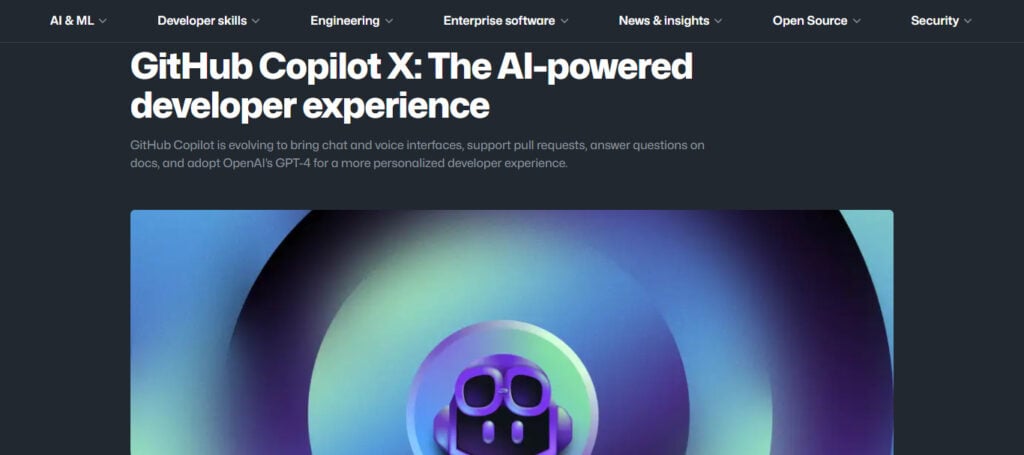
As one of the Best Generative AI Tools for Translating App Codebases, GitHub Copilot X leverages its understanding of project context and repository structure to improve the speed and accuracy of code migration. It can be used conversationally to ask coding questions and provide development suggestions to enhance productivity and reduce the time needed to develop a given project.
GitHub Copilot X – Offering
- Translation and refactoring for code in different programming languages.
- Integration with various IDEs including Visual Studio Code.
- Suggestions based on the content of the repository.
- Generation of code and documentation with automated explanation.
- A coding assistant in the form of a chat for debugging and development.
GitHub Copilot X
| Benefits | Drawbacks |
|---|---|
| Improves developer productivity | May generate inaccurate code |
| Strong IDE integration | Requires internet connectivity |
| Supports multiple programming languages | Subscription costs can be high |
| Speeds up code migration projects | Suggestions need human review |
| Generates documentation automatically | Limited understanding of niche codebases |
2. OpenAI Codex Enterprise
OpenAI Codex Enterprise is an advanced AI coding platform that supports the translation and modernization of large enterprise applications. It has the ability to understand advanced coding and business logic of legacy systems that span multiple programming languages.
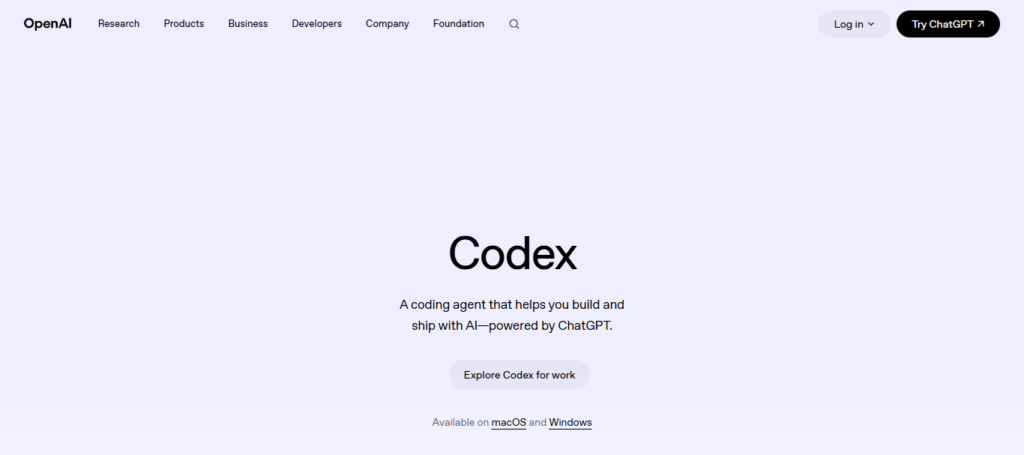
It can be used to modernize applications and frameworks while retaining business functionality. Codex Enterprise is among the Best Generative AI Tools for Translating App Codebases because of its ability to scale and contextual understanding of complex enterprise systems.
It can be used to generate and debug code, create and translate documentation, and convert code between different programming languages. Large enterprises have noticed a marked improvement in the quality of their software, an acceleration of their migration projects, and a reduction in the manual coding effort thanks to the intelligent automation and AI assistance that Codex Enterprise offers.
OpenAI Codex Enterprise – Offering
- Translation of code from and to different programming languages for large and complicated codebases.
- Comprehension of the architecture and business logic of large-scale applications.
- Automated code generation and modernization.
- Enterprise-grade support for large development teams.
- Code debugging, documentation, and optimization.
OpenAI Codex Enterprise
| Benefits | Drawbacks |
| Handles large enterprise codebases | Premium enterprise pricing |
| Excellent code translation capabilities | Requires validation of outputs |
| Supports modernization projects | Learning curve for teams |
| Automates repetitive development tasks | May struggle with highly specialized frameworks |
| Improves software delivery speed | Data governance considerations |
3. Google Gemini Code Translator
Code Translator uses Google’s advanced AI to translate application code to new programming languages or frameworks. Before translation, the platform examines code and the structures and frameworks that support it. Developers are able to update legacy systems and modernize technologies in a way that keeps system and application performance and reliability intact.
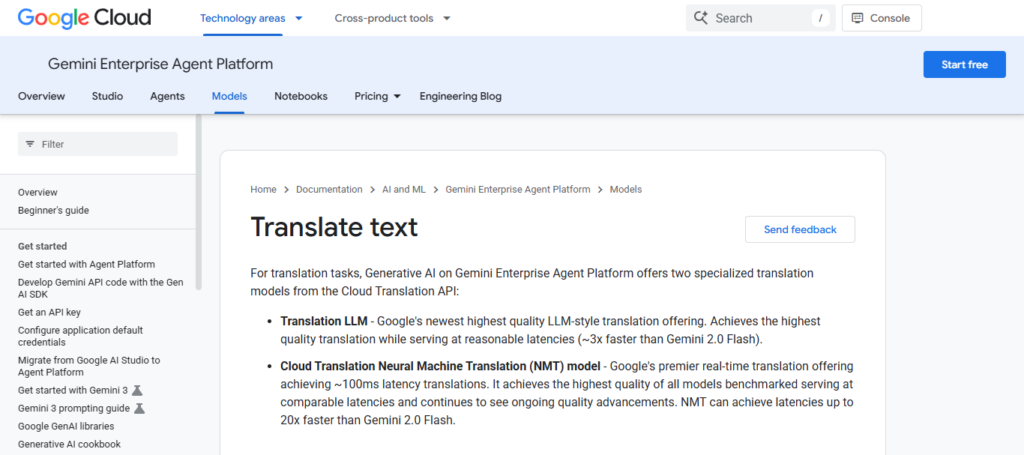
As one of the Best Generative AI Tools for Translating App Codebases, Gemini also provides support for many large scale enterprise modernization efforts. Gemini translates both code and documentation.
Its AI-enhanced features and recommendations help developers identify the areas of the code that can be simplified, optimized, or improved in terms of security. The tool significantly cuts the cost of developing and coding software and helps developers deliver the tools that are necessary to support software development.
Google Gemini Code Translator – Offering
- Migration of modern and legacy applications via AI.
- Multimodal comprehension of code, documentation, and workflows.
- Migration and optimization of code between frameworks and technology stacks.
- Context-aware code optimization.
Google Gemini Code Translator
| Benefits | Drawbacks |
| Strong contextual understanding | Accuracy varies by language pair |
| Supports legacy-to-modern migrations | Dependent on Google ecosystem |
| Multimodal code analysis | Enterprise setup may be complex |
| Generates optimization suggestions | Potential processing costs |
| Handles large repositories efficiently | Requires thorough testing after translation |
4. Amazon CodeWhisperer Pro
CodeWhisperer Pro is an AI extension that helps developers write code more efficiently and helps developers work with more than one programming language and cloud computing environments. Because the tool is an extension of the AWS platform, it is especially beneficial for organizations that are migrating applications to cloud-native architecture.
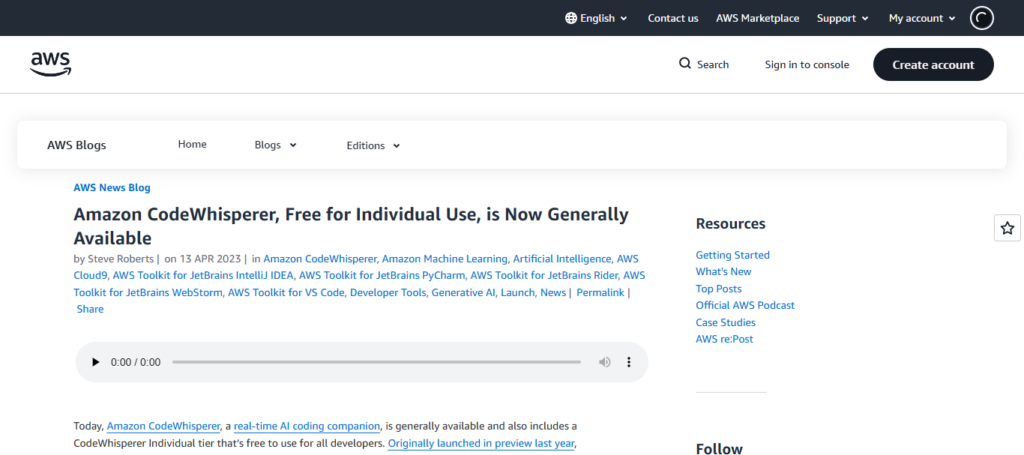
Among the Best Generative AI Tools for Translating App Codebases, CodeWhisperer Pro modernizes legacy systems faster with an easier to follow code, thereby allowing developers to work with more secure and standards compliant code. CodeWhisperer Pro also makes application transformation easier for enterprises of all sizes.
Amazon CodeWhisperer Pro – Offering
- Real-time code generation and translation.
- Native integration with AWS.
- Security scans on code translations and generations.
- Context-aware coding suggestions.
- Cloud-native application modernization support.
Amazon CodeWhisperer Pro
| Benefits | Drawbacks |
| Excellent AWS integration | Best suited for AWS users |
| Includes security scanning | Less beneficial outside AWS environments |
| Fast code generation | Generated code may require refinement |
| Supports cloud modernization | Premium features require paid plans |
| Enhances developer efficiency | Complex projects still need manual oversight |
5. DeepCode AI (Snyk)
DeepCode AI by Snyk utilizes a blend of AI and sophisticated code analysis for issues that arise during application modernizations and code language transformations. Before making suggestions, DeepCode examines a code repository for possible security issues, quality of performance, and development inefficiencies.
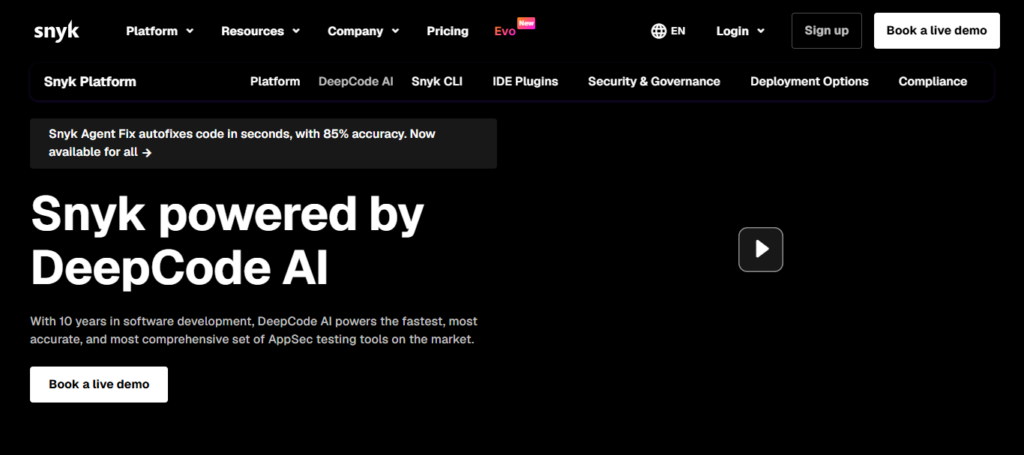
DeepCode AI is one of the Best Generative AI Tools for Translating App Codebases in that it improves code security during the code relocation process. The tool allows language and framework changes while retaining the quality of the code.
Using DeepCode AI helps eliminate the accumulation of technical debt by detecting security issues and risks during the early phases of code translation. This makes DeepCode AI especially relevant to the needs of large-scale, enterprise software development efforts.
DeepCode AI (Snyk) – Offering
- Code migration and translation with AI.
- Detection of vulnerabilities throughout the code migration process.
- Quality and security for Code as a Service.
- CI/CD and DevSecOps integration.
DeepCode AI (Snyk)
| Benefits | Drawbacks |
| Strong security-focused analysis | More focused on security than translation |
| Detects vulnerabilities automatically | Can generate false positives |
| Integrates with DevSecOps workflows | Advanced features can be expensive |
| Improves code quality | Requires configuration for best results |
| Reduces security risks during migration | May overwhelm beginners with findings |
6. IBM Watson Code Translator
IBM Watson Code Translator is an enterprise-level AI tool targeting the code migration and modernization of legacy systems. It aids code translation among multiple programming languages while encapsulating the business and operational logic and needs.
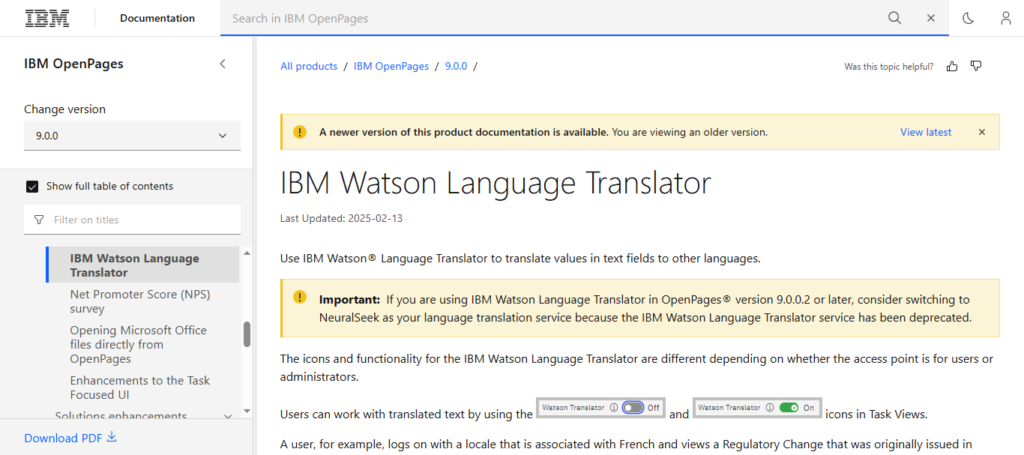
Watson is often used by large organizations to transform older applications and make them modern and available to the cloud. Leveraging NLP and ML, Watson is one of the Best Generative AI Tools for Translating App Codebases because of its precise code translations.
Additionally, the tool helps identify modernization gaps and generates documentation. The AI-integrated code transformation helps organizations reduce the time and costs associated with migration, while also enhancing maintainable software.
IBM Watson Code Translator – Offering
- Legacy modernization and code conversion.
- AI-driven understanding of complex business logic.
- Automated documentation for moved applications.
- A fully enterprise-capable migration and transformation platform.
- Offered through the IBM cloud and enterprise software ecosystems.
IBM Watson Code Translator
| Benefits | Drawbacks |
| Ideal for legacy modernization | Enterprise deployment complexity |
| Strong business logic understanding | Higher implementation costs |
| Supports large organizations | May be excessive for small teams |
| Generates migration documentation | Requires IBM ecosystem familiarity |
| Reduces manual migration effort | Longer setup times |
7. Microsoft Azure AI Code Translator
Microsoft Azure AI Code Translator offers smart code conversion solutions in Azure. It enables developers to migrate applications across languages, frameworks, and cloud platforms, maintaining both compatibility and performance. It connects to Azure DevOps and other Microsoft development applications and accelerates workflows to modernize applications.
Acknowledged by many as one of the Best Generative AI Tools for Translating App Codebases, Azure AI Code Translator examines the dependencies and the architecture of the project and offers transformed, clean code.
It has been designed and developed to handle enterprise-scale projects, and its security, compliance, and cloud features are highly appreciated. Many customers of this tool use it to help digital transformation at their organization and reduce the effort associated to perform application migrations at enterprise scale.
Microsoft Azure AI Code Translator – Offering
- Automated conversion of converted languages and frameworks.
- Comprehensive inclusion related to Azure, DevOps, and assistance related to the cloud.
- Complies with enterprise security and compliance requirements.
- AI-driven architecture and dependency assessment.
Microsoft Azure AI Code Translator
| Benefits | Drawbacks |
| Deep Azure ecosystem integration | Best value for Azure customers |
| Supports enterprise-scale migrations | Azure expertise may be required |
| Strong security and compliance features | Service costs can increase at scale |
| Streamlines cloud transformation | Limited benefits outside Microsoft stack |
| Integrates with DevOps workflows | Complex licensing structures |
8. Sourcegraph Cody
Sourcegraph Cody is an AI coding assistant with the unique capability to analyze entire repositories, rather than just files, allowing it to translate and modernize code on complex projects with high accuracy. Cody is used to migrate, modernize code, and articulate and author related documentation. Recognized as one of the Best Generative AI Tools for Translating App Codebases,

Sourcegraph Cody understands and analyzes relationships and dependencies of modern software code. The repository-wide context of Sourcegraph Cody enables faster, more intelligent, and repository-focused results. Its coding skills are especially helpful in enterprises with extensive development and migration projects.
Sourcegraph Cody – Offering
- Comprehensive understanding and intelligence of code at the repository level.
- Precise assistance with cross-language code translation.
- AI-focused code navigation and search.
- Automatic documentation and explanation generation.
- Fits into enterprise-scale development workflows.
Sourcegraph Cody
| Benefits | Drawbacks |
| Repository-wide code understanding | Requires indexing of repositories |
| Excellent for large codebases | Resource-intensive on huge projects |
| Improves developer navigation | Advanced features may cost more |
| Generates contextual suggestions | Setup can be complex |
| Supports code explanation and translation | Accuracy varies with code quality |
9. Tabnine Enterprise
Tabnine Enterprise is a privacy-centric AI coding platform for enterprise automation of code generation, code translation, and code modernization. Supporting a wide range of programming languages and adaptable to many widely used IDEs (integrated development environments),
Tabnine’s secure enterprise deployment options, coupled with strong data protection, have earned it a spot among the Best Generative AI Tools for Translating App Codebases. Tabnine Enterprise speaks to a developer’s need to transform legacy applications to modern architectures with code consistency.
Tabnine Enterprise’ AI Learning Engine analyzes and quantifies the risk of repetitive coding and translation. Tabnine aids organizations to improve developer productivity through rapid translation of innovative ideas by reducing coding drudgery and enhancing coding/translation accuracy.
Tabnine Enterprise – Offering
- AI-based code generation and translation focused on privacy.
- Secure for enterprise use.
- Enterprise-scale code generation privacy.
- Based on the team dynamics fostering personalized suggestions.
- Supports the multi-language needs of the application modernization.
- Fits into the primary IDEs and development pads.
Tabnine Enterprise
| Benefits | Drawbacks |
| Strong privacy and security controls | Enterprise plans can be costly |
| Supports on-premises deployment | Fewer advanced AI features than some rivals |
| Personalized coding suggestions | Initial training may take time |
| Broad IDE compatibility | Translation accuracy may vary |
| Suitable for regulated industries | Requires maintenance for private deployments |
10. Replit Ghostwriter Pro
Replit Ghostwriter Pro is an AI coding assistant that supports coding, bug fixing, and app modernization. Ghostwriter Pro aids translation, feature generation, and application enhancement across a multitude of programming languages.
Directly embedded into the Replit development platform, Ghostwriter Pro bolsters asynchronous coding and rapid prototyping. Recognized as one of the Best Generative AI Tools for Translating App Codebases, it helps software teams modernize app coding projects with minimal manual coding efforts.
Ghostwriter Pro’s AI suggestions improve coding efficacy, lessen bugs, and expedite the translation process. A unified coding, testing, and translation platform is a win for developers.
Replit Ghostwriter Pro – Offering
- AI-based code translation and code rewriting.
- Built-in assistance for debugging and solving errors.
- Collaborative coding support on the Replit platform.
- Prototyping and application development aids.
- Real-time productivity and coding assistance.
Replit Ghostwriter Pro
| Benefits | Drawbacks |
| Easy to use for developers | Less enterprise-focused |
| Integrated with Replit platform | Limited advanced governance features |
| Supports rapid prototyping | Not ideal for very large codebases |
| Helps with debugging and translation | Requires Replit ecosystem for best experience |
| Encourages collaborative development | Fewer enterprise integrations than competitors |
Conclusion
Generative AI tools for translating app codebases are exemplary tools that help middle organizations to move toward app modernization and migration.
Top-tier products like GitHub Copilot X, OpenAI Codex Enterprise, Google Gemini, Amazon CodeWhisperer Pro, and others allow developers to change coding languages, minimize manual work, and speed up digitization processes.
Also, these tools increase translation accuracy and code safety, quality, and maintenance. Companies are able to modernize legacy systems quicker, and charge lower costs of developing, new, modern frameworks, improved and updated cloud ecosystems, IT, and technologies.
FAQ
What are the Best Generative AI Tools for Translating App Codebases used for?
They are used to automatically convert code from one programming language or framework to another. These tools help modernize legacy apps, migrate systems, and speed up cross-platform development with minimal manual rewriting.
Which are the most popular AI tools for codebase translation?
Some widely used tools include GitHub Copilot, Amazon CodeWhisperer, OpenAI Codex-based systems, Claude AI, Cursor AI, and specialized migration tools like AWS Transform and Tabnine.
Can AI fully translate an entire app codebase accurately?
AI can handle a large portion of translation, but full accuracy is not guaranteed. Complex logic, dependencies, and architecture changes usually require human review and manual adjustments.
What types of code migrations can AI handle?
AI tools can assist with migrating between languages like Python to JavaScript, Java to Kotlin, or PHP to Node.js. They can also help convert frameworks such as Angular to React.
Are AI code translation tools safe for enterprise use?
Yes, but it depends on the tool. Enterprise-grade solutions often include security controls, data privacy features, and on-premise deployment options for sensitive codebases.