


In this article I will discuss the Best Social Media Management Tools to help businesses, marketers, and content creators to efficiently manage their social media accounts. These tools provide features such as content scheduling, post publishing, analytics, audience engagement and automation. We’ll compare their key features, prices, pros and cons, so you can pick the right platform for your marketing goals and budget.
What Are Social Media Management Tools?
Social media management tools are software platforms that allow individuals, businesses and marketing teams to manage multiple social media accounts from one place.
These include content scheduling, post publishing, audience engagement, performance analytics, social listening, and team collaboration. Some platforms also offer AI-enabled content creation, automated messaging, and campaign reporting to help simplify day-to-day marketing activities.
Sprout Social, Buffer, Hootsuite, Later and Metricool are some of the popular tools. These tools help businesses save time, maintain consistent posting, analyze audience engagement, and make data-driven decisions to improve their social media marketing strategy.
How much do social media management tools cost?
Social media management tools can range from free to several hundred dollars per month, depending on features, users, social accounts, and subscription plans. Free options like Buffer and Metricool are good for beginners with basic scheduling and analytics needs.
Entry-level paid plans typically cost around $5-$30 per month. Professional tools like Later, Hootsuite and Sprout Social can cost around $20-$200 or more a month, depending on billing and plan selection.
Enterprise platforms like Sprinklr and specialized B2B tools like Oktopost may offer custom pricing. Extra costs may be for more users, social profiles, advanced analytics, AI features and integrations. Before you sign up, make sure to compare monthly vs. annual billing, free-plan limits and total cost for your team. Prices subject to change.
Key Points
| Social Media Management Tool | Key Point |
|---|---|
| Sprout Social | Comprehensive social media management platform with publishing, analytics, social listening, collaboration, and social intelligence capabilities. |
| Buffer | Popular choice for creators and small businesses, offering scheduling, analytics, content planning, and AI-assisted publishing tools. |
| Hootsuite | Enterprise-grade platform for scheduling, social listening, engagement management, analytics, and team collaboration. |
| Later | Social media scheduling tool designed for visual content planning, especially for Instagram-focused brands. |
| Sprinklr | Enterprise social media platform with advanced social listening, analytics, and customer experience management capabilities. |
| Tailwind | Official Pinterest-focused scheduling and content marketing platform with automation tools. |
| Oktopost | B2B-focused social media management platform with campaign tracking and buyer journey analytics. |
| Metricool | Budget-friendly solution for social scheduling, analytics, reporting, and cross-platform management. |
| CoSchedule | Marketing calendar and social media platform designed for content planning and team collaboration. |
| Manychat | Social messaging automation platform for Instagram, Facebook, WhatsApp, and other channels. |
1. Sprout Social
Founded in 2010, Sprout Social offers social media publishing, engagement management, analytics, social listening and team collaboration. It works with major networks like Facebook, Instagram, LinkedIn, TikTok, Pinterest, YouTube, and X, with different capabilities per feature.

The Essentials plan starts at roughly $79 per seat per month, billed annually, and more advanced plans cost more. Performance data covers metrics like engagement, audience growth, post performance and reporting. ! Especially suitable for companies that need detailed analytics and structured communication with customers.
Aspects of Sprout Social
| Aspect | Details |
|---|---|
| Ease of Use | Offers a centralized dashboard for publishing, engagement, and reporting, although advanced workflows may require training. |
| Content Management | Supports content calendars, post queues, drafts, and collaborative publishing. |
| Customer Engagement | Smart Inbox helps teams manage conversations and respond across supported networks. |
| Analytics | Provides engagement, audience, and publishing reports to support data-driven decisions. |
| Team Collaboration | Includes shared calendars and workflow capabilities, with advanced approvals available on eligible plans. |
| Best Use Case | Businesses that prioritize customer engagement, reporting, and coordinated social media operations. |
2. Buffer
Buffer, founded in 2010, helps content creators, freelancers and small businesses plan and publish content and measure social media performance. It works with Instagram, Facebook, LinkedIn, TikTok, Pinterest, YouTube, Threads and more networks. Its free plan offers up to three channels with ten scheduled posts per channel, and its paid Essentials pricing starts at $5 per channel per month when billed annually.

Analytics include post insights and engagement information, with more advanced reporting available on paid plans. If you’re looking for simple publishing, cheap prices and simple content planning, Buffer is a great option to look at.
Aspects of Buffer
| Aspect | Details |
|---|---|
| Ease of Use | Offers a relatively simple interface for creators and small teams. |
| Content Scheduling | Helps users plan and schedule posts across supported social channels. |
| AI Assistance | Supports content ideation and caption drafting through its AI tools. |
| Analytics | Provides post-performance and engagement insights, depending on the connected network and plan. |
| Affordability | Per-channel pricing and a limited free plan can suit users managing a small number of accounts. |
| Best Use Case | Freelancers, solo creators, and small businesses that need straightforward scheduling. |
3. Hootsuite
Founded in 2008, Hootsuite provides social media scheduling, content creation, engagement monitoring, analytics and team management. It supports platforms like Instagram, Facebook, LinkedIn, TikTok, YouTube, Pinterest, and X, depending on the feature.

Its Standard plan supports up to ten social accounts and unlimited scheduled posts; see its official plans page for current pricing. Performance reporting enables users to track engagement, audience activity and content results. Hootsuite is great for businesses with multiple social profiles and a need to schedule regular publishing.
Aspects of Hootsuite
| Aspect | Details |
|---|---|
| Ease of Use | Combines many management functions in one dashboard, but its breadth can create a learning curve. |
| Publishing | Supports scheduling, content calendars, and publishing workflows across supported networks. |
| Social Listening | Helps users monitor brand mentions and online conversations through available listening features. |
| Analytics | Provides reporting and performance metrics for evaluating social campaigns. |
| Team Management | Supports collaboration and publishing coordination for marketing teams. |
| Best Use Case | Businesses managing multiple accounts that need publishing, engagement, and monitoring tools together. |
4. Later
Founded in 2014, Later is focused on visual content planning, social media scheduling, creator workflows, and analytics. It supports Instagram, Facebook, TikTok, Pinterest, LinkedIn, YouTube, Threads and Snapchat, with limitations based on account and features.

Its Starter plan is roughly $18.75 a month if paid annually, with more profiles, users and publishing capacity on higher tiers. Performance Data After Analytics and Engagement Insights Longer Reporting History Available on Advanced Plans Later is especially useful for creators, ecommerce brands and visual-first marketing teams.
Aspects of Later
| Aspect | Details |
|---|---|
| Ease of Use | Its visual interface helps users plan content without relying entirely on text-based calendars. |
| Visual Planning | Supports visual content scheduling and Instagram grid planning where available. |
| Creator Workflows | Provides tools for organizing content and managing creator-focused publishing activities. |
| Link Management | Link-in-bio features help direct social audiences to products, resources, and landing pages. |
| Analytics | Offers available post and account insights to help evaluate content performance. |
| Best Use Case | Creators, ecommerce brands, and businesses that depend on visual social content. |
5. Sprinklr
Founded in 2009, Sprinklr provides enterprise social media management, client engagement, social listening, publishing and analytics. Its platform is available on multiple social networks and digital customer channels, depending on the product and integration.

Because pricing is typically customized for enterprise needs, buyers should request a quote instead of assuming a fixed entry cost. Performance reporting can help organizations review engagement, brand conversations, campaign outcomes and customer service activity. Sprinklr is best suited for large businesses that are managing many brands, complex workflows and large volumes of customer interactions.
Aspects of Sprinklr
| Aspect | Details |
|---|---|
| Ease of Use | Designed for complex enterprise workflows, so implementation and onboarding may require significant effort. |
| Multichannel Management | Supports large-scale publishing and engagement across supported social and messaging channels. |
| Governance | Provides workflow and permission capabilities for managing approvals across teams and brands. |
| Social Listening | Helps enterprises monitor brand conversations and customer sentiment across available sources. |
| Analytics | Supports large-scale reporting and analysis of social and customer engagement data. |
| Best Use Case | Large organizations managing multiple brands, markets, and complex social media operations. |
6. Tailwind
Founded in 2012, Tailwind specializes in social media scheduling and content marketing, particularly for Pinterest, Instagram and Facebook. It has features like post scheduling, content design, Smart.bio and analytics.

The Pro plan is advertized at around $17.99 per month for annual billing deals, with free and more expensive plans having different publishing limits. Content activity performance data Review content activity and social media results. Tailwind is great for bloggers, creators, and small businesses that rely on Pinterest traffic and visual discovery.
Aspects of Tailwind
| Aspect | Details |
|---|---|
| Ease of Use | Provides a visual workflow suited to content creators and small marketing teams. |
| Pinterest Planning | Offers scheduling and content-management capabilities for Pinterest-focused marketing. |
| SmartSchedule | Recommends publishing times to help organize a consistent content calendar. |
| Content Creation | Tailwind Create helps users prepare visual content for supported workflows. |
| Content Recycling | SmartLoop can help reuse eligible evergreen content according to its settings and limits. |
| Best Use Case | Bloggers, creators, and businesses that rely heavily on Pinterest and visual discovery. |
7. Oktopost
Oktopost, launched in 2013, is a specialist in B2B social media management, employee advocacy, campaign tracking and marketing analytics. It helps businesses coordinate publishing on social profiles across the company, monitor conversations and connect social activity to broader marketing goals.

Its Professional plan begins at around $499/month with annual billing, and Advanced starts at around $799/month; final pricing depends on team requirements and add-ons. The reporting includes campaign tracking, custom dashboards and click measurement via UTMs. Oktopost is best suited for B2B marketing teams who need to track campaign performance.
Aspects of Oktopost
| Aspect | Details |
|---|---|
| Ease of Use | Focuses on B2B marketing workflows, which may require initial configuration and training. |
| B2B Publishing | Helps marketing teams schedule business-oriented content across supported profiles. |
| Employee Advocacy | Enables organizations to distribute approved content for employees to share. |
| Campaign Measurement | Supports tagged links and campaign tracking to connect social activity with marketing efforts. |
| Analytics | Helps teams review social engagement, clicks, and campaign results. |
| Best Use Case | B2B companies seeking employee advocacy and measurable social marketing campaigns. |
8. Metricool
Metricool was founded in 2015 to support creators, freelancers and businesses in scheduling content, analyzing social media performance and managing digital marketing campaigns. It supports major platforms including Instagram, Facebook, TikTok, LinkedIn, YouTube, Pinterest and other channels depending on the plan. Metricool has free and paid subscriptions with prices that depend on brand limits and features.
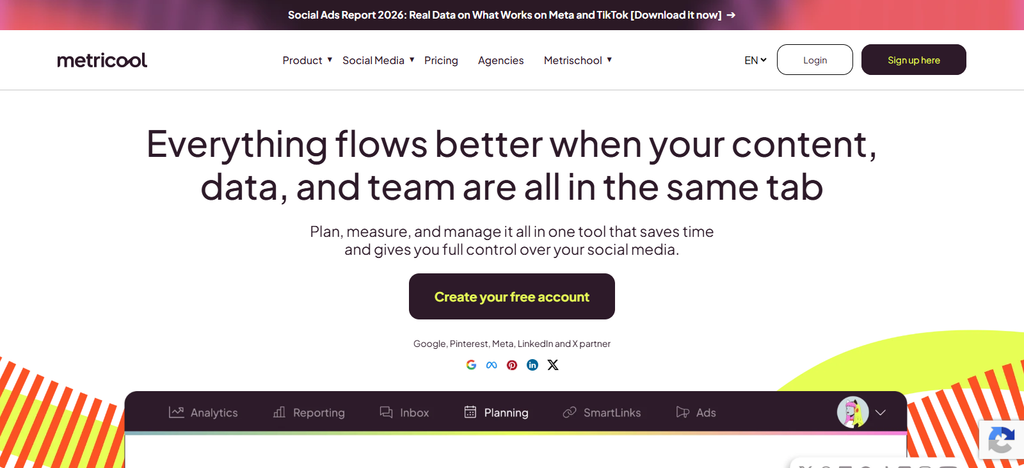
The analytics include engagement, audience growth, reach, content performance and competitor benchmarking where available. For marketers looking for a combination of scheduling and reporting without the complexity of a full enterprise-level system, the platform is valuable.
Aspects of Metricool
| Aspect | Details |
|---|---|
| Ease of Use | Combines scheduling and analytics in a dashboard designed for creators and marketing teams. |
| Content Scheduling | Helps users plan and publish content across supported social networks. |
| Performance Analytics | Reports available metrics such as reach, impressions, engagement, and audience growth. |
| Competitor Analysis | Offers comparison tools based on available public competitor data. |
| Client Reporting | Supports reporting workflows that can help agencies share campaign results. |
| Best Use Case | Freelancers, agencies, and data-focused marketers seeking scheduling and reporting in one place. |
9. CoSchedule
CoSchedule is a social media publishing tool that includes a marketing calendar to help you plan campaigns, content, and team activities. Founded in 2013. It features drag and drop scheduling, automated resharing, analytics, social inbox functionality and AI assisted campaign planning.

The Starter plan is about $29 a month if you pay annually and includes one user and three social profiles (additional profiles can be added at additional cost). Reporting enables marketers to evaluate social performance and communicate campaign outcomes. CoSchedule is perfect for content marketing teams that want to plan blogs, campaigns and social posts in a single calendar.
Aspects of CoSchedule
| Aspect | Details |
|---|---|
| Ease of Use | A marketing calendar helps users coordinate content and campaigns, though broader features may take time to learn. |
| Marketing Calendar | Organizes social posts, content projects, and campaign deadlines. |
| Social Scheduling | Supports planning and publishing content through eligible network integrations. |
| AI Content Assistance | Helps users generate social messages and content ideas. |
| Content Reuse | ReQueue can help schedule eligible evergreen messages again. |
| Best Use Case | Content marketing teams coordinating social publishing with blogs and wider marketing campaigns. |
10. Manychat
Manychat is not a traditional social media scheduling tool but it’s focused on conversational marketing and messaging automation. It was launched in 2015. It supports Instagram, Facebook Messenger, WhatsApp, TikTok, Telegram, SMS and email depending on the plan and region.

Its Pro plan is listed at around $29 a month when billed annually and comes with three channels and up to 2,500 active contacts in the advertized package. Performance can be measured by automation activity, message engagement, contact growth and campaign conversions. Manychat is ideal if you want to automate replies, qualify leads and turn social conversations into sales opportunities.
Aspects of Manychat
| Aspect | Details |
|---|---|
| Ease of Use | Visual automation workflows help users build conversational journeys, although complex flows need careful setup. |
| Messaging Automation | Automates eligible conversations on supported messaging channels. |
| Comment Triggers | Can start supported messaging flows after qualifying social media interactions. |
| Lead Generation | Helps collect prospect information and guide users through conversational funnels. |
| Performance Tracking | Provides available automation and interaction metrics to assess flow activity. |
| Best Use Case | Businesses that want to automate social messaging, qualify leads, and guide prospects toward conversions. |
Comparison Table: Best Social Media Management Tools
| Tool | Best For | Key Features | Pricing Model |
|---|---|---|---|
| Sprout Social | Businesses and marketing teams | Social listening, analytics, Smart Inbox | Paid plans |
| Buffer | Beginners and small businesses | Post scheduling, AI assistant, analytics | Free and paid plans |
| Hootsuite | Growing businesses | Publishing, monitoring, reporting | Paid plans |
| Later | Creators and visual brands | Visual calendar, scheduling, link in bio | Free and paid options vary |
| Sprinklr | Large enterprises | Social listening, AI, multichannel management | Custom pricing |
| Tailwind | Pinterest marketers and bloggers | SmartSchedule, visual content creation | Free and paid plans |
| Oktopost | B2B marketing teams | Employee advocacy, campaign tracking | Custom pricing |
| Metricool | Freelancers and agencies | Analytics, scheduling, competitor analysis | Free and paid plans |
| CoSchedule | Content marketing teams | Marketing calendar, social scheduling, ReQueue | Free and paid plans vary |
| Manychat | Messaging automation | Automated DMs, comment triggers, lead generation | Free and paid plans |
Conclusion
Selecting the top social media management tools for 2026 will depend on your budget, business objectives, team size, and marketing strategy. Sprout Social and Hootsuite are great for advanced management and analytics, while Buffer and Metricool are practical solutions for creators and small businesses.
Later and Tailwind are great for visual content planning, while Sprinklr and Oktopest are more specialized for business needs. CoSchedule is a marketing campaign management tool, and ManyChat is a messaging automation tool. Before you choose a tool, check pricing, platforms, analytics, automation, and limitations of the tool. This will help you find the best for your situation.
FAQ
What are the best social media management tools in 2026?
The best social media management tools in 2026 include Sprout Social, Buffer, Hootsuite, Later, Sprinklr, Tailwind, Oktopost, Metricool, CoSchedule, and Manychat. Each platform offers different capabilities for scheduling, analytics, content planning, team collaboration, or messaging automation.
Which social media management tool is best for beginners?
Buffer is a suitable option for beginners because it offers a straightforward interface, content scheduling, and basic analytics. Metricool is another option for users who want scheduling and performance reporting in one platform.
Are there free social media management tools?
Yes, some platforms, including Buffer and Metricool, offer free plans with limitations. These plans may restrict the number of social accounts, scheduled posts, analytics features, or users. Check current plan details before choosing one.
How much do social media management tools cost?
Pricing varies by platform, subscription plan, number of social accounts, team size, and available features. Some tools offer free plans or affordable subscriptions, while enterprise platforms such as Sprinklr and specialized B2B solutions may require customized pricing.
Which social media management tool is best for businesses?
Sprout Social and Hootsuite are worth considering for businesses that need advanced analytics, publishing, and team collaboration. Sprinklr is designed for complex enterprise requirements, while Metricool and Buffer may suit smaller businesses with simpler workflows.