



In this article I will discuss the Best RAG Platforms for Enterprise AI, including their retrieval capabilities, enterprise security, data connectors, deployment options, vector database support, LLM support, observability, agentic RAG features, scalability, pricing and use cases, to help businesses understand how these platforms can support secure, reliable and scalable AI applications.
What Is RAG Platforms for Enterprise AI?
RAG platforms for enterprise AI are software systems that link large language models with an organization’s own private and continuously updated data. Retrieval-Augmented Generation (RAG) retrieves relevant information from documents, databases, websites, knowledge bases, and business applications to provide context for an AI model.
This enables enterprise applications to generate more contextually relevant and realistic responses that go beyond the pre-trained knowledge of a model. Enterprise RAG platforms typically include data connectors, vector or hybrid search, document processing, control of access, model integrations, observability, and deployment options. They are used for internal knowledge lookup, customer support, AI assistants, research, and to automate business workflows.
Key Points
| Platform | Key Strength |
|---|---|
| Azure AI Search | Enterprise-grade hybrid, semantic, and vector search for AI applications |
| Google Vertex AI Search | RAG and enterprise search tightly integrated with Google Cloud AI |
| AWS Bedrock Knowledge Bases | Managed RAG service integrated with Amazon Bedrock |
| Vectara | Fully managed RAG-as-a-Service with built-in retrieval and generation |
| Glean | Enterprise knowledge discovery across workplace applications |
| Cohere North | Enterprise AI platform focused on grounded and secure retrieval |
| Pinecone | Production-scale vector database for custom RAG architectures |
| Weaviate | Open-source vector database with enterprise cloud deployment options |
| Elastic (Elasticsearch) | Hybrid keyword and vector search for large-scale enterprise data |
| LlamaIndex | Leading framework for building advanced enterprise RAG pipelines |
1. Azure AI Search
Azure AI Search from Microsoft is an enterprise cloud search and RAG platform. Founded: Microsoft 1975 Headquarters: Redmond, Washington Platform Type: Managed enterprise search/RAG Deployment: Azure cloud It features full-text, vector, hybrid, and multimodal search capabilities, along with connectors for Azure Blob Storage, SharePoint, Cosmos DB, and OneLake.
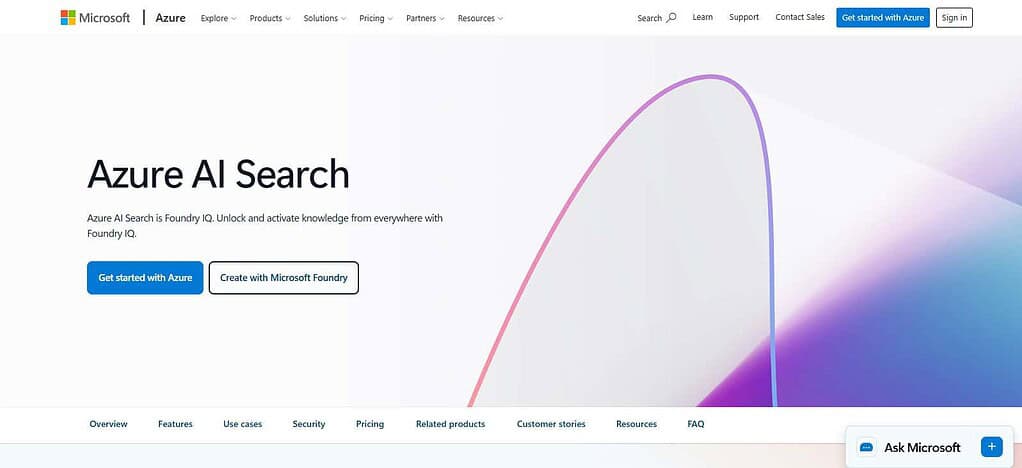
Vector Database Support: native Azure AI Search indexes Supported LLMs: Azure OpenAI and other supported Foundry models Agentic RAG: available via agentic retrieval with query planning and semantic re-ranking. Observability: Azure monitoring, logging and diagnostics. Pricing: tiered dedicated capacity + serverless preview .
Azure Search Key Strengths
- Azure Integration: Tight integration with Azure OpenAI, Azure Storage, Cosmos DB and other Azure services.
- Enterprise Search: Robust full-text, semantic, vector, and hybrid search capabilities.
- Hybrid Retrieval: A mix of keyword, semantic, vector, and ranking.
- Enterprise Security: Supports Azure identity, control of access, private networking and governance features.
Scalable Infrastructure: Built for production enterprise search and RAG workloads.
Azure AI Search — Best For
| Best For | Details |
|---|---|
| Microsoft Enterprises | Organizations already using Azure services |
| Enterprise RAG | Building secure business-data retrieval applications |
| Hybrid Search | Combining keyword, semantic, and vector search |
| Azure OpenAI Apps | Grounding AI applications with enterprise data |
| Enterprise Knowledge Search | Searching large internal document collections |
2. Google Vertex AI Search
Google Vertex AI Search is Google Cloud’s managed enterprise search and generative AI retrieval platform. Founded: 1998, Google Headquarters: Mountain View, California Platform Type: enterprise search, RAG Deployment: Google Cloud It connects enterprise content with semantic search and generative apps, and supports Google Cloud data sources and connectors.
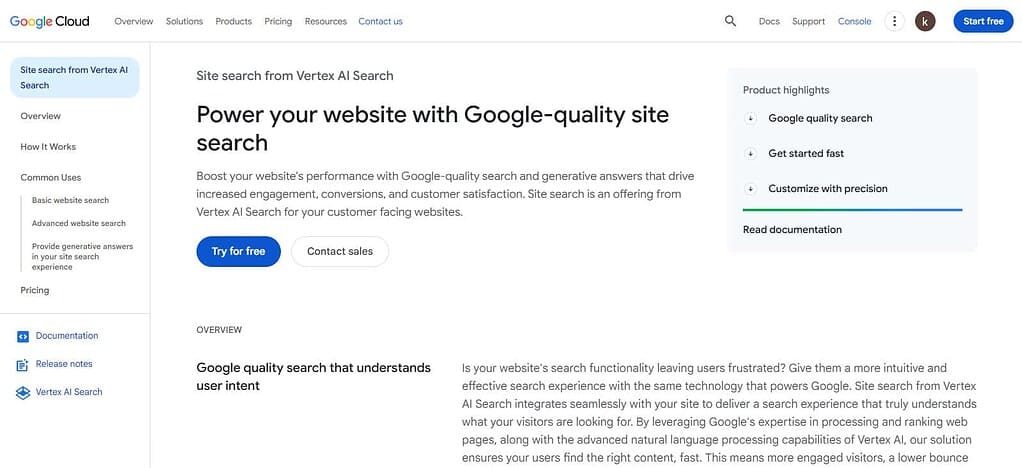
Vector Database Support: integrated Google Cloud search infrastructure and Vertex AI vector capabilities; Supported LLMs: Gemini and supported Vertex AI models. Agentic RAG: can be combined with Vertex AI Agent Builder and other agent services. Observability: Google Cloud monitoring and logging. Pricing: usage-based .
Google Vertex AI Key Strengths
- Google Ecosystem: Tight integration with Google Cloud and Vertex AI services.
- Semantic Search: Allows natural-language queries to fetch relevant enterprise information.
- Gemini Integration: Works with Google’s Gemini models and generative AI services
- Business Data: Connects knowledge sources and organizational content.
Less Operational Work: Reduces the operational work to build enterprise search & RAG systems
Google Vertex AI Search — Best For
| Best For | Details |
|---|---|
| Google Cloud Enterprises | Businesses already invested in Google Cloud |
| Gemini Applications | Building search and RAG applications with Gemini |
| Enterprise Search | Finding information across organizational content |
| Semantic Search | Natural-language and meaning-based information retrieval |
| Managed AI Search | Teams wanting Google-managed search infrastructure |
3. Amazon Bedrock Knowledge Bases
Amazon Bedrock Knowledge Bases provides managed RAG infrastructure for building applications from enterprise data. Founded: Amazon 1994 Headquarters: Seattle, Washington Platform Type: managed RAG and knowledge-base service Deployment: AWS cloud Data connectors include Amazon S3, Confluence,
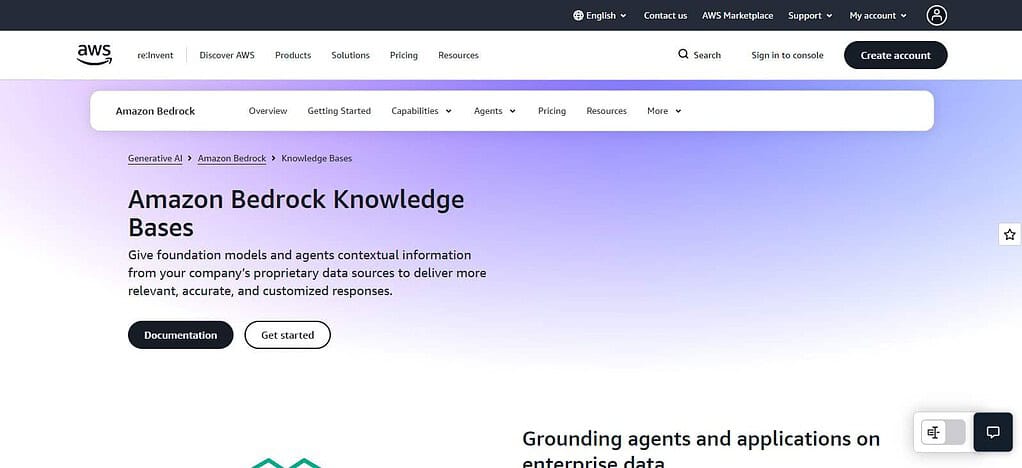
Google Drive, OneDrive, SharePoint, and web crawling with structured-data support through services like Redshift and Glue. Vector Database Support: OpenSearch Serverless, OpenSearch Service, Neptune, Aurora, Pinecone. Supported LLMs: foundation models on Amazon Bedrock. Agentic RAG: integrates with Bedrock Agents. Monitoring: CloudWatch and AWS Monitoring Pricing: Pay as you go.
Amazon Bedrock Knowledge Bases Key Strengths
- AWS Integration: Fully compatible with Amazon Bedrock and the rest of the AWS infrastructure.
Managed RAG: You don’t have to build everything from scratch. Managed RAG takes care of critical retrieval and knowledge base components. - Multiple Data Sources: Supports S3, SharePoint, Confluence, and other supported repositories.
- Vector Store Options: Can work with different supported vector database technologies.
- Agent Integration: Integrates knowledge retrieval with Amazon Bedrock Agents for more complex AI workflows.
AWS Bedrock Knowledge Bases — Best For
| Best For | Details |
|---|---|
| AWS-Native RAG | Applications built within the AWS ecosystem |
| Bedrock Applications | Grounding foundation models with private data |
| Managed RAG | Teams wanting AWS-managed retrieval infrastructure |
| Enterprise Documents | Connecting business documents to AI applications |
| AI Agents | RAG applications integrated with Bedrock Agents |
4. Vectara
Vectara is an enterprise RAG and AI-agent platform designed for grounded, trusted answers. Founded: 2022 HQ: Palo Alto, CA Platform Type: enterprise RAG and agent platform Deployment: SaaS, VPC and on-prem. It provides managed ingestion, retrieval, reranking and generation, rather than forcing enterprises to assemble each element themselves.
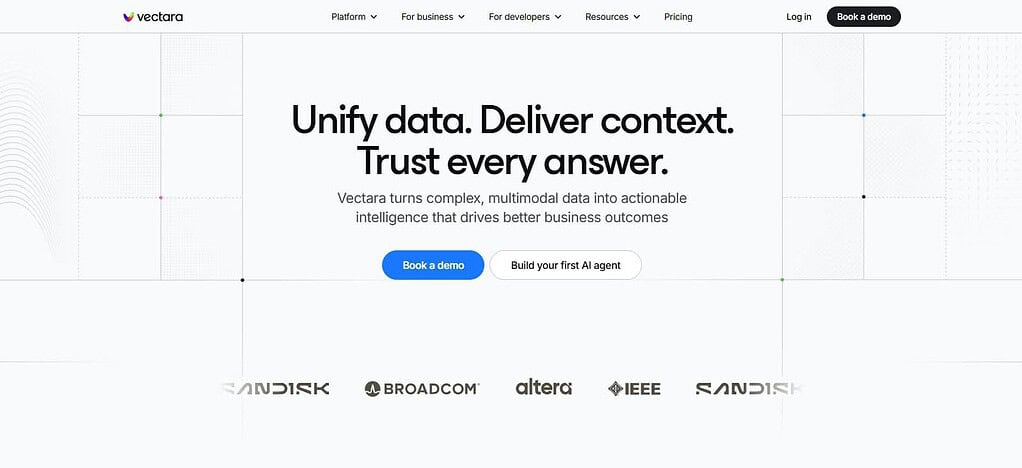
Data Connectors: supports enterprise content ingestion and integration Vector Database Support: managed internal retrieval infrastructure Supported LLMs: Vectara models and external models such as ChatGPT, Claude and Gemini. Enterprise agent platform: supported by its enterprise agent platform. Observability: grounding, citations, evaluation and auditability. Pricing: SaaS enterprise plans starting at $100,000/year .
Vectara Key Strengths
- RAG-Optimized Platform: Built around enterprise retrieval and grounded generation.
- Managed Retrieval: Integrated ingestion, retrieval, reranking and generation capabilities.
- Grounded Answers: Intended to increase answer reliability by grounding answers in retrieved information.
Enterprise Deployment: Offers deployment models for organizations with strict infrastructure requirements. - RAG Evaluation: It offers capabilities to monitor and evaluate the retrieval and generated responses.
Vectara — Best For
| Best For | Details |
|---|---|
| Enterprise RAG | Production applications requiring managed retrieval |
| Grounded Generation | Applications focused on reliable, source-grounded responses |
| Citation-Based AI | AI applications where supporting sources matter |
| Managed Retrieval | Teams wanting ingestion, retrieval, reranking, and generation together |
| Enterprise AI | Organizations requiring controlled RAG infrastructure |
5. Glean
Glean is an enterprise AI search, knowledge and workplace-agent platform that connects information across business applications. Founded: 2019; Location: Palo Alto, California; Type: enterprise search, knowledge graph and RAG; Deployment: managed enterprise cloud.
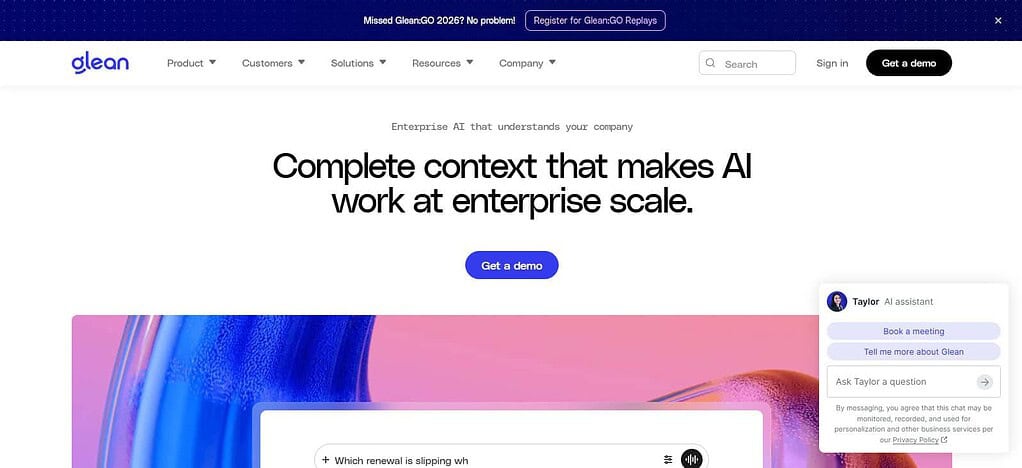
Its connectors suck up content, activity signals and permission information from business applications. Data Connectors: broad SaaS & enterprise app integrations Vector Database Support: Glean-managed search & knowledge infrastructure Supported LLMs: models within its enterprise AI stack that are supported.
Agentic RAG: enables AI agents and workflow automation. Observability: Enterprise management, search analytics, activity signals. Pricing: Custom enterprise pricing Its architecture focuses on permission-aware retrieval.
Glean Key Strengths
- Broad Connectors: Connects knowledge spread across many work applications.
- Enterprise Knowledge Search: A lot of attention to finding information across an organization’s business applications.
- Permission-aware search: Built to honor current enterprise access permissions.
Knowledge Graph: Improves information discovery with company context and relationships. - AI Agents: Brings enterprise search to AI-driven workflows and task automation.
Glean — Best For
| Best For | Details |
|---|---|
| Workplace Search | Finding information across company applications |
| Enterprise Knowledge | Centralizing access to organizational knowledge |
| Employee AI Assistants | Internal AI assistants for workplace questions |
| SaaS-Heavy Organizations | Businesses using many workplace applications |
| Enterprise Agents | AI-powered business workflows and task automation |
6. Cohere North
Cohere North is Cohere’s enterprise AI workspace and agent platform, combining intelligent search, generation, and workflow automation. Founded: Cohere 2019 Headquarters: Toronto, Canada Platform Type: enterprise AI,
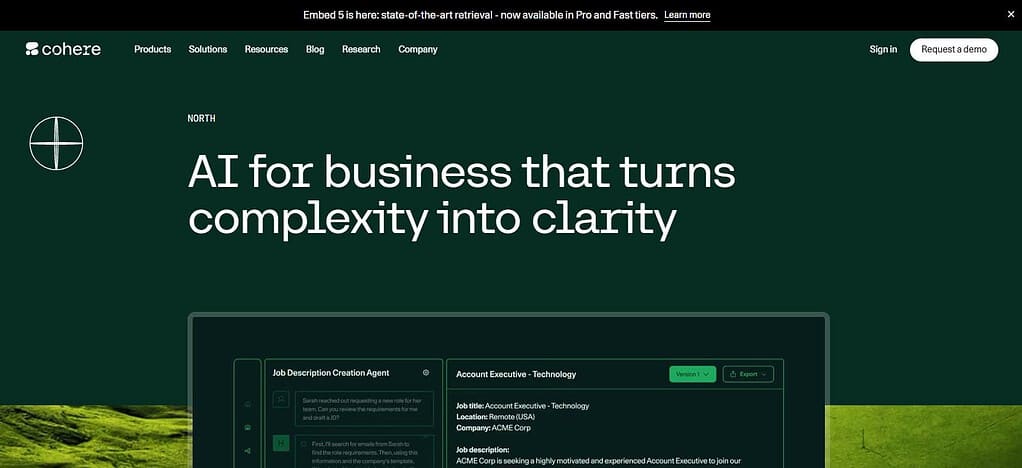
RAG and agent platform Deployment: cloud and private enterprise deployment. Data Connectors: pre-built enterprise connectors for its workplace/search products; Vector Database Support — Managed index and retrieval infrastructure. LLMs supported: Cohere’s Command family and retrieval models with enterprise model options.
Agentic RAG: is built around AI agents automating workflows and complex tasks. Observability: enterprise controls and AI-powered workflows. Pricing: Enterprise pricing, contact us North is all about putting business data into private, secure and compliant deployments.
Cohere North Key Strengths
- Cohere Models: Embeds Cohere’s language and retrieval models in enterprise AI workflows.
- Enterprise AI Workspace: Integrates organizational knowledge, generative AI, and workflow automation.
- Private Deployment: Built for companies that need more command of their sensitive enterprise data.
- AI Agents: Enables agents to accomplish multi-step business tasks.
- Enterprise Security: Controlled access, privacy, governance and enterprise deployment requirements.
Cohere North — Best For
| Best For | Details |
|---|---|
| Private Enterprise AI | Organizations requiring controlled AI environments |
| Workplace AI | Connecting enterprise knowledge with employee workflows |
| AI Agents | Automating multi-step business processes |
| Secure Deployments | Businesses prioritizing data control and governance |
| Cohere-Based AI | Organizations using Cohere’s language and retrieval models |
7. Pinecone
Pinecone is a vector database and AI infrastructure platform that is widely used as the retrieval layer in RAG systems. Founded: 2019; Location: New York, United States; Type: vector database and RAG infrastructure; Deployment: managed cloud and BYOC.
Data Connectors: object-storage and ingestion connectors Vector Database Support: native Pinecone indexes supporting dense, sparse and full-text search. Supported LLMs: Model-agnostic,
Pinecone Inference, integrations with major model providers Agentic RAG: Enables agent-driven retrieval workflows and AI apps. ** Observability: tracking with console metrics, Prometheus, and Datadog. Pricing: Free Starter, Builder $20/month, Standard minimum $50/month, Enterprise minimum $500/month.
Pinecone Key Strengths
- Fast Retrieval: Optimized for fast retrieval of relevant vectors at production scale.
Hybrid Search: Allows for the combination of dense and sparse retrieval methods. - Developer Ecosystem: Integrations with top AI frameworks, embedded models, and LLM providers.
- Managed Scaling: Takes away many of the infrastructure management pain points of running vector databases.
Pinecone — Best For
| Best For | Details |
|---|---|
| Vector Search | Applications requiring high-performance vector retrieval |
| RAG Infrastructure | Developers building production RAG applications |
| Semantic Search | Meaning-based search and recommendation systems |
| Scalable AI Apps | Applications requiring managed vector infrastructure |
| Developer Workloads | Teams wanting integrations with major AI frameworks and models |
8 Weaviate
Weaviate is an open-source vector database with a managed cloud offering for semantic search, RAG and AI applications. Founded 2019. Based in Amsterdam, Netherlands. Vector database and AI application infrastructure platform. Deployment Weaviate Cloud, self-hosted and cloud environments. Data Connectors: supports ingestion via APIs, integrations and its data-import tooling.
Vector Database Support: native Weaviate vector database with hybrid search, compression and multi-tenancy. Supported LLMs: In-built embedding services, external model integrations, model agnostic. Agentic RAG: Query Agent enables natural language database operations. Observability: Console metrics and metrics endpoints on premium plans. Pricing: Free, Flex: from $45/month, Premium: custom.
Weaviate Key Strengths
- Open Source Foundation: Offers flexibility for organizations desiring more control over their RAG infrastructure.
- Vector Search: Built-in semantic and vector based search.
- Hybrid Search: Combines keyword and vector search to improve retrieval coverage.
- Flexible Deployment: Offered as a managed cloud service or self-managed deployment.
- AI Application Features: Supports RAG, Generative Search, Multimodal Data, Agent-based Applications.
Weaviate — Best For
| Best For | Details |
|---|---|
| Custom RAG | Developers building highly customized RAG applications |
| Open-Source AI | Teams wanting an open-source vector database |
| Self-Hosted Deployments | Organizations requiring infrastructure control |
| Hybrid Search | Combining vector and keyword retrieval |
| Multimodal AI | Applications working with different data modalities |
9. Elastic Elasticsearch
Elastic Elasticsearch is a search and analytics platform that has turned into vector search, semantic retrieval and enterprise RAG.
Founded: 2012 * Headquarters: Mountain View, California * Platform Type: enterprise search, vector database and AI retrieval infrastructure * Deployment: Elastic Cloud, self-managed and hybrid Data Connectors: Integrates with a wide range of enterprise data sources via Elastic integrations and connectors.
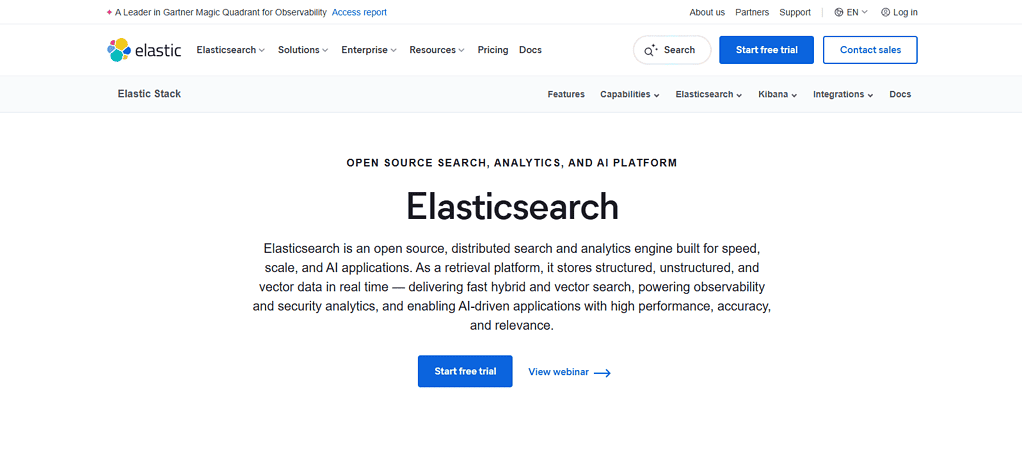
Vector database support: use elasticsearch vector capabilities natively, alongside traditional full-text search. Supported LLMs: agnostic to model, integrated with major LLM providers. Agentic RAG: supports AI-agent and retrieval processes with Elastic AI features.
Observability: a core platform capability that includes logs, metrics, traces and application monitoring. Pricing: Subscription and consumption based pricing varies by deployment and usage.
Elastic (Elasticsearch) Key Strengths
- Powerful Search Engine: Combines traditional enterprise search with modern vector and semantic retrieval.
- Hybrid Retrieval: Supports keyword, vector, semantic, and relevance-based search approaches.
- Existing Enterprise Data: Useful for organizations already using Elasticsearch for logs, documents, or application search.
- Observability: Provides extensive capabilities for monitoring applications, infrastructure, logs, metrics, and traces.
- Flexible Deployment: Available through Elastic Cloud as well as self-managed and hybrid environments.
Elastic (Elasticsearch) — Best For
| Best For | Details |
|---|---|
| Enterprise Search | Organizations modernizing existing search systems |
| Hybrid Retrieval | Combining traditional and vector search |
| Existing Elastic Users | Businesses already operating Elasticsearch |
| Search + Analytics | Applications requiring search alongside analytics |
| RAG + Observability | Teams combining AI retrieval with logs, metrics, and monitoring |
10. Llama Index
LlamaIndex is a developer-centric framework and platform for building data-connected LLM, RAG, and agent applications. Founded: 2022 Headquarters: San Francisco, CA Type: RAG framework and AI application platform Deployments: self-hosted, cloud and managed LlamaCloud services.
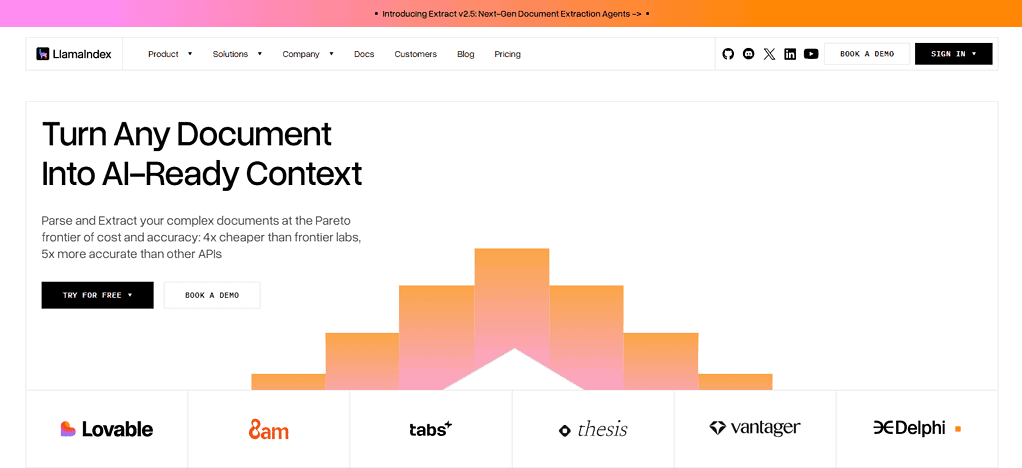
Data Connectors: many connectors for documents, databases, SaaS applications and APIs. Vector Database Support: supports multiple vector stores, no proprietary database needed. Supported LLMs: model agnostic, supports providers such as OpenAI, Anthropic and Gemini.
Agentic RAG Supports agents, tools and multi-step workflows Observability: LlamaTrace/LlamaIndex observability features make it easy to observe retrieval and agent execution. Pricing: open source framework, separate managed cloud offerings.
LlamaIndex Key Strengths
- RAG Development Framework: Provides building blocks for creating customized RAG applications.
- Extensive Data Connectors: Connects LLM applications with documents, databases, APIs, SaaS platforms, and other data sources.
- Model Flexibility: Works with multiple LLM, embedding, and vector database providers.
- Agentic Workflows: Supports agents, tools, workflows, and multi-step retrieval processes.
- Developer Control: Gives teams significant flexibility to customize ingestion, indexing, retrieval, evaluation, and application logic.
LlamaIndex — Best For
| Best For | Details |
|---|---|
| Custom RAG Development | Developers building tailored RAG pipelines |
| Data Integration | Connecting LLMs with multiple enterprise data sources |
| Agentic RAG | Building agents with tools and multi-step workflows |
| Model Flexibility | Applications using different LLM and embedding providers |
| RAG Experimentation | Teams testing custom ingestion, retrieval, and evaluation strategies |
Conclusion
Enterprise RAG platforms are emerging as a key capability for organizations seeking to connect generative AI to private, fast-moving business data. The platforms in this list vary along a number of dimensions: retrieval capabilities, data connectors, vector infrastructure, LLM support, security, deployment options, observability, and agentic RAG capabilities.
Azure AI Search, Vertex AI Search, Bedrock Knowledge Bases, Vectara, Glean, Cohere North, Pinecone, Weaviate, Elasticsearch and LlamaIndex have different enterprise architectures and workloads.
As companies move from experimentation to production, they should consider data needs, security controls, integration requirements, retrieval quality, scalability, monitoring, deployment versatility and total operating costs when choosing a platform.
FAQ
What is an enterprise RAG platform?
An enterprise RAG platform connects large language models with private business data. It retrieves relevant information from documents, databases, applications, or knowledge bases and provides that context to an AI model before generating a response.
What should enterprises look for in a RAG platform?
Enterprises should evaluate retrieval quality, security, data connectors, deployment options, LLM compatibility, vector database support, scalability, observability, agentic RAG capabilities, governance, and overall pricing.
What is the difference between RAG and fine-tuning?
RAG retrieves information from external or private data sources at query time, making it useful for frequently changing knowledge. Fine-tuning changes a model’s behavior or capabilities using training data. The two approaches can also be used together.
Which data sources can enterprise RAG platforms connect to?
Depending on the platform, RAG systems can connect to PDFs, websites, cloud storage, databases, CRM systems, collaboration tools, SaaS applications, APIs, knowledge bases, and other enterprise data repositories.
Is RAG suitable for private enterprise data?
Yes. Enterprise RAG architectures can include access controls, encryption, private deployment, permission-aware retrieval, audit logs, and other governance features. Organizations should verify the specific security and compliance capabilities of their chosen platform.