


In this article, I will talk about the Best AI-Powered Web3 Games to Play in 2026. You’ll discover games that blend artificial intelligence, blockchain technology, NFTs, digital ownership and new gameplay. From AI-driven strategy and competitive fighting, to virtual worlds and card games, this list showcases exciting titles to try out, and what makes each one special for players.
What Are AI-Powered Web3 Games?
As artificial intelligence, blockchain technology and interactive gameplay converge, AI-powered Web3 games offer the potential for more dynamic gaming experiences. Artificial intelligence can be utilized to control characters, train digital agents, create content, customize gameplay, or make choices within the game.
Web3 technology facilitates features like NFT ownership, blockchain assets, player-centric economies, and crypto rewards. Blockchain ownership of digital items and progress gives players more control than traditional games. The games are strategy and card games, simulations, sports and competitions with AI-agents.
How We Ranked the Best AI-Powered Web3 Games in 2026
| Ranking Factor | What We Looked At | Why It Matters |
|---|---|---|
| AI Integration | How deeply AI is used in gameplay, characters, agents, or game systems | Separates genuine AI-powered games from projects that only mention AI |
| Gameplay Quality | Gameplay mechanics, strategy, progression, and overall experience | AI and blockchain features should support enjoyable gameplay |
| Web3 Integration | NFTs, blockchain assets, ownership, tokens, and on-chain features | Measures how meaningfully Web3 technology is used |
| Innovation | Unique use of AI, blockchain, or player-driven mechanics | Highlights games offering something different from traditional titles |
| Accessibility | Free-to-play options, wallet requirements, and ease of getting started | Helps beginners find games with lower entry barriers |
| Game Development Status | Available features, active development, early access, or upcoming releases | Ensures the ranking reflects the game’s actual 2026 availability |
| Long-Term Potential | Community, updates, ecosystem development, and future gameplay possibilities | Identifies projects that could remain relevant beyond the initial launch |
| Overall Experience | Combination of AI, Web3, gameplay, accessibility, and innovation | Produces the final editorial ranking rather than focusing on one feature alone |
How is AI Used in AI-Powered Web3 Games to Play?
AI is used in AI-powered Web3 games to make the gameplay more dynamic, interactive and adaptive. Depending on the game, AI may control non-player characters (NPCs), train autonomous fighters, create or customize digital characters, generate game content, and help agents with making strategic choices.
Some games also use AI to have characters respond to player actions or natural-language commands. When combined with blockchain, these AI-driven characters or assets can also be associated with NFT ownership, digital economies and on-chain interactions, facilitating gaming experiences that transcend traditional scripted gameplay.
Key Points
| AI-Powered Web3 Game | Game Type | How AI Is Used | Web3 / Blockchain Element | Best For |
|---|---|---|---|---|
| Colony: Survival | Colony / Strategy Simulation | AI-powered colonists respond to player instructions; AI also supports creative crafting and problem-solving | Parallel ecosystem, digital assets and Web3 infrastructure | Players who want AI-driven gameplay |
| AI Arena | PvP Fighting | Players train AI-controlled NFT fighters using machine-learning/imitation-learning mechanics | NFT fighters, Arbitrum, NRN ecosystem | Competitive AI gaming |
| Altered State Machine (ASM) | AI Agent / Gaming Platform | Players create, train and compete with AI agents | Intelligent NFTs and ASTO token | AI-agent enthusiasts |
| AIFA Football | AI Sports Simulation | AI-controlled football teams compete against one another | ASM-based AI agents and NFT ownership | Sports and AI fans |
| Parallel TCG | Sci-Fi Trading Card Game | AI is connected to the broader Parallel/AI gaming ecosystem rather than being the core combat mechanic | Ethereum-based NFT cards and PRIME ecosystem | TCG and Web3 players |
| Holoworld AI | AI Avatar / Social Gaming | AI characters and agents interact, generate content and participate in social experiences | Blockchain-owned AI characters and agent assets | AI-avatar and social-game users |
| Blade Games | On-Chain Gaming / AI Agents | AI agents can participate in gameplay, decision-making and game economies | On-chain assets and blockchain-based game infrastructure | On-chain gaming enthusiasts |
| Diamond Dreams | Sports / Casual Game | AI-driven agents and features are being integrated through Saga’s gaming technology | Web3 gaming ecosystem and blockchain integration | Casual and sports-game players |
| Aureus Arena | Autonomous AI Competition | Autonomous AI agents compete against each other without human control | On-chain competition and token-based economic incentives | Players interested in autonomous AI |
1. Colony Survival
Colony: Survival is a colony-building and survival simulation with the AI from the Parallel universe. Gameplay: strategy, simulation and survival. Blockchain: As part of the Parallel/Echelon Web3 ecosystem, core mobile gameplay will be accessible to all, with no crypto knowledge required.

Web3 Element: AI colonists, digital devices and ecosystem-linked assets Gameplay: Build your base, recruit colonists, collect resources, fight off threats and use natural language chat to direct an AI colonist. Token: Weave is used for the Fabricator system instead of a usual investment token. Requirement: mobile access. Our Rating: 9/10.
Why It Stands Out Colony: Survival
- AI Colonists: AI characters can obey player orders, and assist in managing the colony.
Survival Strategy: A blend of resource gathering, building, exploration, and defense. - Natural Language Interaction: Players can give conversational commands to AI colonists.
- Dynamic Gameplay: AI characters can help make a colony more lively and reactive.
- Web3 Integration: Links AI gameplay with the greater Parallel digital-asset ecosystem.
| Pros | Cons |
|---|---|
| AI-driven colonists create more dynamic gameplay | AI mechanics can take time to understand |
| Combines survival, strategy, and colony management | May feel complex for casual players |
| Natural-language interaction adds a unique element | Web3 ecosystem can add onboarding complexity |
| Strong connection to the Parallel universe | Gameplay and features can evolve during development |
| Different from traditional survival games | Availability and features may change over time |
2. The AI Arena
AI Arena is a competitive AI-enabled PvP fighting game where players train digital fighters and then send them into autonomous battles. Game Type: AI battle & PvP fighting. Blockchain: the project is based on blockchain-based digital resources and its Web3 ecosystem. Web3 Element: AI Fighters as NFTs, and ownership as a competitive element.

Gameplay: Players train fighters via imitation learning, enabling the AI to learn from the player and then fight autonomously against other trained fighters. Token: NRN (Neuro) is the utility token of the ecosystem. Entry Requirement: Access to the game ecosystem and fighter/training system. Our Rating: 9/10 for those interested in competitive AI gaming.
Why It Stands Out AI Arena
- Trainable AI Fighters: Players do not directly control each action in combat, but train fighters.
- Autonomous Battles: You can fight other players’ fighters with trained AI characters.
- Machine Learning: Learns fighters using imitation-learning on player behavior.
NFT Characters: Fighters are digital resources within the game’s Web3 ecosystem.
Competitive Focus: Mixes AI training with PvP competitive play.
| Pros | Cons |
|---|---|
| Unique AI-training gameplay | Requires understanding AI training mechanics |
| Autonomous fighter battles | Competitive experience may have a learning curve |
| Combines machine learning with PvP | NFT and Web3 elements can complicate onboarding |
| Strong competitive potential | Economy and game features can change |
| Interesting use of AI-controlled characters | Not ideal for players seeking traditional fighting controls |
3. Altered State Machine (ASM)
Altered State Machine (ASM) is not a traditional standalone game but a AI-agent and Web3 gaming protocol. Game Type: AI-agent gaming, collectibles & interactive virtual experiences Blockchain: ASM uses blockchain based NFTs to represent AI related assets.

Web3 Element: Ownership, training and use of ASM Brains and other intelligent NFTs across compatible experiences. Gameplay: Users can train AI agents and deploy them in environments like AIFA Football.
Token: ASTO supports governance, AI-agent training, NFT-related functions and transactions in the ecosystem. Entry Requirement: Access is dependent on the particular ASM experience and required assets. Our Rating: 8.8/10 for AI-agent experimentation.
Why It Stands Out Altered State Machine (ASM)
- AI Agent Ownership: Users can own and develop blockchain-based AI agents.
- Trainable AI Brains: ASM’s AI Brains can be trained to different experiences.
- Cross-Experience Potential: AI agents will be able to operate across compatible gaming experiences.
NFT Integration: Smart assets combine AI capabilities and blockchain ownership. - AI Gaming Infrastructure: Technology for AI-powered experiences, not just a single game.
| Pros | Cons |
|---|---|
| Innovative AI-agent concept | More complex than a conventional game |
| Trainable AI characters | Requires understanding the ASM ecosystem |
| Combines AI with NFT ownership | Multiple ecosystem components can confuse beginners |
| Potential for AI agents across experiences | Experience depends on supported applications |
| Strong focus on AI-agent technology | Not a single straightforward gaming experience |
4. AIFA Football
AIFA Football is an independent AI football simulation based on Altered State Machine technology. Game Type: AI Football Strategy and Simulation. Blockchain: Works within the ASM Web3 ecosystem. Web3 Element: NFTs allow you to own football assets powered by AIs, represented by AIFA All-Stars and ASM Brains for players.

Gameplay: players build teams of AI-controlled football characters, train their Brains and compete against other autonomous teams in 4v4 matches. Token: ASTO is a major part of the broader ASM ecosystem and AI-agent capabilities. Admission: admission is subject to the availability of AIFA/ASM assets and access to the ecosystem. Our Rating: 8.5/10 AI sports fans.
Why It Stands Out AFA football
- AI Controlled Teams: Football matches are played by autonomous AI controlled characters.
- AI Training Players are able to create and train AI agents to compete in matches.
- Sports Meets AI: Integrates machine-learning concepts into a football simulation.
NFT Players: Blockchain-based assets can be digital football characters. - ASM Ecosystem: Connects AI soccer gameplay with the Altered State Machine technology.
| Pros | Cons |
|---|---|
| Unique combination of football and AI | Gameplay differs from conventional football games |
| AI-controlled players create autonomous matches | AI mechanics may require experimentation |
| Players can train AI-based teams | Web3 features can create additional complexity |
| Connects with the ASM ecosystem | Availability can depend on ecosystem development |
| Interesting option for AI and sports fans | Less suitable for players wanting direct player control |
5. Parallel TCG
Parallel TCG is a sci-fi digital trading card game that blends traditional competitive card gameplay with optional Web3 ownership. Game Type: Trading card & strategy game. Blockchain: Digital collectibles are built on Ethereum. Parallel also supports Base for its Web3 ecosystem.

Web3 Element: collectible cards are owned as digital resources; blockchain interaction is optional for normal game play. Gameplay: Build decks around five factions, collect cards and compete in ranked matches.
Token: PRIME is the utility token of the Echelon ecosystem. It can be earned through qualifying gameplay and used across supported experiences. Entry Requirement: free-to-play access available. Our Rating: 8.8/10.
Why It Stands Out Parallel TCG
- Strategic Card Battles: Combines competitive trading-card gameplay with a sci-fi setting.
- Five Different Factions: Build your strategies around different Parallel factions.
- Digital Card Ownership: Eligible cards are player-owned digital resources on the blockchain.
- Free to Play Mode Availability: The core game can be enjoyed by players without the need to buy NFTs.
- PRIME Ecosystem: Connects gameplay and digital collectibles to the larger Echelon/Parallel economy.
| Pros | Cons |
|---|---|
| Deep strategic card gameplay | Card-based mechanics have a learning curve |
| Strong science-fiction setting | Collecting cards can become complex |
| Free-to-play access lowers the entry barrier | Competitive players may face experienced opponents |
| Optional Web3 ownership | Blockchain features may confuse beginners |
| Digital collectibles add additional utility | Card and ecosystem values can change |
6. Holoworld AI
Holoworld AI is not merely a stand-alone game but is better defined as a AI-agent and immersive content platform. Game Type: AI agents, interactive experiences & virtual characters Blockchain: Holoworld leverages Solana for verifiable ownership of AI-agent IP and ecosystem assets.

Web3 Element: users can build, deploy and own AI agents and participate in an on-chain creator economy. Gameplay: interact with intelligent characters, create personalities, create videos and discover community-made AI experiences.
Token: HOLO is the ecosystem currency for launches, staking, governance and participation. Entry Requirement: users can play the platform without the need for traditional gaming hardware. Our Rating: 8/10.
Why It Stands Out AI in Holoworld
- Creator-Centric Ecosystem: Combines AI character creation and digital ownership.
- AI Characters: Users are able to create and interact with AI-driven virtual personas.
- Interactive Experiences: AI agents could speak and take part in a variety of digital experiences.
On-Chain Ownership: ownership of AI-related assets can be represented on the blockchain. - AI + Social Layer: Combines game-like interactions, characters and AI generated material.
| Pros | Cons |
|---|---|
| Strong focus on AI characters and agents | More platform-like than a traditional game |
| User-created AI experiences | Quality can vary between community-created experiences |
| Combines AI with digital ownership | Web3 onboarding may require additional steps |
| Encourages creator participation | Ecosystem features can evolve quickly |
| Interesting social and interactive possibilities | Not ideal for players seeking conventional gameplay loops |
7. Blade Games
Blade Games is a on-chain gaming and AI-agent ecosystem. It is more accurate to think of it as a Web3 gaming platform rather than a single game. Game Type: on-chain strategy & blockchain gaming infrastructure.
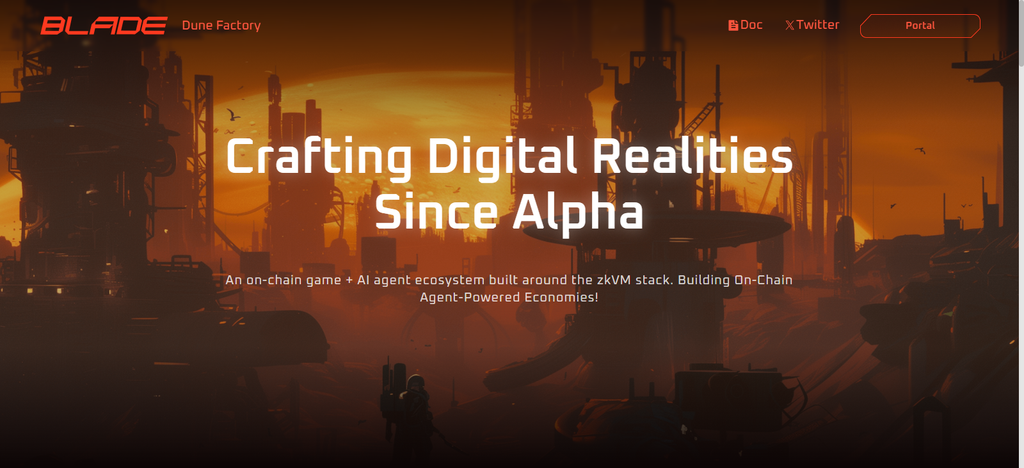
Blockchain: Its games have been powered by zero-knowledge tech and run on networks like Arbitrum and Mantle. Web3 Element: verifiable game logic, on-chain assets & AI-agent integration. Gameplay: its Dune Factory experience is about strategy, progression and play-to-mine mechanics.
Token: BLADE supports ecosystem incentives + in-game purchases including Dune Factory functions Entry Requirement: Depends on the individual Blade game and whether it is in test or live status. Our Rating: 8 out of 10.
Why It Stands Out Blade Games
- On-Chain Gameplay: Attempts to bring the game mechanics and assets closer to the blockchain infrastructure.
- AI-Agent Combinations: Explores the integration of AI agents into Web3 gaming experiences.
- Strategy-Based Experiences: Games that are based around resource management, progression and strategy choices.
- Blockchain Innovation: Creates verifiable game systems with blockchain and related technologies.
- Web3 Gaming Infrastructure: It focuses on the infrastructure that powers on-chain games, rather than on a game.
| Pros | Cons |
|---|---|
| Focuses heavily on on-chain gaming | Blockchain concepts may be difficult for beginners |
| Explores AI-agent integration | Individual games can vary considerably |
| Uses blockchain-focused game mechanics | Ecosystem is less familiar than mainstream gaming platforms |
| Strong experimentation with Web3 infrastructure | Game availability and features may change |
| Offers strategy-oriented experiences | May appeal more to Web3 users than traditional gamers |
8. Diamond Dreams
Diamond Dreams is a casual 3D match-3 puzzle game featuring AI assisted customization and optional blockchain ownership. Game type: casual puzzle, match-3. Blockchain: blockchain features are optional, not core to the game experience.

Web3 Element: players can turn the crafted jewelry into digital collectibles, and can potentially trade or display those assets. Gameplay: Swap gems, progress through levels, collect materials and use them to create custom luxury jewelry for your digital collection.
Token: The game does not have a gameplay token that is mandatory (unlike Web3 games that are token-centric). **Entry Requirement: mobile access; blockchain features optional. Our Rating: 7.8/10.
Why It Stands Out Diamond Dreams
- Casual Gameplay: Provides an easy-to-play match-3 style, instead of forcing players to learn complex Web3 mechanics.
- Jewelry Making: Players can craft unique digital jewelry from collected materials.
- AI-Enabled Capabilities: AI is built into customization and creativity.
- Optional Web3 Layer: Blockchain elements may enhance the gameplay, but should not be the centerpiece of the experience.
Mobile-Friendly Idea: Its casual style makes it more accessible for players new to Web3 gaming.
| Pros | Cons |
|---|---|
| Simple match-3 gameplay | Less complex than hardcore strategy games |
| Easy-to-understand core mechanics | Casual gameplay may not satisfy competitive players |
| AI and creative customization add variety | Web3 features may not be essential for everyone |
| Digital jewelry adds a unique collectible element | Long-term replay value depends on content updates |
| More approachable for casual players | Not primarily focused on competitive AI gameplay |
9. Aureus Arena
Aureus Arena is a on-chain AI-agent competition platform, where bots compete without the traditional human-controlled gameplay. Type of Game: AI strategy and simulation of adversarial agents. Blockchain: Solana.

Web3 Element: The matches, rewards and competition rules are executed and recorded on the chain. Gameplay: AI agents play the Colonel Blotto game, in which they distribute resources over multiple battlefields and try to outwit their opponents.
Token: AUR is the native token, and SOL is for the match entry and prizes. Entry Requirement: The AI agent must be registered and funded for the relevant competition tier. It is not a normal mobile game. Our Rating: 8.7/10.
Why It Stands Out Aureus Arena
- AI Agents Playing Themselves: AI agents are playing, not as traditional player-controlled characters.
Chain-Based Competition: Competition and game results are determined by blockchain technologies. - Strategic AI: Agents need to distribute resources to be able to compete successfully.
- AI vs AI Gameplay: Provides a unique experience, unlike traditional multiplayer games where characters are played by humans.
- Competitive Experimentation: Merges autonomous AI, strategy, blockchain and competitive gaming into a single environment.
| Pros | Cons |
|---|---|
| Autonomous AI-vs-AI competition | Not a conventional player-controlled game |
| Strong focus on AI agents | Concept can be difficult for newcomers to understand |
| Uses on-chain competition | Blockchain participation adds technical complexity |
| Strategic resource allocation creates depth | Appeal may be limited for casual gamers |
| Distinctive AI experimentation | Ecosystem and competitive mechanics can evolve rapidly |
Conclusion
AI-powered Web3 gaming is advancing beyond basic NFT ownership by integrating artificial intelligence, player-driven economies, digital resources, and more engaging gameplay. The games and ecosystems featured on this list illustrate varying methods, ranging from AI-controlled fighters to autonomous agents, colony simulations, football strategy, card battles, and AI-generated characters.
Each project has different blockchain, token, and entry requirements, but the best choice ultimately depends on your preferred genre and how much Web3 involvement you want. Be sure to check the current game status, wallet requirements, token utility and available features before playing. These may change over time.
FAQ
What are AI-powered Web3 games?
AI-powered Web3 games combine artificial intelligence with blockchain technology. AI can control characters, create dynamic gameplay, train virtual agents, or adapt game experiences, while Web3 can provide digital ownership through NFTs, tokens, and blockchain-based assets.
Are AI-powered Web3 games free to play?
Some AI-powered Web3 games offer free access, while others may require NFTs, a wallet, or specific digital assets. Entry requirements vary by game, so players should check the current requirements before starting.
Do I need cryptocurrency to play Web3 games?
Not always. Some games allow players to begin without purchasing cryptocurrency, while blockchain transactions, NFTs, or marketplace features may require a compatible wallet and crypto.
Which AI Web3 games are best for beginners?
Games with simple onboarding and optional Web3 features are generally easier for beginners. Parallel TCG and accessible AI-driven gaming experiences can be good starting points for players who want to explore Web3 gradually.
How is AI used in Web3 games?
AI can be used for autonomous characters, AI opponents, intelligent agents, character training, adaptive gameplay, virtual personalities, and content generation. The role of AI differs significantly between individual games.