




I will examine the integration of AI into Web3 for growth focusing on the symbiosis of AI and decentralized systems. AI builds more scalability into a system, automates smart contract execution, and evolves DeFi. AI amplifies the effectiveness of compliance and user engagement on a system.
Web3 projects can more quickly innovate, build user trust, and gain institutional support by incorporating AI agents, predictive analytics, and decentralized compute. These systems help users more confidently evolve toward a more adaptable and secure digital ecosystem.
What Is AI-Powered Web3 Growth?
AI-powered Web3 growth is the application of AI in Web3 technologies to increase the speed and scope of advancements. Web3 creators will be able to analyze data and predict market shifts using AI. AI can also automate smart contract execution. AI improves the overall user experience within Web3 by providing targeted suggestions, diminishing losses from fraudulent activity, and optimizing governance.

AI will also augment DeFi by improving trading strategies and managing the risks within trading. AI can analyze NFT and gaming ecosystems and adapt issuance and in-game asset valuations.
AI can develop Web3 applications with automated programming and smart contract code audits. Overall, the melding of creativity and productivity with technology drives a more secure and user-centric, scalable Web3.
How to Use AI for Web3 Growth
Step 1: Web3 Growth Goal
What does AI need to improve for your specific growth goal? Do you want to increase activations, gain users, make a community, build retention, process more transactions, or earn more?
Step 2: Collect Relevant Web3 Data
Relevant first-party and on-chain data include wallet activity, transactions, token interactions, website behavior, engagement data, conversion data, community participation, and more. Arrange the data in an orderly manner, and ensure the data is clean.
Step 3: Segment Your Users with AI
AI can segment your users based on different engagement data, behavioral data, activity data, interest data, and more. From this data, you can create groups of new users, active users, inactive wallets, valuable users, and other defined groups of your community.
Step 4: AI Insights on User Intent and Behavior
Using AI can help analyze user behavior to understand why users do what they do, and help identify behavioral patterns that help predict whether or not a user will churn. AI can also address high-value user analysis, and help determine which product features are the most used.
Step 5: Personalized Experience
AI insights on user engagement can help provide a personalized experience for different user segments from product offerings and content to community notifications, rewards, and more. AI insights can help personalize the user onboarding process as well.
Step 6: AI for Content and SEO
AI Content tech can help support Web3 content creation, topic models for keyword research, and content optimization, as well as content’s reusability in new formats.
Step 7: Automate Community Engagement
Use AI assistants for tasks in community management like answering FAQs, or guiding or onboarding new users, explaining a product, or routing support tickets. Keep human moderators on for responses to sensitive, financial, or complex issues.
Step 8: Automate Marketing Campaigns
Integrate AI with your marketing automation. This can automate tasks like audience segmentation, personalization, follow-ups, and performance reporting. AI can determine the audiences and messages that perform optimally.
Step 9: Use AI Agents for Repetitive Growth Tasks
AI agents can execute various tasks like monitoring engagement, analyzing campaign performance and user engagement, reporting, and user automation. Set clear boundaries and approvals for important decisions.
Step 10: Track Web3 Growth KPIs
Track if, and to what extent, AI is positively affecting Web3 growth. This includes metrics related to user acquisition cost, wallet activation rate, conversion rate, retention, churn, community engagement, transaction activity, and revenue per user.
Step 11: Test and Optimize Continuously
Use A/B testing for Web3 onboarding flows, content, landing pages, and campaigns. Compare the performance of campaigns assisted by AI to unassisted campaigns. This will help you fine-tune the workflows that create meaningful performance shifts.
Step 12: Protect Users and Review AI Decisions
Prior to deployment of AI at scale, create safeguards for the responsibility of automated recommendations in the context of privacy, finance, and security. Maintain oversight for important Web3 growth decisions.
Why Web3 Companies Are Using AI for Growth in 2026
Decentralized AI Networks: Model training and validation are done on decentralized compute networks (e.g. Bittensor). This avoids dependency on centralized cloud providers. This provides scalability and verifiability.
DePIN AI Compute: Web3 firms leverage decentralized GPU networks to perform AI training and inference at much lower costs compared to AWS/GCP, thereby reducing the barrier to entry for compute.
AI Agents in DeFi: Autonomous agents enable continuous optimization of trading, yield re-balancing, and liquidity management.
Agentic Payments Infrastructure: AI agents are used to facilitate self directed on-chain settlement for payments, improving efficiency and ease in decentralized commerce.
Tokenized RWAs: Tokenized real world assets (RWAs) hit $30.2B in April 2026. This was a 420% increase from the previous year. Growth is largely attributed to increased automation of compliance and valuation coupled with lower settlement costs. Some of the big institutional firms operating in this space are BlackRock and JPMorgan.
Infrastructure Consolidation: Most of the growth in Web3 is consolidated into three layers: settlement (Ethereum, Solana), application (Uniswap, Aave), and integration tools (Alchemy, QuickNode). AI improves each layer across scalability and efficiency of risk managing services.
Using AI Agents for Web3 Growth

Implementing AI Agents for Web3 Growth consists of introducing self-operating intelligent software that operates on decentralized networks to improve performance and scalability. These software agents analyze blockchain data in real time, execute smart contracts, and manage liquidity pools without human interaction.
In the context of DeFi, AI agents perform yield rebalancing, detect fraud attempts, and generate trading strategies, all of which lessen the burden of executing complex trading strategies. AI agents further facilitate the pricing of assets and adaptation of game environments in relation to NFTs and gaming.
For tokenized real-world assets (RWAs), the smart contract automation provided by AI agents creates a streamlined process for compliance, valuation, settlement, and trader onboarding, thus facilitating institutional investment.
Combining the speed and innovation brought on by machine intelligence and the transparency of a blockchain creates a user-friendly Web3 environment at a lower cost.
AI + Web3 SEO in 2026
| SEO Focus | AI Integration Impact | Web3 Application | Example Tools/Trends |
|---|---|---|---|
| Keyword Intelligence | AI agents analyze blockchain search data to identify high‑value keywords | Optimized dApp discoverability | AI‑driven keyword clustering |
| Content Automation | AI generates SEO‑ready blogs, FAQs, and whitepapers | Educating users on DeFi, NFTs, RWAs | Jasper AI, Copy.ai |
| Semantic Search | AI improves contextual relevance for decentralized queries | Better indexing of smart contracts & DAOs | Generative search optimization |
| Predictive Analytics | AI forecasts traffic trends from blockchain adoption | Anticipating spikes in DeFi/NFT activity | Google AI SEO dashboards |
| Voice & Agent SEO | AI agents optimize for conversational queries | Web3 wallets & AI assistants | Agentic search optimization |
| Compliance SEO | AI ensures content aligns with MiCA, DORA, VARA regulations | Institutional Web3 adoption | Automated compliance tagging |
AI for Web3 Social Media Growth
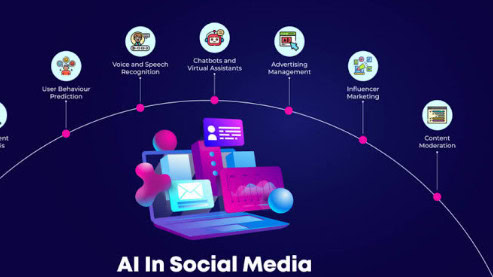
AI for Web 3.0 Social Media Growth enables community marketing on Web 3.0. Based on blockchain and social media data, artificial intelligence identifies priority audience segments. After audience segmentation, AI develops personalized strategies at the channel, audience, and message levels.
With the help of AI, users no longer have to post content. Posts get automatically scheduled, optimized, and published. Artificial intelligence provides real-time updates on post sentiments.
Beyond that, AI has enabled smart tools to manage, moderate, and onboard community members. AI combined with Web 3.0 has helped create a transparent and scalable community marketing program. Companies have also built genuine trust and an engaged community.
AI for Token & Ecosystem Growth
| Growth Area | AI Contribution | Web3 Impact | Example Use Cases |
|---|---|---|---|
| Token Valuation | AI models analyze market sentiment, liquidity, and on-chain data | More accurate pricing & reduced volatility | Dynamic token pricing engines |
| Ecosystem Incentives | AI optimizes reward distribution for staking & governance | Higher user retention & fairer rewards | Adaptive staking pools |
| Compliance Automation | AI ensures tokens meet MiCA, DORA, and VARA standards | Easier institutional adoption | Automated KYC/AML checks |
| Community Growth | AI agents manage social media, Discord, and Telegram engagement | Stronger decentralized communities | Sentiment analysis bots |
| DeFi Optimization | AI rebalances liquidity pools & automates yield farming | Higher efficiency & reduced risk | Autonomous trading agents |
| RWA Integration | AI streamlines valuation & settlement of tokenized assets | Expands institutional participation | BlackRock BUIDL, JPMorgan rails |
AI for Web3 Growth: Key Metrics to Track
| Metric | What It Measures | Why It Matters for AI-Driven Growth |
|---|---|---|
| User Acquisition Cost (CAC) | Cost of acquiring each new user | Shows whether AI is making acquisition more efficient |
| Wallet Activation Rate | Percentage of users who connect and actively use a wallet | Measures the effectiveness of onboarding and activation |
| Conversion Rate | Percentage of visitors who become users or customers | Helps evaluate AI-powered landing pages, personalization, and campaigns |
| Community Growth Rate | Growth in relevant and active community members | Shows whether AI-assisted community and social strategies are attracting users |
| Engagement Rate | User interactions with content, products, or communities | Measures the quality of AI-driven engagement |
| Retention Rate | Percentage of users who remain active over time | Shows whether personalization and AI engagement improve long-term usage |
| Churn Rate | Percentage of users who stop using the platform | Helps AI identify users at risk of becoming inactive |
| On-Chain Active Users | Number of users performing meaningful blockchain activity | Provides a stronger growth signal than registrations alone |
| Transaction Volume | Value or number of transactions generated by users | Indicates actual ecosystem activity and product usage |
| Revenue per User | Revenue generated from each active user | Measures whether AI growth strategies are contributing to monetization |
| AI Automation Rate | Share of growth tasks handled or assisted by AI | Shows how much manual work AI has replaced or accelerated |
| AI-Driven Conversion Rate | Conversions attributed to AI-powered campaigns or experiences | Helps determine the direct business impact of AI |
| Customer Support Resolution Rate | Issues resolved through AI-assisted support | Measures the effectiveness of AI agents and support automation |
| Campaign ROI | Return generated from AI-supported marketing campaigns | Determines whether AI investment is producing measurable returns |
Risks of Using AI for Web3 Growth
Smart Contract Vulnerabilities
Generating AI code poses issues with hidden bugs and hacks, especially if an audit is not done.
Regulatory Compliance Pressure
Automation with AI may not meet MiCA, DORA, or VARA standards, leading to a lack of interest from institutions.
Data Privacy Concerns
AI agents leading analysis on wallet activities may be showing sensitive information of users undermining the principle of decentralization.
Over‑Automation Risks
DeFi trading and governance are more likely to have errors if there is a lack of control due to a high dependence on agents.
Capital Consolidation
Using AI in Web3 in advance of your competition gives you more profit while your competition is likely to have a greater cost and smaller margins.
Hype Cycle Corrections
Many AI launchpads that focus on customers fail after the hype. This puts projects vulnerable to high price volatility.
Compute Dependency
Using decentralized GPU networks may create performance bottlenecks and unpredictable service.
These risks focus on how AI can grow Web3 at a faster rate, but if there is unchecked growth, there will be vulnerabilities.
Best AI Tools for Web3 Growth
| Category | Leading Tools | AI Contribution | Web3 Impact |
|---|---|---|---|
| Smart Contract Security | Cursor AI, ChainGPT Auditor | Automated code reviews & audits | Safer deployments, fewer exploits |
| Simulation & Debugging | Tenderly Virtual TestNet | Transaction simulations across chains | Faster dApp testing & launch cycles |
| On‑Chain AI Inference | Giza LuminAIR | Verifiable ML execution with STARK proofs | Trustless AI agents on-chain |
| Decentralized ML Networks | Bittensor | Incentivized AI model sharing | Scalable decentralized intelligence |
| On‑Chain Analytics | Dune Analytics, Arkham, Nansen | Wallet tracking & sentiment analysis | Better community & investor insights |
| GPU Compute | Render Network | Decentralized GPU power for ML | Lower costs vs AWS/GCP |
| AI Data Infrastructure | Lambda Finance MCP | Structured crypto data for agents | Automated workflows & compliance |
AI Web3 Growth vs Traditional Web3 Growth
| Aspect | AI Web3 Growth | Traditional Web3 Growth |
|---|---|---|
| Scalability | AI agents automate smart contracts, liquidity, and compliance, enabling faster scaling | Manual developer effort and community coordination slow scalability |
| Data Analysis | AI predicts trends using blockchain + social data | Relies on human analysts and slower reporting |
| User Engagement | Personalized recommendations, adaptive gameplay, and AI chatbots | Generic campaigns, manual moderation, limited personalization |
| Compliance | AI automates KYC/AML checks and aligns with MiCA/DORA | Manual audits and legal reviews delay institutional adoption |
| Cost Efficiency | DePIN GPU networks lower compute costs vs AWS/GCP | High reliance on centralized cloud providers increases expenses |
| Innovation Speed | AI accelerates dApp creation with automated coding & audits | Traditional coding cycles are slower and prone to errors |
| Risk Management | AI detects fraud, exploits, and market anomalies in real time | Reactive approach—issues often discovered post‑incident |
Future of AI and Web3 Growth

Combining autonomous intelligence and decentralized infrastructure will lead to significant growth in the areas of scalability, security and user-centric design within the digital economy. By 2027, the management of liquidity, compliance and governance in decentralized finance (DeFi) will be dominated by autonomous agents. This will lead to a dramatic increase in institutional adoption and a decrease in human error.
AI will automate the evaluation and settlement of tokenized real-world assets, and will serve as the bridge between traditional finance and blockchain. Predictive AI will drive social media and community growth by ensuring engagement and winning the trust of users, and By 2027, decentralized GPU networks will begin to dominate the market by democratizing compute and lowering costs compared to centralized systems. The Web3 and AI will combine to create a digital growth ecosystem that will be more transparent, flexible and resilient.
Conclusion
The combination of Web3 and AI technologies will reshape the development of digital ecosystems through the intelligent use of decentralization and automation. AI intelligently integrates itself in the ecosystems with various use cases that benefit DeFi, institutional adoption as well as compliance. These use cases extend to community engagement and provide personalized experiences.
However, potential risks such as the faster pace and a high volume of developments, regulatory challenges, and hype‐cycle changes will remain. Integrating AI technologies in Web3 creates an authentic, flexible, and user‐centered digital ecosystem suitable to the needs of the communities and businesses who will be using it.
FAQ
What is AI‑Powered Web3 Growth?
It’s the use of artificial intelligence to scale decentralized ecosystems by automating smart contracts, optimizing DeFi, and enhancing user engagement.
Why are Web3 companies adopting AI in 2026?
AI reduces costs, improves compliance, and accelerates innovation—especially in tokenized real‑world assets (RWAs) and decentralized finance.
How do AI agents support Web3?
They autonomously manage liquidity pools, execute trades, and streamline governance, minimizing human error.
What risks come with AI in Web3?
Over‑automation, regulatory compliance gaps, and hype‑cycle volatility are major challenges.