



In this article, I will discuss the Best AI + Blockchain Gaming Projects to Invest in, and how these projects are combining artificial intelligence, blockchain technology, digital ownership, and gaming economies. You will learn about their main features, AI uses, blockchain networks, tokens, funding, NFT utilities, development status, and possible risks to consider when considering these new gaming projects.
What Are AI + Blockchain Gaming Projects?
Blockchain Gaming + AI Projects: Combining AI and blockchain gaming to create more interactive gameplay, digital ownership, and player-driven economies. You can use AI to create intelligent characters, adaptive challenges, automated game systems, personalized experiences, and dynamic virtual environments.
Blockchain enables verifiable ownership, allowing players to own, trade, or use digital resources such as NFTs, characters, weapons, land and collectibles. Also, many projects introduce tokens for transactions, rewards, governance or participation in the ecosystem.
These platforms can give players greater control over digital resources than traditional games and can enable open economies. AI and blockchain together will make gaming smarter, more interactive, transparent and player-centric.
Key Points
| Project | Key Point |
|---|---|
| Forgotten Runiverse | Fantasy MMORPG focused on player-owned land, crafting, exploration, combat, NFTs, and a community-driven gaming ecosystem. |
| EVE Frontier | Persistent space-survival MMO emphasizing programmable blockchain infrastructure, player-created systems, digital ownership, and an open player-driven economy. |
| Pixels | Social farming and adventure game combining pixel-art gameplay with Ronin-based digital assets, quests, land ownership, and the PIXEL token. |
| Decentraland | Blockchain-based virtual world where users can own LAND, create experiences, trade digital assets, and participate in community-driven governance. |
| Heroes Chained | Fantasy action RPG combining hero progression, guild gameplay, combat, NFT-based assets, and a blockchain-powered player economy. |
| Aurory | Solana-based gaming ecosystem featuring fantasy adventures, collectible characters, NFTs, the AURY token, and interconnected Web3 gaming experiences. |
| Guild of Guardians | Mobile squad-based RPG centered on collectible heroes, strategic combat, digital ownership, and an ecosystem powered by Immutable infrastructure. |
| Ember Sword | Ambitious MMORPG built around exploration, combat, crafting, virtual land, player-owned assets, and a Web3 economic model. |
| Star Atlas | Sci-fi space gaming ecosystem using Solana for player-owned ships, land, equipment, transactions, and its ATLAS and POLIS token structure. |
| Big Time | Multiplayer action RPG combining traditional combat and progression with blockchain collectibles, crafting, player ownership, and the BIGTIME token. |
1. Forgotten Runiverse
Forgotten Runiverse is a fantasy MMORPG from the Forgotten Runes ecosystem. Development dates back to 2021 with an original 2022 debut. It uses Ronin for game-specific assets, but Forgotten Runes character NFTs still reside on Ethereum.
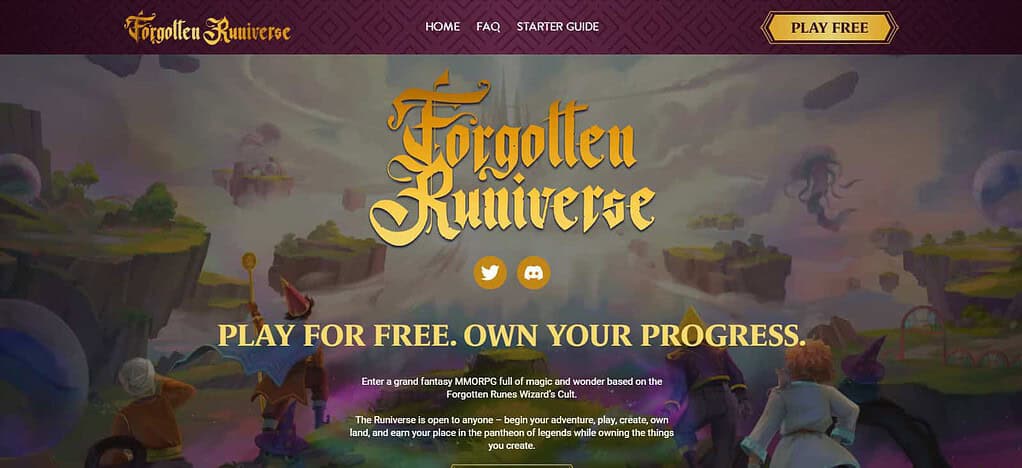
The core technology is blockchain ownership not AI . There is no major standalone AI gameplay system that is publicly documented . The ecosystem will use NFTs for lands, items and crafted assets, and players will be able to trade these assets via on-chain transactions. The project secured a private round of investment led by Dialectic and 776. The current development is aimed at the expansion of the Ronin-based game ecosystem.
Forgotten Runiverse Features, Pros & Cons
| Features | Details |
|---|---|
| Open-World MMORPG | Fantasy-focused multiplayer world with exploration, combat, gathering, crafting, and social activities. |
| Player-Owned Land | The Runiverse includes 70,000 land plots that can be developed, used for resources, crafting, and trading. |
| NFT Creation | Players can mint certain creations and potentially trade them on secondary markets. |
| PvE & PvP | Players can participate in cooperative and competitive experiences with other players. |
| Community Lore | Players can contribute to the evolving world and its collaborative storytelling. |
| Pros | Cons |
|---|---|
| Strong fantasy MMORPG concept | Adoption still needs to expand |
| Large player-owned land system | Web3 mechanics can increase complexity |
| Crafting and asset ownership create utility | NFT demand can fluctuate |
| Community-driven world development | Long-term success depends on active players |
| Multiple gameplay systems | Competition from established MMORPGs |
2. EVE Frontier
EVE Frontier, formerly known as Project Awakening (2014-2022), is a persistent space-survival MMO. Its blockchain direction has shifted to Sui with player-owned objects, programmable infrastructure and an open economy. The game features rogue AI as part of its fictional environment, but the project’s main differentiator is the programmable systems created by players, not the gameplay generated by AI.
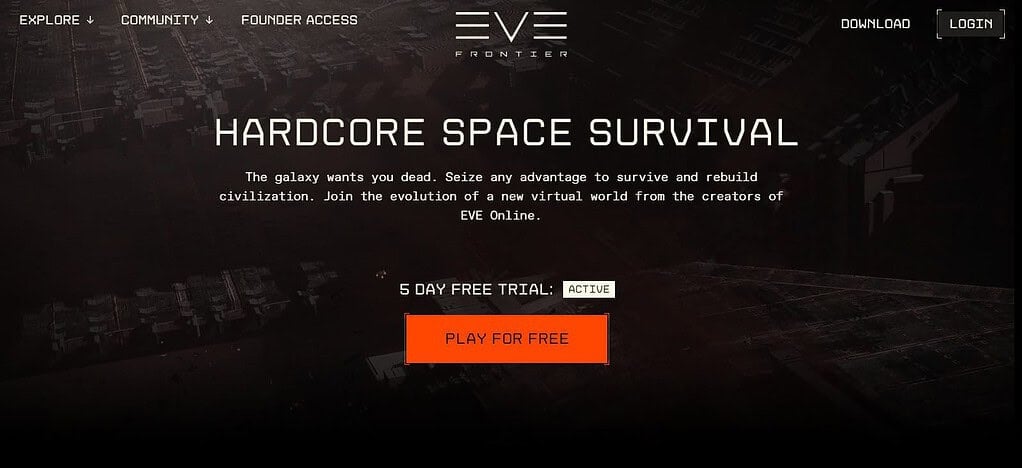
The native ** EVE Token ** supports the on-chain economy, while LUX serves as an in-game currency. Players can own and trade ships, resources and other assets. Transactions are designed around a persistent player driven economy. The game is still in development and Founder Access.
EVE Frontier Features, Pros & Cons
| Features | Details |
|---|---|
| Persistent Space Sandbox | EVE Frontier is designed as a large-scale survival and space sandbox where players can shape the game environment. |
| Sui Blockchain | The project is moving to Sui, with Smart Assemblies using Sui and Move for programmable game systems. |
| Smart Assemblies | Players and developers can create programmable structures and systems that interact with the game world. |
| Player-Driven Economy | Players can create markets, trade assets, and develop services within the open economic environment. |
| Open Development | The project aims for increasing openness and community participation in the underlying technology. |
| Pros | Cons |
|---|---|
| Highly ambitious sandbox design | Development is still evolving |
| Strong blockchain utility | Technical complexity may discourage casual players |
| Programmable player-created systems | Requires understanding of the ecosystem |
| Deep economic possibilities | Economy can become highly competitive |
| Built on the established EVE universe concept | Long-term adoption remains uncertain |
3. Pixel
Pixels development started in 2021, and in 2023 it moved from Polygon to become a major Ronin-based social Web3 farming game. Its blockchain is Ronin and its utility and governance token is PIXEL, which allows for NFT minting, VIP features, guild features and premium upgrades within the ecosystem.
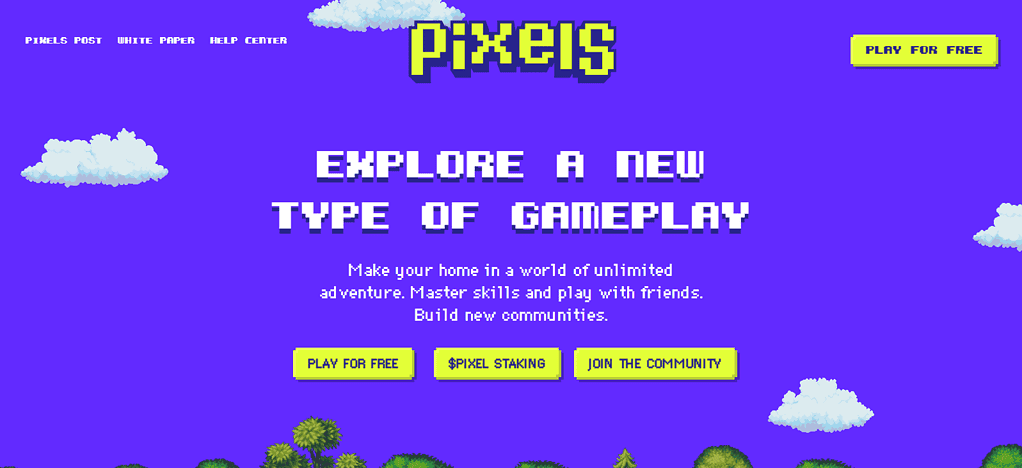
There is no prominent document for core AI gameplay system. Its main technology focus is on social gameplay and player ownership. Farm Land and other NFT assets can be owned by players. Marketplace transactions are carried out through Web3 infrastructure. The game is live and has shown a strong user traction, while its previous roadmap had milestones of around 30,000 DAU and 100,000 MAU.
Pixels Features, Pros & Cons
| Features | Details |
|---|---|
| Social Farming Game | Combines farming, exploration, quests, progression, and social gameplay in a pixel-art environment. |
| Ronin Ecosystem | Pixels operates within the Ronin gaming ecosystem and uses blockchain-based assets. |
| PIXEL Token | The PIXEL token supports various ecosystem activities and game-related functions. |
| NFT Ownership | Land and other digital assets can provide player ownership and utility. |
| Quests & Progression | Players can complete quests, gather resources, develop land, and participate in different activities. |
| Pros | Cons |
|---|---|
| Accessible pixel-art gameplay | Gameplay may not appeal to hardcore gamers |
| Strong social component | Token value remains volatile |
| Established Web3 gaming ecosystem | Depends on continued player activity |
| Multiple asset-ownership mechanics | NFT demand can change quickly |
| Relatively easy concept for new players | Web3 onboarding can still be confusing |
4. Decentraland
Decentraland is built around Ethereum and was publicly launched on February 20, 2020 after several years in development. Its main token is MANA and LAND is tokenized virtual real estate. AI is not the core technology of the platform. The key innovation is the decentralized virtual-world infrastructure, content created by users and digital ownership.
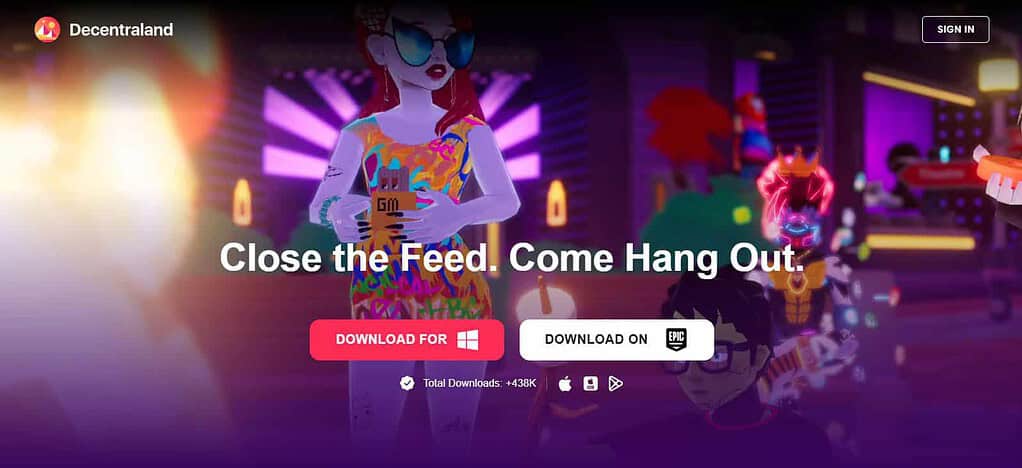
Users can buy, sell and develop LAND, wearables, names and other blockchain assets through on-chain transactions and marketplace. Decentraland raised about $26 million in its 2017 token sale. Its browser-based virtual world, DAO and creator ecosystem are still running, making it one of the longer-running blockchain virtual-world projects.
Decentraland Features, Pros & Cons
| Features | Details |
|---|---|
| Virtual World | Decentraland provides a user-generated virtual environment for exploration, social interaction, events, and experiences. |
| LAND Ownership | LAND parcels are blockchain-based assets that users can own, develop, and trade. |
| MANA Token | MANA is used throughout the Decentraland ecosystem and marketplace. |
| Creator Economy | Users can create scenes, wearables, experiences, and other digital content. |
| DAO Governance | Community members can participate in governance through the Decentraland DAO. |
| Worlds | Users can create separate personal 3D spaces through Decentraland Worlds. |
| Pros | Cons |
|---|---|
| Established virtual-world ecosystem | Metaverse adoption remains uncertain |
| Strong creator economy | LAND can be expensive |
| Real digital asset ownership | MANA is highly volatile |
| DAO-based governance | Graphics and gameplay may feel less advanced than traditional games |
| Large range of community experiences | User activity can vary significantly |
5. Heroes Chained
Heroes Chained is a fantasy action RPG developed with Avalanche and started development around 2021. Its native token is HeC used for trading, rewards, governance and other economic activities. There’s no major core AI gameplay system that’s publicly documented.
The project is more about “Play and Earn” than pure financial incentives. Its blockchain economy powers NFTs representing heroes, land, items, spells and other valuable game assets. NFTs can be acquired through exploration, crafting, breeding, events and purchases, and assets are tradable between players. The project raised $4.54 million across pre-seed, seed, private and public rounds.
Heroes Chained Features, Pros & Cons
| Features | Details |
|---|---|
| Fantasy Action RPG | Combines action combat, heroes, progression, exploration, and strategic gameplay. |
| Avalanche-Based Ecosystem | The project uses Avalanche blockchain infrastructure for its Web3 economy. |
| Hero NFTs | Heroes and other game assets can have blockchain-based ownership and utility. |
| Guild Gameplay | Guild-oriented systems encourage players to cooperate and compete. |
| Play-and-Earn Model | The economy is designed to connect gameplay with ownership and rewards. |
| Pros | Cons |
|---|---|
| Combines RPG and strategy mechanics | Smaller ecosystem than major gaming platforms |
| Hero NFTs have gameplay utility | NFT values can be volatile |
| Guild-focused gameplay | Requires continued player participation |
| Avalanche provides established infrastructure | Web3 onboarding may be challenging |
| Multiple progression systems | Competition in blockchain RPGs is strong |
6. Aurory
Aurory was created in early 2021 and is a free-to-play Web3 gaming ecosystem centered around interconnected games, experiences and applications. It is tied to the Solana ecosystem and its primary utility token is AURY. Artificial intelligence is not the key technology in this project.
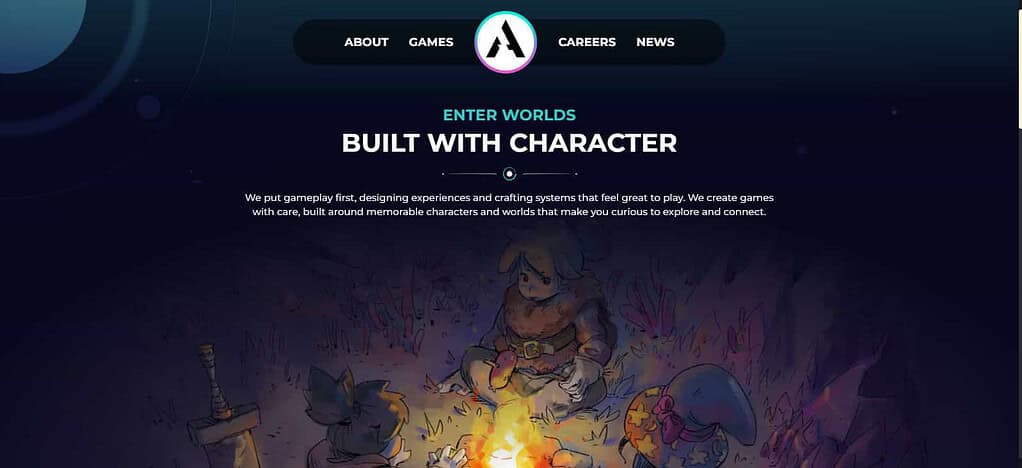
The project is more about game development, interoperable assets and the larger gaming ecosystem. AURY is used for marketplace transactions, Prime Egg hatching, purchasing Crystals, tournaments and future governance functions.
The NFT ecosystem of the game includes characters and other game assets that can have utility across experiences. The project dedicates 25% AURY supply for game rewards, 24% for treasury and 7% for ecosystem funding.
Aurory Features, Pros & Cons
| Features | Details |
|---|---|
| Fantasy Gaming Ecosystem | Aurory combines characters, exploration, competitive experiences, and a wider Web3 gaming ecosystem. |
| Solana Ecosystem | Aurory is closely associated with Solana, supporting fast blockchain-based transactions. |
| AURY Token | AURY serves as the ecosystem’s primary utility token. |
| NFT Characters & Assets | Digital characters and other assets can provide ownership and utility across the ecosystem. |
| Interconnected Experiences | The project has pursued multiple games and experiences rather than relying on a single gameplay format. |
| Pros | Cons |
|---|---|
| Strong visual presentation | Development complexity can be high |
| Solana offers fast transactions | Token volatility remains a major risk |
| Multiple game experiences | Player adoption needs to remain sustainable |
| NFT assets can have utility | Web3 gaming competition is intense |
| Established Web3 gaming brand | Roadmap execution remains important |
7. Guild of Guardians
Guild of Guardians is a mobile squad-based RPG built on digital ownership that started development work in 2020. It is building its blockchain infrastructure on Ethereum and Immutable zkEVM. GOG is its native token. AI is not a main publicly documented gameplay component, the focus of the project is on mobile RPG gameplay, NFTs and player ownership.
Guardians and other game assets can also be represented as NFTs and traded on supported markets. The project had over 500,000 pre-registrations by the end of 2022, and its early digital-asset sales raised more than $20 million, while its CoinList token sale raised more than $5 million. The game is still being developed and has begun its worldwide release in 2024.
Guild of Guardians Features, Pros & Cons
| Features | Details |
|---|---|
| Mobile RPG | Designed as a mobile-friendly squad-based role-playing game. |
| Hero Collection | Players can collect and develop different Guardians with distinct abilities. |
| NFT Ownership | Selected characters and game assets can exist as blockchain-based digital collectibles. |
| Immutable Ecosystem | The project is connected with Immutable’s gaming infrastructure. |
| GOG Token | GOG functions as the ecosystem’s utility token. |
| Squad-Based Gameplay | Players can combine different heroes and strategies for combat and progression. |
| Pros | Cons |
|---|---|
| Mobile-first approach expands accessibility | Mobile gaming competition is extremely high |
| Collectible hero system | NFT demand can fluctuate |
| Strong Web3 infrastructure | Token economics require monitoring |
| Squad strategy creates replayability | Player retention is critical |
| Suitable for RPG and Web3 audiences | Blockchain features may not appeal to traditional mobile gamers |
8. Ember Sword
Ember Sword started out as a blockchain MMORPG in 2018, adding NFT ownership (Ethereum-based) before moving to Immutable and eventually Mantle infrastructure. Its EMBER token launched in 2024. Blockchain assets were created to represent items and land.
No significant AI gameplay system was announced as a core feature. The project drew considerable attention due to virtual land sales, including more than $200 million in 2021 land-sale pledges, along with reported venture funding.
It was launched in Early Access on 2 December 2024, but in May 2025, Bright Star Studios announced that it would no longer develop or support the server, due to lack of funding, making its current state a major investment risk.
Ember Sword Features, Pros & Cons
| Features | Details |
|---|---|
| MMORPG | Ember Sword was designed as a large multiplayer online role-playing game with exploration, combat, gathering, and crafting. |
| Player-Owned Assets | The game incorporated blockchain-based ownership for assets such as land and items. |
| Virtual Land | Land was designed to provide utility within the broader game economy. |
| Player Economy | Trading and asset ownership were important parts of its Web3 design. |
| Early-Access Development | The project progressed through development and early-access stages before later facing major development difficulties. |
| Pros | Cons |
|---|---|
| Ambitious MMORPG vision | Development uncertainty is a major concern |
| Strong player-ownership concept | Project history creates significant risk |
| Land and asset utility | Player confidence can be difficult to maintain |
| Large-scale game design | MMORPG development is expensive and complex |
| Web3 economy concept | Investors should carefully assess current status |
9. Star Atlas
Star Atlas was among the most prominent Solana blockchain gaming projects of 2021, featuring a space-themed virtual world with Unreal Engine tech and Web3 ownership. It is built on Solana, using ATLAS as the transaction token and POLIS as the governance token.
AI is not the main technology that has been documented. The focus of the project is persistent worlds, online resources, and player-driven economies. Ships, crews, pets, components, land and structures can be NFTs and traded on ATLAS. Its token offering in 2021 was for a combined $2 million raise. The ecosystem has since grown with multiple game experiences, including both the browser-based SAGE strategy game and its Unreal Engine experience.
Star Atlas Features, Pros & Cons
| Features | Details |
|---|---|
| Space Exploration | Star Atlas focuses on a large futuristic space universe featuring exploration, combat, resources, and economic activity. |
| Solana Blockchain | The ecosystem uses Solana for blockchain-based assets and transactions. |
| ATLAS Token | ATLAS functions as the primary transactional/economic token. |
| POLIS Governance | POLIS is associated with governance and ecosystem control. |
| NFT Ships & Assets | Ships, land, structures, equipment, and other digital assets can be represented as NFTs. |
| Multiple Game Experiences | The ecosystem has expanded through different gameplay experiences and development initiatives. |
| Pros | Cons |
|---|---|
| Highly ambitious space-game concept | Large-scale development is difficult |
| Strong visual and technical ambitions | Long development timelines can create uncertainty |
| NFT ships provide clear utility | NFT prices can be highly volatile |
| Solana enables fast transactions | Token economics require careful evaluation |
| Multiple ecosystem components | Complexity may discourage casual players |
10. Big Time
Big Time is a multiplayer action RPG developed by Big Time Studios, which started development around 2020 and launched in Early Access in 2022. Its blockchain economy is based on Ethereum NFTs and the BIGTIME utility token, which enables upgrades, crafting, collectibles and special game areas.
AI does not appear to be a core publicly documented gameplay feature, and the project instead focuses on player-owned digital resources and an open in-game economy.
In 2021, the company raised approximately $10.3 million in Series A funding. Launched in October 2023, BIGTIME has a capped supply of 5 billion tokens that players can earn and use through gameplay and transact with blockchain-based collectibles.
Big Time Features, Pros & Cons
| Features | Details |
|---|---|
| Multiplayer Action RPG | Big Time combines action combat, cooperative multiplayer gameplay, character progression, and dungeon-style experiences. |
| Player-Owned Collectibles | Players can obtain and trade blockchain-based collectibles and other digital assets. |
| BIGTIME Token | BIGTIME functions as the game’s primary utility token and can be used within its economy. |
| Ethereum-Based Assets | Blockchain assets provide verifiable ownership and trading functionality. |
| Crafting & Economy | Players can use resources and collectibles within the game’s crafting and economic systems. |
| Multiplayer Focus | Cooperative gameplay provides an important part of the overall experience. |
| Pros | Cons |
|---|---|
| Traditional gameplay combined with Web3 | Token volatility remains a concern |
| Strong action-RPG format | Competition from conventional RPGs is intense |
| Player-owned collectibles | NFT demand can change quickly |
| Multiplayer experience | Long-term retention is important |
| Utility-focused token design | Web3 mechanics may not suit every player |
How To Choose AI + Blockchain Gaming Projects to Invest
Check Real AI Utility – Determine if AI is actually used for NPCs, AI agents, procedural content, personalization, or automation, and not just a marketing term.
Evaluate blockchain benefits — Determine whether blockchain can add value to the game through NFT ownership, asset trading, transparent transactions, digital scarcity, or player-controlled economies;
Assess Game Quality – A good investment story begins with a game that people want to play. Gameplay, graphics, progression, accessibility, updates and replayability.
Active Player Activity Review – Check for available data on active players, transaction activity, marketplace usage, community engagement, and player retention.
Study Tokenomics – Token supply, circulating supply, utility, allocations, vesting periods, future unlocks, inflation and how concentrated the tokens are amongst insiders.
Assess NFT Utility – Determine whether the NFTs play significant in-game roles or are mainly speculative collectibles. Good assets are generally a better gaming proposition.
Research Funding – Check out any disclosed funding rounds, investors, treasury resources and how the project is funding ongoing development.
Check Development Stage – Game live, beta, early access, still in development? Look at its current product and its declared roadmap.
Check Developer Activity – See if the developer is actively updating the plugin with new features, bug fixes, releases and open communication.
Evaluate the Ecosystem – Look at the partnerships, marketplaces, guilds, creators, developers, community size, and integrations that can help you grow over the long term.
Compare Blockchain Infrastructure – Look at transaction speed, fees, scalability, wallet support and suitability for gaming.
Identify AI and Web3 Risks – Consider AI limitations, token price volatility, regulatory uncertainty, security weaknesses, NFT liquidity, smart contract risks, and potential development delays.
Analyze the Competitive Landscape – Compare each project to traditional games and other AI/web3 competitors to see if it has a meaningful edge.
Look for Sustainable Economics – Look for projects that can sustain their ecosystem with revenue, player demand and actual game utility as opposed to primarily token incentives.
Rank by risk-adjusted value – Rather than picking projects based on market hype, create a balanced ranking by combining AI utility, blockchain utility, gameplay quality, adoption, tokenomics, funding, development progress, and risk.
Conclusion
The AI and blockchain gaming space is becoming a wider digital-ownership ecosystem, with games like Forgotten Runiverse, EVE Frontier, Pixels, Decentraland, Heroes Chained, Aurory, Guild of Guardians, Ember Sword, Star Atlas, and Big Time taking various approaches to gameplay, NFTs, tokens, and player economies.
Investors should look beyond token prices and evaluate game development, player adoption, blockchain utility, funding, tokenomics, asset ownership and long-term sustainability for 2026. Given the varying degrees of risk and AI adoption in these projects, it is important to conduct extensive research and perform individual due diligence before making any investment decisions.
FAQ
What are AI + blockchain gaming projects?
AI + blockchain gaming projects combine artificial intelligence with blockchain technology to create features such as intelligent characters, automated systems, dynamic gameplay, digital ownership, NFTs, and player-driven economies. However, not every Web3 game uses AI as a core gameplay feature.
Which AI + blockchain gaming projects are worth watching in 2026?
Projects such as EVE Frontier, Pixels, Star Atlas, Decentraland, Big Time, Aurory, and Guild of Guardians are among the projects worth researching because of their established ecosystems, blockchain infrastructure, game development, or player-owned assets.
How is AI used in blockchain games?
AI can be used for intelligent NPCs, AI agents, procedural content generation, personalized gameplay, automated game systems, and adaptive player experiences. Its actual implementation differs significantly from one project to another.
Why is blockchain important in gaming?
Blockchain can give players verifiable ownership of digital assets such as characters, land, weapons, collectibles, and other NFTs. It can also enable player-to-player trading and transparent in-game transactions.