


Top Harvey AI Alternatives for Legal Workflows To help you out, in this article, I will talk about the platforms that support legal research, contract review, drafting, document analysis, litigation, practice management, etc. I will look at their main features, pricing models, integrations, security, target users and workflow capabilities to help readers understand how each legal AI platform differs from Harvey and where it might fit specific legal requirements.
What Is Harvey AI Competitors?
Harvey AI competitors are legal technology platforms that offer AI-powered tools for workflows such as legal research, contract drafting, document review, due diligence, litigation support, compliance and practice management. These platforms share some capabilities with Harvey but tend to focus on certain legal tasks.
Examples are CoCounsel Legal, Legora, Lexis+ with Protégé, Spellbook, Luminance, Robin AI, Vincent AI, Paxton AI, Clio Duo, and LegalOn. Their differences may be legal research databases, AI models, document-processing capabilities, integrations, security controls, customization, pricing and target users. Assessing these criteria will help law firms and legal departments find platforms that fit their unique workflows, technology stacks, and operational needs.
Why Look for Harvey AI Competitors?
Specialized Legal Workflows: Some are geared toward contracts, legal research, litigation, due diligence or compliance, which makes them good for specialized needs.
Flexible Pricing Models: Competitors may offer subscription, per-user, usage-based, or custom enterprise pricing, giving organizations various budgeting choices.
Research Database Availability: Different legal AI tools access different research databases and legal sources, which can impact the extent of research, jurisdictional scope, and number of citations.
Current Software Integrations: Businesses may prefer alternatives that integrate directly with Microsoft Word, Outlook, document-management systems, CLM platforms or practice-management software.
Contract-Driven Features: Spellbook, Luminance, Robin AI and LegalOn offer specific tools for contract drafting, review, redlining and negotiation.
Corporate Security Requirements Legal organizations deal with confidential information so they may compare security certifications, access control, encryption, data policies and administrative features.Customization * * * Playbooks, templates, organizational knowledge and configurable workflows are offered by some vendors, which can more closely align with a firm’s internal processes.
Team/Firm Size: There are platforms aimed at large law firms, corporate legal departments, midsize practices, or solo practitioners so organizations can evaluate the options to fit their business needs.
Legal Tech Ecosystem: Some alternatives link AI to established legal research, document-management, contract-management, or practice-management ecosystems.
Workflow-Specific AI Automation: Competitors might offer automation for specific multi-step workflows, enabling legal practitioners to cut down on repetitive tasks while still exercising human control over significant legal outcomes.
Key Points
| Harvey AI Competitor | Primary Legal Workflow | Key AI Capabilities | Best-Fit Legal Teams | Main Differentiator |
|---|---|---|---|---|
| CoCounsel Legal | Legal research, document analysis, drafting | Agentic research, analysis, drafting, brief building, document analysis | Law firms & corporate legal departments | Grounded in Westlaw and Practical Law and connects research, analysis and drafting workflows. |
| Legora | Legal research, document review, drafting | Collaborative AI research, review, drafting and workflow automation | Large law firms & legal teams | Broad legal-AI platform designed for complex, multi-document and collaborative workflows. |
| Lexis+ AI with Protégé | Legal research, drafting, document analysis | Legal research, source-backed answers, drafting and analysis | Research-heavy firms & legal departments | Integrates AI capabilities with the LexisNexis legal research ecosystem. |
| Spellbook | Contract drafting, review & negotiation | Contract drafting, redlining, review and Playbooks | Transactional lawyers & in-house teams | Primarily works within Microsoft Word for contract workflows. |
| Luminance | Contract review, negotiation & due diligence | Document analysis, contract review, risk identification and legal intelligence | Enterprise legal departments & law firms | Focuses heavily on high-volume document and contract analysis. |
| Robin AI | Contract review & negotiation | Contract analysis, review, drafting and negotiation support | In-house & commercial legal teams | Concentrates on contract workflows rather than attempting to cover every legal task. |
| Vincent AI | Legal research, litigation & document analysis | Multi-jurisdiction research, legal analysis, document review and agentic workflows | Research-heavy & cross-border legal teams | Combines legal research and document-analysis workflows across jurisdictions. |
| Paxton AI | Legal research, drafting & document analysis | Legal research, drafting, document review and AI legal assistance | Solo lawyers, small firms & legal teams | Provides a broader legal assistant experience with options aimed at smaller practices. |
| Clio Duo | Practice management & legal workflows | AI-assisted matter, client and practice-management tasks | Solo & small-to-midsize firms | AI is integrated into the Clio practice-management environment rather than being solely a research platform. |
| LegalOn | Contract review, drafting & playbooks | Contract review, drafting, clause analysis and contract intelligence | In-house legal & contract teams | Structured, playbook-driven contract review and drafting workflows. |
1. CoCounsel Legal AI
Founded: 2024 as CoCounsel by Thomson Reuters. Core Workflow: Legal research, review of documents, drafting, and complex legal tasks. Pricing Thomson Reuters doesn’t publish a price, but sells plans. Target Users: Law firms and in-house legal departments.
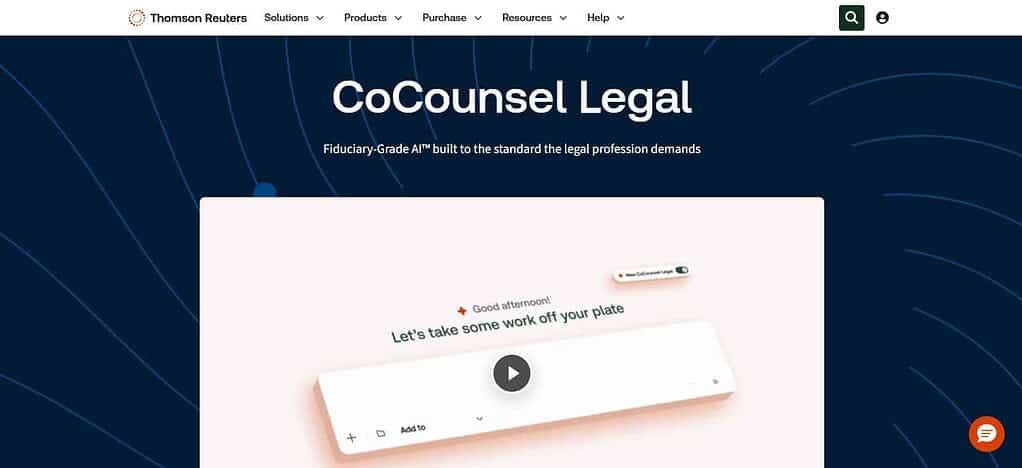
Security: SOC 2 and ISO 42001 certified, and we do not use customer data to train underlying models. Integrations Microsoft Word, Outlook, Teams, Box, Litify, HighQ, and more Drafting & Research: CoCounsel can research, analyze, and draft using authoritative Westlaw and Practical Law content, as well as organizational knowledge.
CoCounsel Legal AI Features
- Agentic Legal Research: Performs research for complex legal questions and produces source-backed research.
- Legal Drafting: Offers support in drafting and editing legal documents and contract language.
- Document Analysis: Summarizes, reviews, compares, and pulls information out of documents.
Westlaw & Practical Law: Integrate grounds workflows into Thomson Reuters legal content.
Litigation Workflows: Supports citation analysis, litigation documents, chronologies, and brief-building workflows.
| Pros | Cons |
|---|---|
| Combines legal research, document analysis, and drafting in one workflow. | Full capabilities can require a broader Thomson Reuters subscription. |
| Uses Westlaw and Practical Law content for research and guidance. | Pricing can vary by plan, team, and content requirements. |
| Supports large-scale document analysis and review. | Some advanced research capabilities are tied to specific plans. |
| Works within Microsoft Word and other Microsoft 365 workflows. | Best value may depend on existing Thomson Reuters ecosystem usage. |
| Provides agentic workflows for multi-step legal tasks. | Human verification remains necessary for important legal work. |
2. Legora
Founded: Legora was created as Leya and later renamed to Legora. The primary workflow includes legal research, document review, drafting, and collaboration on complex matters. Pricing: Pricing for enterprises is typically customized to the organization, and not provided as a single public rate. Users: Law firms and in-house legal professionals.

Security: Designed for legal corporate environments and controlled organizational processes. Integrations: Legora is built to bridge legal workflows and organizational knowledge. Drafting & Research: The agentic platform helps lawyers to research, review, draft and deliver work on complex matters.
Legora Features
- AI Drafting: Assists with drafting and editing legal documents.
- Legal Research: Assists with research and analysis of complex legal issues.
- Document Review: Assists lawyers in sifting through large volumes of legal documents.
- Workflow Automation: Supports multi-step legal workflows, not just single prompts.
Collaborative Work: Intended for law firms and legal teams engaged in complex cases.
| Pros | Cons |
|---|---|
| Supports research, drafting, document review, and broader matter workflows. | Enterprise-oriented deployment can make pricing less transparent. |
| Designed for complex legal work rather than only single-document tasks. | May be more functionality than needed for simple contract review. |
| Supports analysis across large document collections. | Teams need time to configure workflows around their specific processes. |
| Can support structured legal workflows and organizational knowledge. | Exact capabilities and integrations can vary by deployment. |
| Suitable for larger law firms and legal departments. | Smaller teams may prefer a more narrowly focused legal AI tool. |
3. Lexis+ and Protégé
Founded: LexisNexis is a RELX company; Lexis+ AI was rebranded as Lexis+ with Protégé in Feb 2026. Main Workflow: Legal research, drafting, analysis and document review. Pricing: Custom pricing based on organization size, capabilities and content access. Who It’s For: Law firms and legal professionals.
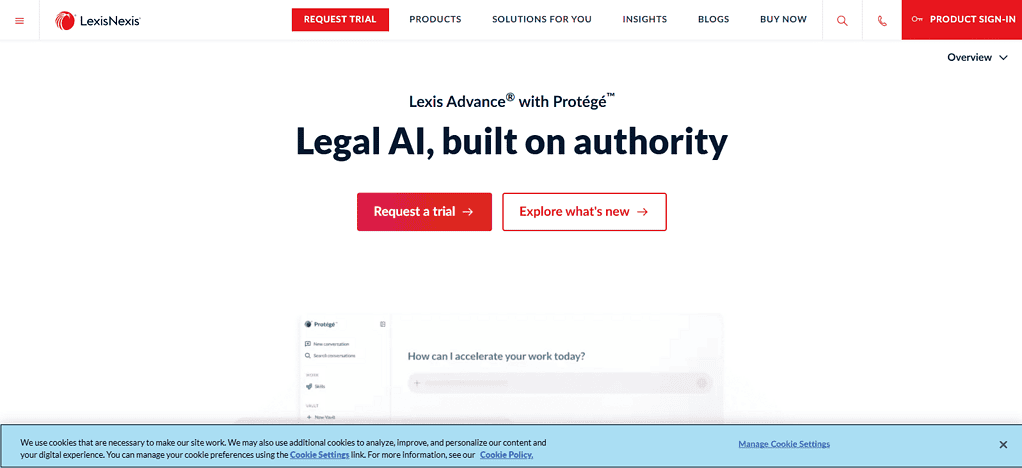
Security: Based on secure legal procedures, permissions and research that can be traced. Integrations: Microsoft 365, Legal workflows and document management Drafts contracts, motions, briefs, complaints and communications Conducts research using LexisNexis content and Shepard’s citation technology .
Lexis+ AI with Protégé Features
- AI Legal Research: Research fueled by LexisNexis legal content.
- Citation Validation: Helps validate citations in the law using Shepard’s technology.
- Legal Drafting: Helps to draft briefs, motions, contracts and other legal documents.
- Agentic Workflows: Protégé can facilitate complex multi-step workflows (research, comparison, drafting, etc.).
- Document analysis: Makes it possible to analyze and use legal documents and matter information.
| Pros | Cons |
|---|---|
| Combines AI research, drafting, summarization, and analysis. | Access to the broader LexisNexis ecosystem can affect overall cost. |
| Uses LexisNexis primary law and secondary legal content. | Advanced functionality may depend on the selected subscription. |
| Shepard’s citation technology supports citation validation. | Primarily valuable to teams that need substantial legal research capabilities. |
| Protégé supports personalized and agentic workflows. | Users still need to review AI-generated legal work. |
| Strong fit for research-intensive legal teams. | Organizations already standardized on another legal research platform may face ecosystem considerations. |
4. Grimoire
Founded: Rally Legal, which later rebranded to Spellbook. Primary Workflow: Contract drafting, reviews, redlining, transactional legal work. Pricing: Pricing depends on plan and organization; enterprise plans can be tailored. Target Users: Transaction lawyers, law firms and in-house legal departments.
Security: For enterprise deployments, administrative controls and secure document access are offered. Integrations: Google Docs, Microsoft Word, OneDrive, Dropbox, iManage Drafting & Research: Spellbook is specifically designed around AI contract drafting, review, clause comparison and document analysis. It also honors iManage permissions when connected to firm documents.
Grimoire Features
- Contract Drafting: Uses AI to draft and edit contract language.
- Contract Review: Identifies clauses, missing provisions and potential contract issues.
- Microsoft Word Integration: Runs inside Word for transactional workflows.
Redlining: Supports review and change of contract language. - Market Benchmarking: Allows lawyers to benchmark contractual terms against market data.
| Pros | Cons |
|---|---|
| Strong focus on contract drafting and review. | More specialized toward transactional and contract workflows than broad legal research. |
| Works directly within Microsoft Word. | Teams seeking a complete legal research platform may need another product. |
| Supports playbooks and contract review workflows. | Its strongest value is concentrated around document-centric legal work. |
| Provides AI-assisted contract negotiation capabilities. | Advanced capabilities can depend on the selected plan. |
| Can use market data to support contract benchmarking. | Less suitable when the primary requirement is litigation research. |
5. Luminosity
Founded: 2015 by mathematicians and researchers associated with the University of Cambridge. Primary Work: Contract review, negotiation, analysis, compliance, investigation, and contract lifecycle work. Pricing: Luminance does not provide a public price, but rather primarily sells to businesses and enterprises.

Target Users: Legal, compliance, procurement, finance and other enterprise teams. Security Designed for enterprise legal environments & controlled document workflows. Integrations: Enables integrated business and contract workflows. Drafting & Research: Its legal-grade AI is able to review contracts, find deviations, offer alternative language, rewrite clauses, and answer contract questions.
Luminosity Features
- Contract Review: Leverages AI to review and analyze contracts at scale.
- Due Diligence: Supports document review for deals.
- Document Intelligence: Extracts relevant information and pinpoints potential risks.
- Contract Negotiation: Helps legal teams spot deviations and problematic provisions.
- Legal Workflow Automation: For enterprise legal teams working with high volumes of contracts.
| Pros | Cons |
|---|---|
| Strong focus on contract review and enterprise document workflows. | Less focused on broad legal research than research-first platforms. |
| Can identify deviations from standard contractual language. | Organizations may need implementation work for complex enterprise processes. |
| Supports automated clause redrafting and alternative language. | Its primary strength is contract intelligence rather than every legal task. |
| Provides visibility across an organization’s contract repository. | Enterprise-oriented functionality may be excessive for small legal teams. |
| Useful for high-volume contract analysis and negotiation. | Pricing and deployment details generally require vendor engagement. |
6.Robin AI
Robin AI was founded in 2019. Core Workflow Contract review, analysis, drafting support, negotiation and contract intelligence. Pricing: Robin AI does not have one public standard price, but mostly uses custom enterprise pricing. Who it’s for: Enterprise legal and commercial teams.

Security: It is GDPR compliant, ISO 27001, and SOC 2 certified. Integrations: Robin offers a single workspace for contract details and legal processes. Research & writing: Its artificial intelligence is able to review, analyze and complete contracts, search across large contract collections, identify key terms and track obligations, such as renewals, payments and reporting requirements.
Robin.ai Features
- Contract Analysis: Analyzes contracts and identifies important terms and provisions.
- Contract Drafting: Assists in preparing and editing contract language.
- Negotiation Assistance: Helps legal teams to identify issues while negotiating contracts.
- Contract Search: Teams can search for information across collections of contract data.
Obligation Tracking: Tracks items such as renewals, payments, and reporting requirements.
| Pros | Cons |
|---|---|
| Focuses on contract review, drafting, and negotiation workflows. | Narrower than broad legal AI platforms covering research and litigation. |
| Useful for commercial and in-house legal teams. | Organizations seeking extensive legal research may need another platform. |
| Can help analyze contract language and identify important provisions. | Enterprise pricing may require a sales process. |
| Supports contract intelligence and document workflows. | Benefits depend on the quality and structure of the organization’s contract data. |
| Designed around practical commercial contracting needs. | Not primarily positioned as a complete legal research database. |
7. Vincent AI
Vincent AI: Vincent AI was built by vLex as its legal AI platform. **Core Workflow: Legal research, document review, litigation support and multi-jurisdiction legal analysis. Pricing: Pricing is based on organizational needs and access rather than a single published rate. Who It’s For: Law firms, legal departments and legal professionals that do a lot of research.
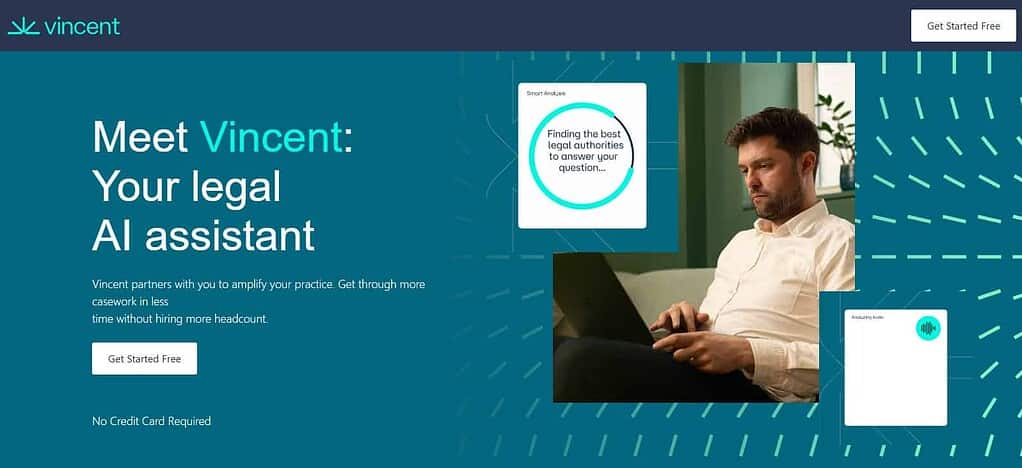
Security: Built for confidential legal workflows and professional legal research. Integrations: It integrates with the broader vLex legal-information ecosystem. Drafting & Research: Vincent integrates AI reasoning with legal research and document analysis to help users explore legal inquiries, analyze uploaded material and create research-based legal work.
Vincent AI Features
- Legal Research: Facilitates research into legal questions and jurisdictions.
- Legal Document Analysis: Investigates and analyzes legal documents you upload.
- Multi-Jurisdictional Search: Helpful for issues with multi-jurisdictional legal implications.
- Legal Analysis: Assists in connecting research to specific legal documents and issues.
- Workflow Support: Facilitates research intensive legal work and complex matter analysis.
| Pros | Cons |
|---|---|
| Combines AI with vLex’s global legal information database. | Access and capabilities depend on the user’s vLex subscription. |
| Supports legal research, document analysis, and litigation workflows. | The breadth of features can require user training and workflow adaptation. |
| Provides cited research with links to underlying sources. | AI-generated results still require professional verification. |
| Supports jurisdiction comparison and 50-state surveys. | Some workflows and content coverage vary by jurisdiction. |
| Offers customizable workflows through Vincent Studio. | Organizations looking only for contract review may prefer a more specialized tool. |
8. Paxton AI
Founding: Paxton AI was created as an AI legal assistant for professional legal work. Workflow: Legal research, document analysis, drafting, compliance, and legal information retrieval. Pricing: Individual pricing is $499 per user/month or $2,999 per user/year, while enterprise pricing is custom and volume-based. Audience: Individual attorneys and law firms.
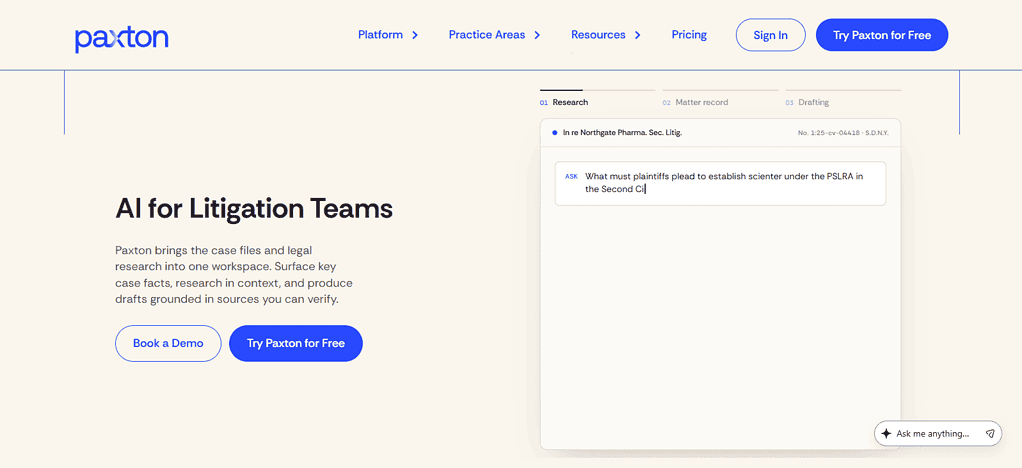
Security: Paxton says its platform is SOC 2, ISO 27001 and HIPAA compliant. Integrations: It supports legal document workflows and creating shared documents. Drafting & Research: Offers legal drafting, file analysis, and access to U.S. federal regulations, state laws, and case law in all 50 states.
Paxton AI Features
- Legal Research: AI-powered research on U.S. federal and state legal materials.
- Document Analysis: Analyzes the legal documents uploaded and extracts relevant information.
- Legal Drafting: Assists lawyers in drafting and editing legal documents.
Legal Support for Regulatory & Compliance: Can help with legal work.
AI Legal Assistant: Your all-in-one solution for research, drafting, document analysis, and other legal-assistance services.
| Pros | Cons |
|---|---|
| Combines legal research, drafting, and document analysis. | Primarily focused on legal professionals rather than general business users. |
| Supports research across U.S. state and federal legal materials. | Research coverage is centered on the jurisdictions and content included in its library. |
| Includes an AI Citator for deeper case analysis. | Important legal results still require attorney verification. |
| Supports uploaded-file analysis and legal document drafting. | Teams with highly specialized enterprise workflows may need additional integrations. |
| Offers enterprise security controls including SOC 2 and ISO 27001 alignment. | Feature requirements should be evaluated against the firm’s existing legal technology stack. |
9. Clio Duo
Founded: In the year 2008; Primary Workflow: AI-enhanced matter & client workflows to support legal practice management. Pricing: Plans begin at $49 per user/month and AI capabilities are included on Core and higher plans. Who it’s for: Law firms that track clients, matters, tasks, billing, and practice operations.
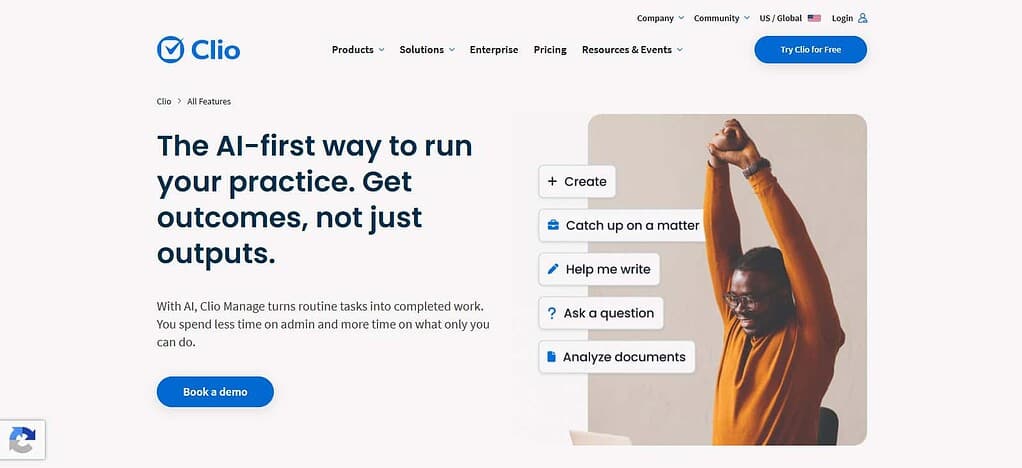
Security: Clio uses encryption, SOC 2 Type II controls, GDPR compliance, backups and multifactor authentication. Integrations: Clio is part of the larger legal practice-management ecosystem. Drafting & Research: Its AI is based on matter information and authoritative legal sources and assists in drafting client updates, identifying risks, prioritizing tasks and preparing billing-related work.
Clio Duo Features
- Practice Management AI: Adds AI to the Clio legal practice-management environment.
- Matter Support: Helps attorneys organize information related to matters and clients.
- Task Support: Helps prioritize and organize legal work.
- Client Communications: Assists in preparing communications for clients.
- Legal Workflow Integration: Integrates AI assistance into larger practice-management workflows.
| Pros | Cons |
|---|---|
| Integrates AI assistance into Clio’s legal practice-management environment. | Its value is closely tied to using the Clio ecosystem. |
| Can work with information already managed within Clio. | It is not primarily a standalone legal research database. |
| Designed around everyday law-firm operations. | Research-heavy firms may require a separate research platform. |
| Benefits firms already using Clio Manage and related products. | AI functionality is more practice-management oriented than contract-specialist tools. |
| Clio emphasizes security and responsible handling of sensitive legal data. | Teams outside the Clio ecosystem may have fewer reasons to adopt it. |
10. LegalOn
Founded: LegalOn is a legal tech company that specializes in AI-powered contract workflows. Primary Workflow: Review, drafting and redlining of contracts, contract intelligence and intake and management of matters. Pricing: The cost depends on the size of your team and the features you need. LegalOn provides personalized quotes and a free trial option.
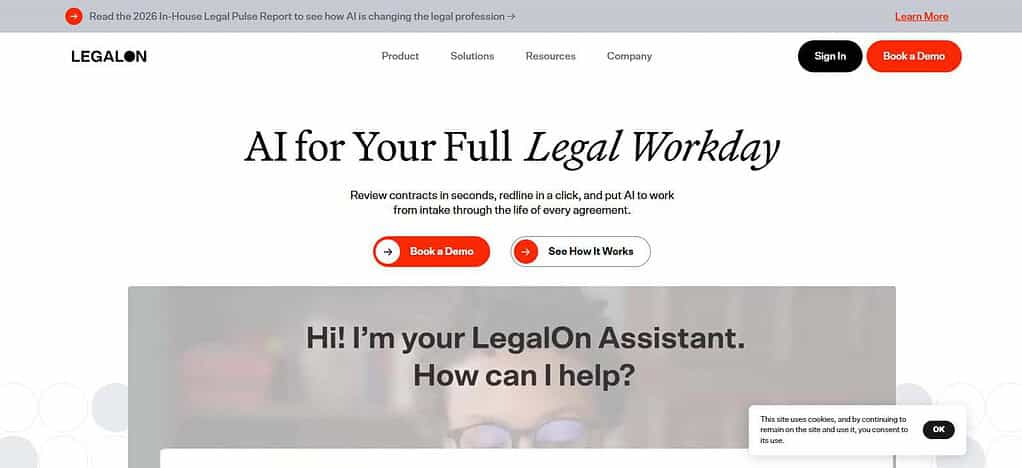
Who It’s For: Solo practitioners, fractional GCs, in-house legal departments and larger legal teams. Security: LegalOn is ISO 27001, ISO 27011 and SOC 2 Type II certified and does not use customer data to train third party models. * Integrations: Microsoft Word, Slack, Microsoft Teams and web platform. Drafting & Research: It has AI drafting, playbooks, contract review, repository search and contract-set analysis.
LegalOn Features
- Reading Contracts: Reviews contracts and highlights important terms and issues.
- AI Drafting: Assists attorneys to compose and alter contract language.
- Playbooks: Supports standardized rules and organizational guidance for contract review.
- Matter Management: Merges contract review and broader legal matter workflows.
- In-House Legal Focused: Built specifically for the daily work of in-house legal teams.
| Pros | Cons |
|---|---|
| Strong contract-review and redlining capabilities. | More specialized around contracts than broad legal research. |
| Provides attorney-authored playbooks for consistent review. | Playbook-driven workflows require appropriate organizational rules and standards. |
| Supports custom playbooks for company-specific requirements. | Full enterprise capabilities may require higher-tier plans. |
| Includes contract repositories and contract-set analysis. | Teams primarily needing litigation research may need another tool. |
| Provides enterprise security features including SSO, MFA, and IP whitelisting on applicable plans. | Pricing is customized around team size and required capabilities. |
Conclusion
In 2026, the best Harvey AI competitors have different approaches to legal workflows, so the best option depends on the tasks, team size, and existing technology stack. CoCounsel and Lexis+ with Protégé are targeted at legal research and analysis, while Spellbook, Luminance, Robin AI, and LegalOn are targeted at contract workflows.
Clio Duo connects AI and practice management, while Legora and Vincent AI are geared toward broader research, document and matter work. Paxton AI provides research, drafting and document analysis for legal professionals. Legal teams should consider workflow coverage, research sources, integrations, security controls, customization, pricing, and deployment requirements before choosing a platform.
FAQ
What are the top Harvey AI competitors in 2026?
Leading Harvey AI alternatives include CoCounsel Legal, Legora, Lexis+ with Protégé, Spellbook, Luminance, Robin AI, Vincent AI, Paxton AI, Clio Duo, and LegalOn. Their capabilities differ across legal research, contract review, drafting, litigation support, and practice management.
What is the best Harvey AI alternative for legal research?
CoCounsel Legal and Lexis+ with Protégé are focused strongly on legal research and analysis. Both connect AI-assisted workflows with established legal information ecosystems, while Vincent AI also supports research and document analysis.
Which Harvey competitors focus on contract review?
Spellbook, Luminance, Robin AI, and LegalOn have strong contract-focused workflows. Their capabilities include contract review, clause analysis, drafting, document comparison, redlining, and negotiation support.
Is CoCounsel similar to Harvey AI?
Yes. Both support multiple legal workflows, including research, document analysis, drafting, and complex legal tasks. CoCounsel also connects these capabilities with Thomson Reuters legal content and professional research resources.
Which Harvey AI alternative is suitable for law firms?
Law firms can evaluate platforms such as CoCounsel, Legora, Lexis+ with Protégé, Vincent AI, and Paxton AI based on their research, drafting, document-analysis, collaboration, security, and integration requirements.