


In the following article, we will go over the Best Enterprise Knowledge Management AI Platforms that help organizations organize information, enhance enterprise search, automate knowledge discovery, and offer faster access to accurate answers. We’ll review the best platforms on AI, integrations, security, knowledge sources, pricing, scalability and key features to help enterprises find the right solution for their needs.
What Are Enterprise Knowledge Management AI Platforms?
Enterprise Knowledge Management AI Platforms are software solutions that leverage artificial intelligence to help organizations collect, organize, search, understand, and share business knowledge across different systems.
They can extract information from documents, wikis, emails, customer-support tools, project-management platforms and other workplace apps. AI-powered search and question answering can help employees find the right information more quickly.
Features such as summaries, knowledge recommendations, permissions, citations, and AI agents can transform organizational knowledge into useful insights and workflows. These platforms are designed to improve access to information, reduce repetitive questions, keep accurate knowledge and help employees make faster and better-informed decisions.
How To Choose Enterprise Knowledge Management AI Platforms
Selecting the right enterprise knowledge management AI platform isn’t just about evaluating AI search capabilities. For enterprises, the question should be: How well can the platform manage existing knowledge, security, integrations, scalability and daily employee workflows.
Knowledge Sources: Check whether it can integrate with the apps your company already uses, including documents, wikis, communication tools, CRM systems, and project-management platforms.
Management of Permissions: Make sure workers receive only the information they are authorized to have. Sensitive business data requires permission-aware search.
AI Features: Evaluate AI answers, summaries, knowledge recommendations, research tools, automated content creation, AI agents, etc.
Integration Support: Make sure it fits into your existing tech stack and allows your employees to search across multiple systems without changing their day-to-day workflows.
Security and compliance: Consider encryption, control of access, SSO, audit features, data governance, and compliance support as required for your organization.
Accuracy of Knowledge – Think about whether the platform can spot outdated information, offer content verification, show citations, and help teams maintain accurate knowledge.
Scalability: The platform should be able to scale to any number of employees, documents, applications and knowledge sources with minimal degradation in search performance.
User Experience: A simple interface, natural language interaction, fast search and easy knowledge creation can help improve employee adoption across departments.
Price & ROI: You will need to weigh the licensing, implementation, integration and usage costs against the expected benefits of reduced time spent searching, faster internal support for employees, increased productivity and fewer recurring questions.
AI Agents and Automation If the goal is more than just looking up information, can the platform tap into enterprise knowledge to do work, trigger workflows, or provide automated assistance?
Analytics and Governance: Look for reporting that shows what employees are searching for, where knowledge gaps exist, what content is being used frequently, and how well the platform is being adopted.
Key Points
| Platform | Best For | Security / Governance |
|---|---|---|
| Glean | Large enterprises | Permission-aware retrieval, enterprise controls |
| Microsoft 365 Copilot | Microsoft-centric enterprises | Microsoft identity, permissions and admin controls |
| Atlassian Rovo | Jira & Confluence organizations | Admin controls and existing Atlassian permissions |
| Guru | Verified internal knowledge | Knowledge verification and enterprise access controls |
| Coveo | Enterprise search and relevance | Permission-aware search and governance |
| Notion AI | Flexible documentation and team knowledge | Workspace permissions and administration |
| Moveworks | Employee knowledge and support | Enterprise security and access controls |
| Confluence + Rovo | Technical and product teams | Atlassian permissions and administration |
| Stack Overflow for Teams | Developer knowledge | Enterprise access and knowledge controls |
| Slite | Internal documentation | Workspace permissions and administration |
1. Glean
Glean is an enterprise AI platform for workplace search, company knowledge, and AI-powered work assistance. Founded in 2019, the company is headquartered in Palo Alto, California, United States. It is a enterprise AI search & knowledge management platform.
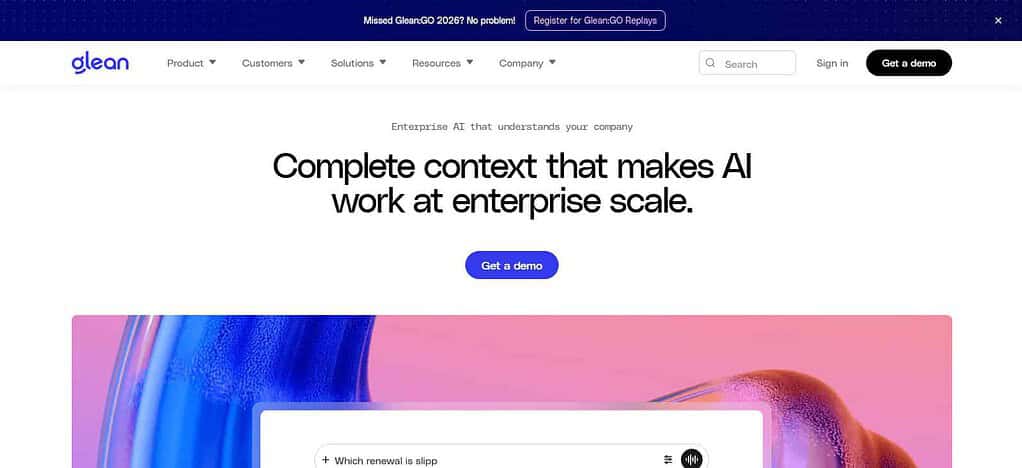
Glean can link information from documents, applications, communications, people and business systems through more than 275 out-of-the-box connectors. It offers AI functions including semantic enterprise search, conversational answers, knowledge discovery, summaries, and AI agents that can perform actions across connected applications.
Glean inherits and enforces the permissions of the source system so employees only see what they are allowed to see. It’s not a single public per-user price, but rather **custom enterprise pricing.
| Feature | Details |
|---|---|
| Platform Type | Enterprise AI search, knowledge discovery, workplace AI, and agent platform |
| Enterprise Search | Unified search across connected enterprise applications with semantic understanding and personalized results |
| AI Knowledge Discovery | Uses company context, content relationships, activity signals, and permissions to surface relevant knowledge |
| AI Chat | Provides conversational answers grounded in enterprise information |
| Knowledge Graph | Connects people, documents, activities, and business information to understand organizational context |
| AI Agents | Supports reasoning-based agents, workflows, actions, orchestration, and agent deployment controls |
| Knowledge Sources | Documents, messages, tickets, files, business applications, and other connected enterprise systems |
| Connectors | 275+ out-of-the-box connectors, plus MCP-based connectivity |
| Permission Control | Mirrors source-system permissions so users see information they are authorized to access |
| Personalization | Uses role, context, organizational relationships, and activity signals to personalize results |
| AI Actions | Agents can read enterprise context and, where configured, perform actions in connected systems |
| Governance | Agent sharing controls, permission checks, human-in-the-loop controls, and agent governance |
| Security | Encrypted data handling, isolated tenant environment, permission-aware retrieval, and enterprise controls |
| Best Feature | Strong combination of enterprise search, organizational context, and AI agents |
2. Microsoft 365 Co-pilot
Microsoft 365 Copilot is Microsoft’s enterprise AI assistant built into the Microsoft 365 ecosystem. Its platform type is enterprise productivity AI, workplace search, knowledge assistance. it can work with company information across Microsoft 365 and connected business systems and offer AI capabilities inside applications such as Word, Excel, PowerPoint, Outlook, and Teams.
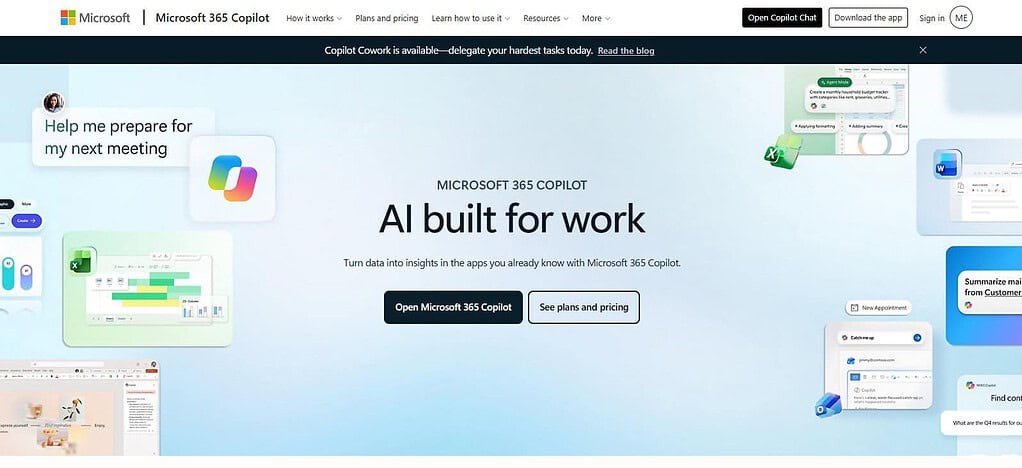
Microsoft also delivers AI-powered search across work data with 100+ connectors and agents and Copilot Studio capabilities. The offering includes built-in enterprise data protection, identity controls, privacy and compliance. Microsoft 365 Copilot Pricing: **₹2,495 per user/month (annual commitment) in India. A qualifying Microsoft 365 license is required.
| Feature | Details |
|---|---|
| Platform Type | Enterprise productivity AI, workplace search, knowledge discovery, and AI agent platform |
| Enterprise Search | Copilot Search provides AI-powered universal search across Microsoft 365 and connected external sources |
| AI Answers | Generates contextual answers and summaries from authorized organizational information |
| Natural-Language Search | Understands questions and requests instead of relying only on traditional keyword matching |
| Microsoft 365 Integration | Works across Microsoft 365 applications including Teams, Outlook, Word, Excel, PowerPoint, SharePoint, OneDrive, and more |
| Knowledge Sources | Microsoft Graph data, emails, files, chats, meetings, calendars, SharePoint, OneDrive, and connected external systems |
| Connectors | More than 100 prebuilt Microsoft 365 Copilot connectors plus custom connector capabilities |
| External Data | Can connect enterprise systems such as Salesforce, ServiceNow, Confluence, Jira, GitHub, Google Drive, and other supported systems |
| AI Agents | Organizations can create specialized agents for knowledge retrieval, business processes, and task automation |
| Permission Model | Copilot uses existing Microsoft 365 and connected-source permissions |
| Security | Built around Microsoft 365 security, privacy, compliance, identity, and access controls |
| Personalization | Uses Microsoft Graph and organizational context to provide relevant results |
| Workflow Support | Search can transition into Copilot Chat for deeper analysis and task completion |
| Best Feature | Deep integration with the Microsoft enterprise ecosystem |
3. Rovo Atlassian
Atlassian Rovo is an AI knowledge and collaboration platform integrated with Atlassian products such as Jira and Confluence. Atlassian is a software company, founded in 2002 and headquartered in Sydney, Australia (with a major U.S. headquarters in San Francisco). Rovo’s platform type: enterprise search, knowledge discovery and AI agents for teamwork It uses Atlassian’s Teamwork Graph to connect work, knowledge, people and systems and supports third party connectors.
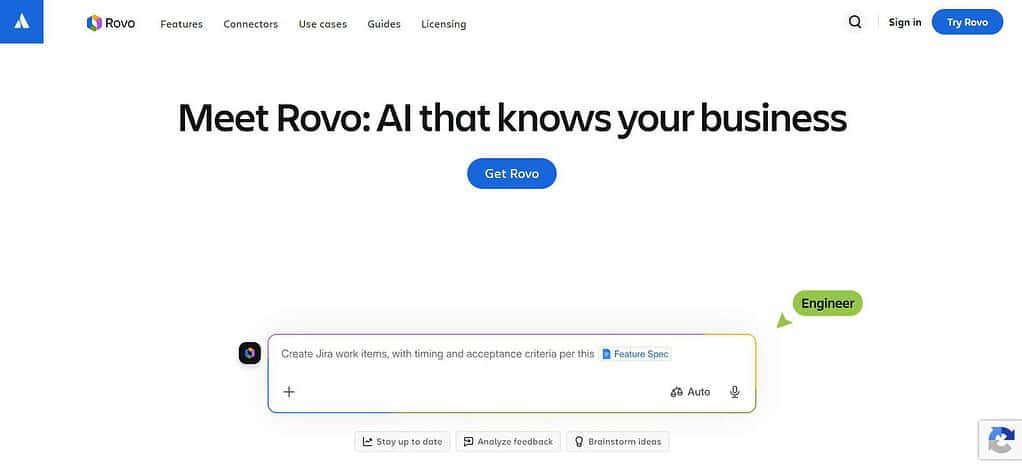
It can do AI things like search, conversational answers, summaries and context-aware agents. Rovo syncs permissions from Atlassian applications and connected third-party applications. Rovo use is currently included in the credits that are part of eligible Atlassian plans. The amount of credits varies depending on the plan.
| Feature | Details |
|---|---|
| Platform Type | Enterprise AI search, knowledge discovery, conversational AI, and agent platform |
| Rovo Search | Searches Atlassian applications and connected third-party applications from one interface |
| Rovo Chat | Conversational AI for questions, analysis, content creation, summaries, and workplace assistance |
| AI Answers | Provides natural-language answers using authorized company knowledge |
| Knowledge Cards | Surfaces related people, topics, information, and contextual insights |
| Definitions | Explains company-specific terminology, acronyms, and project language |
| AI Agents | Provides configurable agents that can perform specialized knowledge and workflow tasks |
| Agent Skills | Agents can help create, organize, analyze, and edit Jira and Confluence content with permission |
| Knowledge Sources | Jira, Confluence, connected third-party applications, and configured knowledge sources |
| Third-Party Search | Supports connected systems such as Google Drive and Slack |
| Permission Model | Search respects user permissions across Atlassian and connected applications |
| Deep Research | Can search, analyze, reason over information, and produce cited reports |
| Studio | Provides tools for creating agents, automations, and AI-powered applications |
| Best Feature | Combines enterprise knowledge discovery with Jira and Confluence workflows |
4. Guru
Guru is an AI-powered enterprise knowledge platform that enables you to create, verify, govern, and deliver trusted organizational knowledge. It is a knowledge management, enterprise search and AI knowledge-layer platform for organizations that need reliable internal answers.
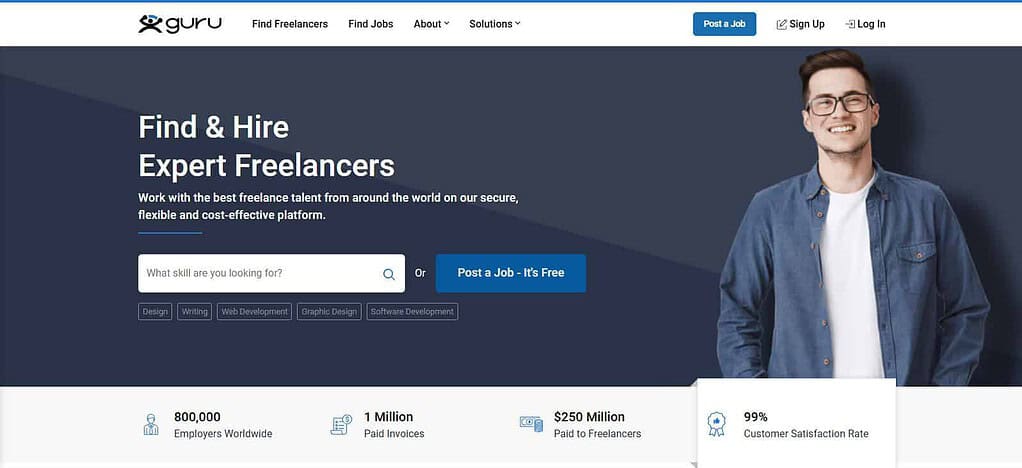
Guru connects to more than 100 systems including Slack, Microsoft Teams, Salesforce, Zendesk, Confluence and SharePoint. Its AI capabilities feature permission-aware search, Knowledge Agents, cited answers, research, and AI-powered knowledge delivery.
Guru provides role-based access management, SSO, SCIM, DLP masking, encryption, audit trails, and permission inheritance. Its existing enterprise offering is custom pricing based on the organization’s size, knowledge complexity, and AI needs.
| Feature | Details |
|---|---|
| Platform Type | AI knowledge management, enterprise search, and governed knowledge platform |
| Unified Knowledge Layer | Brings organizational information from multiple systems into one governed knowledge layer |
| Enterprise Search | Permission-aware search across connected enterprise knowledge |
| AI Answers | Provides answers with source citations and permission-aware retrieval |
| Knowledge Verification | Helps organizations maintain accurate and trusted knowledge |
| Knowledge Freshness | Identifies outdated or missing information and helps improve knowledge quality |
| Connectors | 100+ source connectors across enterprise applications, databases, and file systems |
| Knowledge Sources | Business applications, databases, file systems, Slack, SharePoint, Drive, Zendesk, Confluence, CRM systems, and others |
| Hybrid Search | Uses a unified retrieval index rather than keeping connected sources as isolated search silos |
| Permission Model | Inherits original access controls from connected sources |
| Knowledge Deduplication | Detects redundant and conflicting information across sources |
| AI Agents | Agents can perform knowledge tasks and take actions in connected systems |
| MCP Support | Makes governed Guru knowledge available to compatible AI tools and agents |
| Governance | Supports enterprise permissions, knowledge controls, and governed AI access |
| Best Feature | Strong focus on verified, governed, and permission-aware enterprise knowledge |
5. Coveo
Coveo is an enterprise AI-powered relevance platform based in Montreal, Quebec Canada The company was incorporated in 2004 but company profiles typically state 2005 as the year it was founded. Its platform type is AI enterprise search-powered relevance and generative experiences.
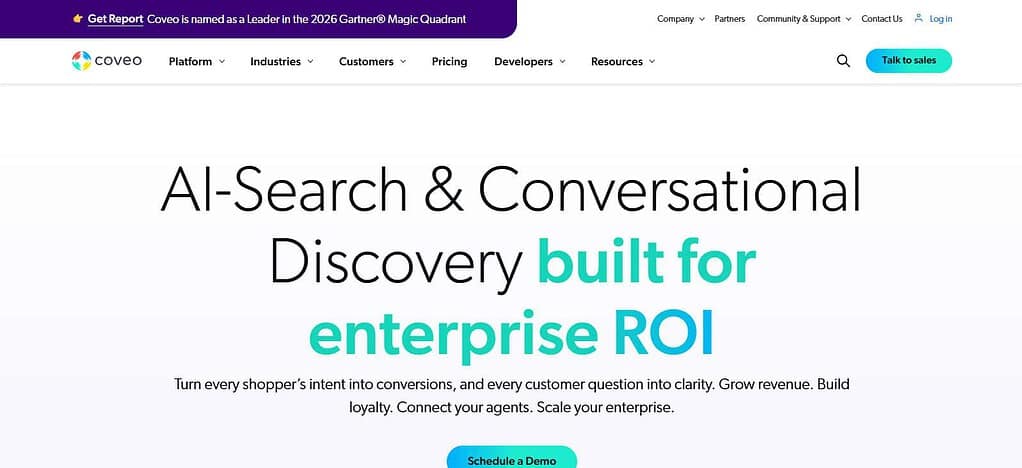
Coveo combines information from enterprise content sources and delivers search, recommendations, personalization, and generative answers. A major enterprise capability is its permission model that can maintain access rules of supported secured content sources.
Coveo’s security model evaluates permissions so that search results are returned only to the users that are allowed to access the underlying information. Pricing is mostly enterprise/custom based on deployment and requirements, not a simple public flat rate.
| Feature | Details |
|---|---|
| Platform Type | AI-powered enterprise search, relevance, personalization, and knowledge discovery platform |
| Enterprise Search | Helps organizations search and discover information across enterprise content |
| AI Search | Uses AI and relevance technology to improve the usefulness of search results |
| Generative AI | Supports AI-powered experiences that generate responses from retrieved enterprise information |
| Relevance | Focuses heavily on relevance, ranking, personalization, and contextual discovery |
| Knowledge Sources | Enterprise content repositories, websites, applications, commerce and service-related information sources |
| Connectors | Connects enterprise content sources through supported connectors and integrations |
| Personalization | Can tailor results and experiences based on user context and behavior |
| Permission Model | Supports secure enterprise search where access permissions can be respected for protected content |
| Content Discovery | Helps users discover relevant documents, information, products, and knowledge |
| Analytics | Provides analytics and insights for understanding search behavior and relevance |
| Search Relevance Controls | Organizations can configure search and relevance experiences for specific enterprise requirements |
| Enterprise Scalability | Designed for large-scale enterprise search and discovery requirements |
| Best Feature | Advanced relevance and AI-powered enterprise search |
6. Notion AI
Notion AI is the AI layer over Notion’s collaborative workspace, bringing together documentation, wikis, project data and AI-powered knowledge discovery. Notion is based in San Francisco, California, USA and its platform type is workspace, documentation, wiki and AI knowledge management.
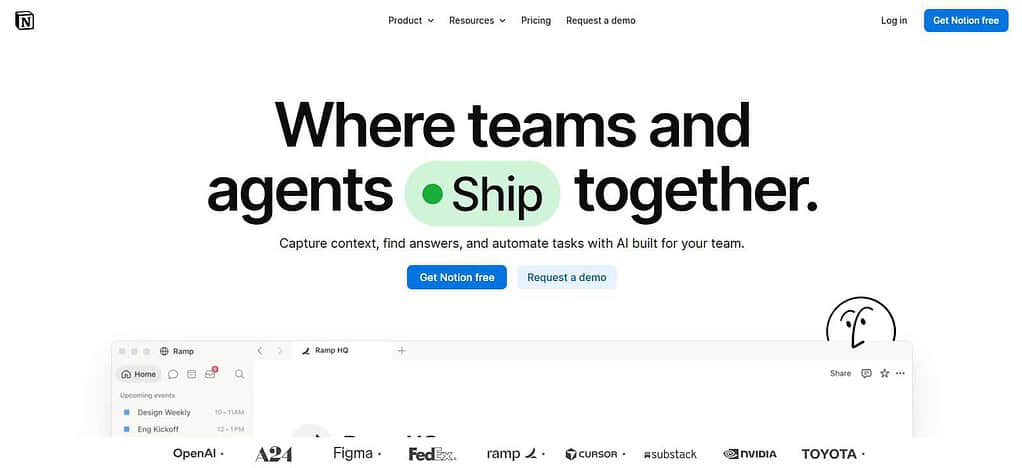
Information can exist in Notion pages, databases, documents, projects, and linked workplace data. Search, question answering, writing assistance, summarization and knowledge discovery assisted by AI with Notion AI.
Notion has workspace and page-level permissions to manage who can see workspace information. There’s no one-size-fits-all enterprise price; rather, pricing is based on the plan you choose. AI capabilities are available on Notion’s existing paid and AI-enabled plans.
| Feature | Details |
|---|---|
| Platform Type | Collaborative workspace, wiki, documentation, enterprise search, and AI platform |
| Enterprise Search | Searches Notion and connected applications using AI |
| AI Answers | Provides contextual answers instead of simply returning document lists |
| Knowledge Management | Supports company wikis, documentation, verified pages, teamspaces, and structured knowledge |
| Research Mode | Performs multi-step research across connected sources and can create detailed reports |
| AI Writing | Generates, rewrites, summarizes, and improves content |
| Connected Search | Can search connected tools such as Slack, Jira, and Google Drive |
| Knowledge Sources | Notion workspace content, documents, databases, connected workplace applications, and selected web sources |
| Citations | Enterprise Search answers can include citations to source information |
| Verified Pages | Helps teams identify trusted and current knowledge |
| Permissions | AI only surfaces information users have permission to access |
| AI Agents | Notion provides agents designed to perform tasks across workplace information |
| Workspace Management | Includes teamspaces, databases, dashboards, version history, and collaborative documentation |
| Best Feature | Combines knowledge management, documentation, AI search, and workspace collaboration |
7. Moveworks
Moveworks is an enterprise AI platform that enables employees to find information and do work across business applications. Founded in 2016 Moveworks is headquartered in Mountain View, California and has a strong presence in Bengaluru.
Platform type: enterprise AI assistant, knowledge discovery, search, workflow automation Moveworks uses conversational AI, semantic search, enterprise knowledge, and AI agents to answer employee questions and automate tasks across connected applications. It is meant to operate across enterprise systems, not just be a standalone documentation repository.
It integrates with Enterprise access management and workplace/business applications to control actions and information. Pricing is typically custom enterprise pricing based on your organization’s needs.
| Feature | Details |
|---|---|
| Platform Type | Enterprise AI assistant, AI search, knowledge discovery, and agentic automation platform |
| Enterprise Search | AI-powered search across enterprise applications |
| Context-Aware Search | Uses intent, relationships, systems, and organizational context to improve answers |
| AI Summaries | Provides summarized answers instead of requiring users to review multiple documents |
| Source Citations | Search responses can include inline citations to supporting sources |
| Conversational AI | Users can ask questions using natural language and continue conversations |
| Agentic AI | Moves from information retrieval toward reasoning and task execution |
| Knowledge Sources | Enterprise applications, knowledge bases, collaboration systems, IT, HR, finance, and other business systems |
| Integrations | 50+ built-in content integrations according to Moveworks’ current enterprise-search documentation |
| Multilingual Search | Supports multilingual enterprise search |
| Search Filters | Allows filtering by source, date, content type, and other search parameters |
| Permission Model | Designed for enterprise permission-aware knowledge retrieval |
| Workflow Automation | AI can connect knowledge discovery with business workflows and actions |
| Best Feature | Strong search-to-action approach for large enterprises |
8. Rovo + Confluence
Confluence + Rovo combines Atlassian’s collaborative documentation platform with Rovo’s AI-powered search and agent capabilities. Confluence is a team wiki, documentation and organizational knowledge platform and Rovo adds AI-powered discovery, answers and agents. Knowledge can be documentation, project information, meeting information, product information, and linked third party sources.
Rovo is able to leverage Atlassian’s Teamwork Graph to link knowledge with people and work context. As Rovo syncs with access management from Confluence, Atlassian applications, and supported connected applications, managing permissions is especially important.
Pricing is based on the applicable Confluence/Atlassian plans and Rovo credit allowances and is not a separate universal Rovo price.
| Feature | Details |
|---|---|
| Platform Type | Collaborative wiki, enterprise documentation, knowledge base, and AI workspace |
| Core Knowledge Base | Confluence provides structured company documentation and collaborative knowledge management |
| AI Search | Rovo searches Confluence content together with connected enterprise applications |
| AI Chat | Rovo Chat can answer questions using Confluence and connected company information |
| AI Summaries | Can summarize pages, content, work history, and project information |
| AI Agents | Rovo agents can work with Confluence content and perform specialized tasks |
| Knowledge Creation | Users can create, refine, organize, and improve documentation with AI assistance |
| Definitions | Rovo can explain company-specific terminology and acronyms |
| Knowledge Sources | Confluence pages, Jira information, and connected third-party applications |
| Third-Party Integrations | Rovo can search connected applications such as Google Drive and Slack |
| Permission Model | Rovo respects permissions from Confluence and connected applications |
| Automation | Agents can help organize or update Confluence pages with appropriate permissions |
| Research | Rovo Deep Research can combine information from Atlassian applications, connected SaaS tools, and the web when requested |
| Best Feature | Strong combination of structured documentation and AI-powered knowledge discovery |
9. Stack Overflow for Teams
Stack Overflow for Teams, now called Stack Internal, was built to help organizations own trusted internal knowledge, particularly for technical and developer teams. Stack Overflow was founded in 2008 and is based in New York, USA. The platform type is enterprise knowledge sharing, Q&A and organizational context management.
Stack Internal can ingest knowledge through connectors and APIs including information from **Google Docs, Microsoft Teams, Slack and other connected sources. Its capabilities include trusted knowledge delivery, confidence labels, provenance, SME workflows and AI-agent access via MCP.
The Starter plan is now free for up to three collaborators and the Organization plan has custom pricing based on Knowledge Flow Credits and custom roles, permissions, SSO, and enterprise governance.
| Feature | Details |
|---|---|
| Current Product Name | Stack Internal |
| Platform Type | Enterprise knowledge intelligence and trusted knowledge platform |
| Core Focus | Capturing, validating, organizing, governing, and delivering organizational knowledge |
| Knowledge Capture | Ingests knowledge from connected sources and transforms scattered information into reusable knowledge |
| Knowledge Validation | Uses trust signals, provenance, authorship, recency, and conflict detection |
| Confidence Indicators | Provides confidence and trust information to help users evaluate answers |
| SME Workflows | Can identify subject-matter experts and route important knowledge gaps for validation |
| Knowledge Organization | Uses role-based scopes to control which knowledge is available to specific users and agents |
| Permission Model | Permission-aware controls for people, teams, and AI agents |
| Governance | Custom roles, permissions, activity tracking, audit trails, and knowledge-health monitoring |
| AI Integration | Provides MCP and API capabilities for connecting trusted knowledge to AI assistants and coding agents |
| Connectors | Current platform supports Google Docs, Slack, Stack Internal Community, and custom ingestion/API options |
| Developer Focus | Particularly useful for engineering, technical, and developer knowledge |
| Knowledge Delivery | Can deliver knowledge through chat, APIs, MCP, plugins, and workplace tools |
| Best Feature | Verified organizational memory with strong trust and developer-oriented knowledge workflows |
10. Slack
Slite is an AI-powered knowledge base to centralize and maintain company docs. Slite says it was founded in 2017. Its current corporate/legal info includes entities in the United States and France. It’s a Team Knowledge Base, Documentation and AI Knowledge Management platform.
Knowledge may include company documents, internal guides, meeting information, policies and related workplace sources. AI is able to do AI search and answers, document verification, fact checking, connected-tool search, agent workflows, etc.
On qualifying plans, Slite has document permissions, user groups, SSO, SCIM, audit logs, and enterprise security controls. Pricing: Basic starts at $10/user/month and Pro starts at $20/user/month when billed yearly. Enterprise is custom priced.
| Feature | Details |
|---|---|
| Platform Type | AI knowledge base, internal documentation, enterprise wiki, and knowledge-management platform |
| AI Knowledge Base | Centralizes internal knowledge for employees and AI agents |
| Slite Agent | AI agent that searches internal knowledge, identifies gaps, and proposes documentation improvements |
| AI Knowledge Search | Understands natural-language questions and returns synthesized answers |
| Source Citations | Answers can include citations so employees can verify supporting information |
| Knowledge Maintenance | Identifies potentially outdated documentation and proposes updates |
| Knowledge Creation | Converts scattered information into structured internal documentation |
| Connected Sources | Can work with information from tools such as Slack, GitHub, Linear, and other supported sources |
| Knowledge Verification | Helps identify outdated or incomplete documentation before employees rely on it |
| Human Review | Proposed documentation changes go through a review process before being applied |
| Workplace Access | Knowledge can be accessed through Slite, Slack, Chrome, and desktop experiences |
| AI Agent Access | Slite Agent can be accessed through Slite, Slack, Claude, or API according to the current product documentation |
| Templates | Provides templates for common business documentation and workflows |
| Best Feature | AI-assisted knowledge maintenance and internal documentation |
Best Enterprise Knowledge Management AI Platforms 2026 — Comparison Table
| Platform | Platform Type | AI Search / Q&A | Knowledge Sources | AI Agents | Key Integrations | Permission Model | Security & Governance | Best For |
|---|---|---|---|---|---|---|---|---|
| Glean | Enterprise AI search & knowledge platform | Yes | Documents, apps, messages, business systems | Yes | 275+ connectors, enterprise apps, MCP | Source-level permission aware | Enterprise access controls, governance, audit capabilities | Enterprise-wide knowledge discovery |
| Microsoft 365 Copilot | Workplace AI & enterprise search | Yes | Microsoft 365, emails, files, meetings, chats, connected systems | Yes | Teams, Outlook, SharePoint, OneDrive, Word, Excel, PowerPoint | Microsoft 365 permissions | Microsoft identity, security, privacy and compliance controls | Microsoft-centric enterprises |
| Atlassian Rovo | AI search, knowledge & agent platform | Yes | Jira, Confluence, connected third-party sources | Yes | Jira, Confluence, Slack, Google Drive and others | Respects source permissions | Atlassian administration and governance | Jira and Confluence teams |
| Guru | AI knowledge management & enterprise search | Yes | Business apps, documents, Slack, CRM, support systems | Yes | Slack, Teams, Salesforce, Zendesk, Confluence, SharePoint | Permission-aware | SSO, SCIM, access controls, audit and governance | Verified internal knowledge |
| Coveo | Enterprise AI search & relevance platform | Yes | Enterprise content and business information | Yes / AI-driven experiences | Enterprise content systems and supported connectors | Permission-aware search | Enterprise security and access controls | Search relevance and personalization |
| Notion AI | AI workspace, wiki & knowledge platform | Yes | Notion pages, databases, documents, connected apps | Yes | Slack, Jira, Google Drive and supported connections | Workspace and page permissions | Workspace administration and enterprise controls | Documentation and team knowledge |
| Moveworks | Enterprise AI assistant & automation | Yes | Enterprise apps, knowledge bases, workplace systems | Yes | IT, HR, business and collaboration applications | Permission-aware | Enterprise security, identity and governance controls | Employee search and workflow automation |
| Confluence + Rovo | Wiki, documentation & AI knowledge | Yes | Confluence, Jira and connected applications | Yes | Jira, Confluence, Slack, Google Drive and others | Confluence/source permissions | Atlassian security and administration | Structured enterprise documentation |
| Stack Internal | Enterprise knowledge intelligence & Q&A | Yes | Internal Q&A, documents, connected knowledge sources | AI/MCP-enabled | Slack, Google Docs, APIs, MCP and supported sources | Scopes, roles and permissions | Governance, audit, knowledge controls | Developer and technical knowledge |
| Slite | AI knowledge base & documentation | Yes | Company docs and connected workplace tools | Yes | Slack, GitHub, Linear and supported tools | Workspace/document permissions | SSO, SCIM, audit and enterprise controls | Internal documentation and knowledge maintenance |
Quick Comparison
| Platform | Main Differentiator | Strongest Use Case |
|---|---|---|
| Glean | Enterprise-wide search + knowledge graph + agents | Large organizations with many SaaS systems |
| Microsoft 365 Copilot | Microsoft 365 ecosystem integration | Microsoft-based enterprises |
| Atlassian Rovo | Search + Chat + AI agents | Jira/Confluence environments |
| Guru | Verified and governed knowledge | Trusted internal answers |
| Coveo | Search relevance and personalization | Complex enterprise search |
| Notion AI | Wiki + workspace + AI search | Documentation-heavy teams |
| Moveworks | Search-to-action automation | Employee support and workflows |
| Confluence + Rovo | Documentation + AI discovery | Product and technical teams |
| Stack Internal | Knowledge validation and trust | Engineering organizations |
| Slite | AI-assisted knowledge maintenance | Internal company documentation |
Conclusion
Enterprise knowledge management AI platforms are becoming a necessity for organizations that need quick access to accurate, secure and actionable information. The optimal platform will be contingent upon a company’s existing technology stack, knowledge sources, security needs, integrations and AI objectives.
Glean and Coveo are good options for enterprise-wide search, and Microsoft 365 Copilot is a good option for organizations heavily using Microsoft tools. Atlassian Rovo and Confluence are great for connected teamwork and documentation; Guru, Notion AI, Moveworks, Stack Internal, and Slite are good for other types of knowledge sharing.
Prior to choosing a platform, organizations should evaluate permissions, retrieval quality, integrations, governance, scalability, pricing and their long-term knowledge management requirements.
FAQ
What is an enterprise knowledge management AI platform?
An enterprise knowledge management AI platform helps organizations collect, organize, search, and use internal business information with artificial intelligence. It can connect documents, wikis, conversations, applications, and other knowledge sources to provide faster answers and improve information discovery.
What are the best enterprise knowledge management AI platforms in 2026?
Leading options include Glean, Microsoft 365 Copilot, Atlassian Rovo, Guru, Coveo, Notion AI, Moveworks, Confluence with Rovo, Stack Internal, and Slite. The right choice depends on an organization’s knowledge sources, technology stack, security requirements, integrations, and budget.
How does AI improve enterprise knowledge management?
AI can understand natural-language questions, search across connected knowledge sources, summarize information, generate answers, identify relevant documents, and help employees find information faster. Some platforms also provide AI agents that can perform tasks using connected enterprise applications.
What should enterprises consider when choosing an AI knowledge platform?
Enterprises should evaluate AI search quality, knowledge sources, integrations, permission controls, security, governance, deployment options, scalability, pricing, administration, and AI capabilities. It is also important to check how frequently connected information is synchronized and how users can verify AI-generated answers.