
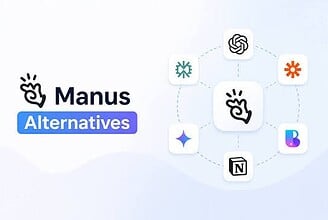


In this post, I will share the Top OpenClaw Competitors for 2026. The last few years have shown accelerated growth for the Autonomous Agent Economy, and the framework OpenClaw has benefited from this growth. However, there are a few competitors in the space.
Some of the top competitors in this space include, OpenAGI, AutoGen Studio, CrewAI, LangGraph, Claude Code, Nanobot, NanoClaw, SuperAGI, Vellum, Claude Cowork, Instinct, Jan.ai, and others.
What Is OpenClaw?
OpenClaw is an AI framework released in 2026 that lets large language models act as independent agents. With it, large language models can do code, file, web, and task management. Written in TypeScript, OpenClaw became one of GitHub’s fastest programs. As of this writing, it has over 347,000 stars, and is still growing.
In the beginning, OpenClaw’s growth outpaced that of both React and Vue.js. OpenClaw charges nothing for its use, and offers commercial user support and other services through partnered firms.
Because of its unified execution model, it can work with numerous LLMs. Although controversial, OpenClaw aims to provide security to its users. Because of this, it has raised several ethical concerns. OpenClaw is still in beta, and is available to the public for free.
Key Points
| Competitor | Best For | Key Strengths |
|---|---|---|
| OpenAGI | Proactive personal agents | Self-improving, learns by watching, multi-channel reach |
| AutoGen Studio | Multi-agent orchestration | Microsoft-backed, visual canvas for agent pipelines |
| CrewAI | Role-based workflows | Specialized agents with distinct jobs |
| LangGraph | Custom developer agents | Graph-based state machine for explicit control |
| Claude Code | Developers | Repo-scoped coding agent with structured diffs |
| Nanobot | Lightweight agent | 4,000 lines of Python, minimal footprint |
| NanoClaw | Security-first users | Docker-isolated, auditable ~500-line core |
| SuperAGI | Multi-agent frameworks | Enterprise-ready, scalable orchestration |
| Vellum | Work & personal task management | Isolated credential storage, native desktop control |
| Claude Cowork | Knowledge workers | Sandboxed document automation with Anthropic models |
| Instinct | Everyday life admin | Autonomous cloud assistant via SMS & phone |
| Jan.ai | Offline users | Fully local, zero telemetry, open-weight models |
1. OpenAGI
OpenAGI was founded in 2025 with the goal of creating an autonomous agent framework, OpenAGI, where agents could learn through experience and generalize that learning across multiple environments. They offer a free product for individual users to use simpler agents and charge $49/month per user for larger, enterprise deployments.
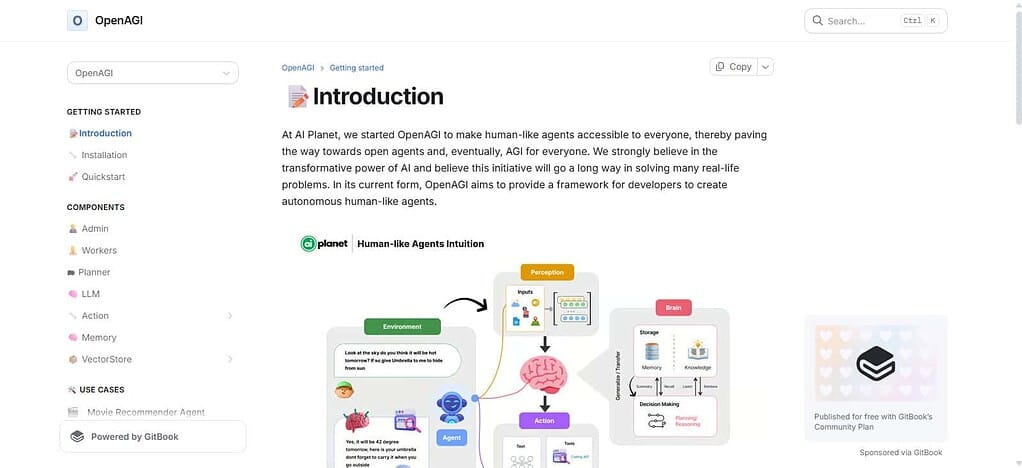
Agents developed by OpenAGI can automate a variety of different user tasks and interactions. OpenAGI’s main differentiator in the market is its focus on agent autonomy and for its agents to be self-improving. In 2026, OpenAGI was positioned as an alternative to OpenClaw, focusing on agent safety and user credential management. OpenAGI’s wide-reaching APIs and integrations make it an interesting competitor in the space.
OpenAGI Features
- Adaptive learning
- Multi-channel communication
- Freemium business model (incl. an $49/mo enterprise tier)
- Developer APIs
- OpenAGI is safer and proactive like OpenClaw.
| Pros | Cons |
|---|---|
| Learns adaptively from user behavior | Risk of over‑automation without oversight |
| Freemium pricing accessible to individuals | Enterprise tier ($49/month) may be costly for startups |
| Multi‑channel communication support | Limited transparency in agent decision‑making |
| Strong personal task automation | Requires consistent data input to improve |
| Developer APIs for customization | Less enterprise orchestration compared to rivals |
| Rapid adoption since 2025 | Still maturing compared to older frameworks |
| Safer than OpenClaw in credential handling | Limited offline functionality |
| Flexible integration options | May lack advanced enterprise compliance features |
2. AutoGen Studio
AutoGen Studio was released in 2024 by Microsoft Research and quickly gained mainstream adoption. It allows users to create workflows using multiple agents and helped organizations develop more complex workflows. Pricing is $99/month for a team and varies for larger, enterprise contracts.
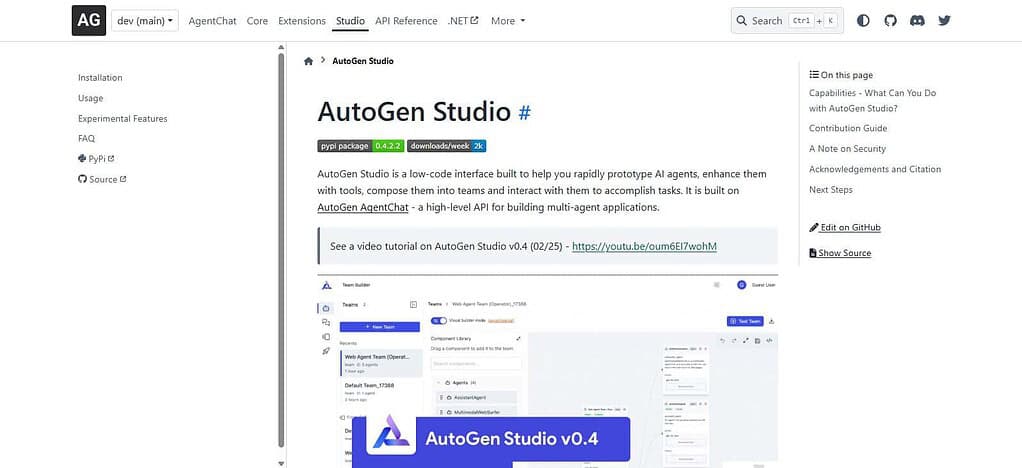
In addition to agents and workflow orchestration, AutoGen Studio offers integration with other Azure AI services. Compared to OpenClaw, AutoGen Studio is less hazardous and more controlled. AutoGen Studio has quickly gained traction in enterprise organizations further validating it as a leading agent orchestration and management platform.
AutoGen Studio Features
- Allows users to create multi-agent systems using visual programming
- Funded and launched by Microsoft (2024)
- Offers a free tier and a $99/month tier
- Integrates Microsoft Azure’s AI services
- Multi-agent based workflow automation
| Pros | Cons |
|---|---|
| Visual canvas for agent orchestration | Requires Microsoft ecosystem adoption |
| Free academic tier | Professional tier at $99/month may be high |
| Backed by Microsoft Research | Less lightweight than indie frameworks |
| Seamless Azure AI integration | Cloud dependency limits offline use |
| Enterprise‑ready workflows | Complex for non‑technical users |
| Strong orchestration capabilities | Limited customization outside Azure |
| Easy adoption in enterprises | May lock users into Microsoft stack |
| Reliable support ecosystem | Less appealing for privacy‑focused users |
3. CrewAI
Launched in 2025, CrewAI leverages a role-based model to build programmable business software. Each software agent is commissioned to perform a specific task within a given workflow. CrewAI offers a small team plan for $29/mo. with larger plans for $199/mo. that are targeted for larger businesses. CrewAI’s proprietary technology allows for the automation of tasks within a workflow while managing the interaction of multiple agents.
Unlike other similar software, CrewAI quickly gained popularity to replace OpenClaw because of its more secure architecture. Similar to OpenClaw, CrewAI provides integrations for workflow management, and AI interactions with project management software like Jira and Slack, as well as source code management software, like GitHub.
CrewAI Features
- Allows users to create multi-agent systems and delegate tasks to them
- Launched in 2025
- Offers a $29/month individual tier and a $199/month enterprise tier
- Integrations with Slack, GitHub, and Jira
- Safest option out of the cited AIs and OpenClaw
| Pros | Cons |
|---|---|
| Role‑based agent delegation | Higher enterprise cost ($199/month) |
| Clear workflow boundaries | Less flexible for creative tasks |
| Integrates with GitHub, Slack, Jira | Requires team adoption for full value |
| Affordable entry tier ($29/month) | Limited offline execution |
| Strong collaboration features | May overlap with project management tools |
| Founded in 2025 with rapid growth | Still building enterprise trust |
| Safer orchestration than OpenClaw | Complex setup for small teams |
| Popular among engineering teams | Less suited for individual users |
4. LangGraph
LangGraph, released in 2024, leverages a graph based model for state machines and offers fine grained control over agent workflows. Like OpenClaw, LangGraph utilizes developer APIs for agent management and state control, extending autonomy over workflows. Individual developers can use LangGraph for free, and enterprises can purchase a subscription for $79/mo.
Like OpenClaw, LangGraph focuses on workflow management and agent orchestration. However, LangGraph fosters more control over potential prompts and agents, reducing risk of unwanted agent execution and prompt injection. Autonomous AI allows developers to direct their attention toward higher value tasks, like strategizing.
LangGraph Features
- Allows users to create state machines
- Offers an enterprise tier for $79/month
- Allows users to control and configure the workflow
- Designed to be security focused
| Pros | Cons |
|---|---|
| Graph‑based state machine control | Requires developer expertise |
| Open‑source availability | Enterprise tier ($79/month) adds cost |
| Transparent workflows | Less user‑friendly for non‑coders |
| Strong customization | Slower adoption outside dev communities |
| Security‑focused design | Limited pre‑built integrations |
| Developer‑centric flexibility | Steeper learning curve |
| Founded in 2024, proven reliability | Not ideal for everyday users |
| Safer than OpenClaw | May lack enterprise compliance certifications |
5. Claude Code
Released in 2025, Claude Code was the first product launched by Anthropic. It is a coding-related automation agent that operates within code repositories. It provides coding suggestions and automated changes to code repositories.
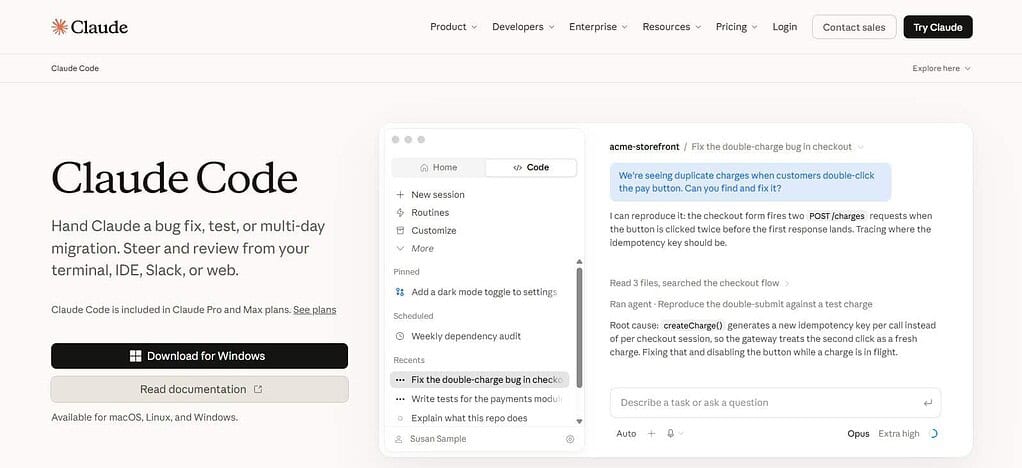
It charges $20 per developer per month, and its enterprise rate is $99 per license. Claude Code focuses on safety and provides automated reviews of source code. It has direct communications with GitHub and GitLab, and in 2026, it was the coding-focused automation agent of choice for several engineering teams.
Claude Code Features
- Automates coding for Repo’s and Bugs
- Released by Anthropic (2025)
- $20/month per user, $99 enterprise Tier
- Sandbox to protect system integrity
| Pros | Cons |
|---|---|
| Repo‑scoped coding automation | Limited beyond developer use cases |
| Automated code reviews | $20/month per developer adds up for teams |
| Bug fixing and structured diffs | Enterprise tier ($99) may be costly |
| Sandboxed execution ensures safety | Focused narrowly on coding tasks |
| GitHub/GitLab integration | Not suitable for general workflows |
| Launched by Anthropic in 2025 | Competes with other dev tools |
| Strong adoption among developers | Requires technical setup |
| Safer than OpenClaw | Limited multi‑channel communication |
6. Nanobot
In 2025, the lightweight, Python-based autonomous agent framework, Nanobot, was released with less than 4,000 lines of code. It charges $39 per month for its enterprise support and is free for use with open source applications.
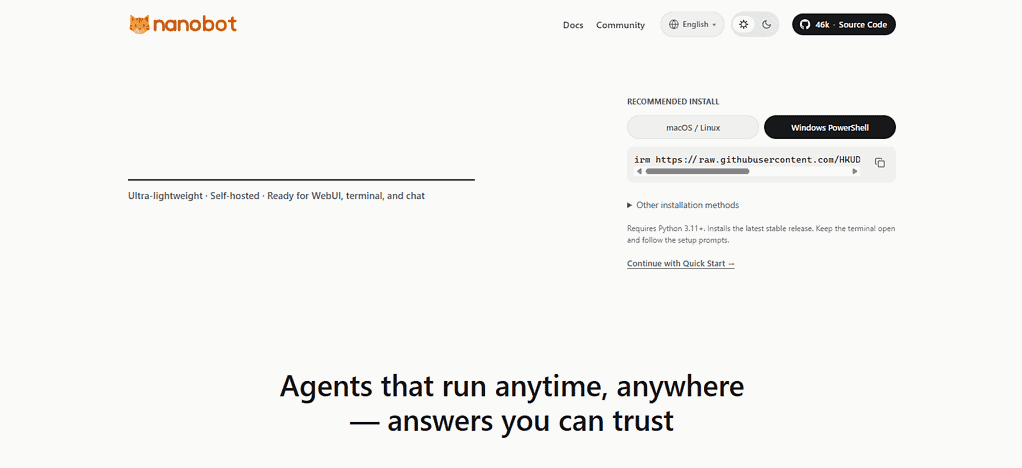
Nanobot provides a framework for task automation and the orchestration of other autonomous agents. It provides a less complex and more transparent framework than OpenClaw, and is particularly helpful for solo developers. In 2026, it became increasingly popular with end-users focused on privacy.
Nanobot Features
- Lightweight framework (4,000 lines Python)
- Founded in 2025 for indie developers
- Free open‑source, $39/month enterprise support
- Minimalistic orchestration tools
- Transparent and privacy‑friendly
| Pros | Cons |
|---|---|
| Lightweight (4,000 lines Python) | Limited enterprise features |
| Free open‑source use | Enterprise support costs $39/month |
| Transparent and minimalistic | Less orchestration power |
| Easy customization | Requires developer setup |
| Privacy‑friendly | Not enterprise‑grade security |
| Founded in 2025 | Smaller adoption base |
| Ideal for indie developers | Limited integrations |
| Safer than OpenClaw | Less scalable for large teams |
7. NanoClaw
The first version of NanoClaw was released in 2025. Based on the same principles as OpenClaw, NanoClaw offered a more secure option with a smaller, simpler code base that could be audited more easily. Like OpenClaw, NanoClaw uses sandboxing and credential isolation. Services offered by NanoClaw include agent orchestration and execution.
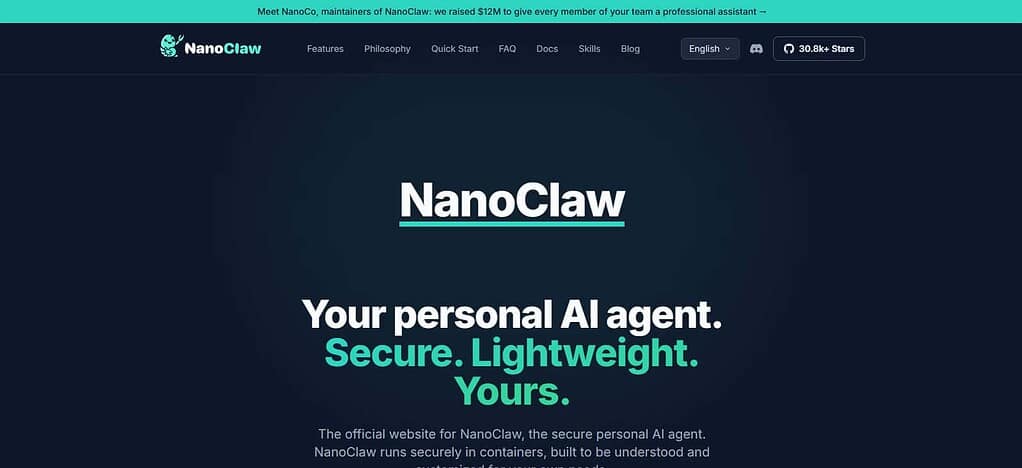
NanoClaw charges $59 per month for its services, while the individual, or pro, version of NanoClaw is free. As with OpenClaw, there are risks associated with the use of NanoClaw. Financial services and healthcare companies have adopted NanoClaw. In 2026, several companies chosen to use NanoClaw over other options, including competitor OpenClaw.
NanoClaw Features
- Security‑first design, 500‑line auditable core
- Docker‑isolated execution environment
- Free individual use, $59/month enterprise tier
- Credential isolation and sandboxing
- Trusted by finance and healthcare sectors
| Pros | Cons |
|---|---|
| Security‑first design | Limited feature set compared to rivals |
| 500‑line auditable core | Enterprise tier $59/month |
| Docker‑isolated execution | Requires technical expertise |
| Credential isolation | Less flexible for general tasks |
| Trusted by finance & healthcare | Smaller adoption outside regulated sectors |
| Free for individuals | Limited community ecosystem |
| Founded in 2025 | Narrow focus on security |
| Safer than OpenClaw | May lack advanced orchestration tools |
8. SuperAGI
SuperAGI launched its first enterprise-level, multi-agent system in 2024. SuperAGI charges $99 a month for its services and offers enterprise agreements for larger teams. SuperAGI focuses on integrating agent technology into companies’ internal systems and workflows.
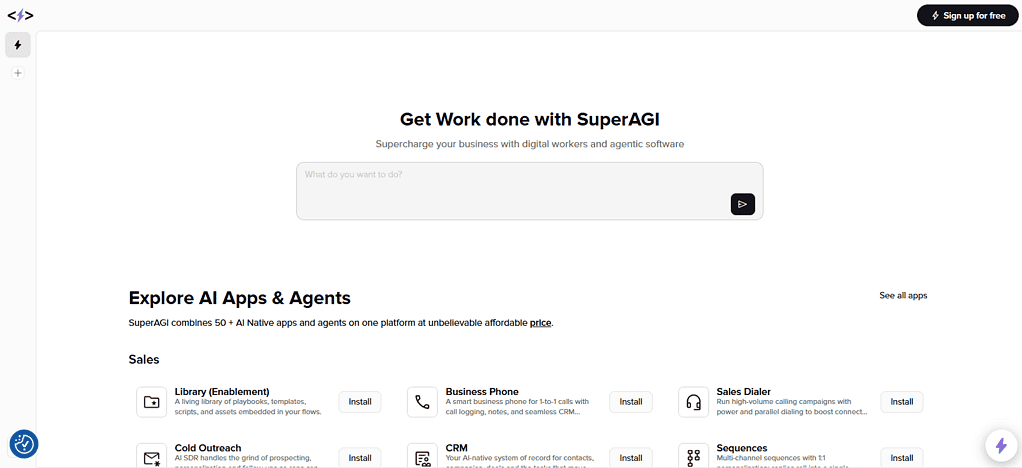
Compared with other agent systems, SuperAGI and OpenClaw offer similar services to large companies. However, SuperAGI does not offer some of the advanced services, like gaming and text generation, that other agent systems provide.
SuperAGI focuses on integrating large numbers of agents across many systems. By 2026, SuperAGI was the primary choice for many organizations to meet their need for large-scale, governing systems and autonomous AI.
SuperAGI Features
- Allows users to create enterprise applications with multiple agents
- Focus on scalability from launch in 2024.
- Monthly pricing for small teams at $99. Enterprises contracts are negotiated separately.
- Automates workflows across multiple organizations.
- Has a head-to-head competitive relationship with OpenClaw in the enterprise AI arena.
| Pros | Cons |
|---|---|
| Enterprise‑ready framework | Entry tier $99/month |
| Scalable orchestration | Complex setup for small teams |
| Founded in 2024 | Requires enterprise IT support |
| Workflow automation | Less suited for individuals |
| Strong integrations | Cloud dependency |
| Reliable enterprise adoption | Higher learning curve |
| Competes directly with OpenClaw | May overlap with existing enterprise tools |
| Proven scalability | Costly for startups |
9. Vellum
Launched in 2025, Vellum’s desktop-first autonomous agent platform quickly gained traction. Pricing is $15 per user per month, or $49 per seat for an enterprise license. In addition to personal task management and privileged access management, Vellum offer a command and control interface for natively running processes and applications on a user’s desktop.
Vellum keeps users’ access credentials, and therefore, their managed tasks, private. Compared to OpenClaw, for example, Vellum offers a stronger cases for both task safety and user control. Vellum has successfully replaced counter-productivity and busy-work applications in knowledge workers’ task arsenals. By the end of 2026, Vellum was a leading option for users looking to engage autonomous AI agents.
Vellum Features
- Depth-first autonomous agent platform for desktop computers.
- 2025 launch for utilize knowledge workers.
- User price tier at $15/month. Enterprice pricing at $49/month.
- Employs credential isolation and a privacy focused design.
- Allows users to automate tasks using desktop applications.
| Pros | Cons |
|---|---|
| Desktop‑focused automation | Limited cloud orchestration |
| Privacy‑first design | Enterprise tier $49/month |
| Credential isolation | Less flexible for developers |
| Native desktop control | Limited integrations |
| Affordable at $15/month | Smaller adoption base |
| Founded in 2025 | Not ideal for large enterprises |
| Strong security guarantees | May lack advanced AI features |
| Safer than OpenClaw | Limited scalability |
10. Claude Cowork
Claude Cowork, an Anthropic 2025 release, is concentrated on knowledge workers. It costs $25 per user, with enterprise prices increasing to $99 per user. The automation of business documents and processes, as well as the sandboxing of distributed agent functionality, are the key offerings of the product.
Claude Cowork, by design, is less permissive than OpenClaw. It has found success in the enterprise automation of office work, and hence has a strong foothold in the market. By 2026, there was growing interest in Claude Cowork and similar products, due to the focus on safety and integrations with productivity applications.
Vellum (2025) debuted as a desktop-centered autonomous agent platform. For $15 monthly per user, credentials and tasks are managed and retrieved from the user’s computer. The 2026 release of Vellum built trust with users concerned about privacy and autonomous AIs.
Claude Cowork Features
- Documents automation for office work.
- 2025 launch by Anthropic.
- User price tier at $25/month. Enterprise pricing at $99/month.
- Employs a sandbox to contain processes.
- Integrates with Google Docs and Sheets.
| Pros | Cons |
|---|---|
| Document automation | Narrow focus on office workflows |
| Sandboxed execution | $25/month per user adds up |
| Productivity tool integration | Enterprise tier $99/month |
| Launched by Anthropic in 2025 | Competes with other office AI tools |
| Safer than OpenClaw | Limited developer features |
| Strong enterprise adoption | Requires enterprise buy‑in |
| Trusted for knowledge work | Less suited for individuals |
| Reliable safety guarantees | Limited customization |
11. Instinct
Founded in 2025, Instinct offers an autonomous assistant via phone and SMS (using the cloud). Pricing is $10/user/month with enterprise rates at $39/seat. Instinct offers workflow and communication solutions through automated scheduling and tasks.
As with all automated system interfaces, Instinct provides means for users to interact with their agents via text. Compared to OpenClaw, Instinct focuses on simplifying automated system interfaces. By the end of 2025, Instinct was a top choice for automating daily tasks with a focus on ease-of-use and accessibility.
Instinct Features
- Cloud-based assistant for personal use via phone and SMS.
- 2025 launch for accessibility.
- User pricing at $10/month. Enterprise pricing at $39/month.
- Automates personal tasks and scheduling.
- Similar functionality to OpenClaw.
| Pros | Cons |
|---|---|
| Cloud‑based assistant | Limited enterprise orchestration |
| Accessible via SMS & phone | Enterprise tier $39/month |
| Affordable at $10/month | Less developer customization |
| Everyday task automation | Limited integrations |
| Founded in 2025 | Smaller adoption base |
| Easy accessibility | Cloud dependency |
| Safer than OpenClaw | Less suited for complex workflows |
| Popular among individuals | Limited enterprise compliance |
12. Jan.ai
Launched in 2024, Jan.ai focuses on providing a fully-autonomous system interface for users concerned with privacy. The core solution is free, with support and prioritization available for $29/month. Like OpenClaw, Jan.ai differentiates on the basis of user privacy.

Jan.ai’s core solution gains traction among developers. Lacking a cloud solution, Jan.ai fully executes tasks on the user’s device. This makes Jan.ai a strong privacy solution. By 2026, Jan.ai gained notoriety for providing fully-local, autonomous agents.
Jan.ai Features
- Local autonomous agent platform.
- 2024 launch for privacy and security.
- Provides a free version for personal use. Support is provided for $29/month.
- Employs local computing and Zero-Knowledge Authenctication for privacy.
- Privacy focused guarantee compared to OpenClaw.
| Pros | Cons |
|---|---|
| Fully local execution | Limited cloud integrations |
| Zero telemetry privacy | Support tier $29/month |
| Free for individuals | Less enterprise adoption |
| Strong privacy guarantees | Limited scalability |
| Founded in 2024 | Smaller ecosystem |
| Offline task automation | Requires local hardware resources |
| Trusted by privacy‑focused users | Less suited for enterprises |
| Safer than OpenClaw | Limited orchestration features |
Conclusion
The autonomous AI ecosystem of 2026 encompasses many competitors to OpenClaw, namely OpenAGI, AutoGen Studio, CrewAi, LangGraph, Claude Code, Nanobot, NanoClaw, SuperAGI, Vellum, Claude Cowork, Instinct, Jan.ai, and others.
Competitors possess a variety of features, including proactive autonomy and enterprise orchestration, as well as lightweight local processing and a focus on privacy. Different monetization strategies, from completely free (freemium) models to enterprise-only models, allow a wide range of users, from individuals to large businesses, to access the platforms.
A trend toward more guarded and more agent-specific AI has allowed for the integration of autonomous AI in a wide variety of applications. These AI agents increase productivity and efficiency for a broad range of uses.
FAQ
What is OpenAGI?
OpenAGI, founded in 2025, is a proactive agent framework that learns by observing user behavior. It offers freemium pricing with enterprise seats at $49/month. Services include adaptive learning, multi‑channel communication, and personal task automation.
What is AutoGen Studio?
AutoGen Studio, launched by Microsoft Research in 2024, provides a visual canvas for multi‑agent orchestration. Pricing ranges from free academic use to $99/month for professionals. It integrates with Azure AI for enterprise workflows.
What is CrewAI?
CrewAI, founded in 2025, is a role‑based agent system where each agent has a distinct job. Pricing starts at $29/month, scaling to $199/month for enterprises. It integrates with GitHub, Slack, and Jira.
What is LangGraph?
LangGraph, introduced in 2024, is a developer‑centric framework using graph‑based state machines. It is open‑source with enterprise support at $79/month. It emphasizes transparency and control in agent workflows.
What is Claude Code?
Claude Code, launched by Anthropic in 2025, is a coding agent for repositories. Pricing is $20/month per developer, with enterprise seats at $99. It automates code reviews, bug fixes, and repo‑scoped tasks.