



In this article, I will discuss the Top Alternatives to Bolt.new for Full-Stack Web App Development in 2026. The rise of AI-based and no-code tools has resulted in increased competition for Bolt.new in the application development and deployment space.
With AI-based and no-code tools offering end-to-end application development and deployment at an affordable price, along with a host of other benefits, startups and enterprises have a wide array of options to develop, deploy, and scale web applications.
What Are Bolt.new Rivals?
Bolt.new rivals operate in the same space as Bolt.new in full-stack web app development. These rivals include various no-code and AI-code development suites. Like Bolt.new, these rivals permit users to build, deploy and scale apps quickly.
Distinguishing features of these rivals include, but are not limited to, AI-assisted code completion, instant cloud deployment, and backend code scaffolding. Some of these rivals also allow users to export their apps to GitHub. Softr, Lovable, Bubble, Replit Agent and Cursor are a sample of the rivaling products. Each of these products has strengths that facilitate development for both technical and non-technical users.
How To Choose Bolt.new Rivals for Full-Stack Web Apps
Identify Your Level of Expertise
Between Replit Agent, Cursor, and Vercel v0, the most experience level control is given to the user. Less technical users may want to check out options like Softr, Zite, and Bubble.
Understand Price Structures
Low cost options like Softgen (approx. $33/year) may work for cash strapped organizations, but if your organization has deep pockets Bubble and Vercel v0 are good options.
Look Into Frontend Development
Verial v0 and Cursor are great for developing the frontend, while Softr and Zite are more focused on back end development.
Look Into Backend Development
Replit Agent and Cursor are great for developing APIs and other back end components, while Bubble and Softr are more limited in that regard.
Consider Your Options for Deployment
Replit and Vercel v0 offer cloud deployment, and Softgen and Lovable offer GitHub export for control over deployment.
Look Into Use Case
For developing an MVP, consider Lovable or Base44. For developing an enterprise app, consider Bubble. For everything else, consider Softr and Zite.
Key Points
| latform | Best For | Pricing (2026) | Standout Features |
|---|---|---|---|
| Softr | Business apps, internal tools | From $19/month | AI Co‑Builder, workflows, roles, Airtable/Google Sheets integration |
| Replit Agent | Developers, multi‑language coding | Free tier; Pro $20/month | AI coding agent, instant deployment, collaborative IDE |
| Lovable | Idea‑to‑product startups | From $21/month | Prompt‑to‑app generation, code ownership, fast MVP builds |
| Vercel v0 | React/Next.js developers | From $20/month | UI scaffolding, GitHub export, deploy on Vercel |
| Cursor | Complex projects, debugging | From $20/month | AI IDE, project‑wide context, refactoring, debugging |
| Softgen | MVP builders, startups | $33/year license | Exportable full‑stack code, auth, payments, integrations |
| Zite | Non‑technical teams | From $19/month | Simple UI, collaboration tools, real app deployment |
| Bubble | Complex custom apps | From $32/month | Mature ecosystem, plugins, scalable hosting |
| Base44 | Fast prototyping | N/A (early stage) | Converts app descriptions into working full‑stack apps |
| Create | Non‑developers, quick builds | N/A | AI + no‑code blend, text‑to‑app/site generation |
1. Softr
Softr is a no-code application development platform that is useful for creating business applications and tools. Its price starts at $19/month, making it an affordable option for many teams and businesses. Softr provides a drag and drop interface to create application forms.
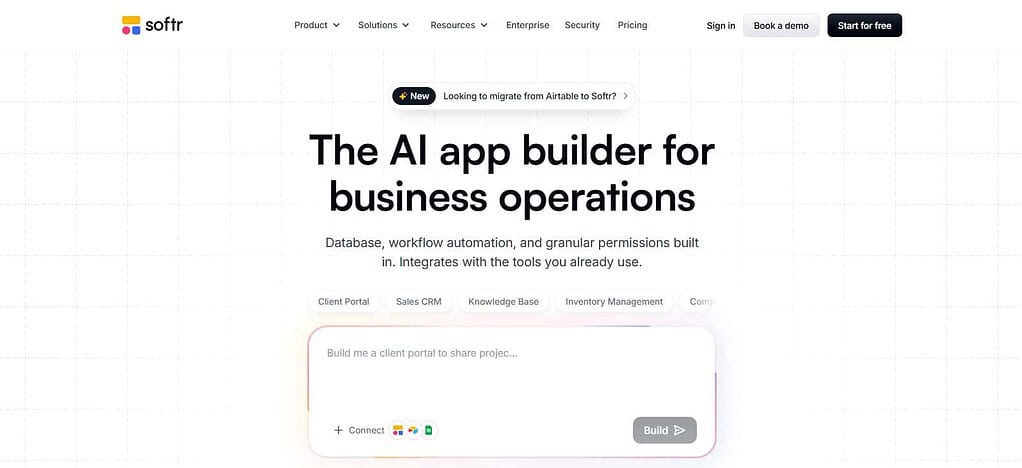
It also provides integration with various services to create application forms with backend and dynamic data. Forms created with Softr can be deployed on Softr’s servers, and it provides a number of features such as user accounts and single sign on.
Softr also provides features to create automate workflows. It’s AI feature can create application forms. Overall, Softr is a great alternative to Bolt.new for creating business applications.
Why Rival: Close competitor Bolt. offers AI-powered no code / low code development suites.
When to Use: For rapid application development of business applications and automation. Alternatives: Big Unfinished Thing, AirTable, Zapier, Casual.
Best Feature: Rapid application development and deployment with built-in workflows and access control.
Where it Falls Short: This is not the right tool for high level or complex coding.
Costs: Starting at $19/user/month.
| Feature | Details |
|---|---|
| Starting Price | $19/month |
| Frontend | Drag‑and‑drop UI blocks |
| Backend | Airtable, Google Sheets, databases |
| Deployment | Softr cloud hosting with custom domains |
| Authentication | Built‑in user roles & permissions |
| Workflows | Automation and integrations |
| AI Tools | AI Co‑Builder for faster app creation |
| Scalability | Suitable for SMBs and internal tools |
| Collaboration | Team access and role management |
| Templates | Pre‑built responsive layouts |
| Integrations | Zapier, Stripe, Google services |
| Target Users | Non‑technical teams, startups |
2. Replit Agent
Replit Agent is a cloud-based IDE that uses AI to assist in coding. The base version of Replit Agent is free, and the Pro versions are $20/mo. Replit’s AI offers features to code and test in different frameworks such as React, and underlying technologies like Node.js. AI offers features to assist in deployments and code merging. In addition, the AI aids in code debugging and refactoring.
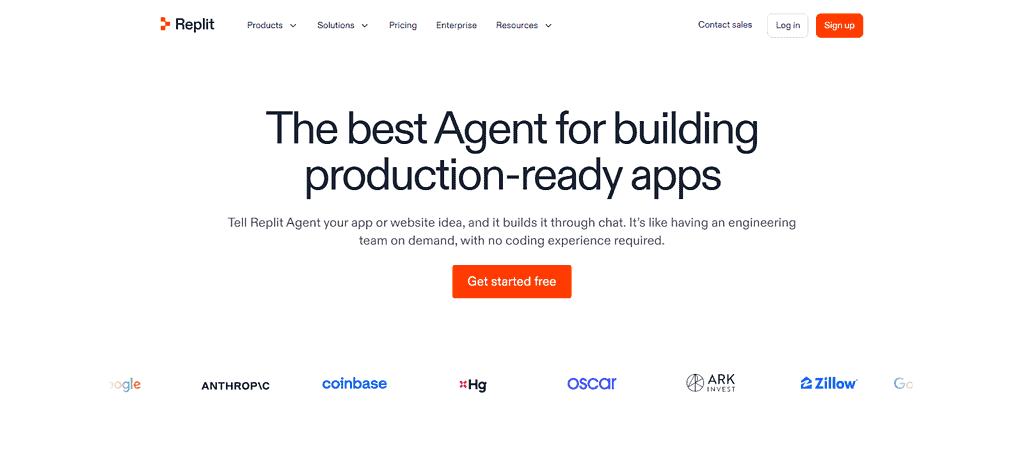
The price determines the level of collaboration and computing power. Replit Agent provides developers the opportunity to integrate and utilize AI in coding, and test different features in a web-based environment.
Why Rival: AI-powered programming in cloud-based IDEs, like Bolt.new’s AI constructs and builds.
Best For: Programmers who want to create cross-platform, multi-language apps, instantly.
Great For: Real-time programming and debugging.
Not For: Novice programmers, as it is somewhat advanced.
Cost: Free version available, Pro Plan for $20/month.
| Feature | Details |
|---|---|
| Starting Price | Free; Pro $20/month |
| Frontend | Supports React, Vue, Svelte |
| Backend | Node.js, Python, Go, Java |
| Deployment | Instant hosting via Replit |
| AI Agent | Generates, debugs, refactors code |
| Collaboration | Real‑time multi‑user editing |
| IDE | Browser‑based cloud IDE |
| GitHub | Integration for version control |
| Scalability | Suitable for developers & teams |
| Authentication | Custom code implementation |
| Pricing Tiers | Unlock private repos, faster compute |
| Target Users | Developers needing AI productivity |
3. Lovable
Lovable’s primary business is transforming natural language prompts into web applications. Its pricing model positions it to target product teams and founders, specifically in the $21/month range. Lovable uses modern frameworks and libraries such as React and Node.js to create web applications.
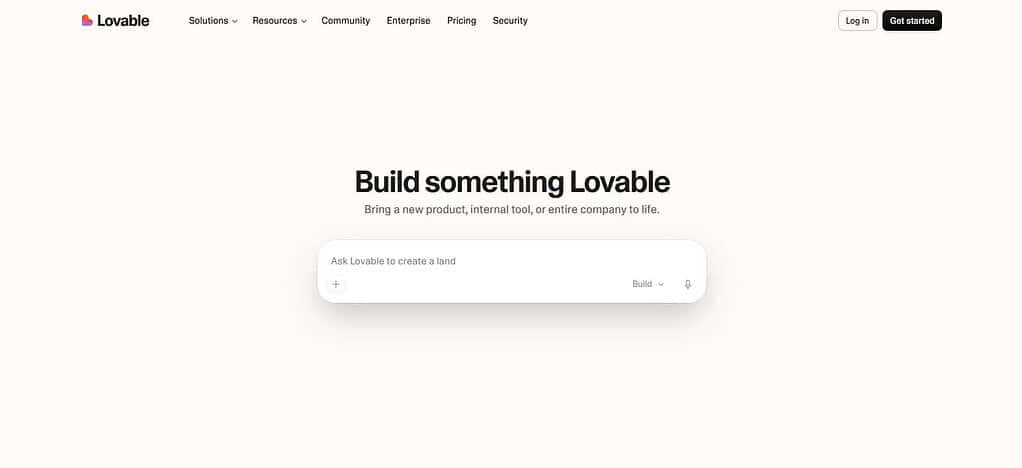
It provides features to automatically deploy applications to the cloud. Unlike other similar applications, Lovable focuses on code ownership. As such, applications generated by Lovable can be further developed and deployed without limitations.
Additional features and the ability to engage other developers in the application generation process is dependent on the Lovable plan selected. Similar to Bolt.new, Lovable provides a means for product teams to quickly build and deploy applications to gain product/market fit.
Why Rival: Similar to Bolt.new, this tool transforms prompts into end-to-end applications.
Ideal Situation: For early-stage companies wanting to rapidly develop a proof of concept and retain control of the code.
Positive Aspect: Very alpine-to-alpine service for developing applications.
Negative Aspect: Can’t change generated code outside of the scaffolds.
Cost: $21 per month.
| Feature | Details |
|---|---|
| Starting Price | $21/month |
| Frontend | React‑based UI generation |
| Backend | Node.js or Python scaffolding |
| Deployment | GitHub export + cloud hosting |
| Prompt‑to‑App | Converts natural language to apps |
| Code Ownership | Users retain generated code |
| Collaboration | Team support in higher tiers |
| Scalability | MVPs and startup launches |
| Authentication | Built‑in scaffolds |
| Pricing Tiers | Scale with AI features |
| Strength | Fast idea‑to‑deployment |
| Target Users | Founders, product teams |
4. Vercel v0
Vercel v0 is a UI-first scaffolding tool for building React and Next.js apps. It costs $20/month and includes a free tier. Scaffolding in Vercel v0 is done by the Frontend and focuses on adding UI components. For Backend integration, it uses Next.js APIs and Serverless Functions. Like other tools provided by Vercel, apps built on Vercel v0 are deployed to Vercel’s edge network.
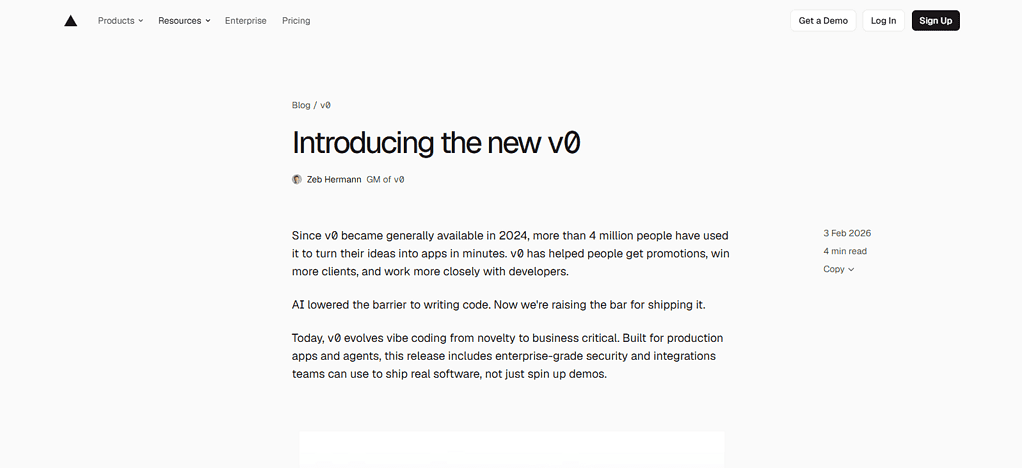
Extra features provided by Vercel’s paid plans includes Analytics and Advanced Collaboration. Compared to other full stack development tools, Vercel v0 favors Frontend development. It is closely competing with Bolt.new for teams that want to quickly deploy apps of high Frontend quality.
Why Rival: Competes with Bolt.new by focusing on UI scaffolding for React/Next.js.
Ideal Use Case: Frontend‑heavy apps needing pixel‑perfect design.
Strength: Seamless GitHub export and edge deployment.
Limitation: Backend features are limited compared to full‑stack rivals.
Pricing: Free tier; paid from $20/month.
| Feature | Details |
|---|---|
| Starting Price | Free; Paid $20/month |
| Frontend | React/Next.js UI scaffolding |
| Backend | Next.js APIs, serverless functions |
| Deployment | Vercel edge network |
| GitHub Export | Seamless integration |
| Design Mode | Visual scaffolding for UI |
| Scalability | Enterprise‑ready hosting |
| Authentication | Custom implementation |
| Pricing Tiers | Collaboration, analytics, enterprise |
| Performance | Global CDN edge deployment |
| Strength | Pixel‑perfect UI generation |
| Target Users | Frontend‑focused developers |
5. Cursor
Cursor is an AI-powered IDE for bigger and more complex developments. Its lowest plan comes at $20/month. It offers a free plan for individual use. It has code editors for front end frameworks such as Vue, React and Angular. It offers back end coding in Java, Python and Node JS. It offers GitHub integration and cloud computing. Like other AI-powered coders, it offers coding assistance and code completion.
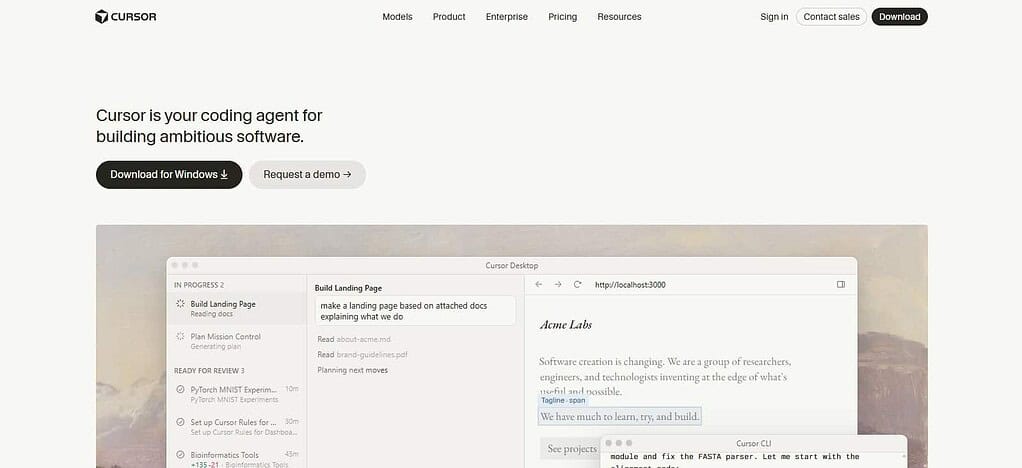
Unlike others, it has AI context across an entire project and helps with debugging and code refactoring. It has different pricing plans based on the number of users and the AI models. Like Bolt.new, it is best for enterprise level applications. However, it gives more control to the user.
Why Rival: AI-powered code completion for bigger projects, similar to Bolt.new.
Ideal for: Large enterprise projects.
Good for: Analyzing and offering suggestions for code bases.
Bad for: Usability for general users.
Cost: Free plan available. Pro plan is $20/month.
| Feature | Details |
|---|---|
| Starting Price | Free; Pro $20/month |
| Frontend | React, Angular, Vue |
| Backend | Node.js, Python, Java |
| Deployment | GitHub + cloud hosting |
| AI Context | Project‑wide understanding |
| Debugging | AI‑assisted error fixing |
| Refactoring | Intelligent code restructuring |
| Collaboration | Team features in Pro |
| Scalability | Enterprise‑level projects |
| Authentication | Developer‑coded |
| Pricing Tiers | Advanced AI models |
| Target Users | Professional developers |
6. Softgen
Softgen specializes in creating Minimum Viable Products (MVPs) by rapidly developing full-stack applications. It charges $33 per year, a price that directly competitors. Softgen differentiates itself by generating frontend and backend code to create full applications that can be immediately deployed and further customized.
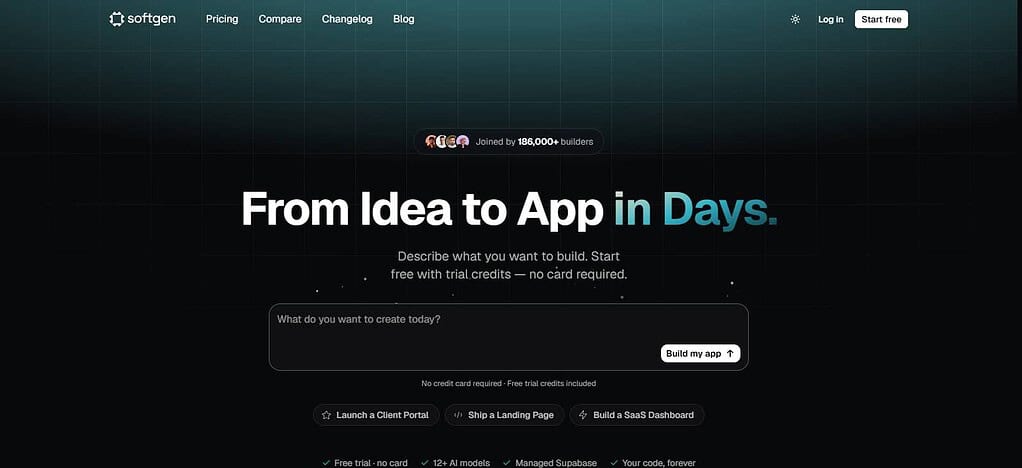
The applications can be deployed anywhere as Softgen does not restrict deployments to its platform. Softgen’s price structure charges a one time fee for a software license. Softgen has applications in rapid prototyping and product development for various customers and industries. Ownership of code gives developers the ability to customize applications to meet their specific needs.
Bolt.new and Softgen target similar customers, which are small and medium businesses and startups. Both products position themselves as inexpensive and time saving alternatives to develop functional business applications.
Why Rival: Inexpensive alternative for generating full stack apps.
Best for: Indie hackers creating MVPs.
Good for: Budget-friendliness.
Bad for: Offering advanced features.
Hosting: Users can host the apps anywhere.
| Feature | Details |
|---|---|
| Starting Price | $33/year |
| Frontend | Modern UI frameworks |
| Backend | Auth, payments, integrations |
| Deployment | Exportable code, host anywhere |
| Scalability | MVPs and prototypes |
| Authentication | Built‑in |
| Pricing | Simple annual license |
| Strength | Budget‑friendly |
| Collaboration | Developer‑driven |
| Templates | Pre‑built scaffolds |
| Flexibility | Full code ownership |
| Target Users | Startups, small teams |
7. Zite
Zite is an app creation tool designed to be easy to use by the non-technical user. Its starting price of $19/month allows individual users to create apps, and includes features to create basic workflows and online databases. Zite allows users to design the front end of apps using a web-based drag and drop editor. Users can also create workflows using a similar interface. Zite hosts users’ apps on its servers; however, users can purchase a custom URL to use with their app.
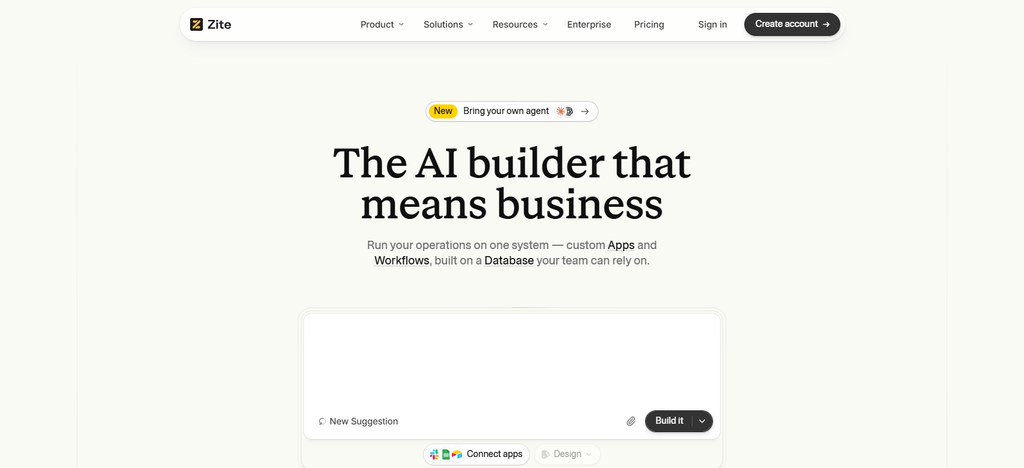
Some users may find Zite’s integrations and features limiting, although, for the individual user, Zite is an inexpensive way to create apps. Compared to a similar product, Bolt.new, Zite is more app creation focused, while Bolt.new is more web page creation focused.
Why Rival: Focuses on easier app creation for non-technical users.
Best for: Non-technical users who need simple apps.
Good for: Easy UI creation.
Bad for: Creating complex apps due to limited back end features.
Cost: $19/month.
| Feature | Details |
|---|---|
| Starting Price | $19/month |
| Frontend | Drag‑and‑drop UI |
| Backend | Simple database workflows |
| Deployment | Zite cloud hosting |
| Authentication | Basic user management |
| Collaboration | Team features |
| Scalability | Small business apps |
| Pricing Tiers | Advanced integrations |
| Templates | Responsive layouts |
| Strength | Beginner‑friendly |
| Limitations | Limited backend complexity |
| Target Users | Non‑technical teams |
8. Bubble
Bubble is a no-code application development platform designed to create production-ready web applications. Apps built with Bubble have a monthly subscription cost starting at $32 and a free plan for development and testing. Bubble’s point of difference from its competitors is the ability for developers to program custom logic using JavaScript within the application.
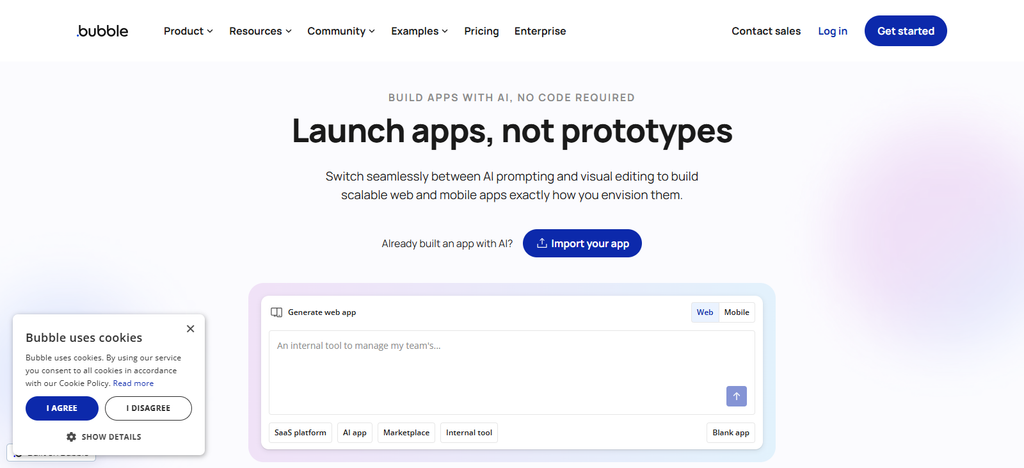
Custom logic, along with APIs and databases, can all be programmed within the application. Bubble provides hosting and domain management for web applications, and allows users to program web applications with a graphical user interface.
Why Rival: Provides no-code app creation for small businesses.
Best for: Creating simple business apps.
Good for: Collaboration and interface creation.
Bad for: Creating apps with complex back ends.
Cost: $53/year.
| Feature | Details |
|---|---|
| Starting Price | $32/month |
| Frontend | Visual editor, responsive design |
| Backend | Workflows, APIs, database |
| Deployment | Bubble cloud hosting |
| Authentication | Built‑in |
| Collaboration | Multi‑user support |
| Scalability | Enterprise‑ready |
| Plugins | Rich ecosystem |
| Pricing Tiers | Scale with app capacity |
| Templates | Marketplace options |
| Strength | Complex custom apps |
| Target Users | Startups, enterprises |
9. Base44
Base44 is still developing its app builder, but from what we can see it’s designed to create apps as quickly as possible. Pricing is currently unavailable. Like Bolt.new, Base44 will generate both the frontend and backend of apps. Base44 differs from Bolt.new in that it uses modern frontend frameworks like React.
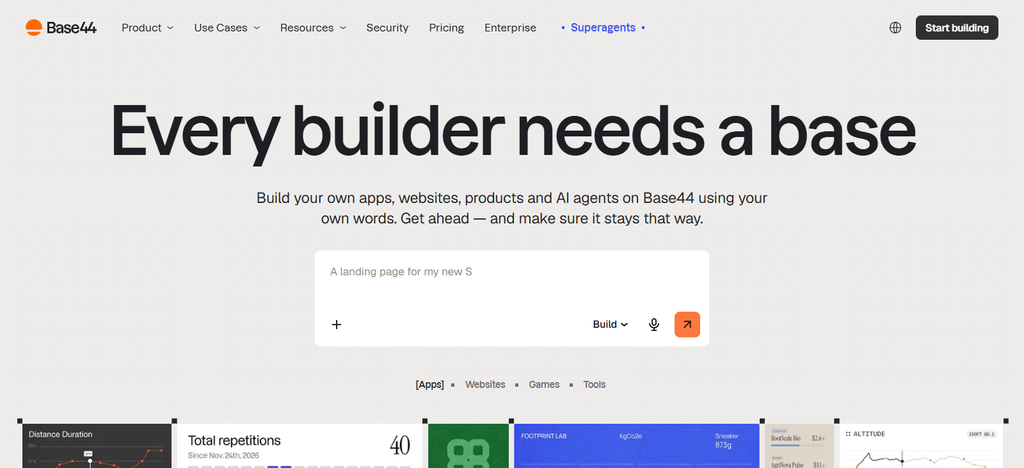
Both App Builders simplify the process of adding backends to apps, and in the case of Base44, adding databases as well, by generating code snippets. Similar to Bolt.new, Base44’s main attraction is quickly creating full stack apps. Overall, Base44 and Bolt.new are great resources for quickly creating apps and validating your ideas.
Why Rival: Converts app descriptions into working full‑stack apps, similar to Bolt.new’s prompt‑to‑app approach.
Ideal Use Case: Rapid prototyping and idea validation.
Strength: Instant app generation from text.
Limitation: Pricing and features still evolving.
Deployment: GitHub export and cloud hosting.
| Feature | Details |
|---|---|
| Starting Price | N/A (early stage) |
| Frontend | React scaffolding |
| Backend | APIs, database connections |
| Deployment | GitHub export + cloud |
| Prompt‑to‑App | Text‑to‑full‑stack apps |
| Scalability | Rapid prototyping |
| Authentication | Basic scaffolds |
| Pricing | TBD |
| Strength | Instant app generation |
| Collaboration | Early features |
| Limitations | Still evolving |
| Target Users | Founders, idea validation |
10. Create
Create uses AI and natural language processing (NLP) to build software from text prompts. App development without code is possible using Create. Create is currently offering free trials, and later charging an undisclosed cost. Create includes features to help users build software from the frontend and the backend.
Users can build software using Create’s cloud, and purchase a custom domain. Create plans to charge users based on the level of integration and collaboration between users. Create has a straightforward goal to give software development to the masses. Users can build software with Create and Bolt.new.
Why Rival: Blends AI and no‑code to democratize app building.
Ideal Use Case: Non‑developers creating apps/sites from text prompts.
Strength: Accessible and beginner‑friendly.
Limitation: Advanced backend features are limited.
Pricing: TBD, with free trials available.
| Feature | Details |
|---|---|
| Starting Price | TBD (free trials) |
| Frontend | Drag‑and‑drop UI |
| Backend | Workflows, simple databases |
| Deployment | Create cloud hosting |
| Prompt‑to‑App | Text‑to‑app/site generation |
| Scalability | Small business apps |
| Authentication | Basic |
| Collaboration | Team features |
| Pricing Tiers | Expected with AI features |
| Strength | Beginner‑friendly |
| Limitations | Limited backend depth |
| Target Users | Non‑developers |
Conclusion
In summary, there are several competing full-stack web app builders in 2026, such as Softr, Zite, Bubble, Replit Agent, Cursor, Vercel v0, Lovable, Base44, Create, Softgen, and others. These apps allow different types of users to create web apps without writing code. Some of these apps have power tools, and features for creating web apps with the help of large language models and artificial intelligence.
Other apps, like Lovable, Base44, Create, and Softgen, help users create web apps by providing tools for rapid application development. Additionally, some apps allow users to create web apps by using natural language input to describe what they want the app to do. These apps can help teams and users, of virtually all skill levels, create and deploy web applications.
FAQ
What is Softr?
Softr is a no‑code builder starting at $19/month, ideal for business apps with Airtable/Google Sheets backend and cloud deployment.
How does Replit Agent work?
Replit Agent is a cloud IDE with AI coding help. Free tier available; Pro at $20/month. Supports React, Python, Node.js with instant deployment.
What makes Lovable unique?
Lovable turns text prompts into full‑stack apps. Starting at $21/month, it offers React frontends, Node.js/Python backends, and GitHub export.
What is Vercel v0 used for?
Vercel v0 scaffolds React/Next.js UIs. Starting at $20/month, it integrates serverless APIs and deploys instantly on Vercel’s edge network.