

In this article, I will discuss the Best AI Human-in-the-Loop Platforms that combine artificial intelligence and human expertise to enhance accuracy, assessment, and decision-making. These platforms support data annotation, AI model testing, human feedback, quality control, and agent evaluation, assisting businesses in developing more robust and responsible artificial intelligence systems. I’ll also compare their main features, pricing, integrations, security and use cases.
What Is AI Human-in-the-Loop Platforms?
AI Human-in-the-Loop platforms are software systems that combine artificial intelligence and human expertise to enhance accuracy, reliability, and control of AI workflows. Rather than letting AI run within a black box, these platforms create structured points where humans can review, validate, correct, approve, reject or score AI-generated results.
Common uses include data annotation, model evaluation, human feedback, RLHF, quality assurance, red teaming, and AI-agent supervision. Then, human feedback may be used to enhance datasets, prompts, models, and automated workflows. These platforms are especially useful in complex AI applications with high risk or that are constantly changing, where automated decisions still require human judgment.
How To Choose AI Human-in-the-Loop Platforms
Look for Human Review Mechanisms: Find changeable review queues, approval processes, correction mechanisms, scoring methods, escalation rules, and reviewer assignments that match your AI workflow.
Verify data type compatibility: See if the platform supports the data formats you need, like text, images, video, audio, documents, 3D data, coding data, or multimodal datasets.
Features to Consider: Customizable evaluation rubrics, model comparison, benchmarks, quality scoring, error analysis, red teaming, and automated evaluation.
Check the Feedback Loop: Select platforms that can capture human corrections, preferences, scores, and judgments and translate those signals into actionable improvements for models and workflows.
AI Agent Support Considerations: If using AI agents, verify that the platform supports agent traceability, tool-call assessment, human approval and intervention, escalation, and multi-step workflow evaluation.
Review Automation Capabilities Look for AI-assisted labeling, pre-labeling, automated quality checks, active learning and intelligent task routing to reduce repetitive human work.
Verify Integrations: APIs, SDKs, cloud storage, webhooks, ML frameworks, databases and data platforms all function to be compatible with your AI stack.
Compare Deployment Options: Select the deployment model, SaaS, private cloud, VPC, on-premises or self-hosted, that best suits your infrastructure and data needs.
Security and Governance: Verify encryption, SSO, RBAC, audit logs, data retention, access control, compliance certifications, and governance features, particularly for sensitive AI workloads.
Quality of the Reviewer: For expert-driven workflows, examine how reviewers are selected, trained, assigned, monitored and evaluated for consistency and accuracy.
Scalability Comparison: As your needs scale, ensure the platform can scale to the volume of annotations you expect, the number of reviewers, datasets, AI models, and production workloads.
Understand Pricing: Look at seat-based, usage-based, project-based, platform, and custom enterprise pricing including the additional cost of human review and expert services.
Level of Measure Review: Verify whether the platform supports simple approve/reject decisions or complex workflows with scoring, correction, annotation, expert validation and continuous feedback.
Quality Control Tools for Review: Look for consensus mechanisms, reviewer audits, disagreement detection, sampling, automated checks and quality metrics for reliable human judgments.
Think About Ease of Use: A platform should give both technical teams and human reviewers an intuitive interface, decreasing training requirements and improving review consistency.
Assess Overall Workflow Fit: Ultimately, choose the platform that most effectively connects AI generation → human review → feedback → evaluation → improvement rather than a tool simply based on its annotation features.
Key Points
| Platform | Key Point |
|---|---|
| Scale AI | Provides human-in-the-loop workflows for data labeling, model evaluation, RLHF, and enterprise AI training pipelines. |
| Labelbox | Offers collaborative data annotation, model-assisted labeling, quality assurance workflows, and human review systems for AI teams. |
| Dataloop | Delivers configurable human-in-the-loop workflows with automation, annotation pipelines, and AI data operations tools. |
| Encord | Provides AI-assisted annotation, human review workflows, dataset management, and model evaluation capabilities. |
| Snorkel AI | Specializes in programmatic labeling and human-guided data development for machine learning and generative AI systems. |
| SuperAnnotate | Offers human-in-the-loop annotation, data quality management, and workforce collaboration for AI development. |
| Label Studio (HumanSignal) | Provides open-source human-in-the-loop data labeling and review workflows across multiple data types. |
| Toloka | Combines crowdsourced human feedback, annotation services, and AI training data generation workflows. |
| Sama | Delivers human-labeled training data and supervised human review processes for machine learning models. |
| V7 | Provides AI-assisted annotation and human validation workflows for computer vision and multimodal AI projects. |
1. Scale AI
Founded in 2016, Scale AI is an enterprise AI data and evaluation platform based in San Francisco. It acts as a human-in-the-loop for data annotation, RLHF, model evaluation, red-teaming and expert review, and its feedback helps improve training and production artificial intelligence systems.

Scale supports computer-vision, language, multimodal and agentic AI workflows, including evaluation of AI applications. Pricing provides a self-service Data Engine with pay-as-you-go and enterprise options that are custom priced. Security and Governance: SOC 2 Type II, ISO 27001, FedRAMP High, DoD IL4.
| Feature | Details |
|---|---|
| Human Feedback | Supports expert human feedback for model improvement, evaluation, and alignment workflows. |
| Data Annotation | Provides large-scale annotation for AI training and evaluation datasets across multiple data types. |
| AI Evaluation | Supports testing and evaluating AI and generative-AI systems using human and automated assessment. |
| RLHF | Enables human preference data and feedback workflows for improving generative AI models. |
| Multimodal Data | Supports workflows involving text, images, video, audio, and other AI data formats. |
| Expert Review | Uses specialized human expertise for complex or domain-specific AI evaluation tasks. |
| AI Agent Evaluation | Supports evaluation and human assessment workflows for newer agentic AI applications. |
| Quality Control | Uses structured review and quality processes to improve consistency of labeled and evaluated data. |
| Enterprise Workflows | Designed for organizations managing large AI development and evaluation programs. |
2. Labelbox
Labelbox was founded in 2018 and provides data annotation, model evaluation, and expert labeling services for AI development. It plays a human-in-the-loop role for annotation, preference ranking, RLHF, supervised fine-tuning, multimodal evaluation, red-teaming, and AI-agent tasks.
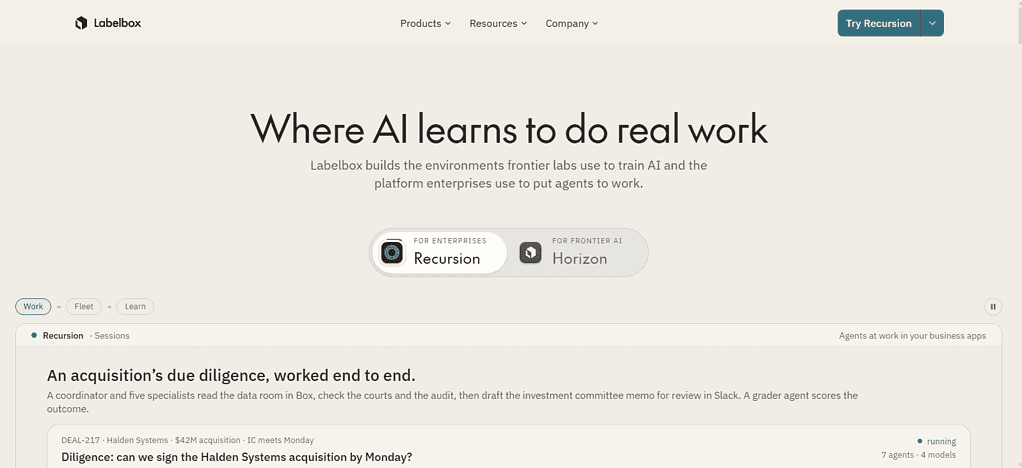
The platform supports images, video, audio, text, LLM conversations, and coding workflows, while model-assisted labeling provides a continuous feedback loop between predictions and human corrections. Pricing varies by plan and usage. Enterprise options available.
Integrations and deployment includes APIs, cloud storage, and customer managed assets. Security and governance include encryption, control of access, SOC 2 Type II, HIPAA and GDPR programs.
| Feature | Details |
|---|---|
| Multimodal Annotation | Supports image, video, audio, text, and other multimodal annotation workflows. |
| LLM Evaluation | Provides interfaces for evaluating LLM responses, prompts, rankings, and model outputs. |
| AI Agent Tasks | Supports coding and AI-agent-related tasks, including evaluation and human review. |
| Expert Labeling | Organizations can use internal teams, vendors, or Labelbox expert labeling services. |
| Model-Assisted Labeling | Uses model predictions and automation to accelerate annotation workflows. |
| RLHF | Supports preference and human-feedback workflows for generative AI development. |
| Red Teaming | Provides workflows for testing AI systems and identifying problematic or unsafe outputs. |
| Collaboration | Teams can configure labeling instructions, review annotations, and align human judgments. |
| Data Lifecycle | Connects data labeling with model development and post-training workflows. |
3. Dataloop AI
Dataloop offers an AI data platform that integrates workflows for human feedback, data management, automation, and annotation. Its human-in-the-loop role enables reviewers to annotate, validate, and correct human judgments, including feeding them back into AI pipelines, supporting RLHF and continuous model improvement.
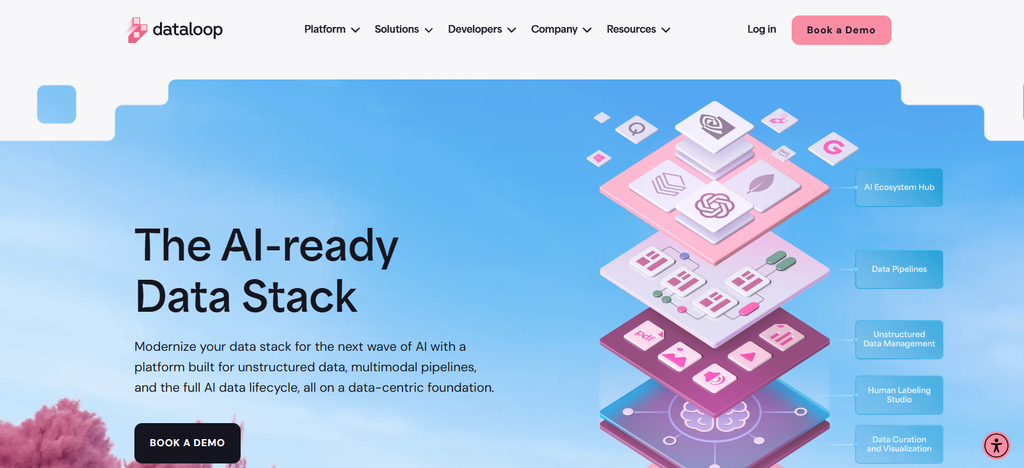
Data and annotation support such as computer vision, language, audio and other AI datasets, with automation to help cut down on repetitive labeling work. AI-agent support becomes more relevant through automated pipeline and AI application workflows.
Integrations and deployment Includes the cloud infrastructure or private or on-premises environments. Security and governance GDPR, ISO 27001, ISO 27701, SOC 2 Type II, RBAC, SSO, 2FA, encryption, audit trails Pricing is mostly enterprise/custom .
| Feature | Details |
|---|---|
| Data Management | Centralizes AI datasets and supports workflows for preparing data before annotation. |
| Annotation | Provides tools for labeling and reviewing AI training data across different modalities. |
| AI-Assisted Labeling | Automation can reduce repetitive manual annotation and accelerate dataset preparation. |
| Human Review | Reviewers can validate, correct, and quality-check AI-generated annotations. |
| Workflow Automation | Allows organizations to build automated data-processing and annotation pipelines. |
| Quality Management | Supports quality-control processes for maintaining consistency across annotation projects. |
| Multimodal AI | Designed for workflows involving different forms of training and evaluation data. |
| Model Feedback | Human corrections can provide useful signals for improving AI data and models. |
| Enterprise Deployment | Suitable for organizations requiring scalable AI-data infrastructure and controlled workflows. |
4. Encod
Encord is a multimodal data platform for annotation, data quality, model evaluation and AI development founded in **2021. Its human-in-the-loop role includes labeling, review, consensus workflows, quality control, model comparison and evaluation of AI outputs.
The platform supports images, video, audio, documents, medical data, LLM evaluations and other specialized datasets. Feedback loops: annotation quality, model performance, active learning, evaluation results.
Integrations and deployment API/SDK access, AWS, Azure, Google Cloud, VPC, on-premises. Security and governance SOC 2, GDPR, HIPAA, RBAC, SSO, AES-256 encryption, TLS Pricing Starter, Team and Enterprise plans. Enterprise pricing is tailored.
| Feature | Details |
|---|---|
| Multimodal Annotation | Supports images, video, audio, text, documents, LiDAR, DICOM, and other specialized data. |
| Human-in-the-Loop | Combines automated labeling with human review and evaluation workflows. |
| LLM Evaluation | Provides custom interfaces for ranking, rubric scoring, and comparing model responses. |
| RLHF | Supports reinforcement-learning-from-human-feedback workflows for generative AI. |
| Quality Control | Provides quality workflows, review processes, and analytics for improving annotation reliability. |
| Active Learning | Helps prioritize valuable or difficult data for additional human annotation and review. |
| Audio Annotation | Supports speaker labeling, transcription correction, timestamp alignment, and audio events. |
| Video Annotation | Provides temporal annotation and tracking workflows for video datasets. |
| Model Evaluation | Connects data quality, model performance, evaluation, and analytics in one workflow. |
5. Snorkel AI
Snorkel AI was founded in 2019 out of the Stanford AI Lab, and focuses on specialized training data, evaluation, benchmarks, and AI-agent development, not pure manual labeling. Its human-in-the-loop role is centered around domain experts who create labeling logic, resolve disagreements, validate evaluation criteria, and optimize datasets. Snorkel’s feedback loop takes expert corrections and creates better rubrics, evaluators, benchmarks and training signals.
Data support enterprise and frontier-AI datasets, RLHF, SFT, and agentic environments. AI-agent support Custom agents. Evaluation of agents. Integrations and deployment are geared toward enterprise AI workflows, and pricing is generally custom and enterprise-focused.
| Feature | Details |
|---|---|
| Programmatic Labeling | Uses labeling functions and code-driven methods to generate labels without manually labeling every item. |
| Data-Centric AI | Places high-quality training and evaluation data at the center of AI development. |
| Expert-in-the-Loop | Allows subject-matter experts to review errors, correct labels, and contribute domain knowledge. |
| Data Slicing | Helps teams identify important subsets of data and analyze model performance on specific cases. |
| Data Transformation | Supports programmatic transformation and augmentation of training data. |
| AI Evaluation | Provides evaluation and error-analysis workflows for AI applications. |
| LLM Support | Designed for modern generative-AI and LLM development workflows. |
| RAG Support | Supports data development for retrieval-augmented generation systems. |
| Agentic AI | Supports specialized data development and evaluation for AI-agent systems. |
6. SuperAnnotate .
Founded in 2018, SuperAnnotate combines annotation software and managed expert services to build, evaluate and align frontier AI models. expert annotation, validation, evaluation, reinforcement-learning workflows, and quality review for its human-in-the-loop role.
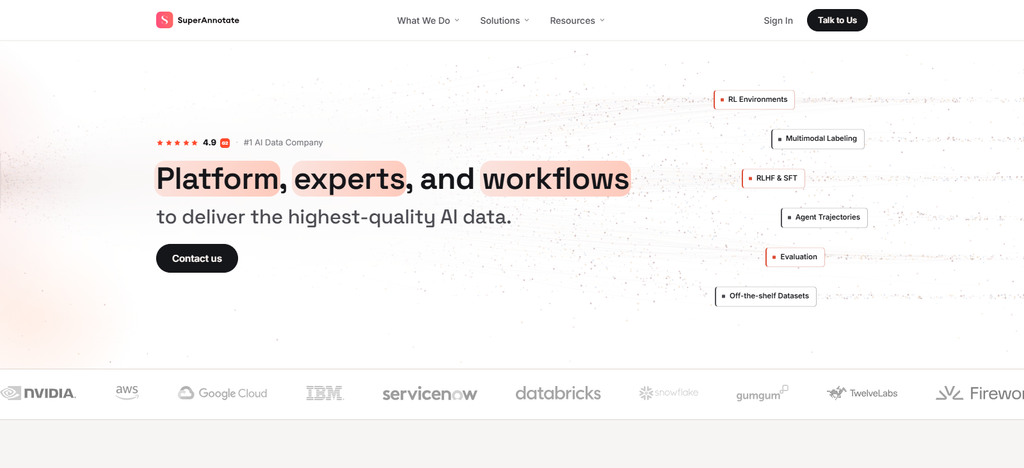
The platform is compatible with multimodal and complex AI data, and the managed expert network provides domain-specific human judgment. Feedback loops link annotation, model evaluation, and active-learning processes, enabling teams to iteratively improve datasets.
Integrations and deployment AWS, Google Cloud, Azure, Databricks, Snowflake, NVIDIA, IBM and custom connectors. Security and governance includes SOC 2 Type II, ISO 27001:2022, GDPR, encryption, restricted access and monitoring. Pricing We offer custom pricing for enterprise projects.
| Feature | Details |
|---|---|
| Multimodal Annotation | Supports image, video, text, audio, LiDAR, custom data, and other AI datasets. |
| LLM Annotation | Provides annotation workflows for LLM training and specialized AI development. |
| RLHF | Supports human preference and feedback workflows for generative AI systems. |
| Agentic AI | Supports agentic workflows where models can pre-label, judge rubrics, and score results. |
| Human Experts | Routes tasks between AI systems and human experts for review and validation. |
| Quality Gates | Provides configurable quality controls, workflows, and review stages. |
| Model Integration | Allows teams to connect different models and use them inside annotation and evaluation workflows. |
| Model Comparison | Supports side-by-side model comparisons and human voting on outputs. |
| Workflow Automation | Uses orchestration and automation to route data between models and human reviewers. |
7. Label Studio (HumanSignal)
Label Studio is an open source labeling platform from HumanSignal, a company founded in 2019. The human-in-the-loop role includes annotation, review, model evaluation, active learning, and supervision of automated AI evaluations. It supports text, image, audio, video, documents, multimodal data and agentic traces. Feedback loops allow model predictions to be pre-labels and human corrections and reviews to feed continuous learning and evaluation workflows.
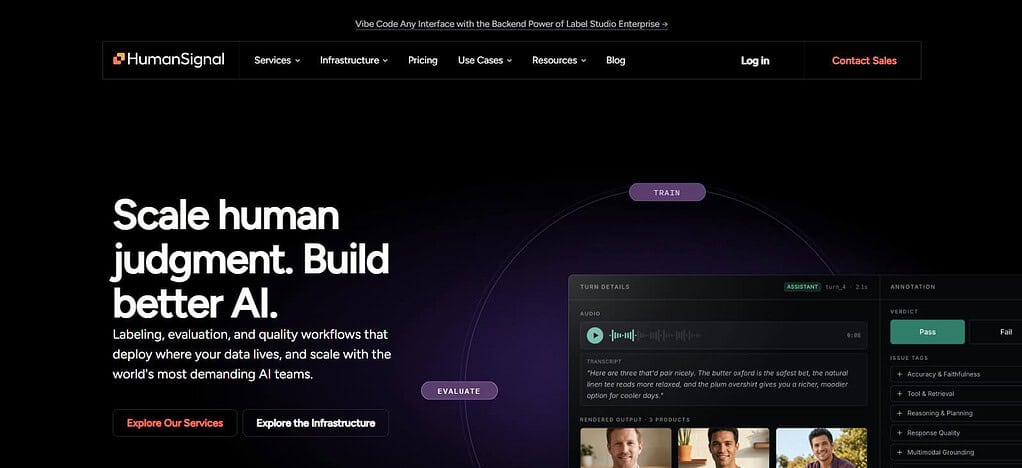
Integrations and deployment APIs, SDKs, webhooks, AWS, Azure, GCP, Databricks, cloud or on-premises deployment. Pricing includes an open source Community Edition, Starter Cloud starting at $99/month, and custom Enterprise pricing. Enterprise adds RBAC, SSO, audit logs, SOC 2 and HIPAA support.
| Feature | Details |
|---|---|
| Open Source | Label Studio Community Edition provides an open-source foundation for data labeling and evaluation. |
| Custom Interfaces | Teams can build customized interfaces for unique annotation and AI evaluation requirements. |
| Multimodal Annotation | Supports different data types and multimodal evaluation workflows. |
| AI Evaluation | Enables teams to benchmark and evaluate AI models using customized rubrics. |
| Human Review | Human reviewers can inspect, correct, score, and evaluate AI-generated results. |
| Agent Evaluation | Can visualize data traces and outputs from agentic AI workflows. |
| Quality Assurance | Supports agreement checks, automated quality checks, and review queues. |
| Role-Based Access | Enterprise capabilities include roles, permissions, and role-based workflows. |
| Auditability | Enterprise provides audit logs, change documentation, and annotator-level tracking. |
8. Toloka
Toloka was founded in 2014 and offers human data, annotation, evaluation, and expert judgment for AI and generative artificial intelligence systems. Its human in the loop role is expert annotation, preference ranking, RLHF, validation and human quality assurance.
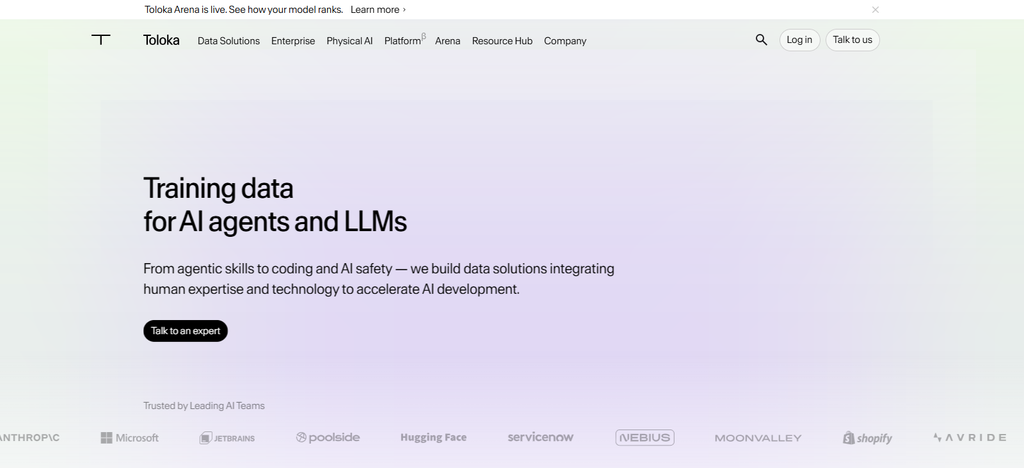
It now employs AI agents and automated quality checks to construct data-collection and annotation pipelines, with humans making complex judgments and managing flagged cases. Feedback loops leverage human corrections and quality signals to refine project guidelines and automated checks.
Data support Text, language, multimodal, coding, domain-specific datasets. The pricing is based on usage and includes the cost of the expert service, quality-control and platform fees. Security: API-based workflow integration, controlled access and expert selection.
| Feature | Details |
|---|---|
| AI Data Collection | Supports large-scale collection of real-world examples and task-specific datasets. |
| Human Annotation | Provides human annotation and expert review for AI development workflows. |
| RLHF | Supports expert-ranked model responses and preference datasets. |
| Instruction Tuning | Helps create prompt-completion datasets for improving AI instruction following. |
| Multilingual Data | Supports data collection and annotation across multiple languages and domains. |
| AI-Assisted Workflows | Uses AI automation to help construct and manage data collection and annotation pipelines. |
| Quality Control | Applies quality mechanisms throughout data collection and annotation workflows. |
| Expert Review | Can use specialized experts for complex reasoning and domain-specific evaluation tasks. |
| AI Agent Workflows | Its newer platform emphasizes AI-assisted pipeline construction and automated data workflows. |
9. Equality
Founded in 2008, Sama offers AI teams expert-led data annotation, validation, and model evaluation services. Its human-in-the-loop role is at the core, with annotation, quality assurance, validation and evaluation performed by trained specialists, while automation speeds up repetitive tasks.
Data and annotation support including computer vision, multimodal, sensor, image and video data, for robotics, autonomous vehicles and other physical-AI applications. Its feedback loop is based on validation and evaluation results to find errors and help improve the model.
Integrations & deployment are powered by enterprise AI data pipelines & APIs. Pricing is flexible and is project-based, not a standard public SaaS plan. Security & governance: ISO 27001, GDPR, CCPA, 2FA, encryption, secure facilities.
| Feature | Details |
|---|---|
| Image Annotation | Supports bounding boxes, polygons, segmentation, keypoints, and other image-labeling methods. |
| Video Annotation | Enables temporal and spatial annotation for objects and events across video frames. |
| 3D Point Clouds | Supports cuboids, lines, polygons, and spatial annotation for 3D datasets. |
| Sensor Fusion | Combines different sensor sources for complex autonomous-system datasets. |
| Human Expertise | Expert annotators handle complex labeling, validation, and edge cases. |
| Assisted Labeling | Machine-assisted suggestions help accelerate repetitive annotation tasks. |
| Quality Control | Combines automated checks, calibration, auditing, and human review layers. |
| Task Management | Routes, prioritizes, distributes, and monitors annotation tasks. |
| Data Delivery | Provides post-processing and export capabilities for integration with AI pipelines. |
10. V7
V7 Darwin is an AI-assisted data labeling platform for visual AI, medical imaging, documents and complex labeling workflows. Human-in-the-loop role allows teams to create, review, correct and manage annotations, while AI-assisted automation accelerates repetitive labeling tasks.
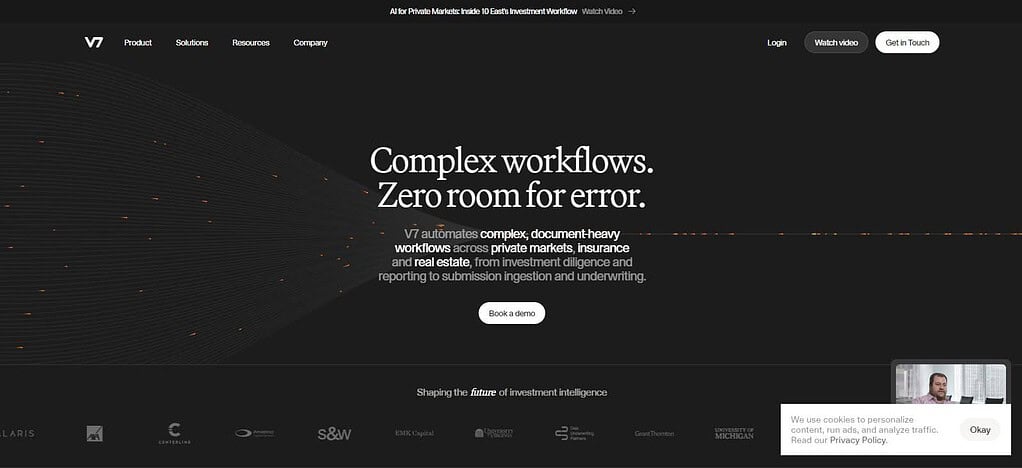
Data and annotation support includes images, videos, medical imaging, documents and volumetric data. Configurable workflows and API capabilities allow feedback-driven annotation pipelines and integration with existing ML systems.
Integrations and deployment can link labeling workflows with backend tools through its API. The pricing is customized and includes a platform fee, user licenses and data processing fees. Security and governance GDPR, HIPAA, SOC 2 Type II, ISO 27001 compliant.
| Feature | Details |
|---|---|
| AI-Assisted Annotation | Uses AI-assisted labeling to reduce repetitive manual annotation work. |
| Image Annotation | Supports bounding boxes, segmentation, classification, keypoints, and other computer-vision labels. |
| Video Annotation | Provides temporal tracking and object localization across video frames. |
| Auto-Track | Can automatically track objects across video frames to accelerate labeling. |
| Dataset Review | Allows reviewers to inspect annotations, apply corrections, and leave comments. |
| Custom Workflows | Supports configurable annotation and review processes for different AI projects. |
| Human Review | Expert human labeling services can complement automated annotation workflows. |
| Large-Scale Video | Designed to handle large video datasets and high annotation volumes. |
| API Integration | Allows datasets and video files to be uploaded or connected programmatically through APIs. |
Comparison Table: Best AI Human-in-the-Loop Platforms
| Platform | Founded | Human-in-the-Loop Role | Data & Annotation Support | AI Evaluation / Feedback Loop | AI Agent Support | Integrations & Deployment | Security & Governance | Pricing |
|---|---|---|---|---|---|---|---|---|
| Scale AI | 2016 | Expert review, validation, RLHF, model evaluation | Text, image, video, audio, multimodal | Human feedback, model evaluation, red teaming | AI and agent evaluation workflows | APIs, enterprise AI workflows, cloud | SOC 2, ISO 27001, FedRAMP, enterprise controls | Custom / usage-based |
| Labelbox | 2018 | Annotation, ranking, review, RLHF, expert evaluation | Image, video, audio, text, multimodal | LLM evaluation, preference data, red teaming | Agent and coding evaluation | API, SDK, cloud integrations | SOC 2, HIPAA, GDPR, access controls | Usage-based / custom |
| Dataloop | 2017 | Annotation, correction, validation, expert review | Computer vision, text, audio, multimodal | AI-assisted labeling and continuous feedback | AI workflow and automation support | API, cloud, private/on-premises options | SOC 2, ISO 27001, ISO 27701, RBAC | Custom |
| Encord | 2021 | Labeling, quality review, model evaluation | Image, video, audio, text, documents, DICOM, LiDAR | LLM evaluation, RLHF, active learning | AI/LLM evaluation workflows | API, SDK, AWS, Azure, GCP, VPC | SOC 2, GDPR, HIPAA, RBAC | Starter / Team / Enterprise |
| Snorkel AI | 2019 | Expert validation, labeling functions, error review | Specialized training and evaluation data | Programmatic labeling, evaluation, error analysis | Agentic AI data and evaluation | Enterprise AI infrastructure | Enterprise security and governance | Custom |
| SuperAnnotate | 2018 | Expert annotation, validation, preference review | Image, video, text, audio, LiDAR, multimodal | RLHF, model comparison, AI-assisted evaluation | Agentic AI workflows | API, AWS, Azure, GCP, Databricks, Snowflake | SOC 2, ISO 27001, GDPR | Custom |
| Label Studio (HumanSignal) | 2019 | Annotation, review, scoring, model evaluation | Text, image, audio, video, documents, multimodal | Custom rubrics, benchmarks, active learning | Agent trace and output evaluation | API, SDK, webhooks, AWS, Azure, GCP | SOC 2, HIPAA, RBAC, audit logs | Open source / $99+ / Enterprise |
| Toloka | 2014 | Human annotation, expert judgment, preference ranking | Text, language, multimodal, coding | RLHF, instruction tuning, preference feedback | AI-assisted data workflows | API and managed data workflows | Controlled access and quality mechanisms | Usage / project-based |
| Sama | 2008 | Expert annotation, validation, QA, evaluation | Image, video, 3D, sensor and multimodal data | Human validation and quality feedback | Primarily data-focused AI workflows | Enterprise AI data pipelines | ISO 27001, GDPR, CCPA, encryption | Custom / project-based |
| V7 Darwin | 2018 | Annotation, review, correction, expert validation | Image, video, documents, medical and volumetric data | AI-assisted labeling and iterative review | Limited compared with agent-focused platforms | API, enterprise integrations, cloud workflows | SOC 2, ISO 27001, GDPR, HIPAA | Custom |
Quick Comparison
| Best For | Platform |
|---|---|
| Large-scale AI data and expert evaluation | Scale AI |
| LLM, multimodal and AI-agent data | Labelbox |
| Automated data pipelines | Dataloop |
| Multimodal AI evaluation | Encord |
| Programmatic data labeling | Snorkel AI |
| Expert AI and RLHF workflows | SuperAnnotate |
| Open-source HITL workflows | Label Studio |
| Human preference and RLHF data | Toloka |
| Expert data annotation at scale | Sama |
| Computer vision and video annotation | V7 Darwin |
Conclusion
AI human-in-the-loop platforms are becoming critical for organizations needing reliable, accurate and accountable artificial intelligence systems in 2026. Platforms like Scale AI, Labelbox, Dataloop, Encord, Snorkel AI, SuperAnnotate, Label Studio, Toloka, Sama and V7 offer a range of options for annotation, evaluation, human feedback, quality control and AI workflow management.
The right approach for you depends on your data type, review requirements, deployment model, security needs, budget and degree of oversight by humans. By merging AI automation with human intelligence, these platforms enable teams to detect mistakes, enhance model performance, assess AI agents, and develop more robust AI applications at scale.
FAQ
What is a Human-in-the-Loop AI platform?
A Human-in-the-Loop AI platform combines AI automation with human review, allowing people to validate, correct, approve, reject, or evaluate AI-generated outputs. This approach helps improve accuracy, quality, safety, and accountability.
Why is Human-in-the-Loop important for AI?
Human oversight is useful when AI systems handle complex, ambiguous, sensitive, or high-risk tasks. Human reviewers can identify errors that automated evaluation may miss and provide feedback for improving models and workflows.
What types of data can HITL platforms support?
Depending on the platform, Human-in-the-Loop systems can support text, images, video, audio, documents, multimodal data, coding data, and AI-agent interactions. Support varies between providers.
Can Human-in-the-Loop platforms evaluate AI agents?
Yes. Some modern platforms can support AI-agent evaluation, trace review, tool-call assessment, human approval, error analysis, and escalation workflows. These capabilities are particularly useful for autonomous and multi-step AI systems.