




In this article, I will highlight some leading AI synthetic data firms that are changing the way artificial intelligence operates with secure, scalable, privacy preserving datasets. These firms, ranging from Pioneers like Mostly AI to Innovators such as NVIDIA (Gretel), Syntho, and Synthesis AI, provide advanced generative models and industry specific integrations and solutions that are compliant.
By examining the features offered by each firm, we learn the deployment models and cost associated with synthetic datasets that help organizations build and sustain an ethical AI based system.
What Is Synthetic Data for AI?
Synthetic data is designed to include patterns, correlations, and distributions from real data sets and generate new data sets with those characteristics. Techniques like GANs, VAEs, and even simulations are used to learn these datasets and generate new synthetic ones.
Because synthetic data have no identifiable information (no personally identifiable information (PII) whatsoever), they are ideal for data sets in the health care industry, finance, and even in the development of autonomous vehicles.
Regulatory compliance throughout these industries are stringent, and synthetic data help solve problems that inequitable, or insufficient data sets, pose like bias and insufficient data. As it stands, limited data hace also hampered rapid, innovative development of trustworthy Artificial Intelligence systems.
Why Synthetic Data Matters for AI in 2026
Core Commitment for Responsible AI
Synthetic data is crucial for responsible AI. Organizations can overcome issues caused by privacy, real-world data bias, and lack of access to sensitive data. It enables collaboration across borders and partners.
Strong Market Growth
It is anticipated that 80% of AI training data will be synthetic by 2028. This is due to the emerging AI data marketplaces and federated AI ecosystems. There is strong enterprise spending that will grow the synthetic data market to around $5 billion by 2035.
High Impact Use Cases
Real world examples of advanced AI applications of synthetic data include fraud detection in the financial services industry, patient cohort simulations in healthcare, anomaly modeling in telecommunications, predictive maintenance in manufacturers, retailers’ customer behavior forecasts, logistics, and modeling of the energy grid.
Scalability and Great Value for Your Money
There is a huge savings opportunity due to the drastically low cost of synthetic data. The cost per image to label data is $1 – $10, whereas data can be generated for as little as a few cents. This dramatically reduces data preparation and labeling.
Modern AI Developments
Synthetic data in 2026 uses diffusion models, large language models (LLMs), GANs, and digital twins to create synthetic data to augment AI and generate ultra-realistic text, images, and 3D environments.
Improved ROI
Organizations that use synthetic data report very rapid development of AI models and up to a 50 – 60% reduction in compliance costs. This dramatically reduces the time it takes to innovate.
Privacy & Governance
Synthetic data fulfills the obligations of both GDPR and HIPAA due to validation frameworks, audibility, and monitoring systems to track bias and the risk of re-identification.
Simulation of Rare Scenarios
Synthetic datasets make it possible for AI systems to train on scenarios that are rare or will be existent in the future (i.e., medical anomalies or case studies in the field of self-autonomous driving), in the absence of real world data.
Implementation Best Practices
As a first step in implementing synthetic data, enterprises have been advised to use a test case and set other success parameters and governance frameworks.
How We Selected These Companies
| Criteria | Details |
|---|---|
| Innovation | Companies like NVIDIA (Gretel) and Synthesis AI were selected for their cutting-edge generative models and advanced AI capabilities. |
| Industry Impact | Firms such as MDClone (healthcare) and Parallel Domain (autonomous driving) were included for their strong vertical-specific applications. |
| Privacy & Governance | Selection emphasized GDPR/HIPAA compliance, anonymization, and differential privacy, ensuring ethical AI development. |
| Deployment Flexibility | Companies offering SaaS, APIs, and enterprise installations (e.g., Tonic.ai, Hazy) were prioritized for adaptability. |
| Integration Ecosystem | Providers with seamless integrations into cloud platforms, ML frameworks, and enterprise IT systems were chosen. |
| Market Leadership | Established pioneers like Mostly AI (legacy brand) and enterprise leaders like Altair and Globant were included for credibility. |
| Pricing Accessibility | Firms offering tiered, project-based, or enterprise pricing models were selected to cover diverse customer needs. |
| Scalability | Companies leveraging GPU acceleration (NVIDIA Gretel) or enterprise-scale consulting (Globant) were highlighted for scalability. |
| Global Reach | Selection favored companies with international adoption across finance, healthcare, manufacturing, and AI research. |
Key Points
| Company | Strengths | Best Use Cases |
|---|---|---|
| NVIDIA (Gretel) | Tabular, text, time-series generation; integrated into NeMo | Enterprise ML pipelines, LLM training, privacy-preserving analytics |
| Syntho (MOSTLY AI) | High-fidelity tabular & time-series, fairness controls | Regulated industries, financial services, healthcare |
| Tonic.ai | Structured + unstructured synthetic data, LLM-ready | Software testing, AI model development, de-identification |
| Hazy (SAS Data Maker) | Privacy-focused, now integrated into SAS workflows | Analytics teams needing governed synthetic datasets |
| Synthesis AI | Synthetic humans, faces, and environments | Computer vision, autonomous vehicles, AR/VR |
| Globant Synthetic Data | Strategic partnership with Synthesis AI | Enterprise AI adoption, large-scale CV datasets |
| Altair | Enterprise-grade synthetic data generation | Simulation-heavy industries, engineering analytics |
| Parallel Domain | Synthetic sensor & scene data | Autonomous driving, robotics, geospatial AI |
| MDClone | Healthcare synthetic data, HIPAA-compliant | Clinical research, patient privacy, medical AI |
| Mostly AI (legacy brand) | Still recognized under Syntho ecosystem | Tabular synthetic data, conditional sampling |
1. NVIDIA (Gretel)
NVIDIA’s Gretel was founded in 2020 and creates synthetic data for training AI models within the domains of text, tabular, and time series data. Within the field of AI, Gretel has built privacy preserving synthetic data, differentially private data, and integrations for the cloud (AWS and Azure) and uses advanced models of data generation.
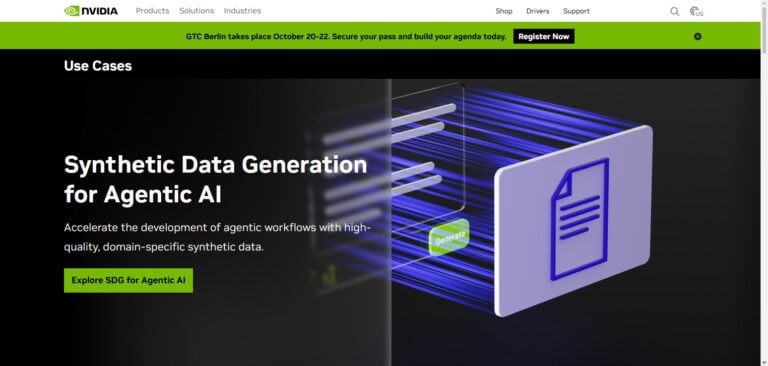
“Privacy & Governance” is a company focus area due to the presence of frameworks and differentially private data. Gretel’s model can be deployed easily and through various avenues which enables Gretel to be developer friendly. It also charges users through subscription with enterprise level packages.
With NVIDIA’s engagement, Gretel will be able to engage in competitive differentiation when dealing with scaling and GPU acceleration. Gretel is able to innovate within synthetic data. Gretel is able to balance speed, compliance, and integration for customers within the enterprise level synthetic data market.
| Feature | Details |
|---|---|
| Founded | 2020 |
| Synthetic Data Type | Text, tabular, time-series |
| AI Capability | Generative models, differential privacy |
| Integrations | AWS, Azure, GCP |
| Privacy & Governance | GDPR, HIPAA, differential privacy |
| Deployment | SaaS, API-first |
| Pricing | Subscription tiers, enterprise packages |
| Strength | GPU acceleration via NVIDIA |
| Use Case | Secure AI training datasets |
2. Syntho (MOSTLY AI)
Also founded in 2020, and building upon Mostly AI, Syntho provides synthetic data within structured domains, like banking, insurance, and healthcare. Within AI, Syntho uses GANs to create synthetic data. Syntho has integrated seamlessly with enterprise data warehouses and services and has concentrated on privacy and governance with GDPR compliance and anonymization.
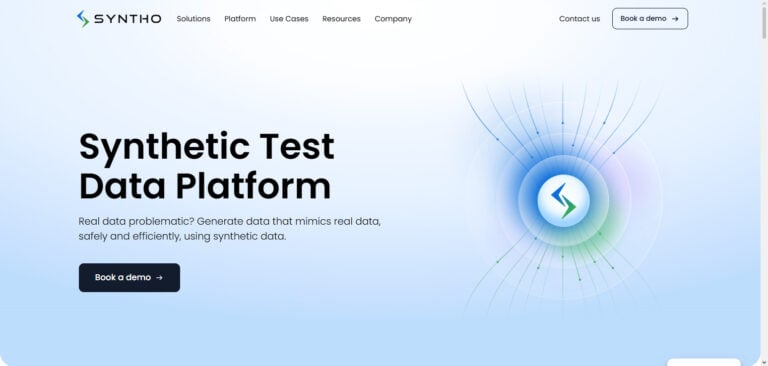
For regulated industries, Syntho provides on-premises deployments as well as SaaS. For large enterprises, Syntho charges on a case by case basis. Within Europe, Syntho prides itself as a leader within the synthetic data market for trust and compliance. Syntho is well known within financial services.
| Feature | Details |
|---|---|
| Founded | 2018 |
| Synthetic Data Type | Test data for QA/dev |
| AI Capability | Realistic test data generation |
| Integrations | SQL, NoSQL, CI/CD pipelines |
| Privacy & Governance | HIPAA, GDPR masking |
| Deployment | Cloud-native, API-first |
| Pricing | Tiered (startup to enterprise) |
| Strength | Developer-centric workflows |
| Use Case | Software testing environments |
3. Tonic.ai
Launched in 2018, Tonic.ai works on synthetic data for software testing, QA, and development environments. Their AI tools simulate various formats of real-world test data, ranging from SQL to NoSQL and even APIs. Their growing list of integrations includes major databases (Postgres, MySQL, MongoDB) and CI/CD pipelines.
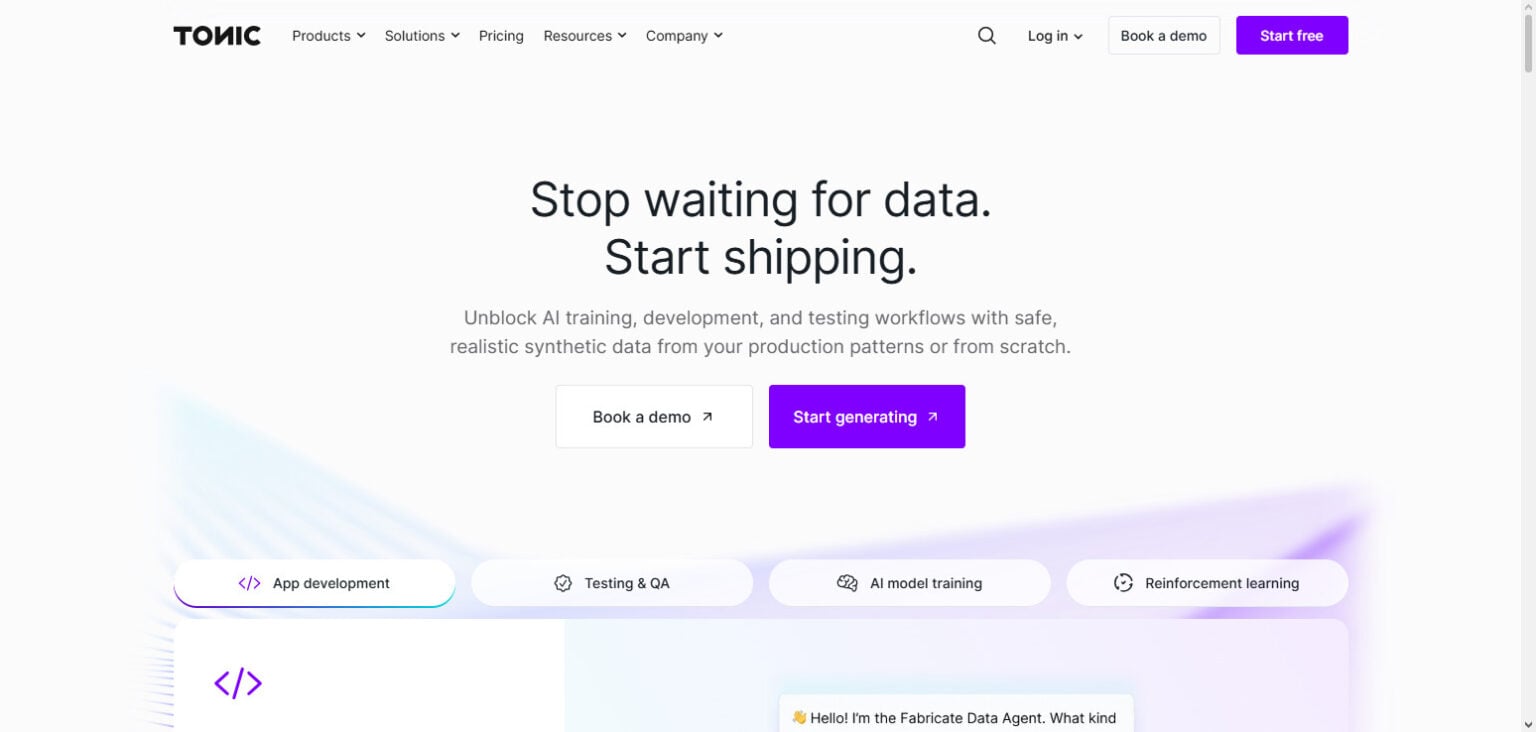
Privacy & governance features include masking and anonymization tools along with HIPAA and GDPR compliance. Cloud native architecture along with an API-first design ensures Tonic.ai makes testing data easily accessible to developers.
Tonic.ai has structured their pricing so that it works for startups as well as enterprise-level companies. They have gained a lot of traction with their engineering clients for expediting testing and protecting sensitive data. Tonic.ai has unique offerings for integrating synthetic data with DevOps tools.
| Feature | Details |
|---|---|
| Founded | 2018 |
| Synthetic Data Type | Test data for QA/dev |
| AI Capability | Realistic test data generation |
| Integrations | SQL, NoSQL, CI/CD pipelines |
| Privacy & Governance | HIPAA, GDPR masking |
| Deployment | Cloud-native, API-first |
| Pricing | Tiered (startup to enterprise) |
| Strength | Developer-centric workflows |
| Use Case | Software testing environments |
4. Hazy (SAS Data Maker)
Founded in 2017, Hazy (along with SAS Data Maker) has made a name for themselves in the insurance and financial services sectors for synthetic data. Their AI tools rely on deep learning and privacy-safe options for synthetic data. Their integrations include SAS analytics tools as well as the major cloud and enterprise data lakes.
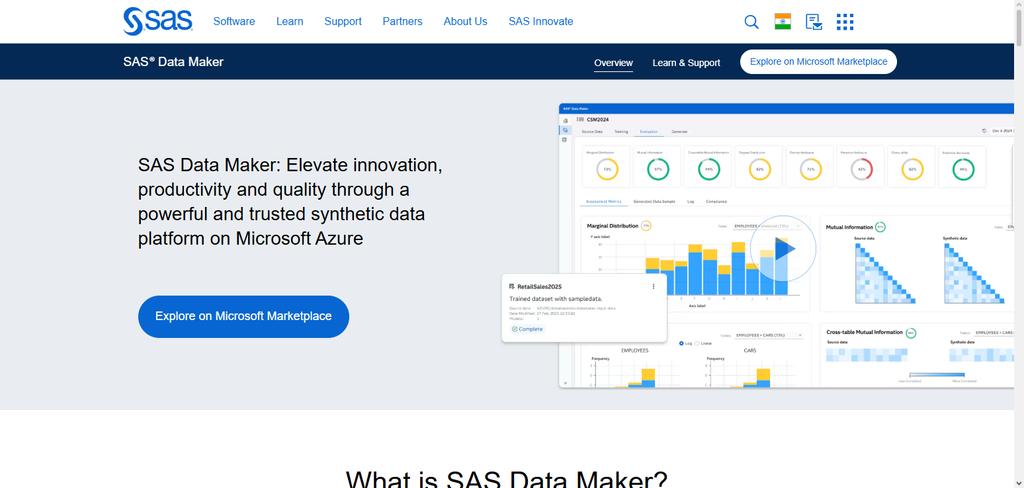
Privacy & governance are covered with strong anonymization tools as well as GDPR compliance. SaaS and enterprise installations are available for their offerings. Their pricing is customized and geared for larger enterprise clients with a heavy focus on regulated and compliance industries.
Their focus on regulated industries has also led to Hazy’s products being used in the financial services and insurance industries, as it allows for access to synthetic data for analytical purposes without violating confidentiality. Hazy (SAS Data Maker) is trusted by financial and insurance services industries.
| Feature | Details |
|---|---|
| Founded | 2017 |
| Synthetic Data Type | Structured datasets |
| AI Capability | Deep learning models |
| Integrations | SAS analytics, cloud platforms |
| Privacy & Governance | GDPR, anonymization |
| Deployment | SaaS, enterprise installs |
| Pricing | Enterprise-driven |
| Strength | Financial services focus |
| Use Case | Banking & insurance analytics |
5. Synthesis AI
US-based company creating synthetic data primarily for computer vision and facial recognition, and catering to the needs of industries like autonomous driving and AR/ VR. Synthesis AI has AI technologies like photorealistic simulations and advanced 3D modeling.
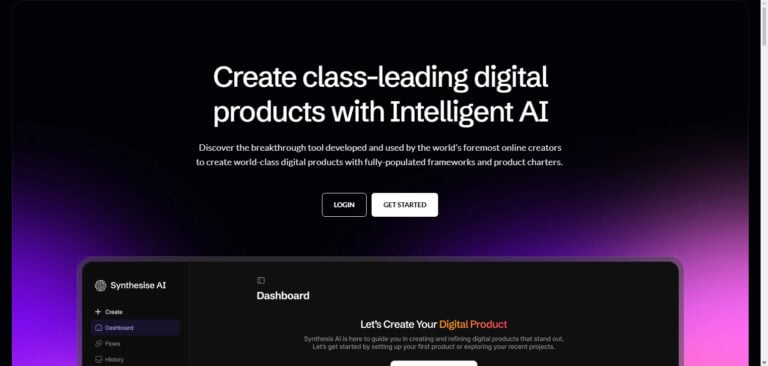
It also offers various customizable synthetic datasets. Integrations include major machine learning frameworks like TensorFlow and PyTorch. It solves the problems associated with privacy and governance by eliminating reliance on real world data and ensuring ethical AI development. Datasets are generated via an interface that users can deploy in the cloud.
The pricing model is tailored to the complexity of the dataset. The company has a large number of clients in industries where there is a need for large visual datasets. Synthesis AI’s focus is on accurate, diverse, and ethical synthetic vision data and 3D models.
| Feature | Details |
|---|---|
| Founded | 2019 |
| Synthetic Data Type | Vision datasets, 3D models |
| AI Capability | Generative 3D simulations |
| Integrations | TensorFlow, PyTorch |
| Privacy & Governance | Ethical AI, no real human data |
| Deployment | Cloud-based APIs |
| Pricing | Project-based |
| Strength | Photorealistic synthetic vision |
| Use Case | Autonomous vehicles, AR/VR |
6. Globant Synthetic Data
Founded in 2003, Globant offers synthetic data solutions to support enterprise adoption of AI. Globant offers diverse AI data sets including images, text, videos, and audios. Its synthetics AI models offer enterprise scale simulations. Integrations include various components of the IT ecosystem, hyperscale cloud services, and analytics and Big Data SaaS platforms.
Globant embeds privacy and governance in its compliance frameworks and offers solutions aimed at adhering to GDPR and HIPAA. Deployments are consulting led implementations with a focus on the enterprise. The pricing is tailored to each enterprise engagement.
Globant leverages its consulting expertise to deliver synthetic data as a part of its digital transformation service offerings. Globant Synthetic Data combines consulting and AI-driven synthetic data generation.
| Feature | Details |
|---|---|
| Founded | 2003 |
| Synthetic Data Type | Structured, unstructured, multimedia |
| AI Capability | Generative enterprise-scale models |
| Integrations | Cloud, enterprise IT ecosystems |
| Privacy & Governance | GDPR, HIPAA frameworks |
| Deployment | Enterprise consulting-led |
| Pricing | Custom enterprise packages |
| Strength | Digital transformation expertise |
| Use Case | Enterprise AI adoption |
7. Altair
Started in 1985, Altair is a global technology company providing synthetic data through its analytics and simulation offerings. Synthetic data types include structured data for modeling in engineering, manufacturing, and finance.
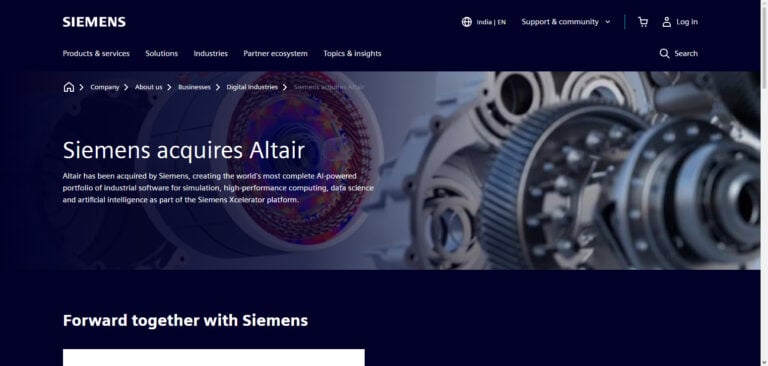
AI technologies provide data and analytics to drive predictions with machine learning and modeling. Integrations span Altair’s simulation tools, cloud technologies, and enterprise analytics. Privacy and governance are provided through anonymization and compliance.
Deployment is flexible and supports both SaaS and enterprise offerings. Pricing is through commercial licenses, with enterprise subscriptions. Altair’s synthetic data solutions are built for industries that require simulation-based insights. With its expertise in engineering simulation, Altair is synthesizing data for the future.
| Feature | Details |
|---|---|
| Founded | 1985 |
| Synthetic Data Type | Tabular datasets |
| AI Capability | Predictive analytics, generative models |
| Integrations | Altair simulation tools, cloud |
| Privacy & Governance | Anonymization, compliance |
| Deployment | SaaS + enterprise |
| Pricing | License-based subscriptions |
| Strength | Engineering + analytics synergy |
| Use Case | Manufacturing, financial modeling |
8. Parallel Domain
Started in 2017, Parallel Domain provides synthetic data for automotive, specifically driving and robotics. Type of synthetic data includes 3D environments, simulated sensors, and datasets that are annotated. AI technologies provide generative simulations for LiDAR, radar, and camera sensors. Integrations include various ML platforms and robotics.

Privacy and control are built into the systems as datasets are completely synthetic and eliminate the use of real-world data. Deployment is cloud-based and includes an API for dataset generation.
Pricing is on a per project basis and is largely dependent on the scale of the dataset. Parallel Domain is used for the development of the majority of autonomous vehicles. Parallel Domain is helping to advance robotics and automotive AI with synthetic data.
| Feature | Details |
|---|---|
| Founded | 2017 |
| Synthetic Data Type | 3D environments, sensor data |
| AI Capability | LiDAR, radar, camera simulations |
| Integrations | Robotics, ML frameworks |
| Privacy & Governance | Fully synthetic datasets |
| Deployment | Cloud APIs |
| Pricing | Project-based |
| Strength | Autonomous driving datasets |
| Use Case | Robotics & automotive AI |
9. MDClone
MDClone (Founded in 2016) specializes in healthcare and life sciences focusing on synthetic data. Its synthetic data specializes in patient records, clinical datasets, medical research data, etc. Safe-yet-realistic datasets for research and analytics are built via AI. Integrations with other systems include hospital IT systems, research platforms, and analytics tools.
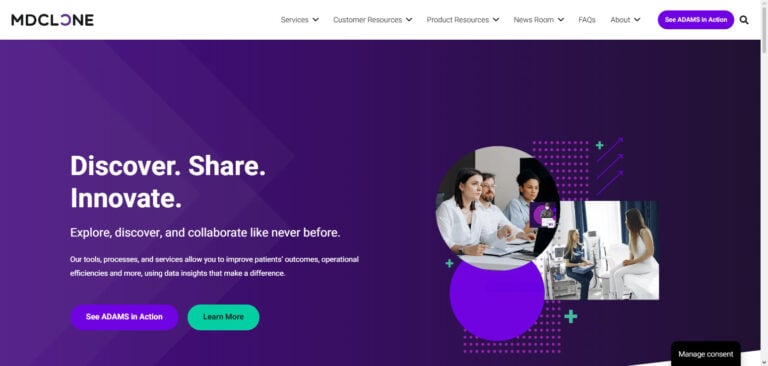
Especially important in the context of privacy and governance, they aim for compliance with HIPAA and GDPR. Deployment options are SaaS and enterprise. Healthcare-specific pricing makes it trusted by hospitals and research centers for safe data sharing. MDClone helps healthcare innovation with synthetic patient data.
| Feature | Details |
|---|---|
| Founded | 2016 |
| Synthetic Data Type | Patient records, clinical datasets |
| AI Capability | Healthcare-specific synthetic generation |
| Integrations | Hospital IT, research platforms |
| Privacy & Governance | HIPAA, GDPR compliance |
| Deployment | SaaS + enterprise |
| Pricing | Enterprise healthcare packages |
| Strength | Safe medical data sharing |
| Use Case | Hospitals, research centers |
10. Mostly AI (legacy brand)
Mostly AI (founded in 2017) was one of the first companies to focus on synthetic data for structured tabular datasets mostly for banking, insurance, and telecom. AI capabilities included GAN-based synthetic data generation. Integrations included enterprise data warehousing and analytics. Privacy and governance included GDPR and anonymization.
Deployment was SaaS and enterprise-ready. Pricing was customized to fit enterprise needs. Mostly AI (legacy brand) was the first to introduce the concept and build the basis for the use of synthetic data in Europe. The company later became Syntho. Mostly AI (legacy brand) is still recognized as a leader in the innovation of synthetic data.
| Feature | Details |
|---|---|
| Founded | 2017 |
| Synthetic Data Type | Tabular datasets |
| AI Capability | GAN-based generation |
| Integrations | Data warehouses, BI tools |
| Privacy & Governance | GDPR compliance |
| Deployment | SaaS + enterprise |
| Pricing | Enterprise custom |
| Strength | Pioneer in synthetic data |
| Use Case | Banking, telecom, insurance |
Synthetic Data Companies Comparison
| Company | Founded | Data Type | AI Capability | Integrations | Privacy & Governance | Deployment | Pricing | Strength / Use Case |
|---|---|---|---|---|---|---|---|---|
| NVIDIA (Gretel) | 2020 | Text, tabular, time-series | Generative models, differential privacy | AWS, Azure, GCP | GDPR, HIPAA, differential privacy | SaaS, API-first | Subscription tiers | GPU acceleration, secure AI training |
| Syntho (MOSTLY AI) | 2020 | Structured/tabular | GAN-based generation | Data warehouses, BI tools | GDPR compliance, anonymization | SaaS, on-premises | Enterprise custom | European compliance, finance & healthcare |
| Tonic.ai | 2018 | Test data for QA/dev | Realistic test data generation | SQL, NoSQL, CI/CD | HIPAA, GDPR masking | Cloud-native, API-first | Tiered pricing | Developer-centric, software testing |
| Hazy (SAS Data Maker) | 2017 | Structured datasets | Deep learning models | SAS analytics, cloud | GDPR, anonymization | SaaS, enterprise installs | Enterprise-driven | Financial services, insurance analytics |
| Synthesis AI | 2019 | Vision datasets, 3D models | Generative 3D simulations | TensorFlow, PyTorch | Ethical AI, no real human data | Cloud APIs | Project-based | Autonomous vehicles, AR/VR |
| Globant Synthetic Data | 2003 | Structured, unstructured, multimedia | Enterprise-scale generative models | Cloud, IT ecosystems | GDPR, HIPAA frameworks | Enterprise consulting-led | Custom enterprise | Digital transformation, enterprise AI |
| Altair | 1985 | Tabular datasets | Predictive analytics, generative models | Altair tools, cloud | Anonymization, compliance | SaaS + enterprise | License subscriptions | Engineering + analytics synergy |
| Parallel Domain | 2017 | 3D environments, sensor data | LiDAR, radar, camera simulations | Robotics, ML frameworks | Fully synthetic datasets | Cloud APIs | Project-based | Autonomous driving, robotics AI |
| MDClone | 2016 | Patient records, clinical datasets | Healthcare-specific synthetic generation | Hospital IT, research platforms | HIPAA, GDPR compliance | SaaS + enterprise | Healthcare enterprise | Safe medical data sharing |
| Mostly AI (Legacy Brand) | 2017 | Tabular datasets | GAN-based generation | Data warehouses, BI tools | GDPR compliance | SaaS + enterprise |
Conclusion
The ecosystem for synthetic data has grown quickly. Examples of companies in the area include Gretel, Tonic.ai, SAS Data Maker, Synthesis AI, Mostly AI, and Globant Synthetic Data. These companies started between 1985 and 2020 and have created solutions to multiple problems within healthcare, finance, autonomous driving, IT, enterprise software, and software testing.
The synthetic data offered by these companies takes many forms and ranges from tabular and structurally formatted data to 3D simulations and data formatted for computer vision and simulations based on AI technologies such as generative adversarial networks (GANs) and deep learning. Integrating solutions with the cloud and systems in enterprise environments with sensitivity to privacy issues also facilitates the adoption of synthetic data technologies.
Deployment of these services is offered through SaaS, APIs, and on-premises installations, and pricing is tailored for startups or regulated industries. These companies show that synthetic data plays an important role in secure, scalable, and ethical artificial intelligence.
FAQ
What is synthetic data?
Synthetic data is artificially generated information that mimics real datasets. It is created using AI models such as GANs or deep learning to replicate statistical properties of real-world data while removing sensitive identifiers. This allows organizations to test, train, and analyze without privacy risks.
Why is synthetic data important?
Synthetic data enables safe innovation in AI, healthcare, finance, and autonomous systems. It reduces dependency on sensitive datasets, ensures compliance with GDPR/HIPAA, and accelerates model training by providing diverse, scalable datasets.
Which industries use synthetic data?
Industries like healthcare (MDClone), finance (Syntho, Hazy), autonomous driving (Parallel Domain), enterprise IT (Globant, Altair), and software testing (Tonic.ai) rely heavily on synthetic data for secure, scalable innovation.
How do companies ensure privacy?
Companies like NVIDIA (Gretel) and Mostly AI use differential privacy, anonymization, and compliance frameworks (GDPR, HIPAA). This ensures synthetic datasets cannot be traced back to real individuals.
What deployment models exist?
Deployment options include SaaS platforms (Tonic.ai, Gretel), APIs (Synthesis AI, Parallel Domain), and enterprise installations (Hazy, MDClone). This flexibility allows adoption across startups and regulated industries.