




In this article, I will talk about the Best AI Data Center Companies, using examples of companies like NVIDIA, Google Cloud, AWS, & Microsoft Azure, which have the capacity with advanced cooling and energy strategies to support the development of artificial intelligence in the future. Other companies like Meta, Oracle, IBM, Tencent, Alibaba, & Equinix all support enterprise AI workloads and training of LLMs and large-scale adoption globally.
What is AI Data Center Companies?
AI Data Center Companies build and manage mega-scale data facilities primarily dedicated to supporting artificial intelligence workloads. Their buildings can host large data center installations, generating power, infrastructure for cooling, and designing for sustainable energy solutions.
These companies help clients with the deployment and training of large language models, as well as deploying robots and generative AI and enterprise apps. NVIDIA, Google Cloud, AWS, and Microsoft Azure offer GPU clusters and powered campuses with renewable energy, and global connection hubs, allowing their clients to securely and efficiently deploy AI workloads around the world.
Benefits Of AI Data Center Companies
Superior Compute Power – They provide systems capable of exaflop to zettascale computing performance. This level of performance can accelerate the training of large language models and generative AI.
Efficient Cooling Systems – The use of liquid and modular cooling technologies actually decrease energy waste while increasing the density of GPUs.
Eco-Friendly Initiatives – Many data center companies implement renewable energy systems along with nuclear PPAs and other strategies to decrease their carbon emmisions.
Thriving Enterprise Partnerships – Collaborations with Fortune 500 companies, governments, and startups promote the rapid adoption of AI on a global scale.
Worldwide Data Center Deployment – Resiliency and low latency access is ensured with a network of deployed data centers spread across the continents.
Cutting Edge GPU Innovation – Companies like NVIDIA, AWS, and Azure leverage the most current GPU products (Rubin, Blackwell, H100) for GPGPU computing.
AI Workload Specialization – Includes AI “engines” optimized for LLMs, robotics, agentic AI, healthcare, and enterprise inference.
Easy Scalability – With elastic computing infrastructure, enterprise users can scale computing resources on demand.
Regulatory Focus – Companies like IBM and Oracle are strong players in computing infrastructure for industries with stringent regulations and compliance.
Rapid Innovation – AI research collaborations, open source infrastructure, and interconnection hubs build a strong innovation ecosystem.
Key Points
| Company | Core Strength | Key Features | Best For |
|---|---|---|---|
| NVIDIA | GPU‑accelerated AI data centers | Blackwell/H200 GPUs, CUDA ecosystem | Enterprises training LLMs |
| Google Cloud | TPU‑powered AI infrastructure | TPU v5e clusters, Vertex AI | AI workloads on Google Cloud |
| AWS | Trainium & Inferentia chips | Optimized for generative AI | Cloud‑native enterprise AI |
| Microsoft Azure | Maia AI accelerators | Integrated with Copilot & OpenAI | Enterprises scaling on Azure |
| Meta AI Data Centers | LLaMA training clusters | Custom AI silicon, open‑source focus | Research & social AI workloads |
| Oracle Cloud Infrastructure | GPU + HPC integration | Enterprise ERP + AI synergy | Enterprise SaaS + AI |
| IBM Cloud | Hybrid AI + quantum | Watsonx AI + secure data centers | Regulated industries |
| Tencent Cloud | Asia‑focused AI compute | GPU clusters, AI APIs | APAC enterprises |
| Alibaba Cloud | AI + e‑commerce integration | Tongyi Qianwen LLM hosting | Retail & logistics AI |
| Equinix | Neutral colocation + AI | Interconnection hubs, GPU hosting | Multi‑cloud enterprise AI |
1. NVIDIA
NVIDIA’s Vera Rubin NVL72 and DGX SuperPOD designs consider the data center as a single unit of compute. Each rack incorporates 72 Rubin GPUs and 36 Vera CPUs and delivers up to 60 exaflops and 10 PB/s per rack. 45°C water-based liquid cooling allows for up to 30% higher GPU density per MW.
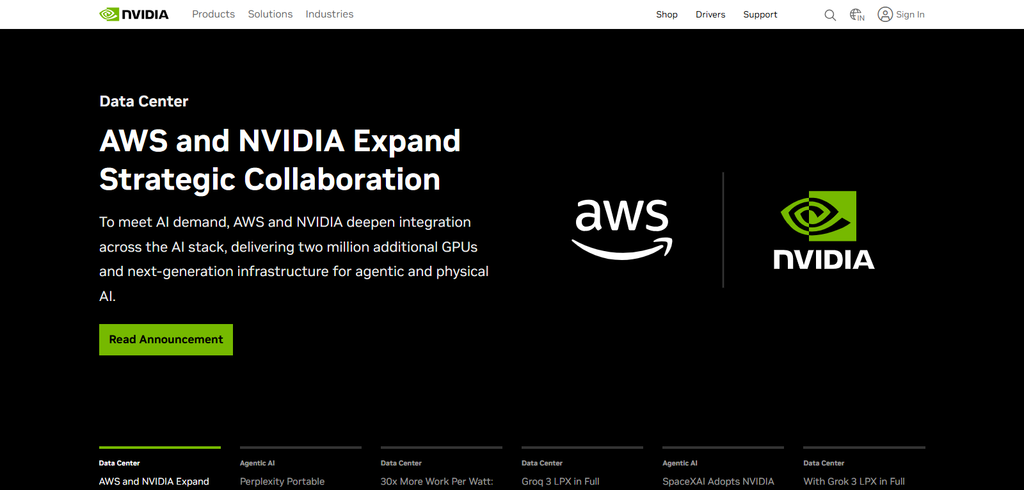
Sustainability is improved by the buffering of grid energy. Early adopters include frontier labs and government and Fortune 500 customers. Workloads include LLMs, agentic AI, robotics, and HPC. ASICs: Blackwell Ultra, Rubin, RTX PRO 6000.
| Feature | Details |
|---|---|
| Data Center Model | DGX SuperPOD, Vera Rubin NVL72 |
| GPU Count | 72 Rubin GPUs + 36 CPUs per rack |
| Compute Capacity | 60 exaflops per NVL72 cluster |
| Cooling | Warm-water liquid cooling at 45°C |
| Density | 30% higher GPU density per MW |
| Sustainability | Renewable PPAs + grid-aware buffering |
| Enterprise Partners | Fortune 500, governments, frontier labs |
| AI Workloads | LLMs, robotics, agentic AI, HPC |
| GPU Portfolio | Blackwell Ultra, Rubin, RTX PRO |
| Positioning | Data center as the unit of compute |
2. Google Cloud
Google Cloud constructs regional specialized AI data centers at 9 GW of installed power capacity in 26 countries and 44 sites. To promote continuous cooling of the data centers, Google has implemented a renewable powered liquid + mixed system that is 57% sourced from renewables.

The data centers run AI workloads on TPU v8 superpods (121 exaflops), in combination with Rubin GPUs from NVIDIA, and Virgo fabric for ultra-low latency. The enterprise partners include AdaniConneX (India) and NextEra Energy (US), and the sustainable strategy augments the addition of nuclear PPA and renewable grids which aims for carbon neutral growth.
Google’s AI infrastructure focuses on offering a suitable computing infrastructure for LLMs and generative AI models at various stages of the training and inference cycles.
| Feature | Details |
|---|---|
| Global Footprint | 44 AI data centers in 26 countries |
| Power Capacity | 9 GW total |
| Cooling | Liquid + renewable hybrid systems |
| Renewable Share | 57% renewable sourcing |
| Compute | TPU v8 superpods (121 exaflops each) |
| GPU Integration | NVIDIA Rubin GPUs |
| Networking | Virgo fabric ultra-low latency |
| Enterprise Partners | AdaniConneX, NextEra Energy |
| Sustainability | Nuclear PPAs + renewable grids |
| Workloads | LLMs, generative AI, enterprise AI |
3. AWS
AWS has 44 AI facilities at 14.1 GW, the largest site at 2.4 GW in Oregon. Cooling relies on mixed renewable, nuclear, and natural gas technologies. AWS is aiming for 2M NVIDIA GPUs (Blackwell Ultra, Rubin) by 2028 to power agentic AI and other computing workloads. Potential customers are Anthropic, partners in the US Government’s AI factories, and others.
Nuclear Power Purchase Agreements (PPAs) in Pennsylvania and Texas provide the basis for sustainability efforts. The AI workload computing capacity grows to multi-exaflop clusters, offering extensive compute capacity for LLM training and inference. AWS focuses on providing a foundation for large enterprises to adopt AI globally, relying on elastic computing and hybrid infrastructure.
| Feature | Details |
|---|---|
| Global Sites | 44 AI facilities in 27 countries |
| Power Capacity | 14.1 GW |
| Largest Site | Oregon (2.4 GW) |
| Cooling | Mixed renewable, nuclear, gas |
| GPU Deployment | 2M NVIDIA GPUs by 2028 |
| GPU Types | Blackwell Ultra, Rubin |
| Enterprise Partners | Anthropic, US Government AI |
| Sustainability | Nuclear PPAs in PA & TX |
| Compute Capacity | Multi-exaflop clusters |
| Workloads | LLMs, robotics, agentic AI |
4. Microsoft Azure
The Azure AI cloud has 13.1 GW of capacity and 53 data centers in 37 countries. Cooling systems combine liquid and renewable energy, with 45% renewable sourcing. Azure’s NVIDIA Vera Rubin NVL72 racks offer 3.6 exaflops for AI compute clusters, and provide scalability to enterprise customers.

OpenAI, Apollo Hospitals, and Air India are all enterprise customers showing the global adoption of Azure across varying industries. Some of Azure’s sustainability projects are using Crane Clean Energy for renewable, low carbon scale AI.
AI workloads vary across large language models, healthcare AI, AI for optimizing air travel, and enterprise AI. Azure also offers Rubin and Blackwell Ultra, a specialized GPU for multi-exaflop computing, among its other offerings. Azure strives to provide enterprise customers AI services across the globe with trust.
| Feature | Details |
|---|---|
| Global Sites | 53 AI data centers in 37 countries |
| Power Capacity | 13.1 GW |
| Cooling | Liquid + renewable grids |
| Renewable Share | 45% |
| GPU Deployment | NVIDIA NVL72 racks (3.6 exaflops each) |
| Enterprise Partners | OpenAI, Apollo Hospitals, Air India |
| Sustainability | Crane Clean Energy nuclear reactivation |
| Workloads | LLMs, healthcare AI, aviation AI |
| GPU Types | Rubin + Blackwell Ultra |
| Positioning | Trusted enterprise AI partner |
5. Meta AI Data Centers
Meta runs 20 data centers for AI in 5 countries that contain a total capacity of 15.8 GW. The largest of these is the Hyperion AI Data Center in Louisiana, which has a capacity of 5 GW. Cooling systems incorporate nuclear and renewable energy systems, and can utilize 70% renewable sources.
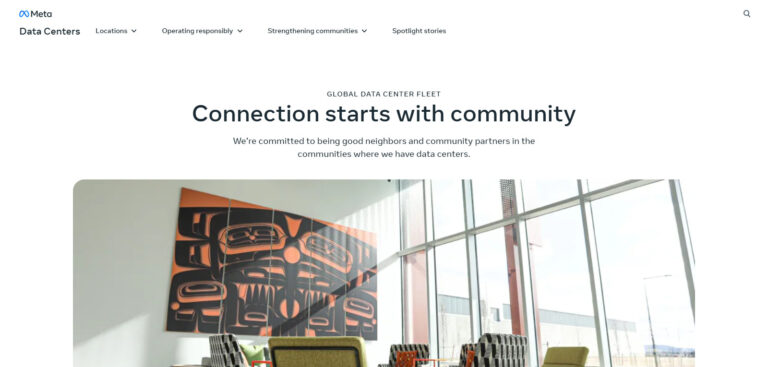
AI workloads are focused on Llama 3 training clusters with 24,576 NVIDIA H100 GPUs each. Enterprise use focuses on supporting community AI ecosystems and research partnerships. Meta opts for a renewable PPA strategy with nuclear baseload to enable an economically viable PPA structure and support sustainable growth.
The focus of the GPU offering is NVIDIA H100 clusters that provide multi-exaflop compute capability. Meta is designing its infrastructure for frontier AI research, open innovation and AGI exploration.
| Feature | Details |
|---|---|
| Global Sites | 20 AI data centers in 5 countries |
| Power Capacity | 15.8 GW |
| Largest Site | Hyperion AI Data Center (5 GW) |
| Cooling | Nuclear + renewable hybrid |
| Renewable Share | 70% |
| GPU Deployment | 24,576 NVIDIA H100 GPUs per cluster |
| Workloads | Llama 3 training, AGI research |
| Enterprise Focus | Open-source AI ecosystems |
| Sustainability | Renewable PPAs + nuclear baseload |
| Positioning | Frontier AI + open innovation |
6. Oracle Cloud Infrastructure
Oracle’s OCI Zettascale10 Supercluster has a max speed of 16 zettaFLOPS with 800,000 NVIDIA GPUs joined by Acceleron RoCE networking. Gigawatt + liquid cooling technology enables high density and scalability of power. Cooling runs through modular gigawatt campus units.
The largest site is Stargate, located in Abilene, Texas. Enterprise clients include OpenAI, Uber, Zoom, and Cohere, among others, and indicate enterprise level adoption. Moving to OCI means a 25x reduction in energy expenditure per inference, making it more sustainable and the leader in AI compute. LLMs, enterprise AI, and generative AI are some AI workloads supported by Blackwell and GB200 GPUs. Oracle focuses heavily on enterprise AI computation at the zettascale.
| Feature | Details |
|---|---|
| Supercluster | OCI Zettascale10 |
| Compute Capacity | 16 zettaFLOPS peak |
| GPU Count | 800,000 NVIDIA GPUs |
| Networking | Acceleron RoCE |
| Cooling | Liquid + modular gigawatt campuses |
| Largest Site | Stargate (Abilene, Texas) |
| Enterprise Partners | OpenAI, Uber, Zoom, Cohere |
| Sustainability | 25× less energy per inference |
| GPU Types | Blackwell + GB200 |
| Positioning | Enterprise-grade zettascale compute |
7. IBM Cloud
IBM Cloud launches 2,000 NVIDIA HGX B300 GPUs with Spectrum-X Ethernet and delivers a 30x increase in inference throughput. Cooling combines flash‑based NVMe + liquid expansion, allowing energy‑efficient scaling. There are 47 PB per rack of AI and HPC workloads optimized storage.
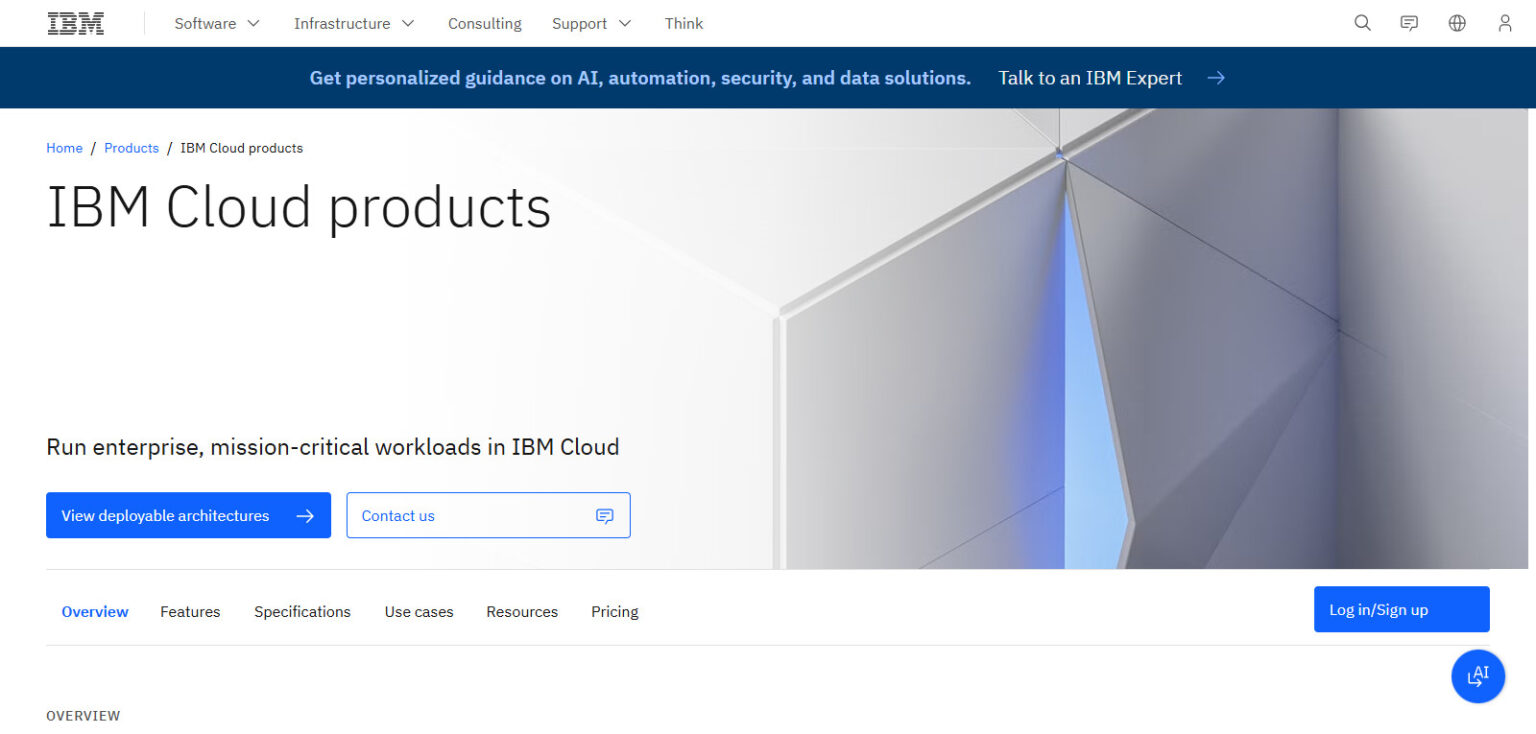
Together AI and Granite models are company partners and are representative examples of collaborations using AI. The sustainability strategy incorporates NVMe Flash and BlueField DPUs, also helping to reduce energy consumption.
AI workloads encompass inference for LLMs and enterprise AI as well as model optimization. HGX B300 GPUs drive these initiatives. IBM Cloud focuses on offering efficient inference scaling and enterprise AI adoption.
| Feature | Details |
|---|---|
| GPU Deployment | 2,000 NVIDIA HGX B300 GPUs |
| Networking | Spectrum-X Ethernet |
| Inference Throughput | 30× higher |
| Cooling | Flash NVMe + liquid expansion |
| Storage | 47 PB per rack |
| Enterprise Partners | Together AI, Granite models |
| Sustainability | NVMe flash + BlueField DPUs |
| Workloads | LLM inference, enterprise AI |
| GPU Types | HGX B300 |
| Positioning | Specialized inference scaling |
8. Tencent Cloud
Tencent Cloud’s Hunyuan AI Supercomputer has a compute capacity of multiple exaflops. With 16,000 NVIDIA H100 GPUs and 3.2 Tbps inter‑node bandwidth, it’s a clear next-generation supercomputer. High-density scaling is achieved with Starlink Network 2.0 optimized liquid systems for cooling. LLMs, game AI, and AI services for WeChat cover enterprise and consumer workloads.
Capacity is tracked in Singapore at 80 MW with local compute clusters. Sustainability is focused on regional optimization and integration of renewables. GPU clusters will focus on NVIDIA H100 for LLMs, as it is optimized for training and inference. Tencent aims to be the premier regional AI provider with global goals.
| Feature | Details |
|---|---|
| Supercomputer | Hunyuan AI |
| GPU Deployment | 16,000 NVIDIA H100 GPUs |
| Networking | 3.2 Tbps inter-node bandwidth |
| Compute Capacity | Multi-exaflop |
| Cooling | Starlink Network 2.0 liquid systems |
| Enterprise Workloads | LLMs, gaming AI, WeChat AI |
| Regional Capacity | 80 MW in Singapore |
| Sustainability | Regional optimization + renewables |
| GPU Types | NVIDIA H100 |
| Positioning | Regional AI powerhouse |
9. Alibaba Cloud
Alibaba Cloud has four AI data centers across China, Singapore, Japan, and Germany with a total capacity of 800 MW. Zhangbei Super Data Center is the largest at 500 MW. Cooling for all AI data centers uses CUBE 5.0 modular architecture which enhances system efficiency to ≤1.10 PUE liquid cooling.
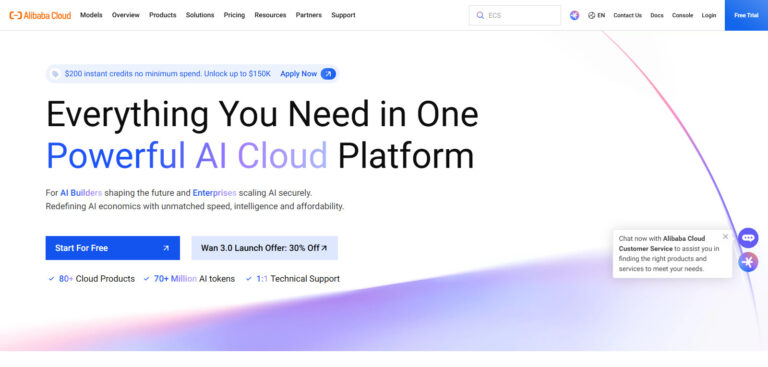
Some of Alibaba’s enterprise partners include local regional governments and e‑commerce AI workloads. Their sustainability efforts are focused on building full data centers even faster (100-day compressed build) and cost reduction by 10% to further promote AI scaling.
AI workloads range from LLMs and e-commerce AI to enterprise AI services. Alibaba wants to lead AI infrastructure services in the region. While achieving scale, Alibaba is also focused on the middle ground of efficiency and enterprise adoption.
| Feature | Details |
|---|---|
| Global Sites | 4 AI data centers |
| Power Capacity | 800 MW |
| Largest Site | Zhangbei Super Data Center (500 MW) |
| Cooling | CUBE 5.0 modular liquid cooling |
| PUE Efficiency | ≤1.10 |
| Enterprise Partners | Regional governments, e-commerce AI |
| Sustainability | 100-day build cycles, 10% lower cost |
| Workloads | LLMs, e-commerce AI |
| GPU Types | Heterogeneous GPU clusters |
| Positioning | Regional AI infrastructure leader |
10. Equinix
Equinix enables multi-megawatt deployments across 270+ AI-ready data centers in 77 markets. They optimize cooling for high density, liquid cooled, GPU power racks. Industry leaders such as Nasdaq, Adobe, Cisco, Nebius, and Merck have partnered with Equinix.
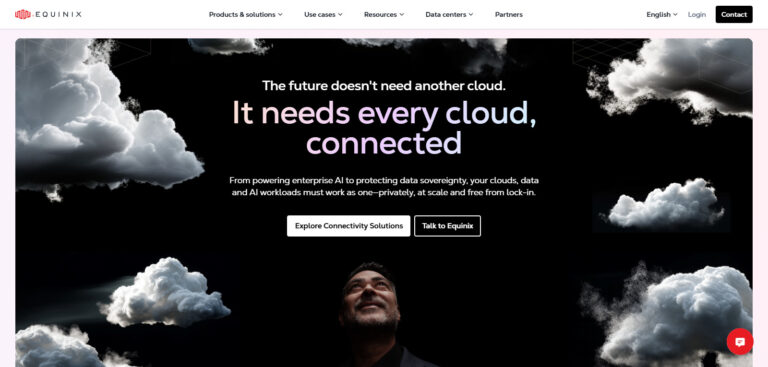
Equinix has adopted sustainable practices by incorporating both a vendor-neutral and renewable-first approach to their interconnection ecosystems. Their focus on sustainable practices allows for Carbon smart scaling. Equinix hosts AI workloads for enterprise AI, HPC, and distributed computing. Equinix has created a global interconnection hub with industry-spanning and geography-spanning AI compute capacity.
| Feature | Details |
|---|---|
| Global Sites | 270+ data centers in 77 markets |
| Cooling | Liquid + high-density GPU racks |
| Enterprise Partners | Nasdaq, Adobe, Cisco, Merck |
| Sustainability | Renewable-first interconnection ecosystems |
| Workloads | Enterprise AI, HPC, distributed compute |
| Positioning | Global interconnection hub |
| GPU Deployment | Vendor-neutral clusters |
| Networking | Multi-megawatt hyperscale deployments |
| Adoption | Broad industry coverage |
| Role | Enabler of enterprise AI scaling |
Global AI Data Center Comparison
| Provider | Data Center Capacity | Power Capacity | Cooling Technology | Sustainability | Enterprise Partners | AI Workloads | GPU/Accelerator Type | AI Compute Capacity | Positioning |
|---|---|---|---|---|---|---|---|---|---|
| NVIDIA | DGX SuperPOD, NVL72 | 60 exaflops per cluster | Warm‑water liquid (45°C) | Renewable PPAs, grid buffering | Fortune 500, governments | LLMs, robotics, HPC | Rubin, Blackwell Ultra | Multi‑exaflop | Data center = unit of compute |
| Google Cloud | 44 sites, 26 countries | 9 GW | Liquid + renewable hybrid | 57% renewable, nuclear PPAs | AdaniConneX, NextEra | LLMs, generative AI | TPU v8, Rubin GPUs | 121 exaflops per superpod | Global distributed resilience |
| AWS | 44 sites, 27 countries | 14.1 GW | Mixed renewable, nuclear, gas | Nuclear PPAs (PA, TX) | Anthropic, US Gov AI | LLMs, robotics, agentic AI | Blackwell Ultra, Rubin | Multi‑exaflop | Elastic AI backbone |
| Microsoft Azure | 53 sites, 37 countries | 13.1 GW | Liquid + renewable grids | Crane nuclear reactivation | OpenAI, Apollo Hospitals | LLMs, healthcare, aviation AI | Rubin, Blackwell Ultra | 3.6 exaflops per NVL72 | Trusted enterprise AI |
| Meta AI Data Centers | 20 sites, 5 countries | 15.8 GW | Nuclear + renewable hybrid | 70% renewable sourcing | Open‑source AI ecosystem | Llama 3, AGI research | NVIDIA H100 clusters | Multi‑exaflop | Frontier AI + open innovation |
| Oracle Cloud Infrastructure | OCI Zettascale10 | 16 zettaFLOPS | Liquid + modular gigawatt | 25× less energy per inference | OpenAI, Uber, Zoom, Cohere | LLMs, enterprise AI | Blackwell, GB200 | Zettascale | Enterprise zettascale compute |
| IBM Cloud | Specialized inference clusters | 47 PB per rack | Flash NVMe + liquid | NVMe flash + BlueField DPUs | Together AI, Granite models | LLM inference, enterprise AI | NVIDIA HGX B300 | 30× higher inference throughput | Efficient inference scaling |
| Tencent Cloud | Hunyuan AI Supercomputer | Regional clusters (80 MW SG) | Starlink 2.0 liquid | Regional renewable optimization | Gaming + WeChat ecosystem | LLMs, gaming AI | NVIDIA H100 | Multi‑exaflop | Regional AI powerhouse |
| Alibaba Cloud | 4 sites | 800 MW | CUBE 5.0 modular liquid | ≤1.10 PUE, rapid build cycles | Governments, e‑commerce AI | LLMs, e‑commerce AI | Heterogeneous GPU clusters | Regional exaflop clusters | Regional AI leader |
| Equinix | 270+ sites, 77 markets | Multi‑MW deployments | Liquid + high‑density racks | Renewable‑first interconnection | Nasdaq, Adobe, Cisco, Merck | Enterprise AI, HPC |
Conclusion
The AI data center industry is characterized by large-scale capacity, advanced cooling technologies, sustainable practices, and enterprise customer adoption. NVIDIA’s innovation revolves around GPUs, defining the data center as the fundamental unit of compute.
Google Cloud and AWS control large-scale deployments and integrate renewable energy and nuclear PPAs. Microsoft Azure prioritizes partnerships to build trust with enterprise customers. Meta AI Data Centers are focused on LLMs and AGI through open sourcing. Oracle Cloud Infrastructure offers zettascale compute, while IBM Cloud offers inference compute optimization.
The established AI data center ecosystem is comprised of regional players like Tencent Cloud and Alibaba Cloud as well as AWS and Google Cloud. AWS, Google Cloud, and the rest of the industry are increasingly the AI data center ecosystems as well as offer GPU acceleration and sustainable computing technologies.
FAQ
What is the largest AI data center capacity today?
Meta’s Hyperion AI Data Center in Louisiana leads with 5 GW capacity, while Oracle’s Zettascale10 Supercluster delivers 16 zettaFLOPS peak compute.
Which provider focuses most on GPU innovation?
NVIDIA dominates with Rubin + Blackwell Ultra GPUs, positioning the data center as the unit of compute.
How do hyperscalers manage cooling technology?
Google, AWS, and Azure use liquid + renewable hybrid cooling, while Alibaba’s CUBE 5.0 modular system achieves ≤1.10 PUE efficiency.
Which cloud provider emphasizes sustainability?
Google Cloud and AWS integrate nuclear PPAs + renewable grids, while Oracle achieves 25× less energy per inference.
What workloads dominate AI data centers?
LLM training, inference, robotics, agentic AI, and enterprise AI services are common across NVIDIA, AWS, Azure, and Meta.