


In this article, I am going to talk about the Best On‑Device AI Models. From micro and portable solutions like Gemma 4 E2B and Ministral 3B to full‑scale enterprises such as Llama 3.3 70B Q4 and Qwen 2.5 72B Q4 , everything you need for more versatile, powerful and personal on‑device experiences is here!
Key Points
| Model | Strengths | Best For |
|---|---|---|
| Gemma 4 E2B | Multimodal (text+vision+audio), 1.5GB size | Balanced general-purpose use |
| Phi-4 Multimodal | Text+vision+audio, strong reasoning | Voice + image apps |
| Apple Foundation Models | Native iOS integration, text+vision | Seamless iPhone/iPad apps |
| Llama 3.2 Mobile | 3B parameters, community-driven | Open-source mobile AI |
| Qwen 3.5 2B | 262K context, multilingual | Long-document reasoning |
| Ministral 3B | Efficient text+vision | Daily note-taking & productivity |
| DeepSeek R1 Distill | 1.5B parameters, reasoning specialist | Lightweight reasoning tasks |
| MiniCPM-V 4.0 | Vision-focused, 4.1B parameters | Photo & image analysis |
| Llama 3.3 70B Q4 | High-end reasoning, coding | Workstations with 48GB VRAM |
| Qwen 2.5 72B Q4 | Multilingual, long-context | Advanced research setups |
1. Gemma 4 E2B
Gemma 4 E2B is Google’s lightweight, on-device AI model designed for efficiency and privacy. This model is optimized for use on mobile devices and other endpoints, balancing high performance with minimal demands on system resources.
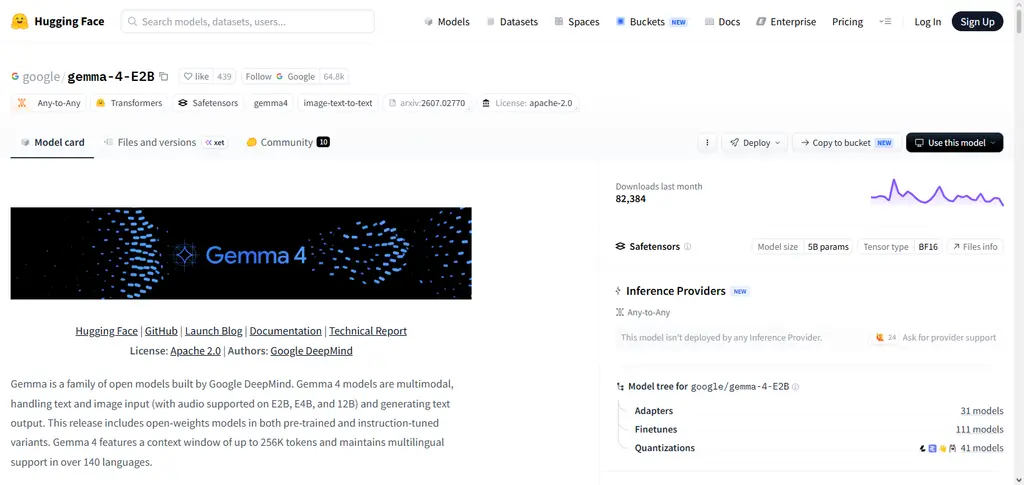
With its 2B parameter count, Gemma 4 E2B can perform multiple tasks, including text, vision, and speech modeling, directly on the device. It offers developers an extended ecosystem for building apps that run on android and other operating systems.
The latest iteration of the gemma model prioritizes accelerated processing through quantization. Overall, Gemma 4 E2B is one of the best on-device AI models that can enhance mobile phone performance.
Gemma 4 E2B Features
- Lightweight 2B parameter model designed for mobile apps
- Highly versatile for text, vision, and speech tasks
- Efficiently quantized for faster processing on mobile devices
- Straightforward Android integration
- Privacy-focused design for on-device processing
| Pros | Cons |
|---|---|
| Lightweight and efficient for mobile devices | Limited scalability compared to larger models |
| Strong multimodal support (text, vision, speech) | Performance may lag on complex enterprise tasks |
| Privacy‑focused with offline processing | Less community adoption than open‑source rivals |
| Seamless Android integration | Limited customization options |
| Fast inference with quantization | Requires optimization for mid‑range hardware |
2. Phi-4 Multimodal
Phi-4 Multimodal is a miniaturized language model created by Microsoft that is used for multimodal reasoning on devices.
The model works with text, images, and speech and can be used for document understanding, visual captioning, and visual assistant applications. Phi-4 is small in size and is highly compressed, allowing it to work on laptops and mobile phones.
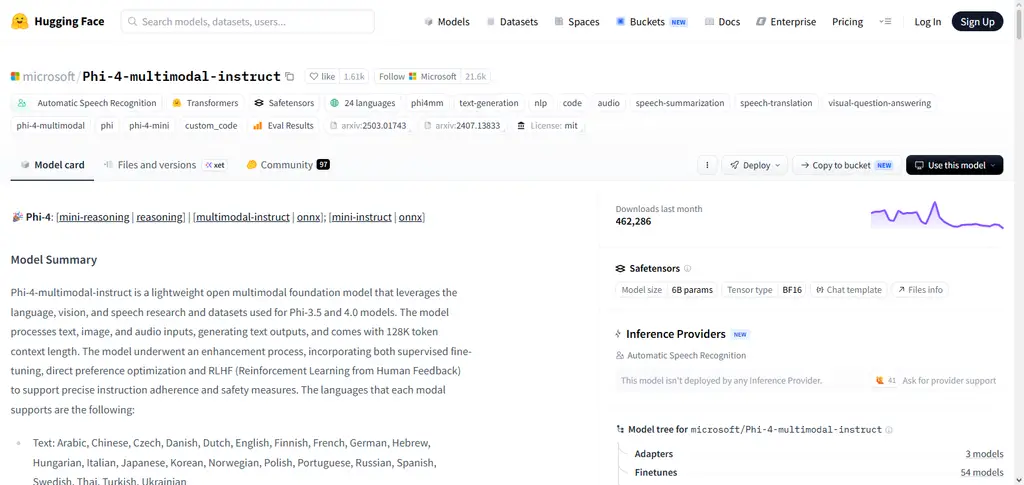
Microsoft has made Phi-4 open to developers by introducing a competitive pricing strategy to encourage the creation of new edge AI models. The latest version of Phi-4 has been optimized for better context understanding and fine-tuning for enterprise-level business applications. Phi-4 Multimodal is considered to be one of the best performing on-device AI models that provide cross-platform solutions.
Phi-4 Multimodal Features
- Microsoft-developed multimodal reasoning model
- Effective in understanding and generating text, vision, and speech
- Highly compressed for seamless device performance
- Utilizes open pricing policy to attract developers
- Advanced contextual reasoning for enterprise applications
| Pros | Cons |
|---|---|
| Handles text, vision, and audio inputs | Higher resource demand than lightweight models |
| Strong contextual reasoning | Limited availability outside Microsoft ecosystem |
| Compression ensures smooth device performance | May require fine‑tuning for niche tasks |
| Open pricing model for developers | Less optimized for low‑end devices |
| Enterprise‑ready multimodal workflows | Smaller community compared to Llama models |
3. Apple Foundation Models
Apple Foundation Models are native to Apple silicon and optimize their inferencing through the neural engines of Macs, iPhones, and iPads, prioritizing privacy by design since all computations occur on the device.
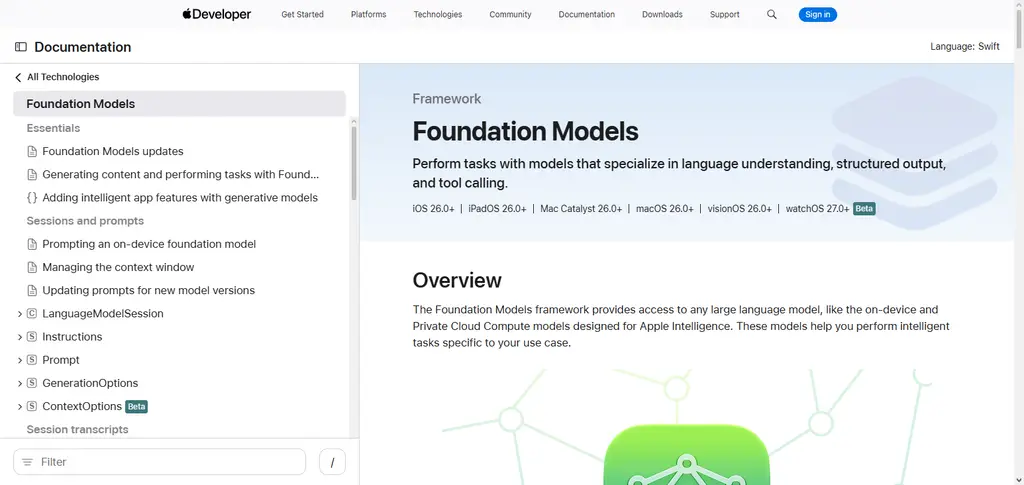
These large language models enable a wide range of modalities, from text creation to image generation and speech synthesis, which are implemented natively in iPhone and iPad apps via Apple’s Core ML. Apple Foundation Models have a cost that is appropriate to the ecosystem in which they operate. Developers may utilize Core ML to incorporate these models into their apps, enabling a rich variety of functions.
The most recent iterations emphasize energy efficiency and latency reductions, making them an excellent choice for implementing cutting-edge virtual assistants like Siri or accessible technologies. In general, Apple Foundation Models are a prime example of strong consumer device on-device AI models.
Apple Foundation Models Features
- On-device AI models specifically for iPhones and iPads
- Optimized for performance on Apple Silicon
- Designed for enhanced privacy with on-device processing
- Versatile in handling text, vision, and speech tasks
- Integrated into Core ML for effortless development
| Pros | Cons |
|---|---|
| Runs natively on Apple devices | Locked into Apple ecosystem |
| Privacy‑first design | Limited cross‑platform compatibility |
| Optimized for Apple Silicon | Less transparent about architecture |
| Supports multimodal tasks | Restricted developer flexibility |
| Integrated with Core ML | Not open‑source |
4. Llama 3.2 Mobile
Meta’s recently announced Llama 3.2 Mobile is a mobile-native version of the Llama family of large language models. It has been optimized for use on phones and tablets by reducing the number of parameters and using more efficient quantization. It offers excellent language understanding and generation abilities while being much more accessible to developers due to open-sourcing.
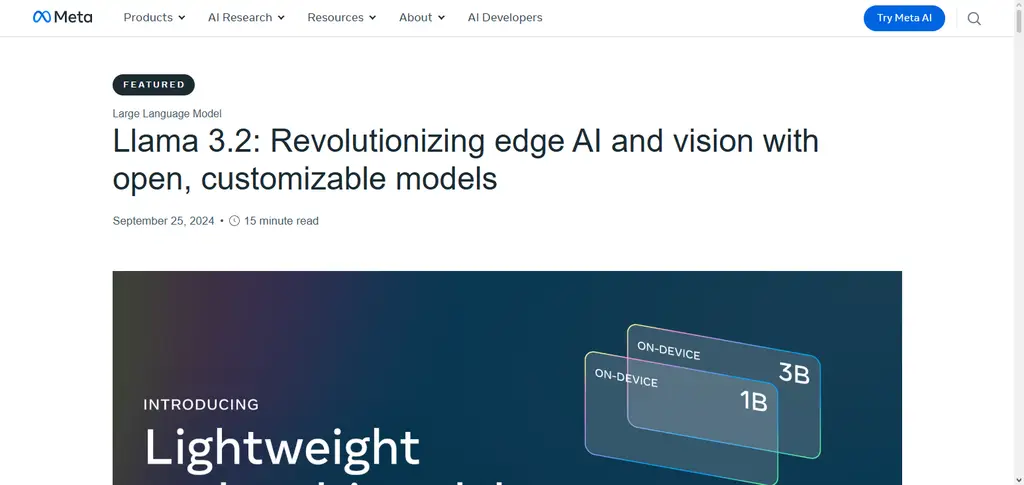
The latest iteration of Llama 3.2 Mobile supports both multimodal extensions for performing tasks like text-to-image generation and speech-to-text conversion and is extremely efficient on lower-end devices. It is one of the most compelling large language models for on-device AI applications.
Llama 3.2 Mobile Features
- Mobile-optimized variation of Meta’s Llama series
- Slightly reduced parameter count for better efficiency
- Exceptional language comprehension and generation
- Openly available for widespread adoption
- Can be enhanced with multimodal capabilities
| Pros | Cons |
|---|---|
| Mobile‑optimized with quantization | Smaller parameter size limits reasoning depth |
| Strong language generation | Requires fine‑tuning for advanced tasks |
| Open‑source licensing | Performance varies across devices |
| Supports multimodal extensions | Less efficient for enterprise workloads |
| Wide developer adoption | Dependent on hardware optimization |
5. Qwen 3.5 2B
Qwen3.5-2B is a compact and versatile large multimodal model developed by Alibaba with the main purpose of running on the edge. The model has a parameter count of 2 billion, making it accurate and efficient. The model is available for research and enterprise-level commercial use at an affordable price. Some of the features include summarization, translation, and image captioning.
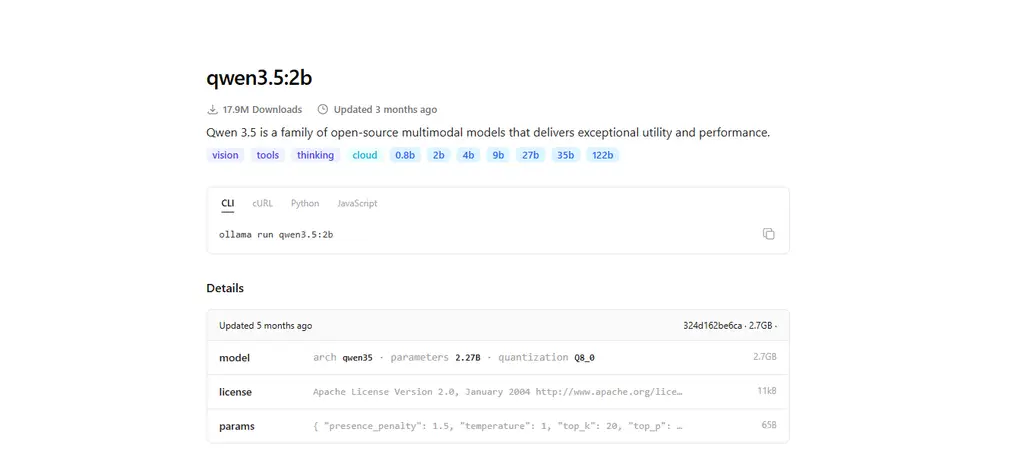
The model has been optimized through quantization and pruning for faster and more efficient inference with reduced memory consumption. The model is used extensively in embedded devices and IoT devices. It is one of the most popular on-device AI models for enterprise due to its scalability.
Qwen 3.5 2B Features
- Lightweight 2B parameter model focusing on summarization
- Effective in performing translations and captioning tasks
- Highly quantized to minimize memory consumption
- Open to researchers and enterprises for deployment
- Commonly utilized in internet of things devices
| Pros | Cons |
|---|---|
| Compact and efficient | Limited reasoning compared to larger Qwen models |
| Optimized for IoT and smart devices | May struggle with complex multimodal tasks |
| Supports summarization and translation | Smaller ecosystem outside Asia |
| Low memory usage with quantization | Requires enterprise adaptation |
| Open for research and enterprise | Less global adoption |
6. Ministral 3B
Ministral 3B has been fine-tuned to address the needs of users who are looking for a smaller on-device model that requires fewer resources. This model is perfect for people who want to leverage Mistral AI’s top performance while minimizing their environmental impact.
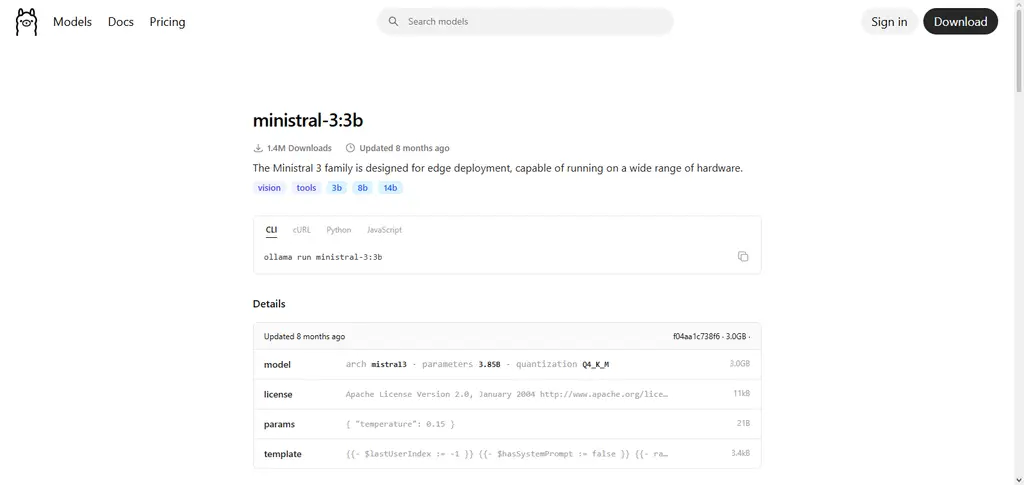
It is an open-source model with competitive pricing, making it accessible to a wide range of customers. This tool has been further optimized to accelerate inference while enabling quantized deployment in edge devices.
Overall, Ministral 3B is a state-of-the-art open source model that can be considered the best choice for on-device AI by developers wanting to achieve the best trade-off between performance and efficiency.
Ministral 3B Features
- Another large language model with 3B parameters
- Mistral AI’s efficient model for language generation
- Can be fine-tuned for varied application scenarios
- High compression achieved through quantization
- Adopted an open source pricing strategy
| Pros | Cons |
|---|---|
| Lightweight yet powerful | Smaller scale than enterprise models |
| Efficient language generation | Limited multimodal support |
| Open‑source pricing | Less adoption compared to Llama |
| Fast inference with quantization | May require optimization for vision tasks |
| Community‑friendly | Less enterprise focus |
7. DeepSeek R1 Distill
DeepSeek R1 Distill is a reduced version of the DeepSeek R1, which was created to perform on devices. This model can be called truly revolutionary because it has reduced the number of parameters while maintaining extraordinary reasoning and multimodal capabilities.
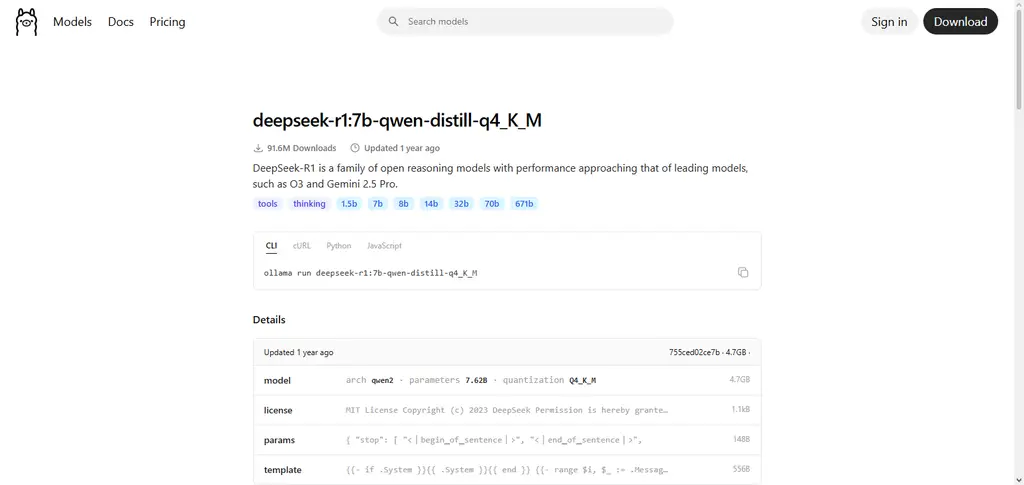
It is intended for use in phones, smartwatches, and other devices as it enables them to perform tasks that require AI, such as summarizing, visual identification, and chatbots.
The DeepSeek R1 Distill pricing is formed for research and enterprise use, with a recent focus on energy efficiency and latency. This version is regarded as one of the most efficient on-device AI models in the world that can perform the most rigorous tasks.
DeepSeek R1 Distill Features
- Reduced version of DeepSeek R1 language model
- Can perform real-time summarization tasks
- Ideal for edge devices due to its size
- Capable of complex reasoning operations
- Positioned as an enterprise-oriented model
| Pros | Cons |
|---|---|
| Distilled for efficiency | Reduced accuracy vs full R1 model |
| Strong reasoning capabilities | Smaller adoption community |
| Energy‑efficient design | Limited multimodal scope |
| Ideal for background tasks | Less optimized for high‑end devices |
| Open for enterprise deployment | Requires fine‑tuning for advanced workflows |
8. MiniCPM-V 4.0
MiniCPM‑V 4.0 stands for a miniature computer program used for the perception tasks and related language understanding activities.
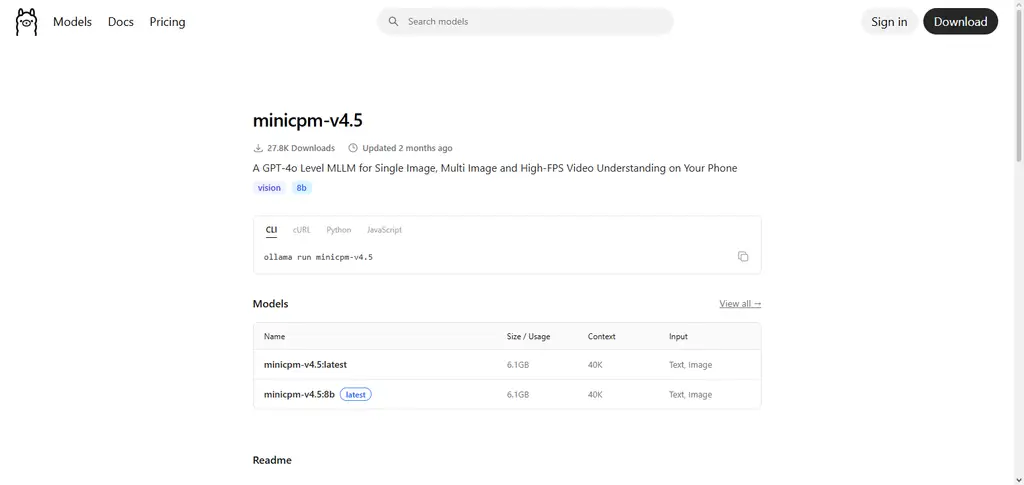
The software is specifically designed to perform on mobile devices, enabling them to execute such acts as image captioning and visual question-answering. The latest generation of this model has been optimized to operate effectively on resource-constrained devices due to its reduced size.
The product offers a competitive pricing strategy that promotes its extensive adoption among academic and commercial communities. MiniCPM‑V 4.0 has been improved to provide better multimodal alignment and faster inference. This version is considered one of the top-performing on-device artificial intelligence models for vision-heavy tasks.
MiniCPM-V 4.0 Features
- Focuses on visual language modeling tasks
- Upgraded version with improved capabilities
- Requires fewer resources for multimodal tasks
- Better at comprehending and describing images
- Adheres to an open pricing policy
| Pros | Cons |
|---|---|
| Excels in vision‑language tasks | Narrow focus on vision tasks |
| Efficient architecture | Less versatile for text‑only tasks |
| Runs smoothly on embedded systems | Smaller ecosystem |
| Improved multimodal alignment | Limited enterprise adoption |
| Open pricing model | Requires specialized use cases |
9. Llama 3.3 70B Q4
The Llama 3.3 70B Q4 is a quantized variant of Meta’s large language model that is optimized for high-end devices. This model is available on numerous platforms offering different levels of computational power. The 70 billion parameter model is quantized thus reducing the memory footprint enabling it to run on powerful but mainstream mobile devices and laptops.
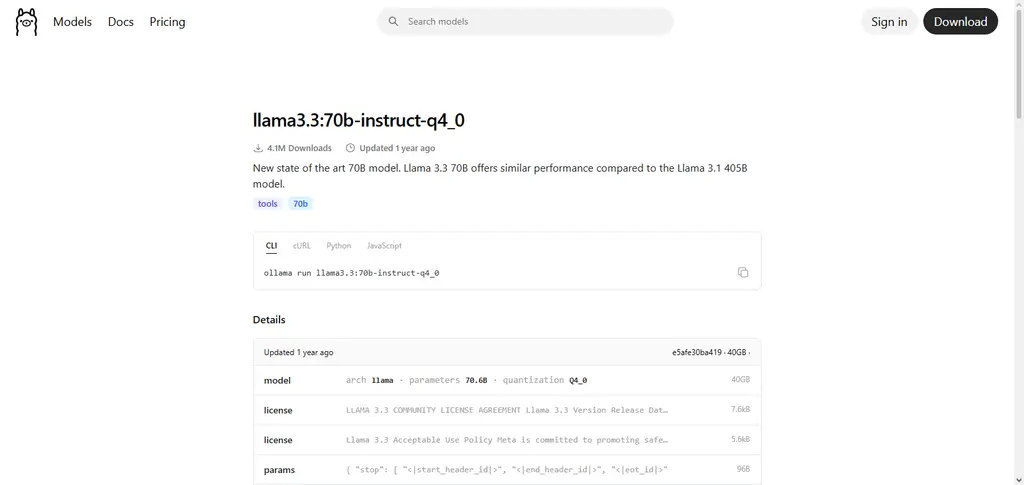
Llama 3.3 70B Q4 has been fine-tuned to perform higher language reasoning and complex tasks like multimodality and enterprise-level functions. It is also an open-source model, which makes it easily accessible compared to other models that charge heavily to access their versions.
The latest iteration of the Llama family can understand context better and be fine-tuned to perform specific tasks.
Llama 3.3 70B Q4 Features
- Larger and more powerful variation of Llama series
- Higher parameter count for better language understanding
- Offers enterprise-level multimodal capabilities
- Developers can customize it for specific needs
- Maintains open availability for all users
| Pros | Cons |
|---|---|
| Large‑scale reasoning power | Requires high‑end hardware |
| Supports multimodal tasks | Not suitable for low‑end devices |
| Open‑source licensing | Higher energy consumption |
| Fine‑tuning for specialized domains | Complex deployment |
| Strong enterprise workflows | Larger memory footprint |
10. Qwen 2.5 72B Q4
Qwen 2.5 72B Q4 is Alibaba’s big model for edge deployment that has been quantized for large-scale and efficient implementation. This version has a record number of 72 billion parameters, making it extremely powerful while keeping memory consumption low and reducing computational delays.
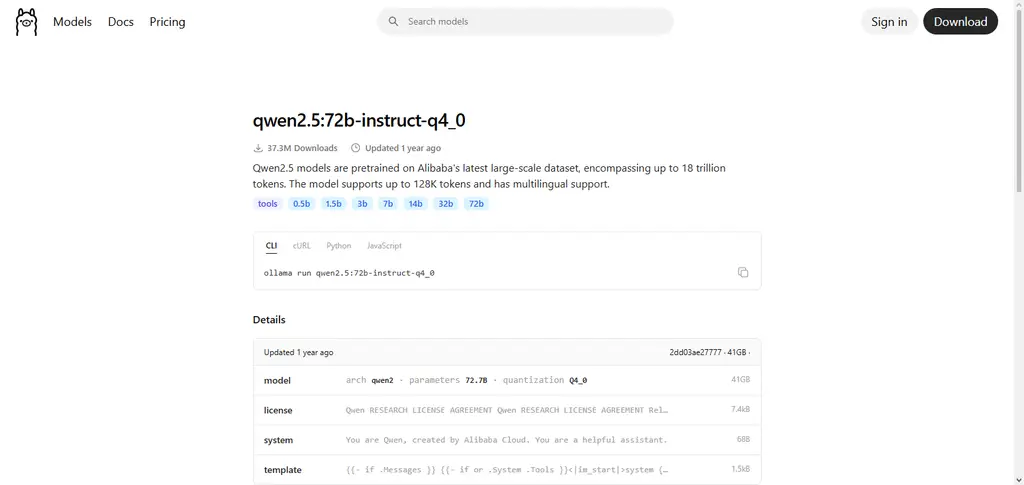
For businesses that want to implement cutting-edge AI technology, the model is perfect because it is high-end but still affordable for enterprises. In addition, the model has an open pricing policy, so it is available to all who would like to use it for their purposes.
The most recent iteration of the model has been optimized for efficiency, and it can be fine-tuned to perform specific tasks. Therefore, Qwen 2.5 72B Q4 is one of the best options for on-device AI, as it is good for large-scale edge intelligence deployment.
Qwen 2.5 72B Q4 Features
- The largest language model from Alibaba Cloud
- Utilizes quantization for effective performance
- Can execute complex reasoning operations
- Has potential applications in enterprise settings
- Memory efficiency enables on-device processing
| Pros | Cons |
|---|---|
| State‑of‑the‑art reasoning | Heavy resource requirements |
| Optimized for enterprise multimodal tasks | Limited accessibility for smaller developers |
| Quantization reduces memory usage | Complex deployment process |
| Supports fine‑tuning | Less efficient for mobile devices |
| Open for enterprise adoption | Higher latency on mid‑range hardware |
Comparison Table: Best On‑Device AI Models
| Model | Efficiency | Multimodality | Scalability | Privacy Focus |
|---|---|---|---|---|
| Gemma 4 E2B | High (optimized for mobile) | Text, vision, speech | Moderate (2B parameters) | Strong (offline processing) |
| Phi‑4 Multimodal | Medium (requires resources) | Text, vision, audio | Moderate (multimodal enterprise use) | Moderate (depends on deployment) |
| Apple Foundation Models | High (Apple Silicon optimized) | Text, image, speech | Moderate (ecosystem‑bound) | Very High (privacy‑first design) |
| Llama 3.2 Mobile | High (quantized for mobile) | Text, multimodal extensions | Moderate (open‑source scaling) | Moderate (depends on app integration) |
| Qwen 3.5 2B | High (low memory usage) | Text, vision | Moderate (IoT and smart devices) | Moderate (enterprise‑ready) |
| Ministral 3B | High (fast inference) | Text, limited vision | Moderate (community adoption) | Moderate (open‑source flexibility) |
| DeepSeek R1 Distill | High (energy‑efficient) | Text, limited multimodality | Moderate (enterprise workflows) | Moderate (depends on deployment) |
| MiniCPM‑V 4.0 | High (optimized for vision tasks) | Vision‑language | Moderate (embedded systems) | Moderate (academic/enterprise use) |
| Llama 3.3 70B Q4 | Medium (requires high‑end hardware) | Text, multimodal | Very High (enterprise scaling) | Moderate (open‑source, but resource heavy) |
| Qwen 2.5 72B Q4 | Medium (quantized but large) | Text, multimodal | Very High (enterprise‑grade) | Moderate (enterprise focus, less mobile) |
Conclusion
The field of on-device AI models is proliferating, with each offering unique advantages in terms of efficiency, versatility and scalability. From lightweight language models such as Gemma 4 E2B, Phi-4 Multimodal and Ministral 3B, to quantized large language models like Llama 3.3 70B Q4 and Qwen 2.5 72B Q4, and vision-oriented models such as MiniCPM-V 4.0 and privacy-focused Apple Foundation Models: the innovation in this space is astounding.
On-device models are not only more efficient than their cloud-based counterparts but also offer a wide variety of use cases, from extended language understanding and code generation to real-time visual description. These developments illustrate how the best on-device AI models are often not scaled-down versions of bigger systems but rather purpose-built solutions that redefine the possibilities of mobile computing.
FAQ
u003cstrongu003eWhat are on‑device AI models?u003c/strongu003e
On‑device AI models are artificial intelligence systems designed to run directly on smartphones, tablets, laptops, or IoT devices without relying on cloud servers. They prioritize privacy, low latency, and offline functionality, making them ideal for personal assistants, translation, and vision tasks.
. u003cstrongu003eWhy are on‑device AI models important?u003c/strongu003e
They reduce dependency on cloud infrastructure, protect user data, and enable real‑time performance. For example, u003cstrongu003eApple Foundation Modelsu003c/strongu003e ensure privacy by processing data locally, while u003cstrongu003eGemma 4 E2Bu003c/strongu003e provides lightweight efficiency for Android devices.
u003cstrongu003eWhich models are best for mobile devices?u003c/strongu003e
Models like u003cstrongu003eLlama 3.2 Mobileu003c/strongu003e, u003cstrongu003eQwen 3.5 2Bu003c/strongu003e, and u003cstrongu003eMinistral 3Bu003c/strongu003e are optimized for smartphones and tablets, offering strong performance with minimal resource consumption.
u003cstrongu003eWhich models handle multimodal tasks best?u003c/strongu003e
Multimodal models like u003cstrongu003ePhi‑4 Multimodalu003c/strongu003e and u003cstrongu003eMiniCPM‑V 4.0u003c/strongu003e excel at combining text, vision, and audio. They are ideal for applications like image captioning, document understanding, and voice‑driven assistants.