



This article will examine the Top Enterprise RAG Platforms, helping enterprises construct sophisticated AI services by linking large language models to their enterprise data.
Enterprise data is extremely complex since it includes a wide range of data types (structured, semi-structured, unstructured), as well as a variety of data delivery mechanisms, frequencies, and formats.
The goal is to efficiently access and integrate enterprise data with AI/ML-powered models, tools, and services in order to maximize the system’s performance, utilization, and scalability.
Key Points
| Enterprise RAG Platform | Key Points | Vector Database / Search Capability | Main Features | Best For |
|---|---|---|---|---|
| Pinecone | Managed vector database designed for high-performance RAG applications | Scalable vector search with low-latency retrieval | Fully managed infrastructure, metadata filtering, hybrid search, real-time indexing, API-first architecture | Enterprises building production-ready AI search and knowledge assistants |
| Weaviate | Open-source vector database with built-in AI capabilities | Supports vector, hybrid, and semantic search | Generative search, multimodal data support, GraphQL APIs, cloud deployment, module ecosystem | Enterprise AI applications requiring flexible data retrieval and customization |
| Qdrant | High-performance open-source vector database optimized for similarity search | Fast vector similarity search with advanced filtering | Payload filtering, distributed deployment, REST & gRPC APIs, quantization support | Developers and enterprises needing scalable RAG infrastructure |
| Chroma | Lightweight open-source embedding database for AI applications | Local and cloud-based vector storage | Simple API, embedding management, document retrieval, developer-friendly integration | Prototyping RAG apps and smaller AI projects |
| Redis Vector | Vector search capability built into Redis for real-time AI applications | High-speed vector similarity search with Redis database | Low-latency retrieval, hybrid search, caching, real-time data processing, indexing | Enterprises needing fast AI search with existing Redis workloads |
| Microsoft Azure Cognitive Search (Azure AI Search) | Enterprise search platform integrated with Azure AI ecosystem | Vector and semantic search capabilities | AI enrichment, document processing, security integration, hybrid search, Azure OpenAI support | Large enterprises using Microsoft cloud and enterprise data systems |
| IBM Watson Discovery | AI-powered enterprise search and knowledge discovery platform | AI-driven semantic retrieval and document search | Natural language processing, document analysis, insights extraction, enterprise connectors | Businesses managing large document repositories and knowledge bases |
| Oracle AI Vector Database | Enterprise vector database integrated with Oracle Database ecosystem | Native vector storage and similarity search | SQL-based vector queries, enterprise security, database integration, AI model support | Organizations using Oracle databases for enterprise AI workloads |
| LangChain | AI application framework for building RAG workflows | Connects with multiple vector databases | Document loaders, retrieval chains, agents, prompt management, LLM integrations | Developers creating customized RAG pipelines and AI agents |
| LlamaIndex | Data framework focused on connecting LLMs with enterprise data | Supports multiple vector stores and retrieval systems | Data connectors, indexing, query engines, retrieval optimization, enterprise knowledge integration | Enterprises building data-aware AI assistants and knowledge applications |
1. Pinecone
Pinecone is an excellent enterprise RAG platform that knots together scalable AI systems with fast and accurate information retrieval.
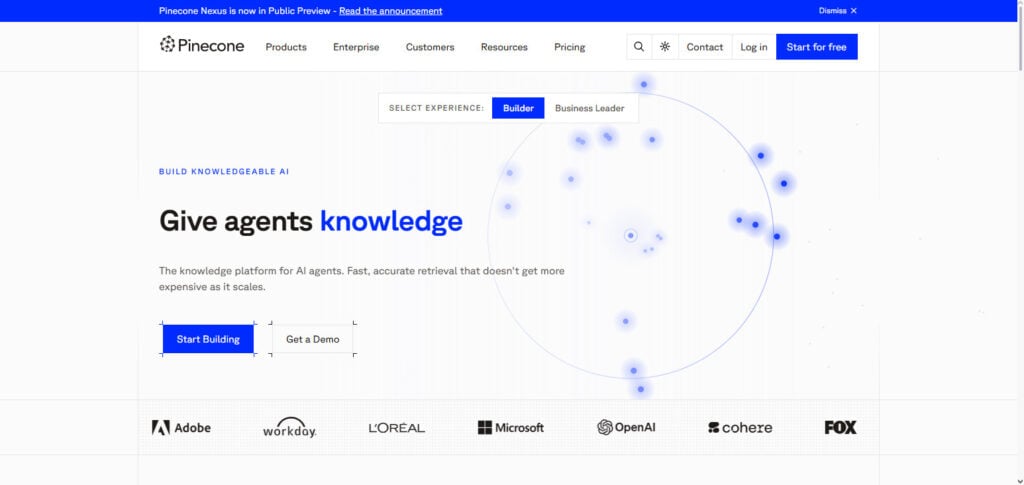
It is a fully managed vector database that handles the storage and search of high-dimensional vector embeddings, which are generated from various types of data such as documents, images, and so on. Pinecone provides a variety of advanced features such as metadata filtering, hybrid search, real-time indexing, and low-latency vector retrieval.
Enterprises leverage Pinecone for AI chatbots, knowledge assistants, recommendation systems, and enterprise search solutions. Its cloud-native architecture exempts database management, making it appropriate for companies that need reliable and production-ready Retrieval-Augmented Generation (RAG) systems.
Features
- Cloud hosted fully managed vector database designed for large scale Retrieval-Augmented Generation (RAG) applications.
- Support for fast similarity search with low latency vector retrieval.
- Support for metadata filtering and hybrid search.
- Automatic scaling database infrastructure management.
- Integration with popular AI toolkits, LLMs, and enterprise applications.
Pros
- Easy managed cloud deployment.
- Fast enterprise AI search.
- Reliable scale for production workloads.
- Simple API for developers.
- Real time data updates and indexing.
Cons
- Higher cost compared to open source alternatives.
- Less control for customized infrastructure.
- Dependency on Pinecone cloud services.
- Advance features include premium plans.
- Not appropriate for agencies that prioritize complete data ownership.
2. Weaviate
Weaviate is an open-source and cloud-based enterprise RAG platform recognized for its excellent intelligent search and AI knowledge application development. It provides vector database features combined with semantic search, hybrid search, and generative AI features.
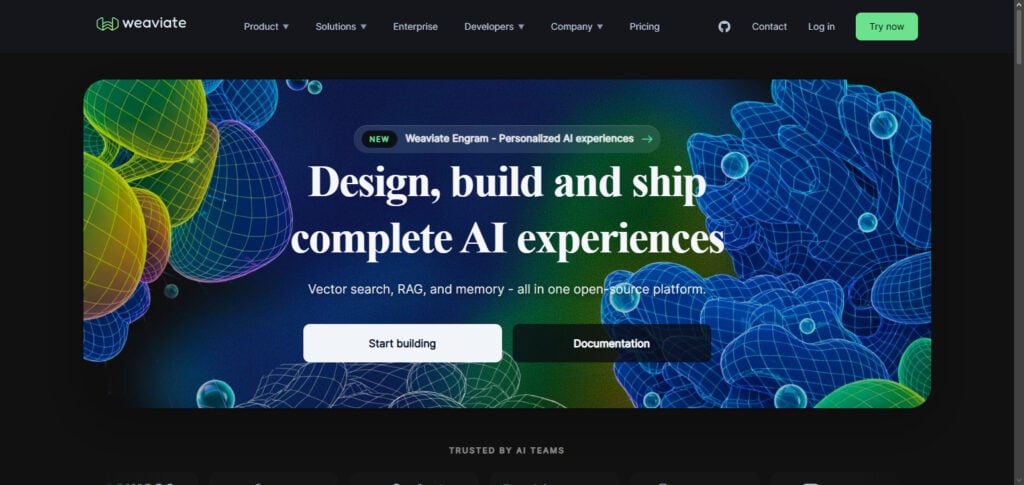
Weaviate allows enterprises to store structured and unstructured data while allowing LLMs to retrieve relevant information from company knowledge bases.
The platform supports multiple AI models, GraphQL APIs, multimodal data, and flexible deployment options. Organizations use Weaviate for AI assistants, document search, recommendation engines, and enterprise knowledge management systems that require accurate contextual responses to queries.
Features
- Open source vector database that is semantic and hybrid search capable.
- Support for text, images, and multimodal AI data retrieval.
- Pre-built known AI model integrations.
- Enterprise grade GraphQL APIs and data management.
- Cloud, self-hosted, and hybrid deployment options.
Pros
- Customizable open source platform.
- Integrations for multiple AI models.
- Enterprise grade AI search.
- Flexible deployment and data control.
- Vibrant developer community and ecosystem.
Cons
- Self-host deployment complexity and dependency on infrastructure management.
- Configuration and deployment complexity for large deployments.
- Performance tuning may require additional effort.
- Cloud version may become expensive.
- Not appropriate for agencies that prioritize complete data ownership.
3. Qdrant
With its high performance, scalability, and similarity search capabilities, Qdrant is one of the best enterprise RAG platforms with high performance.
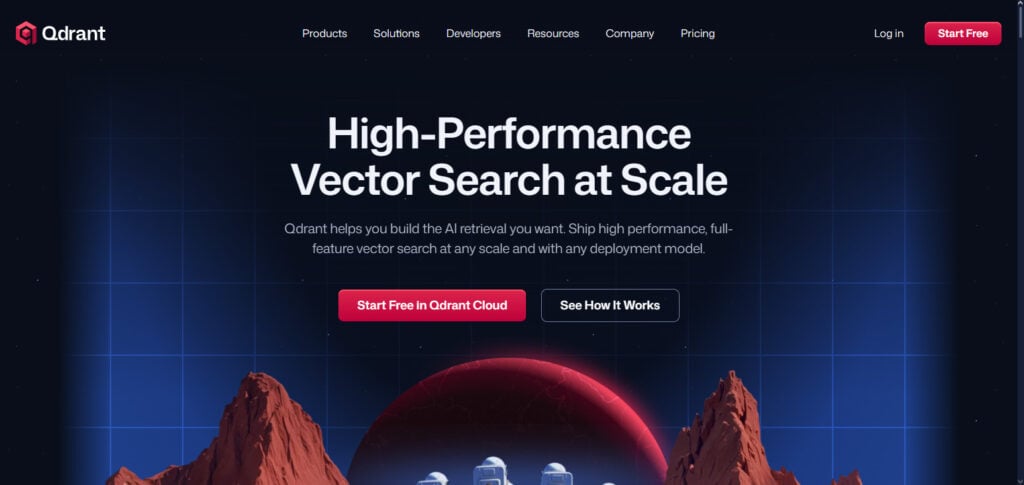
Qdrant enables businesses to store vector embeddings for data retrieval and to support RAG-based AI operations. Qdrant provides advanced filtering, payload management, and REST and gRPC APIs as well as support for distributed deployment.
Qdrant is designed for semantic search and other similar use cases, including AI assistants, recommendation systems, and enterprise knowledge systems. With developer flexibility and optimal performance, Qdrant helps companies build customized RAG solutions and remain in control of their data infrastructure.
Features
- Designed for high-performance similarity searches.
- Employs advanced metadata analysis and payload storage.
- Offers REST and gRPC APIs.
- Enables a distributed architecture for large-scale deployments.
- Includes vector compression and optimization techniques.
Pros
- Fast and efficient similarity search performance.
- Complete control over data with an open-source approach.
- Lightweight architecture and developer-friendly approach.
- Strong filtering capabilities for enterprise data.
- Supported for scalable AI applications.
Cons
- Evaluation of trade-offs for deployment.
- Smaller ecosystem compared to major cloud platforms.
- Limited enterprise support options.
- More manual infrastructure management required.
- Advanced features may need customization.
4. Chroma
Chroma is an open source vector database which one of the Best Enterprise RAG Platforms for developers creating retrieval systems with AI applications. Chroma is designed to make it simpler to build, maintain, and run embedding models on business data.
Chroma provides easy integration with the many AI frameworks and supports document retrieval workflows required for RAG applications.
Chroma is widely adopted for creating AI chatbots, research assistants, and other enterprise solutions. The platform is design-focused and places great emphasis on user experience, agile development, and quick time-to-value.
Features
- Vector search optimized open-source vector database designed for AI applications.
- Designed for simple embedding storage.
- Offers REST,gRPC, and other APIs.
- Enables distributed architecture for large-scale deployments.
- Significant reduction in data size and optimization of vector data.
Pros
- Open-source approach enabling complete control over data.
- Lightweight architecture and developer-friendly approach.
- Frames a simple API to support LLM frameworks and RAG pipelines.
- Supports local development and cloud deployment.
Cons
- Not ideal for large enterprise workloads.
- Scaling capabilities are lower than dedicated vector databases.
- Requires more tools for complex workflows.
- Smaller production ecosystem.
5. Redis Vector
Redis Vector is a high-speed vector search solution that provides true real-time AI search and retrieval. It is a next generation edge AI and real-time database solution for organizations that need to build advanced next-generation stable modeling enterprise AI solutions and search applications.
It combines Redis’s high-speed in-memory database capabilities with vector similarity search to support fast and efficient RAG workflows. Enterprises can store embeddings, perform semantic searches, and integrate AI applications with real-time data sources.
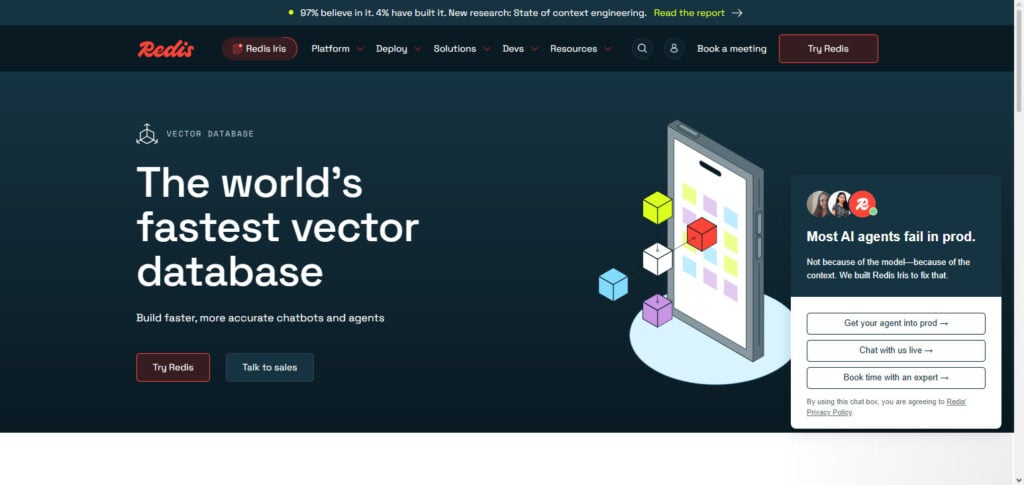
Redis Vector supports hybrid search, indexing, filtering, and caching capabilities, improving response speed for AI assistants and enterprise search systems.
It is especially useful for businesses already using Redis infrastructure and looking to add AI-powered search and retrieval features without adopting a separate database.
Features
- Adds vector search capabilities to Redis infrastructure.
- Supports semantic search and similarity-based retrieval.
- Provides high-speed data processing and low latency.
- Enables hybrid search combining keyword and vector search.
- Works with existing Redis caching and database systems.
Pros
- Extremely fast retrieval performance.
- Combines AI search with real-time database capabilities.
- Suitable for real-time AI applications.
- Easy integration for existing Redis users.
- Supports flexible indexing and filtering.
Cons
- Requires Redis expertise for optimization.
- Large-scale vector storage can increase infrastructure costs.
- Not a dedicated vector database solution.
- Complex configurations for advanced use cases.
- Resource usage increases with large datasets.
6. Microsoft Azure Cognitive Search
Microsoft Azure Cognitive Search is one of the Best Enterprise RAG Platforms for organizations using Microsoft’s cloud ecosystem to build AI-powered search applications. It combines traditional search technology with vector search, semantic ranking, and AI enrichment features.
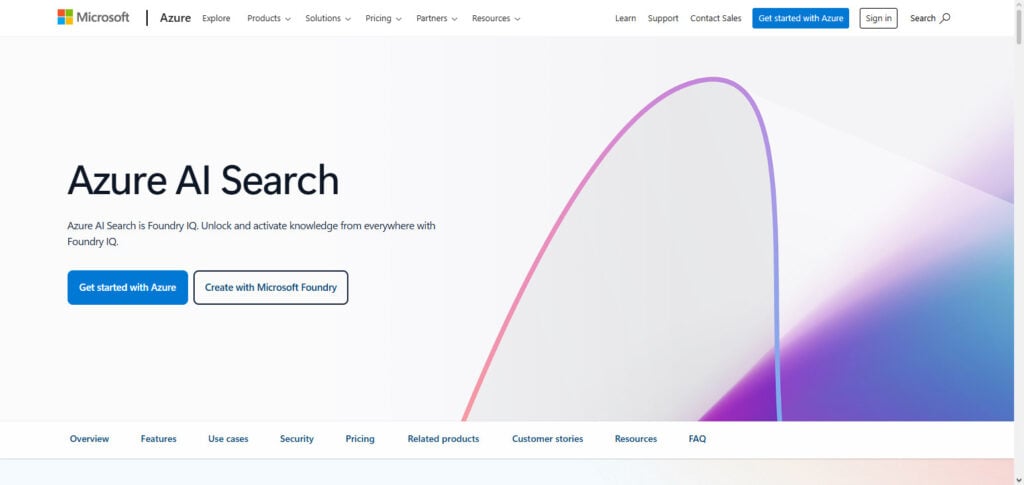
Azure AI Search can process large volumes of enterprise documents, extract insights, and provide relevant context to large language models. It integrates seamlessly with Azure Open AI services, making it ideal for building secure enterprise chatbots and knowledge assistants.
Businesses benefit from advanced security controls, scalability, document processing capabilities, and enterprise-grade integration with existing Microsoft technologies.
Features
- Enterprise search platform with vector and semantic search.
- Integrates with Azure OpenAI and Microsoft AI services.
- Provides AI-powered document processing and enrichment.
- Supports enterprise security and compliance features.
- Enables hybrid search across structured and unstructured data.
Pros
- Strong integration with Microsoft enterprise ecosystem.
- High security and compliance standards.
- Scalable cloud infrastructure.
- Supports advanced AI enrichment features.
- Suitable for large organizations.
Cons
- Higher cost compared with open-source solutions.
- Best suited for Azure-based environments.
- Configuration can be complex for beginners.
- Vendor dependency on Microsoft ecosystem.
- Advanced features require technical expertise.
7. IBM Watson Discovery
IBM Watson Discovery is a platform that uses artificial intelligence (AI) technologies to help organizations find important pieces of information from a large number of business documents, and with natural language processing (NLP) and machine learning (ML) technologies.
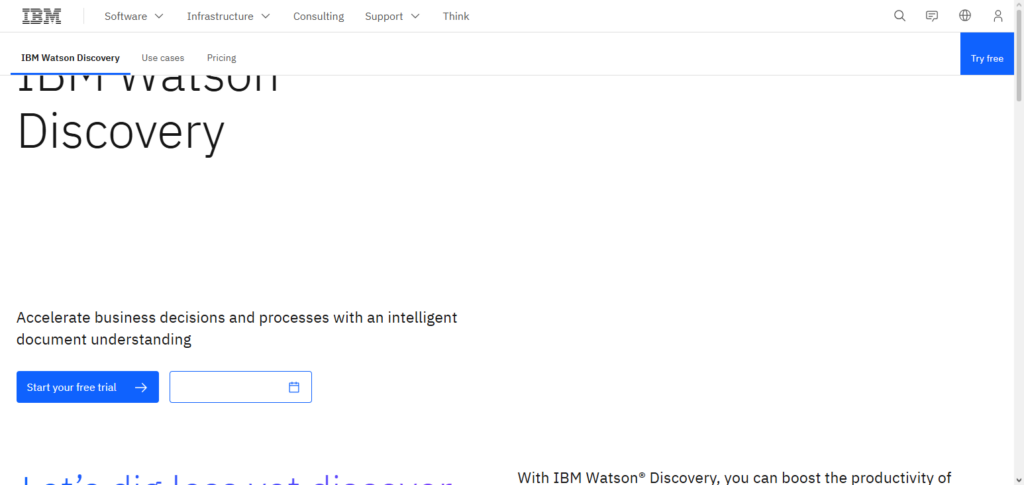
Watson Discovery can connect to enterprise data and document analysis, perform semantic search, and create automated insights. It can support RAG applications by providing accurate data retrieval from enterprise internal data repositories, and before creating AI responses.
Finance, health care, legal, and other similar industries utilize IBM Watson Discovery to aid in the decision-making process, simplify the research work, and manage different types of enterprise data and information.
Features
- AI-powered enterprise search and knowledge discovery platform.
- Uses NLP for document understanding and data extraction.
- Supports enterprise document repositories.
- Provides semantic search capabilities.
- Helps organizations analyze large information sources.
Pros
- Strong enterprise-grade security features.
- Excellent document analysis capabilities.
- Suitable for regulated industries.
- Supports complex data discovery workflows.
- Provides AI-powered insights from business data.
Cons
- Expensive compared to open-source platforms.
- Requires IBM ecosystem knowledge.
- Setup can be complex.
- Limited flexibility compared with developer-focused tools.
- May require additional customization.
8. Oracle AI Vector DB
Oracle AI Vector Database is a solution that is focused on the enterprise and is included in the Best Enterprise RAG Platforms category because it integrates vector search technologies with Oracle’s powerful database infrastructure.
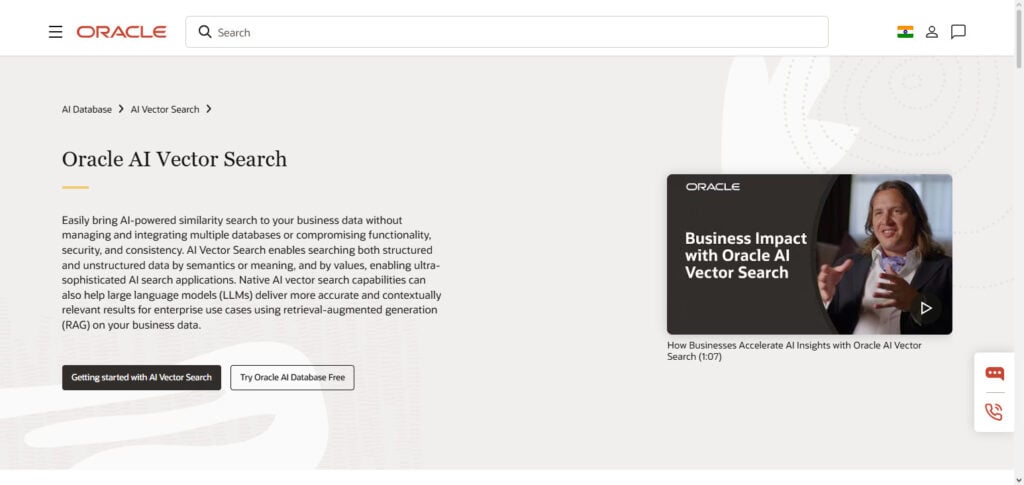
It offers organizations the ability to store embeddings directly alongside traditional business data, providing a fast, AI-powered data retrieval without the need to move data between multiple systems. The platform supports similarity searches, SQL-based queries, enterprise security, and integration with Oracle Cloud technologies.
Finance, health care, legal, and other similar industries utilize Oracle databases to build RAG applications such as intelligent assistants, document analysis systems, enterprise search platforms, etc., while maintaining a strong governance, compliance, and data protection policy.
Features
- Includes vector search capabilities built natively within the Oracle Database.
- Permits the storage of business data and embeddings jointly.
- Supports SQL-based vector queries.
- Offers enterprise-level security and governance.
- Integrates with the full suite of AI services available on Oracle Cloud.
Pros
- Strong option for existing Oracle customers.
- Maintains the enterprise data security that is required.
- Eliminates separate vector databases.
- Supports the large scale of business applications.
- Provides database level governance.
Cons
- Best suited for Oracle ecosystem users.
- Can be expensive for small businesses.
- Requires Oracle database expertise.
- Less flexible compared with open-source alternatives.
- Migration from other databases may be complex.
9. LangChain
LangChain is another popular framework that is one of the Best Enterprise RAG Platforms. This framework is particularly good at integrating enterprise data with large language models. Because of this, it is ideally positioned to help organizations simplify document and database as well as API and other data source operations.
Integrating such systems with LangChain allows organizations to build internal knowledge platforms and intelligent search solutions that offer accurate business information. LangChain’s strong focus on data connectivity and data retrieval makes it an excellent base for scalable RAG applications.
Features
- Framework that allows the development of RAG applications powered by LLMs.
- Supports document loading and retrieval workflows.
- Enables the integration of many vector databases.
- Provides the ability to build AI agents, chains, and automation flows.
- Includes prompt management and LLM and orchestration features.
Pros
- Very flexible AI application framework.
- Supports many LLM and database integrations.
- Vibrant developer community.
- Makes it easy to create customized RAG workflows.
- Lessens the overall AI application development time.
Cons
- Requires programming knowledge.
- Not a standalone vector database.
- Managing complex workflows becomes difficult.
- Frequent updates may require adjustments.
- Optimization of performance needs expertise.
10. LlamaIndex
LlamaIndex is one of the best data frameworks in the industry and is one of the Best Enterprise RAG Platforms for connecting enterprise data to large language models. It is designed for organizations to be able to convert their documents, databases, APIs, and other miscellaneous data into intelligent search systems within the enterprise.
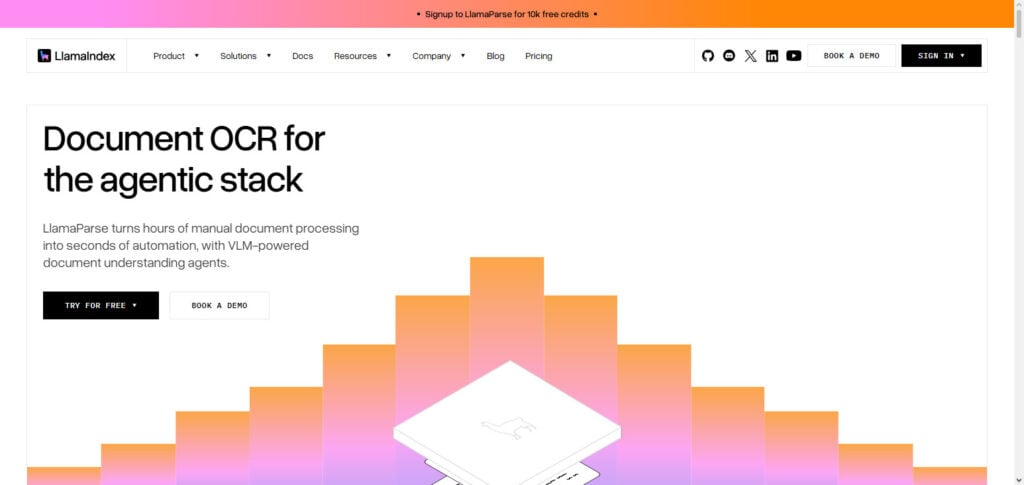
LlamaIndex provides a number of advanced indexing methods, retrieval systems, and integration with multiple vector databases. Enterprises use it to build AI assistants, internal knowledge platforms, and intelligent search solutions that provide accurate responses based on private company data. Its focus on data connectivity and retrieval performance makes it a strong foundation for scalable RAG applications.
Features
- Data framework developed to connect enterprise data to LLMs.
- Offers optimizations for document indexing and retrieval.
- Provides connectors for different data sources.
- Integrates with Vector Databases and different AI Models.
- Enables the creation of Knowledge Assistants and RAG Systems.
Pros
- Excellent for enterprise data integration.
- Simplifies the building of data-aware AI applications.
- Supports multiple retrieval strategies.
- Strong compatibility with LLM ecosystems.
- Helpful for complex knowledge management systems.
Cons
- Requires technical expertise for advanced implementations.
- Not a complete end-to-end AI platform.
- Depends on external databases and models.
- Large projects may require additional
Conclusion
The top Enterprise RAG Platforms enable businesses to build more intelligent AI applications by integrating large language models with precise, real-time business data.Pinecone, Weaviate, Qdrant, Chroma, Redis Vector, Microsoft Azure AI Search, IBM Watson Discovery, Oracle AI Vector Database provide powerful capabilities for semantic search and vector retrieval.
Knowledge management and AI automation. The right platform for an enterprise depends on the enterprise’s needs, especially flexibility and AI workflow integration.Version 2.0. RAG Platforms will increasingly be used to develop trustworthy, context-sensitive, and enterprise-ready AI solutions as businesses embrace Generative AI.
FAQ
What are Enterprise RAG Platforms?
Enterprise RAG Platforms are AI solutions that combine large language models (LLMs) with external enterprise data sources to provide accurate, context-aware responses. These platforms use retrieval-augmented generation technology to search company documents, databases, and knowledge repositories before generating AI answers.
Why are Enterprise RAG Platforms important for businesses?
Enterprise RAG Platforms help businesses improve AI accuracy by providing real-time access to internal data. They reduce incorrect AI responses, improve knowledge management, automate customer support, and enable employees to quickly access valuable business information.
Which are the Best Enterprise RAG Platforms in 2026?
Some of the Best Enterprise RAG Platforms include Pinecone, Weaviate, Qdrant, Chroma, Redis Vector, Microsoft Azure AI Search, IBM Watson Discovery, Oracle AI Vector Database, LangChain, and LlamaIndex.
What features should businesses look for in Enterprise RAG Platforms?
Important features include vector database support, semantic search, scalability, data security, API integration, hybrid search capabilities, AI model compatibility, metadata filtering, enterprise data connectors, and flexible deployment options.