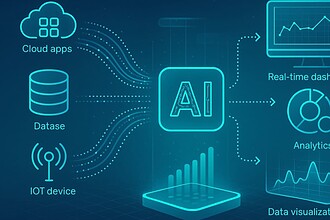


This article identifies the Best Digital Twin Software for Drug Human Organ Modeling. Specifically, the digital twin software for modeling human organs using advanced AI that simulates the behavior of human organs for the purpose of drug testing.
These programs aid in predicting the response of drugs, thereby improving safety, minimizing the risks involved in clinical trials, and accelerating the development of precision medicine. They are changing the way contemporary health care and drug discovery are realized.
What is Digital Twin Software for Human Organ Modeling?
Digital Twin Software for Human Organ Modeling uses cutting edge technology to create virtual models of human organs or systems in the computing world. With the added presence of AI and machine learning, this software is able to describe the functionality of organs and how they would be impacted by treatments, disease and drugs.
Using the information from imaging, genetics, and clinical records, this software is able to describe the effectiveness of drugs and the response of patients with a considerable degree of accuracy.
This software is most commonly used in the pharmaceutical realm to create drugs more efficiently by designing better tests and reducing the reliance on testing on animals. Ultimately, this software provides people with better healthcare that is more precise and tailored to the individual.
How Digital Twin Technology Works in Drug Development
Data Collection from Multiple Sources: Digital twin systems collect various data and build an accurate biological foundation to simulate health, including data from genomics, proteomics, medical imaging, clinical trials, and electronic health records.
Creation of Virtual Organ Models: With the help of AI and the field of computational biology, the software creates digital replicas of real human organs including the heart, liver, lungs, and kidneys to simulate behaviors of the organs as they would in real life.
Integration of AI and Machine Learning: An advanced algorithm can analyze biological data, and with the help of AI, it can learn from the results of clinical and experimental data to further build on the accuracy of the model.
Drug Simulation (ADMET Process): The system also tests the Absorption, Distribution, Metabolism, and Excretion (ADMET) of the drug to predict the drug’s safety and efficacy before it even undergoes human trials.
Multi-Scale Biological Modeling: Digital twins can simulate and provide a holistic view of the behavior of a drug in the human body at other scales such as cellular, tissue, and organ scales.
Virtual Clinical Trials: Researchers can perform a simulated trial with digital patients to predict the outcome of the clinical study and to reduce the risk of optimizing the clinical study performed in the real world.
Outcome Prediction and Optimization: The system can predict the therapeutic effect and adverse side effects, as well as the optimal dosage of the drug, allowing the researcher to refine the drug developer candidate during the early stages.
Continuous Model Updating: The digital twin can enhance its predictive accuracy by continuously updating the model based on newly available clinical or experimental data.
Importance of Digital Twin Software in Pharmaceuticals
Decreases Expenses in Drug Development: Digital twin software helps to cut the need for costly large scale animal testing and laboratory experiments, helping to drastically reduce costs for research and drug development.
Shortens the Timeline for Drug Development: Digital twin software lists the best candidates for drug development and removes suboptimal candidates by virtual testing the interactions.
Provides Safety Assurance for Drugs: Some of the effects of drugs can be assessed by digital twin software prior to large scale testing, decreasing the risk of harmful effects on the study population.
Enables Advanced Custom Medicine: Digital twin software can be used to design specific drugs with specific effects for a person based on their genetics.
Lessens the Use of Animal Testing: Digital twin software lessens the need for experimentation on animals and the ethical issues that arise from that.
Refines the Process of Designing Clinical Trials: Digital twin software is used to design and refine chosen aspects of a clinical trial before the trial is actually conducted.
Improves Outcomes of Regulatory Review: Digital twin Software aids regulatory bodies in executing their drug safety and efficacy assessments.
Identifies Drug Failures Early in Development: The use of digital twin software reveals potential failures of drugs early in their development, reducing costs and the risks of later clinical trials.
Key Point & Best Digital Twin Software for Drug Human Organ Modeling
- Dassault Systèmes BIOVIA Virtual Organs
- Insilico Medicine Digital Twin AI
- Physiome Project (Auckland Bioengineering Institute)
- ANSYS Living Heart & Lung AI
- Siemens Simcenter Amesim BioTwin
- IBM Watson BioTwin AI
- GNS Healthcare REFS AI
- Unlearn.AI Digital Twins
- BioSimulations.org AI
- Cellworks Therapy Simulation AI
10 Best Digital Twin Software for Drug Human Organ Modeling
1. Dassault Systèmes BIOVIA Virtual Organs
The BIOVIA Virtual Organs platform offered by Dassault Systèmes is a highly advanced solution in the field of computational biology focused on rendering the simulations of human organs and systems in the field of human physiology.
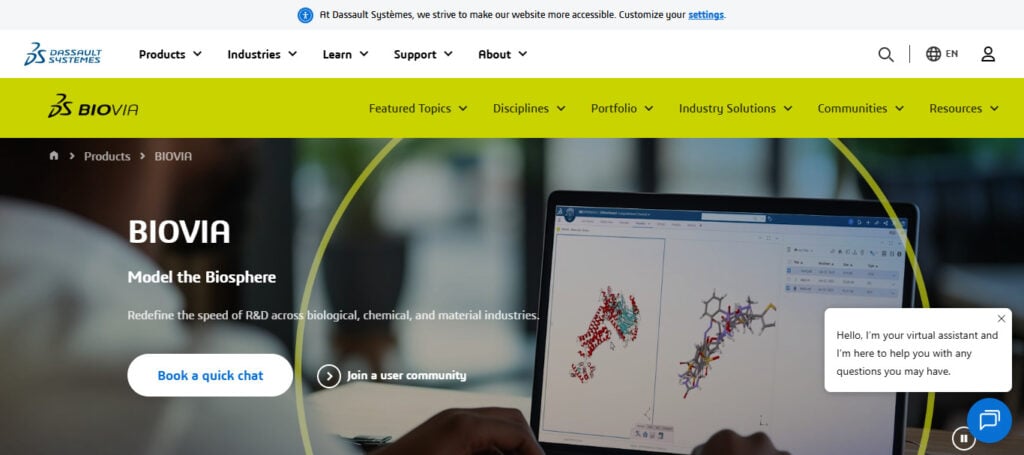
Using this solution, pharmaceutical companies are able to address challenges associated with predicting responses, testing, and determining the effectiveness of best-case scenario drug delivery systems. It is used in the research of several diseases, including those that are cardiovascular and respiratory, as well as those that are metabolic.
With regards to the Best Digital Twin Software for Drug Human Organ Modeling, BIOVIA Virtual Organs pioneered simulation systems that decrease the need for animal testing and extend the pharmaceutical innovation pipeline globally, accelerating the development of precision medicine.
Dassault Systèmes BIOVIA Virtual Organs – Highlight
| Feature | Details |
|---|---|
| Multi-scale modeling | Simulates molecular, cellular, tissue, and full organ behavior |
| Virtual human physiology | Creates digital replicas of human organs for drug testing |
| Drug toxicity prediction | Predicts adverse drug reactions before clinical trials |
| Systems biology integration | Combines biological pathways and organ-level responses |
| Regulatory-grade simulations | Used in pharmaceutical R&D for validated modeling |
| Cardiovascular & metabolic focus | Strong models for heart and metabolic diseases |
| High-performance computing | Enables large-scale simulations for drug screening |
2. Insilico Medicine Digital Twin AI
The deep learning and generative AI of the Insilico Medicine Digital Twin AI allow the digital twins of specific patients and organs to be constructed for the purposes of drug discovery. It combines omics data with imaging and clinical data to model the reaction of human organs to various compounds.
This solution possesses significant strength in modeling diseases related to both oncology and aging. It allows for the rapid testing of hypotheses and the discovery of new biomarkers.
As referenced in the Best Digital Twin Software for Drug Human Organ Modeling, Insilico Medicine is highly regarded for its integration of AI-enabled drug design with the modeling of human physiology, as it provides an unprecedented paradigm shift in the economics and speed in the practice of early-stage drug discovery.
Insilico Medicine Digital Twin AI – Highlight
| Feature | Details |
|---|---|
| AI-driven drug discovery | Uses deep learning for molecule and organ simulation |
| Patient-specific modeling | Builds personalized digital organ twins |
| Multi-omics integration | Combines genomics, proteomics, and clinical data |
| Oncology specialization | Strong focus on cancer drug response simulation |
| Generative AI models | Designs new drug candidates virtually |
| Aging biology simulation | Models age-related disease progression |
| Fast hypothesis testing | Rapid validation of drug-target interactions |
3. Physiome Project (Auckland Bioengineering Institute)
The Auckland Bioengineering Institute’s Physiome Project studies the anatomy and physiology of the human body and constructs detailed computer models of their organizational and functional levels. To achieve this, it relies on a mixture of data on cellular and sub-cellular biology, as well as data on mechanics of tissues, organs and systems.
This tool offers researchers in various fields the ability to visualize the progression of diseases and the interaction of drugs with the body, among many other things. Although the Physiome Project is highly interdisciplinary and academically focused, it provides a great deal of support to the area of pharmaceutical research.
Within the scope of Best Digital Twin Software for Drug Human Organ Modeling, the Physiome Project’s frameworks are among the first and the most extensive, open-source systems that are intended to provide researchers the tools to create credible and extensible simulations of human organs in the context of pharmaceutical research.
Physiome Project (Auckland Bioengineering Institute) – Highlight
| Feature | Details |
|---|---|
| Open-source framework | Community-driven computational biology models |
| Multi-organ simulation | Models heart, lungs, kidneys, and more |
| Physiological accuracy | Based on real biological and experimental data |
| Multi-scale integration | Links molecular, tissue, and organ systems |
| Academic research focus | Widely used in universities and labs |
| Disease progression modeling | Simulates long-term biological changes |
| Interoperable models | Supports shared global research standards |
4. ANSYS Living Heart & Lung AI
ANSYS Living Heart and Living Lung provide sophisticated modeling that demonstrates the behavior of the cardiac and respiratory systems in the presence of various conditions, including drugs.
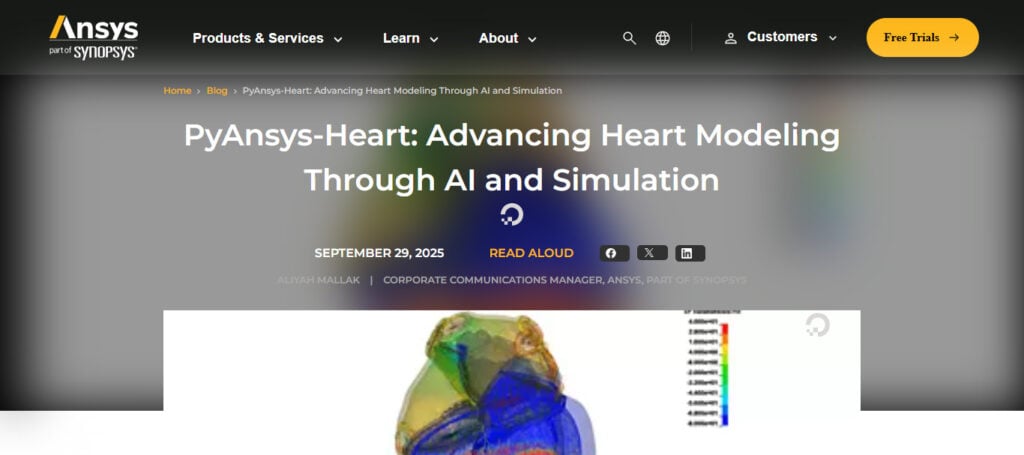
These digital twins employ finite element analysis augmented with physiological data to achieve an unprecedented accuracy in predicting an organ’s response. They are especially popular in the development of drugs and devices related to the cardiovascular and respiratory systems.
Within the scope of Best Digital Twin Software for Drug Human Organ Modeling, the ANSYS solutions are also exceptional for their biomechanical accuracy, as they allow researchers to evaluate the impact of drugs on heart and lung function and the flow of blood before conducting clinical trials, thereby improving the safety of these studies.
ANSYS Living Heart & Lung AI – Highlight
| Feature | Details |
|---|---|
| Finite element analysis | High-precision biomechanical simulation |
| Cardiac modeling | Simulates heart rhythm and blood flow |
| Lung mechanics simulation | Models breathing and airflow dynamics |
| Drug response testing | Predicts physiological reaction to drugs |
| Medical device validation | Used for stents, valves, and implants |
| Real-world calibration | Based on clinical and imaging data |
| High accuracy simulation | Industry-grade engineering precision |
5. Siemens Simcenter Amesim BioTwin
Siemens Simcenter Amesim BioTwin enables multi-domain simulations by integrating mechanics, thermals, and biology. The tool helps design virtual human organ systems and simulate drug intake, distribution, and the resultant physiological feedback of the human system.
This tool is very helpful for studying the interaction of drugs and medical devices. Siemens BioTwin is part of the Best Digital Twin Software for Drug Human Organ Modeling.
It provides the ability to integrate both engineering and biological systems, thereby allowing pharmaceutical researchers to simulate, with great industrial accuracy, the organ-system interactions of drugs under varying physiological and pathological conditions.
Siemens Simcenter Amesim BioTwin – Highlight
| Feature | Details |
|---|---|
| Multi-domain simulation | Combines mechanical, thermal, and biological systems |
| Pharmacokinetic modeling | Simulates drug absorption and distribution |
| System-level digital twin | Models entire physiological systems |
| Engineering-biomed integration | Merges medical and industrial simulation |
| Cardiovascular modeling | Simulates blood flow and pressure systems |
| Respiratory system analysis | Models lung and breathing dynamics |
| Industrial scalability | Used in pharmaceutical engineering pipelines |
6. IBM Watson BioTwin AI
IBM Watson BioTwin AI is a Digital Twin of Organ Systems (DTOS) that integrates AI and Analytics for the creation of personalized digital twins of organs. The DTOS uses real-world health records, genomic data, and clinical data to improve drug response modeling.
There are numerous advantages this DTOS offers to the growing field of precision medicine and Adaptive Drug Development (ADD). While particularly among the Best Digital Twin Software for Drug Human Organ Modeling, this DTOS also provides the benefits of cognitive computing, which provides organizations with the ability to predict and better understand the outcomes of a given treatment and the risks of a given drug.
This DTOS also provides healthcare researchers and professionals with the ability to make informed and better treatment decisions in a timely manner.\
IBM Watson BioTwin AI – Highlight
| Feature | Details |
|---|---|
| Cognitive AI system | Uses advanced AI reasoning for predictions |
| Personalized medicine | Creates patient-specific digital twins |
| EHR integration | Uses electronic health record data |
| Genomic analysis | Incorporates genetic information |
| Clinical decision support | Helps optimize treatment plans |
| Predictive analytics | Forecasts drug response outcomes |
| Real-time insights | Continuously updates from health data |
7. GNS Healthcare REFS AI
GNS Healthcare REFS AI applies causal AI and machine learning to develop digital twins for simulating patient and organ response to treatments. Its emphasis is on the reaction of biological systems to the cascading effects of drug intervention.
The platform enjoys popularity across oncology, cardiology, and chronic diseases. In Best Digital Twin Software for Drug Human Organ Modeling, GNS Healthcare is recognized for its ability to model causal frameworks rather than correlations, greatly assisting researchers in the development of drug models to forecast the progression of disease and the likely outcomes for patients in a highly interpretable and clinically relevant context.
GNS Healthcare REFS AI – Highlight
| Feature | Details |
|---|---|
| Causal AI modeling | Identifies cause-effect relationships in biology |
| Patient response prediction | Simulates treatment outcomes |
| Oncology focus | Strong cancer therapy modeling |
| Real-world evidence integration | Uses clinical datasets |
| Disease progression modeling | Tracks long-term patient outcomes |
| Explainable AI | Provides interpretable predictions |
| Precision medicine support | Improves targeted treatment selection |
8. Unlearn.AI Digital Twins
Unlearn.AI builds digital twins for modeling clinical trials that predict patient outcomes using machine learning and previously collected clinical data. These models serve as “synthetic controls” for the purpose of minimizing the overall scale and expense of clinical trials.
This platform is particularly advantageous in the study of chronic and neurological diseases. Within the context of Best Digital Twin Software for Drug Human Organ Modeling,
Unlearn.AI offers an improvement to the efficiency of trials by forecasting the likelihood of specific patient drug responses and eliminating the uncertainty of assessing the probable beneficial effects of clinically tested drugs, all of which elevates the statistical integrity and ethical standards of clinical research.
Unlearn.AI Digital Twins – Highlight
| Feature | Details |
|---|---|
| Synthetic control arms | Replaces placebo groups in trials |
| Clinical trial simulation | Predicts patient outcomes digitally |
| Machine learning models | Uses historical clinical datasets |
| Trial efficiency boost | Reduces sample size requirements |
| Neurology & chronic disease focus | Strong application in complex diseases |
| Bias reduction tools | Improves trial reliability |
| Regulatory acceptance support | Used in modern clinical trial design |
9. BioSimulations.org AI
For Digital Twin research, BioSimulations.org is useful for hosting and structuring models of computational biology and for open-access, community-driven simulation support for academic and pharmaceutical research.
BioSimulations.org hosts models of the dynamics of biological processes including cellular signaling and the interaction of cells, tissues, and organs with therapeutics. BioSimulations.org facilitates modeling and simulation of drug discovery, development, and delivery processes as well as research on the mechanisms of drug action on human physiology.
BioSimulations.org is also useful for supporting research on public health and the impact of therapeutics on human health and the health of human populations.
BioSimulations.org AI – Highlight
| Feature | Details |
|---|---|
| Open simulation platform | Hosts shared biological models |
| Standardized formats | Ensures reproducibility in research |
| Systems biology focus | Models cellular and organ processes |
| Community-driven models | Collaborative global research ecosystem |
| Drug mechanism simulation | Studies drug effects on biological systems |
| Cloud-based access | Easy accessibility for researchers |
| Interoperability | Supports multiple simulation tools |
10. Cellworks Therapy Simulation AI
Cellworks Therapy Simulation AI builds patient-specific digital twins to the cellular and molecular descriptions of drug response of patients and predicts drug response, particularly in oncology.
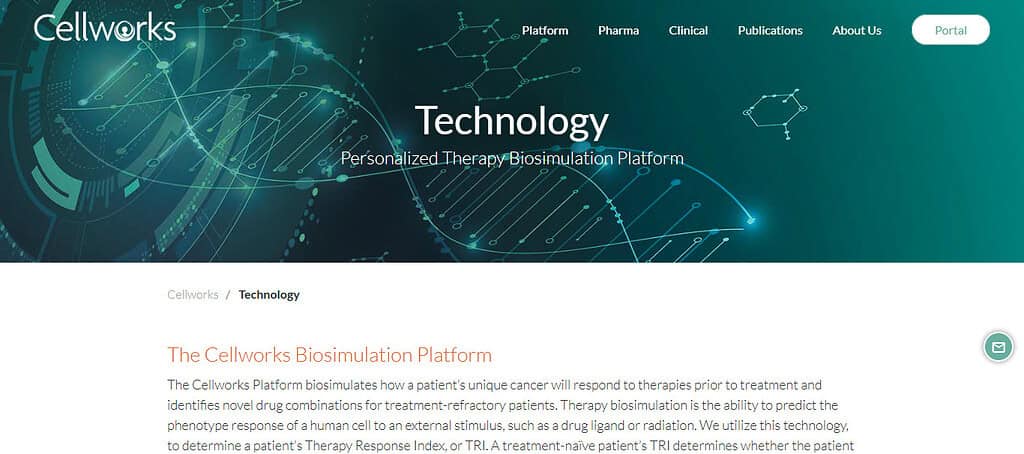
It develops models of signaling pathways to ascertain the cellular response of cancer to various treatment modalities. This modeling aids oncologists in choosing the optimal cancer treatment for the patient.
Cellworks Therapy Simulation AI is useful for modeling the mechanisms of drug resistance and is helpful for designing cancer treatment strategies that are both time- and resource-efficient, combined with a higher probability of achieving positive clinical outcomes.
Cellworks Therapy Simulation AI – Highlight
| Feature | Details |
|---|---|
| Cellular pathway modeling | Simulates intracellular signaling networks |
| Cancer therapy prediction | Optimizes oncology treatment selection |
| Personalized oncology | Patient-specific drug response simulation |
| Drug resistance analysis | Predicts treatment failure risks |
| Molecular-level accuracy | High-resolution biological modeling |
| Precision medicine engine | Guides therapy decisions for doctors |
| Clinical decision support | Improves oncology outcomes |
Applications in Healthcare and Drug Discovery
| Application Area | Description | Impact |
|---|---|---|
| Personalized Medicine | Creates patient-specific digital organ models using genetic, clinical, and lifestyle data | Enables tailored treatments with higher success rates |
| Drug Discovery | Simulates how new drug compounds interact with human organs | Speeds up identification of effective drug candidates |
| Clinical Trial Optimization | Runs virtual trials before real human testing | Reduces cost, time, and trial failure rates |
| Oncology Research | Models tumor growth and drug response in cancer patients | Improves targeted cancer therapies |
| Cardiovascular Studies | Simulates heart function and blood flow under drug influence | Enhances safety of heart-related medications |
| Respiratory Disease Modeling | Replicates lung behavior under disease and treatment conditions | Helps develop better asthma and COPD drugs |
| Toxicity Prediction | Evaluates harmful side effects of drugs on organs | Reduces risk of adverse drug reactions |
| Disease Progression Simulation | Tracks how diseases evolve over time in virtual models | Supports early intervention strategies |
| Medical Device Testing | Tests implants and devices in virtual organ environments | Improves safety and performance before production |
| Regulatory Support | Provides simulation data for drug approval processes | Helps authorities make faster, evidence-based decisions |
Future of Digital Twin Technology in Medicine
Digital Twin Technology is expected to advance healthcare to more predictive and preventative systems with treatment options suited more for the individual patient. This will be made possible with the integration of real-time data and fast-evolving technology like artificial intelligence and machine learning. Digital twins will construct models better than examples of human organs and complete biological systems.
Doctors will be able to better simulate the process of treatment and its effects on the patient. This technology will be especially useful when it comes to the creation of new pharmaceuticals.
Digital twins will speed up the creation of new medicines and help to better fine-tune and optimize testing that is less general and more tailored to the individual. Digital twins will be better designed as processing power and data improve. They will be vital to the future of healthcare systems and their design.
Conclusion
The ability to construct virtual models of human organs and biological systems is revolutionizing empirical drug research. Digitizing Twin Software for Human Drug Organ Models is the nexus of virtual modeling systems that operate with precision, significantly minimizing the reliance on animal testing and research.
These models have integrated AI, greatly reducing the time required for the research and development of new drugs, while improving the prediction of drug safety and efficacy before clinical trials.
These digital twin models allow researchers to visualize and comprehend the complex phsyiology of humans and the interactions of drugs with this system. Modern biomedicine is placing new demands to improve patient outcomes. The evolution of these models will undoubtedly lead to more precise and responsive healthcare systems.
FAQ
What is digital twin software for human organ modeling?
Digital twin software for human organ modeling is a technology that creates virtual replicas of human organs or entire physiological systems. These models simulate how organs respond to drugs, diseases, and treatments in real time, helping researchers predict outcomes without extensive lab or animal testing.
How is digital twin technology used in drug development?
It is used to simulate drug absorption, distribution, metabolism, and toxicity in virtual human organs. This helps pharmaceutical companies identify effective compounds faster, reduce clinical trial risks, and improve safety and efficacy before testing on real patients.
Why is digital twin software important in pharmaceuticals?
It reduces drug development costs, shortens research timelines, and improves prediction accuracy for human responses. This leads to safer clinical trials and more personalized medicine approaches, especially in complex diseases like cancer and cardiovascular disorders.
Which is the best digital twin software for organ modeling?
Some of the leading solutions include Dassault Systèmes BIOVIA Virtual Organs, ANSYS Living Heart & Lung, Siemens Simcenter Amesim BioTwin, and Insilico Medicine AI platforms. Each offers unique strengths in simulation accuracy, AI integration, and organ-specific modeling.
What organs can be modeled using digital twin software?
Commonly modeled organs include the heart, lungs, liver, kidneys, and brain. Advanced systems can also simulate entire physiological networks, including drug interactions across multiple organ systems.