


In this article I will talk about the best AI crypto games to play. I will highlight games that combine artificial intelligence, blockchain technology, digital ownership and fun gameplay. You’ll get to know what AI is used in the game, what blockchain features it has, gameplay, rewards, and main differences, so you can choose an AI crypto game that suits your interests and gaming goals.
What Are AI Crypto Games?
AI crypto games are video games that integrate artificial intelligence and blockchain technology to offer more interactive gameplay and player-owned digital economies. Artificial intelligence can be used for intelligent NPCs, autonomous characters, adaptive opponents, personalized experiences, or content created by AI.
Blockchain can be used for NFTs, tokens, digital ownership, and marketplaces. But not all crypto games are AI games. The amount of AI integration varies widely and players should know whether AI is actually part of the gameplay or just a part of the huge technological infrastructure of the project.
How We Picked These 10 Games
| Selection Factor | What We Evaluated | Why It Matters |
|---|---|---|
| AI Integration | AI NPCs, AI agents, adaptive systems, AI training, or AI-generated experiences | Shows whether AI actually affects the game |
| Gameplay Quality | Genre, combat, exploration, strategy, progression, and replayability | A crypto game should still be enjoyable to play |
| Blockchain Utility | NFTs, digital ownership, on-chain assets, and blockchain functions | Measures whether blockchain has a meaningful purpose |
| Crypto Economy | Tokens, rewards, marketplaces, staking, and asset utility | Helps readers understand the game’s economy |
| Accessibility | Platforms, free-to-play options, wallet requirements, and entry costs | Shows how easy it is for new players to start |
| Player Ownership | NFTs, characters, land, cards, weapons, and other transferable assets | Highlights the Web3 ownership component |
| Long-Term Potential | Development activity, ecosystem growth, updates, and gameplay expansion | Helps identify projects with broader potential |
| Beginner Friendliness | Learning curve, onboarding, complexity, and initial requirements | Helps new Web3 players choose suitable games |
| Overall Experience | Combination of AI, gameplay, blockchain, economy, and accessibility | Provides a balanced basis for the final selection |
Key Points
| AI Crypto Game | Key Point |
|---|---|
| Illuvium | Uses AI-driven NPC behaviors and battles while combining RPG, exploration, and blockchain asset ownership. |
| Parallel | AI-powered sci-fi strategy card game featuring AI agents and blockchain-based digital card ownership. |
| Colony | Built around AI-generated autonomous characters whose actions shape the game economy and world. |
| AI Arena | Players train AI agents to compete in battles, merging machine learning with Web3 gaming mechanics. |
| Altered State Machine (ASM) Games | Enables NFT-owned AI brains that can learn, evolve, and power in-game characters. |
| Axie Infinity | Uses AI-enhanced gameplay systems alongside one of the most established play-to-earn ecosystems. |
| Star Atlas | Integrates AI tools and autonomous systems within a blockchain-based space metaverse. |
| The Sandbox | Supports AI-generated content, virtual assistants, and user-created blockchain gaming experiences. |
| Pixels | Web3 farming and social game increasingly leveraging AI-driven engagement and in-game economy features. |
| World of Dypians | Combines AI-enhanced gameplay systems with MMORPG mechanics and blockchain asset ownership. |
1. Illuvium.
Illuvium officially launched its game universe on July 25, 2024 combining Arena, Overworld, Zero and Beyond experiences.
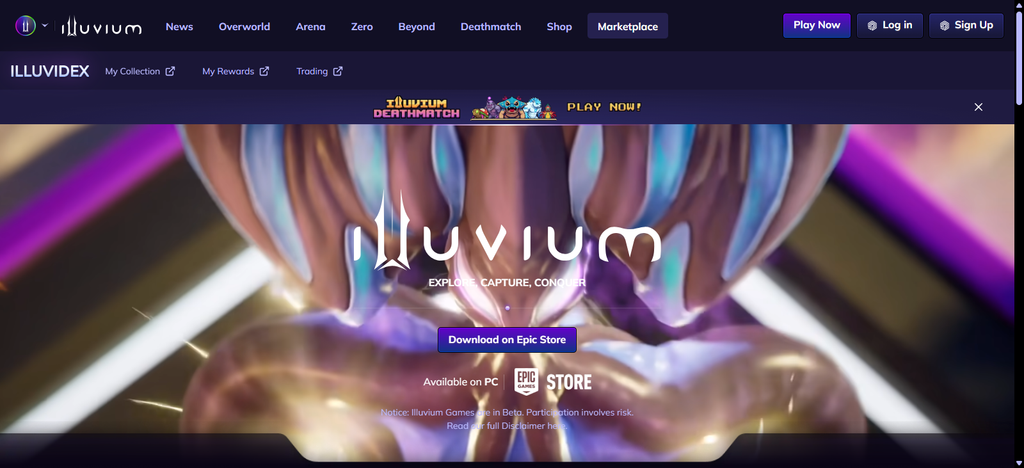
The ecosystem leverages Immutable technology/IMX infrastructure for its digital resources, and ILV is its primary ecosystem token. You explore the Overworld, find and capture Illuvials, engage in strategic Arena battles, develop on land in Zero and collect Illuvials in Beyond.
The official material covers NPC interactions, combat, crafting, land and economic systems, but does not make generative AI the central gameplay mechanic. Thus, rewards and ownership are most closely linked to its Web3 asset and economy systems.
What Makes Its AI Different?
- AI-based combat behavior: Illuvials exhibit unique combat behaviors and skills that make for strategic combat.
- Adaptive strategy: Players need to place and combine Illuvials according to opponents and battlefield situations.
- Automated combat: Arena battles are automated once players have set up their strategic setup.
AI vs. game automation Official game info doesn’t name generative AI as the main gameplay system. - Key difference: Illuvium is a strategy and blockchain game, not a AI-first game.
| Feature | Details |
|---|---|
| Genre | RPG / Strategy |
| World | Open-world exploration |
| Combat | Auto-battler strategy |
| Creatures | Collectible Illuvials |
| Blockchain | Immutable ecosystem |
| Digital Assets | Illuvials, land and other assets |
| Token | ILV |
| Main Appeal | High-quality Web3 gaming experience |
2 Parallel
Parallel is a free-to-play PC game. It is a science-fiction trading card game that released its Open Beta prior to 2026. The main gameplay includes building decks of five factions, Augencore, Earthen, Kathari, Marcolian and The Shroud and battling with cards. Its blockchain layer is based on ERC-1155 digital collectibles built on Ethereum and PRIME is part of the larger Parallel ecosystem.
Players can buy PRIME with gameplay and rewards, and collectible cards can offer utility to the game. Note that AI is not the core mechanic of Parallel TCG itself, but the AI-centric experience is mostly provided by the related Colony project.
What Makes Its AI Different?
- Strategic deck-building and decision-making: Players construct decks and make tactical choices concerning cards, factions, resources and abilities.
- Automated systems: Some game functions can run automatically, but this shouldn’t be mistaken for generative AI.
- AI tie-in: The wider Parallel ecosystem consists of AI projects like Colony.
- Key difference: Parallel is more accurately described as a Web3 trading card game with a growing AI ecosystem, rather than an AI-first game.
| Feature | Details |
|---|---|
| Genre | Trading Card Game |
| Setting | Science-fiction universe |
| Factions | Five major Parallels |
| Gameplay | Strategic card battles |
| Cards | Collectible digital cards |
| Blockchain | Ethereum ecosystem |
| Token | PRIME |
| Main Appeal | Competitive card strategy + digital ownership |
3. Colony
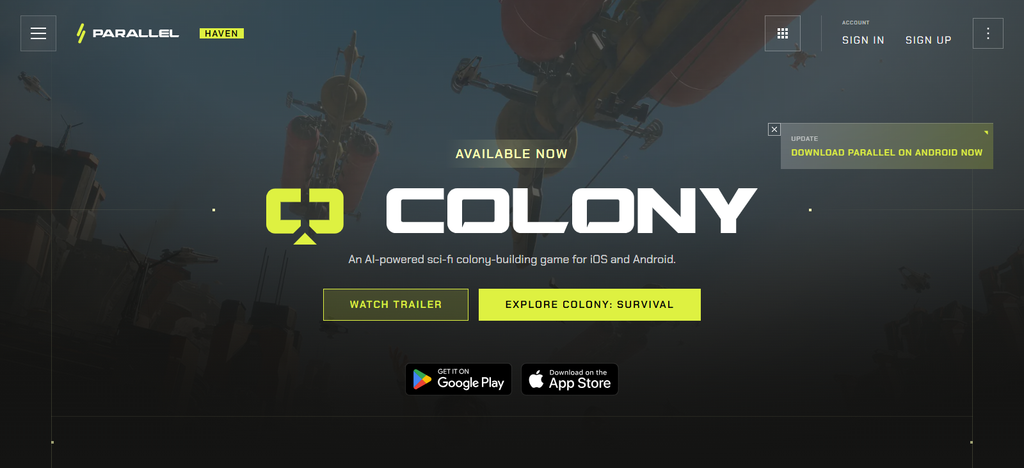
Colony: Survival is an AI-powered sci-fi 4X, colony-building and survival game made by Parallel Studios and is available on iOS and Android. In the current game players can found a settlement, recruit Colonists, gather resources, upgrade buildings and fight PvE and PvP battles.
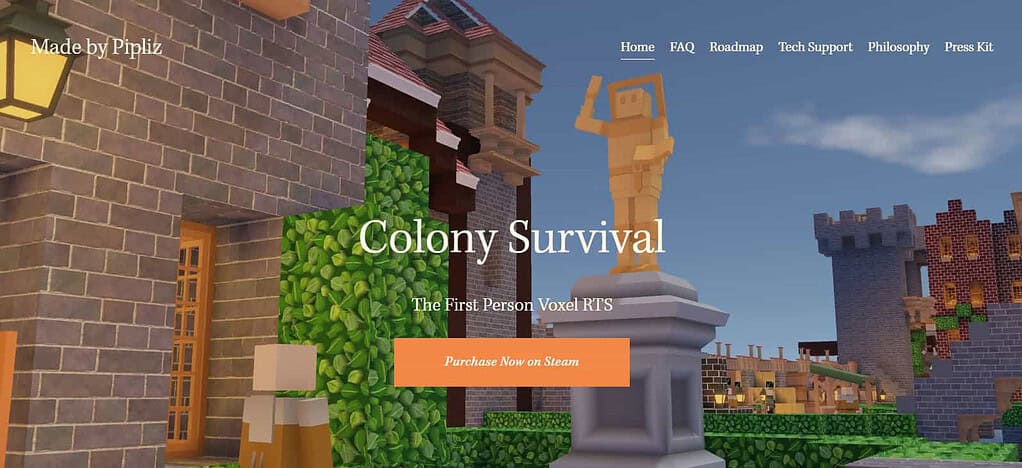
Its AI implementation is considerably more simple: players can talk to a AI-powered Colonist in natural language, influence decisions with custom Dilemmas, and make cosmetic 3D weapons and helmets with the Fabricator.
Colony is linked to the wider Parallel ecosystem, but the official game information currently does not show a traditional play-to-earn token economy as its primary reward system.
What Makes Its AI Different?
- AI-powered Colonists: AI is embedded in the game’s characters.
- Natural language interaction: The players can talk with AI Colonists in natural language.
- AI decision making: Colonists will respond to player orders and game circumstances.
- Custom Dilemmas: Players can influence the behavior of AI characters in various situations.
The key difference: Colony makes interactive AI characters a part of the gameplay itself instead of just using AI as a background technology.
| Feature | Details |
|---|---|
| Genre | Sci-fi 4X / Survival |
| Platform | Mobile |
| Core Gameplay | Build and manage a colony |
| Characters | AI-powered Colonists |
| AI Interaction | Natural-language conversations |
| AI System | Player-influenced AI decisions |
| Multiplayer | PvE and PvP elements |
| Main Appeal | Interactive AI characters |
4. AI Arena
AI Arena is centered around human-trained AI characters, making it one of the most obvious examples of an AI-first crypto game. Players train AI-powered fighters with imitation learning, which means the AI learns from what the player does.
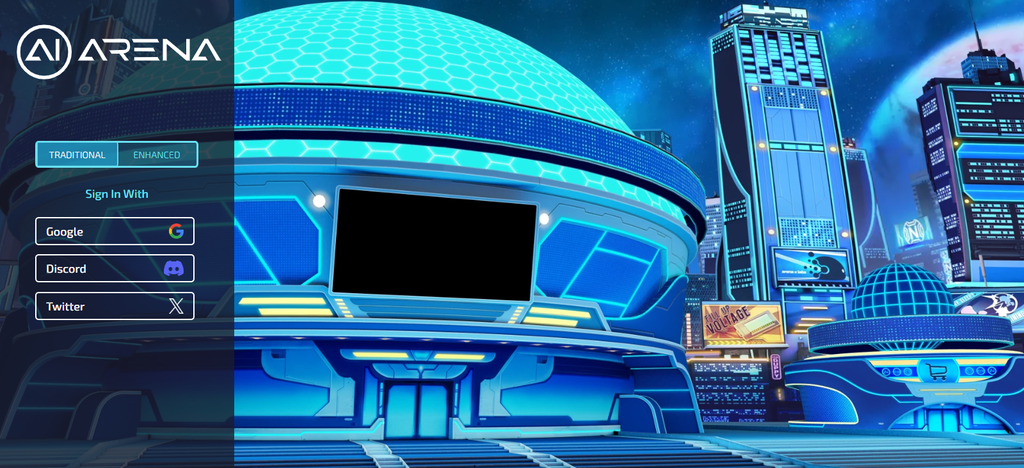
When you’ve trained, fighters can compete on their own in ranked competitions. Its blockchain layer uses **NFT fighters and NRN (Neuron) is the utility token for the ecosystem.
Rewards are based on the performance of the NFT, NRN staking and Elo performance, among other things. And so the game combines gameplay with AI training, NFT ownership, competitive rankings and token-based rewards, not just putting AI in as a cosmetic.
What Makes Its AI Different?
- Imitation learning: AI fighters learn the actions by observing how players do them.
Player-trained AI: Instead of controlling every battle directly, players train their AI characters. - Autonomous combat: Once trained, the fighters are able to fight each other without the player needing to control every single move.
- Individual behavior: Training can alter how an AI fighter acts in combat.
- Main difference: AI Arena puts **AI training and autonomous competition at the core of the gameplay
| Feature | Details |
|---|---|
| Genre | Competitive Fighting |
| AI System | Imitation learning |
| Characters | AI-powered fighters |
| Training | Players train their fighters |
| Combat | Autonomous AI battles |
| Blockchain | NFT-based ecosystem |
| Token | NRN |
| Main Appeal | Train AI and compete |
5. Altered State Machine (ASM)
Altered State Machine (ASM) is an AI-and-NFT protocol based on ownable, trainable AI Agents instead of a single traditional game. An ASM Agent is a mix of an NFT Brain and an Avatar or Form.
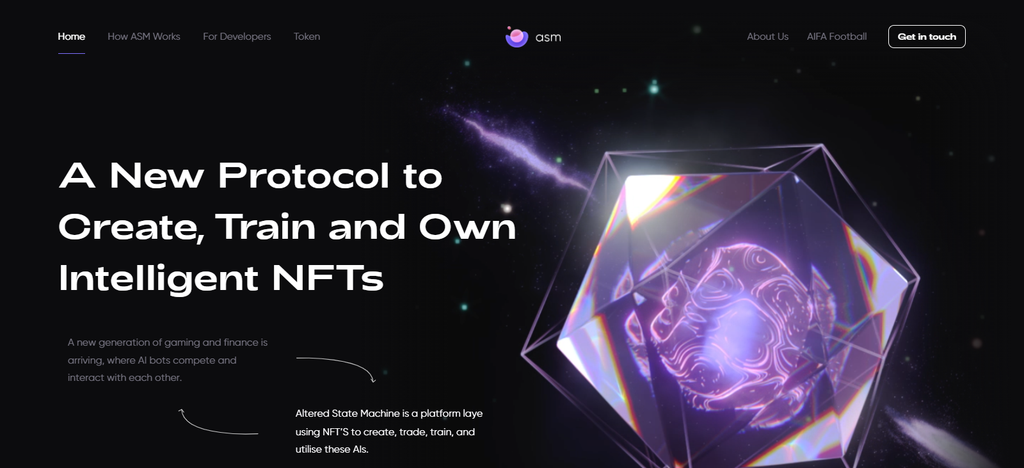
The Brain has a unique Genome Matrix that influences characteristics and behavior. Players can train Agents in AI training environments to improve their performance for specific applications or games.
The ASTO token is used in the ecosystem for AI-agent training, NFT creation, governance and in-game transactions. ASM has enabled experiences such as AIFA Football and AI-powered game demos, bringing ownership of AI itself into the gameplay economy.
What Makes Its AI Different?
- AI Brain NFTs: Each Agent can be given a unique Brain, represented as an NFT on the blockchain.
- Genome based features: The Brain’s Genome Matrix enhances an Agent’s distinctive features.
- Cross-game potential: The design of ASM Agents can be extended to other experiences and applications.
- Key difference: ASM is all about player-owned, trainable AI Agents, so the AI itself is a digital asset.
| Feature | Details |
|---|---|
| Category | AI Agent ecosystem |
| Core Asset | AI Agent |
| AI Brain | Unique trainable Brain |
| Training | AI Agent training |
| Genome | Genome Matrix |
| Blockchain | NFT-based infrastructure |
| Token | ASTO |
| Main Appeal | Ownable and trainable AI Agents |
6. Axie Infinity
Axie Infinity released its battle system in 2018, but eventually evolved into a larger blockchain gaming ecosystem. Its core gameplay is collecting, breeding, and battling Axies, with Origins employing a tactical card battler system, featuring free starter Axies, sequential turns, Runes, and Charms.
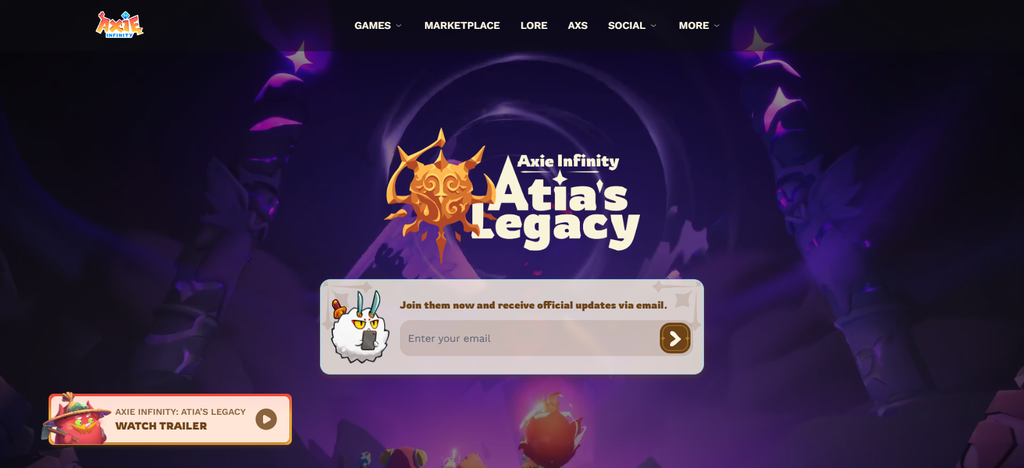
The ecosystem runs mainly on Ronin, a gaming network connected to Ethereum, with AXS and SLP as its core ecosystem tokens.
Players can interact with NFT based items like tradable Ronin Runes, use blockchain assets and participate in battles. Axie Infinity does not have AI as a core gameplay mechanic and should be positioned as a blockchain game, not an AI game.
What Makes Its AI Different?
- AI is not the biggest differentiator: Axie Infinity is a blockchain-based game about creatures and strategic combat.
- Strategic battle systems Players select Axies, cards, abilities and tactical moves during battles.
- Automated mechanics: Some battle processes are system-controlled, but that doesn’t necessarily mean generative AI.
- Changing ecosystem: Over time, the wider Axie ecosystem can adopt new technologies and gameplay systems.
- Main difference: Axie Infinity is better defined as a blockchain gaming ecosystem rather than an AI-first game.
| Feature | Details |
|---|---|
| Genre | Strategy / Battler |
| Core Characters | Axies |
| Gameplay | Tactical battles |
| Game Mode | Origins |
| Digital Assets | Axies, Runes, Charms |
| Blockchain | Ronin |
| Tokens | AXS / SLP |
| Main Appeal | Creature ownership + strategic gameplay |
7. Star Atlas
Star Atlas is a sci-fi blockchain gaming metaverse built on Solana. Its original playable on-chain experience launched in 2021. Players explore a futuristic universe with three major factions and interact with spaceships, resources, territories and other digital items.
The project is based upon blockchain technology where player-owned assets are shown as NFTs, the in-game currency is ATLAS and the governance layer is supported by POLIS. Gameplay has included fleet management, exploration and on-chain asset interactions.
However, official Star Atlas documentation does not list generative AI as a core gameplay system, so its primary differentiator remains blockchain ownership rather than AI.
What Makes Its AI Different?
- AI is not its key gameplay feature at present: Star Atlas is mainly focusing on a blockchain-based space economy and virtual universe.
- Simulation systems: The game has a big universe and needs systems for ships, resources, factions, exploration and interaction.
Autonomous possibilities: Space simulation can include automated systems but these should not be automatically called AI.
Blockchain-first Design: The ecosystem is centered around player-owned assets and on-chain interactions. - Main Difference: Star Atlas differentiates itself more on the basis of large scale space simulation and digital ownership rather than gameplay AI.
| Feature | Details |
|---|---|
| Genre | Sci-fi / Space MMO |
| Universe | Futuristic space metaverse |
| Blockchain | Solana |
| Assets | Ships, land and digital items |
| Currency | ATLAS |
| Governance | POLIS |
| Gameplay | Exploration and space activities |
| Main Appeal | Large-scale space economy |
8. The Sandbox
The Sandbox began as a 2D game in 2012 and transformed into a 3D blockchain-based creator platform around 2020. It is based on the ** Ethereum and Polygon ** ecosystem. Its utility and governance token is ** SAND ** .
Players and creators can own LAND, build experiences, create assets, and publish interactive content with no-code tools. LAND lets you create and monetize games and experiences and lets creators participate in the rewards and the platform economy.
The convergence of Web3 and AI is happening and is part of The Sandbox’s future strategy, but AI is not the core gameplay mechanic of the platform itself.
What Makes Its AI Different?
- AI is an emerging layer: AI is being experimented with more and more within The Sandbox ecosystem rather than defining its original gameplay model.
- AI-assisted creation: AI might help creators to build content and interactive experiences more efficiently.
- Virtual characters: Artificial intelligence can help make digital characters and experiences more interactive.
- Creator-centric: The platform’s biggest strength continues to be user-generated worlds and experiences.
- Main difference: The Sandbox is not entirely AI-focused, but combines creator tools, virtual worlds, blockchain ownership and emerging AI capabilities.
| Feature | Details |
|---|---|
| Genre | Metaverse / Creator Platform |
| Core Feature | User-generated experiences |
| Creation | No-code game creation |
| Virtual Land | LAND |
| Assets | User-created digital assets |
| Blockchain | Ethereum / Polygon |
| Token | SAND |
| Main Appeal | Create, own and monetize experiences |
9. Pixels
Pixels is a social MMO and farming life-simulation game built on Ronin, with the major Ronin migration in 2023 and the PIXEL token launching in 2024. Players farm, gather resources, develop skills, complete quests, socialize and engage in a player driven economy. The game provides digital ownership, interoperable NFT avatars and limited Farm Land NFTs.
PIXEL is the premium utility token of the ecosystem and can be used for special items, progression, guild participation and governance. PIXEL replaced previous BERRY functionality as the main on-chain economy. Pixels’ official materials don’t list AI-driven gameplay as a core feature.
What Makes Its AI Different?
- AI is not the game’s central mechanic: Pixels primarily focuses on social gameplay, farming, exploration, quests, and its player-driven economy.
- Game automation: Some systems can automate repetitive activities, but automation should not automatically be described as AI.
- Social interaction: The game’s strength is its persistent multiplayer environment and player interactions.
- Blockchain integration: NFTs and tokens support ownership and the broader economy.
- Key difference: Pixels is primarily a social Web3 MMO and farming game, rather than an AI-first crypto game.
| Feature | Details |
|---|---|
| Genre | Social MMO / Farming |
| Gameplay | Farming and exploration |
| World | Persistent multiplayer world |
| Social Features | Player interaction and communities |
| Blockchain | Ronin |
| Token | PIXEL |
| Digital Assets | Land and collectible assets |
| Main Appeal | Social gameplay + Web3 economy |
10. World of Dypians
World of Dypians is a Web3 open-world multiplayer game featuring exploration, combat, quests, virtual land and blockchain-based assets. Its ecosystem is built on BNB Chain and other supported networks with WOD as the core gameplay token for rewards and ecosystem activity.
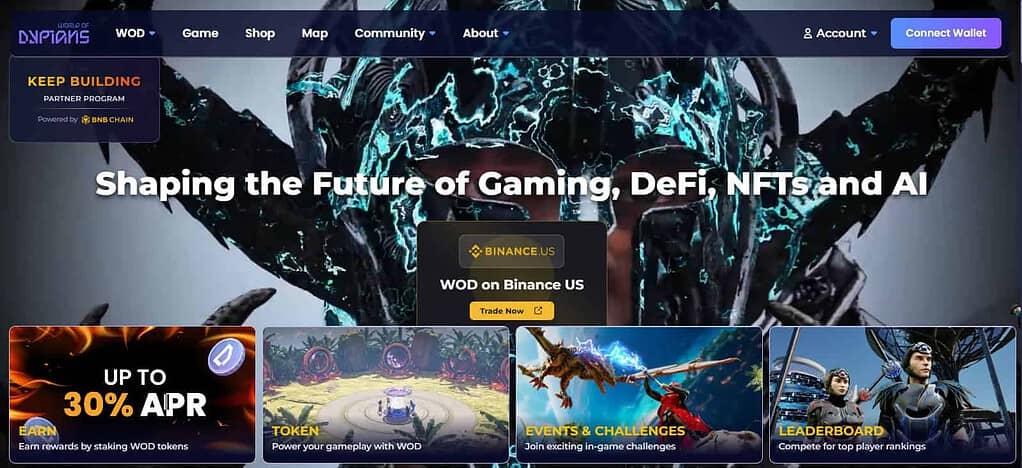
Players can select heroes, battle foes, explore locations, own or build virtual land and participate in challenges and leaderboards. Several games on this list make AI invisible to gameplay, but World of Dypians makes AI a visible layer of gameplay.
The roadmap shows integration of Grok AI for NPC interaction, player guidance, and in-game education. That brings AI into the player experience instead of just a dev concept.
What Makes Its AI Different?
- AI-powered NPC interaction: AI can make NPCs more interactive and responsive to players.
- Grok AI integration: The project has highlighted Grok-related AI integration for NPC interactions and player assistance.
- AI guidance: AI can help players understand or navigate aspects of the game environment.
- Interactive virtual world: AI can add a more conversational layer to an open-world Web3 experience.
- Key difference: World of Dypians stands out by bringing conversational AI into its virtual-world experience, rather than limiting AI to behind-the-scenes development.
| Feature | Details |
|---|---|
| Genre | Open-world Web3 MMO |
| World | Persistent virtual world |
| Gameplay | Exploration, quests and combat |
| AI | AI-powered NPC interactions |
| AI Integration | Conversational/player assistance |
| Blockchain | Multi-chain Web3 ecosystem |
| Token | WOD |
| Main Appeal | Open-world gameplay + AI + blockchain |
Conclusion
AI crypto gaming is evolving beyond simple play-to-earn, integrating artificial intelligence, player-owned assets, blockchain economies, and more engaging gameplay.
These 10 games demonstrate how differently this space is developing: AI Arena and ASM are focused heavily on trainable AI agents, while Colony brings AI-driven characters into its gameplay. Illuvium, Parallel, Axie Infinity, Star Atlas,
The Sandbox, Pixels, and World of Dypians are examples of games that showcase various forms of blockchain ownership, digital currencies, rewards, and virtual economies. Ultimately the best pick in 2026 will come down to whether you want AI innovation, gameplay depth, ownership, accessibility or crypto-based features.
FAQ
What are AI crypto games?
AI crypto games combine artificial intelligence with blockchain technology. Depending on the game, AI can power NPCs, opponents, autonomous characters, generated content, or player interactions, while blockchain can provide NFT ownership, tokens, digital assets, and player-driven economies.
Which AI crypto game is best in 2026?
There is no single best game for everyone. AI Arena is particularly focused on AI-powered competitive gameplay, Colony emphasizes AI-driven characters and interaction, while ASM focuses on trainable AI agents. Other games on the list are primarily blockchain games with varying levels of AI integration.
Do AI crypto games use NFTs?
Many do, but not all use NFTs in the same way. NFTs can represent characters, cards, land, weapons, avatars, or other digital assets. Their purpose depends on the game’s economy and blockchain design.
Can you earn cryptocurrency by playing AI crypto games?
Some games offer tokens, NFTs, or other blockchain-based rewards, but earnings are not guaranteed. Rewards can depend on gameplay, competitions, quests, marketplace activity, and the game’s economic model. Token values can also fluctuate significantly.