




In this article, I will cover the Best Windsurf Alternatives for AI programming Assistant 2026. I will be looking at solutions that provide independence, privacy and flexibility. I will cover Cursor and GitHub Copilot and Codeium and Claude Code. All of the above solutions provide advances in Agent-based programming and integrate with IDEs.
They provide examples of how programming Assistants have advanced to the enterprise level. All of the above solutions should be evaluated by programmers working independently and in smaller organizations as well as larger and more established organizations.
What Makes a Good Windsurf Alternative?
In 2026, the ideal Windsurf competitor will offer flexibility and independence to developer teams. Most importantly, it will allow developers the freedom to work the way they want. Teams will be able to train the AI to do agentic coding (like implementing features or debugging) and still retain control to abide by organization’s policies.
Like Windsurf, the best alternatives will provide a choice of pricing models to target individual and enterprise customers. The models will also provide organization-level policies for governance and control. Indemnification, local control, and additional administration will justify the higher prices.
The best alternatives will also provide models and integrations to extend the offerings of IDEs made by JetBrains and other organizations. As with Windsurf, the best alternatives will leverage large language models (LLMs) to achieve enhanced contextual computing and provide organizations the freedom to set their own policies.
Key Points
| Tool | Best For | Key Strengths | Limitations |
|---|---|---|---|
| Cursor | Power users, large codebases | Composer mode, multi-file autonomy, Claude/GPT-4 integration | Higher cost ($20/mo), closed-source fork |
| GitHub Copilot | Teams & enterprises | Works in VS Code, JetBrains, Neovim; enterprise indemnification | Agent weaker than Windsurf Cascade |
| Codeium | Free users, IDE flexibility | Works in 70+ IDEs, unlimited completions free | Fewer enterprise controls |
| Claude Code | Terminal-first devs | Command-line AI agent, deep context | Less GUI support |
| Continue | Model flexibility | Connects Claude, GPT-4, Ollama | Less polished UX |
| Aider | Open-source enthusiasts | Lightweight, customizable agent | Smaller community |
| Zed | Performance-focused devs | Built-from-scratch editor, speed | Limited ecosystem |
| Cody | Sourcegraph users | Code search + AI agent | Best only with Sourcegraph |
| Tabnine | Privacy-conscious teams | Local model hosting, enterprise controls | Weaker multi-file autonomy |
| Sourcegraph Cody | Enterprise search + AI | Deep repo context | Requires Sourcegraph infra |
| Pearai | Lightweight workflows | Minimalist AI coding agent | Limited advanced features |
| Replit Ghostwriter | Cloud-first devs | Integrated with Replit IDE, instant deploy | Locked to Replit ecosystem |
1. Cursor
Cursor, launched in 2023 as the AI coding extension for VS Code, supports composers and autonomy for multi-file coding, as well as large models like Claude and GPT-4, by 2026. The extension costs $20/month and, therefore, is more expensive than competitors like Codeium.

Privacy is compromised because Cursor uses cloud processing. However, larger companies are able to enable stricter controls. Like Windsurf, Cursor supports agentic coding and balances controlling and giving autonomy to the developer. Its closed source model limits its ability to be modified for other uses.
| Feature | Details |
|---|---|
| Founded | 2023 |
| Pricing | $20/month |
| IDE Base | Fork of VS Code |
| Model Support | Claude, GPT‑4, others |
| Agentic Coding | Composer Mode, multi‑file autonomy |
| Privacy | Cloud‑based, enterprise configurable |
| Strength | Balances autonomy with developer control |
| Limitation | Closed‑source, less customizable |
| Target Users | Power users, large codebases |
| Ecosystem | Growing but smaller than Copilot |
Cursor Pros & Cons
Pros
- Extra file autonomy in Composer Mode
- Worked with Claude and GPT-4
- Extensive customization in VS Code
- Adjustable enterprise privacy
- Balanced autonomy
Cons
- At $20/month, higher price point than competitors
- Closed-source
- Less flexible than Copilot
- Less flexible IDE than Copilot
- Less lightweight than other competitors
2. GitHub Copilot
GitHub Copilot was launched by GitHub and OpenAI in 2021. It has since become the most well-known and used AI coding assistant. Copilot is available for integration with various code editors including Visual Studio Code, JetBrains, Neovim, etc. Copilot charges $10/month. It is charged at an individual level and enterprise plans are available as well.
The enterprise plans include legal indemensifications and assurances which are required in strict and regulated industries. The enterprise Copilot plans provide privacy and data protection agreements. Like Windsurf, Copilot also utilizes models from OpenAI and provides suggestions and autocompletions. However, Copilot lacks true agentic coding and is less versatile than Windsurf. Copilot, nevertheless, is widely used in the enterprise level.
| Feature | Details |
|---|---|
| Founded | 2021 |
| Pricing | $10/month individual, enterprise tiers |
| IDE Support | VS Code, JetBrains, Neovim |
| Model Support | Codex, GPT‑4 |
| Agentic Coding | Inline suggestions, limited autonomy |
| Privacy | Enterprise indemnification & compliance |
| Strength | Widest adoption, strong enterprise trust |
| Limitation | Less autonomy than Windsurf/Cursor |
| Target Users | Teams, enterprises |
| Ecosystem | Deep GitHub integration |
GitHub Copilot Pros & Cons
Pros
- Most enterprise customers
- Available with VS Code, Neovim, and Jetbrains IDEs
- Enterprise indemnification and compliance
- Deep integration with GitHub
Cons
- Less agentic than others
- More expensive than others at $10/month
- More cloud reliance
- Less flexible than others
- Less flexible IDE than Codeium
- Compares unfavorably to Windsurf Cascade
3. Codeium
Codeium was launched in 2022. Like Windsurf, Codeium offers suggested completions for coders for free and for an unlimited number of times. In the succeeding years, Codeium expanded its integrations to different code editors and IDEs including JetBrains, VS Code, and terminals.
Codeium offers protections and assurances for its enterprise clients. The enterprise clients of Codeium can choose between different models including Codeium’s own and fine-tuned LLMs. Codeium’s agentic coding capabilities also include codings refactoring and generating automated tests. Codeium mainly caters to individual and small clients.
| Feature | Details |
|---|---|
| Founded | 2022 |
| Pricing | Free unlimited completions |
| IDE Support | 70+ IDEs |
| Model Support | Proprietary + GPT‑based |
| Agentic Coding | Refactoring, test generation |
| Privacy | Secure handling, enterprise options |
| Strength | Free, flexible |
| Limitation | Fewer enterprise controls |
| Target Users | Solo devs, startups |
| Ecosystem | Expanding open‑source community |
Codeium Pros & Cons
Pros
- Free unlimited use
- Integrates with 70+ IDEs
- Model integrations and replacements
- Enterprise customizations
- Agentic features like testing
Cons
- Less favorable enterprise agreements than others
- Less enterprise deployments in regulated fields
- More reliant on external services for advanced features
- Less refined UX
- Smaller user base
4. Claude Code
Claude Code was released by Anthropic in 2025 as a coding AI. It utilizes command line interfaces, as opposed to graphical user interfaces, like most other AI coding programs. This has gained it some popularity among programmers.
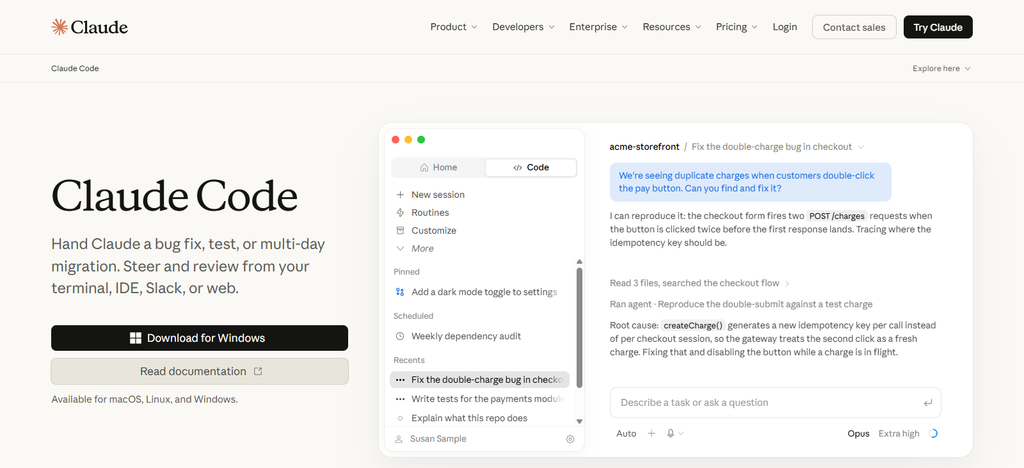
Like Anthropic’s other AI models, Claude Code is based on the constitutional AI framework, so the suggestions given are safer, and to a degree, trustworthy. Agentic coding is supported, and debugging is automated. Like other command line programs, it supports multi-file editing and other tasks. It is less useful to developers that rely on graphical user interfaces.
| Feature | Details |
|---|---|
| Founded | 2025 (Anthropic) |
| Pricing | $20/month via Claude Pro |
| IDE Support | Terminal‑first |
| Model Support | Claude 3.5+ |
| Agentic Coding | Multi‑file edits, debugging |
| Privacy | Constitutional AI framework |
| Strength | Long context windows |
| Limitation | Limited GUI support |
| Target Users | Terminal‑centric developers |
| Ecosystem | Anthropic ecosystem |
Claude Code Pros & Cons
Pros
- Terminal interface
- Powerful agentic coding with Claude 3.5
- Long context windows
- Better output controls
- Integrated Claude Pro for $20/month
Cons
- More cumbersome to use than others
- Limited GUI/IDE integration.
- Costs more than most free options.
- Smaller ecosystem than Copilot.
- Ports to other services.
5. Continue
Launched in 2023, Continue is an open-source AI coding extension that allows developers to code using the models of their choice. Users can choose from GPT-4 and Claude and other models via Ollama. The base extension is free; however, users will have to pay to use models of their choice. Users can control the level of privacy by using models either locally or through cloud APIs.

The extension allows developers to code in an agentic way and provides developers the ability to code across multiple files. Compared to Copilot, Cursor and other coding extensions, Continue offers fewer UX features. Continue enables developers the flexibility to use models of their choice. Developers can switch models based on the type of coding they want to do without being locked to a particular vendor. However, this flexibility requires developers to do additional work.
| Feature | Details |
|---|---|
| Founded | 2023 |
| Pricing | Free, model costs vary |
| IDE Support | VS Code extension |
| Model Support | Claude, GPT‑4, Ollama |
| Agentic Coding | Multi‑file support |
| Privacy | Local or cloud, user‑controlled |
| Strength | Flexible model choice |
| Limitation | Less polished UX |
| Target Users | Experimenters, open‑source devs |
| Ecosystem | Open‑source community |
Continue Pros & Cons
Pros
- Free and open‑source
- Flexible model choice (Claude, GPT‑4, Ollama)
- User‑controlled privacy (local/cloud)
- Supports multi‑file agentic coding
- Strong adaptability for experimentation
Cons
- Less polished UX than Cursor/Copilot
- Requires manual setup for models
- Smaller community support
- Limited enterprise adoption
- Performance varies by chosen model
6. Aider
Released in 2023, Aider is a compact AI coding assistant, which can be customized and used in various ways. Aider, for now, is totally free, so programmers can use it without restrictions. Aider’s developers state that Aider will not access or store any code. Users will have full control of Aider. Aider can simulate bug fixes, and perform code refactoring and other code related tasks.
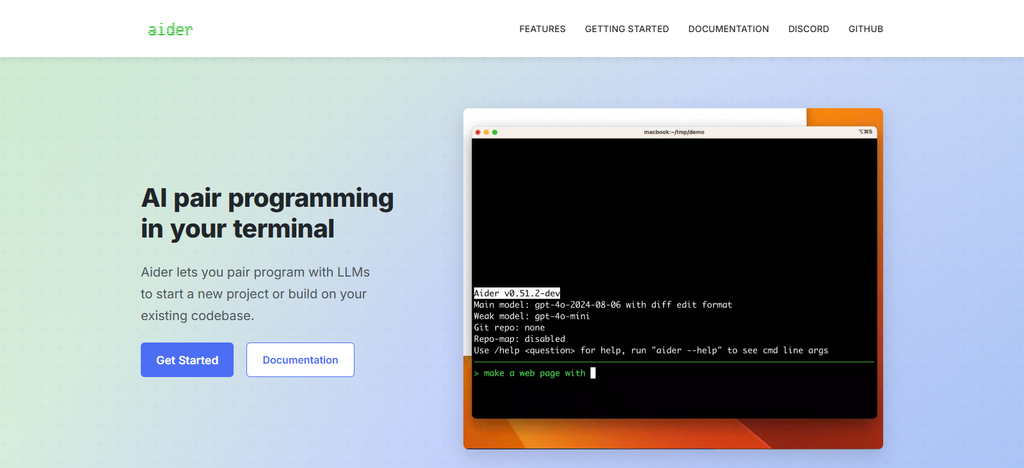
Aider and other similar AI coding assistants will only get better. Other similar coding assistants like Copilot and Cursor, contain more coding related features and a larger code base. Aider offers transparency, and can be used to perform code-related tasks. Unlike Copilot, Cursor, and other similar coding assistants, Aider does not contain a lot of features. Aider can be a good option for those that want to try using an AI coding assistant.
| Feature | Details |
|---|---|
| Founded | 2023 |
| Pricing | Free |
| IDE Support | Terminal workflows |
| Model Support | GPT‑4, Claude via API |
| Agentic Coding | Bug fixes, refactoring |
| Privacy | User‑controlled, no external storage |
| Strength | Lightweight, customizable |
| Limitation | Smaller community |
| Target Users | Hobbyists, open‑source contributors |
| Ecosystem | Minimalist |
Aider Pros & Cons
Pros
- Free and open‑source
- Lightweight terminal integration
- Supports GPT‑4/Claude via API keys
- Strong privacy (no external storage)
- Customizable workflows
Cons
- Smaller developer community
- Limited advanced features
- Dependent on external APIs
- Less polished than Cursor/Copilot
- Minimal ecosystem growth
7. Zed
Started in 2022 by ex-Atom employees, Zed hopes to create a customizable, high-performance editor. In 2026, Zed releases a version with generative AI that can assist in coding. For now, the base version is free, and the company charges a premium for companies to use the collaborative features. Like other privacy focused companies, Zed uses a local-first strategy and builds its code editor to run primarily on users’ computers.
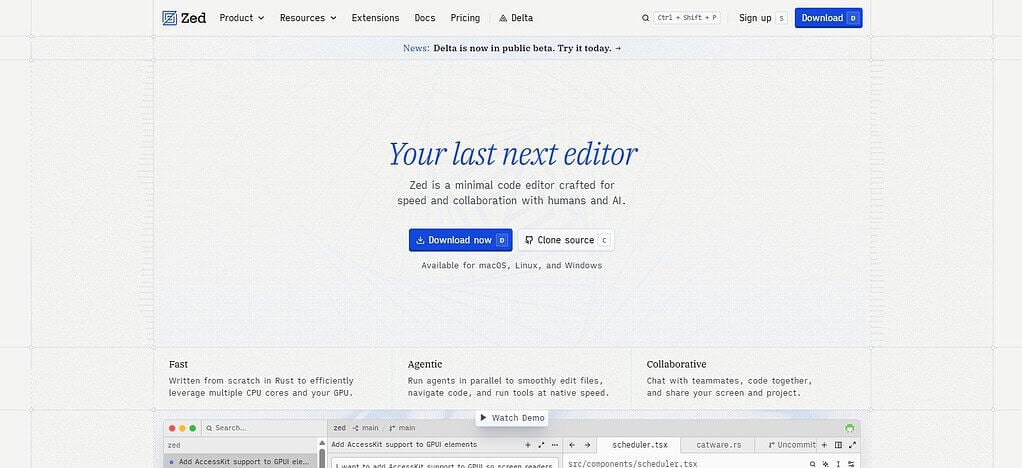
The company has integrated models like GPT-4 and Claude. Like Windsurf, Zed employs Agentic Coding, but focuses on programming features to improve developer efficiency and collaborative editing. Zed is more of a performance improvement platform for developers frustrated by the unresponsive nature of VS Code forks.
| Feature | Details |
|---|---|
| Founded | 2022 |
| Pricing | Free individual, paid team features |
| IDE Support | Custom editor |
| Model Support | GPT‑4, Claude |
| Agentic Coding | Productivity‑focused |
| Privacy | Local‑first |
| Strength | Speed, performance |
| Limitation | Smaller ecosystem |
| Target Users | Performance‑focused devs |
| Ecosystem | Collaboration features |
Zed Pros & Cons
Pros
- Built‑from‑scratch high‑performance editor
- Free for individuals
- Local‑first privacy architecture
- Supports GPT‑4/Claude integrations
- Fast, responsive UX
Cons
- Smaller ecosystem than VS Code forks
- Limited enterprise adoption
- Agentic coding less autonomous
- Collaboration features locked behind premium tiers
- Less flexible than Continue/Codeium
8. Cody
In 2023, Sourcegraph released Cody. Built on their code search platform, Cody is designed to be an AI-powered coding companion. Cody is free for individual users. Sourcegraph manages Cody’s privacy and compliance for enterprise customers. Users of Cody can interact with large models (GPT-4 and Claude) to perform agentic coding.

Cody and Sourcegraph’s integration allows Cody to perform contextual code refactoring and recommend possible solutions to coding bugs in large codebases. Cody can be limited by Sourcegraph’s code search integration. Sourcegraph’s code search is primarily used by software developers. Cody can be a valuable product in software development companies.
| Feature | Details |
|---|---|
| Founded | 2023 (Sourcegraph) |
| Pricing | Free individual, enterprise tiers |
| IDE Support | Sourcegraph integration |
| Model Support | GPT‑4, Claude |
| Agentic Coding | Context‑aware refactoring |
| Privacy | Enterprise compliance |
| Strength | Deep repo context |
| Limitation | Requires Sourcegraph |
| Target Users | Enterprises |
| Ecosystem | Sourcegraph suite |
Cody Pros & Cons
Pros
- Deep Sourcegraph integration
- Free individual use, enterprise tiers available
- Supports GPT‑4/Claude models
- Strong context‑aware agentic coding
- Enterprise compliance frameworks
Cons
- Requires Sourcegraph infrastructure
- Limited appeal outside Sourcegraph ecosystem
- Smaller adoption among solo developers
- Dependent on enterprise contracts for full features
- Less flexible than Continue
9. Tabnine
Tabnine was released in 2019 and quickly become popular with software developers for integrating an AI coding assistant with their IDE. Tabnine costs $12/month and offers an enterprise plan that allows organizations to host Tabnine’s models on-premise. Tabnine uses models that are fine-tuned for code to perform code completion.
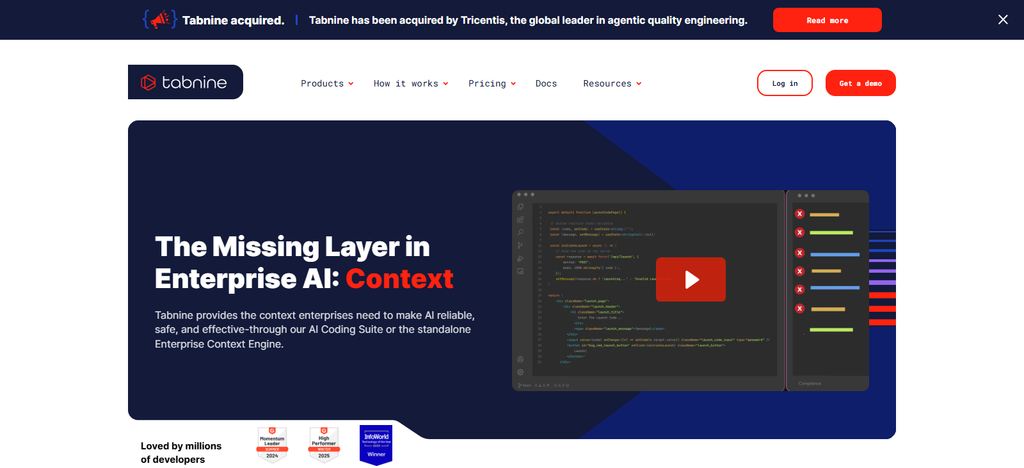
Tabnine offers agentic coding to perform code refactoring. While its coding capabilities are similar to Cursor and Windsurf, Tabnine focuses on simple suggestions and code completion. Due to its models and technologies being hosted on-premise by its clients, Tabnine is widely used in the financial and healthcare industries.
| Feature | Details |
|---|---|
| Founded | 2019 |
| Pricing | $12/month |
| IDE Support | Multiple IDEs |
| Model Support | Proprietary LLMs |
| Agentic Coding | Autocomplete, inline suggestions |
| Privacy | Local hosting option |
| Strength | Strong privacy & compliance |
| Limitation | Less autonomy |
| Target Users | Privacy‑focused teams |
| Ecosystem | Enterprise adoption |
Tabnine Pros & Cons
Pros
- Founded early (2019), mature product
- Strong privacy with local hosting option
- Enterprise compliance focus
- Proprietary fine‑tuned LLMs
- Affordable at $12/month
Cons
- Agentic coding weaker than Windsurf/Cursor
- Limited autonomy beyond autocomplete
- Smaller innovation pace compared to newer rivals
- Less flexible model support
- Ecosystem less vibrant than Copilot
10. Sourcegraph Cody
Sourcegraph Cody is a large enterprise repository management solution that extends Sourcegraph’s enterprise offering. Sourcegraph Cody pricing is available with an enterprise sales engagement. Cody can support regulated industries with Sourcegraph’s compliance framework and model support for GPT-4 and Claude.
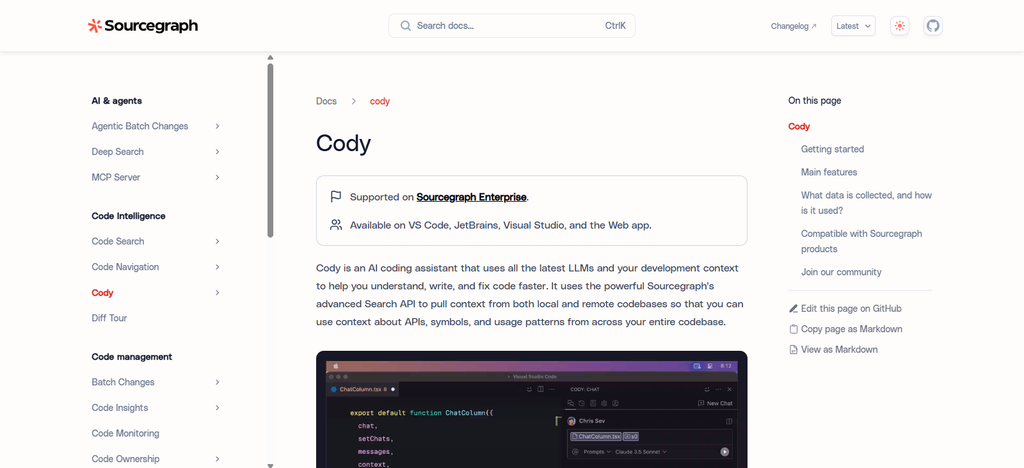
Cody leverages Sourcegraph’s infrastructure and indexers to provide agentic coding across codebases. Sourcegraph Cody provides automated documentation and refactoring. Sourcegraph Cody is bound by the constraints of Sourcegraph’s infrastructure and therefore does not scale well. However, within the constraints of Sourcegraph’s enterprise offering, it is a powerful Windsurf alternative.
| Feature | Details |
|---|---|
| Founded | 2023 |
| Pricing | Enterprise contracts |
| IDE Support | Sourcegraph integration |
| Model Support | GPT‑4, Claude |
| Agentic Coding | Large‑scale refactoring |
| Privacy | Enterprise frameworks |
| Strength | Handles massive repos |
| Limitation | Sourcegraph dependency |
| Target Users | Large enterprises |
| Ecosystem | Enterprise workflows |
Sourcegraph Cody Pros & Cons
Pros
- Focused on large enterprise clients
- Process tens of thousands of files with GPT-4/Claude
- Powerful large-scale Agentic Coding
- Integrated with Sourcegraph development suite
Cons
- Sourcegraph infrastructure only
- Enterprise licenses only
- Sourcegraph centric ecosystem
- Premium pricing
11. Pearai
Pearai was released in 2024 and provides GPT-4 and Claude models for coding. It provides basic Agentic Coding features to perform small-scale refactoring and bug fixes. Pearai differentiates itself from competitors by offering a free tier and charging for additional features.
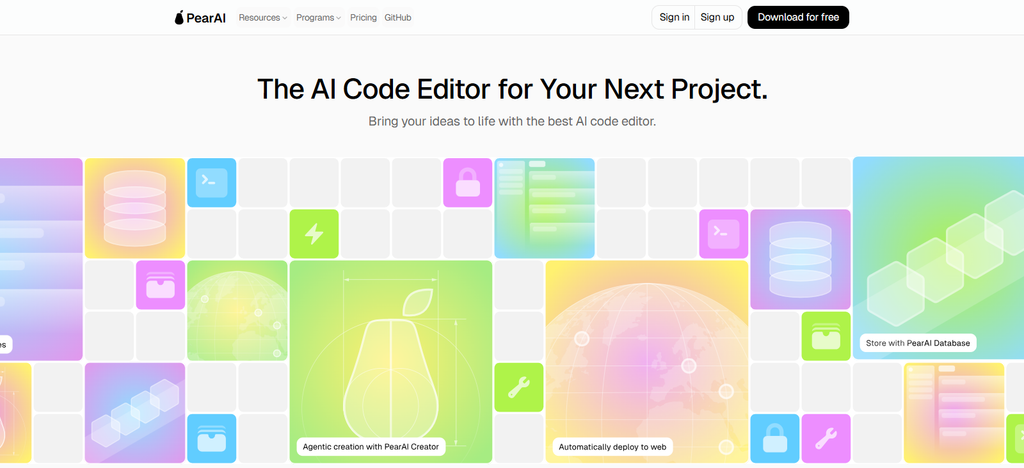
The free version does not rely on cloud computation, offering local model execution. Because the free tier does not include Agentic features, it provides a distraction free coding environment. Pearai provides coding templates, prompts, and other features to assist users in writing code. Overall, Pearai is a good lightweight coding assistant.
| Feature | Details |
|---|---|
| Founded | 2024 |
| Pricing | Free, optional paid tiers |
| IDE Support | Lightweight |
| Model Support | GPT‑4, Claude |
| Agentic Coding | Basic refactoring |
| Privacy | Local execution options |
| Strength | Minimalist simplicity |
| Limitation | Reduced functionality |
| Target Users | Lightweight workflow devs |
| Ecosystem | Small community |
Pearai Pros & Cons
Pros
- Free with optional paid tiers
- Lightweight, minimalist design
- Supports GPT‑4/Claude models
- Local execution privacy options
- Simple agentic coding features
Cons
- Reduced functionality vs Cursor/Copilot
- Smaller community adoption
- Limited enterprise features
- Less polished UX
- Narrow scope of workflows
12. Replit Ghostwriter
Replit Ghostwriter was released in 2021. It will be a good option for developers that prefer a cloud workspace by 2026. As part of Replits’s ($10/month) premium plans, Ghostwriter will provide a cloud IDE with coding assistance. Since Ghostwriter will utilize Replits infrastructure and services, its level of control over its users’ data will be determined by Replits’s contracts. Ghostwriter will utilize GPT-4, along with other large language models.
As part of Replits’s focus on Agentic programming, Ghostwriter will also be able to help its users quickly deploy web apps. Ghostwriter may result in customers becoming reliant on the Replit ecosystem, and preferring to code in the cloud. However, for teams that prefer to code in the cloud, Ghostwriter will certainly reduce the time it takes to develop applications.
| Feature | Details |
|---|---|
| Founded | 2021 |
| Pricing | $10/month via Replit plans |
| IDE Support | Replit cloud IDE |
| Model Support | GPT‑4, proprietary |
| Agentic Coding | Integrated with deploy |
| Privacy | Cloud‑managed |
| Strength | Cloud‑native convenience |
| Limitation | Locked to Replit |
| Target Users | Cloud‑first teams |
| Ecosystem | Replit platform |
Replit Ghostwriter Pros & Cons
Pros
- Integrated into Replit cloud IDE
- $10/month pricing via Replit plans
- Supports GPT‑4 and proprietary models
- Agentic coding with instant deploy features
- Cloud‑native convenience for teams
Cons
- Locked to Replit ecosystem
- Less flexible for local IDE users
- Privacy tied to Replit cloud agreements
- Smaller enterprise adoption vs Copilot/Tabnine
- Limited customization outside Replit
Conclusion
In 2026, AI coding assistants will provide developers multiple options outside Windsurf. Some, like Cursor and Claude Code, give developers high levels of agentic coding autonomy. Still others, like GitHub Copilot and Tabnine, gain momentum with large companies due to their strength in the field of privileged and restricted coding, and compliance.
Aider and Codeium give up-and-coming, open source developers high levels of agentic coding autonomy for free. Finally, Replit Ghostwriter is strong in cloud-based and coding assistance. Overall, all developers can find options outside Windsurf in 2026. Which options developers choose depend on their preferences related to combining or compromising agentic coding autonomy, affordability and security.
FAQ
What is Cursor?
Cursor was founded in 2023 as a VS Code fork. It costs $20/month, supports Claude and GPT‑4, and emphasizes agentic coding with multi‑file autonomy. Privacy is cloud‑based but configurable for enterprises.
How does GitHub Copilot compare?
Launched in 2021, Copilot costs $10/month and integrates with VS Code, JetBrains, and Neovim. It uses GPT‑4/Codex, offers enterprise indemnification, and is widely adopted for compliance.
Is Codeium free?
Yes. Founded in 2022, Codeium offers unlimited completions free, supports 70+ IDEs, and provides enterprise privacy options. It supports multiple LLMs and agentic coding features.
What makes Claude Code unique?
Introduced in 2025 by Anthropic, Claude Code is terminal‑first, priced at $20/month via Claude Pro. It supports Claude 3.5+, offers long context windows, and strong agentic coding autonomy.
Why choose Continue?
Founded in 2023, Continue is open‑source and free. It connects Claude, GPT‑4, or local models via Ollama. Privacy is user‑controlled, and agentic coding is supported across files.