


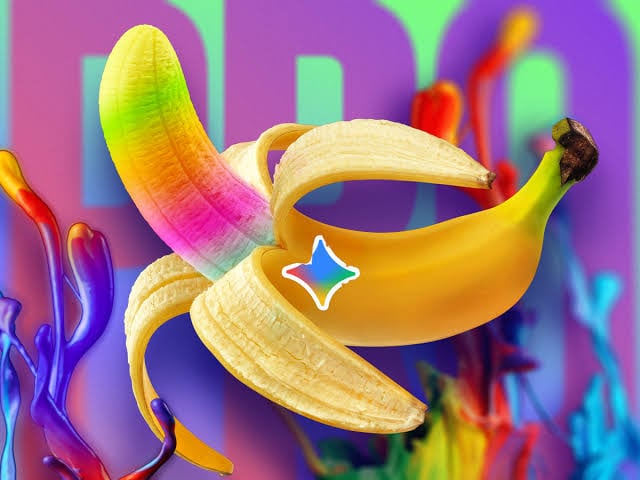
I will discuss the Best Nano Banana Rivals for AI Image Generation in this article. I will analyze head to head the alternates and competitions of Google’s Nano Banana in 2026. Different factors such as pricing, consistency, typography, and post-processing will be analyzed.
I will compare enterprise solutions and discover the pros and cons of free and open source solutions. In this article, I will try to cover as many solutions as I can, analyze their strengths and weaknesses and determine their position in today’s AI image generation market.
What Is Nano Banana?
Nano Banana is powerful software that quickly and easily generates images from user prompts or edits images using Artificial Intelligence. With Nano Banana, users can do more than just edit images, they can create and modify images to be of better quality than ever before.
The software draws influence from the Gemini 3 family and therefore has a wide variety of products based on speed and price. Some features of Nano Banana and other products influenced by Gemini 3 are image and character edits, virtual shopping, image restoration, and more.
The price is around $9.99 a month, and for an additional price, users can get even higher image quality, more editing features, and the ability to use the software for work. Because of the features and price, Nano Banana is a great product for at home and work use.
Why Look for Nano Banana Rivals?
Price Variability: Nano Banana’s subscription plans can get pricey, and there are alternatives that charge less or offer services for free/open-source plans.
Consistency: Sometimes projects require more consistency across image generations, and alternatives like Flux.2 Pro or GPT Image 2 may work better in those cases.
Text Rendering: Nano Banana isn’t great at text generation and rendering, and there are alternatives like Ideogram 4.0 or Recraft V4.1 that may work better for text heavy prompts.
Editing & Layer Control: Competing AI generators like Adobe Firefly 5 may be a better alternative if editing and altering layers within the app is important for the use case.
Open Source: Stable Diffusion 3.5 allows users to edit and change code, giving users more control and transparency.
API Integration: For enterprise use cases, competitors like Flux.2 Pro may work better if integrating the AI generators API is important.
Style Diversity: Midjourney v7 has a variety of artistic styles, and there may be other styles that Nano Banana does not cover.
Niche Specialization: Other rivals like Recraft or Leonardo may cover generating art for games or other niche styles.
Model Deprecation: Google has been known to remove models from their store (like Imagen‑4 Ultra), so there’s value in looking at alternatives.
Selection Criteria — Most Important Section
| Criteria | Details |
|---|---|
| Pricing | Subscription tiers vs. free/open‑source access; affordability for individuals and enterprises. |
| Consistency | Ability to maintain scene coherence, object placement, and repeatable outputs. |
| Text & Typography | Accuracy in rendering legible, editable text within generated visuals. |
| Editing Performance | Strength of in‑painting, out‑painting, and layer‑based refinements. |
| Integration | Compatibility with design suites, APIs, and enterprise workflows. |
| Scalability | Ability to handle large‑scale deployments and high‑volume generation. |
| Creative Diversity | Range of artistic styles, realism, and niche specializations. |
| Accuracy | Fidelity to complex prompts and contextual instructions. |
| Use Cases | Suitability for branding, advertising, gaming, research, or prototyping. |
| Limitations | Weaknesses such as typography errors, pricing barriers, or lack of open access. |
Key Points
| Model | Maker | Strengths | Best Use Cases |
|---|---|---|---|
| GPT Image 2 | OpenAI | Sharp text rendering, multilingual accuracy, strong instruction-following | Marketing visuals, text-heavy designs |
| Midjourney v7 | Midjourney | Artistic coherence, textures, specialized modes | Creative art, stylized campaigns |
| Flux.2 Pro | Black Forest Labs | Open weights, fine-tuning, self-hosting | Enterprise workflows, custom training |
| Adobe Firefly 5 | Adobe | Deep Creative Cloud integration, vector + raster | Professional design pipelines |
| Stable Diffusion 3.5 | Stability AI | Open-source, community-driven, flexible | Research, indie projects, custom models |
| Recraft V4.1 | Recraft | Vector-first generation, scalable assets | Logos, icons, brand identity |
| Ideogram 4.0 | Ideogram | Best for typography + text-in-image | Posters, memes, ad creatives |
| Leonardo Lucid Origin | Leonardo.ai | Game art, cinematic realism | Concept art, gaming visuals |
| Imagen-4 Ultra | Photorealism, text overlays (sunsetting Aug 2026) | Short-term projects needing realism | |
| Gemini 3.1 Flash | Lightning-fast edits, bulk processing | Quick iterations, product photos |
1. GPT Image 2
GPT Image 2 is a model by OpenAI for creating photos from prompts. It is strong at interpreting and understanding text, making it easier to explain prompts to generate photos. Unlike previous models by OpenAI, GPT Image 2 places objects in photos, giving users control over composition.
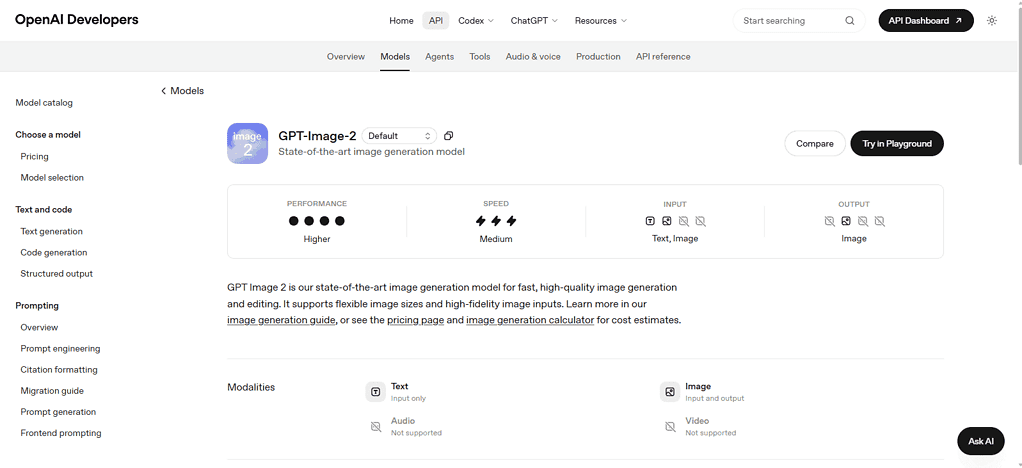
Like other models by OpenAI, pricing is generally included in a subscription, which gives users flexibility to choose a plan based on their usage. While it shows a basic understanding of scene composition, it sometimes places objects in unrelated or illogical positions.
Compared to the previous model by OpenAI, GPT Image 2 gives better hints on how to convey text and type, but is still limited in interpreting and understanding more complex elements. Users can edit prompts to refine the final output. Due to its strong interpreter of text and excellent control overfinal output, GPT Image 2 can be used in professional settings.
| Feature | Details |
|---|---|
| Foundation | Built on OpenAI’s multimodal architecture. |
| Pricing | Bundled in subscription tiers (ChatGPT Plus/Enterprise). |
| Consistency | Strong contextual alignment and scene coherence. |
| Text & Typography | Improved accuracy, though not perfect. |
| Editing Performance | Iterative refinements via prompt adjustments. |
| Integration | Works seamlessly with text generation. |
| Scalability | Enterprise‑ready API access. |
| Accuracy | High fidelity to complex instructions. |
| Use Cases | Marketing, design, contextual visuals. |
| Limitation | Typography less precise than design‑native tools. |
2. Midjourney v7
Midjourney v7 specializes in creating artistic photos. Like previous versions, pricing is based on subscription, which gives users a set number of credits. Users can purchase additional credits for more photos.
Midjourney v7 has improved its consistency over previous versions, and while it can represent real-life objects, it often adds artistic interpretaion and focuses on style over accuracy. Editing Midjourney’s prompts allows users to refine the output and shift focus to other elements.
Unlike previous versions, v7 can represent scenes involving people, but it often places them in random or illogical positions. Due to its strong style representation, Midjourney is best suited for creating artistic photos.
| Feature | Details |
|---|---|
| Foundation | Community‑driven generative art model. |
| Pricing | Subscription tiers with GPU hour allocations. |
| Consistency | Improved realism, still artistic bias. |
| Text & Typography | Weak, often distorted. |
| Editing Performance | Remix and prompt chaining modes. |
| Style | Cinematic, painterly aesthetics. |
| Scalability | Discord‑based workflow. |
| Accuracy | More interpretive than literal. |
| Use Cases | Concept art, mood boards, storytelling. |
| Limitation | Typography and technical precision. |
3. Flux.2 Pro
Flux.2 Pro is modeled after large language models (LLMs), giving it strong text-to-text generation capabilities. It excels at interpreting text and producing photos quickly and at scale. Similar to other LLMs, Flux.2 Pro is best when used in a professional setting.
Flux 2.0 Pro can be quite pricey, but its API-based pricing makes it possible to generate thousands of prompts for image generation for enterprise customers. Its strength is consistency, and many customers find it reliable for producing images at scale.
Flux is not without rivals. For instance, many competitors in this space struggle to render text and typography, and Flux is better than most.
When it comes to generation and Editing, Flux is powerful and flexible, and can be leveraged across many areas of an advertising or marketing organization. Because of its flexibility and strength, especially when compared to the competition, Flux 2.0 Pro is a strong contender in this space.
| Feature | Details |
|---|---|
| Foundation | Enterprise‑grade generative model. |
| Pricing | API‑based billing for businesses. |
| Consistency | Highly reliable across prompts. |
| Text & Typography | Strong accuracy for branding. |
| Editing Performance | Advanced in‑painting/out‑painting. |
| Integration | Fits production pipelines. |
| Scalability | Optimized for speed and volume. |
| Accuracy | Precise object placement. |
| Use Cases | Advertising, product visualization. |
| Limitation | Less artistic than Midjourney. |
4. Adobe Firefly 5
Adobe’s Firefly 5 offers a version of generative AI within their creative suite, greatly simplifying the workflow of designers. Firefly 5 also shares a subscription with Adobe’s Creative Cloud. Overall, the tool meets our expectations for a generative AI model and, in some cases, exceeds them.
Firefly 5, along with other Adobe products, provides industry-leading tools and functionalities for editing, layout, and design. Firefly 5 gives creatives the ability to design marketing materials and prototypes with control over both the message and the medium.
Firefly 5 excels at rendering images with text and other media using typefaces and other resources available through Adobe. Firefly 5 implements Adobe’s creative design suite to produce marketing designs and other materials. Firefly 5 is also able to design designs.
| Feature | Details |
|---|---|
| Foundation | Integrated into Adobe Creative Cloud. |
| Pricing | Subscription with Adobe suite. |
| Consistency | Strong alignment with design standards. |
| Text & Typography | Excellent, leveraging Adobe fonts. |
| Editing Performance | Layer‑based refinements in Photoshop/Illustrator. |
| Integration | Native Adobe ecosystem. |
| Scalability | Professional creative workflows. |
| Accuracy | High fidelity for branding. |
| Use Cases | Marketing, prototyping, branded visuals. |
| Limitation | Enterprise‑oriented, less open source. |
5. Stable Diffusion 3.5
Stable Diffusion 3.5 is accessible and flexible, with various pricing structures. Many organizations provide free or inexpensive access. The model is offered through APIs for enterprise customers. Distortions have lessened with this release. Like previous versions, the model has limitations when rending text and typography, and editing prompts may require post-processing.
Adjusting prompts requires community provided resources like ControlNet and in-painting. Although Stable Diffusion has some limits, it has many resources to edit and adjust prompts. Stable Diffusion 3.5 is used by developers and independent content creators.
When compared to other generative models, Stable Diffusion is unique as it provides resources to edit prompts and adjust models to users’ desired specifications. Stable Diffusion is best used for research, or when a flexible, customizable model is needed.
| Feature | Details |
|---|---|
| Foundation | Open‑source generative model. |
| Pricing | Free/low‑cost, enterprise APIs available. |
| Consistency | Improved prompt handling. |
| Text & Typography | Limited, often distorted. |
| Editing Performance | Flexible via ControlNet/in‑painting. |
| Integration | Community‑driven tools. |
| Scalability | Customizable deployments. |
| Accuracy | Good but variable. |
| Use Cases | Experimentation, research, indie projects. |
| Limitation | Typography and polish weaker. |
6. Recraft V4.1
Recraft V4.1 is a subscription-based vector graphics and scalable design tool. It prides itself on consistency. Editable vector text allows designers to create logos and other marketing materials within Recraft.
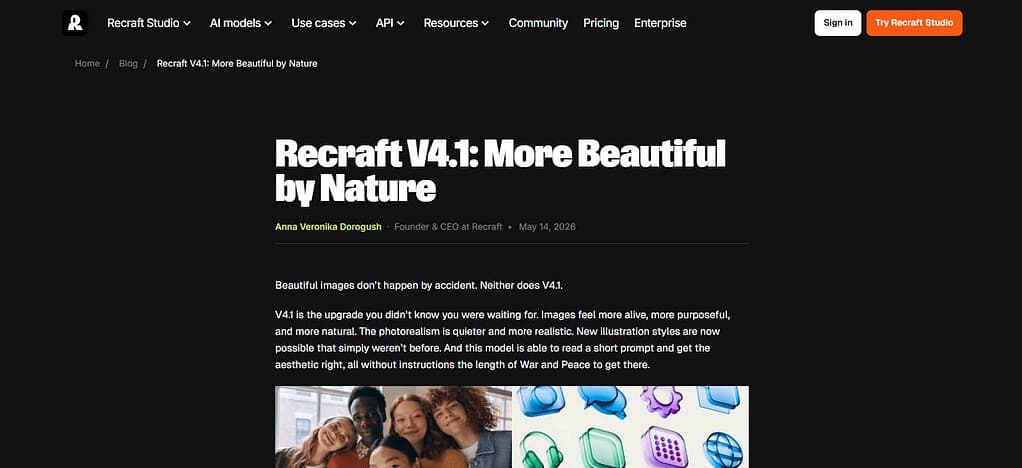
Users can upload images to Recraft, and the tool can edit and enhance the uploaded images. Recraft is best for designers and brand managers who work on multiple projects and clients. This is because the sets of assets the designers work on change frequently, and having a tool that can help maintain consistency is beneficial. Recraft can create production-ready designs.
This features, along with its sharp edge and concise vector graphics, separate it from other generative AI designs. Recraft excels at creating digital designs that can be integrated into user interfaces. Its vector-based models allow it to create designs and graphics that other AI models, based on raster, cannot.
| Feature | Details |
|---|---|
| Foundation | Vector‑focused generative design. |
| Pricing | Subscription for designers. |
| Consistency | Strong stylistic coherence. |
| Text & Typography | Accurate, editable vector text. |
| Editing Performance | Direct export to design tools. |
| Integration | Branding and UI/UX workflows. |
| Scalability | Production‑ready assets. |
| Accuracy | High precision in vectors. |
| Use Cases | Logos, scalable graphics. |
| Limitation | Raster realism less emphasized. |
7. Ideogram 4.0
Ideogram 4.0 is a text-to-image generator that excels at incorporating text in images. Like other text-to-image generators, it’s still evolving and improving. It currently offers a subscription model that’s more expensive for professional use. Its greatest strength is in modeling text. The quality of the text in images is often times better than the rest of the image.
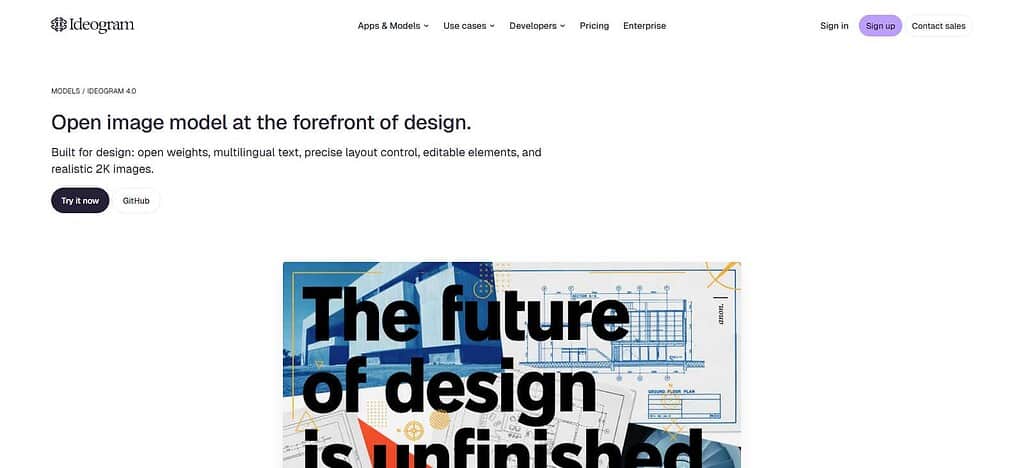
Because of this, creators should feel empowered to use it for producing marketing and social media images. Editing images in Ideogram 4.0 is more like modifying a text document. Users can make a large number of changes quickly. Ideogram 4.0 excels at producing text-containing images. It is evolving quickly, and in a short time, could influence how creators across a range of fields develop text-based images.
| Feature | Details |
|---|---|
| Foundation | Text‑to‑image with typography focus. |
| Pricing | Subscription tiers. |
| Consistency | Reliable text rendering. |
| Text & Typography | Core strength, highly legible. |
| Editing Performance | Quick iterations via prompts. |
| Integration | Poster/social media design. |
| Scalability | Supports varied text styles. |
| Accuracy | Typography fidelity unmatched. |
| Use Cases | Marketing, communication design. |
| Limitation | Artistic realism secondary. |
8. Leonardo Lucid Origin
Leanandro Lucid Origin is a generative model designed for the creation of various styles of concept art and game assets. It offers subscription-based plans and charges based on rendering speed and quality. The model excels at generating consistent images of humanoid and other fantasy and sci-fi entities and environments.

However, it can be limited when generating text and/or type. Editing and creating images in Leonardo Lucid Origin is much easier than in other text-to-image models. Therefore, generating images containing a high degree of visual complexity is possible. As a result, game developers and artists in the entertainment industry should find it a useful tool.
| Feature | Details |
|---|---|
| Foundation | Tailored for concept art/game design. |
| Pricing | Subscription tiers. |
| Consistency | Strong fantasy/sci‑fi coherence. |
| Text & Typography | Limited focus. |
| Editing Performance | Style transfer, iterative refinement. |
| Integration | Game/entertainment pipelines. |
| Scalability | Supports detailed world‑building. |
| Accuracy | High fidelity in imaginative visuals. |
| Use Cases | Gaming, entertainment art. |
| Limitation | Typography accuracy weak. |
9. Imagen-4 Ultra
Imagen-4 Ultra is Google’s enterprise-targeted, context-dependent photorealistic generative model. Like other generative models, it is API-based. Imagen-4 Ultra’s strength is consistent photorealism at length. It can generate images with remarkable quality at great depth, and.
It remains primarily a text-to-image model, and while it has improved its typography and other forms of textual expression, it can still get some of these wrong. It’s strength is primarily in generating photorealistic scenes. edits are straightforward with advanced in-painting.
Imagen-4 Ultra is helpful in a myriad of downstream creative endeavors like advertising, media, and product design. Unlike other generative models, its strength is in contextualizing and photorealistically interpreting scenes.
| Feature | Details |
|---|---|
| Foundation | Google’s photorealistic generative model. |
| Pricing | Enterprise API access. |
| Consistency | Excellent realism and fidelity. |
| Text & Typography | Improved but secondary. |
| Editing Performance | Advanced scene manipulation. |
| Integration | Media/advertising workflows. |
| Scalability | Large‑scale deployments. |
| Accuracy | Photographic quality outputs. |
| Use Cases | Advertising, product design. |
| Limitation | Typography weaker than Ideogram. |
10. Gemini 3.1 Flash
Gemini 3.1 Flashfounded is DeepMind’s Enterprise-level multimodal model, focused on text and image generation as well as text and image editing. Flashfounded excels in generating coherent text and image multimodal outputs. It advances text and image generation by enhancing text editing within generated images and adds the ability to edit generated images.
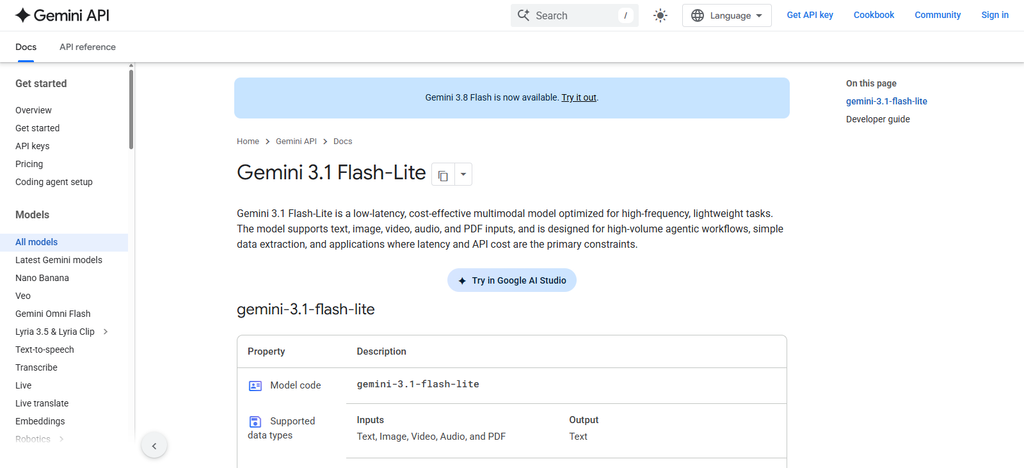
Flashfounded is designed with enterprise integration in mind and therefore, is focused on content and media creation for business. Flashfounded can generate and edit text and images and therefore, is a great option for businesses that need similar capabilities for multiple and various media types.
| Feature | Details |
|---|---|
| Foundation | Google DeepMind multimodal model. |
| Pricing | Enterprise‑tier API. |
| Consistency | Strong multimodal coherence. |
| Text & Typography | Advanced, editable text rendering. |
| Editing Performance | Exceptional multimodal refinements. |
| Integration | Unified text+image workflows. |
| Scalability | Enterprise content pipelines. |
| Accuracy | High fidelity across modes. |
| Use Cases | Branding, communication, enterprise media. |
| Limitation | Premium pricing barrier. |
Comparison Table — Nano Banana vs Rivals
| Model | Pricing | Consistency | Text & Typography | Editing Performance | Integration | Scalability | Creative Diversity | Accuracy | Best Use Case |
|---|---|---|---|---|---|---|---|---|---|
| Nano Banana | $9.99+ tiers | Strong | Moderate | Good | Gemini ecosystem | Enterprise‑ready | Balanced | High | General creative workflows |
| GPT Image 2 | Subscription | Strong | Improved | Iterative | OpenAI suite | API scalable | Balanced | High | Marketing, contextual visuals |
| Midjourney v7 | Subscription | Artistic | Weak | Remix modes | Discord workflow | Limited | Cinematic styles | Interpretive | Concept art, storytelling |
| Flux.2 Pro | API billing | Very strong | Strong | Advanced | Enterprise pipelines | High volume | Limited | Precise | Advertising, product visualization |
| Adobe Firefly 5 | Creative Cloud | Strong | Excellent | Layer‑based | Adobe suite | Professional | Balanced | High | Branding, prototyping |
| Stable Diffusion 3.5 | Free/low cost | Improved | Weak | Flexible | Community tools | Customizable | Wide range | Variable | Indie projects, research |
| Recraft V4.1 | Subscription | Strong | Excellent | Direct export | Design workflows | Scalable assets | Vector focus | Precise | Logos, UI/UX |
| Ideogram 4.0 | Subscription | Reliable | Excellent | Quick iterations | Poster/social media | Moderate | Typography styles | High | Marketing, text visuals |
| Leonardo Lucid Origin | Subscription | Strong | Limited | Style transfer | Game pipelines | Moderate | Fantasy/sci‑fi | High | Game art, entertainment |
| Imagen‑4 Ultra | Enterprise API | Excellent | Moderate | Advanced | Media workflows | Large scale | Realism focus | Very high | Advertising, photorealism |
| Gemini 3.1 Flashfounded | Enterprise API | Very strong | Advanced | Multimodal | Unified workflows | Enterprise |
Conclusion
Finally, modern generative image models like GPT Image 2 and Gemini 3.1, show how technology is changing the way people work. Each of these models finds success in different areas. Generally speaking, GPT Image 2 and Midjourney v7 are great for quickly creating rich media, and Flux.2 Pro is great for the enterprise.
Additionally, Firefly 5 offers similar features to Adobe products. Stable Diffusion 3.5 allows users to access a large models and Recraft V4.1 provides vector graphics. Finally, Ideogram 4.0, Leonardo Lucid Origin, and Imagen-4 Ultra give accuracy to various styles of image rendering.
When considering all of the models mentioned, the generative AI industry provides many tools for different areas of the workflow, and pricing models for a range of customers. These models give various levels of consistency, and focus on different areas like editing and typography.
FAQ
What is GPT Image 2?
GPT Image 2 is OpenAI’s image generation model, offering strong consistency, contextual accuracy, and bundled pricing within subscription tiers.
How does Midjourney v7 differ?
Midjourney v7 emphasizes artistic exploration and cinematic aesthetics, with subscription pricing and remix/editing modes for creative workflows.
What makes Flux.2 Pro unique?
Flux.2 Pro is enterprise‑focused, delivering reliable consistency, accurate typography, and scalable API pricing for production environments.
Why choose Adobe Firefly 5?
Adobe Firefly 5 integrates directly into Creative Cloud, excelling in typography accuracy and professional editing performance.
Is Stable Diffusion 3.5 free?
Stable Diffusion 3.5 is open‑source, often free or low‑cost, with strong customization and community‑driven editing tools.