


In this article, I will discuss the Best Fleet Maintenance Software for Transportation. Here, you will find the top platforms that help businesses manage vehicle servicing, preventive maintenance, repair schedules, inspections, and operating costs. I’ll also compare their key features, automation, integrations, pricing, and benefits to assist transportation companies in selecting the optimal solution for enhancing fleet performance and minimizing vehicle downtime.
What Is Fleet Maintenance Software?
Fleet Maintenance Software is a digital solution that enables transportation companies to manage vehicle servicing, preventive maintenance, repair schedules, inspections, and maintenance records from a single centralized system.
This enables fleet managers to monitor vehicle conditions, schedule routine services, assign repair work, track spare parts and capture maintenance costs. These platforms often come with automated service reminders, work order management, vehicle diagnostics and reporting features.
Fleet maintenance software plays an important role in helping transportation businesses reduce unexpected breakdowns, control operating costs, improve vehicle availability, and maintain efficient fleet operations by organizing maintenance activities and identifying potential vehicle issues.
Why Use Fleet Maintenance Software for Transportation
Reduce Vehicle Downtime: Transportation companies can use fleet maintenance software to schedule routine maintenance, spot vehicle issues, and book repairs, which helps avoid unforeseen breakdowns that can interfere with deliveries and daily transportation operations.
Monitor maintenance costs: Record repair charges, labor costs, replacement parts, and service invoices to gain insights into vehicle maintenance expenses and make smart choices for operating budgets.
Streamline repair tracking: Utilize work order management to delegate repair tasks, track technician actions, document completed services, and keep organized maintenance histories for each vehicle in the fleet.
Track Vehicle Health: Transportation companies can use telematics integrations and diagnostic data to identify engine issues, monitor vehicle conditions, and determine maintenance needs before they disrupt fleet operations.
Control Spare Parts Inventory: Inventory management tools help companies track the availability of spare parts, monitor stock usage, manage purchasing needs, and reduce delays caused by missing maintenance components.
Enhance Driver Inspections: Drivers can utilize digital inspection checklists to report vehicle defects, document maintenance issues, and share inspection details with maintenance teams to expedite repair coordination.
Boost Fleet Productivity: Centralized maintenance records, automated notifications and operational reports help transportation managers coordinate multiple vehicles, improve maintenance planning and achieve higher fleet availability.
Key Points
| Software | Best For | Key Fleet Maintenance Features |
|---|---|---|
| Fleetio | Small to mid-sized transportation fleets | Preventive maintenance scheduling, work orders, vehicle inspection management, fuel tracking, parts inventory, and mobile fleet management. |
| Samsara | Telematics-driven fleet operations | GPS tracking, maintenance alerts, fault-code diagnostics, vehicle health monitoring, work order management, and fleet analytics. |
| Verizon Connect | Large transportation fleets | Telematics-integrated maintenance scheduling, engine-hour tracking, service reminders, vehicle utilization reporting, and compliance monitoring. |
| Geotab | Data-focused fleet operators | Vehicle diagnostics, predictive maintenance alerts, engine monitoring, maintenance tracking, and telematics-based reporting. |
| Motive | Trucking and logistics companies | Fleet maintenance workflows, DVIR management, fault-code monitoring, preventive maintenance tracking, and driver safety integration. |
| Azuga Fleet | Medium-sized transportation businesses | Scheduled maintenance, GPS tracking, vehicle health monitoring, driver behavior analytics, and service reminders. |
| RTA Fleet Management | Government and enterprise fleets | Asset lifecycle management, maintenance scheduling, inventory control, technician management, and detailed maintenance reporting. |
| AssetWorks Fleet Management | Public sector and large fleet operations | Fleet maintenance planning, inspection management, work orders, asset tracking, and compliance reporting. |
| MaintainX | Maintenance-focused transportation teams | Mobile work orders, preventive maintenance scheduling, inspection management, repair tracking, and service history records. |
| AUTOsist | Small fleet operators and owner-managed fleets | Vehicle maintenance records, inspection tracking, service reminders, fuel logs, and document management. |
1. Fleetio
Founded in 2012
Fleetio is a fleet maintenance and optimization platform that helps transportation companies manage vehicle service, repairs and operating costs. It can schedule preventive maintenance, perform digital inspections and create work orders.
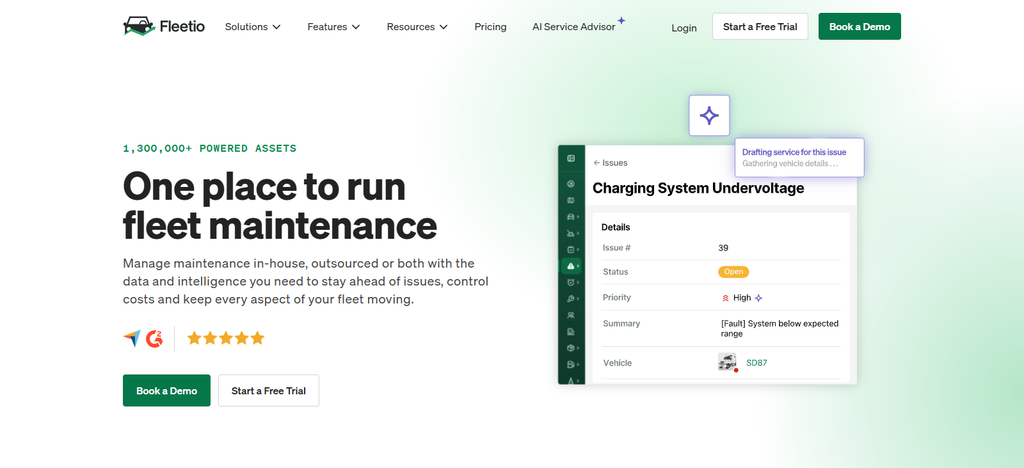
It also keeps track of service history, parts inventory and warranties. Automation allows managers to get service reminders, identify inspection defects and schedule repair activities without reliance on manual records.
Fleetio can sync vehicle data with telematics providers, fuel cards, accounting systems and other business applications. Its cost management tools track maintenance costs, fuel consumption and total cost of ownership. Fleetio helps transportation companies increase vehicle availability and manage in-house and outsourced maintenance.
Key Features
- Scheduling of preventive maintenance by mileage, engine hours and service intervals.
- Digital vehicle inspections, defect reporting and tracking of maintenance issues.
- Work order management – for the organization of repairs, technician assignments and service costs.
- Inventory, purchase order and warranty management.
- Reporting on maintenance, analysis of fuel expenses, and managing the vehicle’s lifecycle.
Benefits
- Maintenance management tools on one central platform.
- Incorporates inspections into repair workflows to streamline defect management.
- Supports integration with multiple GPS and telematics providers.
- It helps transportation companies monitor vehicle performance and maintenance costs.
- Facilitates in-house workshops and outsourced maintenance processes.
Cons
- Real time GPS tracking is not a built-in feature.
- Advanced reporting may take a while to understand and set up.
- Some advanced features require a subscription.
- Telematics integrations may require additional service or hardware.
- The initial data setup of the vehicles can be a significant administrative effort.
2. Samsara
Founded: 2015
Samsara is a connected fleet maintenance software company that helps transportation companies track vehicle health and manage repair operations. It maintains preventive maintenance schedules, digital vehicle inspection reports, work orders, service history, parts inventory and warranty management.
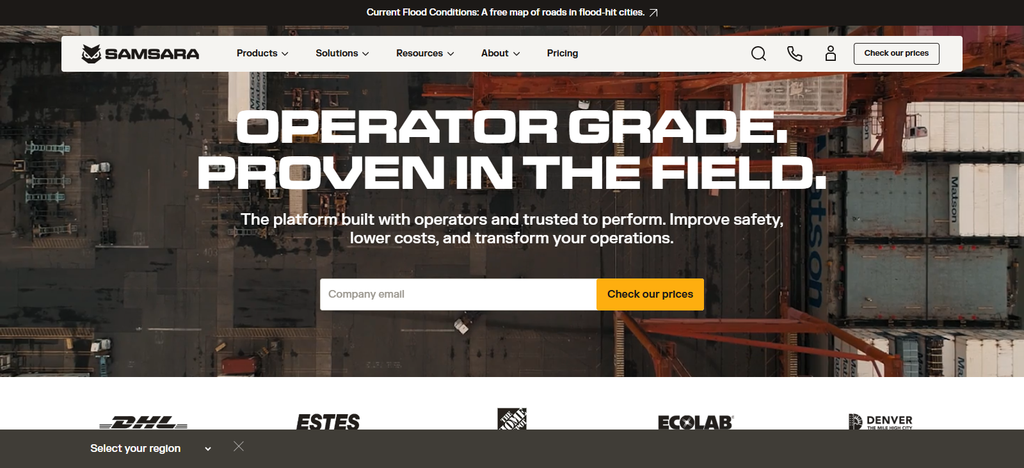
Automation turns reported inspection deficiencies into work orders, identifies pending maintenance requirements, and assists technicians in prioritizing repairs. The platform links maintenance information to GPS tracking, telematics, driver operations and third-party business applications.
Its cost management tools analyze repair invoices, maintenance spending, vendor expenses and cost per vehicle. Samsara helps transportation companies link fleet monitoring to maintenance scheduling, cut down on paperwork and increase visibility into operations.
Key Features
- Scheduling of preventive maintenance according to vehicle usage and service requirements.
- Digital vehicle inspection reports identifying maintenance deficiencies.
- Automatically generate work orders from defects identified in inspections and vehicle faults.
- AI-based fault code intelligence and maintenance invoice handling.
- Integrated fleet dashboards to monitor asset health and repair activities.
Benefits
- Brings together vehicle telematics and maintenance data in a single platform.
- Helps identify vehicle faults via connected diagnostic information.
- links driver inspection reports directly to maintenance work flows.
- Useful visibility into vehicle availability and repair requirements.
- Assists with maintenance cost analysis and automation of invoice processing.
Cons
- Advanced maintenance features may require additional subscriptions.
- Hardware requirements can increase implementation cost.
- Depending on the vehicle, the feature compatibility may be different.
- The platform might be too large for smaller transportation businesses.
- Teams might need training to effectively use its connected fleet management capabilities.
3. Verizon Connect
Founded: 2018 (Verizon Connect brand launch)
Verizon Connect provides fleet management and maintenance capabilities to help transportation companies monitor vehicles, schedule servicing and maintain operational records. Its Maintenance Connect feature allows for preventive maintenance schedules, vehicle service histories, driver inspection reports and maintenance alerts.
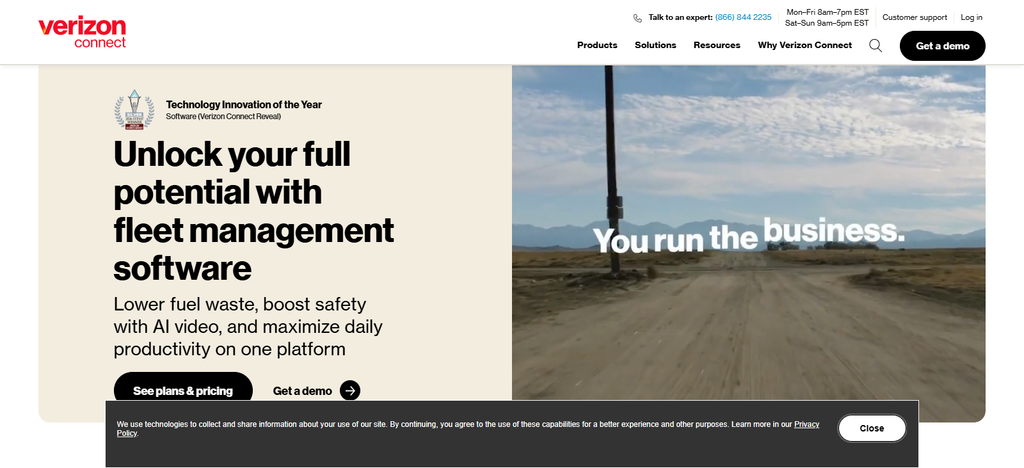
Automation notifies fleet managers when vehicles have diagnostic faults or are due for services. The fleet management ecosystem connects maintenance information to vehicle tracking, telematics and driver activity.
Maintenance records and operational reporting help in identifying recurring problems in the vehicles which help in cost management. Verizon Connect can help transportation companies coordinate maintenance schedules, monitor vehicle conditions and maintain better visibility across geographically distributed fleets.
Key Features
- GPS Vehicle Tracking and engine diagnostic and mileage info.
- Fleet vehicle service reminders and maintenance scheduling.
- Keeping a record of vehicle inspection and maintenance.
- Fleet activity monitoring with automatic alerts and operational reports.
- Integration capabilities for linking fleet tracking with business applications.
Benefits
- GPS tracking for vehicle location and operational visibility.
- Enables managers to track vehicle usage and maintenance requirements.
- Supports fleet activity reporting and custom notifications.
- Integrates vehicle tracking with other transportation management activities.
- Helps companies manage vehicle fleets in different geographical locations.
Cons
- Maintenance functions may not be as robust as dedicated CMMS solutions.
- With advanced tracking and reporting features, the subscription cost may increase.
Some integrations depend on third-party services. - Technical support may be required for configuration on larger fleets.
- Advanced workshop inventory management may require additional software for businesses.
4. Geotab
Established: 2000
Geotab offers fleet maintenance tools via its MyGeotab platform, assisting transportation companies in tracking vehicle status and scheduling repair jobs. Features include preventive maintenance scheduling, work order management, remote diagnostics, engine fault monitoring, and maintenance cost reporting.
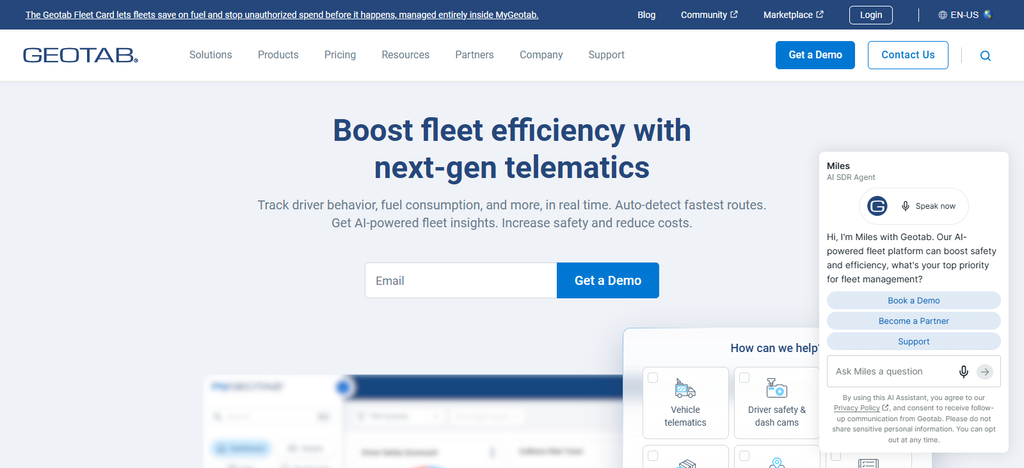
Automation assists with maintenance reminders and diagnostic alerts that allow managers to spot potential vehicle problems earlier. Geotab’s Marketplace ecosystem combines vehicle telematics, engine data, GPS data and third-party applications.
It helps businesses to review maintenance costs, highlight repetitive faults and prioritize important repairs. Geotab allows transportation operators to improve vehicle reliability, manage service needs and make maintenance decisions based on operational data.
Key Features
- Preventive maintenance reminders based on mileage, engine hours and service intervals.
- Telematics for vehicle diagnostics and engine fault detection.
- MyGeotab dashboards to monitor vehicle health and fleet performance.
- Integration with third-party applications via the Geotab Marketplace.
- Vehicle performance analysis and maintenance reporting.
Benefits
- Gives detailed vehicle diagnostic information for planning maintenance.
- Provides a wide ecosystem of third-party fleet integrations.
- Uses connected telematics data to help identify potential vehicle issues.
- Enables fleet monitoring across various vehicle types.
- Allows customization of reports for transportation operations.
Cons
- Some advanced maintenance workflows may require third party applications.
- There are upfront costs in installing telematics hardware.
- Some marketplace options may require separate subscriptions.
- The massive configuration may be a learning curve for new users.
- Some integrations are complex and require technical expertise from companies.
5. Motive
Founded: 2013 (as KeepTruckin)
Motive provides fleet maintenance software to help transportation companies track vehicle health, inspections, repairs, and maintenance costs. It can schedule preventive maintenance, conduct digital inspections, create work orders, track service histories, manage parts inventory and track warranties.
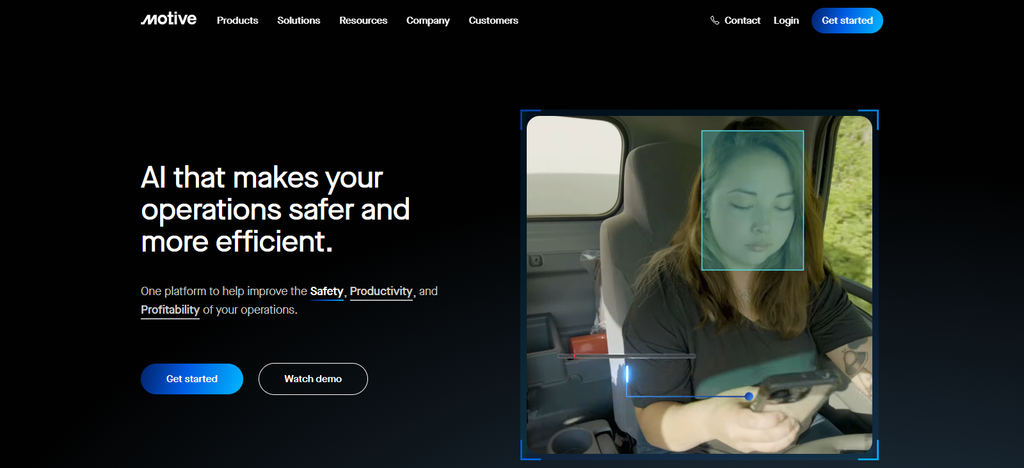
Automation links inspection defects, diagnostic fault codes and service reminders to repair workflows, minimizing manual maintenance administration. Motive’s connected platform integrates telematics, driver operations, vehicle diagnostics and maintenance information.
Its cost management tools provide visibility into operating expenses, repair invoices, vehicle ownership costs and replacement decisions. Motive helps fleet managers schedule maintenance, prioritize critical repairs, and increase fleet uptime across their operations.
Key Features
- Schedule preventive maintenance based on vehicle use and service intervals.
- AI-assisted fault code diagnosis and maintenance suggestions for vehicles.
- Automated work orders from defects, fault codes and service reminders.
- Maintenance history, warranty tracking and parts inventory management.
- Reporting on operating cost analysis and vehicle replacement.
Benefits
- Integrates fleet management and maintenance data into one ecosystem.
- Helps turn vehicle defects into structured repair workflows.
- AI-powered diagnostics can make it easier to identify faults.
- Provides insight into maintenance costs and replacement.
- Coordination of inventory and maintenance between multiple locations.
Cons
- The right maintenance subscription is required for full maintenance workflows.
- Some diagnostic features require compatible vehicle hardware.
- More expensive features may increase the overall cost of the subscription.
- Smaller fleets may not need all of its features.
- May require additional time for implementation and staff training.
6. Flota Azuga
Founded: 2012
Azuga Fleet offers fleet tracking and management capabilities that enable transportation companies to monitor their vehicles, driving activity, and maintenance needs. It provides vehicle service reminders, maintenance alerts, fleet information and operational reporting.
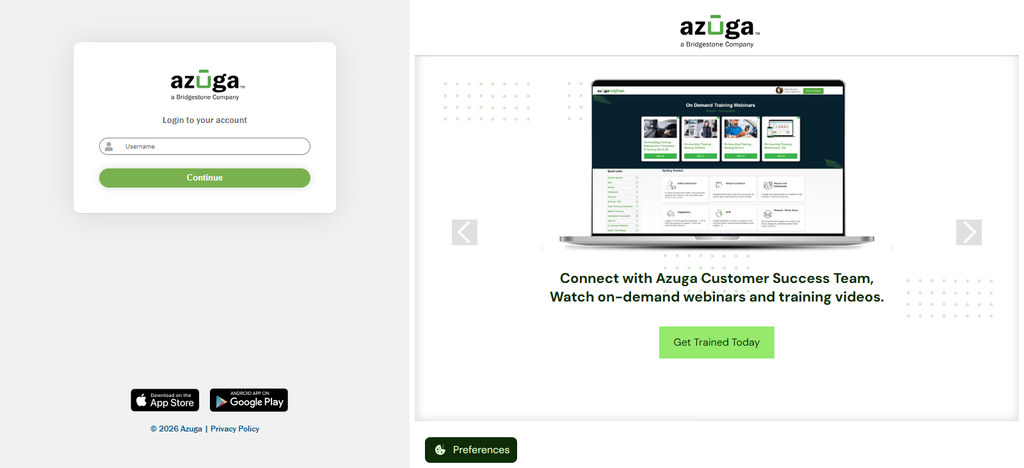
Managers can receive notifications on upcoming servicing needs and monitor vehicle-related activities using connected telematics data, with automation. Integration with GPS tracking, vehicle information and compatible fleet applications allows centralized fleet monitoring.
Its cost management capabilities allow companies to review fuel consumption, vehicle performance and operating expenses associated with maintenance. Azuga Fleet helps transportation companies monitor the condition of their vehicles, organize routine service, understand how they use their fleet and coordinate maintenance planning across commercial vehicles.
Key Features
- GPS vehicle tracking with real time fleet location visibility.
- Vehicle maintenance reminders based on mileage and service schedules.
- Recording driver behavior and reporting vehicle activity.
- Fuel consumption and utilization in fleet performance dashboards.
- Alerts based on telematics to monitor the operation and maintenance needs of the vehicles.
Benefits
- Combines GPS tracking with essential fleet management features.
- Allows transportation managers to track vehicle location and usage.
- Provides maintenance reminders for regular servicing.
- Provides driver behavior insights for improved fleet operations.
- Helps businesses recognize patterns in fuel usage and vehicle operations.
Cons
- Smaller than dedicated maintenance platforms for maintenance management.
- More sophisticated workshop and repair workflows may require additional solutions.
- Feature availability may vary by subscription packages.
- Costs for telematics hardware and installation may be added for implementation.
- Organizations with complex inventory needs might need specialized tools.
7. RTA Fleet Management
Established: 1979
RTA Fleet Management supplies maintenance software to transportation companies, government fleets and organizations with commercial vehicles. Maintenance capabilities include preventive maintenance scheduling, repair history, work orders, parts inventory, tire tracking, purchase orders and warranty management.
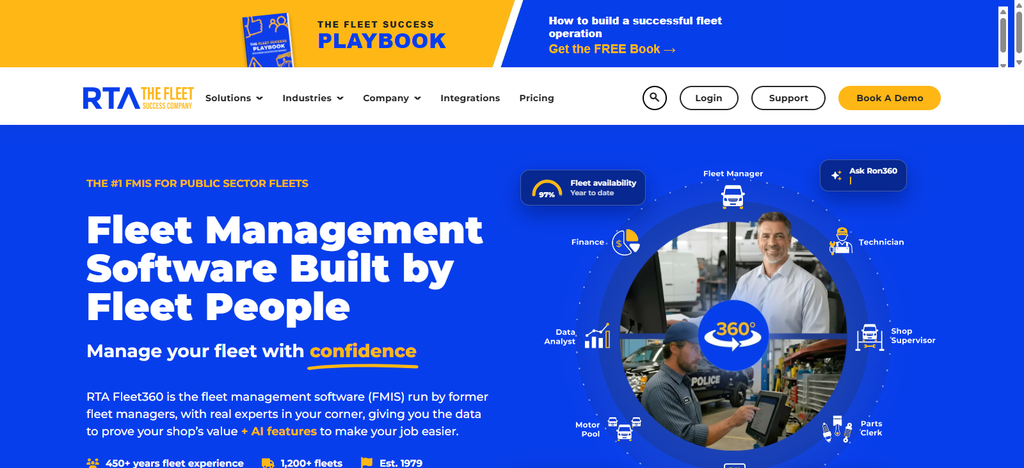
Automation allows maintenance teams to schedule service activities, monitor scheduled inspections and track repair progress. The platform integrates with telematics providers, fuel systems, accounting applications and enterprise resource planning systems.
Its capabilities in cost management include expense analysis, maintenance budgeting and vehicle replacement planning. RTA can be used by transportation businesses to synchronize workshop operations, manage vehicle availability, maintain maintenance records, and improve fleet performance across locations.
Key Features
- Schedule preventative maintenance on vehicles and equipment.
- Work order management to track repairs and technician activities.
- Parts inventory management including ordering and inventory tracking.
- Fuel management, tire tracking, and vehicle service history.”
- Fleet life-cycle management with maintenance cost and replacement reporting.
Benefits
- Offers full service maintenance for large fleets of vehicles.
- Supports detailed workshop and repair management work flows.
- Assists businesses in monitoring parts inventory and purchasing activity.
- Visibility of maintenance costs across all fleet assets.
- Centralized fleet management across multiple locations.
Cons
- Implementation may require considerable planning in larger organizations.
- It may be hard for new users to learn with so many features.
- Configuration may require assistance to align with specific business workflows.
- It may be overkill for smaller transportation companies.
- The implementation can be complex depending on integration and customization requirements.
8. AssetWorks Fleet Management
Founded The year of company’s founding should be independently verified.
AssetWorks Fleet Management offers fleet information management capabilities to organizations managing large transportation fleets and specialized vehicles. Its FleetFocus platform provides preventive maintenance scheduling, work orders, repair histories, parts inventory, fuel tracking and vehicle lifecycle management.
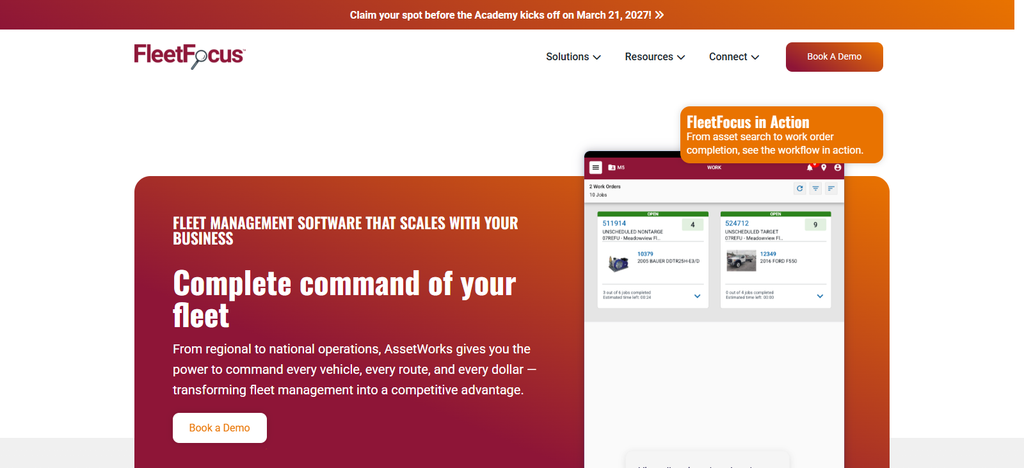
Automation helps maintenance departments organize service schedules, manage repair requests and keep consistent vehicle records. Integration capabilities link fleet information with telematics, monetary systems, fuel management and enterprise applications, depending on the configuration.
Its cost management tools allow organizations to understand the maintenance costs, replacement needs and operating costs of assets. AssetWorks enables transportation companies to connect maintenance departments, manage large vehicle inventories and obtain financial visibility across fleet operations.
Key Features
- FleetFocus maintenance management for the organization of service activities of vehicles.
- Automatic tracking of service and scheduling of preventive maintenance.
- Work order management, repair history and technician records.
- Parts inventory, purchasing and fleet fuel management.
- Vehicle life cycle analysis and reporting of maintenance costs.
Benefits
- Provides a full suite of features for managing large and complex fleets.
- Detailed support for vehicle maintenance and workshop operations.
- Helps organizations track parts, purchasing and maintenance costs.
- Provides fleet lifecycle management and replacement planning.
- Meets requirements for enterprise fleet management and reporting.
Cons
- Smaller transportation companies may not need the full range of functions.
- Implementation can be very planning and configuration intensive.
- Training may be required for teams using advanced modules.
- Customization needs can make deployment more complex.
- Pricing and implementation costs may not be readily available without a custom quote.
9. MaintainX
Established: 2018
MaintainX is a computerized maintenance management system (CMMS) that assists transportation companies with organizing equipment servicing, maintenance requests and repair activities. Maintenance features include digital work orders, preventive maintenance scheduling, asset records, parts inventory and inspection checklists.
Automation supports recurring maintenance tasks, work order assignments, notifications and maintenance workflow tracking. Its mobile-first platform lets technicians access repair guides, update job progress and record maintenance info from anywhere.
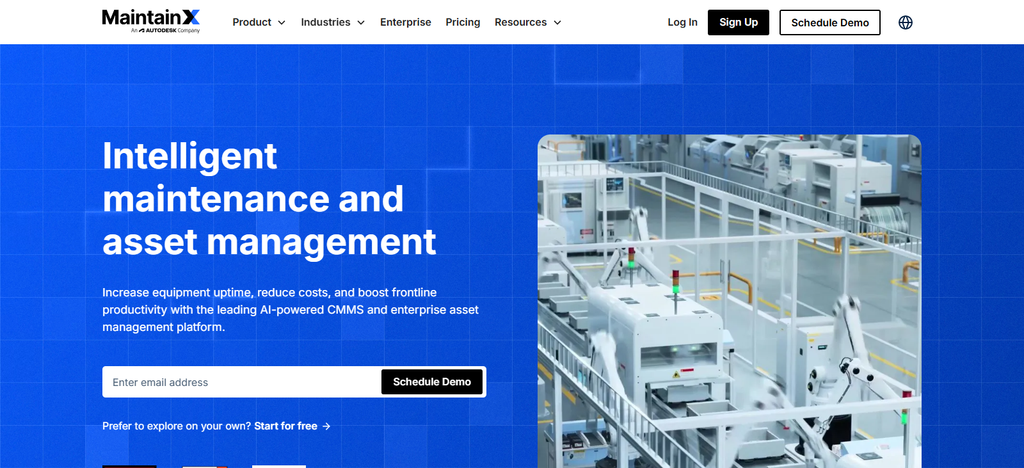
Integration capabilities connect maintenance workflows to compatible business applications and operational systems.
Maintenance histories, inventory visibility, and work order records help you manage costs more effectively. MaintainX is a platform that helps transportation businesses coordinate technicians, handle equipment related to vehicles and organize maintenance operations.
Key Features
- Schedule preventive maintenance for vehicles, equipment and operating assets.
- Digital work orders, technician assignments and repair tracking.
- Mobile inspection checklists and maintenance request management.
- Parts inventory and maintenance records.
- Automatic notifications, recurring workflows, and performance reports for maintenance.
Benefits
1.Provides a user-friendly, mobile-first maintenance management platform.
2. Allows technicians to manage repair tasks and work orders efficiently.
3. Assists in preventive maintenance planning and repetitive service activities.
4. Enhances communication between maintenance managers and technicians.
5. Supports maintenance management in multiple facilities and operational locations.
Cons
- This is a generic CMMS and not a transportation fleet specific platform.
- Advanced GPS vehicle tracking is not its main functionality.
- External integration might be required for transportation specific telematics.
- Complex fleet lifecycle management tools may be needed.
- Advanced reporting and integrations may require subscription plans.
10. AUTOsist
Founded: 2013 (please confirm the company’s founding year prior to publication.)
AUTOsist provides fleet maintenance management tools that help transportation companies track vehicle records, servicing schedules and repair documentation. It reminds you of preventive maintenance, records service history, stores digital vehicle records, performs inspections, and tracks maintenance to keep maintenance.
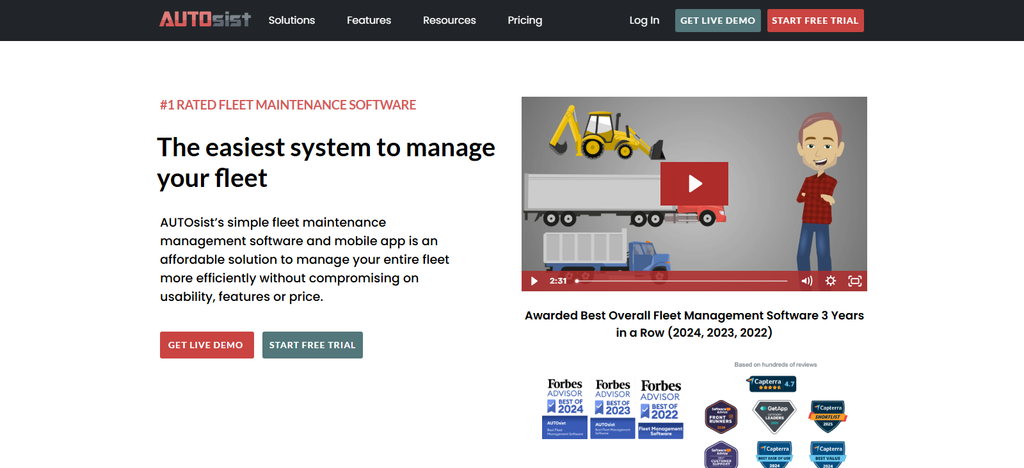
Automation helps fleet managers keep track of recurring service reminders and keep vehicle maintenance information current. Authorized users can access records and update maintenance activities via a mobile interface, reducing reliance on paper-based systems.
The ability to integrate should be evaluated against the particular plan and systems involved, especially in terms of telematics and accounting requirements. The benefits of cost management include organized repair records and visibility into maintenance expense. AUTOsist makes it easy for transportation companies to schedule servicing and keep vehicle info in one place.
Key Features
- Set up preventive maintenance reminders based on date or odometer readings.
- Digital vehicle inspections and check lists that you can customize.
- Vehicle service history and storage of documents & receipts.
- Work order management to organize vehicle repair activities.
- Maintenance records, fuel tracking and service reminders recommended by the manufacturer.
Benefits
- Provide easy tools for tracking vehicle maintenance records.
- Helps companies create servicing schedules and maintenance alerts.
- Allows inspections and digital documentation of vehicles.
- Enables mobile updating of fleet maintenance information.
- Reduces paperwork by centralizing the management of service history.
Cons
- Capabilities for advanced enterprise fleet management may be limited when compared with larger platforms.
- Complex telematics requirements may need further integrations.
- Other solutions might be necessary for advanced workshop inventory management.
- Scalability needs to be evaluated for businesses with large multi-location operations.
- Advanced reporting and integrations availability varies by subscription plan.
Conclusion
The best fleet maintenance software helps transportation companies improve vehicle reliability, schedule preventive services, control repair costs and reduce operational downtime. Fleetio, Samsara, Verizon Connect, Geotab, Motive and RTA Fleet Management are just some of the platforms that offer a variety of capabilities to manage vehicle maintenance, inspections, work orders, and fleet performance.
Before selecting a solution, businesses should compare automation features, telematics integrations, maintenance tracking, reporting capabilities, scalability and pricing. The right software should be a match for fleet size, vehicle types, maintenance needs and operational budgets, while helping transportation companies maintain vehicle availability and reach more effective fleet operations.
FAQ
What Is Fleet Maintenance Software?
Fleet maintenance software helps transportation companies manage vehicle servicing, preventive maintenance, repair schedules, inspections, work orders, service histories, and maintenance expenses through a centralized platform.
What Is the Best Fleet Maintenance Software for Transportation Companies?
Fleetio, Samsara, Verizon Connect, Geotab, Motive, and RTA Fleet Management are popular options. The best choice depends on fleet size, maintenance requirements, integrations, and budget.
How Does Fleet Maintenance Software Reduce Vehicle Downtime?
It helps businesses schedule preventive maintenance, identify vehicle defects, automate service reminders, and track repair progress, allowing maintenance teams to address problems before they cause extended downtime.
What Features Should Transportation Companies Look for in Fleet Maintenance Software?
Important features include preventive maintenance scheduling, digital inspections, work order management, vehicle diagnostics, parts inventory, maintenance cost tracking, reporting, and telematics integration.