




This article will discuss the Best AI Agents for Tracking Nonprofit Grant Opportunities that assist organizations in discovering relevant funding, determining eligible grants, monitoring application deadlines, and researching potential funders. These AI-powered tools simplify grant tracking, cut down on manual research, enhance funding decisions, and enable nonprofit teams to manage applications more efficiently, freeing them to focus on their missions and community impact.
Key Points
| AI Agent / Platform | Key Features | Main Purpose | Best For |
|---|---|---|---|
| Instrumentl | Intelligent grant matching, funder research, deadline tracking, AI application assistance, award management | Grant discovery and full-cycle tracking | Nonprofits managing multiple grant applications |
| Grantable | AI funder prospecting, proposal drafting, requirement analysis, grant pipeline tracking | AI-assisted grant research and application workflows | Nonprofits seeking an AI-first grant workspace |
| FundRobin | AI grant discovery, organization-based matching, proposal assistance, deadline reminders, pipeline tracking | End-to-end grant opportunity management | NGOs and nonprofits seeking local and international funding |
| Mavenly | AI funder intelligence, grant matching, proposal drafting, deadline automation, pipeline forecasting | Automated grant research and workflow management | Grant development teams |
| Muin | Scheduled grant scanning, funder research, eligibility checks, deadline reminders, foundation prospecting | Automated funding discovery and application tracking | Nonprofits seeking recurring grant opportunities |
| Thirtyfold | Autonomous opportunity matching, grant research, proposal drafting, follow-up automation, deadline tracking | Agent-based grant prospecting and follow-ups | Teams wanting automated grant workflows |
| OpenGrants | AI-powered grant matching, funding database, opportunity discovery, grant expert marketplace | Grant discovery and early application support | Nonprofits exploring different funding sources |
| GrantSense AI | AI grant matching, NGO eligibility checks, funding scheme discovery, proposal generation | Indian grant and CSR opportunity discovery | Indian NGOs and social enterprises |
| GrantWatch | Grant opportunity database, funding alerts, deadline tracking, AI grant-writing assistance | Grant research and opportunity monitoring | Small nonprofits and budget-conscious organizations |
| Candid | Foundation research, funder profiles, nonprofit information, AI-assisted research capabilities | Funder intelligence and funding prospect research | Nonprofits researching foundations and potential funders |
1. Instrumental
Instrumentl is an AI-powered grant discovery and management platform that helps nonprofits discover relevant funding opportunities and organize their grant pipelines. Its AI matching evaluates organizational programs, funding priorities and eligibility criteria to suggest suitable grants.
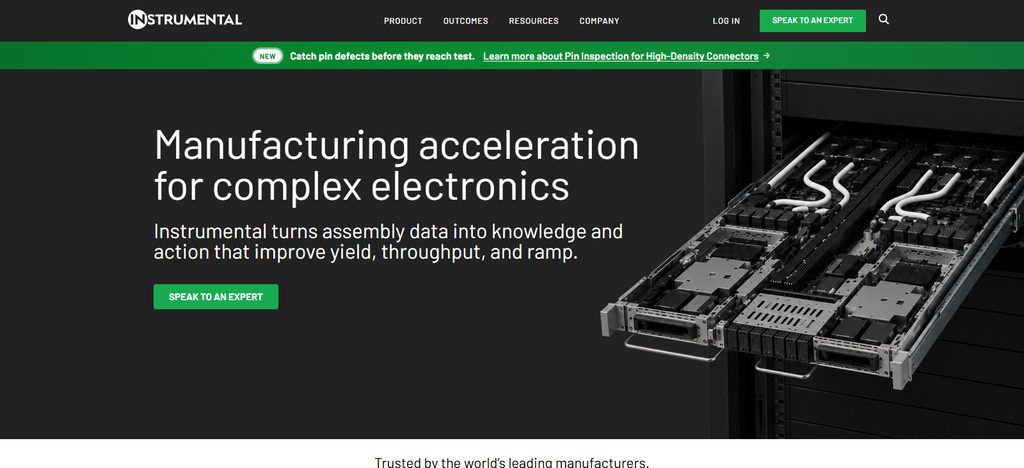
Its funding intelligence includes foundation profiles, historical giving, and active RFP research. Before applying, teams use eligibility screening to see if an opportunity fits their mission.
Automation includes saved searches, deadline reminders, application tasks and post-award tracking. Instrumentl also has integrations with CRM, accounting and calendar. Prices begin at about $299 per month with annual billing and there is a 14-day free trial.
Instrumental Best For
- Nonprofits with a high volume of grant applications
- Organizations that need smart grant matching.
- Teams tracking funding deadlines and the status of applications.
- Pros to grant research foundation giving histories.
- Nonprofits managing entire grant processes.
| Pros | Cons |
|---|---|
| Provides intelligent grant matching based on nonprofit requirements. | Subscription costs may be high for small nonprofits. |
| Offers detailed foundation and funder research. | Some advanced features require higher-tier plans. |
| Helps monitor grant deadlines and application progress. | Requires time to configure organizational profiles. |
| Supports grant pipeline and award management. | Coverage may vary by funding category and location. |
| Provides a centralized grant research workspace. | AI recommendations still require manual eligibility verification. |
2. Grantable
Grantable is an AI-powered grant research, writing and workflow platform that supports nonprofits to find and apply for funding opportunities from prospecting through proposal writing. Its AI matching analyzes organizational missions, programs, geography and funder giving history to generate relevant recommendations with explanations.

Funding intelligence is derived from foundation records, IRS filings, and public research. Eligibility screening includes AI-extracted RFP requirements and checklists for applications. Automation can help monitor scheduled funders, remind you of deadlines, draft proposals, and update your pipeline.
Grantable’s offers document imports, team collaboration and cloud integrations. The free plan has five AI messages a day; paid plans start at $50/month, with discounts for eligible nonprofits.
Grantable Best For
- Nonprofits wanting AI-powered grant research.- Groups working on grant proposals and applications.
- Organizations that research funder requirements.
- Grant writers with multiple funding opportunities.
- Nonprofits automating research and writing processes.
| Pros | Cons |
|---|---|
| Offers AI-assisted grant research and proposal writing. | AI-generated content requires human review. |
| Helps analyze funder requirements and application documents. | Advanced usage may require paid subscriptions. |
| Supports collaborative grant-writing workflows. | Not every grant opportunity will match organizational needs. |
| Helps organize funding research and proposals. | Requires accurate organizational information for better results. |
| Offers a free plan for initial use. | Daily AI message limits apply to the free plan. |
3. FundRobin
FundRobin is an AI-powered grant management platform to help non-profits find funding opportunities, assess eligibility and prepare grant proposals. The intelligent matching compares organizational information to funding requirements, including geography, mission fit, deadlines, award amounts and organization type.
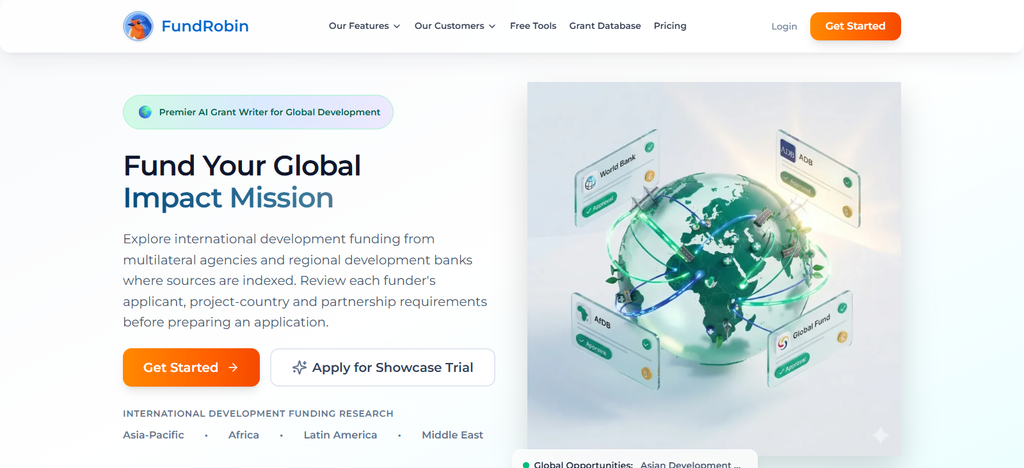
Opportunity research is informed by aggregating data from government programs and foundation databases, including Funding Intelligence. Its AI eligibility scoring helps teams focus on the most relevant grants before they start spending time on applications.
Automation includes proposal generation, opportunity tracking, funding pipeline analytics and team collaboration. Organizations with specific needs can request custom integrations. Growth is £49 + VAT per month and Impact is £199 + VAT per month.
FundRobin Best For
- NGOs looking for relevant funding opportunities.
- Nonprofits in need of AI-powered grant matching.
- Teams working effectively on grant applications.
- Organizations that follow the path of grant applications.
- Nonprofits seeking government and foundation funding.
| Pros | Cons |
|---|---|
| Helps nonprofits discover relevant funding opportunities. | Funding coverage may vary by geographic region. |
| Provides AI-assisted grant matching. | Recommendations require manual eligibility checks. |
| Supports grant proposal preparation. | Proposal outputs may need substantial editing. |
| Offers grant pipeline management capabilities. | Smaller organizations may find advanced plans expensive. |
| Supports funding research and team workflows. | Integration availability should be checked before subscribing. |
4. Mavenly
Mavenly is an AI-native grant funding platform that helps nonprofits with grant discovery, funder intelligence, proposal writing and application management. Its AI matches opportunities based on organizational mission, geography, and capacity, and its funding intelligence looks at historical giving, funder priorities, and award patterns.
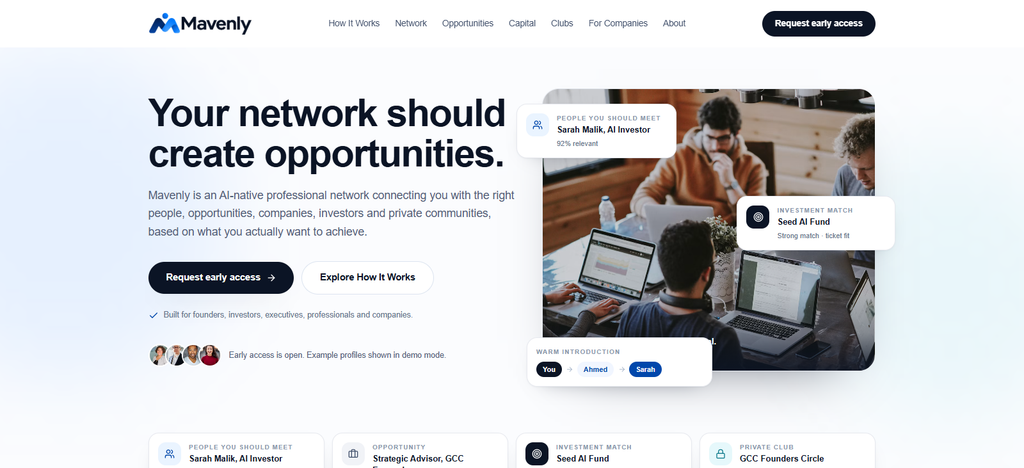
Eligibility screening includes go/no-go determinations on organizational requirements, project suitability, staff capacity, matching funds, and compliance risks. Automation helps you discover opportunities on a schedule, reminds you of deadlines, forecasts your pipeline, classifies documents, and reports on them.
Integrations include Google Workspace, Microsoft 365, Slack, Zapier, Make, Salesforce, and HubSpot depending on the plan. Plans start at $49/month, with enterprise options available.
Mavenly Best For
- Nonprofit grant opportunity discovery automation.
- Provide research support for development teams seeking potential funders.
- Entities assessing qualifications and needs for grants.
- Funding pipeline and deadline teams.
- Departments that coordinate research grants across non-profits.
| Pros | Cons |
|---|---|
| Combines grant discovery with AI-powered research. | Advanced features may require higher subscription plans. |
| Helps evaluate funding eligibility and organizational fit. | AI-generated eligibility assessments are not guarantees. |
| Supports deadline monitoring and pipeline forecasting. | Requires accurate organizational and project information. |
| Offers multiple workflow integration options. | Setup can be complex for smaller teams. |
| Supports automated grant research processes. | Some integrations may require additional configuration. |
5. Muin (The Hanged Man)
Muin is an AI-powered grant discovery and management platform that helps nonprofits find funding opportunities, research funders and track application progress. Its AI matching takes into account organizational profiles, mission, service areas and past funding fit. Funding intelligence uses IRS Form 990 and 990-PF data to reveal past giving, typical grant sizes and past recipients.

Eligibility Screening Checks include: IRS status, annual filings, SAM.gov registration, and state charity registration. Automation is available for scheduled grant scanning, anticipated funding-cycle monitoring, email notifications, and deadline reminders. Muin also supports importing trackers from CSV and Excel. The free plan allows tracking five grants; paid plans begin at $39/mo.
Muin (The Hanged Man) Best For
- Nonprofits seeking automated grant scanning
- Organizations tracking repeat funding opportunities.- teams reviewing foundation giving histories
- NGOs monitoring eligibility and registration requirements.
- Small nonprofits running grant deadlines.
| Pros | Cons |
|---|---|
| Automates recurring grant opportunity searches. | Free-plan tracking is limited. |
| Uses historical foundation giving information. | Historical funding does not guarantee future awards. |
| Helps identify potentially relevant funding opportunities. | Some eligibility requirements require manual verification. |
| Supports deadline notifications and grant monitoring. | Database coverage may differ across regions. |
| Offers spreadsheet and tracker import capabilities. | Advanced workflows may require a paid subscription. |
6. Thirtyfold
Thirtyfold is an autonomous AI platform that discovers grants and prepares applications, eliminating the manual funding research for nonprofits. The AI matching looks at your organization’s information, its focus areas and its geography to find applicable funding opportunities.
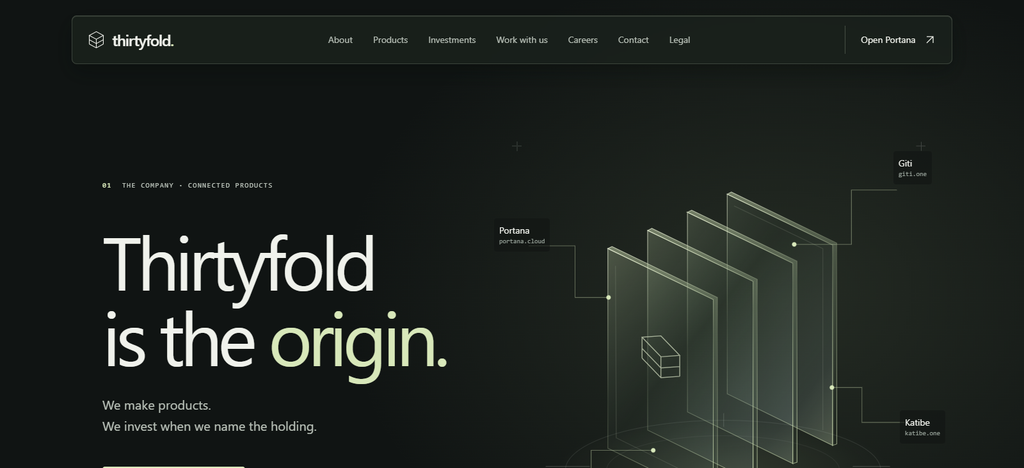
Funding intelligence allows teams to research grant providers and understand available opportunities before applying. Its screening workflow includes a review of potential matches before preparing an application, and human approval remains part of the submission process.
Automation includes grant discovery, proposal writing, deadline tracking, follow-up activities and pipeline management. The platform also includes funder CRM and application tracking. Discover starts at $29 per month, Grow at $79 per month and Pro at $149 per month. It includes a seven-day free trial.
Thirtyfold Best For
- Nonprofits that are automating grant prospect research.
- Teams interested in AI-aided proposal preparation.
- Multiple funding applications from one organization.
- Automate grant professional follow-up activities.
- Nonprofits are always tracking funding opportunities.
| Pros | Cons |
|---|---|
| Supports automated grant opportunity discovery. | AI-generated proposals require human review. |
| Helps reduce manual grant research work. | Autonomous workflows may need initial configuration. |
| Offers proposal drafting and follow-up automation. | Complex applications still require staff involvement. |
| Provides funder CRM and application tracking. | Pricing increases with advanced capabilities. |
| Offers multiple subscription options. | Funding recommendations are not guaranteed matches. |
7. OpenGrants
OpenGrants is an AI-powered grant discovery and tracking platform that helps nonprofits discover government, foundation, state and local funding opportunities. The AI matching examines organizational profiles and ranks opportunities by eligibility, geography and program fit, providing rationales for suggested grants.
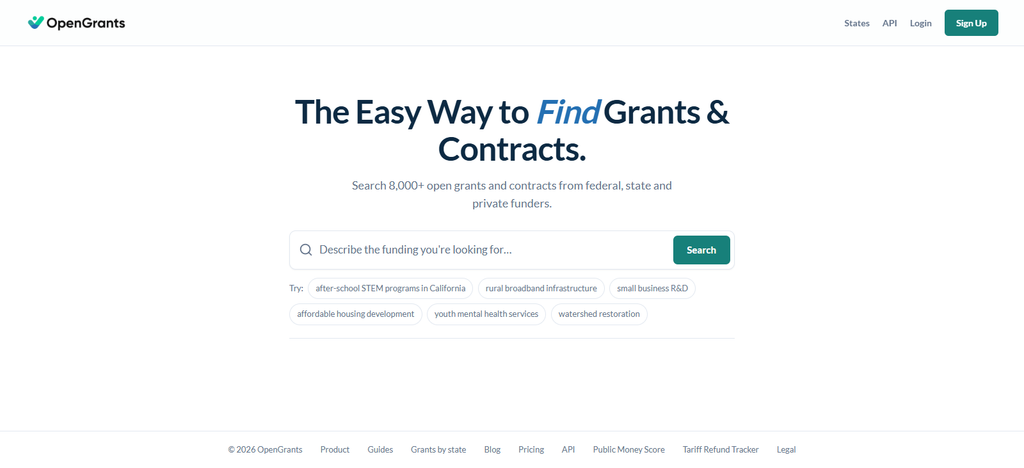
Funding intelligence is searchable grant and funder information from many funding sources. Eligibility screening helps to identify any possible gaps before organizations spend time on applications.
Automation allows for daily or weekly funding alerts, saved searches, deadline reminders and pipeline management It also provides API access and an MCP server to link grant data with AI tools. Pro pricing starts at $9/month; seven-day free trial.
OpenGrants Best For
- Organizations in need of AI-powered funding recommendations.
- Teams that monitor state and local funding programs.
- Researchers looking at different sources of funding.
- Nonprofits that utilize API integrations for grant data.
| Pros | Cons |
|---|---|
| Provides access to multiple grant funding categories. | Opportunity coverage varies by funding source. |
| Offers AI-assisted grant matching and recommendations. | Some recommendations may require additional research. |
| Supports daily and weekly funding alerts. | Advanced capabilities may require a paid plan. |
| Provides API and MCP connectivity options. | Technical integrations may require developer support. |
| Offers a relatively affordable Pro subscription. | Not every opportunity includes complete application information. |
8. GrantSense AI
GrantSense AI is an AI enabled grant discovery and proposal writing platform for NGOs and nonprofit organizations in India. Its AI matching looks at an organization’s sector, state, activities and registrations like DARPAN, FCRA, 12A, 80G to locate potentially relevant funding schemes.
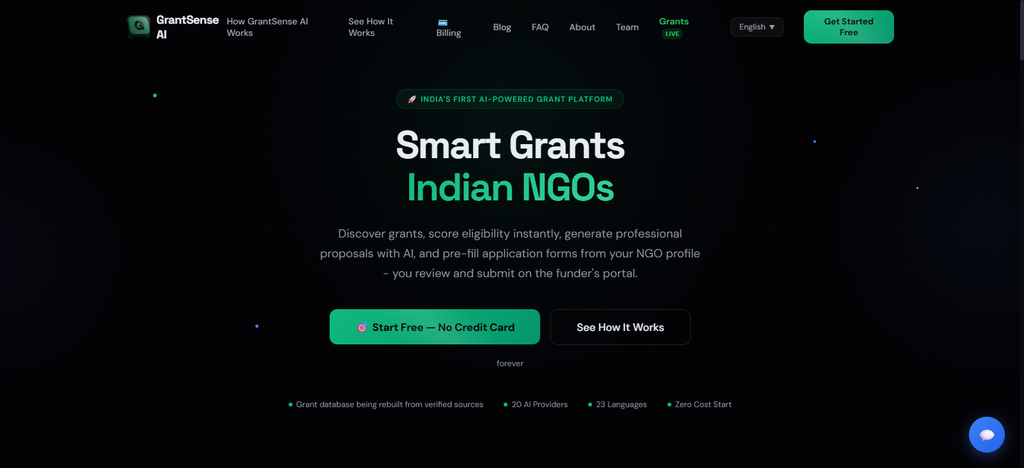
Funding intelligence comprises government ministries, state programs, CSR foundations and international funding opportunities. Eligibility screening helps organizations determine registration and program requirements prior to application.
Automation – from searching for grants and checking eligibility to AI-assisted proposal writing. This platform is more about Indian nonprofit funding needs, not for general international grant management. It has 3 grant searches per day in its free plan. Pro starts at ₹399/month.
GrantSense AI Best For
- Indian NGOs asking for government grants.
- Nonprofits looking to fund CSR opportunities.
- Organizations checking the requirements for NGO registration.
- Teams developing AI-assisted grant proposals.
- Funding schemes explored by Social Enterprises in India.
| Pros | Cons |
|---|---|
| Focuses on Indian NGO funding opportunities. | Primarily suited to organizations seeking Indian funding. |
| Supports AI-assisted grant discovery. | International funding coverage may be limited. |
| Helps identify government and CSR opportunities. | Grant eligibility should be verified with funders. |
| Supports AI-assisted proposal generation. | Generated proposals may need professional editing. |
| Offers an affordable entry-level subscription. | Advanced research capabilities may require paid access. |
9. Grant Watch
GrantWatch is a grant discovery & research platform that helps nonprofits find funding opportunities from government agencies, foundations, charities, and other funders. It has a searchable database of daily updated, human verified grant listings.
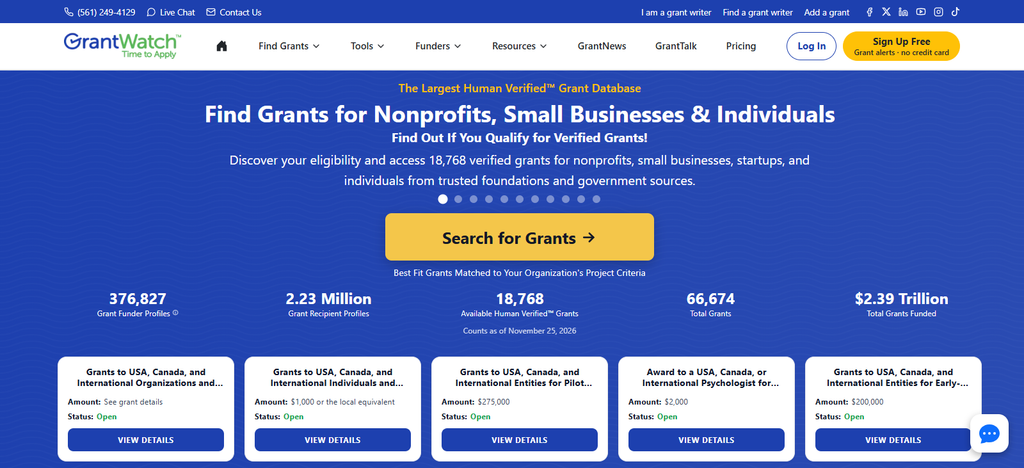
With funding intelligence, users can see opportunity descriptions, funding categories, deadlines, and application requirements. GrantWatch Intelligence, its AI-assisted research capabilities and its grant-writing resources for application preparation.
The eligibility screening is mainly based on review of individual grant requirements, and not on fully automated organizational verification. Automation provides access to new listings and research on opportunities. Its MemberPlus+ subscriptions are $22 weekly, $49 monthly or $249 annually.
Grant Watch Best For
- Small nonprofits researching grant opportunities.
- Organizations tracking newly released grant listings.
- Teams seeking funding from government and private foundations.
- Nonprofits that follow application deadlines.
- Provide researchers with access to classified funding databases.
| Pros | Cons |
|---|---|
| Provides a searchable grant opportunity database. | Full access requires a paid membership. |
| Covers government and private foundation grants. | Listings require individual eligibility review. |
| Offers frequently updated funding opportunities. | Database relevance varies by location and category. |
| Supports grant research and deadline monitoring. | It is less focused on autonomous AI workflows. |
| Provides categorized grant listings. | Some opportunities may have restricted application access. |
10. Candid Fundraising Assistant
Candid Fundraising Assistant is an AI-powered research tool that helps nonprofit fundraisers discover potential foundation funders and relevant grant opportunities. The AI matching suggests potential prospects, with explanations, based on nonprofit information, foundation records, and funding history.
Funding intelligence offers grantmaker profiles, grants made, grants received, and historical giving patterns. Eligibility research gives organizations the ability to see funder guidelines, application requirements and help for similar nonprofits.
Features include saved searches, personalized dashboards, prospect lists, and AI-assisted letters of inquiry. Candid also has a Claude connector and enterprise API options. It has a limited free plan, and its Premium plan starts at $100 per month (billed annually)when.
Candid Fundraising Assistant Best For
- Nonprofits looking at private foundations.
- Study of historical foundation by fundraisers.
- Identification of institutional potential funders by organizations.
- Allow grant professionals to create funder prospect lists.
- Research by nonprofits on the funding priorities of foundations.
| Pros | Cons |
|---|---|
| Provides detailed foundation and funder research. | Premium research tools can be expensive. |
| Helps analyze historical foundation giving patterns. | Historical funding does not guarantee future funding. |
| Supports nonprofit prospect research. | Primarily focuses on funder intelligence rather than full grant automation. |
| Offers AI-assisted fundraising research capabilities. | Some advanced features require eligible subscriptions. |
| Provides extensive nonprofit and foundation information. | Users may need additional tools for deadline management and application tracking. |
Conclusion
AI agents are simplifying grant tracking for nonprofits by streamlining funding discovery, eligibility screening, funder research and deadline monitoring.
Platforms like Instrumentl, Grantable, FundRobin, Mavenly and Muin help organizations find relevant opportunities and manage their grant application workflows. Additional funding research and funder intelligence capabilities are available through tools such as OpenGrants, GrantWatch and Candid.
Nonprofits should consider grant database coverage, AI matching accuracy, automation features, integrations, and pricing when choosing a platform. The right solution can save time on manual research, increase funding opportunities and allow nonprofit teams to run their grant activities more efficiently.
FAQ
What Are AI Agents for Tracking Grant Opportunities for Nonprofits?
AI agents for tracking grant opportunities are software tools that help nonprofits discover funding programs, identify eligible grants, research funders, monitor deadlines, and organize grant applications using artificial intelligence.
How Do AI Agents Find Grant Opportunities for Nonprofits?
These tools analyze nonprofit missions, locations, project details, and eligibility requirements to identify relevant funding opportunities from government agencies, private foundations, corporations, and other grant providers.
Which Is the Best AI Agent for Tracking Nonprofit Grant Opportunities?
Instrumentl is a strong option for grant discovery, funder research, and application tracking. Grantable is useful for AI-assisted research and proposal workflows, while Muin focuses on automated grant discovery.
Can AI Agents Automatically Check Nonprofit Grant Eligibility?
Yes. Some AI platforms analyze organizational status, location, mission, project requirements, and funding restrictions. However, nonprofits should manually verify eligibility against the official grant guidelines before applying.