



This article will cover the Best AI Agents for Multi-Channel Payment Reconciliation. These AI Agents help businesses automate transaction matching, track refunds, identify payment discrepancies, and manage settlements across multiple sales channels. We will go over their important features, integration possibilities, level of automation, pros and cons and suitability to help businesses choose the right reconciliation solution.
What Is AI Agents for Multi-Channel Payment Reconciliation?
AI agents for multi-channel payment reconciliation are intelligent software systems that automatically collect, compare, verify and match financial transactions from multiple sales channels, payment gateways, marketplaces, banks and accounting platforms. They use AI, machine learning and automated workflows to reconcile customer payments to orders, invoices, refunds, fees and bank settlements.
They can also identify payments that are missing, transactions that are duplicated, amounts that are incorrect, chargebacks and settlement discrepancies that require investigation.
AI agents help businesses to connect different financial platforms, maintain accurate records of payments, reduce manual accounting tasks, improve visibility of real-time transactions, and streamline financial reporting. They are especially valuable for ecommerce companies, online marketplaces, retailers and enterprises that manage payments across multiple sales channels.
Key Points
| AI Agent Platform | Primary Reconciliation Focus |
|---|---|
| HighRadius Agentic AI | Account & payment reconciliation |
| BlackLine Verity | Financial close & transaction matching |
| Trintech AI Platform | Enterprise reconciliation automation |
| FloQast AI | Close management & reconciliations |
| Numeric AI | Variance analysis & reconciliation |
| Vic.ai | AP and payment reconciliation |
| Tipalti AI Agents | Payment operations & reporting |
| Ledge | Real-time transaction matching |
| Bluecopa | Multi-workflow reconciliation |
| Ramp Finance Agents | Spend and payment monitoring |
1. HighRadius Agentic AI
HighRadius Agentic AI enables finance teams to automate complex reconciliation processes by linking financial transactions, payment records, invoices and bank statements across multiple business channels. Its capabilities are focused on transaction mismatch detection, reduction of manual verification and improved financial close workflows.
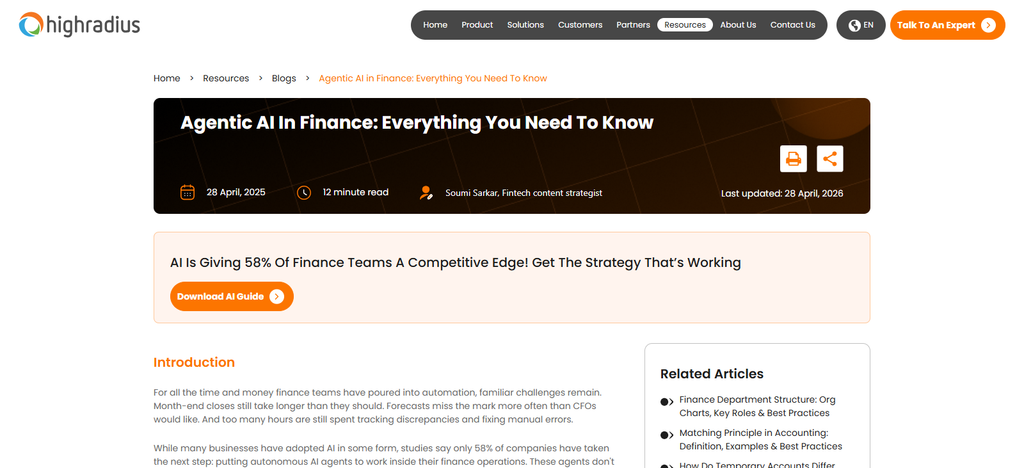
Multi-Channel Integration: Companies can assess how well the platform integrates with payment gateways, ERP systems, and accounting systems. It has AI Transaction Matching that compares transaction records and identifies discrepancies that need to be investigated. Where available, refund and chargeback tracking can be handled through linked financial workflows.
Real-Time Monitoring helps finance teams stay on top of reconciliation activities, while Bank & ERP Integration helps consolidate financial data and more consistent reporting across business operations.
Best For HighRadius Agentic AI
- Large organizations that are managing complex financial reconciliation work flows.- High transaction volume teams in finance.
- Companies looking for accounting automation with AI capabilities.
- Organizations that maximize their financial close and reporting processes.- Companies that need integrated enterprise financial management;
| Pros | Cons |
|---|---|
| Supports complex enterprise finance automation workflows. | Implementation may require significant planning. |
| Helps streamline reconciliation and financial close activities. | Advanced features may require specialized configuration. |
| Supports financial data management across business systems. | May be more suitable for larger organizations. |
| Reduces repetitive manual finance tasks. | Pricing may not suit smaller businesses. |
2. BlackLine Verity
BlackLine Verity provides AI-powered financial operations and accounting automation and reconciliation workflows for enterprise finance teams. This is especially true for organizations that process high volumes of transactions across multiple business units, payment sources and monetary systems. Evaluate its Multi-Channel Integration capabilities with available connectors and enterprise data integrations.
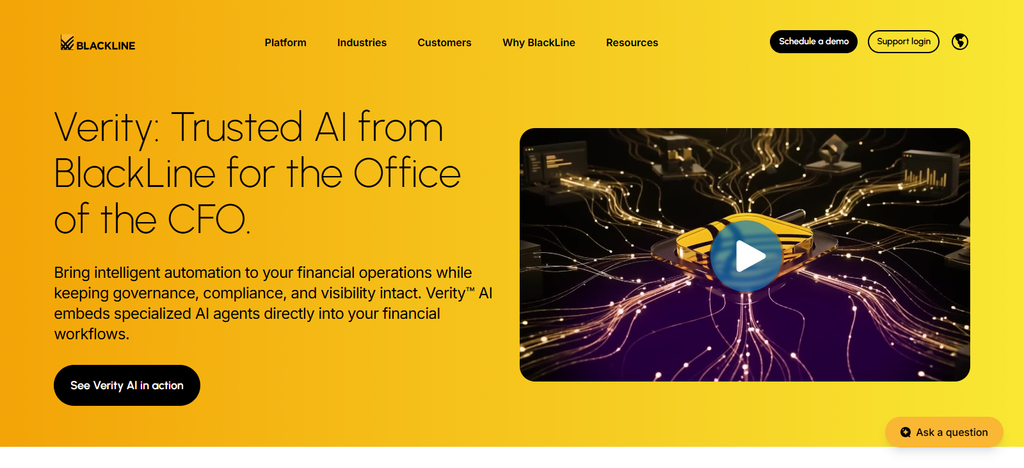
AI Transaction Matching helps you compare financial records, identify unmatched entries and reduce your repetitive reconciliation work. Connected transaction records and accounting workflows help finance teams keep track of related adjustments for Refund & Chargeback Tracking.
Real-time Monitoring gives you better visibility on the reconciliation tasks that are still pending. Bank & ERP Integration allows integrations with enterprise systems of finance, helping companies stay organized and have better financial controls.
Best For BlackLine Verity
- Big companies with complex accounting operations.
- Enterprises that require automated account reconciliation.
- Finance teams managing more than one business entity.
- Companies looking for improved financial control and audit visibility.
- Organizations optimizing month-end and year-end closings.
| Pros | Cons |
|---|---|
| Strong focus on enterprise accounting automation. | May involve a complex implementation process. |
| Supports account reconciliation and financial close management. | Requires proper workflow configuration. |
| Helps improve financial controls and audit visibility. | May be expensive for smaller finance teams. |
| Suitable for complex multi-entity accounting environments. | Users may need training to use advanced features. |
3. Trintech AI Platform
The Trintech AI Platform is designed to automate the financial close process, match transactions, reconcile accounts and manage financial controls. It helps companies automate the reconciliation activities for bank statements, payment records, general ledger entries and supporting financial documents.
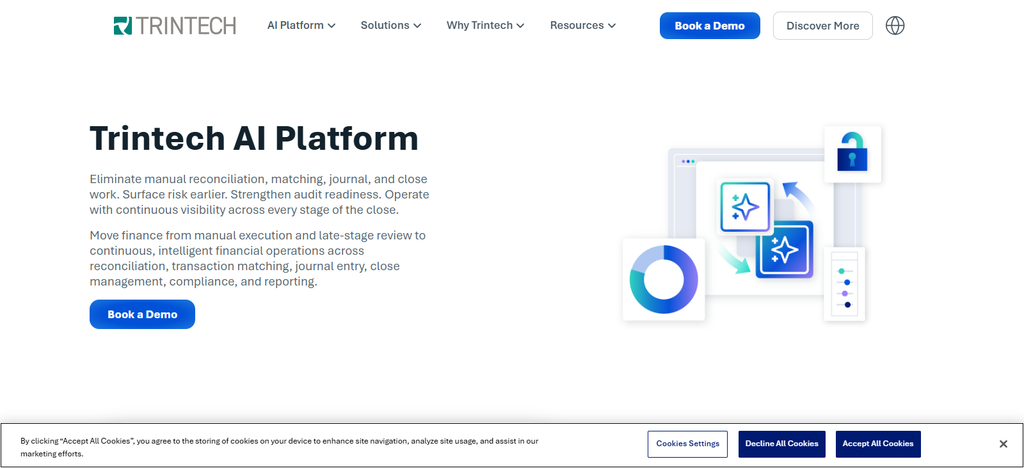
It is especially helpful when considering its Multi-Channel Integration potential for companies that combine information from different payment processors, banking systems and enterprise applications. AI Transaction Matching helps finance professionals to identify matching entries and investigate unmatched transactions.
Businesses may also create refund and chargeback related adjustments in their reconciliation processes. Real-Time Monitoring lets you monitor reconciliation progress and unresolved exceptions. Bank & ERP Integration connects financial information to enterprise accounting environments, enhancing reporting efficiency and month-end closing.
Best For Trintech AI Platform**
- Companies that handle high volume financial transactions.
- Accounting teams automating reconciliation processes
- Companies needing financial close management.
- Organizations enhancing transaction matching and exception management.
- Companies in need of standardized accounting procedures.
| Pros | Cons |
|---|---|
| Supports financial close and reconciliation workflows. | Initial setup may require technical assistance. |
| Helps manage high-volume accounting activities. | Advanced capabilities may require additional configuration. |
| Improves visibility into financial processes. | May be complex for smaller organizations. |
| Supports structured financial controls and reporting. | Pricing may depend on enterprise requirements. |
4. FloQast AI
FloQast AI helps accounting and finance teams get the most out of their reconciliation workflows, financial close and accounting task management. It gives organizations better visibility into account balances, supporting documents, transaction history and outstanding reconciliations.
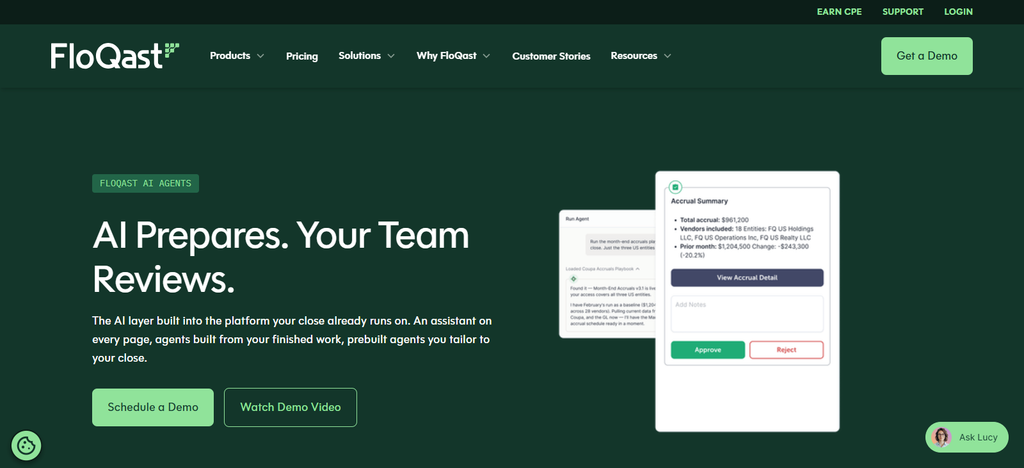
Multi-Channel Integration allows a business to assess how its accounting integrations can handle financial information from multiple payment channels and operational systems. Its AI Transaction Matching and accounting automation capabilities can help to cut down on repetitive work and improve review processes.
Where supported refunds and chargebacks can be tracked in connected accounting records. Real-Time Monitoring offers visibility into close activities and Bank & ERP Integration enables finance teams to coordinate financial information across their existing accounting infrastructure.
Best For FloQast AI**
- Medium companies handling accounting operations.
-Accounting teams simplifying month end close. - Finance departments are automating reconciliations.
- More effective businesses collaborating on financial workflows.
- Organizations who want more visibility and documentation of accounting.
| Pros | Cons |
|---|---|
| Simplifies accounting close management. | Not primarily designed as a dedicated payment gateway reconciliation platform. |
| Supports accounting workflow collaboration. | Advanced functionality may require compatible integrations. |
| Helps organize reconciliation documentation. | Enterprise-level requirements may need additional tools. |
| Improves visibility into accounting tasks. | May be less suitable for complex payment operations. |
5. Numeric AI
Numeric AI focuses on accounting automation, financial close workflows, reconciliation support and visibility into financial data. It helps finance teams to organize transaction data, audit account balances and identify discrepancies that need attention.
Its value is in Multi-Channel Integration by linking accounting data and financial records across supported business applications. AI Transaction Matching and automated accounting workflows can lessen the manual effort of reconciling financial transactions.
When choosing a platform, businesses should consider if it has the right payment and accounting integrations, particularly regarding Refund & Chargeback Tracking.
Best For Numeric AI
- businesses to improve account reconciliation procedures
- Accounting departments are eliminating manual data entry.
- Expanding companies updating their accounting processes.
- Finance teams automating the financial close process.
- Companies looking for greater insight into their financial reporting.
| Pros | Cons |
|---|---|
| Supports modern accounting and close automation. | May require existing accounting system integrations. |
| Helps reduce repetitive finance activities. | Specialized payment-channel coverage needs verification. |
| Provides visibility into financial workflows. | Some advanced workflows may need configuration. |
| Useful for growing finance teams. | May not cover every complex reconciliation requirement natively. |
6. Vic.ai
Vic.ai uses artificial intelligence to automate finance and accounting processes like invoice processing, accounts payable workflows and financial data. Real-Time Monitoring provides insight into the accounting workflow, while Bank & ERP Integration merges financial information and maintains consistent records throughout your business.
Its capabilities are of interest to companies looking to cut down on manual document processing and improve the accuracy of their financial records. Multi-Channel Integration – Organizations need to evaluate the adequacy of existing accounting and ERP integrations with their payment processing ecosystem.
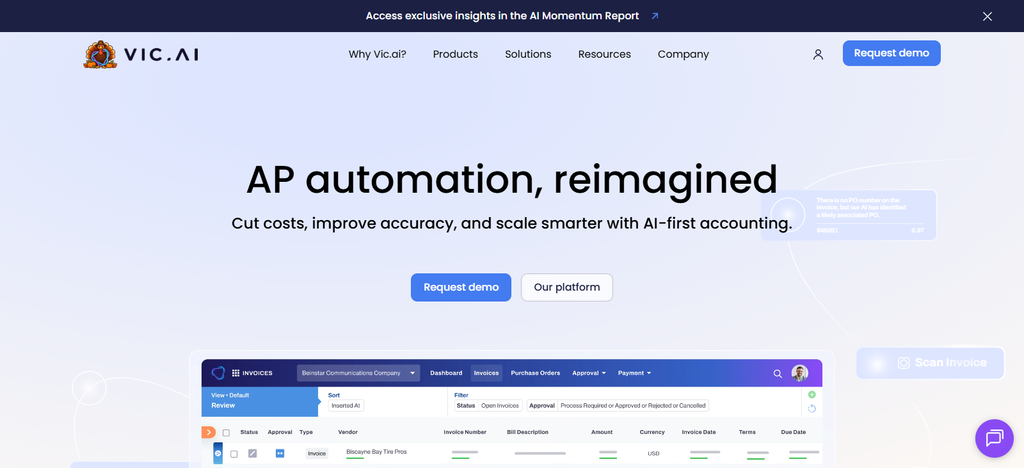
The AI-driven document comprehension can assist with transaction verification by extracting and comparing relevant financial information. The evaluation of AI Transaction Matching needs to be evaluated against the specific reconciliation workflows required by the business.
Connected payment systems may be needed to monitor refunds and chargebacks. Real-Time Monitoring of processing workflows and Bank & ERP Integration can help to improve financial coordination and accounting efficiency.
Best For Vic.ai
- Firms automating accounts payable functions.
- Companies with a large number of invoices.
- Invoice data accuracy improves for finance teams.
- Organizations automating their supplier payment processes.
- Businesses automating manual accounting and document handling tasks.
| Pros | Cons |
|---|---|
| Uses AI to automate invoice processing. | Primarily focused on accounts payable workflows. |
| Helps reduce manual invoice data entry. | Not a complete multi-channel payment reconciliation solution. |
| Supports accounting workflow automation. | Payment gateway coverage may be limited. |
| Helps finance teams manage document-heavy processes. | Advanced integrations may require additional setup. |
7. Tipalti AI-Agents
Tipalti AI Agents are applicable to businesses handling supplier payments, global payouts, accounts payable and financial operations across several payment channels. The platform supports payment workflows with different currencies, vendors and international financial requirements.
Its Multi-Channel Integration capabilities help businesses connect payment operations to accounting and enterprise systems based on the available integrations. AI Transaction Matching can support financial verification and reconciliation workflows such as supplier invoices, payment records and payout information.
Connected workflows allow businesses to test how it handles refunds, failed payments and payment adjustments. Real-Time Monitoring keeps finance teams informed about payment operations and Bank & ERP Integration harmonizes financial data for improved payment management.
Best For Tipalti AI Agents
- Companies that pay suppliers worldwide.
- Companies with international payment activities.
- Finance teams automating accounts payable processes.
- Multi-currency and payment options for businesses.
- Companies that are streamlining their vendor payments and financials.
| Pros | Cons |
|---|---|
| Supports global supplier payment operations. | May be more focused on accounts payable than marketplace reconciliation. |
| Helps manage international payment workflows. | Pricing may be less suitable for small businesses. |
| Supports multiple currencies and payment methods. | Implementation can require operational planning. |
| Connects payment operations with financial workflows. | Some reconciliation requirements may need additional integrations. |
8. Ledge
Ledge specializes in automating financial data and reconciling payments for companies with complicated transaction environments. This is especially true for companies that need to merge payment information from multiple processors, banking partners, and financial applications.
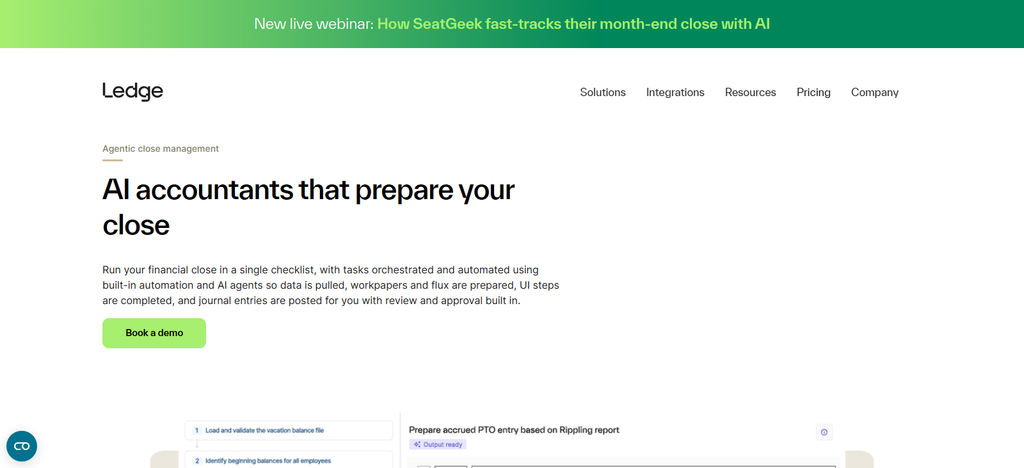
Its Multi-Channel Integration helps organize data from multiple payment sources into centralized reconciliation workflows. AI Transaction Matching can help identify matching transactions, investigate discrepancies and reduce manual matching work.
Businesses can check its support for ** Refund & Chargeback Tracking **, such as payment reversals, adjustments, and unmatched refund records . Real-Time Monitoring supports finance teams to monitor the status of reconciliations and detect any unresolved exceptions. Bank & ERP Integration supports to make financial operations more connected and reporting more consistent.
Best For Ledge
- Companies with complex payment reconciliation procedures
- E-commerce businesses aggregating payment data.
- Finance teams reconciling transactions between payment providers.
- Organizations that find missing and unmatched transactions.
- Companies looking for automated reconciliation of financial data
| Pros | Cons |
|---|---|
| Focuses on payment data reconciliation. | Integration coverage should be checked for each payment provider. |
| Helps consolidate financial transaction information. | Complex workflows may require customization. |
| Supports automated transaction matching processes. | Pricing may depend on transaction volume and requirements. |
| Useful for businesses managing multiple payment sources. | Advanced reporting needs should be evaluated before selection. |
9. Bluecopa
Bluecopa offers finance automation and reconciliation features that seek to help businesses handle complex financial transactions and improve accounting efficiency. Its platform is appropriate for organizations with high payment volumes, multiple accounting systems, and detailed reconciliation needs.
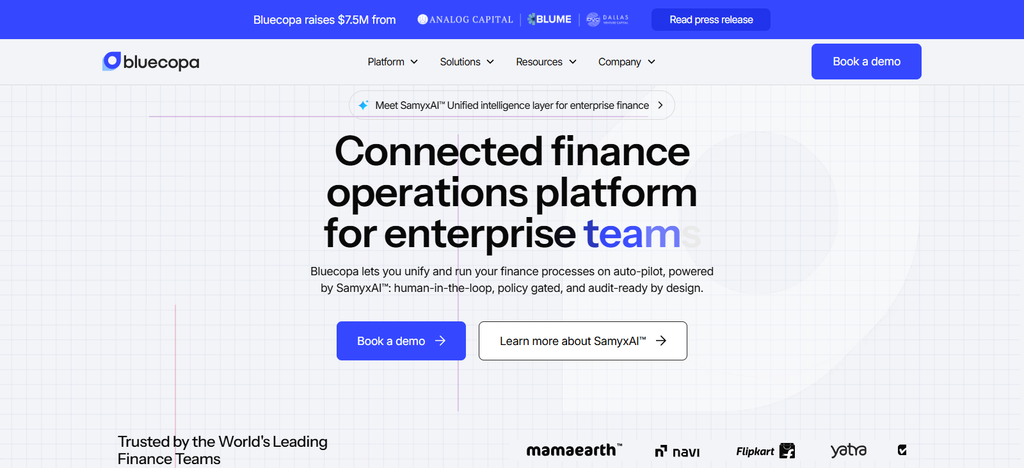
Multi-Channel Integration enables businesses to aggregate transaction data from supported payment gateways, banking systems and enterprise applications. AI Transaction Matching helps you compare financial records and identify discrepancies that require further investigation.
Refund & Chargeback Tracking helps review payment adjustments and transaction reversals via linked data workflows. Real-Time Monitoring provides greater visibility into reconciliation activities and Bank & ERP Integration allows finance teams to synchronize financial information and simplify reporting across business operations.
Best For Bluecopa
- Businesses that handle a lot of financial transactions.
- Companies that automate reconciliation and financial operations.
- Finance teams that handle multiple sources of payment.
- Organizations increasing the visibility and accuracy of transactions.
- Companies improving their financial reporting and controls.
| Pros | Cons |
|---|---|
| Supports finance automation and reconciliation workflows. | Implementation may require integration planning. |
| Helps manage high-volume financial transactions. | Advanced features may need configuration. |
| Improves visibility into financial operations. | Pricing may vary by business requirements. |
| Supports centralized financial data management. | Smaller businesses may not need its full capabilities. |
10. Ramp Financial Agents
Ramp Finance Agents automate financial operations, expense management, accounting workflows, and other finance activities related to transactions. They are especially useful for companies that want to reduce manual finance work and get better visibility into company spending.
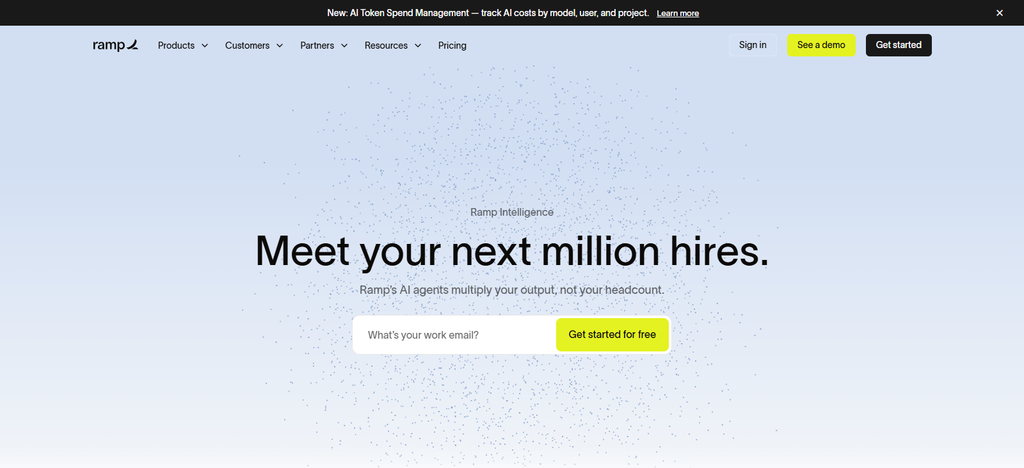
Multi-Channel Integration – Businesses should assess the supported accounting integrations and financial connections based on their payment infrastructure. AI Transaction Matching and automated transaction categorization can help you streamline your financial records and remove repetitive accounting tasks.
Supported card and payment flows let you monitor transactions related to refunds and chargebacks. With Real-Time Monitoring, finance teams can track spending and transaction activity. Bank & ERP Integration assists in linking financial accounts and accounting systems for a more centralized approach to financial management
Best For Agents of Ramp Finance
- Automating financial operations for small and medium businesses.
- Companies that deal with corporate spending and expenses.
- Finance teams enhancing transaction categorization.
– Financial activities integrated into the accounting workflow for business. - Organizations looking to centralize expense and financial management.
| Pros | Cons |
|---|---|
| Supports automated finance and expense workflows. | More focused on business finance than marketplace settlement reconciliation. |
| Helps organize transaction and spending information. | Advanced capabilities may depend on available integrations. |
| Supports accounting workflow automation. | May not cover every external payment channel natively. |
| Useful for centralized expense management. | Availability and functionality can vary by plan and configuration. |
Conclusion
The best AI agents for multi-channel payment reconciliation can simplify financial operations for businesses, cut down on manual accounting work and improve transaction accuracy. Other platforms providing different types of financial automation and reconciliation are HighRadius Agentic AI, BlackLine Verity,
Trintech AI Platform, FloQast AI, Numeric AI, Vic.ai, Tipalti AI Agents, Ledge, Bluecopa, and Ramp Finance Agents. Businesses should compare multi-channel integrations,
AI transaction matching, refund and chargeback tracking, real-time monitoring and bank and ERP connectivity before making a decision. The right solution can improve payment visibility, accelerate discrepancy identification, streamline financial reporting and support business growth.
FAQ
What Are AI Agents for Multi-Channel Payment Reconciliation?
AI agents for multi-channel payment reconciliation are intelligent software solutions that automate transaction matching, payment verification, discrepancy detection, and financial record management across different sales channels and payment platforms.
How Do AI Agents Reconcile Payments Across Multiple Sales Channels?
These agents collect transaction data from ecommerce platforms, payment gateways, marketplaces, banks, and accounting systems. They compare payment records with orders, invoices, fees, refunds, and settlements to identify matching entries and discrepancies.
Can AI Agents Reconcile Shopify, Amazon, Stripe, and PayPal Payments?
Yes, some platforms support integrations with ecommerce marketplaces and payment gateways. However, actual compatibility depends on the provider’s available connectors, integration capabilities, and supported transaction data.
What Features Should Businesses Look for in AI Payment Reconciliation Agents?
Businesses should prioritize multi-channel integration, AI transaction matching, automated exception detection, refund tracking, chargeback management, real-time monitoring, bank connectivity, ERP integration, and audit reporting.