




This Article Covers Best AI Tools to Build Full-Stack Apps Without a Team, how modern AIs help them design, code & Deploy complete Application without the requirement of full-blown Development team.
Discover how these tools accelerate backend, frontend and deployment tasks at lower cost, reduced complexity and development time to build products more quickly.
How To Choose AI Tools to Build Full-Stack Apps Without Team
Define Your Project Needs
First off you would need to check whether the help is required in frontend, backend, database or full stack. Opt for the AI tools that align with your development needs exactly.
Check Ease of Use
Choose tools that have simple interfaces, low learning curves and good documentation so you can start building apps fast without a team.
Look for Full-Stack Support
Make sure that the AI tool can do frontend, backend integration, API and database in a single ecosystem to prevent moving from one Platform to another.
Evaluate Automation Features
Tools that support code generation, debugging, deployment automation and testing are recommended saving significant amount of manual efforts.
Integration with Popular Platforms
Ensure the tool plays well with GitHub, and cloud services/services (Firebase/AWS/Supabase).
Scalability Options
As your projectContent grows you will need to use and select such tools that can be used for small MVPs as well large production level application content.
AI Code Quality & Accuracy
Test the efficiency of an AI that creates clean, bug-free and production-ready code to prevent problems down the line.
Key Point & Best AI Tools to Build Full-Stack Apps Without Team
| Tool | Key Points |
|---|---|
| GitHub Copilot X | Advanced AI pair programmer, real-time code suggestions, chat-based debugging, integrates with IDEs |
| Supermaven | Ultra-fast autocomplete, large context window, optimized for speed and long code files |
| Replit Ghostwriter | Browser-based AI coding, beginner-friendly, supports full app generation and debugging |
| Tabnine Enterprise | Secure AI coding assistant, privacy-focused, on-prem deployment options for enterprises |
| DhiWise AI | Converts Figma/designs to code, accelerates frontend development, automation-focused |
| JetBrains AI Assistant | Built into JetBrains IDEs, smart refactoring, code explanation, and debugging help |
| Vercel AI Tools | AI-powered frontend deployment support, optimized for Next.js apps and serverless workflows |
| Firebase AI Extensions | AI integration for backend services, helps with database, auth, and cloud automation |
| Google Gemini Code Assist | Context-aware coding help, multi-language support, deep reasoning for complex code tasks |
| Amazon Q Developer | AWS-focused AI assistant, cloud architecture help, debugging, and infrastructure automation |
1. GitHub Copilot X
GitHub Copilot X is a new AI-powered coding assistant that can help developers write, debug and optimize code even faster. It deeply integrates with popular IDEs and offers real-time suggestions, chat-style explanations & helps generating tests automatically.
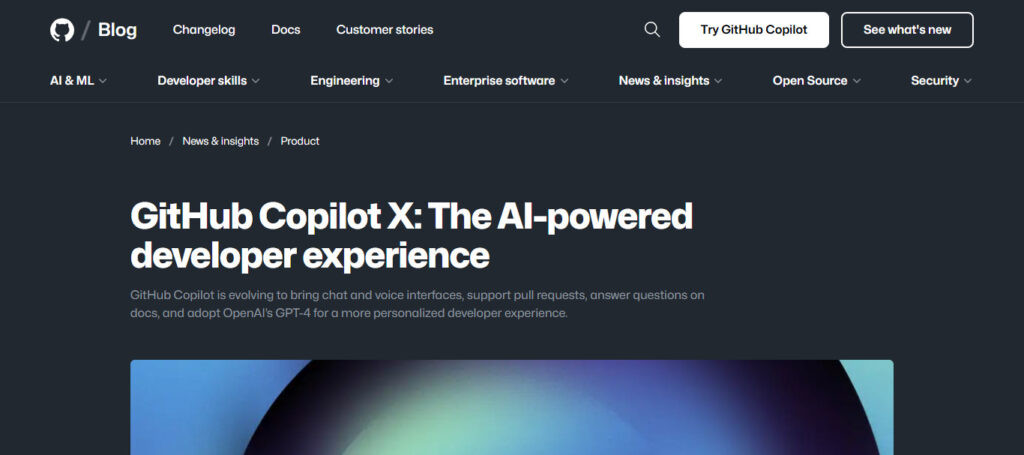
This allows developers to write functions, debug issues and understand complex codebases in a matter of seconds. Provides multi-language development and increases productivity at scale.
Top AI Tools for Building Full Stack Apps Without Team- Between the best 87,845 repos and kidding you not to write a single line of code leaving your focus in GitHub Copilot Baseline or X Not only is that one Writing full stack apps helped with working on quality CodingReducing effort producing bulk codesdocumentation so it understands how everything relates.
GitHub Copilot X Review Mode
| Pros | Cons |
|---|---|
| Seamless GitHub integration | Limited deep security detection |
| Fast AI-assisted code review | Can miss complex logical bugs |
| Explains code in natural language | Still experimental features |
| Improves developer productivity | Sometimes gives generic feedback |
| Works inside popular IDEs | Not a full replacement for manual review |
GitHub Copilot X Features
- Cross-language AI-powered code completion
- A chat-style coding assistant for debug/ explanations
- AI generated knowledge insights from pull request summaries
- Support to edit code across multiple files in IDE
- Single project structure for context-aware suggestions
2. Supermaven
Supermaven is a next-gen AI autocomplete tool designed for speed and big code comprehension. Allows context windows as large as to analyze entire files or even an entire project providing improved suggestions.
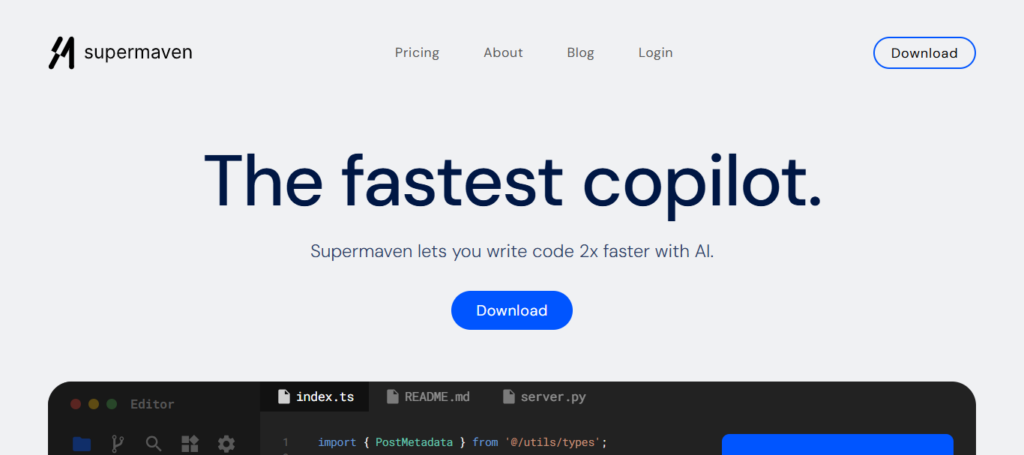
Very quickly anyone who works with the code is helped by some fast, accurate predictions to write this syntax faster and require fewer typing. That is particularly beneficial for larger applications that relies on regular coding patterns.
Best No-Ch code supermaven is one of the best AI tools that assists developers to stay productive by forecasting lines of codes and helping in building modern full-stack development environments smoothly without frozing screens while coding or computing.
Supermaven
| Pros | Cons |
|---|---|
| Extremely fast code suggestions | Limited enterprise features |
| Large context window support | Smaller community vs Copilot |
| Smooth developer experience | Less mature AI reasoning |
| Works well for long files | Not strong in security analysis |
| Lightweight performance | Fewer integrations |
Supermaven Features
- Very low latency ultra-fast AI code autocomplete
- Context window is large enough to understand full code files
- Predicts long code sequences accurately
- Works smoothly with modern IDEs
- Designed for fast and efficient use in large projects
3. Replit Ghostwriter
Replit Ghostwriter, an AI coding assistant inbuilt right into the Replit cloud development environment. Easy to Develop, Test And Deploy: It enables users Build and test the applications with out complex setup in browser itself. The perfect tool for newcomers and professionals alike, it is capable of code generation, debugging, and real-time collaboration.
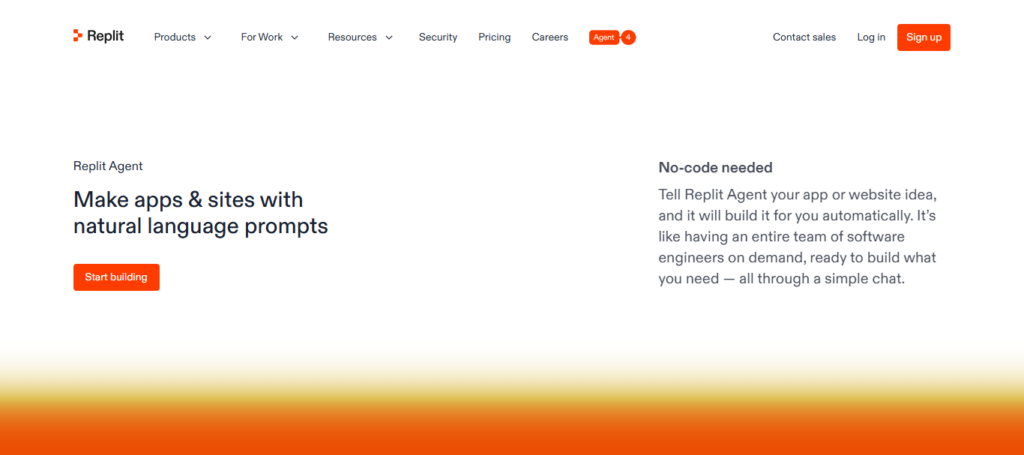
It is capable of producing entire applications from basic prompts. Replit Ghostwriter is one of the best AI tools to Build Full-Stack Apps without Team, It generates backend and frontend code in seconds by offering instant support for full-stack development anytime, anywhere so that developers don’t need an engineering team or even a local environment setup before prototyping & deploying their apps.
Replit Ghostwriter
| Pros | Cons |
|---|---|
| Great for beginners & prototyping | Not ideal for enterprise systems |
| Browser-based convenience | Limited advanced review depth |
| Helps debug and explain code | Occasional inaccurate suggestions |
| Real-time collaboration support | Depends heavily on Replit ecosystem |
| Easy to use setup | Weak large-scale code analysis |
Replit Ghostwriter Features
- AI assistant for coding, right in the browser (Replit IDE)
- Creates whole code, functions and applications
- Real-time debugging and error explanation
- Supports collaborative cloud development
- Converting English to code for dummies
4. Tabnine Enterprise
Tabnine Enterprise is a privacy-aware, secure AI coding assistant for organizations that care about data. This is because it offers intelligent code completions while keeping sensitive codebases private and compliant with enterprise standards.
You can deploy it on-prem and as Private/Within the Cloud. It integrates with major code IDE and supports multiple programming languages. In contrast, Tabnine Enterprise enables businesses to scale development safely and easily while maintaining control of proprietary code ideally suited for enterprise-level full-stack application development with strict security requirements and team collaboration.
Tabnine Enterprise
| Pros | Cons |
|---|---|
| Strong privacy and data protection | Less powerful reasoning than Copilot |
| On-premise deployment option | Limited deep bug detection |
| Learns from private codebases | UI is less advanced |
| Works across many IDEs | Requires tuning for best accuracy |
| Good enterprise compliance | Not strong conversational AI |
Tabnine Enterprise Features
- Enterprise Teams Secure AI Code Completion
- Multiple Deployment Pref-enable on premise and Private cloud
- Learns from team-specific coding patterns
- Robust Privacy And Data Protection Features
- Multi-language support with IDE integration
5. DhiWise AI
DhiWise AI is a Productivity automation tool which allows you to convert your UI designs in production ready code. It connects the two worlds of designer and developer by converting Figma or design-based files to clean frontend code.
This greatly speeds up the manual work of developing frontend, and maintains uniformity among UI components. Professional Integration with Backend Workflows DhiWise AI is one of the best choices for startups or individual developer to rapidly develop full-stack applications by automating repetitive coding tasks and accelerating the UI-to-code conversion process.
DhiWise AI
| Pros | Cons |
|---|---|
| Automates frontend/backend code generation | Limited deep debugging features |
| Speeds up app development | Focused more on scaffolding than review |
| Reduces manual coding effort | Smaller ecosystem |
| Supports API integration workflows | Less accurate for complex logic |
| Good for rapid MVP development | Not enterprise-grade AI review tool |
DhiWise AI Features
- Transforms Figma UI up screen/signup page type — Build in an-UI, (Figma to code).
- Automates frontend development workflows
- Supports backend API integration
- Reduces manual coding effort significantly
- Accelerates full-stack application development cycle
6. JetBrains AI Assistant
JetBrains AI Assistant offers context-aware coding hints, explanations and debugging help inside JetBrains IDEs including IntelliJ IDEA or PyCharm. This aids developers to comprehend complex codebases, refactor quickly and generates documentation automatically.
Additionally, it gives contextual chat support in the IDE. Best AI Tools to Build Full Stack Apps Without Team—JetBrains AIAssistant→ is deep IDE integration with tools that enhances developer productivity by providing AI-powered insights at key moments, making full-stack development much more structured and efficient as it helps manage large teams of developers over complex software projects.
JetBrains AI Assistant
| Pros | Cons |
|---|---|
| Deep IDE integration | Works mainly in JetBrains ecosystem |
| Smart code explanations | Subscription required |
| Strong refactoring support | Can lag on huge projects |
| AI-based test generation | Not fully standalone tool |
| High accuracy for supported languages | Limited outside IDE use |
JetBrains AI Assistant Features
- JetBrains IDEs (IntelliJ, PyCharm) – Integrated AI
- Support for code generation and refactoring
- Code explanation for complex logic
- Automated documentation generation
- Context-aware debugging assistance
7. Vercel AI Tools
A bunch of Vercel AI Tools that are meant to streamline your frontend deployment tasks, particularly for frameworks like Next. js. They assist in the automation of build processes, performance enhancement and deployment to serverless systems.
The developers can deploy an scalable web application easily with very minimum configuration. It also helps accelerate an AI-enhanced performance of the web. The requested topic — Build Full-Stack Apps without Team | Vercel AI Tools The first of their kind, great for developers looking to quickly build and deploy modern full-stack applications from the comfort of a box delivered right in front your door;
while freedom at developement side is ensured with tools that simplify infra management: fast deployments allow you more time spent on building beautiful UIs & making optimals decisions when choosing technologies which are critical processes in our age today.
Vercel AI Tools
| Pros | Cons |
|---|---|
| Great for frontend and web apps | Limited backend review capabilities |
| Optimized for Next.js ecosystem | Not general-purpose AI coding tool |
| Fast deployment integration | Narrow use case focus |
| Helps generate UI components | Less effective for complex systems |
| Developer-friendly workflow | Still evolving features |
Vercel AI Tools Features
- Automated and intelligent deployment optimization for web applications
- Built for Next. js and serverless architecture
- Automatic performance improvements
- Simplifies frontend hosting workflows
- Fast CI/CD integration for developers
8. Firebase AI Extensions
Firebase AI Extensions: Firebase AI extensions integrate artificial intelligence technology with the Google firebase services so that backend functions such as authentication, cloud storage, and database management can be automated.
This enables developers to easily plug in AI capabilities into their applications such as chatbots, recommendations and data processing. It reduces backend complexity significantly. Top AI Tools to Create Full-Stake Applications Without a Team- Firebase AI Extensions are ideal for those looking to build scalable backend systems without a deep understanding of server management, allowing developers the ability to integrate their real-time database directly into their applications making rapid full-stack application development possible.
Firebase AI Extensions
| Pros | Cons |
|---|---|
| Strong Google ecosystem integration | Limited outside Firebase apps |
| Helps with backend automation | Not full code review system |
| Good for real-time apps | Requires Firebase knowledge |
| Easy cloud setup | Less control over deep logic |
| Supports AI-driven features | Narrow development scope |
Firebase AI Extensions Features
- AI-powered backend automation tools
- Easy integration with Firebase services
- Assists in chatbot and other AI feature launches
- Real-time database and authentication support
- Reduces backend development complexity
9. Google Gemini Code Assist
Google Gemini Code Assist is a powerful AI coding tool that offers context-aware suggestions, code generation, and debugging assistance in multiple programming languages. It employs robust reasoning capabilities to comprehend intricate development tasks and provide respectful solutions.
That is advantageous in the case of massive scale software engineering projects. Top AI Tools For Creating Full-Stack Apps Without TeamGoogle Gemini Code Assist enables developers to write high-quality, clean, efficient and faster code along with improving the problem-solving time in full-stack development environments by intuitive intelligent reasoning.AI-based Reasoning based on Intuition.
Google Gemini Code Assist
| Pros | Cons |
|---|---|
| Strong multi-file reasoning | Still evolving product |
| Context-aware AI suggestions | Google ecosystem bias |
| Real-time bug detection | Occasional inconsistent outputs |
| Good cloud integration | Limited offline support |
| Improves code readability | Not fully mature yet |
Google Gemini Code Assist Features
- Code generation with reasoning capability using advanced AIs
- Multi-language coding support
- Context-aware suggestions across projects
- Debugging and error fixing assistance
- Cloud-integrated development support
10. Amazon Q Developer
Amazon Q Developer — an AI assistant for AWS environments to help developers build, manage and optimize cloud-based applications. It assists with coding, debugging, establishing infrastructure and cloud architecture advice. It’s tightly coupled with various AWS offerings, which makes it suitable for enterprise-grade applications.
Top Best AI Tools to Build Full-Stack Apps Without a Team:Amazon Q Developer is another best tool that allows developers automatic cloud operations, optimize deployment workflows and provide intelligent insights in your AWS-based application development for designing scalable full-stack systems.
Amazon Q Developer
| Pros | Cons |
|---|---|
| Excellent AWS integration | Weak outside AWS ecosystem |
| Strong security scanning | Limited general coding support |
| Detects vulnerabilities early | Requires AWS setup |
| Good for cloud-native apps | Can be complex for beginners |
| Automates cloud development tasks | Less flexible for non-AWS projects |
Amazon Q Developer Features
- An AI assistant for building aws cloud
- Helps design scalable cloud architectures
- Code generation for backend systems
- Debugging and optimization suggestions
- Deep integration with AWS services
Conclusion
By 2026, powerful AI-driven tools enable enterprises to create full-stack applications without a huge development team. GitHub Copilot X, Replit Ghostwriter, Google Gemini Code Assist and Amazon Q Developer are all examples of new platforms that completely transform how software can be designed coded and deployed.
They assist developers in automating anything frontend or backend, help dock and ship code quickly to production through CI/CD pipelines, debug it efficiently because of their logs API integration — reducing time spent on building apps while putting less effort into managing cloud infrastructure.
These AI tools help developers save a large amount of the development time and cost, produce better code that scales for whoever you are — solo developer to startup or freelancer. Now anybody can build production-ready full-stack applications with multiple tools at frontend, backend and deploy workflows. In short, AI is not merely helping a developer; it is changing the way modern software can be built—without having an actual development team.
FAQ
What are AI tools for building full-stack apps?
AI tools for full-stack development are platforms that help you create both frontend and backend applications using artificial intelligence. They can generate code, design UI, build databases, and even handle deployment without needing a full development team.
Can I really build a full-stack app without coding?
Yes, modern AI tools like Replit Ghostwriter, DhiWise AI, and Firebase AI Extensions allow users to build working apps using prompts or minimal coding. While complex apps may still need adjustments, most MVPs can be built without deep programming knowledge.
Which AI tool is best for beginners?
Replit Ghostwriter and Google Gemini Code Assist are great for beginners because they offer simple natural-language prompts, real-time suggestions, and easy debugging support. They help you learn while building apps step by step.
Which AI tools are best for startups?
Startups often use tools like GitHub Copilot X, Vercel AI Tools, and Firebase AI Extensions because they speed up development, reduce cost, and help launch scalable full-stack products quickly without hiring large teams.
Do AI full-stack tools replace developers?
No, they do not fully replace developers. Instead, they act as assistants that handle repetitive coding, scaffolding, and debugging tasks, allowing developers to focus on logic, design, and scaling the application.