




This article is about the Increasing Need for Cross-Cutting Operational AI Layers. It analyzes why companies have moved away from using stand-alone AI tools, and are now adopting unified operational frameworks.
As AI is further integrated in the business world, companies have more demand for integrated governance, security, orchestration, compliance, and scalable solutions. Emerging operational layers will provide the governance needed to create efficient, secure, and adaptable AI ecosystems.
What Are Cross-Cutting Operational AI Layers?
Cross-Cutting Operational AI Layers combine management structures, infrastructures, and controls that are employed across various systems and applications. Unlike standard, discrete AI tools, these layers provide centralized offerings for governance, security, and compliance, as well as orchestration, monitoring, and integration and performance management.
They unify AI models, data, workflows, business platforms, and everything in between. When AI is implemented broadly across an organization, they enable operational silos to be dismantled and complexity and inefficiency to be minimized while ensuring compliance, security, and business alignment.
Benefits of Cross-Cutting Operational AI Layers
Consolidated AI Management – Enables AI integration and centralizes control and oversight of diverse organizational AI systems.
Strengthened Security – Standardization of security policies, access management, and threat monitoring enhances security of all operational AI systems.
Simplified Compliance – Automation of compliance checks and reporting assists organizations in adhering to industry and data privacy regulations.
Increased Scalability – Organizations can process and roll out AI systems and solutions at scale with operational and infrastructural congestion.
Decreased Operational Silos – Integration of AI systems, data, and resources improves communication and collaboration at all levels.
Increased Operational Effectiveness – Governance, monitoring, and workflow management are automated, thereby decreasing manual and administrative efforts.
Standardized AI Governance – Cross AI initiatives helps in standardization of governance policies, ethical and risk frameworks across all AI operations.
Enhanced Agility – Modular and composable AI architectures are supported and assist organizations with seamless integration of emerging technologies.
AI Systems, Enhanced Reliability and Performance – Enterprise environments experience stable and continually optimized resource allocation and performance of operational AI systems.
Infrastructure and Management Costs Reduction – AI solutions and systems integrated into a single operational layer provide significant cost savings for organizations.
Adaptive AI Setup – AI Systems Integration provides organizations with tools to adapt emerging technologies such as edge AI, multi-agent systems, and quantum-safe security AI.
Challenges in Implementing Operational AI Layers
Integration Difficulties – It is usually quite difficult to connect systems and combine functionalities across multiple AI Models, enterprise applications, databases and clouds.
Costly Frustration – Constructing operational AI layers and their associated infrastructures is disruptive and costly.
Frustration with Data – The operations of most integrated systems become more difficult as the variety of data both structured and unstructured increases.
Cascading Security Issues – The expansion of AI operations means the threat surfaces of systems increase and additional layers of advanced cybersecurity and data protections become necessary.
Evolving Compliance Frustrations – Companies are now accustomed to the global proliferation of AI and privacy regulations, as well as compliance frameworks and varying industry standards.
Talent Shortage – Shortages are now increasing among teams for AI governance, orchestration, security, and enterprise integration.
Integration Frustration – AI tool and platform systems frequently rely on varying and non-compatible standards, making integration and communication frustrating.
Frustration with AI Maintenance – AI systems can be frustrating with the effort and disruption required to monitor and maintain both the precision and performance of the models, especially over time.
Frustration with AI Scaling – Operational AI systems can be frustrating with the lack of assurance of the infrastructure capability to scale efficiently.
Frustration with Governance – It can be quite difficult to determine the oversight and responsibility for AI systems across multiple departments.
Adoption Frustration – AI Frustration can be intense among employees and other interested stakeholders.
Frustration with Vendor Lock-In – The use of a single AI vendor or platform can be quite frustrating.
Performance Optimization Difficulties – It can be tough to deliver low latency with high availability and maintaining consistent performance across distributed AI environments.
Data Quality and Consistency Issues – Substandard or inconsistent data can adversely affect AI performance and business operations.
Future Technology Uncertainty – Long-term planning and deciding on infrastructure becomes arduous with the swift changes present in AI, cyber security, and quantum computing.
Key Point & New Demands for Cross-Cutting Operational AI Layers
- Unified AI Governance
- Zero‑Trust AI Security
- Multi‑Agent Orchestration
- AI‑Native ERP Integration
- Cross‑Border Compliance Layers
- Quantum‑Safe AI Encryption
- Composable AI Architectures
- Proof‑of‑Solvency AI Audits
- Low‑Latency AI Serving
- Multi‑Modal AI Layers
10 New Demands for Cross-Cutting Operational AI Layers
1. Unified AI Governance
Unified AI Governance is vital as organizations deploy multiple AI models across departments, cloud platforms, and business functions. Unified AI Governance provides centralized management for policies, risk management, data usage, model monitoring, and ethics.
AI Governance is critical, as business AI systems are uncontrolled and create regulatory, security, and compliance issues. The New Demands for Cross-Cutting Operational AI Layers prompts other companies to implement AI Governance, which integrates frameworks for the AI asset lifecycle from development to deployment.

Cross-Cutting Operational AI Layers prompts other companies to implement AI Governance, which integrates frameworks for the AI asset lifecycle from development to deployment and provides Governance for the responsible use of AI.
Unified AI Governance is critical if enterprises are intent on scaling AI Operations to sustain trust and protect operational efficiency and the business from regulatory risks in diverse and expanding AI ecosystems.
Importance of Unified AI Governance
- Streamlines AI governance policies.
- Facilitates AI operational transparency and accountability.
- Decreases compliance and regulatory obligations issues.
- Centralizes oversight of AI systems.
- Deploys AI systems in a responsible and ethical manner.
- Negates fragmentation of AI systems.
- Increases confidence of stakeholders in AI governance.
2. Zero‑Trust AI Security
Zero-Trust AI Security is based on the belief that no user, application, model, or device should be trusted. The New Demands for Cross-Cutting Operational AI Layers prompts other companies to implement AI Governance, which integrates frameworks for the AI asset lifecycle from development to deployment and provides Governance for the responsible use of AI.

Unlike traditional perimeter security, with constrained trust, AI systems must be protected from internal and external threats. Zero-Trust systems control risk while ensuring the necessary, trusted interaction between AI components and business systems.
Importance of Zero-Trust AI Security
- Safeguards AI systems from cyber intrusions.
- Validates all users and devices as a prerequisite to access.
- Mitigates threats posed by employees and contractors.
- Fortifies data privacy and protection.
- Increases the ability to withstand security challenges.
- Protects AI subsystems and components.
- Addresses security compliance frameworks.
3. Multi‑Agent Orchestration
Multiple AI agents can work together to autonomously accomplish more complex tasks that involve information sharing, decision-making, and workflow execution using a technique called Multi-Agent Orchestration. Organizations can build models for research and analytics, customer service, operations, and automation instead of building a single monolithic model.
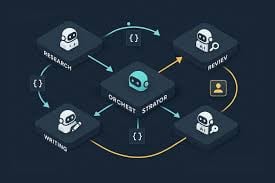
New Demands for Cross-Cutting Operational AI Layers are causing businesses to adopt orchestration tools for linking and managing the cooperative and communicative activities of AI agents.
These layers accomplish task assignment and deal with conflicts, manage workflow, and optimize resources. Effective orchestration of AI systems offers businesses more scalability, more efficiency, and more precise decision-making and less operational friction and manual effort.
Importance of Multi-Agent Orchestration
- Facilitates the interaction of multiple AI systems.
- Streamlines the automation of workflows.
- Resolves operational inefficiencies.
- Augmented decision-making with targeted AI agents.
- Robust AI infrastructure.
- Maximizes the effective use of AI.
- Decreases time to completion for tasks in different functions.
4. AI‑Native ERP Integration
Building smart ERP systems that predict, automate, and optimize business activities and decisions in real-time is what the New Demands for Cross-Cutting Operational AI Layers are pushing organizations to do. AI is embedded in all functional areas of an organization because of AI-Native ERP Integration. Unlike other ERP systems where AI is an external addition,

AI is now an internal component of ERP workflow systems. These operational layers facilitate direct connectivity of AI systems with an organization’s data, resulting in improved productivity, forecasting, agility, and business performance.
Importance of AI-Native ERP Integration
- Direct linkage of AI to business operations.
- AI-enabled automation of business operations.
- Optimized business operations and increased agility.
- Enhanced AI-Native operations and business integration.
- Strengthened real-time decision-making.
- Enhanced business operations.
5. Cross‑Border Compliance Layers
Cross-Border Compliance Layers allow organizations to manage regulatory demands internationally. Compliance becomes more problematic as businesses operate in more countries and as AI systems process more global data. Regions impose different standards for privacy, security, data residency, and AI.

The New Demands for Cross-Cutting Operational AI Layers are creating frameworks for automated compliance that adjust to situational demand. The Cross-Border Compliance Layers are meant to change legal policies to geographical, legal, and organizational risk demands. Reducing legal risk while enabling global operations and responsible AI use is the goal of simplified compliance management.
Importance of Cross-Border Compliance Layers
- Facilitated compliance with regulations worldwide.
- Positive impact on business operations across borders.
- Automated policy implementations.
- Decreased legal and operational hurdles.
- Safeguards proper management of data.
- Incorporates compliance with privacy and data protection.
- Improved readiness for audits.
6. Quantum‑Safe AI Encryption
Quantum-Safe AI Encryption secures sensitive data and AI systems from the threat of future quantum computing. The New Demands for Cross-Cutting Operational AI Layers are prompting the use of quantum-resistant AI encryption.

Advanced Cross-Border Compliance Layers are designed to defend against attacks from traditional and quantum systems. Organizations that adopt quantum-safe strategies are protecting the future of their AI systems and secure their investments. These organizations protect valuable proprietary business information and their reputation.
Importance of Quantum-Safe AI Encryption
- Guards data against the future threats of quantum computers.
- Bolsters long-term strategies for cyber defense.
- Protects AI communication.
- Protects business and IP assets.
- Increases trust from clients and partners.
- Aids the planning of infrastructures that are future-ready.
- Helps avoid the risk of obsolete cryptography.
7. Composable AI Architectures
Composable AI Architectures help organizations design adaptable AI ecosystems using modular building blocks that remain separable, substitutable or improvable. Unlike monolithic systems, modular systems contain a range of models, data, APIs, automation tools, among others, specialized to help a business meet its diverse needs.
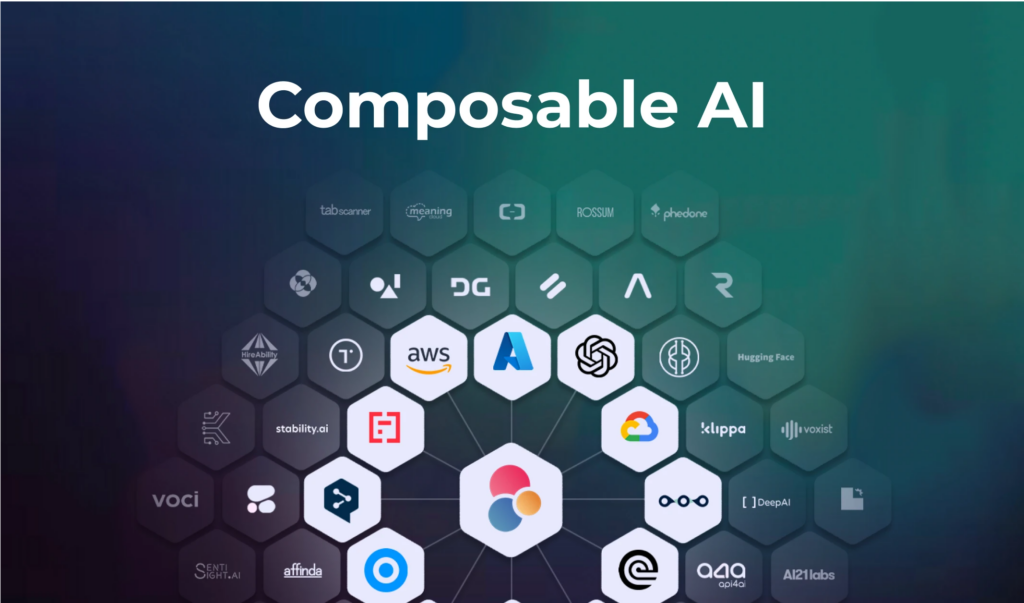
Composable systems are scalable, flexible and speed up the innovation process, thus, the New Demands for Cross-Cutting Operational AI Layers are driving their adoption.
These operational layers offer frameworks for structuring integrations between systems and provide standardized tools for managing workflows across various systems. Rapidly evolving business needs drive technology composability to mitigate complexity and lock-in.
Importance of Composable AI Architectures
- Promotes design flexibility for AI systems.
- Facilitates the fast incorporation of new tech.
- Minimizes vendor lock.
- Eases greater system flexibility.
- Facilitates the upsurge of inventive ideas and concepts.
- Fosters tailored AI designs.
8. Proof‑of‑Solvency AI Audits
Proof-of-Solvency AI Audits are a novel offering for businesses that operate on the intersection of digital assets, finance, and AI. These audits employ AI to prove funds, calculate potential shortfalls, reconcile imbalances and offer clear snapshots of solvency.
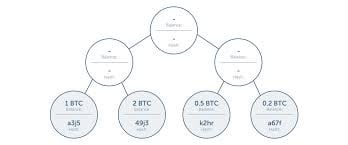
The New Demands for Cross-Cutting Operational AI Layers have businesses adopting continuous auditing for standardized layers to verify fiscal claims. These operational layers offer automated financial verification, real-time risk monitoring, and trustworthy regulatory reporting.
Automated Proof of Solvency systems enhance transparency and the financial trust of customers, and facilitate the management of financial and operational risks.
Importance of Proof-of-Solvency AI Audits
- Promotes financial transparency.
- Enhances trust of customers and partners.
- Enables the monitoring of assets and obligations.
- Minimizes financial crime and manipulation.
- Improves compliance to laws and regulations.
- Improves auditing and efficiency of financial systems.
- Fosters sound financial practices.
9. Low‑Latency AI Serving
Low-Latency AI Serving aims to execute AI prediction and response processes in real time – critical for applications involving automation (like self-driving cars), financial markets, healthcare, and customer interactions.

The demand for this type of AI application is growing. The more organizations implement AI, the more customers expect real-time responses. The New Demands for Cross-Cutting Operational AI Layers apply to the optimization and hardware support for inference, edge deployment, and caching.
These layers are designed to provide the same level of performance even in distributed environments and provide the lowest possible latency. AI serving throughput and latency positively impact the user experience and operational efficiency, along with the added benefit to the business from the applications that are time sensitive.
Importance of Low-Latency AI Serving
- Provides rapid AI prediction and response.
- Significantly improves user and customer satisfaction.
- Supports the Real-Time nature of the system.
- Improves the efficiency of Operations.
- Aids the optimization of AI and Predict Systems.
10. Multi‑Modal AI Layers
The ability to analyze, synthesize, and provide responses to various forms of input (text, images, sounds, videos, and even physical input of various states) is called Multi-Modal AI Layers. This ability allows AI to form different types of contextual reasoning for the response.
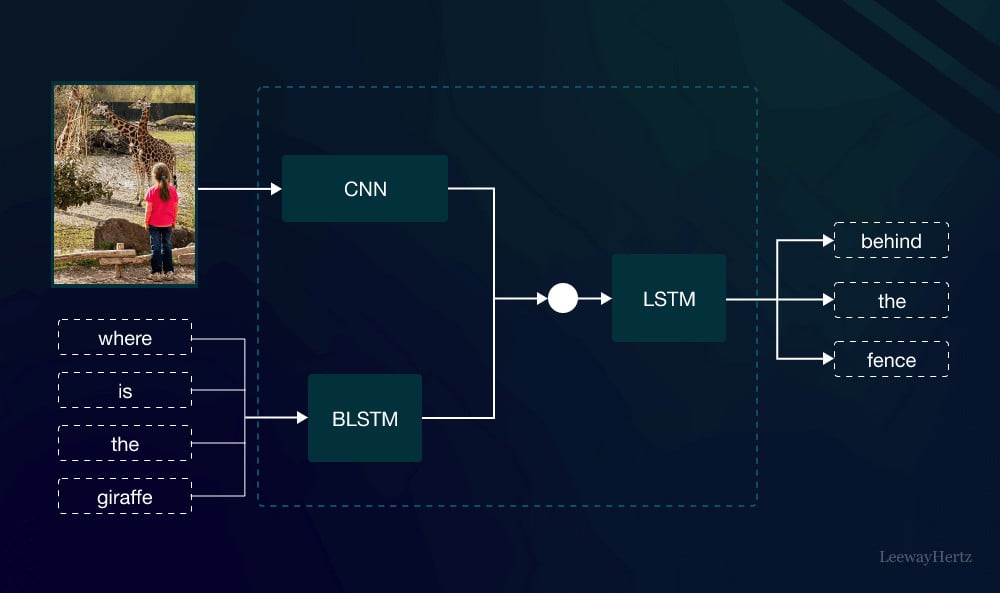
The New Demands for Cross-Cutting Operational AI Layers are making organizations design and implement the type of infrastructure that allows the coordinated functioning of models of different types and layers of contextual reasoning. From this type of reasoning, organizations can derive dynamic operating models, customer engagement interfaces, and enhanced analytic capability.
Importance of Multi-Modal AI Layers
- Integration of text, audio, image, and video.
- Improves the contextual understanding of AI.
- Provides deep insights and predictions.
- Improves the customer engagement experience.
- Supports high-level AI-driven Automation.
- Fosters new AI-related innovative concepts.
- Supports in-depth data analysis.
Future Trends in Cross-Cutting Operational AI Layers
Cross-Cutting Operational AI Layers will continue to evolve based on the elements of increased automation, intelligence, and interoperability across enterprise ecosystems. Organizations are predicted to enable self-sufficient autonomous AI operations to oversee the governance, security, compliance, and performance tuning with minimal human involvement.
Along with that, the sophistication of multi-agent AIs will begin to rapidly evolve, allowing for the collaboration of specialized agents across all business functions. The development of multi-agent operational frameworks will provide organizations with extensive resilience to emerging threats.
The development of advanced, multi-modal AI systems will cause the integration of AI systems that will allow for the synthesis of text, images, video, audio, and even sensor data. In addition, AI will be embedded to provide real-time monitoring of compliance with evolving laws and regulations. Finally, it is predicted that enterprises will become AI-driven, providing secure and robust systems that meet user needs.
Summary
The changing needs for Cross-Cutting Operational AI Layers are changing enterprise AI use, management, and scaling. Modern enterprises are moving away from siloed AI tools. Now, enterprises are using operational layers that integrate governance, security, orchestration, compliance, and performance across the entire AI ecosystem. AI-driven operations need the resilient, scalable layers that state-of-the-art Unified AI Governance, Zero Trust Security, Multi-Modal AI Layers, and Quantum-Safe Encryption are providing. With the global acceleration of AI, the integration of these Cross-Cutting Operational Layers will allow enterprises to innovate and compete efficiently while meeting compliance and regulatory demands.
FAQ
. What are Cross-Cutting Operational AI Layers?
Cross-Cutting Operational AI Layers are shared infrastructure and management frameworks that support AI systems across an entire organization. They provide governance, security, orchestration, compliance, monitoring, and integration capabilities that work across multiple AI applications and business functions.
Why are organizations moving away from isolated AI tools?
Isolated AI tools often create data silos, inconsistent governance, security vulnerabilities, and operational inefficiencies. Modern enterprises need unified operational layers that can manage multiple AI systems while ensuring scalability, compliance, and seamless collaboration across departments.
What is Unified AI Governance and why is it important?
Unified AI Governance provides centralized oversight for AI policies, risk management, compliance, and model monitoring. It helps organizations maintain transparency, accountability, and responsible AI practices while reducing operational and regulatory risks.
How does Zero-Trust AI Security protect AI systems?
Zero-Trust AI Security continuously verifies users, applications, and devices before granting access. This approach minimizes security risks, prevents unauthorized access, and protects sensitive AI models and data from cyber threats and malicious attacks.