


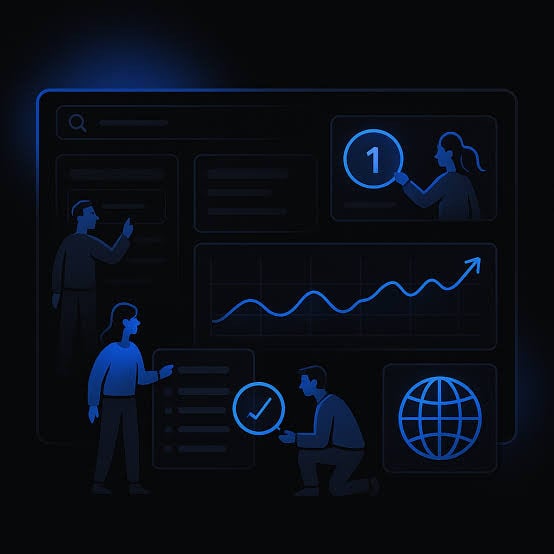
In this article, I will talk about the Best AI Agents for SEO Agency Client Reporting that help the agencies to automate reporting, analyze the SEO performance, and manage multiple client accounts efficiently. These platforms make it easy to track keywords, analyze organic traffic, monitor competitors and create reports. I’ll also cover their key features, reporting capabilities, integrations, and benefits to help agencies pick the right solution.
Why Choose AI Agents for SEO Agency Client Reporting
Automated Report Generation: AI agents assist agencies in generating SEO performance reports automatically, minimizing manual effort and saving time in producing weekly, monthly, and customized client updates.
Centralized Data Management: They gather data from multiple SEO and marketing platforms, enabling agencies to monitor keyword rankings, organic traffic, backlinks, and conversions through centralized dashboards.
Enhanced Data Analysis: AI-driven analysis can help you identify key performance trends, ranking changes, traffic movements, and potential areas for optimization across various client campaigns.
Improved Client Communication: These tools translate complex SEO metrics into easily digestible summaries, allowing agencies to communicate campaign progress, challenges, and successes to clients more effectively.
Competitor Performance Monitoring: AI-powered SEO platforms help agencies benchmark client sites against competitors, identify keyword gaps, track search visibility, and uncover new opportunities for organic growth.
SEO ROI Measurement: By integrating data on traffic, leads, and conversions, agencies can more accurately measure campaign performance and demonstrate the tangible impact of SEO efforts on business objectives.
Multi-Client Reporting: Agency-centric platforms offer easier management of multiple client accounts with distinct dashboards, reporting frequencies, and campaign metrics for performance.
Faster Problem Identification: Performance tracking and anomaly detection features help agencies identify traffic declines, ranking shifts, and technical SEO issues needing immediate action.
Consistent Reporting Workflow: Agencies can maintain consistency in their reporting for various clients and projects with automated data refreshes, reusable templates and scheduled delivery of reports.
Agency Operations Scalability: AI-assisted reporting saves time on mundane administrative tasks, allowing SEO professionals to spend more time on strategy, optimization, client relationships, and growing their business.
Quick Comparison Table
| AI Agent / Platform | Best For |
|---|---|
| AgencyAnalytics | Automated client reporting |
| Semrush | SEO + AI visibility reporting |
| Databox | KPI and performance dashboards |
| DashThis | White-label automated reports |
| SEOmonitor | SEO forecasting and reporting |
| Raven Tools | Custom SEO reports |
| Serpstat | Multi-client SEO reporting |
| Rank Ranger | Rank-tracking reports |
| Ahrefs | Backlink and SEO analysis |
| SE Ranking | Workflow automation and reporting |
1. Analytics Agency
AgencyAnalytics is designed for digital marketing agencies that need to report on SEO performance across multiple client accounts. It pulls in data from supported marketing platforms like Google Analytics and Google Search Console and generates automated client reports and dashboards.
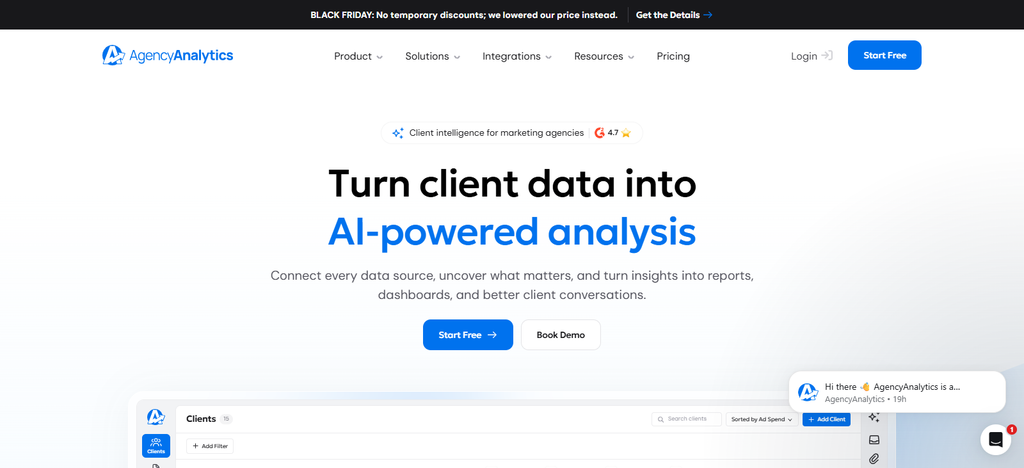
Agencies can track progress through keyword rankings, organic traffic, backlink metrics, and campaign performance. Its reporting workflows contribute to improved data transparency by displaying connected-source metrics in organized dashboards.
Competitor comparisons and SEO ROI measurement can be added where supporting data is available. Agencies should also review account permissions and access to connected data to safeguard client data.
How Does It Work
- Data Collection: Gathers SEO and marketing performance data from supported integrations such as Google Analytics 4 and Google Search Console.- Automated Reporting: Generates scheduled SEO reports and dashboards for various client accounts.
- Keyword Tracking: Tracks your keyword rankings daily and flags any shifts in position across the different search engines.
- Backlink Monitoring: Monitors new and lost backlinks to assess the effectiveness of link building campaigns.
Performance Analysis: A combination of organic traffic, ranking, backlink and website audit metrics are used to assess the campaign. - Client Management: Dashboards for individual clients, customizable reporting access.
- Custom Reports: Agencies can add their own branding, choose from multiple report templates, and add relevant performance indicators.
- Report Approval: Enables report approval workflows so agency teams can review information prior to scheduling for delivery.
2. Semrush
Semrush provides SEO research, keyword tracking, competitor analysis and reporting features to help agencies communicate campaign performance to clients. Its tools provide you with information on organic visibility, keyword rankings, backlink profiles, website health, and competitor activity.
These insights can enable agencies to benchmark the performance of their clients against competing domains and spot changes in search visibility. It has reporting features that help you organize SEO metrics into digestible performance updates.
Then agencies can combine the SEO visibility and traffic data with conversion data from the linked analytics platforms to measure ROI. If you prepare reports for several businesses, make sure you check client permissions, account access, and source attribution.
How Does It Work
- SEO Data Collection: Provides keyword research, organic traffic estimates, backlink data and website performance data.
- Competitor Analysis: It analyzes the keywords and organic search opportunities of your competitors and the differences in their rankings.
Keyword Monitoring: Keeps an eye on changes in keyword positions, helping agencies assess search visibility over time. - Site Auditing: Helps you find technical SEO issues that may affect the website’s performance and ranking on search engines.
- Report Generation: Uses its My Reports feature to generate SEO metric reports for its clients.
- Performance Analysis: Assists agencies to understand organic visibility, backlink growth and keyword performance.
- Campaign Monitoring: Allows constant monitoring of SEO activities and website optimization progress.
- Client Reporting: Helps agencies communicate campaign results through customizable and scheduled reporting tools.
3. Databox
Databox allows SEO agencies to bring together marketing and business performance data into dashboards that are centralized. Its integrations allow teams to follow the analytics, advertising, CRM, and marketing metrics they support without having to manually switch between multiple platforms.
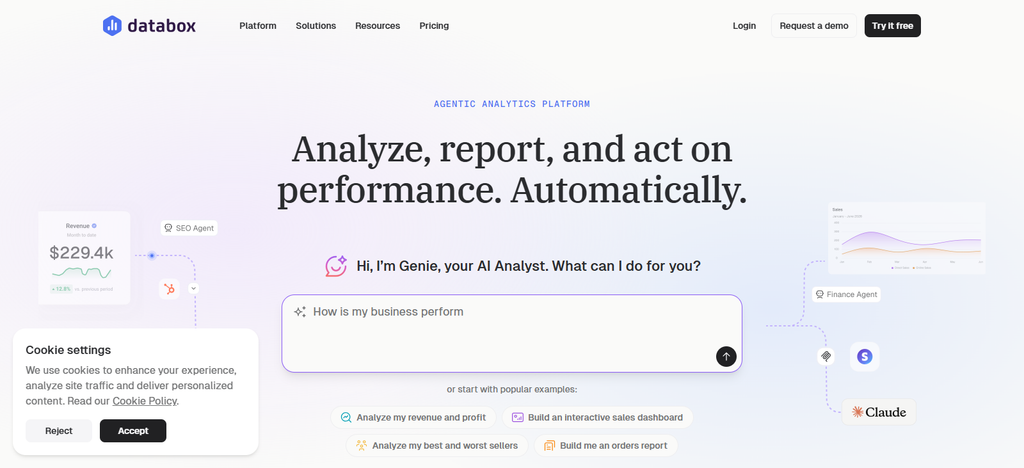
Agencies can use dashboards and automated reporting workflows to display organic traffic, lead generation, conversion performance and other client KPIs. With integration of relevant data sources, its analytics and goal-tracking capabilities can aid SEO ROI measurement by connecting campaign activity with business outcomes.
Clear identification of connected platforms and reporting periods ensures transparency of the data source. Agencies should set permissions carefully to protect individual client accounts and sensitive business information.
How Does It Work
- Data Integration: Connects with supported marketing, analytics, CRM and business platforms to pull together client performance data.
- Dashboards: Sets up visual dashboards to consolidate key SEO and marketing KPIs.
- Performance Tracking: Tracking metrics like organic traffic, website conversions, leads and campaigns performance.
- Goal Tracking: Enables agencies to set performance goals and track progress toward client objectives.
- Automated Updates: Updates connect data so teams can monitor performance without having to collect information manually over and over.
- KPI Comparison: You can compare your current performance against previous periods, and set your business goals.
- Automated Reporting: Facilitates automated reporting and client performance update processes.
- Business Insights: Supports agencies in linking marketing activity to business outcomes, where analytics and CRM data are integrated.
4. DashThis
DashIt’s all about making digital marketing reporting easier with automated dashboards and customizable client reports. SEO agencies can aggregate supported data sources such as Google Analytics, Search Console and other marketing platforms to show campaign performance in one place.
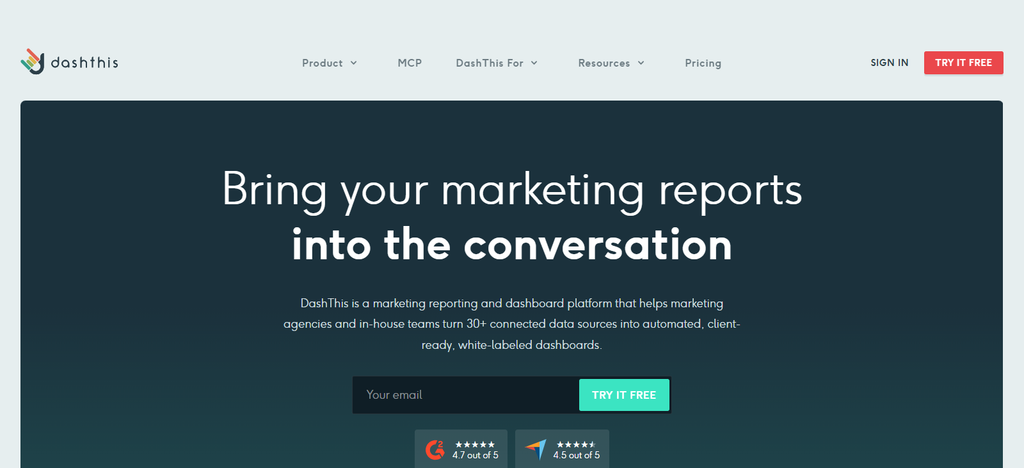
Templates and reporting tools allow you to share keyword visibility, organic traffic, conversions and progress of marketing without building reports yourself. Agencies may utilize competitor performance indicators when they are available through connected SEO tools.
When measuring SEO ROI, traffic and conversion data can be combined to show campaign value. When managing reports for several clients, proper account permissions and transparent source labeling are still important.
How Does It Work
- Data Connection: Links with supported SEO and marketing platforms to pull campaign performance data.
- Dashboard Configuration: Builds centralized dashboards with templates and customizable reporting widgets.
- SEO Performance Tracking: Shows organic traffic, keyword rankings, backlinks, and other available SEO data.
- Automated Reporting: Allows agencies to schedule reports for regular client updates.
- Client Customization: Enables teams to tailor dashboards to particular client requirements.
- Visual Data Representation: Converts connected marketing metrics into charts/graphs with easy-to-understand summaries.
- Sharing Reports: Offers reporting and dashboard sharing options to communicate campaign results.
- Performance Comparison: Helps agencies look at past metrics and see changes between reporting periods.
5. SEOmonitor
SEOmonitor is a tool that helps SEO agencies manage client campaigns. It tracks keywords, analyzes search visibility, makes forecasts, and generates performance reports. This enables teams to track ranking fluctuations, find organic search opportunities, and assess campaign performance against planned objectives.
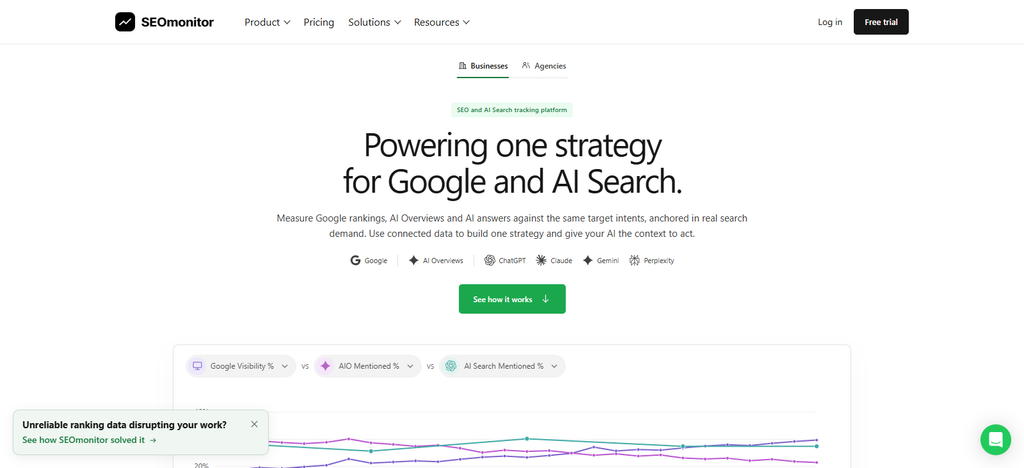
Competitor visibility comparisons can help agencies identify keyword gaps and changes in market positioning. Another way to measure SEO ROI is through forecasting and campaign performance data, which helps tie projected organic growth to business goals.
The keywords tracked, data periods and forecasting assumptions need to be clearly described for transparent reporting. Agencies should define the appropriate user access and client-account permissions to secure data.
How Does It Work
- Campaign Setup: Organizes SEO projects by client websites, target keywords, and campaign goals.
- Keyword Tracking: Tracks keyword rankings and search visibility to assess the performance of organic campaigns.
- Competitor Monitoring: Compares the client’s search visibility against competing sites to identify ranking opportunities.
- Forecasting: Leverages SEO forecasting capabilities to project potential organic traffic and campaign growth.
- Performance Analysis: Helps agencies see how keywords and organic search performance have changed.
- Campaign Reporting: Summarizes SEO campaign data into reports that show progress to clients.
- ROI Measurement: Helps to predict and measure the performance based on business goals and expected campaign outcomes.
- Client Communication: Assists agencies in communicating SEO progress, opportunities and campaign expectations with structured performance data.
6. Raven Tools
Raven Tools offers SEO research, website auditing, rank tracking and marketing reporting for agencies with multiple client campaigns. Its reporting workflows help aggregate supported marketing data into structured dashboards and client facing reports. Agencies can review keyword rankings, backlink performance, website health, and organic search activity to monitor their campaigns.
Competitor research tools provide you with insights into differences in keyword visibility and backlinks. Enhance how you measure SEO ROI by pulling in traffic and conversion data from linked analytics sources. Source transparency comes from knowing where metrics originate, and proper account permissions and secure handling of client-data protects confidential reporting information.
How Does It Work
- SEO Data Collection: Collects supported information about website ranking, backlinks, technical performance and marketing activity.
- Website Auditing: Checks websites for technical SEO problems and finds places to improve.
- Keyword Research: Helps agencies find keyword opportunities and track search performance.
- Competitor Research: Data on competing websites, keyword visibility, and backlink profiles.
- Report Building: Creates SEO metrics into client-friendly reports with reporting tools.
- Dashboard Management: Enables teams to collect campaign data to better track performance.
- Automated Reporting: Automates repetitive reporting workflows to reduce manual report preparation.
- Performance Evaluation: Helps agencies to evaluate SEO progress and report on campaign results using available reporting metrics.
7. Serpstat
Serpstat assists SEO agencies with keyword research, rank tracking, backlink analysis, site audits, and competitor research. These capabilities help reporting teams understand how client websites perform in organic search and identify opportunities for improving visibility.
Agencies can compare competing domains and discover keyword gaps and track ranking changes across all tracked projects. Its reporting and analytics features help turn your SEO findings into useful campaign updates.
Data from compatible analytics sources on traffic and conversion can provide context for measuring SEO ROI. Agencies need to distinguish between estimated SEO metrics and verified analytics data, log reporting sources and manage team permissions to protect client data.
How Does It Work
- Keyword Research: Performs research on relevant search terms and keyword opportunities for client SEO campaigns.
- Rank Tracking: Monitors changes in keyword rankings over time to measure search visibility.
- Competitor Analysis: Reviews competitor domains to find keyword gaps and organic search opportunities.
- Backlink Analysis: Analyzes the referring domains and backlink profiles to assess the growth of website authority.
- Website Auditing: Identifies technical SEO issues that can impede website search performance.
- SEO Reporting: Compiles keyword, backlink and website audit data into campaign reports
- Performance Monitoring: Enables agencies to review historical SEO data and analyze changes in campaign performance.
- Client Reporting: Offers SEO insights for agencies to report optimization progress and make recommendations.
8. Rank Ranger
Rank Ranger is an SEO tracker, search visibility monitoring, competitor analysis and custom reporting tool for digital marketing agencies. It’s reporting workflows are designed to emphasize keyword rankings, organic search performance and campaign progress with client-facing dashboards and reports.
Agencies can measure their clients’ search visibility against competitors and uncover ranking opportunities among tracked keywords. Historical performance data can help explain changes in SEO campaigns, while integrated analytics data can help support ROI reporting when conversion metrics are available.
When presenting ranking and traffic measurements it’s important to be transparent about data sources. Appropriate user permissions and account controls should also be implemented by agencies to safeguard client reporting data.
How Does It Work
- Keyword Tracking: Tracks keyword rankings and search visibility on chosen search engines.
- Competitive Monitoring: Compares client keyword performance to that of competing websites to determine differences in rankings.
- SERP Analysis: Enables agencies to study search result features and changes impacting organic visibility.
- Historical Tracking: Tracks ranking performance to determine campaign progress over time.
- Dashboard Creation: Organizes SEO performance data into customizable reporting dashboards.
- Reporting Automation: Enables scheduled reporting processes for continued client performance updates.
- Performance Analysis: Assists teams in analyzing keyword changes, visibility trends, and search campaign results.
- Client Reporting: Delivers SEO tracking information in well-organized reports to facilitate communication between the agency and the client.
9. Ahrefs
Ahrefs was founded in 2010 and helps agencies with SEO research, backlink analysis, keyword tracking, competitor research, and website auditing features for client reporting. Its tools help track organic search visibility, keyword movements, referring domains and competing sites.
Competitor analysis helps agencies identify gaps in their backlinks, discover keyword opportunities, and see changes in search performance. Historical SEO data can be used to compare performance, and Google Analytics and Search Console data can be used to add context to your measures of organic traffic and conversions.
AI-assisted analysis should not be confused with fully automated root-cause detection. Agencies also should manage workspace permissions and clearly identify sources behind reported metrics.
How Does It Work
- Backlink Research: Analyzes referring domains, backlink profiles and link building opportunities for client sites.
- Keyword Research: Find relevant keywords, search demand and ranking opportunities.
- Competitor Analysis: Examines competitor sites for keyword gaps and backlink opportunities.
- Rank tracking: It tracks the rankings of keywords you select and analyzes changes in organic search visibility.
- Website Audit: Scans websites to detect technical SEO problems and areas for improvement.
- Organic Performance Analysis: Allows agencies to research organic search trends and understand competitive positioning.
- Reporting: Exporting SEO data and reporting workflows. Connections with third-party reporting platforms.
- Client Performance Evaluation: Provides data about backlinks, keywords and technical SEO that agencies can use to generate client performance reports.
10. SE Ranking
Founded in 2013, SE Ranking provides SEO agencies with tools for keyword rank tracking, website audits, backlink monitoring, competitor research, and automated reporting. Its agency-specific features allow teams to manage multiple client projects and share campaign performance through customizable reports and dashboards.
Agencies can also track keyword positions, analyze competing domains and detect changes in organic search visibility. Connected analytics data can help you measure traffic, conversions and SEO ROI more effectively.
Transparency in reporting requires clearly defining your metrics, knowing where they originate, and reporting them for the correct time period. Agencies should also look at account roles, project permissions and data-sharing controls to help keep client information confidential.
How Does It Work
- Project Management: helps agencies organize SEO campaigns and manage multiple client website projects.
- Rank Tracking: Tracks keyword rankings and changes in search visibility.
– Competitor Research: Research competitor websites to find keyword gaps and opportunities for organic growth. - Website Audit: Identifies technical SEO issues and makes recommendations to improve website performance.
- Backlink Monitoring: Monitors backlink profiles and assesses the success of link building campaigns.
- Automated Reporting: Assists agencies in generating and scheduling recurring SEO reports for their clients.
- White-Label Reporting: Enables branded reporting and agency-style presentation.
- Performance Analysis: Integrates up-to-date SEO data to assist agencies in evaluating campaign performance and showcasing optimization outcomes.
Comparison Table: 10 Best AI Agents for Managing Client Reporting at SEO Agencies in 2026
| Platform | Best For | Reporting Automation | SEO Analysis | Competitor Tracking | White-Label Reporting |
|---|---|---|---|---|---|
| AgencyAnalytics | SEO agency client reporting | Yes | Yes | Yes | Yes |
| Semrush | SEO research and campaign reporting | Yes | Advanced | Yes | Via reporting features |
| Databox | Marketing dashboards and KPI monitoring | Yes | Via integrations | Via integrations | Dashboard customization |
| DashThis | Automated client reports | Yes | Via integrations | Via integrations | Yes |
| SEOmonitor | SEO campaign tracking and forecasting | Yes | Advanced | Yes | Agency reporting |
| Raven Tools | SEO audits and client reporting | Yes | Yes | Yes | Yes |
| Serpstat | Keyword and competitor analysis | Reporting features | Advanced | Yes | Reporting customization |
| Rank Ranger | Rank tracking and SEO reporting | Yes | Advanced | Yes | Yes |
| Ahrefs | Backlink and competitor research | Via reporting workflows | Advanced | Yes | Via integrations |
| SE Ranking | Agency SEO campaign management | Yes | Advanced | Yes | Yes |
Key Comparison Factors
| Comparison Factor | What Agencies Should Evaluate |
|---|---|
| Client Data Security | Account permissions, access controls, and secure data handling. |
| Data Source Transparency | Original data sources, reporting periods, and metric accuracy. |
| Competitor Performance Comparison | Keyword gaps, ranking changes, backlink profiles, and search visibility. |
| SEO ROI Measurement | Organic traffic, leads, conversions, and revenue attribution. |
| AI-Powered Root Cause Analysis | Ability to identify possible reasons behind ranking or traffic changes. |
| Multi-Client Management | Managing separate projects, dashboards, and client accounts. |
| Report Customization | Branded templates, personalized summaries, and custom KPIs. |
| Automated Delivery | Scheduled reports, recurring updates, and client notifications. |
Conclusion
The best AI agents for SEO agencies to manage client reporting in 2026 will be selected based on reporting automation, data accuracy, competitor analysis, and client management needs. There are many platforms like AgencyAnalytics, Semrush, Databox, DashThis, SEOmonitor, SE Ranking that are able to track SEO performance and give insights into campaigns.
The most important things for agencies to look at in these solutions are reliable data integrations, transparent reporting, client data security and accurate measurement of ROI. Artificial intelligence can make reporting easier and help recognize patterns in performance but it’s still important to have people check the results to ensure the insights and recommendations are sound. The right platform enables agencies to automate manual work, improve client communication, and scale up.
FAQ
What Are AI Agents for Managing Client Reporting at SEO Agencies?
AI agents and AI-powered reporting tools help SEO agencies collect performance data, analyze keyword rankings, monitor organic traffic, generate client reports, and simplify campaign communication.
Which AI Reporting Tools Are Best for SEO Agencies in 2026?
AgencyAnalytics, Semrush, Databox, DashThis, SEOmonitor, Raven Tools, Serpstat, Rank Ranger, Ahrefs, and SE Ranking are useful platforms for SEO reporting, analytics, and campaign monitoring.
Can AI Agents Automatically Generate SEO Client Reports?
Yes. Supported platforms can automate data collection, organize SEO metrics, create dashboards, and schedule report delivery, reducing repetitive manual reporting tasks.
How Do AI Agents Help SEO Agencies Measure Client ROI?
They help connect organic traffic, keyword visibility, leads, and conversion data to evaluate campaign performance and understand how SEO activities contribute to business growth.