


In this article I will be reviewing the Best AI Agents for Independent Restaurant Reservations. I will be focusing on platforms that allow restaurants to automate bookings, check real-time table availability, handle cancelations and answer guest questions. I will compare their key features, pricing, integrations, multilingual support and human handoff options to help independent restaurant owners choose the right AI solution.
Why Use AI Agents for Independent Restaurant Reservations
24/7 Reservation Management: AI agents can receive booking requests at any hour of the day. This allows guests to reserve a table even when the restaurant’s staff is not on duty.
Fewer Missed Calls: They answer inbound calls during peak dining hours so restaurants can capture more opportunities for reservations and avoid lost business.
Automated Booking Process. AI agents can check table availability, confirm bookings and update reservation information through integrated reservation management systems.
Faster Guest Communication. They can quickly answer questions about opening hours, menus, seating arrangements, parking and restaurant policies.
Streamlined Cancelations and Modifications: AI agents can process reservation changes and cancelations, relieving restaurant staff from repetitive administrative tasks.
Multilingual Guest Assistance: AI-enabled communication allows restaurants to communicate with guests in different languages and offer more accessible reservation experiences.
Reduced Staff Workload: AI agents take on the routine calls and booking requests, allowing staff to concentrate on customer service, food preparation, and daily restaurant operations.
Reservations More Accurate: Integrated AI agents can reliably pull booking information, helping to eliminate errors from manual entry and confusion about times or party size.
Key Points
| AI Agent | Best For | Key Reservation Features |
|---|---|---|
| OpenTable Voice AI | Independent restaurants using OpenTable | 24/7 phone reservations, automated booking, guest assistance |
| SevenRooms Voice AI | Hospitality-focused venues | AI call handling, direct reservation booking, guest profile management |
| Slang AI | Automated phone reservations | AI host, reservation booking, OpenTable and SevenRooms integrations |
| Yelp Host Voice AI | Restaurants handling high call volumes | Phone reservations, booking modifications, cancellation management |
| PolyAI for Restaurants | Full-service dining venues | Natural-language reservation booking and guest support |
| Hostie AI | Independent and boutique restaurants | AI phone host and reservation management |
| SoundHound Smart Answering | Restaurant call automation | Conversational AI for reservations and customer inquiries |
| Microsoft Copilot Studio | Custom restaurant reservation agents | Reservation workflows, customer service automation, CRM integration |
| Salesforce Agentforce | Multi-location restaurant groups | AI booking, guest communications, customer management |
| Google Dialogflow CX | Custom reservation systems | Conversational booking, omnichannel customer interactions |
1. OpenTable Voice AI
OpenTable Voice AI gives independent restaurants access to voice AI integrations that automate incoming calls and reservation management. It can answer guest questions, take party sizes, preferred dates and booking times, and make reservations right in the restaurant’s OpenTable system through compatible partners.
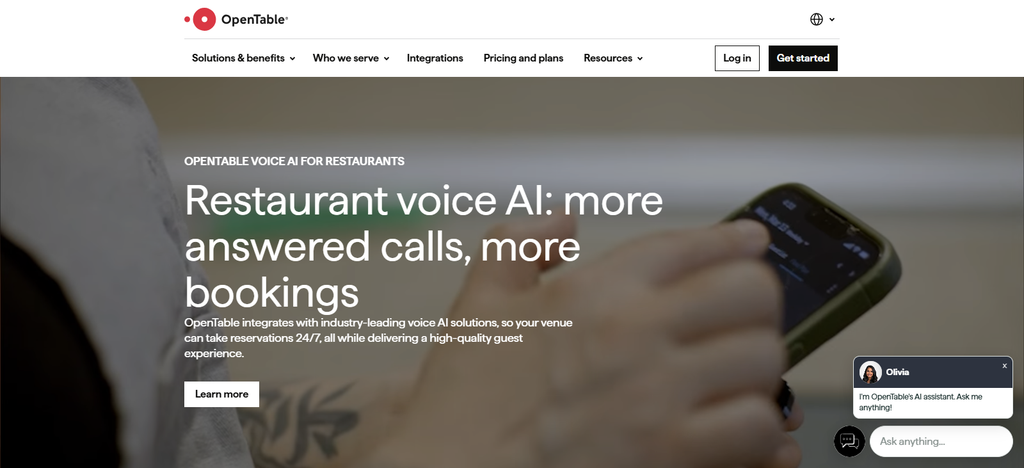
Real-time tables availability depends on connected AI partner and permissions. Guests can also change or cancel existing reservations if the integration chosen supports those actions.
Provider Variability Human Handoff Multilingual Communication After Hours Answering Service OpenTable doesn’t charge an additional fee to enable the integration, but individual AI partners charge separate subscription fees.
| Features | Pros | Cons |
|---|---|---|
| Connects with compatible voice AI partners | Lets restaurants add automated phone answering to an existing OpenTable setup | Requires choosing and configuring a supported partner |
| Supports reservation creation through partner integrations | Can help capture bookings from phone calls | Booking capabilities vary by partner |
| Can answer common guest questions | Reduces repetitive calls to restaurant staff | Complex questions may still need a person |
| Partner features may include reservation changes and cancellations | Can reduce manual reservation handling | Not every partner supports every booking action |
| Partner availability varies by region and plan | Gives restaurants several integration options | Additional partner fees may apply |
2. SevenRooms Voice AI
SevenRooms Voice AI offers independent restaurants the ability to automate guest calls, reservation requests, and routine communication with an integrated voice assistant.
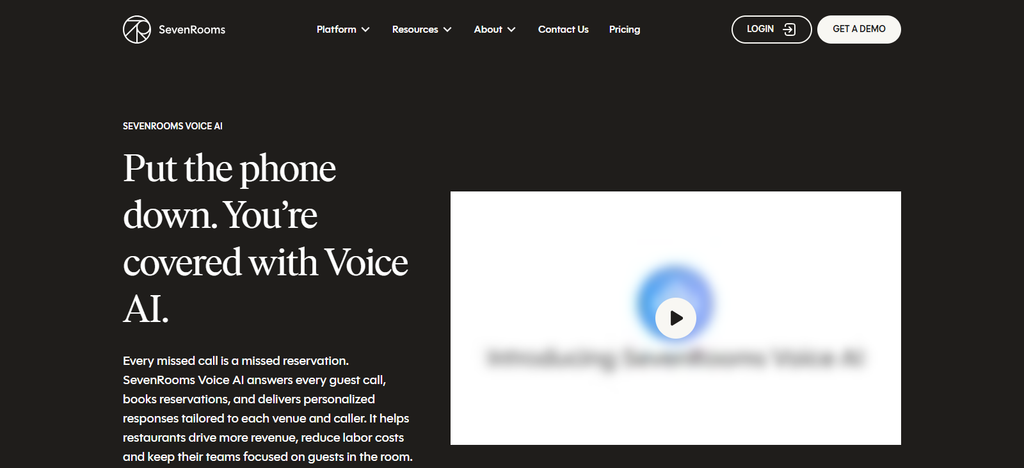
It takes calls 24/7, checks availability of reservations and processes new reservations, cancelations and modifications directly through its reservation management system. In restaurants, guests may be asked about menus, opening hours, parking and dining policies.
It has guest recognition features to identify returning customers and personalize conversations. If requests are complicated or need personal attention the system can route calls to appropriate staff. It allows for different voice and language settings. Pricing is on a custom sales quote basis, not a published standard subscription.
| Features | Pros | Cons |
|---|---|---|
| Answers guest calls around the clock | Helps capture bookings during busy periods and after hours | Requires a SevenRooms-based setup |
| Handles new reservations, modifications, and cancellations by voice | Reduces manual booking work | May need staff intervention for unusual requests |
| Uses guest profiles for personalized responses | Helps recognize returning guests | Personalization depends on available guest data |
| Answers FAQs about menus, parking, hours, and policies | Reduces repetitive staff interruptions | Restaurant information must be kept updated |
| Supports staff escalation, call recordings, and performance dashboards | Helps staff review conversations and monitor results | Requires staff to review escalated calls and reports |
3. Slang AI.
Slang AI – AI-powered virtual receptionist for restaurants to help them take reservation calls without having to answer every call by employees. It can create new reservations, check availability, edit existing reservations, and handle cancelations through integrations with OpenTable, SevenRooms, Resy, and Yelp. Guests can also ask about menus, parking, hours of operation, allergies and restaurant policies.
The platform supports 97 languages, allows language switching mid-conversation and can transfer callers directly to staff upon request. Its reservation confirmations, SMS communication, call recordings and performance insights help restaurants track booking activity. Core pricing begins at $399 per location per month, with other tiers available.
| Features | Pros | Cons |
|---|---|---|
| Answers restaurant calls 24/7 | Helps prevent missed calls during peak service | Ongoing subscription costs may be significant for small venues |
| Books, changes, and cancels reservations through supported integrations | Reduces manual reservation management | Workflows depend on the connected reservation platform |
| Integrates with OpenTable, SevenRooms, Resy, and Yelp | Fits restaurants already using supported systems | Restaurants using unsupported systems may need another solution |
| Supports multilingual conversations, including 97 languages | Helps serve guests who speak different languages | Language performance should be tested with real callers |
| Provides call recordings, summaries, SMS, and staff transfers | Improves follow-up and gives staff visibility into calls | Some advanced features require higher-tier plans |
4. Yelp Host Voice AI
Yelp Host Voice AI helps independent restaurants answer incoming phone calls and capture potential customers who would otherwise walk away with unanswered questions. As an AI phone-answering solution, it can share restaurant information, answer typical guest questions, and manage reservation-related requests with its integrations.
It can be used by restaurants to decrease missed calls during busy times and help guests when the restaurant is not open.
Check reservation availability, direct booking creation, cancelations management, multi-language coverage and human handoff vs actual restaurant integration and plan. Yelp does not have a readily apparent, public, stand-alone price for this AI service, so restaurants should inquire about current pricing and features.
| Features | Pros | Cons |
|---|---|---|
| AI-powered phone answering for restaurants | Helps respond to calls that staff might otherwise miss | Reservation capabilities depend on supported integrations |
| Handles common guest inquiries | Reduces repetitive questions for employees | May not resolve complicated or unusual requests |
| Connects with the OpenTable voice AI partner ecosystem | Can complement an existing restaurant reservation workflow | Availability and functionality may vary by market |
| Helps capture guest inquiries by phone | Gives callers an automated response when staff are busy | Restaurants should verify which requests it can complete |
| Supports automated call handling | Can reduce pressure on front-of-house teams | Public pricing and detailed feature availability may require a provider inquiry |
5. PolyAI for Restaurants
PolyAI for Restaurants delivers conversational voice agents that automate restaurant phone calls, taking reservation requests, answering guest questions and managing booking changes. Its artificial intelligence is able to check availability through connected reservation systems and make, change or cancel bookings without staff having to deal with each call.
It also takes care of requests for large parties, private events, deposits and common questions about restaurant policies.” PolyAI supports natural conversations, multiple languages, different accents, and human escalation when requests require a human touch.
Its OpenTable integration allows reservations to sync with the restaurant’s current system. Pricing is usage-based, typically on a per-connected-minute basis, with tailored commercial terms for restaurant deployments.
| Features | Pros | Cons |
|---|---|---|
| Answers restaurant phone calls 24/7 | Helps capture calls during busy service and outside opening hours | May require onboarding and integration work |
| Makes, amends, and cancels reservations through connected restaurant systems | Automates several common booking tasks | Exact capabilities depend on the connected systems |
| Answers questions about opening hours, parking, and corkage | Reduces repetitive guest inquiries | Restaurant-specific information needs accurate configuration |
| Captures large-party and event inquiries | Helps restaurants follow up on potential group bookings | Complex event requests may still need staff involvement |
| Handles high call volumes through conversational AI | Helps reduce phone workload for restaurant employees | Custom enterprise deployments may be more than a small venue needs |
6. Hostie AI
Hostie AI is a virtual restaurant concierge that handles incoming calls, text messages, guest inquiries, and reservation communication. The reservation integrations allow for the creation, availability check, modification, and cancelation of bookings via OpenTable, Resy, Tock, SevenRooms, and Yelp. Its waitlist-related communications, takeout assistance and private-event inquiry management can also be used by restaurants to capture additional business opportunities.
Hostie’s Premium offering includes multilingual communication in 20 languages and allows employees to follow conversations with live transcripts and its operator application. If personal assistance is required, staff can respond directly. The price depends on the plan, the needs of the restaurant and the integrations.
| Features | Pros | Cons |
|---|---|---|
| Automates calls for reservations, events, takeout, and guest questions | Covers several restaurant communication tasks | Some workflows depend on available integrations |
| Connects with restaurant reservation platforms | Helps manage bookings through existing systems | Restaurants should confirm compatibility before setup |
| Provides real-time conversation transcripts | Lets staff review guest interactions | Staff may need to monitor conversations and follow-ups |
| Supports multilingual guest communication | Helps restaurants serve a wider range of callers | Language coverage and quality should be checked for the target audience |
| Combines calls, texts, and emails with guest insights | Gives teams more visibility into guest communication | A broader communication platform may require staff training |
7. SoundHound Smart Answer
SoundHound Smart Answering is integrated with SoundHound’s restaurant voice AI capabilities that help businesses automate customer calls, answer common questions, and minimize interruptions during peak service times. Its broader voice technology powers restaurant operations like phone interactions, multilingual conversations, menu information and order-related assistance.
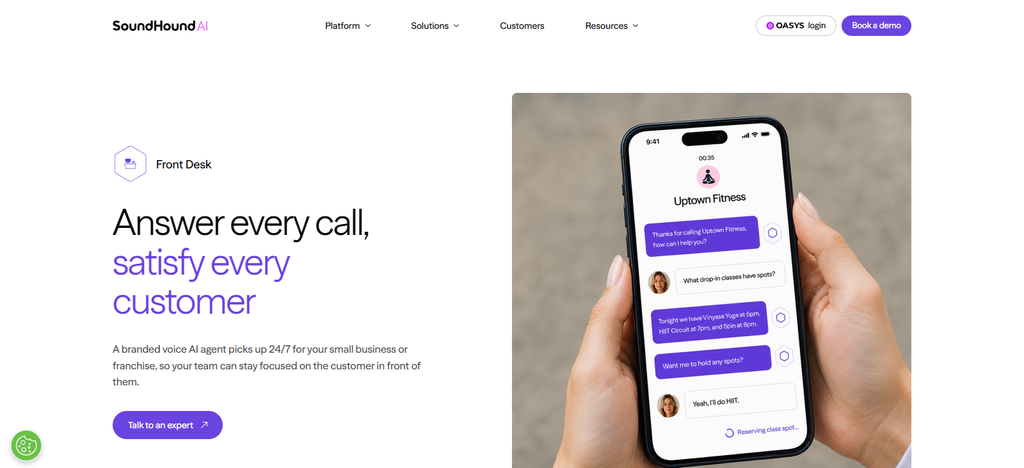
SoundHound’s OASYS platform can be integrated with appropriate hospitality systems to enable reservation creation, modification, cancelations and live availability checks. Human assisted resolution allows complex requests to be passed to restaurant staff with the context of the conversation
. It has multilingual voice capabilities and can switch languages during conversations. Pricing is typically tailored to the deployment, usage and integration requirements, not offered as an all-you-can-eat restaurant subscription.
| Features | Pros | Cons |
|---|---|---|
| Uses voice AI to answer restaurant phone calls | Helps reduce missed calls and staff interruptions | Reservation functions depend on the selected deployment |
| Answers common questions about restaurant services | Gives callers quick access to routine information | Incorrect or outdated restaurant details can affect responses |
| Supports voice-based customer interactions | Offers a hands-free way for guests to make inquiries | Complex conversations may need human assistance |
| Can connect with restaurant technology systems | May fit into an existing hospitality technology setup | Integration availability should be confirmed for the reservation platform |
| Supports automated call handling and customer assistance | Helps staff focus on in-person guests | Not every implementation is a complete reservation-management system |
8. Microsoft Copilot Studio
**Microsoft Copilot Studio allows independent restaurants and technology partners to create custom AI agents for managing reservations and guest communications. Restaurants can configure agents to capture booking dates, party sizes, preferred seating and contact details and then link them to reservation databases or external booking systems via APIs and Power Platform connectors.
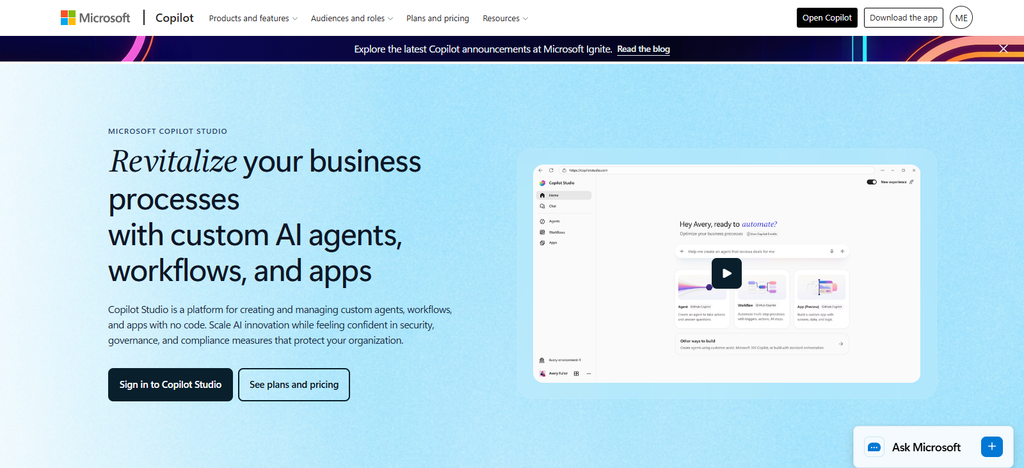
Add the right applications and agents can view live table availability, make reservations and process changes or cancelations to bookings. You can also configure workflows and connected services for multilingual conversations, automated confirmations and human handoff. In India, it will be priced starting at ₹16,640 per month for 25,000 messages, paid for annually. There are also pay-as-you-go options.
| Features | Pros | Cons |
|---|---|---|
| Builds custom AI agents for voice and digital conversations | Allows restaurants to design workflows around their needs | Requires configuration and technical expertise |
| Can connect to reservation databases through APIs and connectors | Can support live availability checks when properly integrated | Does not provide a ready-made restaurant reservation system |
| Can be configured to create, update, and cancel bookings | Offers flexibility for custom booking processes | Booking accuracy depends on the connected systems and workflow design |
| Supports multilingual conversational experiences | Can help serve guests across different language preferences | Language behavior needs testing and configuration |
| Supports escalation to human staff | Allows complicated requests to reach employees | Handoff processes must be designed and maintained |
9. Salesforce Agentforce
Salesforce Agentforce is an AI agent platform that restaurants can use to communicate with customers, answer questions about reservations, and manage guest relationships. Restaurants can create workflows to check real-time table availability, capture guest preferences, generate bookings and make modifications or cancelations by connecting Agentforce to reservation databases and external booking applications.
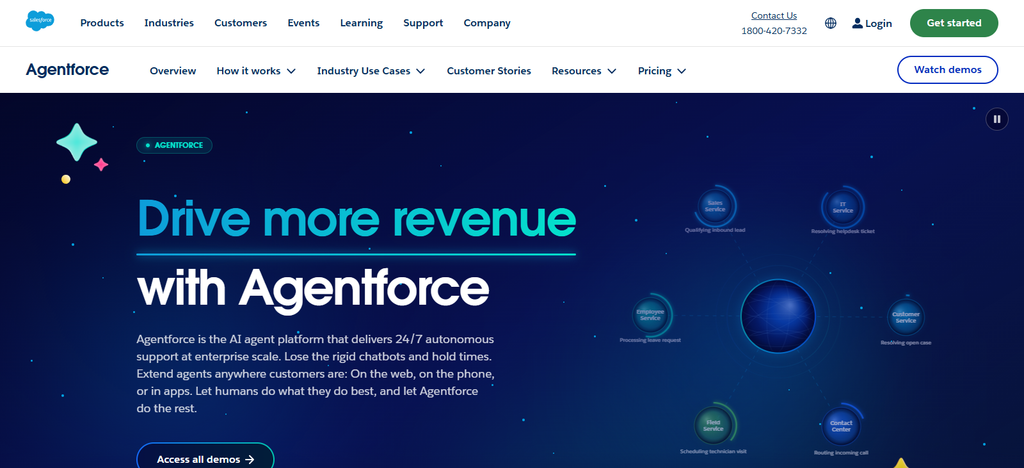
Its CRM capabilities can help keep customer profiles, reservation histories and personalized interactions with guests. Voice and digital communication options support automated assistance and configured escalation workflows can route complex requests to employees.
Multilingual functionality depends on the configuration and services selected. The published pricing is $2 per conversation or $500 for 100,000 Flex Credits. Additional implementation and integration costs are not included.
| Features | Pros | Cons |
|---|---|---|
| Builds AI agents for customer service and guest interactions | Supports customized restaurant service workflows | Can be complex for a small independent restaurant |
| Connects with CRM records and external systems | Helps use guest profiles and interaction history | Requires suitable integrations and reliable data |
| Can be configured to check availability and manage bookings | Supports automated reservation workflows | Live booking actions are not automatic without system connections |
| Supports automated responses across customer channels | Helps manage guest inquiries consistently | Setup and ongoing administration may require technical support |
| Supports escalation to human employees | Gives staff a way to handle sensitive or complicated requests | Human handoff depends on workflow configuration |
10. Google Dialogflow CX
Google Dialogflow CX allows restaurants to build conversational AI agents that can answer reservation questions over the phone, in website chats and other supported channels. APIs allow independent restaurants to create conversational flows to gather guest information, preferred times for booking, answer questions about the restaurant, and integrate with external reservation systems.
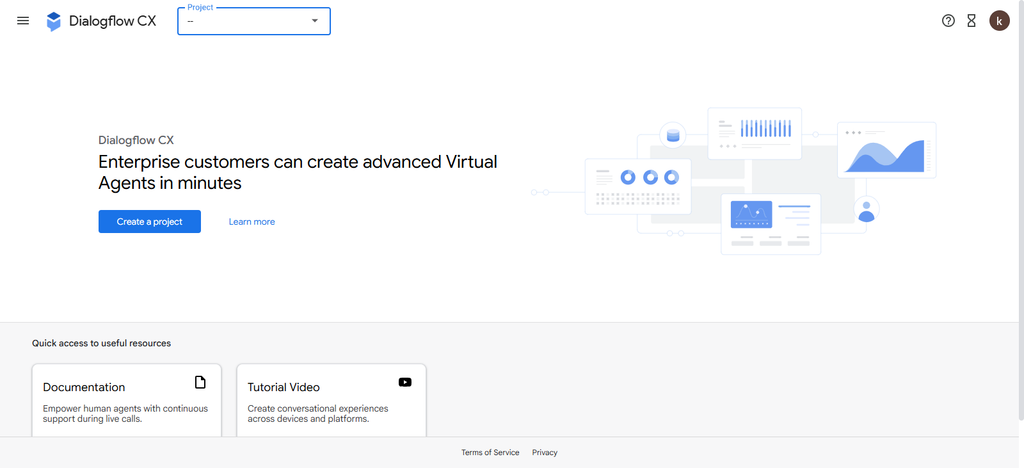
With the right back-end integrations, agents can view table availability in real time, make reservations, and handle cancelations and modifications. It supports multilingual conversations, so customers can speak to it in different languages, and has telephony integrations for voice-based interaction and configured human hand-off.
The price is based on usage (both audio and text) and there are additional charges for telephony or integration. It’s a platform you can customize, not a restaurant reservation product you download.
| Features | Pros | Cons |
|---|---|---|
| Builds conversational voice and chat agents | Allows restaurants to create customized guest experiences | Requires technical setup and conversation design |
| Connects with external reservation systems through APIs | Can check live table availability when integrated correctly | Does not include a built-in restaurant booking database |
| Can be configured for booking, cancellation, and modification requests | Supports tailored reservation workflows | Each booking action needs to be developed and tested |
| Supports multilingual conversational agent design | Can serve guests in different languages | Language coverage and conversation quality vary by configuration |
| Supports integrations with contact-center and telephony systems | Offers flexibility for phone-based guest support | Integration, telephony, and usage costs can add complexity |
Conclusion
Selecting the best AI agents for independent restaurants’ reservation management requires consideration of the need for booking automation, real-time table availability, guest communication, pricing, and integration.
Restaurants can automate phone reservations, cancelations and guest inquiries with platforms like Slang AI, Hostie AI, PolyAI and SevenRooms, while Microsoft Copilot Studio, Salesforce Agentforce and Google Dialogflow CX offer customizable solutions for building reservation workflows.
Restaurant owners should consider multilingual support, human handoff, ease of setup and ongoing costs when choosing an agent. The right AI solution can help independent restaurants reduce missed calls, streamline day-to-day operations, enhance guest experiences, and better manage reservations.
FAQ
What Are AI Agents for Independent Restaurant Reservations?
AI agents are automated systems that manage restaurant booking requests, answer guest inquiries, check table availability, confirm reservations, and handle cancellations or modifications through voice and digital communication channels.
How Do AI Reservation Agents Help Independent Restaurants?
They reduce manual booking work by answering incoming calls, managing reservation requests, sending confirmations, handling guest questions, and supporting after-hours bookings without requiring staff to respond to every inquiry.
Can AI Agents Check Real-Time Table Availability?
Yes, AI agents can check real-time table availability when connected to compatible reservation management systems. They can identify open time slots, check party sizes, and confirm available tables.
Can AI Agents Automatically Cancel or Modify Restaurant Reservations?
Yes, supported AI agents can process booking cancellations and modifications through connected reservation systems. Their ability to update reservations depends on integration permissions and restaurant-configured booking policies.