


This article discusses the Best AI Inference Providers for Businesses in 2026. More enterprises depend on solutions based on AI. Balancing speed, scalability, and cost-effectiveness in an AI-driven world means understanding how inference works and selecting the right platform. Today’s businesses have a suite of providers that include AWS AI, Azure AI, Google AI, Together AI, and Fireworks AI. These providers know how to operate in real-time on a large enterprise-scale.
What is AI Inference Providers for Businesses?
AI Inference Providers offer cloud-based services that increase business access to the computing resources necessary to deploy AI at scale. When a model is trained, inference describes how the model processes new data and returns output in real time. Most companies like Together AI, Fireworks AI, and Groq help businesses speed up inferences at a low cost.
Cloud providers like AWS AI, Azure AI, and Google Cloud AI focus more on ensuring compliance and offering different modeling modalities. These companies reduce the barriers of entry for providing AI applications that operate efficiently and reliably across numerous business needs.
How To Choose AI Inference Providers for Businesses
Performance & Latency – Consider if the provider offers hardware allowing for real-time processing with ultra-low latency (Groq’s LPU).
Pricing Models – Consider token-based vs GPU-hour pricing to determine the best cost/value (Together AI, DeepInfra).
Scalability – Check if the platform supports autoscaling and/or distributed computing across enterprise-grade workloads (Anyscale, Baseten).
Model Availability – Consider if the provider supports a variety of open source and proprietary models (AWS Bedrock, Google Gemini, Azure OpenAI).
Compliance & Security – Consider if the provider offers HIPAA, GDPR and SOC 2 certifications (AWS, Azure).
Integration Ecosystem – Evaluate if the provider extends your existing enterprise tools (Azure for Microsoft, Google Cloud for Workspace).
Customization & Fine-Tuning – Consider providers who excel in LoRA, DPO, and RLHF fine-tuning (Together AI, Fireworks AI).
Deployment Flexibility – Check if the provider offers serverless APIs, persistent endpoints, edge deployments (Replicate with Cloudflare).
Support & Reliability – Check if the provider offers enterprise support, uptime SLAs, and has a global infrastructure.
Use Case Fit – Match your use-case with Providers like DeepInfra (cost sensitive startups), Groq (latency sensitive), AWS (Fortune 500).
Key Points
| Provider | Key Strengths | Best For |
|---|---|---|
| Together AI | Optimized inference clusters, cost-efficient scaling | Enterprises needing multi-model orchestration |
| Fireworks AI | High-performance inference, strong developer APIs | Startups and SaaS platforms |
| Groq | Ultra-low latency with custom hardware (GroqChip) | Real-time AI workloads |
| Baseten | Easy deployment, serverless inference | Teams needing fast prototyping |
| DeepInfra | Pay-per-inference pricing, GPU-backed scaling | Cost-sensitive businesses |
| Replicate | Community-driven model hosting, simple APIs | Experimentation and open-source models |
| Anyscale | Ray-based distributed inference | Large-scale ML pipelines |
| AWS AI | Enterprise-grade governance, global reach | Regulated industries and Fortune 500 |
| Azure AI | Deep Microsoft ecosystem integration | Enterprises with Microsoft stack |
| Google Cloud AI | TPU-backed inference, strong ML tooling | Research-heavy organizations |
1. Together AI
Founded in 2022 (San Francisco), Together AI provides open-source inference and fine-tuning in 200+ models (Llama, Mistral, Qwen, DeepSeek). Pricing is per-token ($0.10 – $0.90/M input tokens) and charged on GPU-hour usage (H100 at ~$3.49/hr, B200 at ~$7.49/hr). Raising $800M in 2026 at an $8.3B valuation, Together AI achieved about $1B ARR.
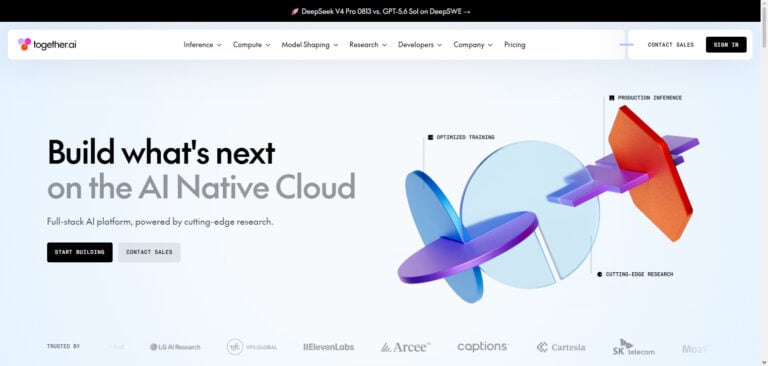
The company’s core capabilities include its serverless inference APIs, OpenAI-like endpoints, and fine-tuning workflows (LoRA, DPO and RLHF). Batch inference is used by enterprises, and by startups that utilize its fine-tuned ML infrastructure and avoid GPU over-head. Together AI is optimized for teams that are devoted to open-weight models of AI and scaling practices, and want to avoid private lock-in.
| Feature | Details |
|---|---|
| Founded | 2022, San Francisco |
| Pricing | $0.10–$0.90 per 1M tokens; GPU-hour billing (H100 ~$3.49/hr) |
| Valuation | $8.3B (2026) |
| ARR | ~$1B annual recurring revenue |
| Models | 200+ (Llama, Mistral, Qwen, DeepSeek) |
| APIs | OpenAI-compatible endpoints |
| Fine-tuning | LoRA, DPO, RLHF supported |
| Compliance | SOC 2, GDPR |
| Strength | Cost-efficient inference scaling |
| Best For | Enterprises avoiding proprietary lock-in |
2. Fireworks AI
Founded in 2022 by Lin Qiao, the ex-Meta PyTorch lead, San Mateo-based Fireworks AI is the ultra-fast inference pioneer. Fireworks AI closed the $1.5B Series D in 2026 and reached a $17.5B valuation, while crossing the $1B ARR. Fireworks AI charges $0.008–$0.10 per 1M tokens for its serverless tier and $7/hr for an H100/H200 lease. For B300, leases cost $12/hr. Fireworks AI offers LoRA fine-tuning for $0.50–$2 per M token and offers full-param DPO for 80B–300B models.
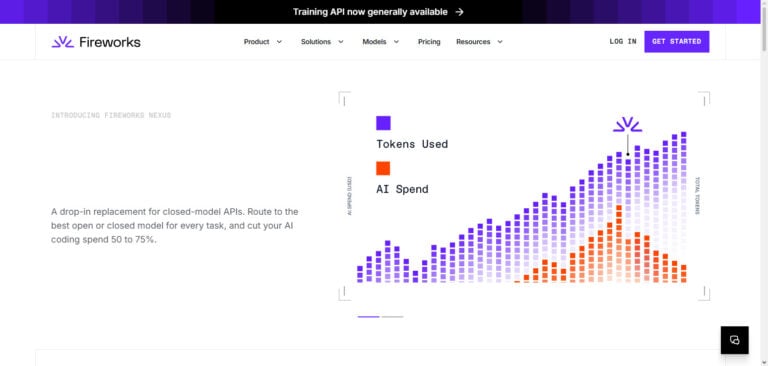
All of these offerings, combined with SOC 2 and HIPAA and GDPR compliance, make Fireworks AI a leading enterprise competitor. Currently, Fireworks AI processes over 40 trillion tokens each day and has Uber and Shopify as customers. Fireworks AI offers ultra-low latency and high throughput for large production workloads. Fireworks AI puts it directly against Together AI.
| Feature | Details |
|---|---|
| Founded | 2022, San Mateo |
| Pricing | $0.008–$0.10 per 1M tokens; GPU $7–$12/hr |
| Valuation | $17.5B (2026) |
| ARR | $1B+ |
| Models | Supports 80B–300B scale |
| APIs | Ultra-fast inference APIs |
| Fine-tuning | LoRA + full-param DPO |
| Compliance | SOC 2, HIPAA, GDPR |
| Strength | Low latency, high throughput |
| Best For | Production-scale workloads |
3. Groq
In 2016, Jonathan Ross (formerly of Google TPU team), founded Groq in Mountain View. Groq offers custom inference hardware (LPU – Language Processing Unit). By 2025, it had raised $2.3B and is valued in the multi-billion range. Groq has competitive pricing ($2/M input tokens, $6/M output tokens), meaning it undercuts hardware accelerators competing against it like GPT-5.6.
GroqCloud API provides low latency inference with a deterministic guarantee that is 10X better than hardware accelerators based on GPUs. Groq offers real time AI, especially for chatbots, agents, and voice assistants applications due to its global data center deployments. For latency sensitive applications, Groq is the best.
| Feature | Details |
|---|---|
| Founded | 2016, Mountain View |
| Pricing | $2/M input tokens, $6/M output tokens |
| Hardware | Custom LPU (Language Processing Unit) |
| Valuation | Multi-billion (2025) |
| API | GroqCloud |
| Latency | Ultra-low, deterministic |
| Throughput | 10x GPU-based systems |
| Compliance | Enterprise-ready |
| Strength | Real-time inference |
| Best For | Latency-sensitive workloads |
4. Baseten
Baseten was founded in 2019 (San Francisco), and provides an inference platform for production deployment. With US$1.5B in Series F funding in 2026, at a US$13B valuation, and reporting ~US$600M ARR, Baseten is able to offer GPU pricing on a pay-as-you-go basis, with a free tier. Baseten provides autoscaling, cold-start optimization, and a 99.99% uptime SLA.
Baseten provides APIs that are ready-to-use and open-weight models (DeepSeek, GLM, GPT OSS), with dedicated GPU deployments (H100, B200). Its open-source tool Truss standardizes model packaging. Baseten is intended for ML engineers and start-ups looking for serving infrastructure without the necessity of self-hosted deployment.
| Feature | Details |
|---|---|
| Founded | 2019, San Francisco |
| Pricing | GPU billed per minute; free tier |
| Valuation | $13B (2026) |
| ARR | ~$600M |
| Models | Open-weight (DeepSeek, GLM, Llama) |
| APIs | Ready-to-use endpoints |
| Tools | Truss (open-source packaging) |
| Compliance | 99.99% uptime SLA |
| Strength | Autoscaling, serverless |
| Best For | ML engineers, startups |
5. DeepInfra
Palo Alto, 2022 – DeepInfra. Low-cost inference cloud with 190+ open-source models such as Llama, DeepSeek, Qwen, and Mistral. DeepInfra raised a $107M Series B in 2026 with NVIDIA and Samsung Next as their backers. Pricing is even cheaper than rival companies at $0.02–$0.50 per 1M tokens and $1.98/hr (B300) per GPU cluster.
DeepInfra runs 8+ US data centers and offers OpenAI-compatible APIs with SOC 2 and ISO 27001 compliance. It processes approximately 5 Trillion tokens each week, and they make it their mission to provide budget-friendly inference services. Ideal for businesses that want to scale on a budget and do not want to be locked into a proprietary system.
| Feature | Details |
|---|---|
| Founded | 2022, Palo Alto |
| Pricing | $0.02–$0.50 per 1M tokens; GPU $1.98/hr |
| Valuation | $107M Series B (2026) |
| Models | 190+ (Llama, DeepSeek, Qwen) |
| APIs | OpenAI-compatible |
| Data Centers | 8+ US regions |
| Compliance | SOC 2, ISO 27001 |
| Strength | Budget-friendly inference |
| Scale | ~5 trillion tokens weekly |
| Best For | Cost-sensitive enterprises |
6. Replicate
Replicate started in 2019 (San Francisco) to host over 100,000+ models like Stable Diffusion, FLUX, Llama and Whisper. They have priced at a per second usage of GPU at $0.0001 – $0.0112/sec and have costs for idle usage.
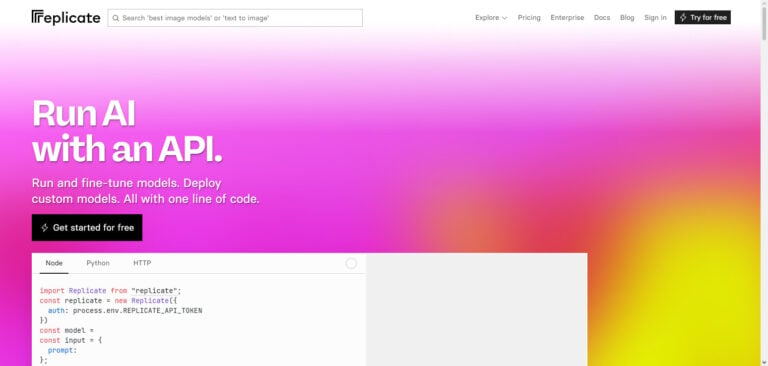
Cloudflare bought Replicate in 2026, and with that, Replicate gained access to Cloudflare’s global edge network. With that, Replicate offers Deployments (persistent endpoints), streaming and async pipelines. They have an open-source tool Cog which helps with packaging and deploying. They are mostly targeted at developers and startups that need to quickly prototype across various modalities like image, video, audio, LLMs.
| Feature | Details |
|---|---|
| Founded | 2019, San Francisco |
| Pricing | $0.0001–$0.0112/sec GPU billing |
| Acquisition | Cloudflare (2026) |
| Models | 100,000+ (Stable Diffusion, Whisper, Llama) |
| APIs | Deployments, streaming, async |
| Tools | Cog (open-source packaging) |
| Compliance | Cloudflare edge integration |
| Strength | Rapid prototyping |
| Scale | Global edge serving |
| Best For | Developers, startups |
7. Anyscale
Anyscale was built by UC Berkeley researchers who created a multi-cloud distributed AI compute technology called Ray, and was introduced in 2019. It was bought by Nscale in 2026 for $1.65 billion. Now, it completely integrates Ray in its full-stack AI cloud.
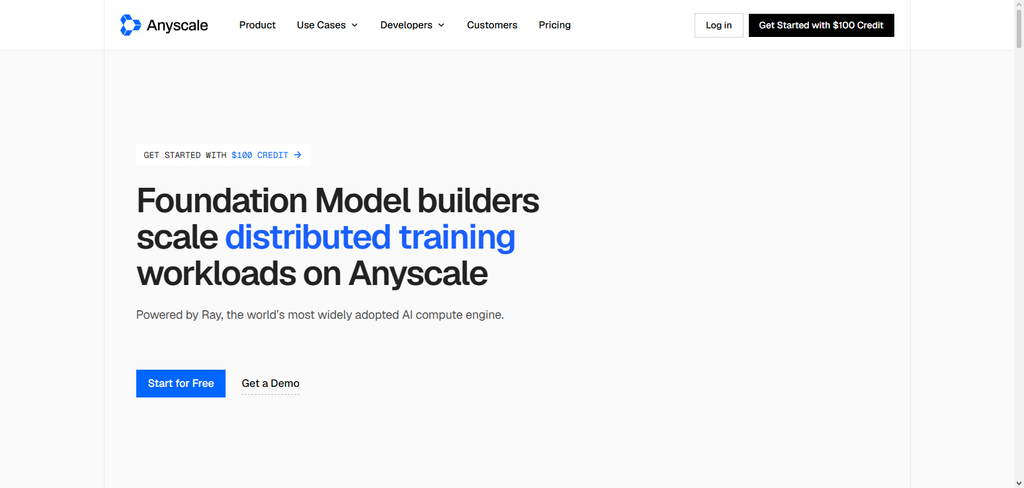
Usage-based pricing includes $0.39/M tokens for Llama 3.3 70B, $0.0135/hr for a CPU, and $4.95/hr for A100 GPUs. Anyscale covers the entirety of the process of training, performing batch inference, and serving pipelines for OpenAI’s endpoints. It is ideal for large-scale ML workloads spread across multiple clouds.
| Feature | Details |
|---|---|
| Founded | 2019, San Francisco |
| Acquisition | Nscale (2026, $1.65B) |
| Pricing | $0.39/M tokens (Llama 70B); GPU $4.95/hr |
| Models | Llama, DeepSeek, OSS |
| APIs | OpenAI-compatible |
| Tools | Ray (distributed compute) |
| Compliance | Enterprise-ready |
| Strength | Distributed ML workloads |
| Scale | Multi-cloud pipelines |
| Best For | Large-scale ML pipelines |
8. AWS AI
AWS launched in 2006 and still has the largest studied market share at 28% and a projected $25B annual recurring revenue for AI in 2026. Its AI offerings include SageMaker and Bedrock (Claude, GPT, Llama, Titan, and Nova). Pricing is not consistent: Claude Opus costs $15 per input and $75 per output for 1M tokens, and GPT-5.5,
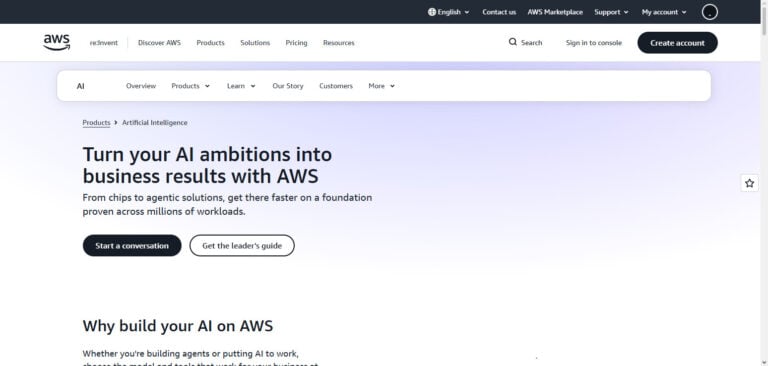
Llama 4, and other models can cost anywhere from $5 to $15 per 1M tokens. They operate optimized AI training and inferencing chips called Inferentia and Trainium. AWS dominates highly regulated markets like FedRAMP and HIPAA as many industries depend on them.
| Feature | Details |
|---|---|
| Founded | 2006 |
| Pricing | $0.18–$75 per 1M tokens |
| Revenue | $25B AI run rate (2026) |
| Models | Claude, GPT, Llama, Titan |
| APIs | Bedrock, SageMaker |
| Hardware | Inferentia, Trainium |
| Compliance | FedRAMP, HIPAA |
| Strength | Global reach, governance |
| Market Share | 28% cloud |
| Best For | Regulated industries |
9. Azure AI
Azure was first released in 2010 and has since captured 21% of the cloud market. It passed the $100 billion revenue point in 2026. Azure’s AI offerings include Azure OpenAI Service(GPT-4/GPT-5/Claude/Llama), Azure AI Studio, and Copilot Studio.
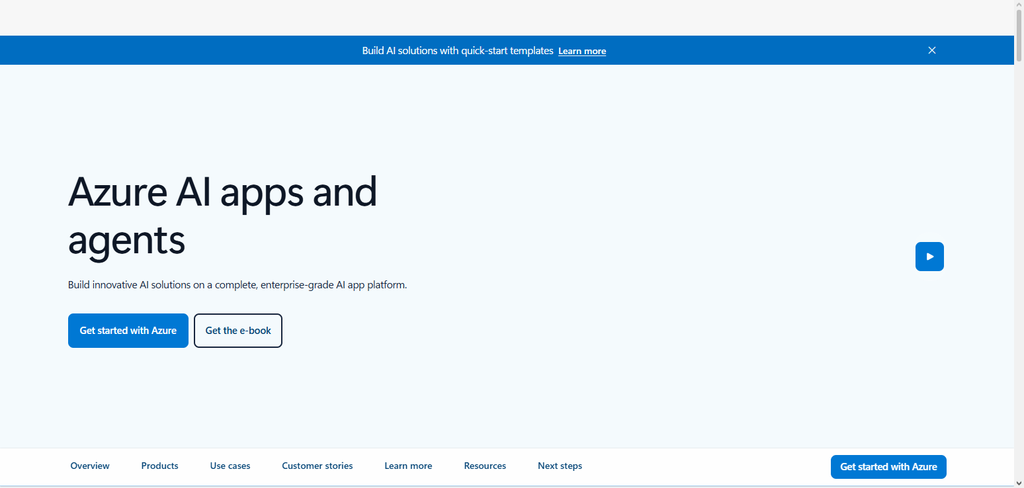
Pricing for GPT-4o is $2.50 input/ $10 output per 1M tokens, Claude Haiku is $0.80/$4, and Llama 4 is $5/$15. Azure has a cost optimization solution with provisioned throughput units (PTUs). It has deep integration with the Microsoft offerings, so is well suited for clients that have a strong Microsoft stack.
| Feature | Details |
|---|---|
| Founded | 2010 |
| Pricing | $0.80–$15 per 1M tokens |
| Revenue | $100B+ (2026) |
| Models | GPT-5.6, Claude, Llama |
| APIs | Azure OpenAI, AI Studio |
| Tools | Copilot Studio |
| Compliance | SOC 2, GDPR |
| Strength | Microsoft ecosystem |
| Market Share | 21% cloud |
| Best For | Enterprises using Microsoft stack |
10. Google Cloud AI
Google Cloud AI in 2026 is one of the most advanced enterprise AI ecosystems. Built on DeepMind research and Google’s cloud infrastructure, work on AI began in 2008 with the introduction of Google Cloud, while significant advancements were made in 2015 with TensorFlow. In 2021, Google Cloud launched Vertex AI, while the first models in the Gemini family were introduced in 2023.
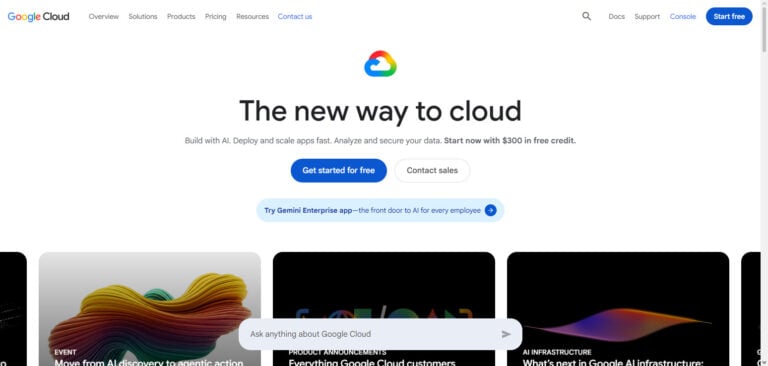
Gradually, Google Cloud’s offering began to include multimodal AI and advanced AI offerings for image generation (Imagen), video generation (Veo), and multimodal models like Gemini 3.1 Pro and Flash. The models and offerings continue to improve with flexibility in pricing. An enterprise offering of Google Cloud AI, called the Vertex AI platform, has automatic deployment and compliance to SOC 2 and ISO 27001.
The large context windows found in Google Cloud AI help regulated industries employ Google Cloud AI for an in-depth analysis of legal documentation and even programming code. Beyond this, the creative industries can employ Imagen and Veo to aid in their endeavors. Overall, Google Cloud AI is best suited for enterprises, developers, and researchers who need multimodal, scalable, and compliant AI solutions.
| Feature | Details |
|---|---|
| Founded | 2008 |
| Pricing | $0.15–$1.25 per 1M tokens |
| Consumer Plans | $19.99–$29.99/month |
| Models | Gemini, Imagen, Veo, Astra |
| APIs | Vertex AI, AI Studio |
| Context Window | Up to 1M tokens |
| Compliance | SOC 2, ISO 27001 |
| Strength | Multimodal AI |
| Market Share | 10%+ cloud |
| Best For | Enterprises, researchers, creatives |
AI Inference Providers Comparison (2026)
| Provider | Founded | Pricing (2026) | Strengths | Best For |
|---|---|---|---|---|
| Together AI | 2022 | $0.10–$0.90 per 1M tokens; GPU-hour billing (H100 ~$3.49/hr) | Open-source model orchestration, fine-tuning workflows | Enterprises avoiding proprietary lock-in |
| Fireworks AI | 2022 | $0.008–$0.10 per 1M tokens; GPU $7–$12/hr | Ultra-fast inference, enterprise compliance | Production-scale workloads |
| Groq | 2016 | $2/M input tokens, $6/M output tokens | Custom LPU hardware, ultra-low latency | Real-time AI workloads |
| Baseten | 2019 | GPU billed per minute; free tier | Autoscaling, serverless APIs, Truss packaging | ML engineers, startups |
| DeepInfra | 2022 | $0.02–$0.50 per 1M tokens; GPU $1.98/hr | Budget-friendly inference, OpenAI-compatible APIs | Cost-sensitive enterprises |
| Replicate | 2019 | $0.0001–$0.0112/sec GPU billing | Community-driven hosting, Cloudflare edge integration | Rapid prototyping, creative teams |
| Anyscale | 2019 | $0.39/M tokens (Llama 70B); GPU $4.95/hr | Ray-based distributed compute | Large-scale ML pipelines |
| AWS AI | 2006 | $0.18–$75 per 1M tokens | Bedrock, SageMaker, Inferentia/Trainium chips | Regulated industries, Fortune 500 |
| Azure AI | 2010 | $0.80–$15 per 1M tokens | Microsoft ecosystem integration, PTU optimization | Enterprises using Microsoft stack |
| Google Cloud AI | 2008 | $0.15–$1.25 per 1M tokens; consumer plans $19.99–$29.99/month | Gemini multimodal models, Vertex AI, DeepMind research | Enterprises, researchers, creatives |
Conclusion
The AI inference industry was characterized by a separation of the market into specialized start-ups and enterprise hyperscalers by the year 2026. Specialized start-ups, including Groq, Baseten, and Together AI, compete to include innovative low latency hardware and APIs and cost efficiency all while maintaining open sourced models. Start ups and developers pay attention to these innovations.
Enterprise Hyperscalers lead in enterprise adoption with global infastructure, compliance frameworks, and offer multimodal capabilities. All of these innovations and offerings create a market that offers a variety of options like speed at a cost of scalability to maintain controls and governance, making it easy for businesses to use AI inference as a key differentiation strategy.
FAQ
What is Replicate AI?
Replicate AI is a cloud platform that lets developers run, deploy, and scale machine learning models without managing infrastructure. It hosts 100,000+ open-source models across text, vision, audio, and multimodal AI.
When was Replicate founded?
Replicate was founded in 2019 in San Francisco. In 2026, it was acquired by Cloudflare, integrating its inference stack into Cloudflare’s global edge network.
How does Replicate pricing work?
Replicate uses GPU-per-second billing. Costs range from $0.0001–$0.0112 per second, making it highly affordable for experimentation, prototyping, and short-lived inference workloads.
What models are available?
Replicate hosts models like Stable Diffusion, Whisper, Llama, FLUX, and multimodal OSS models. Developers can deploy their own models using Cog, Replicate’s open-source packaging tool.
What is Cog?
Cog is an open-source framework that standardizes model packaging, ensuring reproducibility and easy deployment across Replicate’s infrastructure.