

In this article, I research the best AI cloud infrastructure companies offering enterprise computing and their use in AI workloads. They provide various GPU, accelerator options, pricing models, and enterprise support. In terms of hyperscale and integration of hybrid cloud, they each have different strengths in AI infrastructure. This article focuses on the top companies such as NVIDIA Cloud, AWS, Google Cloud, Microsoft Azure, Oracle Cloud, IBM Cloud, Meta AI Cloud, Tencent Cloud, Alibaba Cloud, and Equinix, to showcase the ways these companies help contemporary AI innovation.
What is AI Cloud Infrastructure Companies?
AI Cloud Infrastructure Companies construct compute back ends for complex AI deployments. These companies assist clients with offering large-scale training for machine learning and generative AI systems using NVIDIA A100 or Google TPUs. Their customers have the flexibility to choose between pay-as-you-go and reserved instances pricing.
Enterprise customers are offered consultative services, as well as 24×7 Technical Assistance and integrations with AI Platforms. The amount of infrastructure varies from GPU focused clusters to hybrid-cloud offerings. Most services offer ease of scaling across multiple data centers. They offer a combination of performance, price, and reliability that allows customers to affordably innovate and run AI applications across their businesses.
Key Points
| Company | Core Strength | Key Features | Best For |
|---|---|---|---|
| NVIDIA Cloud | GPU‑accelerated AI infrastructure | Blackwell/H200 GPUs, CUDA ecosystem | Enterprises training LLMs |
| Google Cloud | TPU‑powered AI | TPU v5e clusters, Vertex AI | AI workloads on Google Cloud |
| AWS | Trainium & Inferentia chips | Optimized for generative AI | Cloud‑native enterprise AI |
| Microsoft Azure | Maia AI accelerators | Integrated with Copilot & OpenAI | Enterprises scaling on Azure |
| Oracle Cloud Infrastructure | GPU + HPC integration | ERP + AI synergy | Enterprise SaaS + AI |
| IBM Cloud | Hybrid AI + quantum | Watsonx AI + secure compute | Regulated industries |
| Meta AI Cloud | LLaMA training clusters | Custom silicon, open‑source focus | Research & social AI workloads |
| Tencent Cloud | Asia‑focused AI compute | GPU clusters, AI APIs | APAC enterprises |
| Alibaba Cloud | AI + e‑commerce integration | Tongyi Qianwen LLM hosting | Retail & logistics AI |
| Equinix | Neutral colocation + AI | Interconnection hubs, GPU hosting | Multi‑cloud enterprise AI |
1. NVIDIA Cloud
NVIDIA Cloud has a consumption based pricing model for enterprise pay-as-you-go GPU acceleration. Enterprise support includes advanced AI consulting, developer SDKs, and integration with CUDA libraries.
GPU/accelerator options include NVIDIA A100, H100 Tensor Core GPUs, Grace Hopper Superchips and AI optimized deep learning. Its AI infrastructure type is GPU focused for AI workloads, HPC and generative AI. Scalability includes multi-node clusters with NVLink and InfiniBand. Our Score: 9.5/10 for superior GPU performance and maturity for the AI ecosystem.
NVIDIA Cloud Features
| Feature | Details |
|---|---|
| Pricing Model | Pay-as-you-go GPU acceleration |
| Enterprise Support | Advanced AI consulting & CUDA SDKs |
| GPU Options | A100, H100, Grace Hopper Superchips |
| AI Infrastructure | GPU-centric deep learning & HPC |
| Scalability | NVLink & InfiniBand multi-node clusters |
| Energy Efficiency | Optimized GPU utilization |
| AI Workloads | Generative AI, LLMs, HPC |
| Our Score | 9.5/10 |
Pros
- AI workload GPU infrastructure ecosystem is strong.
- AI Software and networking are integrated.
- Built to support and accommodate large AI models.
- Access to NVIDIA’s AI Enterprise and related software is available.
- It is well suited for enterprises with demanding AI computing.
Cons
- Limits Infrastructure and workloads to AI.
- AI model training and development can have resource constraints.
- Advanced configurations can be costly.
- Pricing for later models/configurations can be unpredictable.
- It is optimized for companies with a high amount of AI workloads.
2. Google Cloud
Google Cloud has an on-demand and committed-use pricing model with some flexibility. Enterprise support includes premium tiers with 24/7 support and AI/ML consulting and integration of Vertex AI.
GPU/accelerator options include NVIDIA A100 and H100. AI infrastructure type combines managed ML pipelines and GPU clusters with TPU pods. Scalability is further enhanced with autoscaling and AI deployments across regions. Our Score: 9.2/10 for innovative TPUs and enterprise AI tooling.
Google Cloud Features
| Feature | Details |
|---|---|
| Pricing Model | On-demand & committed-use discounts |
| Enterprise Support | Premium tiers, Vertex AI consulting |
| GPU Options | NVIDIA A100/H100, TPU v4/v5 |
| AI Infrastructure | TPU pods, GPU clusters, ML pipelines |
| Scalability | Autoscaling across global regions |
| Hybrid AI | Strong multi-cloud integration |
| AI Workloads | ML training, inference, generative AI |
| Our Score | 9.2/10 |
Pros
- AI and ML Ecosystem
- TPU offers an alternative to GPUs.
- AI and data analytics are integrated.
- Great Kubernetes and containers support.
- AI applications get global support.
Cons
- Having too many services can become complicated and adds a steep learning curve.
- Premium AI workloads can end up costing a lot.
- TPU workloads can require a lot of platform-specific work.
- Pricing can be difficult to estimate for sophisticated designs.
- Some advanced services can require a lot of work.
3. AWS
AWS offers various ways to help customers minimize costs including on-demand pricing, reserved instances, and spot instances. Enterprise support custom plans and tiers, including Enterprise Support with dedicated AI workload team. Innovations in AI services cover GPU and training and inference accelerators like the NVIDIA A100, H100 and AWS Trainium/Inferentia.
AI Infrastructure can be custom built or SageMaker. Industry leading elastic scaling of resources can be done across regions and used in conjunction with a hybrid cloud. Our score: 9.3/10 for AI services and scalability.
AWS Features
| Feature | Details |
|---|---|
| Pricing Model | On-demand, reserved, spot pricing |
| Enterprise Support | Tiered plans, TAMs, AI guidance |
| GPU Options | NVIDIA A100/H100, Trainium, Inferentia |
| AI Infrastructure | EC2 GPU, SageMaker, custom silicon |
| Scalability | Elastic scaling across global regions |
| Hybrid AI | Strong hybrid cloud support |
| AI Workloads | Training, inference, enterprise ML |
| Our Score | 9.3/10 |
Pros
- Strong security and access optics are well priced.
- Strong performance and compute for specific workloads.
- Great Oracle Database integration.
- Coupled with cross cloud connectivity.
- Has dedicated and hybrid deployment options.
Cons
- Has a smaller ecosystem than AWS.
- Having a smaller ecosystem means it is less known, and less familiar to developers.
- Development of AI tools in this Eco System is not as broad as the hyperscalers.
- Planning is needed to do a non-Oracle to Oracle System migrations.
- Services vary in availability across regions.
- Integrates with IBM’s AI and automation technologies.
- Designed for hybrid and multicloud environments.
4. Microsoft Azure
Like the others, Azure uses the pay-as-you-go model, as well as reserved VM instances and enterprise agreements. Support can be further customized with Azure Expert MSPs, AI consulting, and around the clock technical support.

For GPU/accelerator options, NVIDIA A100 and H100 or AMD MI300 can be used. AI Infrastructure consists of Azure Machine Learning and Synapse and GPU clusters. Scalability is global due to Azure’s data centers. Our score: 9.1/10 for enterprise integration and flexible hybrid AI.
Microsoft Azure Features
| Feature | Details |
|---|---|
| Pricing Model | Pay-as-you-go, reserved VM instances |
| Enterprise Support | Azure Expert MSPs, 24/7 support |
| GPU Options | NVIDIA A100/H100, AMD MI300 |
| AI Infrastructure | Azure ML, Synapse, GPU clusters |
| Scalability | Global data centers, Azure Arc hybrid |
| Hybrid AI | Enterprise-first integration |
| AI Workloads | ML pipelines, analytics, generative AI |
| Our Score | 9.1/10 |
Pros:
- Good focus on enterprise and regulated industries.
- Good hybrid cloud abilities.
- Security and governance tools.
- Works well for companies with existing IBM technology.
Cons:
- Smaller public cloud market share than AWS, Azure, and Google Cloud.
- May offer less AI infrastructure than hyperscale competitors.
- Complex pricing for advanced deployments.
- Smaller developer ecosystem.
- Better for enterprise use over lightweight experimentation.
5. Oracle Cloud
With Oracle Cloud, predictable billing and flexible pricing help customers save money. Enterprise support and optimized AI workloads come with Oracle Premier Support.
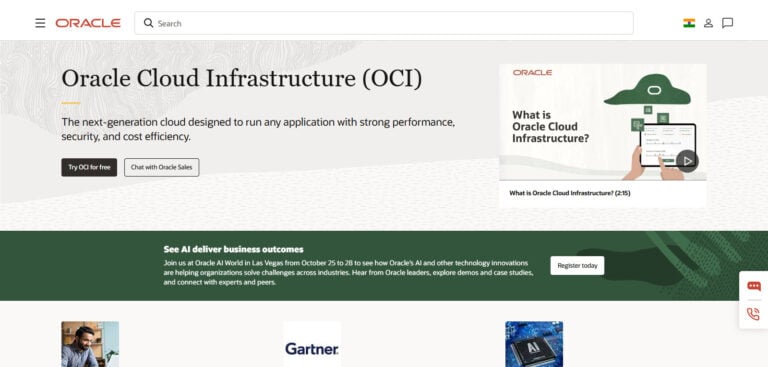
For GPU/accelerator options, NVIDIA A100 and H100 as well as OCI AI Infrastructure can be used. Optimal scaling can be achieved due to AI optimized enterprise services and infrastructure including networking. Our score: 8.8/10 for enterprise database-AI integration and pricing.
Oracle Cloud Features
| Feature | Details |
|---|---|
| Pricing Model | Competitive, predictable billing |
| Enterprise Support | Oracle Premier Support |
| GPU Options | NVIDIA A100/H100 |
| AI Infrastructure | OCI AI clusters |
| Scalability | Elastic GPU clusters, high-bandwidth |
| Hybrid AI | Database-AI synergy |
| AI Workloads | Analytics, enterprise ML |
| Our Score | 8.8/10 |
Pros
- Competitive infrastructure economics for some workloads.
- Strong performance for compute-intensive applications.
- Excellent Oracle Database integration.
- Useful multicloud connectivity options.
- Dedicated and hybrid deployment choices.
Cons
- Smaller overall ecosystem than AWS.
- Less familiar to some developers.
- AI tooling ecosystem is not as broad as the largest hyperscalers.
- Migration from non-Oracle environments can require planning.
- Service availability varies across regions.
6. IBM Cloud
IBM Cloud’s pricing comprises subscriptions and consumption. There are enterprise discounts and support. Enterprise support includes IBM Watson AI consulting, 24/7 support, and hybrid cloud integration. There are NVIDIA A100, H100, and IBM AI accelerators.
AI infrastructure will focus on Watson AI, hybrid AI, and enterprise ML pipelines. Scalability is hybrid first, where it supports AI workloads on premise and in the cloud. Our Score: 8.7/10 for hybrid AI leadership and enterprise trust.
IBM Cloud Features
| Feature | Details |
|---|---|
| Pricing Model | Subscription & consumption models |
| Enterprise Support | Watson AI consulting, 24/7 support |
| GPU Options | NVIDIA A100/H100 |
| AI Infrastructure | Watson AI, hybrid ML pipelines |
| Scalability | Hybrid-first, on-prem + cloud |
| Hybrid AI | Strong enterprise integration |
| AI Workloads | NLP, ML, enterprise AI |
| Our Score | 8.7/10 |
Pros
- Strong enterprise and regulated-industry focus.
- Good hybrid-cloud capabilities.
- Established security and governance tools.
- Useful for organizations with existing IBM infrastructure.
- Strong business and enterprise support ecosystem.
Cons
- Smaller public-cloud market share than AWS, Azure and Google Cloud.
- May offer fewer AI infrastructure choices than hyperscale competitors.
- Pricing can be complex for advanced deployments.
- Developer ecosystem is comparatively smaller.
- Better suited to enterprise use cases than lightweight experimentation.
7. Meta AI Cloud
Meta AI Cloud’s pricing is driven by research, with flexible compute offering both internal and enterprise partnerships. Enterprise support is relatively lacking and includes AI research.
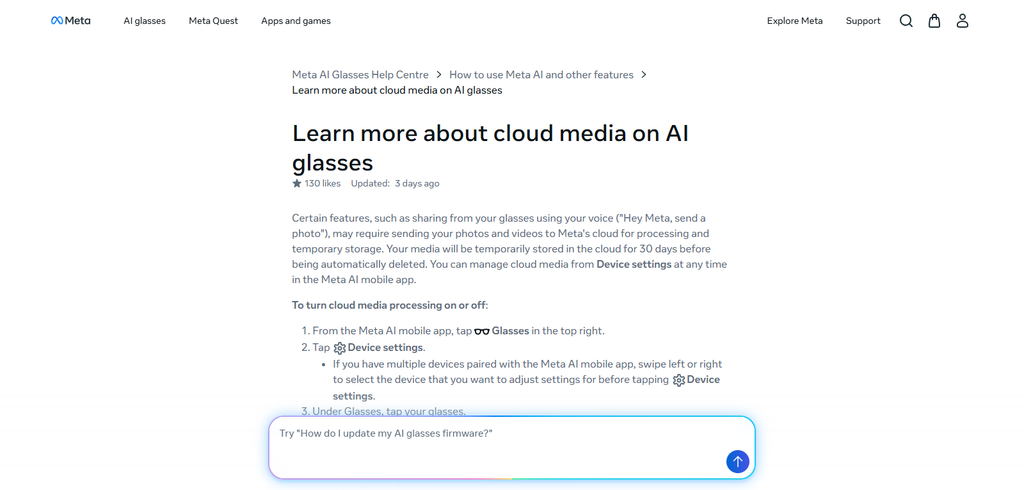
There are NVIDIA A100, H100, as well as Meta’s custom AI accelerators. AI infrastructure focuses on generative AI, LLMs, and recommendation systems. Scalability is done through massive hyperscale clusters for AI research. Our score: 9.0/10 for AI research infrastructure.
Meta AI Cloud Features
| Feature | Details |
|---|---|
| Pricing Model | Flexible research-driven compute |
| Enterprise Support | AI research collaboration |
| GPU Options | NVIDIA A100/H100, custom accelerators |
| AI Infrastructure | Generative AI, LLM clusters |
| Scalability | Hyperscale clusters for AI research |
| Hybrid AI | Limited enterprise focus |
| AI Workloads | LLMs, recommendation systems |
| Our Score | 9.0/10 |
Pros
- Operates a significant AI infrastructure at scale.
- Works well with large model AI workloads.
- Has a strong integration with AI research.
- Focuses on AI compute infrastructure.
- Is a great reference architecture for hyperscale AI.
Cons
- Not a typical public cloud service.
- Limited direct infrastructure access for external customers.
- Not built to function as a general-purpose cloud alternative.
- Challenging to conduct a pricing comparison to offerings from AWS or Azure.
- Most applicable to Meta’s own AI cloud ecosystem and infrastructure.
8. Tencent Cloud
Tencent Cloud pricing is the most competitive in Asia, either pay as you go or subscription. There is enterprise support, with AI consulting, and 24/7 support, as well as integration in the WeChat ecosystem. There are NVIDIA A100 and H100, along with domestic AI chips.
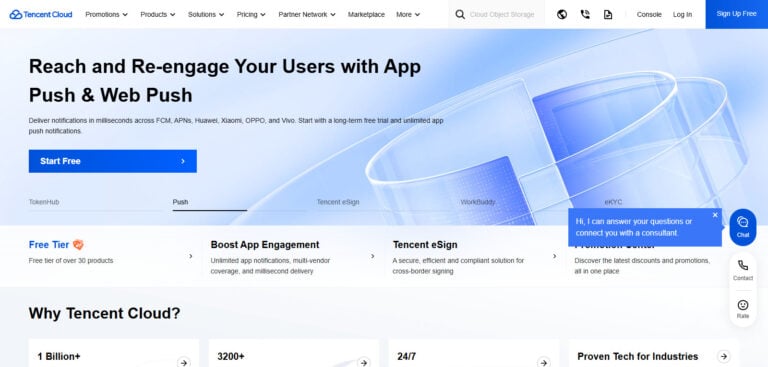
AI infrastructure includes gaming AI, fintech, ML, and enterprise AI pipelines. Scalability is strong in the Asia-Pacific region, with elastic GPU clusters. Our score: 8.9/10 for regional dominance and AI ecosystem integration.
Tencent Cloud Features
| Feature | Details |
|---|---|
| Pricing Model | Pay-as-you-go, subscription |
| Enterprise Support | Localized AI consulting, 24/7 |
| GPU Options | NVIDIA A100/H100, domestic chips |
| AI Infrastructure | Gaming AI, fintech ML workloads |
| Scalability | Elastic GPU clusters, Asia-Pacific |
| Hybrid AI | WeChat ecosystem integration |
| AI Workloads | Gaming, fintech, enterprise ML |
| Our Score | 8.9/10 |
Pros
- China and Asia-Pacom country infrastructure.
- Useful for customers of China market services.
- Enterprise focused cloud services.
- AI and big data services are built to support big workloads.
- A large technology platform services ecosystem built around Tencent.
Cons
- Smaller global foot print than AWS or Azure.
- Individual services may have varying regions of availability.
- Deployments may have regulatory issues and data residency concerns.
- Less used by Western developers.
- Volume and variety of documentation and tools may be less than for international developers.
9. Alibaba Cloud
Alibaba Cloud has flexible pricing with pay-as-you-go and enterprise options. Enterprise support includes AI consulting, global support centers, and integration with DAMO Academy. GPU/accelerator options include NVIDIA A100, H100, and Alibaba’s custom AI chips.
AI infrastructure supports e-commerce AI, recommendation systems, and enterprise ML. Scalability is hyperscale with global data centers and elastic GPU clusters. Our Score: 9.0/10 for e-commerce AI leadership and scalability.
Alibaba Cloud Features
| Feature | Details |
|---|---|
| Pricing Model | Pay-as-you-go, enterprise packages |
| Enterprise Support | DAMO Academy, global support |
| GPU Options | NVIDIA A100/H100, custom AI chips |
| AI Infrastructure | E-commerce AI, ML clusters |
| Scalability | Hyperscale global data centers |
| Hybrid AI | Strong enterprise integration |
| AI Workloads | Recommendation systems, ML workloads |
| Our Score | 9.0/10 |
Pros
- Strong presence in China and Asia-Pacific.
- Broad cloud infrastructure portfolio.
- Competitive options for regional deployments.
- Good integration with Alibaba’s technology ecosystem.
- Suitable for China-focused AI applications.
Cons
- International ecosystem is smaller than AWS and Azure.
- Service availability differs between regions.
- China-related regulatory requirements can add complexity.
- Some global developers may find the platform less familiar.
- Multiregion architecture requires careful planning.
10. Equinix
Equinix pricing is colocation-based with flexible contracts for enterprises. Enterprise support includes global interconnection services, AI workload consulting, and hybrid cloud enablement. GPU/accelerator options are based on partner integrations and include NVIDIA A100, H100, and custom AI hardware.
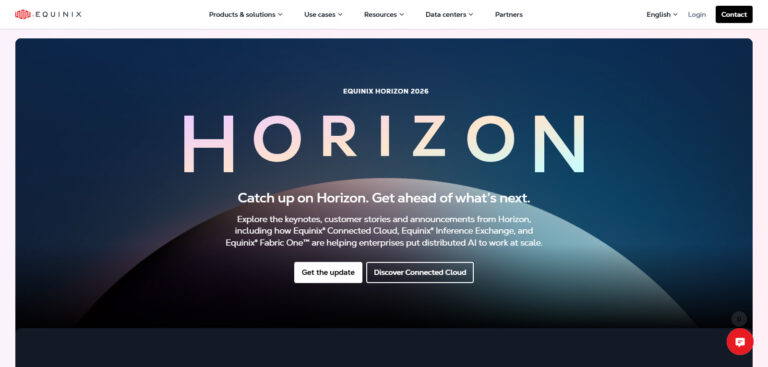
AI infrastructure is hybrid and allows enterprises to colocate AI clusters with cloud providers. Scalability is unmatched in interconnection and supports global AI workloads. Our Score: 9.1/10 for hybrid AI enablement and global reach.
Equinix Features
| Feature | Details |
|---|---|
| Pricing Model | Colocation-based flexible contracts |
| Enterprise Support | Global interconnection services |
| GPU Options | NVIDIA A100/H100 via partners |
| AI Infrastructure | Hybrid AI colocation clusters |
| Scalability | Global interconnection scalability |
| Hybrid AI | Multi-cloud enablement |
| AI Workloads | Enterprise AI, hybrid ML |
| Our Score | 9.1/10 |
Pros
- Excellent connectivity to multiple cloud providers.
- Strong option for hybrid and multicloud AI infrastructure.
- Extensive global data-center footprint.
- Useful for low-latency distributed workloads.
- Helps enterprises avoid dependence on a single cloud provider.
Cons
- Not a direct replacement for AWS, Azure or Google Cloud.
- Customers may still need a separate cloud/GPU provider.
- Infrastructure architecture can be complex.
- Costs depend heavily on connectivity and deployment requirements.
- Better suited to enterprise infrastructure strategies than simple AI experimentation.
Conclusion
In summary, cloud providers shows how each option such as NVIDIA Cloud, Google Cloud, AWS, Azure, Oracle Cloud, IBM Cloud, Meta AI Cloud, Tencent Cloud, Alibaba Cloud and Equinix has their unique advantages of pricing models, enterprise support, options of GPUs/accelerators, AI infrastructure, and scalability.
NVIDIA has the edge in GPU technology; Google has the edge in Tensor Processing Unit (TPU) technology; AWS has the edge in services; Azure has the edge with hybrid enterprise services. Oracle and IBM are focused on price and trust; Meta,
Tencent, and Alibaba are focused on regional and research-based AI. Equinix is the only option for large scale hybrid interconnection. Businesses need to pick based on workload, budget, and scalability needs. In our comparison scores, we ranked NVIDIA, AWS, and Google as first, but each of them has their strong suits.
FAQ
What is the main difference between NVIDIA Cloud and AWS?
NVIDIA Cloud is GPU-first, optimized for deep learning and generative AI, while AWS offers a broader ecosystem with custom chips (Trainium, Inferentia) and diverse AI services.
Which provider offers the most affordable pricing model?
Oracle Cloud and IBM Cloud generally provide more predictable and competitive pricing compared to hyperscalers like AWS and Google Cloud, making them attractive for cost-sensitive enterprises.
Who provides the strongest enterprise support?
AWS and Microsoft Azure lead with tiered enterprise support, dedicated account managers, and global 24/7 coverage. Google Cloud also offers strong AI consulting via Vertex AI.
Which cloud has the best GPU/accelerator options?
NVIDIA Cloud dominates with A100/H100 GPUs, while Google Cloud adds TPU v4/v5 units. AWS and Azure balance NVIDIA GPUs with proprietary accelerators for training and inference.
What type of AI infrastructure does each provider focus on?
NVIDIA Cloud: GPU-centric deep learning
Google Cloud: TPU pods + ML pipelines
AWS: EC2 GPU + custom silicon
Azure: Hybrid AI with enterprise integration
Oracle/IBM: Enterprise AI + hybrid workloads
Meta/Tencent/Alibaba: Generative AI, e-commerce, regional AI
Equinix: Hybrid interconnection