


In this article, we explore the best AI retrieval platforms that can help businesses and developers enhance their data search and information retrieval by building AI apps.Vector databases, semantic search, and retrieval-augmented generation (RAG) help to deliver appropriate and contextual results.
We will look at their features, pros, and cons. Additionally, we examine their impact on building intelligent AI solutions.
What is AI Retrieval Platforms?
AI Retrieval Platforms help AI systems gain a better understanding of data structuring and provide necessary information by using vector search, embeddings, semantic search, RAG, etc.
Through the integration of large language models (LLMs) with external knowledge sources, AI Retrieval Platforms let applications search documents, databases, and digital media and return more relevant and contextual answers.
Many applications use AI Retrieval Platforms in integrated chatbots, enterprise search systems, AI assistants, recommendation systems, and knowledge management solutions to improve how AI systems comprehend and manipulate data.
Why Choose AI Retrieval Platforms for Smarter Data Search
More pertinent results
AI Retrieval Platforms offer semantic search and vector tech that can help you understand your search intent and produce search results that are more alignn with your intent.
Improved productivity
AI Retrieval Platforms can analyze massive amounts of data quickly and can present the information you need in a matter of seconds.
Improved AI modeling
AI Retrieval Platforms provide support for RAG. This allows AI models to search for the most current and accurate data to answer your questions before providing you with a response.
Large data support
These platforms can support large datasets, such as enterprise-level needs.
Good knowledge management
Knowledge can be organized efficiently from within a company by connecting company documentation and AI systems.
Improved customer experience
AI-powered search enables instant and relevant responses to customers questions regardless of the method of engagement (i.e. chatbot, virtual assistant, support system, etc.)
More advanced applications of AI
Platforms enable developers to build advanced applications (i.e. recommendation engines, intelligent search components, research tools, etc.)
Decreased incorrect AI responses
These platforms integrate with other services to provide relevant information to language models, which minimizes the occurrence of inaccurate responses or outdated information.
Scalable solutions
These platforms are able to grow with your data and are good for startups or large enterprises.
Key Point & Best AI Retrieval Platforms
LangChain
- Framework for building AI applications with retrieval-augmented generation (RAG).
- Supports document loading, text splitting, embeddings, and vector database integration.
- Enables AI agents to retrieve and process external knowledge sources.
- Provides connectors for APIs, databases, and cloud storage platforms.
- Best suited for developers creating custom LLM-powered applications.
LlamaIndex
- Data framework designed for connecting LLMs with private and enterprise data.
- Simplifies indexing, querying, and retrieving information from multiple sources.
- Supports structured and unstructured data integration.
- Provides advanced retrieval methods for RAG applications.
- Ideal for knowledge assistants and enterprise AI search systems.
Chroma
- Open-source AI vector database optimized for embedding-based search.
- Provides simple storage and retrieval of AI-generated vectors.
- Supports fast semantic search for RAG workflows.
- Easy integration with Python-based AI applications.
- Suitable for developers building lightweight AI retrieval systems.
Redis Vector
- Adds vector similarity search capabilities to Redis databases.
- Enables real-time AI retrieval with low-latency performance.
- Supports embeddings, filtering, and hybrid search operations.
- Works well for AI chatbots and recommendation systems.
- Provides scalable memory-based data retrieval.
Vespa
- Powerful search and AI retrieval engine for large-scale applications.
- Combines vector search, keyword search, and machine learning ranking.
- Supports real-time data processing and personalization.
- Handles complex enterprise search workloads.
- Suitable for large AI-powered search platforms.
Kinetica
- GPU-accelerated database with advanced vector search capabilities.
- Enables high-speed AI retrieval and analytics on large datasets.
- Supports real-time geospatial and machine learning workloads.
- Combines SQL analytics with AI vector search.
- Best for performance-focused enterprise applications.
Oracle AI Vector DB
- Enterprise vector database integrated with Oracle Database technologies.
- Enables AI retrieval from business data and enterprise systems.
- Supports semantic search and RAG-based applications.
- Provides strong security and governance features.
- Ideal for organizations using Oracle cloud infrastructure.
Pinecone
- Managed vector database built for scalable AI retrieval systems.
- Provides fast similarity search for machine learning applications.
- Supports large-scale RAG and generative AI workflows.
- Offers simple APIs for embedding storage and retrieval.
- Popular among AI developers building production applications.
Weaviate
- Open-source vector database for AI-powered search applications.
- Supports hybrid search combining vectors and keywords.
- Provides built-in modules for embeddings and AI models.
- Enables scalable knowledge retrieval for RAG applications.
- Suitable for enterprise AI assistants and semantic search.
Milvus
- Open-source vector database designed for massive AI workloads.
- Provides high-performance similarity search across billions of vectors.
- Supports multiple indexing methods for faster retrieval.
- Used for RAG, recommendation engines, and AI search.
- Offers cloud-native scalability for enterprise applications.
10 Best AI Retrieval Platforms for Smarter Data Search in 2026
1. LangChain
LangChain allows developers to build advanced AI applications by integrating large language models (LLMs). It helps them connect their AI models to external data sources, APIs, databases, and document collections. LangChain supports retrieval-augmented generation (RAG). Within LangChain, document loading, text splitting, embeddings, and vector database integration can all be configured.
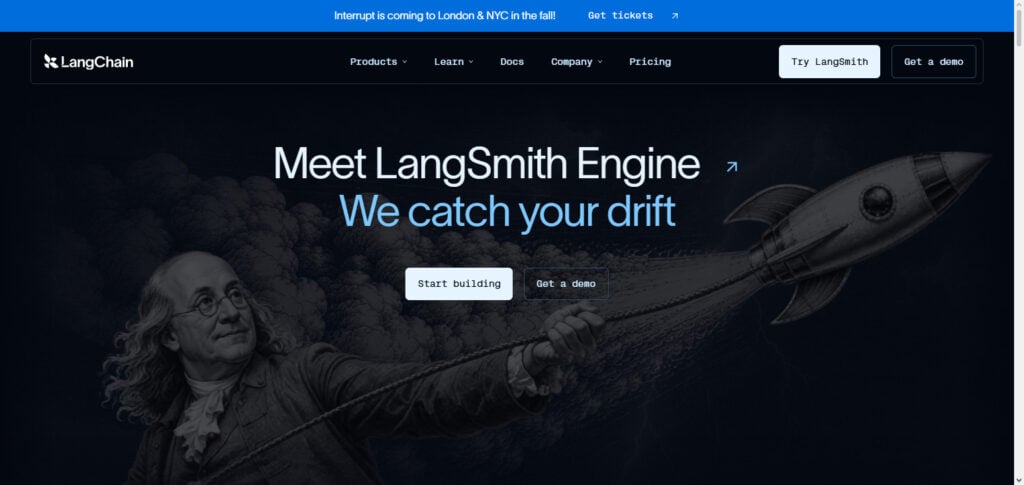
Users can build AI agents, chatbots, knowledge assistants, and automation workflows. With support for multiple LLM providers and types of retrieval, LangChain helps businesses build their own AI systems that can access bespoke, context-appropriate information from both internal and external systems.
Why LangChain Matters
| Point | Details |
|---|---|
| AI Application Development | LangChain matters because it provides developers with a complete framework to build AI-powered applications using large language models (LLMs), external data sources, APIs, and databases. |
| Improves AI Accuracy | It enables retrieval-augmented generation (RAG), allowing AI models to access updated information and generate more accurate, context-aware responses. |
| Supports AI Agents | LangChain helps create autonomous AI agents capable of performing tasks, making decisions, and interacting with multiple tools and data sources. |
| Easy Integration | It connects with various LLM providers, vector databases, document loaders, and cloud platforms, making AI development more flexible. |
| Enterprise AI Solutions | Businesses use LangChain to build chatbots, knowledge assistants, customer support systems, and intelligent automation solutions. |
2. LlamaIndex
LlamaIndex is one of the best AI retrieval platforms for integration of large language models with enterprise data and knowledge bases. It functions as a data framework for organizing, indexing, and retrieving data from files, databases, APIs, and other sources.
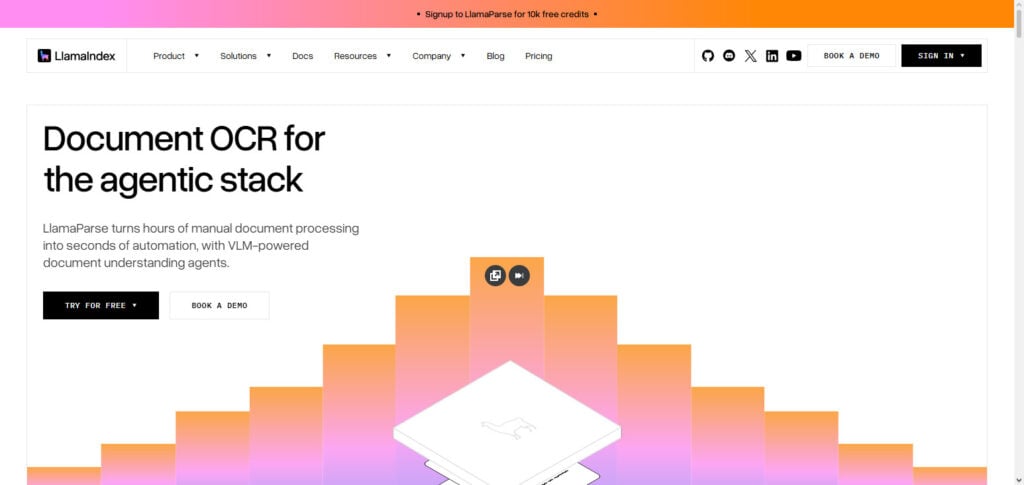
LlamaIndex helps improve the quality of AI responses by setting up continuous and efficient retrieval augmented generation (RAG) workflows. It offers multiple indexing and integrations with popular vector databases.
LlamaIndex is used by businesses to create AI search engines, virtual assistants, and knowledge management systems. Its architecture is flexible enough for developers to build applications that need reliable and efficient data retrieval.
Why LlamaIndex Matters
| Point | Details |
|---|---|
| Connects AI With Private Data | LlamaIndex matters because it allows businesses to connect large language models with internal documents, databases, and enterprise knowledge sources. |
| Better Data Retrieval | It improves AI responses by organizing and indexing information so models can quickly find relevant data. |
| Powerful RAG Framework | LlamaIndex plays an important role in building retrieval-augmented generation systems for accurate AI outputs. |
| Enterprise Knowledge Management | Organizations can create AI search engines, virtual assistants, and document analysis tools using LlamaIndex. |
| Flexible Data Support | It supports structured and unstructured data, making it suitable for different industries and AI applications. |
3. Chroma
Chroma is a fantastic example of an AI Retrieval Platform that has produced a user-friendly, lightweight vector database that is well-suited for a developer creating an AI solution. Chroma allows users to store, maintain, and search high-dimensional embeddings.

Due to these capabilities, Chroma is a natural choice for inclusion in RAG systems that need fast, semantic database searching integrated into their frameworks.
Document storage, metadata, and similarity-based application retrieval are all supported by Chroma. Due to its lightweight design, Chroma is geared towards start-ups, researchers, and organizations that need to create scalable AI applications with integrated data retrieval.
Why Chroma Matters
| Point | Details |
|---|---|
| Simple Vector Database | Chroma matters because it provides an easy-to-use vector database for storing and retrieving AI embeddings. |
| Supports Semantic Search | It helps AI systems understand user intent and find information based on meaning rather than only keywords. |
| Developer Friendly | Chroma offers a simple setup process, making it useful for developers, researchers, and startups. |
| RAG Application Support | It helps build AI chatbots, knowledge assistants, and retrieval-based applications. |
| Open-Source Advantage | Its open-source design allows customization and flexible deployment for different AI projects. |
4. Redis Vector
Redis Vector is one of the Best AI Retrieval Platforms that adds vector similarity search to modern AI applications to Redis. This allows embedding data to be stored and retrieved with extremely low latency that is suitable for AI systems that need to operate in a real-time environment.
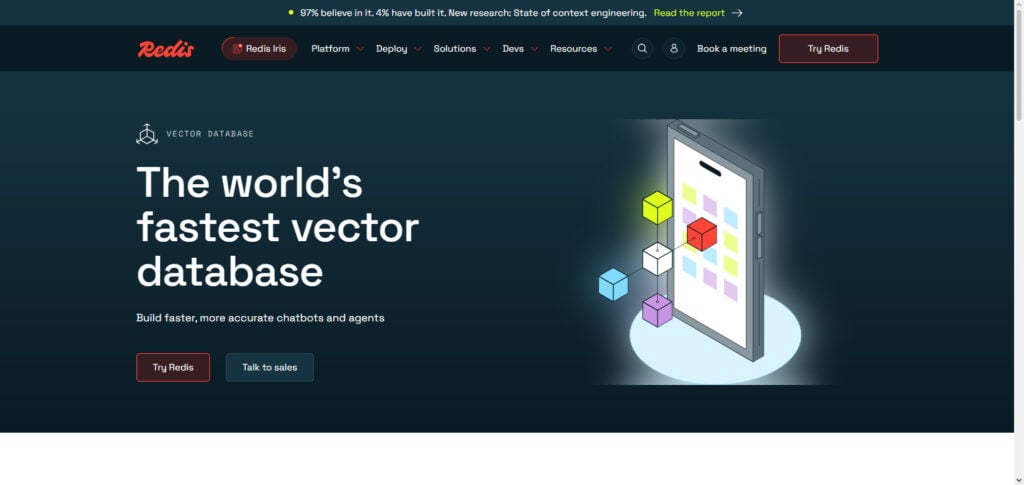
Redis Vector supports semantic search, as well as hybrid search and recommendation systems along with filtering. It is compatible with large language models, and AI chatbots and RAG along with other AI retrieval applications.
Redis Vector provides the potential for seamless blend of classical database operations with AI data retrieval. Due to its performance, real-time ability, and scalability, it is geared towards real-world AI applications.
Why Redis Vector Matters
| Point | Details |
|---|---|
| Real-Time AI Search | Redis Vector matters because it provides fast vector search capabilities for applications requiring instant AI responses. |
| Low Latency Performance | Its in-memory architecture helps deliver quick retrieval results for chatbots, recommendations, and AI assistants. |
| Combines Database and AI Search | Redis Vector allows businesses to manage traditional data and AI embeddings in one platform. |
| Scalable AI Applications | It supports growing AI workloads with efficient search and retrieval performance. |
| Better User Experience | Fast information retrieval improves personalization, recommendations, and conversational AI experiences. |
5. Vespa
Vespa has recognition as one of the Best AI Retrieval Platforms. It is framework that allows developers to create systems for search, recommendation, and retrieval at scale. It unites conventional keyword search, vector search, and ML ranking to provide users search results at an incredible accuracy.

Vespa’s ability to process and create real-time results, personalized search results, and efficiently execute complex searches makes it scalable to large enterprise searches. Vespa’s technology allows companies to build enterprise search solutions, recommendation systems,
AI assistants that search through enormous data. Advanced ranking and retrieving systems make it possible for companies to provide users with lightning fast, highly relevant and accurate results across the myriad of digital services and applications.
Why Vespa Matters
| Point | Details |
|---|---|
| Large-Scale Search Capability | Vespa matters because it handles massive search workloads for enterprise applications and digital platforms. |
| Hybrid Search Support | It combines keyword search, vector search, and machine learning ranking for better results. |
| Real-Time Data Processing | Vespa enables businesses to process and retrieve updated information instantly. |
| AI Recommendation Systems | It powers personalized recommendations and intelligent search experiences. |
| Enterprise Performance | Vespa is valuable for organizations needing scalable and high-performance AI retrieval infrastructure. |
6. Kinetica
Kinetica is another Best AI Retrieval Platforms that uses GPU-accelerated databases and AI vector search technologies. Kinetica allows companies to perform high-speed AI retrieval, analytics, and processing of large data in real-time.
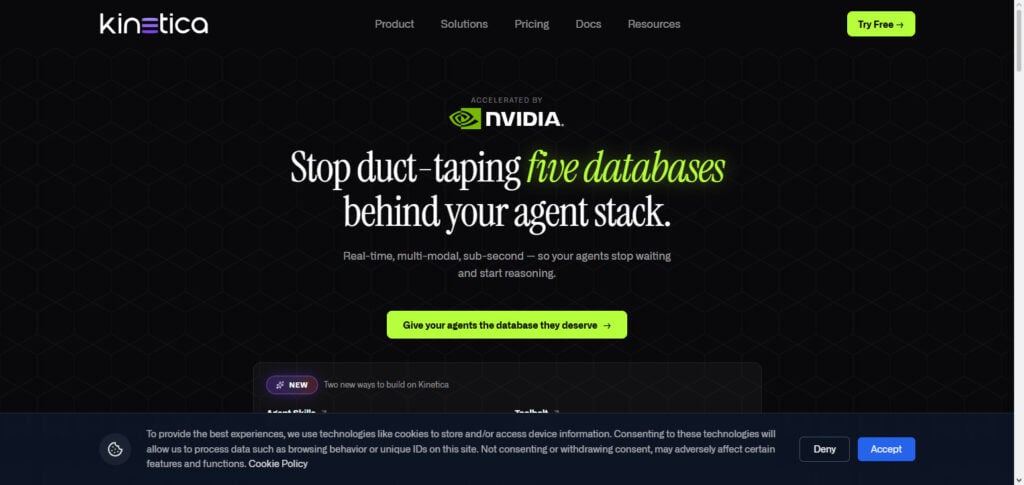
It is vector similarity search, ML workloads, and geospatial analytics that Kinetica brings together with capabilities of SQL queries. It caters to industries that need to perform analysis of large data in real-time and make several decisions in real time. Kinetica provides highly advanced retrieval systems and predictive systems for enterprise AI workloads.
Why Kinetica Matters
| Point | Details |
|---|---|
| High-Speed AI Analytics | Kinetica matters because it combines GPU acceleration with AI retrieval for faster data processing. |
| Real-Time Decision Making | It helps organizations analyze large datasets and generate insights quickly. |
| Vector Search Performance | Kinetica supports advanced vector search for AI applications requiring speed and accuracy. |
| Industry Applications | It is useful for finance, logistics, healthcare, and other industries managing complex data. |
| Unified Data Platform | It combines analytics, database management, and AI retrieval capabilities in one solution. |
7. Oracle AI Vector DB
Oracle AI Vector DB is an AI retrieval-based platform that empowers businesses to securely and effectively retrieve information across their databases. Compatible with Oracle Database technologies, businesses can integrate vector embeddings in their business data, and provide a means for storage and retrieval. Vector DB is capable of RAG (retrieval-augmented generation) and semantic searching, as well as AI application hosting.

Security and governance are of enterprise concern and Oracle AI Vector DB provides protection for each. Oracle AI Vector DB enables enterprises to connect infra and data sources to large language models (LLMs). These models, in conjunction with internal data sources, enable improved compliance, AI retrievals, and optimized management.
Why Oracle AI Vector DB Matters
| Point | Details |
|---|---|
| Enterprise Data Security | Oracle AI Vector DB matters because it provides secure AI retrieval capabilities for business-critical data. |
| Database Integration | It allows organizations to combine traditional Oracle databases with AI vector search technology. |
| Supports RAG Applications | It enables enterprises to build AI assistants and search systems using internal company data. |
| Strong Governance | It provides security, compliance, and management features required by large organizations. |
| Enterprise AI Adoption | Companies using Oracle infrastructure can easily integrate AI retrieval into existing systems. |
8. Pinecone
Pinecone is an AI retrieval platform that enables businesses to build scalable vector search applications and efficiently manage large databases for vector search and RAG applications. It is a vector database that provides fast similarity searches with metadata filtering.
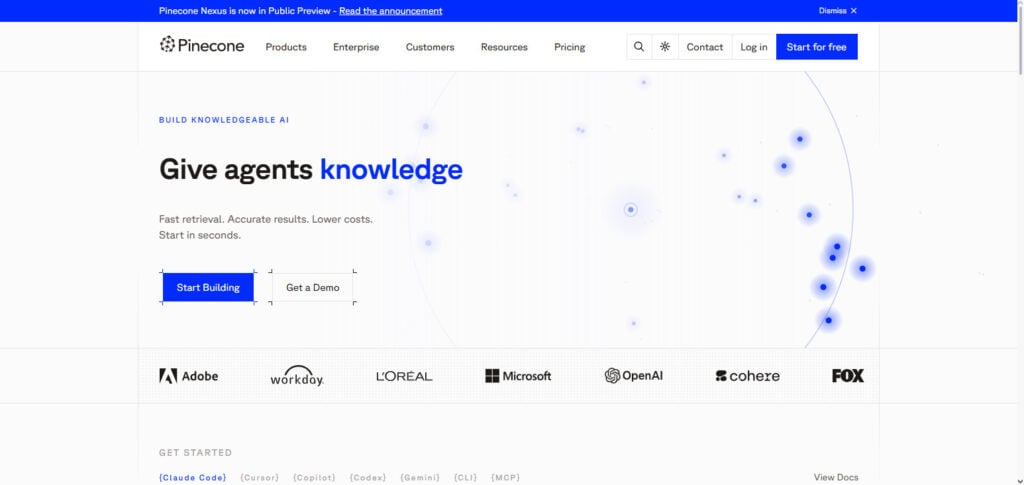
It also offers RAG, integrations, and large language model support. It is most often used in AI chatbots, recommendation systems and search applications. It helps alleviate the burden of managing a solution for AI based applications by taking care of the solution in a production ready environment.
Why Pinecone Matters
| Point | Details |
|---|---|
| Managed Vector Database | Pinecone matters because it provides a fully managed solution for storing and searching AI embeddings. |
| Scalable AI Retrieval | It helps businesses handle large-scale AI applications without managing complex infrastructure. |
| Fast Similarity Search | Pinecone enables quick retrieval of relevant information for AI models. |
| Production-Ready AI | It supports enterprise applications such as chatbots, recommendations, and knowledge assistants. |
| Developer Efficiency | Pinecone simplifies the process of building and deploying AI-powered search systems. |
9. Weaviate
Weaviate is an open-source vector database for semantic search with AI technology. Weaviate allows businesses to index and interact with data through vector embeddings and supports hybrid search that enables both keyword and vector based retrieval.
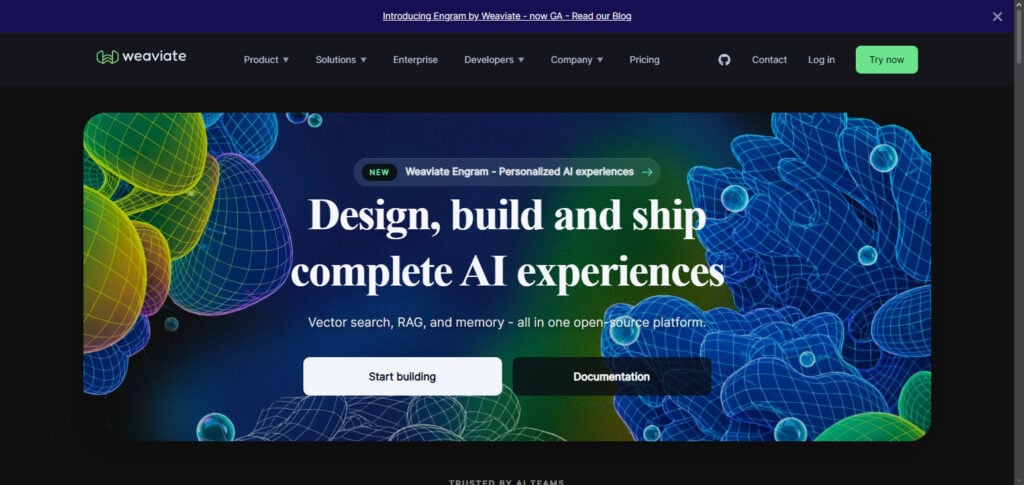
It supports integrations with most popular AI models, embedding services and Machine Learning frameworks.
Weaviate is largely used for RAG and AI assistants as well as enterprise knowledge systems. With a combination of flexibility, scalability and intelligent search, Weaviate helps developers build intelligent applications that understand the context to a great extent and deliver information precisely.
Why Weaviate Matters
| Point | Details |
|---|---|
| Semantic AI Search | Weaviate matters because it helps applications search information based on meaning and context. |
| Hybrid Search Capability | It combines vector search with keyword search to improve retrieval accuracy. |
| AI Model Integration | Weaviate supports different AI models and embedding technologies. |
| RAG Development | It enables developers to build advanced AI assistants and knowledge systems. |
| Flexible Deployment | Its open-source architecture provides customization and scalability options. |
10. Milvus
Milvus is an open source vector database for AI data management designed for large scale vector similarity search. Milvus is built to hold and process billions of embeddings with a focus on performance and dependability. Milvus supports different indexing methods, real time search as well as AI applications frameworks integration.
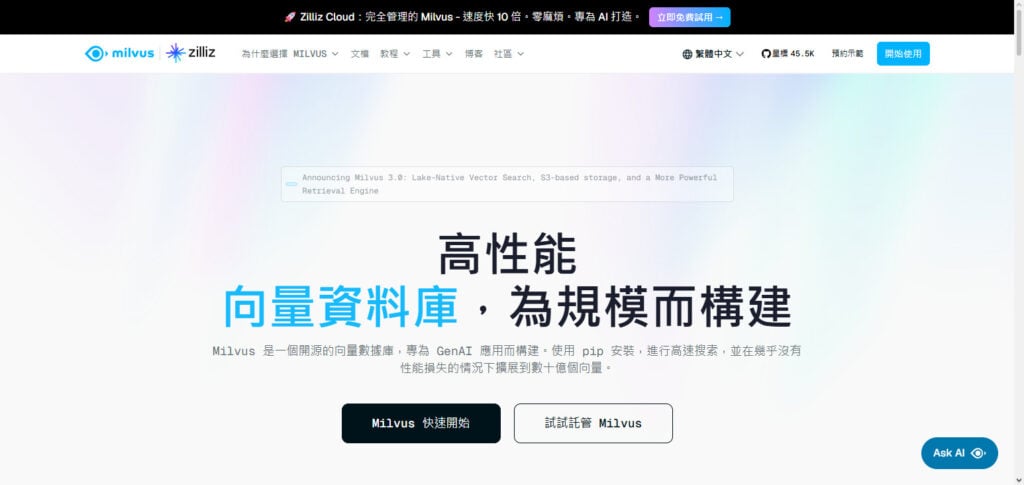
Milvus finds wide use in RAG systems and recommendation systems, image search systems, as well as enterprise AI platforms. With a cloud native architecture and strong scalability, Milvus helps organizations build powerful retrieval systems to handle large volumes of data and provide sophisticated AI powered search.
Why Milvus Matters
| Point | Details |
|---|---|
| Large-Scale Vector Search | Milvus matters because it is designed to manage billions of vectors for advanced AI applications. |
| High Performance | It provides fast similarity search for recommendation systems, AI assistants, and enterprise applications. |
| Open-Source Platform | Milvus allows organizations to customize and deploy AI retrieval solutions according to their needs. |
| Cloud-Native Scalability | It supports modern cloud environments and large AI workloads. |
| AI Infrastructure Support | Milvus helps businesses build powerful retrieval systems for RAG, search, and machine learning applications. |
Comparison Table: Best AI Retrieval Platforms
| AI Retrieval Platform | Type | Best For | Key Retrieval Features | Scalability | Open Source | Ideal Users |
|---|---|---|---|---|---|---|
| LangChain | AI Application Framework | Building LLM applications and RAG workflows | LLM integration, document retrieval, AI agents, vector database connections | High | Yes | Developers, AI Engineers, Startups |
| LlamaIndex | Data Framework for LLMs | Connecting AI models with private and enterprise data | Data indexing, semantic search, RAG pipelines, knowledge retrieval | High | Yes | Enterprises, Data Teams, AI Developers |
| Chroma | Vector Database | Lightweight AI search and RAG applications | Embedding storage, similarity search, metadata filtering | Medium | Yes | Developers, Researchers, Small Teams |
| Redis Vector | Vector Search Database | Real-time AI retrieval applications | Low-latency vector search, hybrid search, caching, recommendations | High | Partially | Businesses needing fast AI responses |
| Vespa | Search & AI Retrieval Engine | Large-scale search and recommendation systems | Hybrid search, ML ranking, vector search, real-time processing | Very High | Yes | Large Enterprises, Search Platforms |
| Kinetica | GPU-Accelerated Database | Real-time analytics and AI retrieval | GPU vector search, SQL analytics, machine learning queries | Very High | No | Enterprises, Data-Driven Organizations |
| Oracle AI Vector DB | Enterprise Vector Database | Secure enterprise AI applications | Vector search, RAG, semantic search, database integration | Very High | No | Large Enterprises Using Oracle |
| Pinecone | Managed Vector Database | Production AI applications and RAG systems | Similarity search, embeddings management, metadata filtering | Very High | No | AI Developers, SaaS Companies |
| Weaviate | Open-Source Vector Database | Semantic search and AI assistants | Hybrid search, embeddings, RAG support, AI model integration | High | Yes | Developers, Enterprises |
| Milvus | Open-Source Vector Database | Massive-scale AI search workloads | Billion-scale vector search, indexing, similarity search | Very High | Yes | Enterprises, AI Infrastructure Teams |
Quick Comparison Summary
| Category | Best Platform |
|---|---|
| Best Overall AI Framework | LangChain |
| Best for Enterprise Data Integration | LlamaIndex |
| Best Lightweight Vector Database | Chroma |
| Best for Real-Time Applications | Redis Vector |
| Best for Large-Scale Search | Vespa |
| Best GPU-Powered Retrieval | Kinetica |
| Best Enterprise Security | Oracle AI Vector DB |
| Best Managed Vector Database | Pinecone |
| Best Hybrid Search Platform | Weaviate |
| Best Open-Source Large-Scale Vector Database | Milvus |
Conclusion
The Best AI Retrieval Platforms allow businesses and developers to RETRIEVE, SEARCH, and UTILIZE data with artificial intelligence better than ever before. Powerful AI-based platforms such as LangChain, LlamaIndex, Pinecone, Weaviate, Milvus, and others, offer sophisticated services for retrieval-augmented generation (RAG), semantic search, vector storage, and AI-based knowledge systems.
Which platform a team utilizes depends on their needs including scalability, security, real time support, APIs, and integration. The growing acceptance of AI means that retrieval systems will be necessary for advanced AI assistants, smart enterprise search systems, and other next generation intelligent systems.
FAQ
What Are AI Retrieval Platforms?
AI Retrieval Platforms are software solutions that help artificial intelligence systems find, access, and retrieve relevant information from large datasets. They use technologies like vector search, embeddings, semantic search, and retrieval-augmented generation (RAG) to provide accurate and context-aware responses.
Why Are AI Retrieval Platforms Important?
AI Retrieval Platforms improve the accuracy of AI applications by allowing large language models (LLMs) to access external knowledge sources. They help businesses build smarter chatbots, AI assistants, enterprise search tools, and knowledge management systems.
Which Are the Best AI Retrieval Platforms in 2026?
Some of the Best AI Retrieval Platforms include LangChain, LlamaIndex, Pinecone, Weaviate, Milvus, Chroma, Redis Vector, Vespa, Kinetica, and Oracle AI Vector DB. Each platform offers different features for AI search, vector storage, and RAG applications.
What Is Retrieval-Augmented Generation (RAG)?
Retrieval-Augmented Generation (RAG) is an AI technique that combines language models with external data retrieval. It allows AI systems to search relevant information from databases or documents before generating responses, improving accuracy and reducing incorrect outputs.
Which AI Retrieval Platform Is Best for Developers?
LangChain and LlamaIndex are popular choices for developers because they provide flexible frameworks for building AI applications, integrating data sources, and creating custom RAG workflows with different large language models.