



This article will analyze the Best AI Personalization Platforms for E-Commerce. I will look at each platform’s key features and benefits as well as how each platform is used and the platform’s advantages. These platforms focus on the tailored experience of online shopping. They offer data analysis by AI that performs real-time personalization and recommend products that urge customers to buy, thereby increasing engagement and conversion.
What Are AI Personalization Platforms for E-Commerce?
AI Personalization platforms apply artificial intelligence, customer data, and behavioral signals to provide unique customer shopping experiences. These platforms study the details of site interactions such as customer searches, the products viewed and / or purchased and their respective order, clicks, and internal web page navigation.
This data allows them to create personalized product recommendations, search results, page content, promotions, and marketing messages for each customer. Furthermore, they control the segmentation of customers and customize the user interface for every web, mobile, email, and other communication channels.
Using the results of the analysis of purchase preferences and customer intent, AI can improve product discovery for customers, enhance customer engagement, increase order value, and improve customer retention.
Why Use AI Personalization in E-Commerce?
More Conversions – Offer customers recommendations and content that best fits their shopping interests and behaviors.
A Better Customer Experience – Offer customers a shopping experience that adapts to their preferences.
More Effective Product Recommendations – With the help of AI, targeted product recommendations can be made with purchase and browsing data.
More Value for Each Order – Personalized recommendations can help customers find complementary products.
Better Product Discovery – Personalized product recommendations help guide customers to products that are most relevant to them.
Drives Customer Interaction – Relevant messages and offers prompt customers to engage with your online store more frequently.
Repeat Customers – Personalize customer experiences to make them feel understood and meet their product needs.
Ease and Scale Personalization – Natural language processing (NLP) can help personalize your site experiences for each segment of customers.
More Effective Marketing – AI can help you better understand and segment your customer base to make your marketing more relevant and effective.
Make Better Decisions – With the help of AI, businesses can personalize their e-commerce efforts based on customer metrics and data.
Key Points
| AI Personalization Platform | Best For | Key Personalization Capabilities |
|---|---|---|
| Bloomreach | Enterprise & mid-market e-commerce | AI-powered search, product recommendations, merchandising, customer data, web personalization, email, SMS, push and omnichannel journeys |
| Dynamic Yield | Enterprise real-time personalization | Real-time personalization, product recommendations, behavioral targeting, experimentation and optimization |
| Insider One | Cross-channel personalization | Web and app personalization, predictive segmentation, recommendations, email, SMS, push notifications and customer journeys |
| Nosto | E-commerce personalization & merchandising | Product recommendations, onsite personalization, segmentation, search, merchandising and experimentation |
| Adobe Target | Large enterprises | A/B testing, multivariate testing, automated personalization, recommendations and personalized digital experiences |
| Optimizely | Experimentation & personalization | A/B testing, experimentation, personalization, audience targeting and digital experience optimization |
| Algolia | AI search & product discovery | Personalized search, AI-powered discovery, product recommendations, autocomplete and behavioral relevance |
| Salesforce Personalization | CRM-connected personalization | Real-time customer data, personalized experiences, recommendations and integration with Salesforce Marketing and Commerce ecosystems |
| Klevu | AI search & merchandising | AI-powered site search, product discovery, merchandising, category optimization and recommendations |
| Rebuy | Shopify e-commerce | AI-powered product recommendations, upselling, cross-selling, cart optimization and personalized shopping experiences |
1. Bloomreach
Bloomreach is an AI-based personalized search and recommendations solution that integrates product discovery and customer data. It can tailor search results and product ranking based upon individual shopping behaviors, such as product views, add-to-cart, purchases, and shopping behavior.
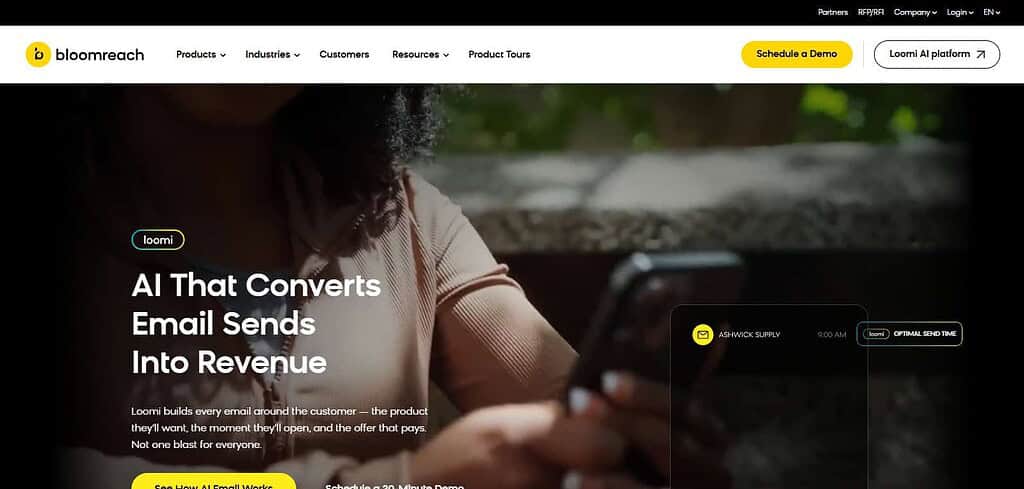
Bloomreach also has a recommendation service that shows products that are likely to be interested in by the shopper. They have capabilities that extend past recommendations, such as email, SMS, web personalization, and push notifications. The platform is designed to help merchandisers that handle search and recommendations in unified commerce platforms.
Features:
- Artificial intelligence to support onsite product search, discovery, and merchandising features
- AI to generate product recommendations
- Customer data tools
- Complete marketing automation across all sales channels
- Merchandising and behavioral targeting tools
Pros:
- Powerful eCommerce focused personalization tools
- Integrates Search, recommendations, and customer engagement tools
- Marketing automation tools
- Focused on mid-market and enterprise retailers
- Powerful merchandising tools
Cons:
- Can be difficult to implement
- Expensive enterprise functionality
- Requires quality customer and product data
- Requires technical expertise for advanced functionality
- Potential for overspending
2. Dynamic Yield
Dynamic Yield is a platform for enterprise level personalization and experimentation. It empowers teams to develop personalized digital experiences through product recommendations, audience segmentation, behavioral targeting, A/B testing, multivariate tests, and personalized content delivery. Through combination of real-time signals and shopper behavior, Dynamic Yield suggests the most relevant products, content, and experiences.
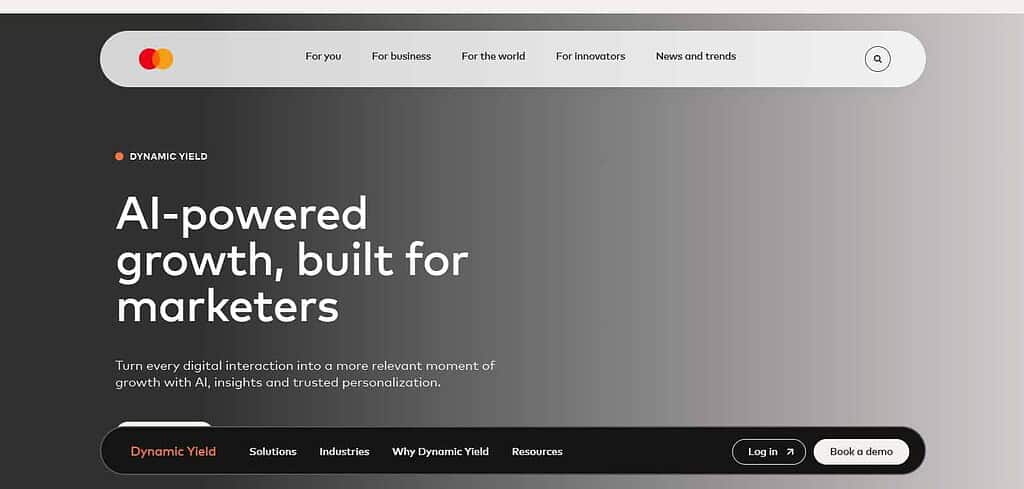
Dynamic Yield works great for companies that want to dive deep into personalization, while also conducting experiments to test different experiences; the company’s platform is built for e-commerce companies. Because Dynamic Yield’s technology is flexible and covers personalization across emails, websites, mobile apps, and other digital experiences, its offerings scale with sophisticated multi-channel marketing programs.
Features:
- AI driven personalization for websites
- Real-time personalization
- Audience targeting and segmentation tools
- A/B and multivariate tests and experiments
- Cross channel personalization
Pros:
- Real time customer data and personalization
- Advanced testing framework
- Advanced recommendation engines
- Focused on enterprise eCommerce personalization
- Optimization and data driven analytics
Cons:
- Focused on enterprise clients
- Complex implementations
- Requires ongoing optimization
- Advanced functionality can become a cost center
- May require technical resources
3. Insider One
Insider One is an enterprise level cross-channel customer engagement and personalization platform. Its features include personalization on the web and mobile, customer segmentation, product recommendations, predictive audiences, email, SMS, push notifications, WhatsApp and other similar chat tools.
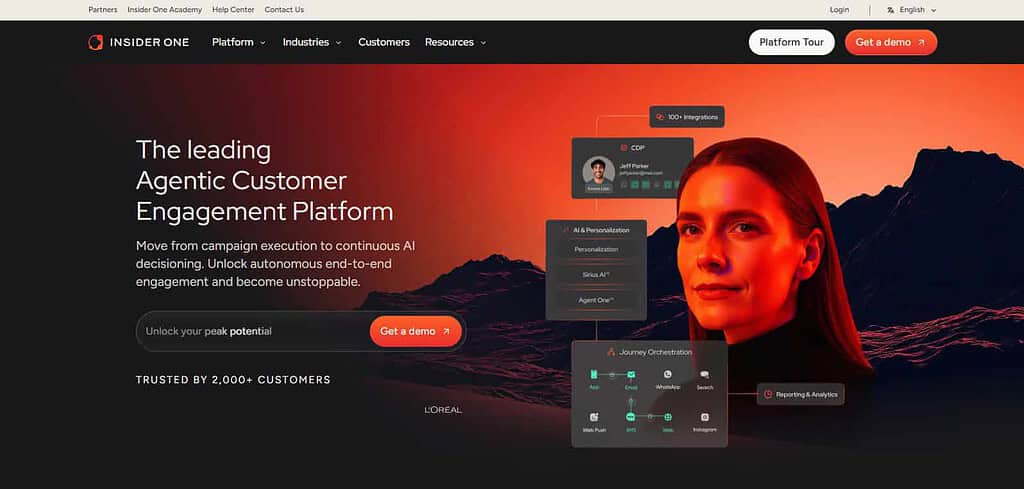
Insider One uses customer and behavioral data to allow the creation of audiences and the delivery of personalized experiences. Its journey orchestration feature makes Insider One a good fit for e-commerce brands doing customer focused engagements, retention, and marketing during the customer lifecycle. Insider One is a good choice for organizations looking for personalization to become part of cross-channel campaigns beyond their website.
Features:
- Web and Mobile customer journey personalization
- Predictive audience segmentation and targeting
- Tools to unify customer journeys and communications across multiple touchpoints
- SMS, Email, and Push Personalization
Pros:
- Full Customer journey personalization
- Predictive customer audience targeting
- Focused on customer engagements and retention tools
- Integrated communication tools
Cons:
- Complex to set up and integrate various tools
- Advanced functionality require overspending
- Focused on large enterprises
- Potential for overspending
- Integrates with customer data
- Some advanced functionality may require assistance from one of our partners
4. Nosto
Nosto builds personalization options for ecommerce product pages. The platform offers touchpoints for AI-based product recommendations, personalization, customer segmentation, merchandising, search, and digital experiences. Retailers build product displays and recommendations depending on important user signals such as browsing and buying signals.
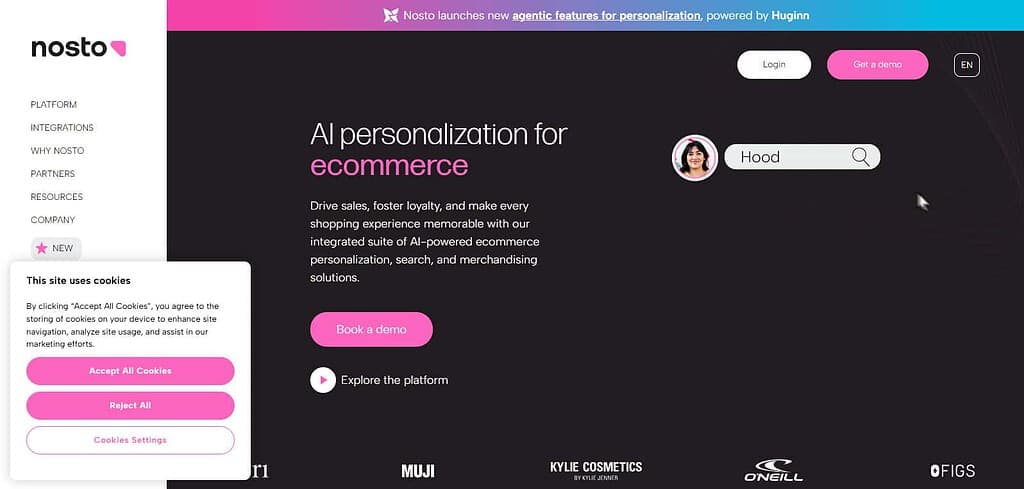
Nosto is built for Shopify and Magento to name a few eCommerce platforms. Nosto offers integrations and tools that allow retailers to find a personalization fit. Nosto’s personalization features allow product recommendations, cross-sells and upsells, and customization of digital experiences without needing developers to make each change.
Features
- AI-powered product suggestibility
- Site recommendations
- Customer divide and rule
- Merchandising system
- Search and inventiveness
Strengths
- Exclusively built for electronic sell
- Recommender systems
- Useful instrumentation systems
- Systems for customized shopping
- Joins famous companies
Weaknesses
- Not for smaller operations
- Best used by companies of size
- Not for smaller business
- More complex
- May not be necessary for very small shops
5. Adobe Target
Adobe Target is an A/B testing and personalization tool attuned to the needs of large enterprises within the Adobe Experience Cloud. Adobe Target supports customer data and behavioral data in recommending personalization experiences and assessing the performance of such experiences.
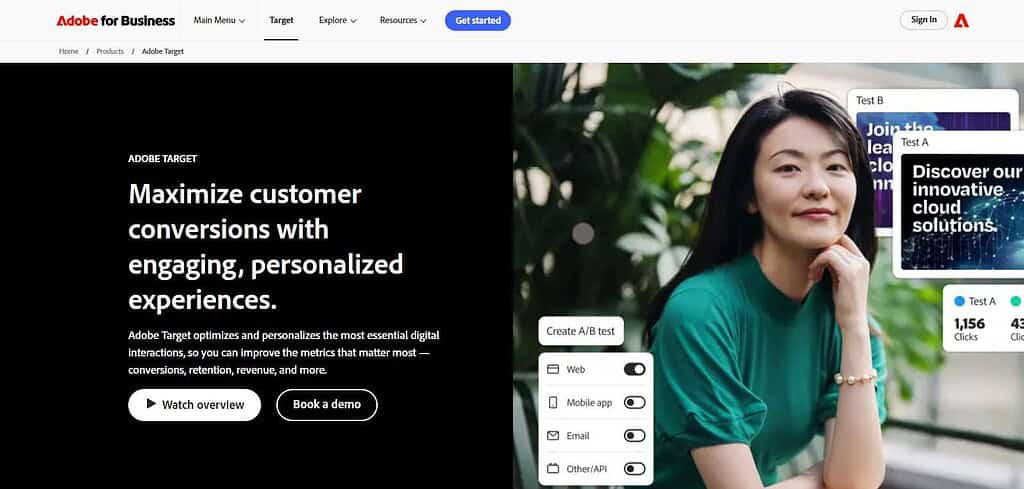
Organizations that have an integrated implementation of Adobe tools would find Adobe Target a seamless add-on. From an e-commerce perspective, Adobe Target’s features can address personalization of content and recommendations, audience targeting, and optimization of customer experience across various touchpoints of the digital customer journey.
Features
- Automated suggestions
- Testing (A/B, multivariate)
- Personalization
- Customer targeting
- Automated suggestions
Pros
- Designed for enterprise-level testing
- Great personalization tool
- Customer targeting
- Joins the Adobe services
- Useful for major companies
Cons
- Best for enterprise clients
- Requires custom implementations
- Use of advanced features needs expertise
- Probably unnecessary for smaller businesses
- Joins a lot of the Adobe services
6. Optimizely
Optimizely delivers a full suite of tools for digital experience management with a focus on testing, experiment learning, personalized experiences, and optimization.
While its testing tools enable organizations to measure the impact of differing website experiences on customer interactions and the organization’s overall business performance, personalized experiences enable different types of experiences to be created for different segments of customers based on customer and behavioral data. Personalization based upon structured experimentation is a major value add for Optimizely specifically for e-commerce teams.
Optimizely serves more expansive use cases in a broader digital experience environment than just personalization; organizations with a commitment to continuous improvement of customer experience and engagement may benefit most from Optimizely.
Features
- A/B testing
- Personalization
- Customer targeting
- Feature/experience testing
- Digital experience optimization
Pros
- Excellent personalization
- Useful in testing and targeting
- Enterprise level system
- Supports continuous personalization
- For large enterprise teams
Cons
- Advanced personalization unnecessarily complex
- Pricing for smaller businesses high
- Needs testing expertise
- Expertise in technology implementation is needed
- Unnecessarily advanced
7. Algolia
AI-Powered Search and Product Discovery. Algolia makes easier Search, personalized ranking, autocomplete, semantic search, automatically Product Recommendations and Behavioral Relevance. Product Discovery, relevance, and Personalization search results can be optimized by AI using Shoppers’ behavior and Product Data.
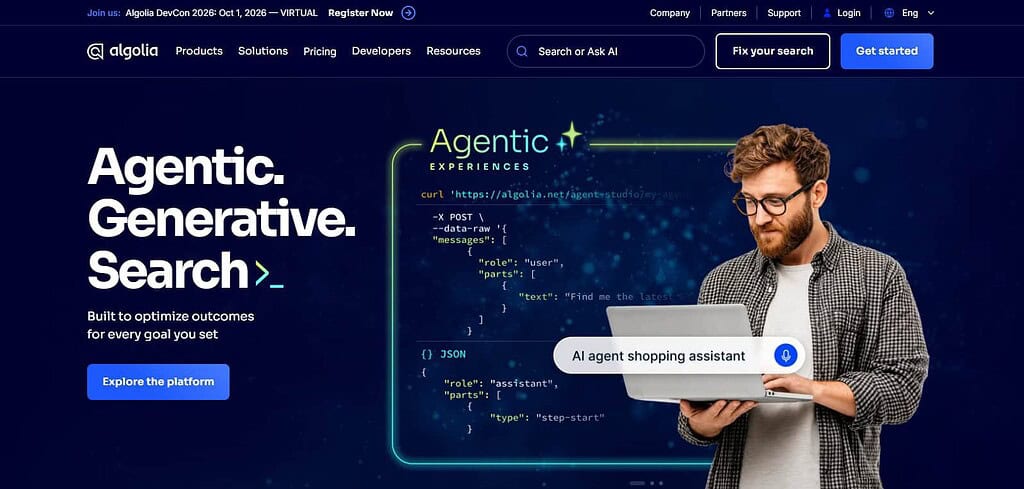
Algolia thrives with engineering-led e-commerce teams since it is built with a robust API-first architecture, allowing developers the flexibility to build custom Search and Discovery experiences. Algolia is uniquely built to be beyond just a Site Search solution with features including Product Recommendations and Personalized Discovery, thus making it applicable for retailers with large or complex catalogs, where the Search relevance is critical to the shopping experience.
Features
- Customizable search and ranking
- Product suggestions
- Results that automatically appear in the search bar
- Results based on what you have already typed
- Ability to find new products
Pros
- Search capability that is extremely fast and customizable
- Great focus on builders
- Ideal for large product databases
- Has flexible APIs and integrations
- Product discovery improves
Cons
- Primarily focuses on search and discovery
- Modifications require development resources
- Advanced personalization requires additional tools
- Expense can be significant with usage
- Focuses less on marketing automation
8. Salesforce Personalization
Salesforce Personalization integrates within the Salesforce ecosystem to help build customized customer experiences at scale. Salesforce Personalization provides tools for constructing personalized customer experiences, customer segmentation, recommendations, and cross-channel marketing with customer data and signals. Salesforce Personalization is designed to be used by companies who have existing Salesforce CRM and/or Marketing or Commerce Clouds.
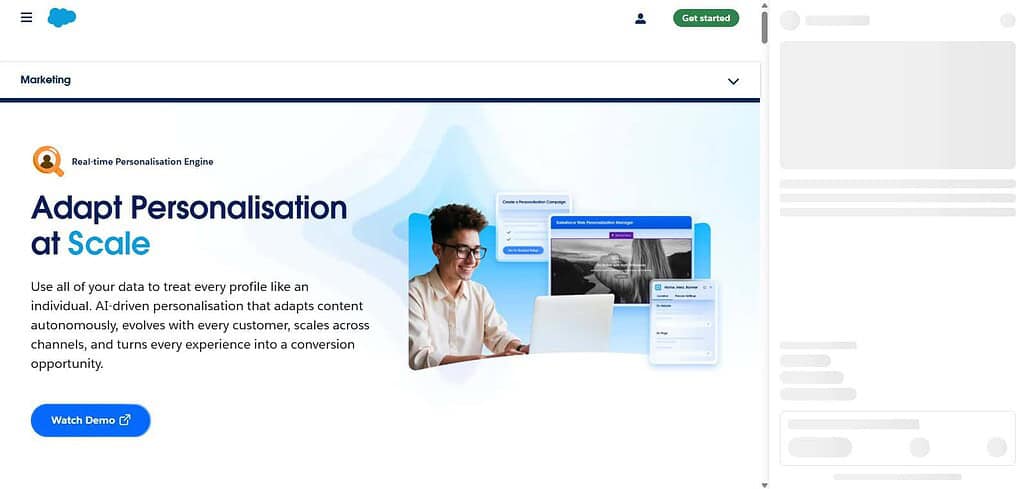
Personalization is designed to connect with other customer data and marketing materials in those other tools. Salesforce Personalization offers the ability to connect customer data with personalized marketing and commerce experiences within e-Commerce businesses. Personalization is best suited to larger companies where integration across the Salesforce tools will be used rather than Personalization as a standalone tool.
Features
- Real-time personalization
- AI-driven recommendations
- Customer division
- Personalization of the sales channel
- Integration of salesforce customer data
Pros
- Excellent integration with the salesforce personalization ecosystem
- Connections of personalization with customer data
- Aligned with the needs of large businesses
- Can support activities in a short space of time
- Aligned with cross-channel customer interaction
Cons
- Ideal for salesforce users
- Complex to implement
- High Enterprise pricing
- Potentially requires Salesforce
- Increased ecosystem can necessitate a larger configuration
9. Klevu
Klevu provides e-commerce search, merchandising, and personalization with AI for product discovery to help customers find products in online stores. AI site search, product discovery, merchandising, category optimization, and personalized product recommendations are all included in the one platform. Klevu is mainly used by enterprises with large product catalogs to give customers instant search results and easy ways to navigate throughout the catalog to discover relevant products.
Klevu provides search intelligence mixed with merchandising which automatically optimizes product discovery and offers retailers the ability to influence what is discovered. As compared to other customer engagement platforms, Klevu focuses on one platform and offers enterprise search, navigation, merchandising, and personalized product discovery.
Features
- AI-powered e-commerce search
- Product discovery
- Personalized search
- Tools for merchandisers
- Recommendations for related products
Pros
- AI improves product discovery
- Useful with large product databases
- Focused on search and discovery
- Has merchandiser tools
- Designed for online selling
Cons
- Focused on search and discovery
- Requires development for modifications
- More required for personalization
- Cost highly variable
- May need more tools for personalization
10. Rebuy
Rebuy specializes in developing e-commerce personalization technologies for product recommendations and upselling/cross-selling. With a focus on merchants using Shopify, it helps customers suggest more relevant products based on each step in the consumer’s shopping journey.
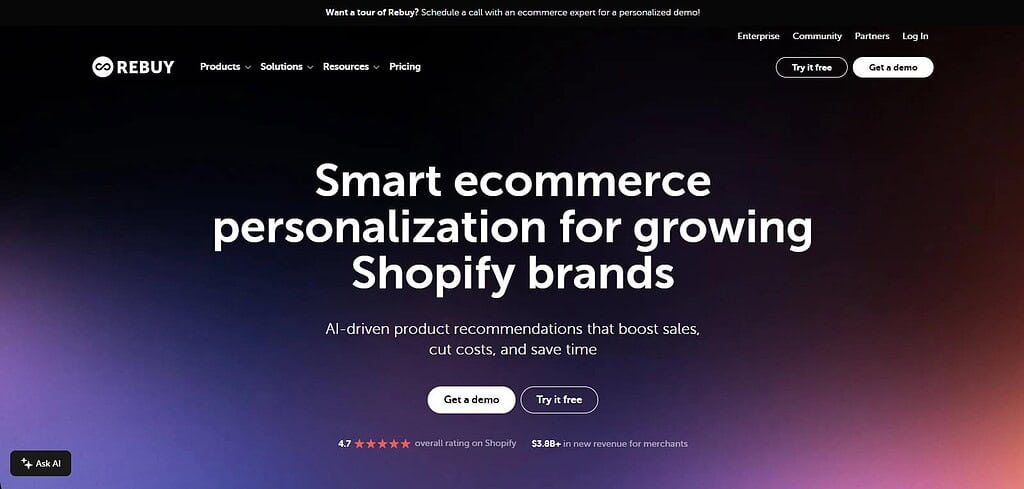
Recommendation experiences can be used to help consumers discover complementary products, encourage additional purchases, and present relevant offers across product pages and in shopping carts. As a result, Rebuy is more focused on commerce conversion and merchandising compared to addressing enterprise customer data orchestration.
With the features and capabilities Rebuy offers, merchants using e-commerce SaaS can either improve product discovery and offer personalized user experiences within their stores or increase opportunities available for cross- and up-selling.
Features
- AI-powered product recommendations
- Upselling and cross-selling
- Cart optimization
- Personalized shopping experiences
- Post-purchase recommendations
Pros
- Strong focus on e-commerce conversion
- Particularly useful for Shopify merchants
- Easy-to-use recommendation experiences
- Supports upselling and cross-selling
- Can help increase average order value
Cons
- More specialized than enterprise personalization suites
- Strongest fit is within supported commerce ecosystems
- Less comprehensive for omnichannel personalization
- Advanced personalization needs may require other tools
- Less suitable for complex enterprise-wide personalization needs
Conclusion
AI personalization is transforming today’s e-commerce, allowing companies to provide individualized products and content in a more customized way to their customers. The top 10 AI personalization e-commerce platforms in 2026 (Bloomreach, Dynamic Yield, Insider One, Nosto, Adobe Target, Optimizely, Algolia, Salesforce Personalization, Klevu, and Rebuy) provide unique tools for search tools, recommendations, experimentation, merchandising, and omnichannel engagement.
The best platform is dependent on your company’s size, e-commerce technology, your personalization goals, required integrations, and your budget. Selecting the right solution allows e-commerce companies to provide customers with more personalized shopping journeys and improve customer engagement and conversions while keeping customers for the long term.
FAQ
What is an AI personalization platform for e-commerce?
An AI personalization platform uses artificial intelligence, customer data, and behavioral signals to deliver more relevant shopping experiences. It can personalize product recommendations, search results, content, offers, and customer journeys based on individual shopper interests and actions.
What are the best AI personalization platforms for e-commerce in 2026?
Some of the leading options include Bloomreach, Dynamic Yield, Insider One, Nosto, Adobe Target, Optimizely, Algolia, Salesforce Personalization, Klevu, and Rebuy. Each platform has different strengths, so the best choice depends on the business’s requirements and technology stack.
How does AI personalization increase e-commerce sales?
AI personalization can help shoppers discover products that are more relevant to their interests. Personalized recommendations, search results, offers, and content can improve engagement and product discovery, potentially increasing conversion rates, average order value, and repeat purchases.
Which AI personalization platform is best for product recommendations?
Platforms such as Bloomreach, Dynamic Yield, Nosto, Algolia, and Rebuy provide product recommendation capabilities. The best option depends on factors such as catalog size, required integrations, recommendation use cases, personalization depth, and budget.