



Let’s talk about the best applicant tracking systems—the ones top recruiters lean on every single day to make the hiring process smoother, keep candidate pipelines organized, and boost how quickly they find the right people.
These days, recruiters depend on strong ATS platforms to handle repetitive tasks, help teams work together, and make smarter calls about who to hire. Pick the right system, and you’ll save time, cut down on hiring expenses, and bring in the best candidates faster.
What is Applicant Tracking Systems?
An Applicant Tracking System, or ATS, is software that helps companies run their hiring process online. With an ATS, recruiters can post jobs, gather and sort through resumes, screen applicants, set up interviews, and keep track of everyone in one place.
The system takes care of a lot of routine work, keeps the hiring team on the same page, and helps companies spot the right candidates more quickly. All in all, it streamlines the whole recruitment process and makes it more organized and efficient.
Key Point & Best Applicant Tracking Systems Top Recruiters Use Daily
| ATS Tool | Key Points |
|---|---|
| Greenhouse | Strong structured hiring workflows, excellent interview kits, advanced analytics, widely used by enterprise tech companies |
| Workday Recruiting | Part of Workday HCM suite, powerful for large enterprises, AI-driven candidate matching, strong HR integration |
| Lever | Combines ATS + CRM, great for collaborative hiring, easy pipeline tracking, strong automation features |
| iCIMS Talent Cloud | Enterprise-grade platform, highly scalable, strong compliance tools, robust talent acquisition suite |
| SmartRecruiters | Modern UI, easy-to-use platform, AI-driven hiring insights, strong global recruitment support |
| Jobvite | Social recruiting focus, strong automation, employee referral tools, good onboarding features |
| BambooHR ATS | Simple and user-friendly, ideal for SMBs, integrates well with HR management system, easy setup |
| Bullhorn | Best for staffing agencies, strong CRM features, fast candidate placement tracking, industry-specific workflows |
| JazzHR | Affordable ATS for small businesses, easy job posting, customizable hiring workflows, simple interface |
| Zoho Recruit | Budget-friendly, strong automation, integrates with Zoho ecosystem, supports both corporate HR and staffing agencies |
1. Greenhouse
Greenhouse stands out as a powerful, structured hiring platform, built to boost the quality and consistency of recruiting. You’ll spot it at lots of big companies—mostly because of its well-designed interview guides, handy scorecards, and strong analytics that back up smarter decisions.
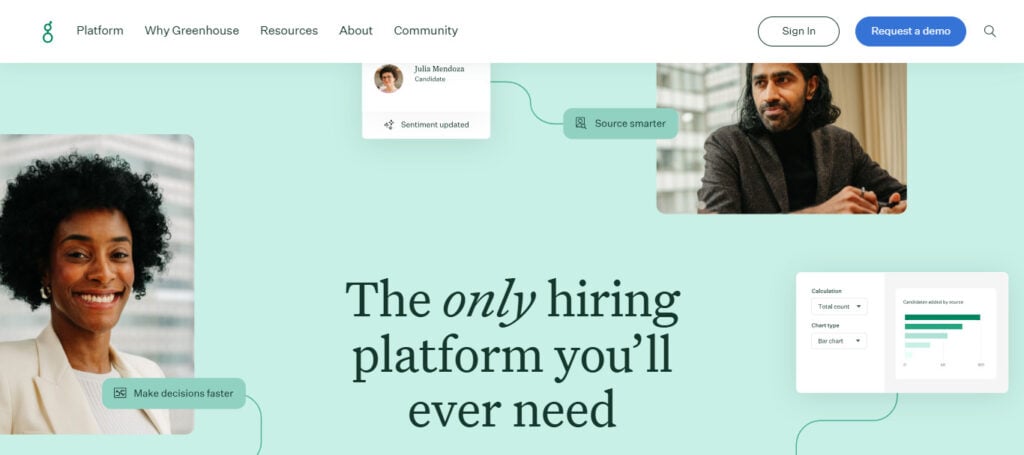
Teams use Greenhouse to work better together (and make the entire process less biased). Global companies lean on Greenhouse to organize every step, cut out miscommunication, and move from sourcing to onboarding without losing their sanity.
Greenhouse Features
- 1. Structured hiring flows that keep every stage clear.
- 2. Advanced interview scorecards, so evaluations stay fair.
- 3. Solid tools for teams to work together.
- 4. Strong analytics and recruitment reporting to track progress.
- 5. Connects easily with job boards and HR tools.
Greenhouse
| Pros | Cons |
|---|---|
| Strong structured hiring workflow | Expensive for small companies |
| Excellent interview scorecards | Requires learning curve for setup |
| Powerful reporting & analytics | Admin configuration can be complex |
| Great integrations with HR tools | Not ideal for very small teams |
| Reduces hiring bias with structured process |
2. Workday Recruiting
Workday Recruiting fits right into the broader Workday HR suite, so it’s a natural pick for large enterprises chasing an all-in-one solution. You get smart, AI-powered candidate suggestions, built-in links to payroll and HR, and clear tools for workforce planning—all from a single dashboard.
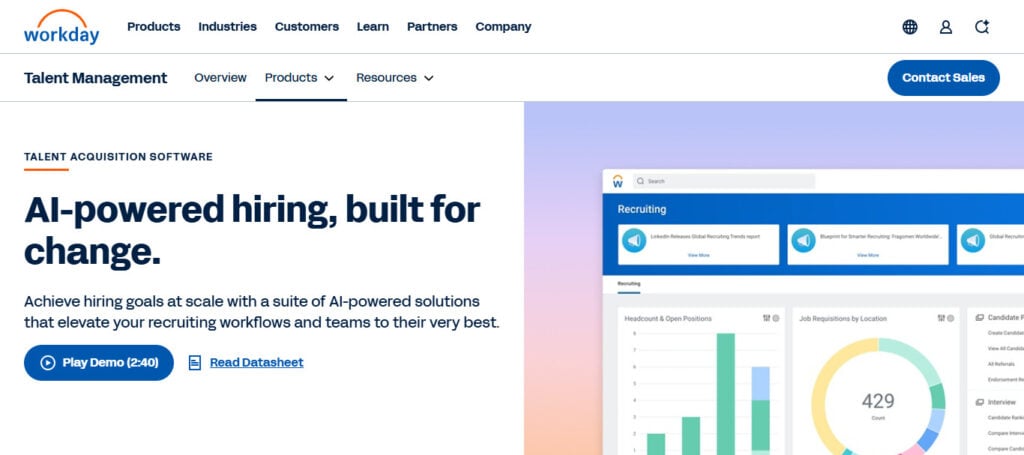
Recruiters appreciate the way everything connects, letting them manage the whole hiring process without constant switching between tools. Companies turn to Workday Recruiting because it really helps them scale up and keeps their HR, finance, and recruiting teams on the same page, especially when they’re hiring around the globe.
Workday Recruiting Features
- 1. Uses AI for smart candidate matching and suggestions.
- 2. Fits right into Workday’s HR and payroll setup.
- 3. Covers the entire talent lifecycle from start to finish.
- 4. Handles global hiring and compliance challenges.
- 5. Gives you real-time analytics for workforce planning.
Workday Recruiting
| Pros | Cons |
|---|---|
| Fully integrated HR + payroll system | Very complex UI |
| AI-driven candidate matching | Too many clicks for simple tasks |
| Strong enterprise scalability | Difficult for recruiters to use daily |
| Global compliance support | Slow workflow compared to competitors |
| End-to-end HR management | High implementation cost |
3. Lever
Lever brings together ATS and CRM functions, and fast-growing companies love that flexibility. It lets recruiters build real relationships with candidates, not just spreadsheets. With automation for scheduling and following up, a lot of the tedious stuff just disappears.
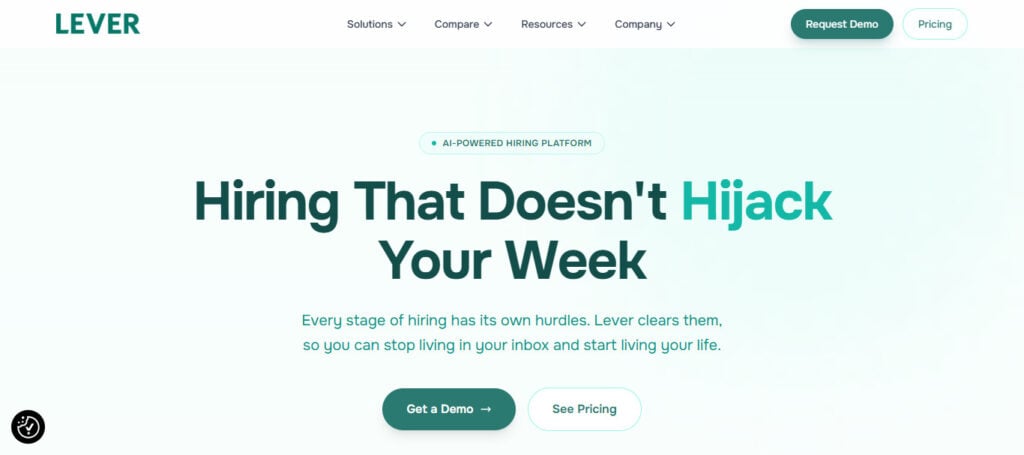
The interface is clean, and it’s easy for the whole team to stay in sync. Modern businesses like Lever because it makes hiring smoother and gives candidates a more personal experience—more real conversation, less ghosting.
Lever Features
- 1. Blends ATS and CRM to manage your talent pipeline.
- 2. Handles candidate engagement and follow-ups automatically.
- 3. Dashboards make team hiring efforts easy to track.
- 4. Interview scheduling and communication tools are straightforward.
- 5. Strong on analytics and reporting for recruitment.
Lever
| Pros | Cons |
|---|---|
| Combines ATS + CRM features | Limited advanced reporting vs enterprise tools |
| Strong candidate pipeline tracking | Support quality varies |
| Easy collaboration tools | Can feel less powerful for large enterprises |
| Automation for hiring workflow | Occasional feature instability |
| Good candidate engagement tools |
4. iCIMS Talent Cloud
iCIMS Talent Cloud is a no-nonsense platform built for big businesses with all kinds of hiring needs. It covers you end-to-end—sourcing, tracking, onboarding, staying compliant—all in one spot. It’s especially popular in fields where data security and tailor-made workflows matter.
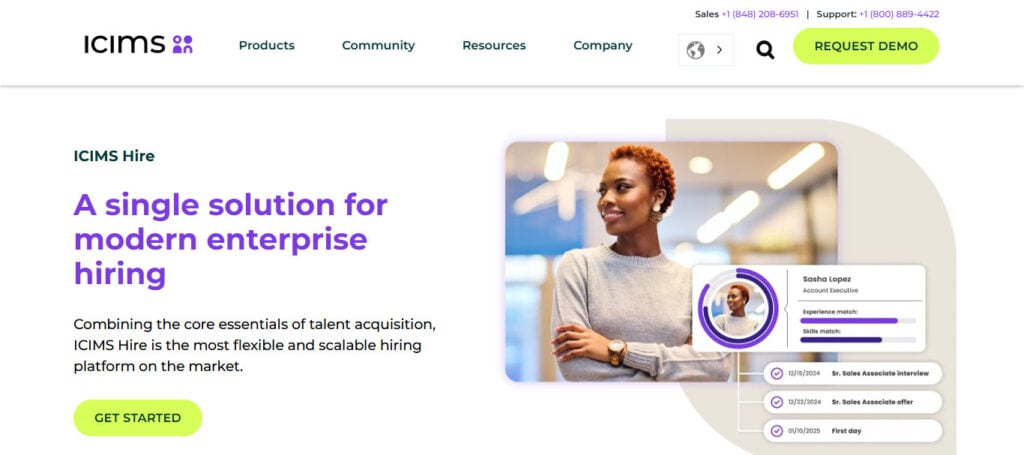
The platform has smart AI to match candidates to roles more precisely. Large organizations go with iCIMS to handle huge volumes of applicants without breaking a sweat while keeping every system consistent and above-board.
iCIMS Talent Cloud Features
- 1. Built for big organizations, scalable for enterprise needs.
- 2. Advanced job distribution and candidate tracking.
- 3. Heavy focus on compliance and security.
- 4. AI-driven matching finds candidates fast.
- 5. Custom workflows, perfect for companies with complex processes.
iCIMS Talent Cloud
| Pros | Cons |
|---|---|
| Highly scalable enterprise solution | Complex setup process |
| Strong compliance and security tools | UI not very modern |
| Advanced reporting & analytics | Expensive platform |
| Customizable workflows | Requires technical expertise |
| Handles high-volume hiring | Integration complexity |
5. SmartRecruiters
SmartRecruiters is a modern, cloud-based ATS that makes hiring simple no matter your company size. It’s pretty intuitive and offers AI-driven job matching, plus tools to improve how candidates experience the process. Need to recruit worldwide? The platform handles different languages and offers real insights through analytics.
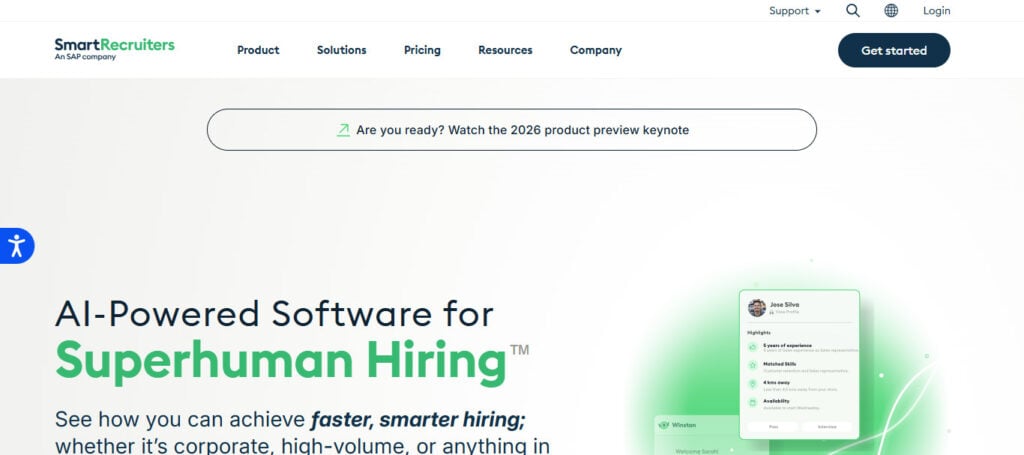
It also plays well with other HR tools—so you’re not stuck in some outdated silo. Companies like SmartRecruiters (and trust it day-to-day) because it speeds up hiring, encourages teamwork, and makes sure everyone—candidates included—feels the process is smooth from start to finish.
SmartRecruiters Features
- 1. Modern, intuitive design that’s easy to use.
- 2. AI sources candidates and matches jobs efficiently.
- 3. Supports global hiring, with multilingual features.
- 4. Integrates smoothly with HR and other apps.
- 5. Delivers real-time hiring analytics and insight.
SmartRecruiters
| Pros | Cons |
|---|---|
| Modern and easy-to-use interface | Can become costly for enterprise use |
| Strong global hiring support | Setup can take time |
| AI-powered job matching | Some advanced features need training |
| Flexible integrations | Reporting not as deep as iCIMS |
| Good candidate experience tools |
6. Jobvite
Jobvite is all about leveraging social networks, automation, and referrals to bring in strong talent. It helps you reach candidates in more places and take the fuss out of the hiring workflow. There are onboarding tools right in the system, making life easier for HR folks.
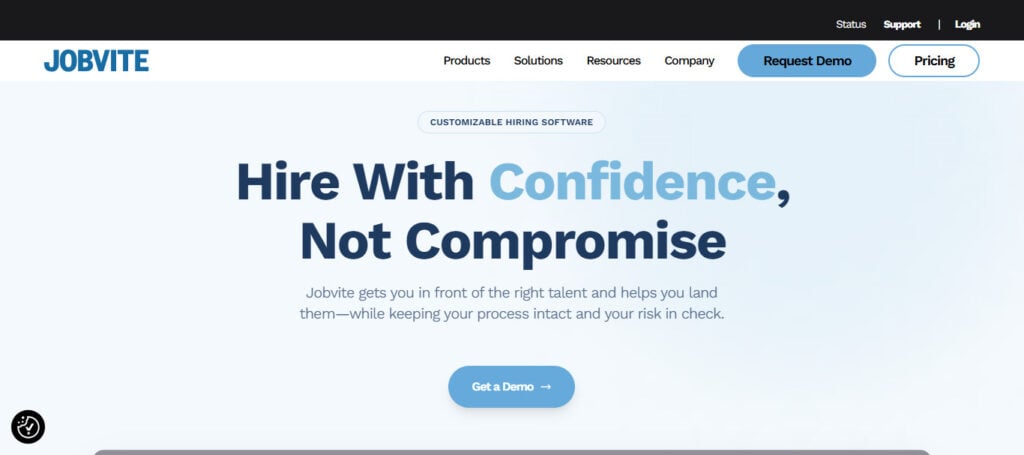
Analytics help recruiters stay sharp, tweak their strategies, and see what’s delivering results. Teams use Jobvite to keep candidates engaged, hire faster, and build solid pipelines—especially through social recruiting and tapping into employee connections.
Jobvite Features
- 1. Social recruiting plus employee referral tools.
- 2. Has marketing automation for attracting talent.
- 3. Built-in onboarding to help new hires settle in.
- 4. AI-based candidate recommendations.
- 5. Robust dashboard for recruitment analytics.
Jobvite
| Pros | Cons |
|---|---|
| Strong social recruiting tools | Interface feels slightly outdated |
| Employee referral system | Limited customization options |
| Good onboarding features | Reporting not very advanced |
| Automation in hiring process | Can be expensive for small teams |
| Strong marketing tools for jobs |
7. BambooHR ATS
BambooHR ATS is built mainly for small to mid-sized companies that want simple, effective recruiting without the bells and whistles nobody uses. Job posts, tracking, easy interview scheduling—it’s all right there in a layout anyone can pick up quickly.
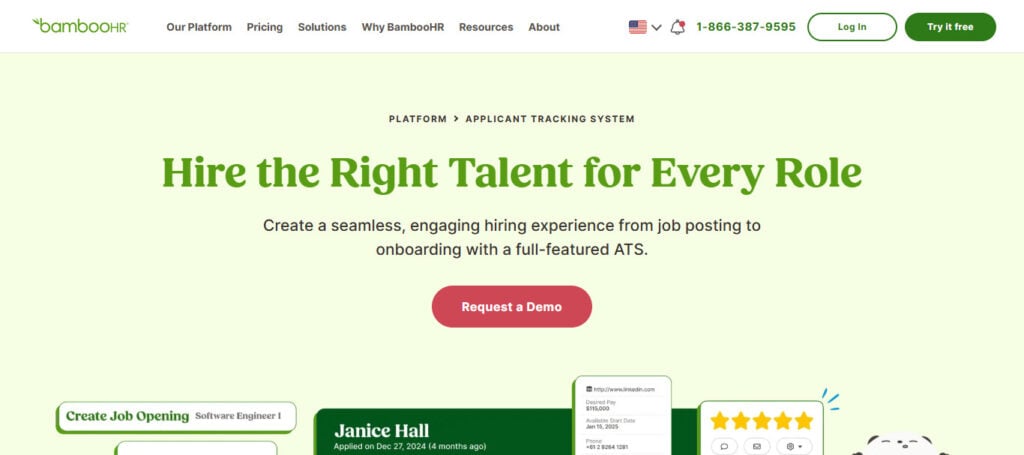
The system blends straight into the bigger BambooHR platform, which makes managing your people far easier. It’s famous for easy setup and just enough features to do the job well. Growing businesses choose BambooHR ATS because it keeps the process straightforward and manageable, even for teams with barely any HR staff.
BambooHR ATS Features
- 1. Simple hiring system, easy to navigate.
- 2. Works seamlessly with BambooHR’s main HRIS platform.
- 3. Handles job postings and applicant tracking without fuss.
- 4. Scheduling interviews and collaborating is straightforward.
- 5. Best suited for small and medium-sized companies.
BambooHR ATS
| Pros | Cons |
|---|---|
| Very simple and easy to use | Limited advanced ATS features |
| Best for SMBs | Not suitable for enterprise hiring |
| Strong HR + ATS integration | Basic analytics |
| Quick setup and onboarding | Less automation compared to competitors |
| Clean user interface |
8. Bullhorn
Bullhorn was made with staffing and recruitment agencies in mind. Agencies rely on it to match candidates with jobs fast, keep up with client relationships, and track every single interaction in real time.
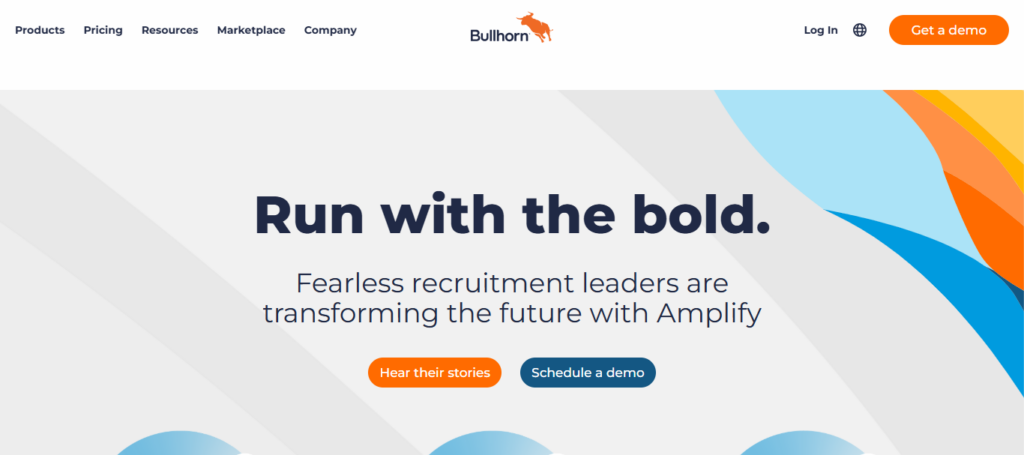
There’s plenty of automation, so recruiters can handle tons of placements without burning out. Plus, you get mobile access—recruit on the fly or from anywhere. Staffing firms turn to Bullhorn to get more done, communicate smoothly, and keep up the pace in fast-moving markets.
Bullhorn Features
- 1. Designed with staffing and recruitment agencies in mind.
- 2. Combines CRM and ATS for the complete package.
- 3. Tracks candidate placement quickly.
- 4. Automates high-volume recruiting tasks.
- 5. Powerful mobile tools for recruiters on the go.
Bullhorn
| Pros | Cons |
|---|---|
| Best for staffing agencies | Not ideal for in-house recruiting |
| Strong CRM + ATS combo | Steep learning curve |
| High-volume recruitment support | UI feels complex |
| Advanced automation tools | Expensive for small teams |
| Strong candidate tracking |
9. JazzHR
JazzHR is budget-friendly and built for small businesses and startups that need all the essentials (like job posts, application tracking, and interview management) but don’t want to drown in complexity. Setting it up is quick, and you don’t need to be a tech wizard to get started.
JazzHR encourages team collaboration, so everyone involved in hiring actually has a voice. Smaller teams love JazzHR because it’s affordable, powerful, and super practical for hiring and growing at their own pace.
JazzHR Features
- 1. Affordable option for small businesses.
- 2. Lets you customize hiring workflows.
- 3. Easy job posting and resume tracking.
- 4. Team collaboration plus approval system.
- 5. Quick setup, so you can start hiring fast.
JazzHR
| Pros | Cons |
|---|---|
| Affordable pricing for SMBs | Limited enterprise features |
| Easy setup and use | Basic reporting tools |
| Customizable workflows | Not suitable for large-scale hiring |
| Good collaboration tools | Fewer integrations than top ATS |
| Simple job posting system |
10. Zoho Recruit
Zoho Recruit adapts easily to both in-house HR teams and staffing agencies. It brings you resume parsing, automation for posting jobs, smart candidate matching, and solid tracking features. The connection to the larger Zoho suite makes all your work more productive.
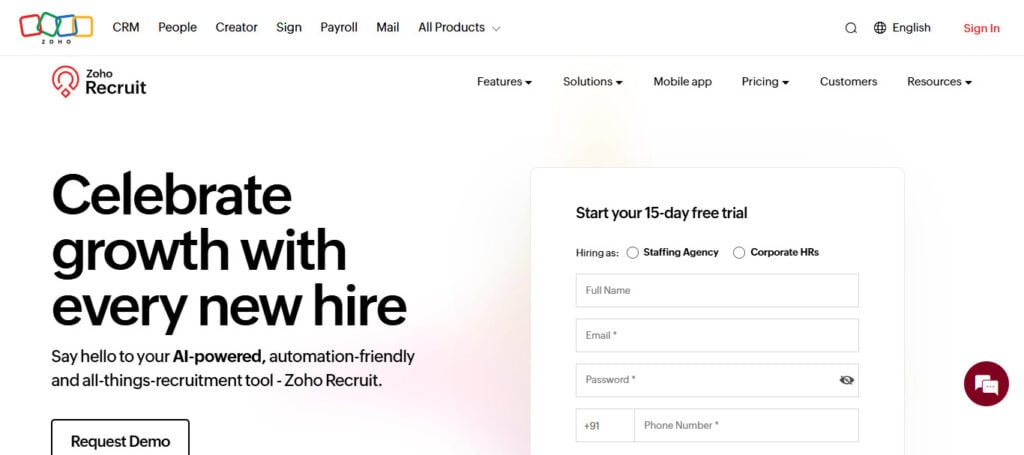
You can tweak the platform to fit your process, not the other way around. Organizations go with Zoho Recruit for its affordability, automation, and ability to grow with them—perfect for expanding businesses and busy recruitment agencies alike.
Zoho Recruit Features
- 1. Parses resumes and matches candidates well.
- 2. Automates job postings and workflow steps.
- 3. Ties into Zoho tools for extra functionality.
- 4. Works for both HR teams and agencies.
- 5. Offers advanced reporting and analytics.
Zoho Recruit
| Pros | Cons |
|---|---|
| Budget-friendly ATS solution | UI feels less modern |
| Strong automation features | Limited advanced enterprise features |
| Integrates with Zoho ecosystem | Can be overwhelming for beginners |
| Resume parsing & tracking | Support can be slow |
| Flexible for HR + agencies |
Conclusion
Applicant Tracking Systems are pretty much a must-have for anyone hiring these days. They help companies move faster, keep things organized, and give applicants a smoother experience.
Big players like Workday Recruiting and iCIMS Talent Cloud have all kinds of features for larger organizations, while options like Zoho Recruit and JazzHR are more flexible and fit smaller teams. No more endless spreadsheets or chasing emails—these platforms cut down on manual work and get everyone on the HR team working together.
Picking the right system really comes down to things like your budget, company size, and what you want out of your hiring process. Honestly, recruiters who use top Applicant Tracking Systems every day can spot good candidates quicker and put together a smarter, stronger hiring workflow.
FAQ
How does an ATS help recruiters in daily work?
An ATS helps recruiters manage their daily hiring tasks more efficiently by centralizing all candidate information in one system. It automates job postings, tracks applications, and organizes interview schedules. Tools like Lever and Jobvite also allow recruiters to build talent pipelines and maintain communication with candidates. This reduces manual work and ensures no candidate is overlooked. Many ATS platforms also provide analytics and reporting features to measure hiring performance. As a result, recruiters can focus more on selecting the right talent instead of handling administrative tasks.
Are ATS systems suitable for small businesses?
Yes, ATS systems are highly beneficial for small and medium-sized businesses. Platforms like JazzHR, BambooHR ATS, and Zoho Recruit are specifically designed for smaller teams with limited budgets. They offer simple interfaces, easy setup, and essential hiring features such as job posting, resume tracking, and interview scheduling. These tools help small businesses compete with larger companies by improving hiring speed and organization. Even without large HR teams, small businesses can manage recruitment professionally and efficiently using modern ATS solutions.
What is the future of Applicant Tracking Systems?
The future of ATS platforms is driven by artificial intelligence, automation, and data analytics. Modern systems like Workday Recruiting and SmartRecruiters are already using AI to match candidates with job roles more accurately. Future ATS tools will focus more on predictive hiring, better candidate experience, and deeper integrations with HR technologies. Automation will continue to reduce manual tasks, while analytics will help companies make smarter hiring decisions. Overall, ATS systems will become more intelligent and essential in shaping the future of recruitment.