




This article dives into the Best AI Reasoning Models that are leading the industry through advancements in problem solving, reasoning, and decision making with Artificial Intelligence. The models cover automation, research, coding, and even enterprise workflow solutions. We will walk through key features and take a deep look into the strengths of these models and even the performance, technical capabilities, pricing, and more to assist in narrowing down the right AI reasoning model.
What Are AI Reasoning Models?
AI Reasoning Models are AI models trained to understand and analyze legal structures and frameworks to help machines develop problem-solving abilities involving multiple steps of logical reasoning. They are designed to break down problems and evaluate answers by evaluating multiple options in context.
They are used in software development, scientific research, business intelligence, financial analysis, automation, and AI agent systems. Using large language models and instructed training, modern reasoning models have the ability to provide more reliable approaches to tackle complex problems encountered in the real world.
How AI Reasoning Models Work Behind the Scenes?
Training Data
AI reasoning models have the ability to understand and output logical, complex responses to open-ended questions. This is the result of huge datasets being used to train AI reasoning models. These datasets include: books, academic journals, code, webpages, and structured data, to name a few. Once a dataset is provided to a reasoning model, the model learns the syntax and semantics of a given domain and the relationships of concepts and solving problems within that domain. Advanced reasoning models understand the context of and generalize to new questions, rather than just memorizing datasets.
Neural Networks and Model Architecture
Transformer neural networks utilize attention mechanisms, which allow them to reason about the most important concepts in a poorly structured, large amount of text. The transformer neural networks are designed to process severely complex text. These reasoning models are able to interpret context, answer follow up questions, and execute open ended, multi step guidance.
Chain-of-Thought and Multi-Step Problem Solving
AI reasoning models help to break larger problems into discrete and logical sub-problems. Instead of jumping to the solution, reasoning models divide the problem into smaller sub-problems, consider various solutions, and evaluate the correctness of each solution. This type of reasoning is appropriate for tasks like calculations, software debugging, constructing a plan for achieving a goal, and analyzing research. AI reasoning models build confidence in the solutions presented to users by taking a step-by-step decision-making approach.
Reinforcement Learning and Improvement from Human Feedback
AI reasoning models employing reinforcement learning use feedback to adjust and improve their performance in behavior evaluation and automated testing. These systems learn to generate more accurate and helpful responses and to filter out erroneous and unreliable responses. The use of these models results in fewer errors, better compliance, and safer interaction with other agents. Models are able to strengthen their reasoning skills when presented with new, real-world requirements and user demands.
Context Understanding and Long Term Memory
AI reasoning models analyze documents and conversations based on the context and relationship of different pieces of information. With sufficiently large context windows, models are able to analyze texts, papers, reports, and verbal interactions and discourse without losing any information. This capability provides a strong enterprise application to process a vast amount of information and provide a summarized and meaningful end result.
Integration of Retrieval-Augmented Generation (RAG)
Retrieval-Augmented Generation (RAG) integrations allow modern knowledge reasoning systems to access external sources of information to enhance their internal knowledge. RAG helps AI systems conduct searches on documents, company databases, application programming interfaces (APIs), and other sources of rapidly evolving information. RAG is useful for improving factual accuracy and helps models avoid relying on stale information. RAG is integrated across multiple enterprise AI assistants, research tools, and knowledge management systems.
Key Point & Best AI Reasoning Models
| Model | Developer | Strengths | Benchmark Highlights |
|---|---|---|---|
| Claude Mythos 5 | Anthropic | Best overall reasoning | 83.1 BenchAlign v5, top GPQA Diamond |
| Claude Opus 5 | Anthropic | Balanced speed + accuracy | 83.1 BenchAlign v5, strong chain‑of‑thought |
| Claude Fable 5 | Anthropic | Highest composite score | 82.9 BenchAlign v5, multilingual + coding |
| GPT‑5.6 Sol | OpenAI | Knowledge + reasoning combo | 81.6 BenchAlign v5, perfect math scores |
| Qwen3.8 Max | Alibaba | Best open‑weight reasoning | 95.5 weighted reasoning score, LongBench v2 leader |
| Kimi K3 | Moonshot AI | Largest context window | 1.05M tokens, frontier‑adjacent reasoning |
| Claude Opus 4.8 | Anthropic | Legacy stability | 77.4 BenchAlign v5, strong agentic reasoning |
| Muse Spark 1.1 | Meta | Multimodal reasoning | 76.8 BenchAlign v5, visual + text logic |
| Gemini 3.5 Flash | Google DeepMind | Fastest reasoning model | 71.5 weighted reasoning, 178 tokens/sec |
| GLM‑5.2 (Reasoning) | Z.AI | Best open‑weight budget option | 70 overall score, cost‑efficient reasoning |
1. Claude Mythos 5
One of the newest enterprise AI reasoning systems is Claude Mythos 5. Its focus is on deep reasoning, complex problem solving and superior automation for the enterprise. The driving force of its growth is the need for AI agents that can be trusted in research and finance.
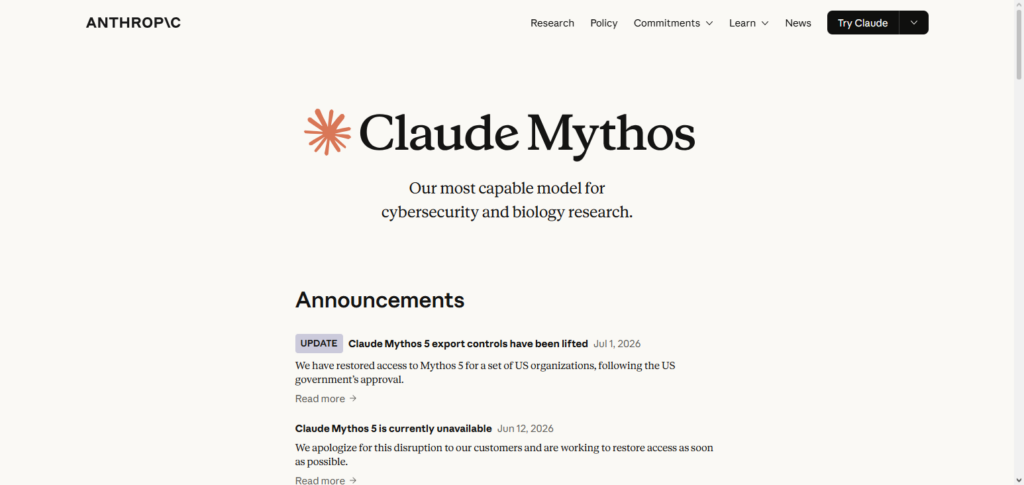
The competitive edge that Claude Mythos 5 has in the market might be the focus on safety and accuracy over the other reasoning models. Performance metrics in this model are an improvement from the other AI systems in terms of coding and problem solving with a focus on mathematical and logical reasoning with increased planning.
Technically, Claude Mythos 5 uses better alignment with advanced transformer architecture and improved memory control that allows for more consistent reasoning.
Core Reasoning:
- High level logic for complex case research, analysis and multi-step problem solving.
- Strong contextual understanding and better understanding for decision-making.
- Designed for enterprise-level AI agents and knowledge-intensive workflows.
Key Strength:
- Safety and alignment is excellent and answers are reliable.
- Excellent reasoning performance for professional tasks.
- Effectively processes long documents and complex tasks.
- Well suited for business intelligence, research and automation tasks.
Pricing:
- Expected to have a premium pricing model based on enterprise usage.
- Possibly available with an API and a usage-based billing model.
- Price may be higher for advanced reasoning workloads.
2. Claude Opus 5
Claude Opus 5 is designed for professionals and businesses needing advanced AI reasoning models offering high accuracy and creativity. It is expected to have the greatest impact in areas such as legal, enterprise, and IT consulting, scientific, and engineering analysis, and software design and development.

Opus 5 is targeted at the same customer base as competing reasoning models, though it is designed to offer better context and more advanced instruction handling. Improvements in performance have been demonstrated by better benchmarking in coding, reasoning, knowledge, and problem decomposition.
With respect to technical implementation, Claude Opus 5 combines large-scale neural networks with enhanced safety, improved training datasets and inference systems. It thus reflects the trend of powerful AI assistants designed to replace traditional automation of workflows.
Core Reasoning**:
- Strengthens Raven’s Progressive Matrix (logical reasoning) and advanced intelligence.
- Improves the analysis of complex problems and situations, technical and/or strategic.
- Increases reasoning and accuracy.
Key Strength:
- Strong AI in language understanding and problem solving.
- Advances in coding and analytics.
- Excellent content (both creative and professional) generation.
- Enterprise-grade safety and reliability features.
Pricing:
- Designed to be at the top of the AI Model Tier.
- Token-based usage is expected with an API.
- Enterprise clients will have the opportunity for negotiable pricing.
3. Claude Fable 5
Claude Fable 5 goes beyond creative writers and designers by bringing advanced reasoning and creative intelligence to the domain of storytelling, content creation, and business communication. The model will help the AI market expand into creative industries beyond technical applications where AI is currently used.
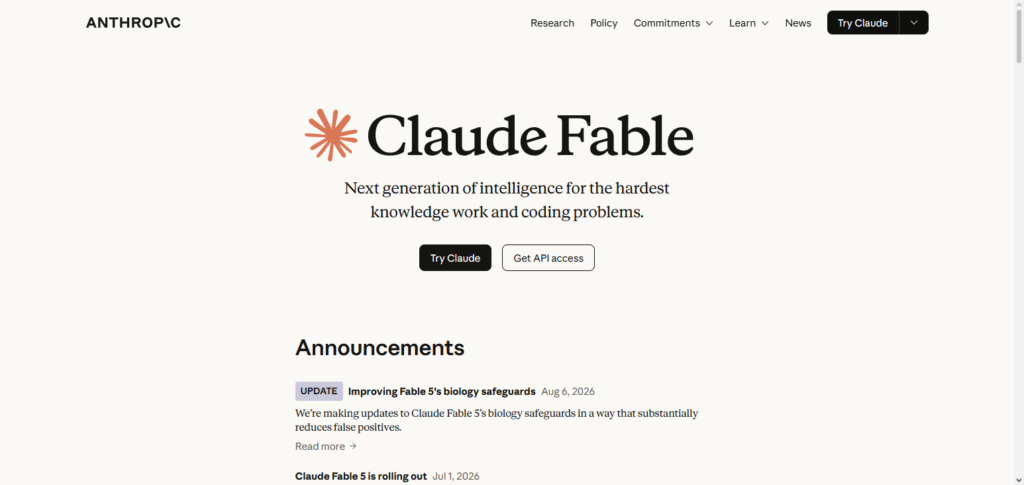
Through new performance metrics, improvements have been reported in language generation, emotional understanding, instruction following, and creative problem solving.
Fable 5 incorporates multimodal context and reason, NLP, and language models to interpret and respond in a more humanlike manner. Improvements in parameter efficiency, contextual memory, and alignment have aided its market relevance and creativity.
Core Reasoning
- Combines creativity and reasoning.
- Best suited for professions such as a copywriter or marketer.
- Breaks down and follows different creative instructions.
Key Strength
- Highly developed forms of creativity and intelligence.
- Highly developed written content generation skills.
- Great for your brand and media production.
- Weighs creativity against established facts.
Pricing
- Subscription and API models likely.
- Users with creativity focus may find it in premium AI.
- Variable pricing under enterprise depending on how much you use it.
4. GPT‑5.6 Sol
The Sol AI model prioritizes efficient reasoning and flexible deployment for consumer and enterprise uses. Current demand for lightweight yet powerful AI models encourages growth for Sol. Robust reasoning performance allows AI systems to function efficiently and appropriately.
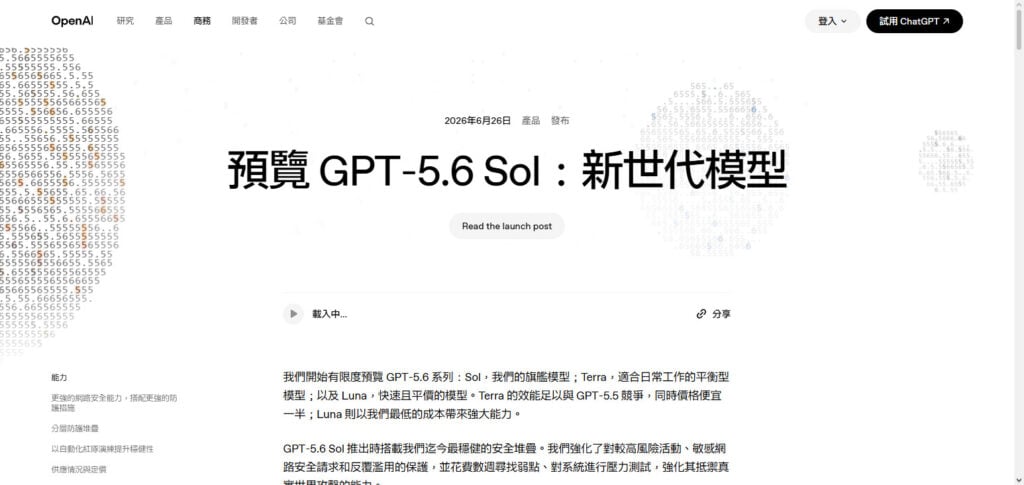
Sol aims to improve accessibility of AI through applications for automation, customer support, productivity tools, and intelligent assistants. Characteristics focus on speed and efficiency alongside contextual accuracy with less computational burden compared to other large AI models.
Sol uses optimized neural architectures and advanced parameter management for inference. This model illustrates the focus for AI companies to shift from pure intelligence to practical deployment and cost-effective scalability.
Core Reasoning
- General purpose reasoning for coding, analyzing, researching, and automating.
- Understands a greater range of complex directives.
- Capable of more complex planning and self-directed AI task flows.
Key Strength
- Exceptional reasoning in a variety of domains.
- Strong coding and development.
- Cross-modal understanding.
- Suitable for large scale enterprise use.
Pricing
- Likely to have consumer subscriptions and API pricing.
- Developers may gain access under a pricing model based on tokens.
- Custom AI pricing under enterprise models may exist.
5. Qwen3.8 Max
Qwen3.8 Max is specifically designed for enterprise applications; it is a high-performance reasoning model for multilingual intelligence and developer-centric AI. Growth for Qwen3.8 Max correlates to the growing demand for AI systems for use in multiple languages and for use in large and complex intended/professional tasks.
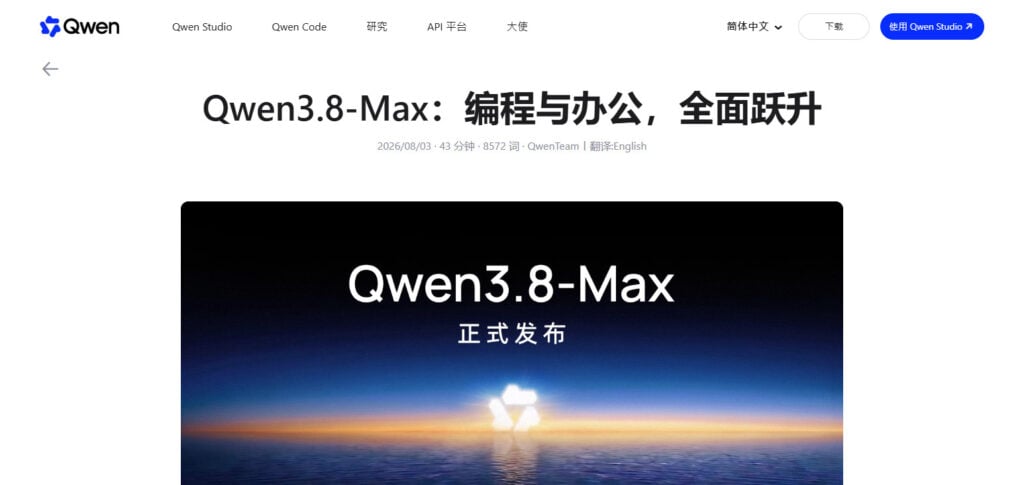
Market disruption can be attributed to Qwen3.8 Max, due to its strong reasoning, coding, and knowledge capabilities, making it competitive with other leading Western AI models. Evidence of performance track improvements includes better multilingual understanding and reasoning, mathematics and programming accuracy, and improved long-context processing.
Qwen3.8 Max uses state-of-the-art Transformer architecture with optimized large-scale training and a mixture-of-experts approach and other advanced data processing techniques. Competition and innovation for global AI offerings are better due to Qwen3.8 Max’s market offering.
Core Reasoning
- Fast reasoning for practical AI.
- Low processing cost. Optimized for performance.
- Best for real time automation.
Key Strength
- Response time virtually instantaneous.
- Economically mindful AI.
- Intelligent performance.
- Best for applications needing scalable AI.
Pricing
- Likely to be low cost AI.
- Pricing dependent on API calls.
- Geared at developers wanting low cost operations.
6. Kimi K3
Kimi K3 uses a reasoning model focused on long context understanding, document analysis, and productivity automation for enterprise applications. Market traction for Kimi K3 is driven by enterprise interest for AI systems that can process large volumes of information, e.g. reports, research papers, and other business related documentation.

Framework improvements for Kimi K3 include strong metrics for reasoning, summarization, coding assitance, and knowledge extraction. Improvements to the efficiency of long-context models and document understanding further increase the usability of AI systems within enterprise settings.
Optimized Transformer-based attention models in conjunction with improved data training techniques are used in the construction of Kimi K3. Market disruption for Kimi K3 is driven by adoption of long-context AI systems for use in enterprise environments where speed and accuracy of information processing are highly valued.
Core Reasoning
- High capacity for multilingual reasoning.
- Exemplary performance in math, programming, and analysis of business.
- Directive complexity of a high order in a multitude of languages.
Key Strength
- Mastery of multilingual domain.
- Robust coding skills and sound judgement.
- Successful large-scale implementations.
- Competitive benchmarks against global AI models.
Pricing
- Flexible, API-based pricing expected.
- Likely to feature developer-oriented pricing tiers.
- Custom plans offered based on computational needs and deployment size.
7. Claude Opus 4.8
Claude Opus 4.8 offers enterprise-grade intelligence focused on innovation, reliability, and advanced problem-solving. It’s growth is accelerated by the increasing adoption of AI assistants in the professional sector requiring accurate analysis and secure data. Performance metrics show significant growth in reasoning benchmarks, coding tasks, business analysis, and complex decision-making.

Claude Opus 4.8 provides organizations a competitive edge by helping them understand large volumes of data and complex instructions. From a technical perspective, it utilizes the latest safer approaches for reinforcement learning coupled with advanced transformer models, scaled computing architectures, and contextual reasoning systems. This model focuses on more advanced forms of professional intelligence that can support modern business activities.
Core Reasoning
- Long context and large document processing.
- Designed to assist research and business analysis.
- Can process large amounts of data and maintain context.
Key Strength
- Long context capabilities.
- Document summarization and analysis.
- Business enterprise knowledge management.
- Strong research and productivity tools.
Pricing
- Subscription and API pricing expected.
- Contextual processing may be priced at a premium.
- Custom plans within enterprise may be offered.
8. Muse Spark 1.1
Muse Spark 1.1 combines intelligent reasoning and creative generation and focuses on automating the design and creative process with marketing and media applications. Rapid adoption of marketing AI technologies is spurring market demand for sophisticated creative assistants.

Performance metrics focus on creativity, language quality, understanding of imagery-related prompts alongside strong idea generation and user interface. Muses Spark 1.1 utilizes state of the art frameworks for creative generation, multimodal AI, and efficiently trained neural networks.
Its automation in creative work with marketers and designers further illustrates the expanding role of AI as a collaborator as it shifts beyond the realm of conventional analytical tasks.
Core Reasoning
- A robust reasoning model which balances accuracy and reliability.
- Handles complex and valuable tasks across business, technical and analytical domains.
- Secure for high-value enterprise applications.
Key Strength
- High consistency of reasoning.
- Excellent document processing.
- Enterprise AI assistant with strong safety and alignment.
Pricing
- Higher cost model with premium category.
- Pricing for APIs expected to be based on input/output tokens.
- Custom contracts expected for enterprise clients.
9. Gemini 3.5 Flash
Where Gemini 3.5 Flash excels is speed. It aims to be fast and effective in deployed AI systems that require real-time responses and complex deployments. This model aims to address developing concerns with AI deployed in mobile applications, enterprise systems, and developer ecosystems.
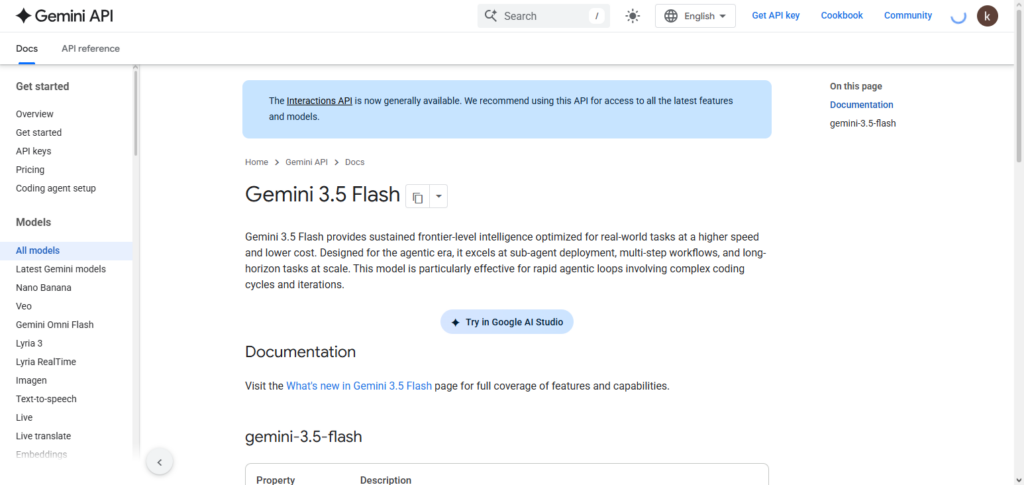
There is an emerging need for low latency AI deployments. Speed and efficiency are central to these deployments. Gemini 3.5 Flash aims to fill a developing need in the industry.
Technologically, Gemini 3.5 Flash uses cloud based AI infrastructure, efficient inference, multimodal inputs, and a transformer architecture, which significantly reduces complexity. The model enables intelligent large-scale deployments at rapid speeds, following the primary trend in the industry to integrate intelligent AI systems that are both high-performance and cost effective.
Core Reasoning
- Fast reasoning model optimized for real-time applications.
- Designed for efficient AI responses with strong multimodal capabilities.
- Supports scalable consumer and enterprise solutions.
Key Strength
- High-speed AI performance.
- Lower operational cost compared with larger models.
- Strong multimodal understanding.
- Suitable for mobile apps and AI-powered services.
Pricing
- Expected to follow usage-based API pricing.
- Designed as a cost-efficient alternative for developers.
- Enterprise pricing may depend on API volume and infrastructure needs.
10. GLM‑5.2 (Reasoning)
The GLM-5.2 (Reasoning) model focuses on advanced reasoning and includes AI enterprise applications and multilingual capability. Competition and demand for reasoning focused models has impacted GLM-5.2 growth.
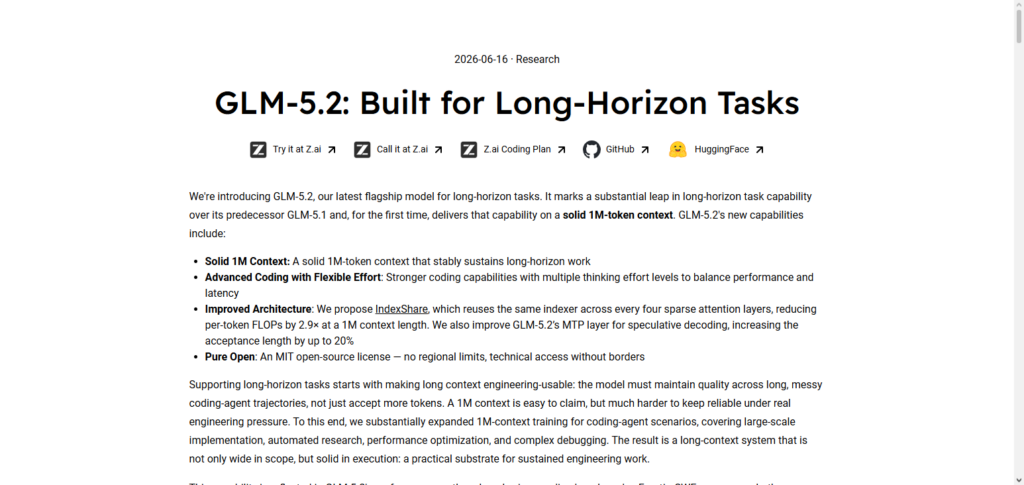
The model offers improvements in mathematical reasoning and programming, language comprehension, and support for automation. Technically, GLM-5.2 uses large scale language models, reinforcement learning approaches, and improved datasets, and incorporates computing efficiency.
The model allows speed and innovation in high performance reasoning architectures within AI. GLM-5.2 creates market disruption due to its improvements in performance and accessibility; it offers a high-performance reasoning model and architecture within the AI ecosystem.
Core Reasoning
- Reasoning-focused AI model designed for advanced analysis and problem-solving.
- Supports coding, mathematics, research, and enterprise intelligence.
- Optimized for complex logical tasks.
Key Strength
- Strong reasoning performance.
- Multilingual AI capabilities.
- Efficient enterprise deployment.
- Competitive alternative in global AI markets.
Pricing
- Expected to offer API-based and enterprise pricing models.
- Pricing may depend on computational usage.
- Designed to provide flexible options for developers and organizations.
Conclusion
Advancements in AI reasoning technology are significantly changing how businesses, developers, researchers, and creatives address complex challenges. AI models like Claude Mythos 5, Claude Opus 5, GPT-5.6, Qwen3.8 Max, Kimi K3, Gemini 3.5 Flash, and GLM-5.2 illustrate the rapidly increasing accuracy and sophistication of AI in automating tasks, coding, researching, and aiding decision-making.
Premium models perform deeper reasoning and are designed for enterprise use cases. Efficient models offer simpler, near instant deployment of AI technologies. Pricing, performance, context meaning, and business use cases are some factors to consider when choosing an AI reasoning model. AI model competition further spurs innovation of business models across industries.
FAQ
What Are AI Reasoning Models?
AI reasoning models are advanced artificial intelligence systems designed to analyze information, understand complex instructions, perform logical thinking, solve problems, and make decisions through multi-step reasoning. Unlike traditional AI chatbots, reasoning models focus on deeper analysis, planning, coding, research, and problem-solving capabilities.
Which Are the Best AI Reasoning Models in 2026?
Some of the leading AI reasoning models include Claude Mythos 5, Claude Opus 5, GPT-5.6, Qwen3.8 Max, Kimi K3, Claude Opus 4.8, Gemini 3.5 Flash, Muse Spark 1.1, Sol, and GLM-5.2 (Reasoning). Each model offers different strengths in areas like coding, research, creativity, speed, and enterprise automation.
How Do AI Reasoning Models Differ From Traditional AI Models?
Traditional AI models mainly generate responses based on learned patterns, while reasoning models use advanced techniques to break down problems, evaluate multiple possibilities, and provide more accurate solutions. They are better suited for complex tasks requiring analysis, planning, and logical decision-making.
Which AI Reasoning Model Is Best for Coding?
Models such as GPT-5.6, Claude Opus 5, Qwen3.8 Max, and GLM-5.2 (Reasoning) are considered strong options for coding tasks. They can assist with software development, debugging, code optimization, architecture design, and technical documentation.