



This article will analyze the Top Demand Generation Channels for B2B Fintech Brands that enable long-term growth in 2026. Buyer personas for Fintech solutions prioritize compliance and risk when evaluating new offerings and business solutions. Therefore, Outbound Email, LinkedIn Outbound, Intent Data, ABM, SEO + Content, and related channels, help sales and marketing teams align with the Fintech buyer’s stage, risks, and intent to build the pipeline and transform enterprise deals.
What Is Demand Generation for B2B Fintech Brands?
Demand Generation for Fintech is designed to create interest, manage leads, and control brand awareness in the regulated and complex business to business financial services markets. In this type of marketing, the channels are aligned with the trust of the regulator, buyer intent, and deal cycle of the enterprise.
Prospective clients include CFOs, compliance officers, and IT decision-makers, who scrutinize trust before engaging with solutions. Demand Generation moves through the entire funnel. Top-funnel activities include the creation of awareness through the use of SEO and communities, while bottom-funnel activities are account-based marketing techniques and referrals.
Key performance indicators center on the developing pipeline, conversion rates, and influencing revenue. Fintech companies must strike a balance between strict compliance and the trust requirements of the market while enabling growth.
Why B2B Fintech Needs a Different Demand Generation Strategy
Compliance Sensitivity: Before engagements, fintech clients require evidence regarding licensing and compliance. Legal compliance impedes the messaging of fintech, thus increasing the friction involved in the SaaS or technology space.
Trust Deficit: The risk aversion of CFOs and compliance officers means strategies driven by referrals or partnerships are vital to satisfy unrealized demand.
Longer Sales Cycles: Enterprise level fintech sales deals generally involve a deal size of more than $50,000 where multiple stakeholders are involved. Multiple stakeholders mean intent data and account-based marketing are necessary.
Buyer Persona Complexity: The buyers are finance managers, compliance managers, and IT personnel.
Channel Effectiveness: Due to Slack, WhatsApp, and Reddit communities, dark social is active.
Key Points
| Channel | Key Strength | Why It Works for Fintech |
|---|---|---|
| Outbound Email | Direct, scalable outreach | High ROI when compliance-safe; delivers meetings at predictable cost. |
| LinkedIn Outbound | Targeted professional reach | Access to CFOs, compliance leads, and fintech buyers; strong engagement despite algorithm changes. |
| Intent Data | Buyer readiness signals | Identifies prospects actively researching fintech solutions; reduces wasted outreach. |
| Account-Based Marketing (ABM) | Enterprise deal acceleration | Tailored campaigns for multi-stakeholder buying committees; vital for $50k+ ACV deals. |
| SEO + Content | Long-term inbound authority | Builds trust with compliance-conscious buyers; ranks for fintech-specific queries. |
| Paid Search & LinkedIn Ads | Fast visibility | Effective for fintech keywords; LinkedIn Ads reach decision-makers directly. |
| Webinars & Events | Education-driven trust | Demonstrates expertise; attracts compliance and finance professionals seeking validation. |
| Partnerships & Co-Marketing | Shared credibility | Leverages trust from established fintech players; accelerates adoption. |
| Referral Engines | Peer-driven trust | Finance buyers rely heavily on peer recommendations; referrals shorten sales cycles. |
| Communities & Social | Dark social influence | Slack/WhatsApp groups and founder-led LinkedIn presence drive authentic engagement. |
1. Outbound Email
Outbound email playing to mid to large enterprise CFOs, compliance officers and procurement leads, is the most powerful tactic for demand generation outbound for B2B fintech. It works especially well in the early stages of the buyer journey when interest is more moderate and can be developed through a custom outreach effort. The primary KPI is meeting booked rate and getting a reply as both indicate the development of the sales pipeline.

Intent is classified in the low to medium range, and strongly targeted outreach efforts must be complimented by language that is customized based on professional and legal compliance. For fintech companies, outbound email is an excellent method for reaching potential clients as the approach bypasses search engine compliance, gets around the social media crushing algorithm, and gives direct access to decision makers.
Outbound Email Features, Pros & Cons
Features
- Account and persona tailored outreach
- Automated email series and follow-up emails
- Segmentation by industry, company size, and role
- Sales driven prospecting and lead nurturing
- CRM and sales workflows integration
Pros
- Inexpensive relative to many paid channels
- Highly targeted
- Scalable personalization
- Direct contact with decision makers
- Measurable
Cons
- High competition for inbox space
- Challenging deliverability
- Accurate data on prospects is required
- Low engagement on general messages
- Compliance is a consideration
2. LinkedIn Outbound
With a focus on finance, compliance and innovation leads, LinkedIn outbound is an excellent sales channel for B2B fintech. It shines best in the consideration stage when buyers are thinking about solutions and have not yet made a commitment to a specific option.
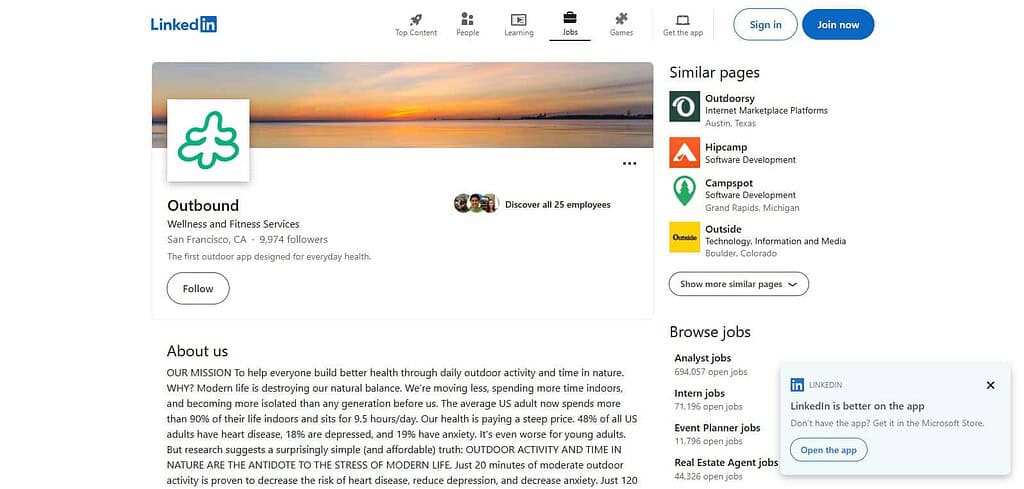
Intent falls in the medium range as the use case and content engagement on LinkedIn, as well as professional affiliation groups, help indicate the focus. Conversions from outreach to meetings (KPI) are measured by the ratio of accepted outreach to connections.
Outbound email via LinkedIn is useful for sales outreach because prospective buyers are likely to be on LinkedIn to check on developments in their industry and peer and compliance updates. By minimizing outreach emails and structuring professional outreach campaigns within LinkedIn, tech fin companies can reach buyers and accelerate Enterprise deals.
LinkedIn Outbound Features, Pros & Cons
Features
- Direct contact with decision makers
- Role, industry, and company based targeting
- Personalized connection requests
- Sales messaging and follow-ups
- Outreach by executives and founder
Pros
- Well suited for B2B fintech audiences
- Senior decision maker identification is easy
- Supports account- level prospecting
- Builds personal and brand reputation
- Well suited for complex enterprise sales
Cons
- Time consuming due to outreach being manual
- Response rates are highly volatile
- Can negatively affect credibility
- Scaled personalized outreach is hard
- Platform limits activity
3. Intent Data
Fintech brands use Intent Data to identify buyers who are in the research stage of finding a solution. Typical users are risk managers, treasury, and compliance executives. This solution is most helpful in the middle of the funnel during the consideration stage, where intent is the highest since prospects are searching, downloading content, or comparing vendors.
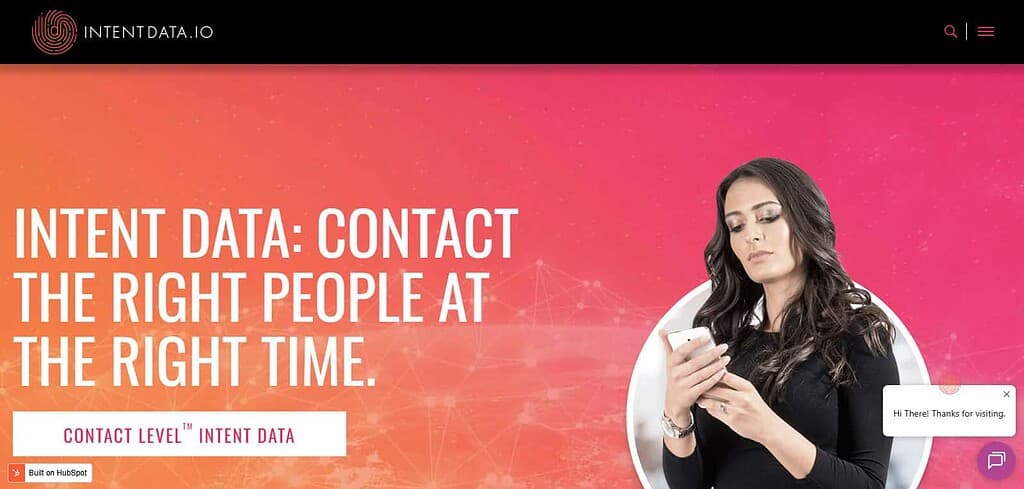
Engagement of qualified accounts and speed of the sales pipeline are primary metrics for evaluating fintech Intent Data. For fintech, the use of Intent Data eliminates outreach to accounts that do not have identified buying signals.
It also helps sales and marketing teams work together to reach accounts more efficiently in a timely manner with relevant information. Prioritization of accounts by fintech results in a reduction in the sales cycle length and an increase in ROI.
Intent Data Features, Pros & Cons
Features
- Detects companies exhibiting purchasing intent
- Tracks research and content engagement
- Helps account prioritization
- Identifies in market prospects
- CRM and ABM system integration support
Pros
- Help sales teams prioritize accounts
- Improves outreach timing
- Helps tailor outreach messages
- Reduces ineffective outreach
- Sales focus is intent data
- Designed for high-value B2B fintech sales
Cons
- Algorithm inaccuracy may occur
- Desire to aid intent doesn’t ensure purchase
- Costs can be high for small companies
- Data requires understanding
- Concerns regarding privacy and data usage
4. Account-Based Marketing (ABM)
ABM is essential for fintech brands looking to sell to enterprise accounts, banks, and other financial institutions. This uses intent that is the highest at the late consideration and decision stages where many stakeholders are involved.
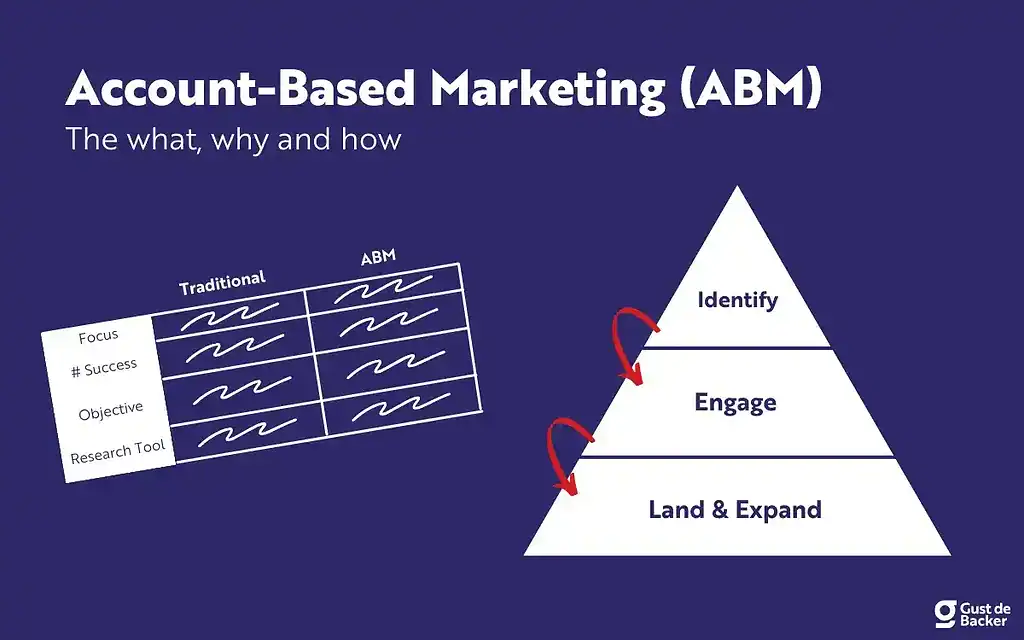
The primary KPIs are velocity of deal progression and engagement of multiple stakeholders. ABM can address the buying groups’ concerns around risk, compliance, and ROI through purpose-built campaigns targeted at each account. For fintech, ABM is necessary for enterprise deals that come in over $50k ACV, where it requires buying group consensus. To address compliance and attain partnership status, fintech solutions implement personalized microsites, targeted campaigns, and tailored outreach to upper level executives.
Account-Based Marketing (ABM) Features, Pros & Cons
Features
- Account selection
- Identification of the buying committee
- Campaigns customized at the account level
- Integration of sales and marketing teams
- Tracking engagement at the account level
Pros
- Useful for enterprise fintech sales
- Directs resources toward high-value accounts
- Personalizes the buyer’s journey
- Aligns initiatives of marketing and sales
- May enhance pipeline quality
Cons
- Strong ICP is a requirement
- More resource intensive than broader campaigns
- Requires accuracy in account data
- Personalization can be challenging
- Results may take longer
5. SEO + Content
SEO + Content offers long-term inbound authority for fintech brands. Target buyers are finance leaders, compliance officers, and IT decision-makers at the awareness and early consideration stages. Content helps breadth intent from low-to-medium as the buyers consume it.
The primary metric for success is organic traffic, keyword rankings, and content driven leads. For fintech, SEO is critical because buyers glimpse through compliance, payment, and risk management solutions before interacting with the vendors.
To build the trust and solidify fintech brands as the thought leaders, content such as compliance guides, whitepapers, or ROI calculators are used. This channel makes sure that the fintech solutions are user discoverable when the buyers start their journey.
SEO + Content Features, Pros & Cons
Features
- Content produced with search intent
- Landing pages with high commercial intent
- Pages for alternatives and comparison
- Content about the industry and uses
- Domain with visibility in organic search
Pros
- Generates demand for a service in the long run
- Fulfils user search intent
- Fintech brand builds authority
- Possibility of generating consistent traffic
- Lessens reliance on paid customer acquisitions
Cons
- Demand generation takes some time
- Fintech keywords become challenging to use
- Reliance on consistent content
- Quality of content affects performance
- Search algorithms are dynamic
6. Paid Search & LinkedIn Ads
Paid Search and LinkedIn Ads present fintech brands with visibility in a short period of time. Target buyers are finance executives and compliance officials who are searching for or engaging with fintech topics. This channel works best at the awareness and mid-funnel stages. Intent is medium-to-high, depending on the keyword targeting.

The primary metric is cost per lead (CPL) and conversion rate. For fintech, this channel balances speed and accuracy, making sure that the solution is visible to the buyers looking into compliance, payment, or treasury automation. It complements SEO by targeting the demand that needs immediate visibility.
Paid Search and LinkedIn Advertising Features, Pros & Cons
Features
- Advertising with search keywords
- Audience targeting at the account and job levels
- Advertising retargeting
- Conversion oriented landing pages
Pros
- Quickly generates traffic
- Adds flexibility to audience targeting
- These ads are most useful for high-intent searches.
- It is easy to test messaging and offers.
- It is flexible with the right budget.
Cons:
- It can be expensive.
- There is the potential to waste budget due to poor targeting.
- Performance reduces when spending stops.
- Keywords related to FinTech may have high CPCs.
- Continuous optimization is necessary.
7. Webinars & Events
Webinars and Events create educational trust for fintech clients with target audiences of compliance officers, CFOs, and risk managers. This marketing channel most notably impacts potential clients at the consideration and decision stage where their intent is generally considered medium to high.

The most important performance indicator for this channel is registrations, attendance, and influencing the pipeline. Webinars provide fintech brands an opportunity to build trust with clients by addressing their compliance pain points through the preview of the company’s subject matter expertise, as well as the ability to interact with clients through different formats.
Virtual or in-person events provide a further opportunity to gain trust and validation through a peer jury. Therefore, webinars and events serve a brand’s marketing efforts at the fintech trust layer along with compliance by building direct engagement and providing thought leadership for advancing deals.
Webinars & Events Features, Pros & Cons
Features
- Educational webinars
- Industry conferences
- Executive roundtables
- Customer and expert panels
- Live product education
Pros
- Puts trust with potential customers
- Allows for a direct channel to the buying decision-makers
- Illustrates thought leadership
- Generates quality interactions
- Works well for complex FinTech products
Cons
- Significant time commitment
- No users means no value
- Expensive
- Follow up is very important
- Measuring results takes time
8. Partnerships & Co-Marketing
Partnerships and Co-Marketing utilize other companies’ credibility for fintech brands. Target clients for this marketing channel are enterprise finance teams and compliance departments who place a high degree of trust on other companies. This marketing channel is most impactful at the consideration stage with a buyers’ intent that is considered medium.
The key performance indicator is joint marketing efforts with partner led influence. For fintech brands, partnerships with banks or other companies in payment processing or compliance greatly reduce the perceived risk and accelerate adoption. Reach and credibility are further increased by co-branded webinars, joint reports, and campaigns. For fintech marketing, trusted partnerships are most critical at the regulatory trust and peer validation layer of potential clients.
Partnerships & Co-Marketing Features, Pros & Cons
Features
- Joint campaigns with complementary brands
- Partner webinars and events
- Co-authored e-books and blog posts
- Collaboration with Like-minded brands
- Ecosystem partner referral programs
Pros
- Offers more reach for campaigns
- Leans into a partners established trust
- Great for new customer acquisition
- New pathways to customers and products
- Best for the FinTech market
Cons
- Finding a strategic partner can be time consuming
- The partner and your audience have to align
- Synchronization with partner is vital
- The results rely on partner activity
9. Referral Engines
Referral Engines create demand generation through peer-based trust in fintech. Focused on finance and compliance, the decision makers of this segment rely greatly on peer-based recommendations. Referral Engines are strongest at the decision stage when the buyer has a high intent and is looking for reassurance before buying. Deals driven by referrals and conversion rate are the most important metrics.
In fintech, referrals leverage the trust that existing customers and industry peers have to significantly shorten sales cycles. For fintech, referral programs based on structure are the best way to incentivize introductions and organic referrals are a great way to build credibility. In the compliance-based industries, peer validation is important, and coupled with a referral engine, is the best way to create market dominance.
Referral Engines Features, Pros & Cons
Features
- Customer referral programs
- Partner referral networks
- Referral incentives
- Tracking and attribution
- Automated referral workflows
Pros
- Uses existing customer trust
- Can generate highly qualified prospects
- Lower acquisition cost potential
- Strengthens customer relationships
- Creates a repeatable acquisition channel
Cons
- Requires a strong customer experience
- Referral volume can be unpredictable
- Incentives can increase costs
- Difficult to scale in some markets
- Attribution needs careful tracking
10. Communities & Social
For fintech brands, the Communities and Social channels rely on dark social. The target group of buyers are finance professionals, compliance managers, and fintech innovators who are active in Slack groups, WhatsApp chats, and LinkedIn communities.

This channel is strongest for the buyer intent level that is low to medium but is impacted by peer discussions and has the most potential at the consideration stage. For fintech, the most important metrics here are probably going to be engagement rate, mentions, and community driven leads.
The credibility earned by a founder driven presence and participation in niche LinkedIn groups is the best way to create demand in this space. Trust and adoption of new technologies are driven primarily by peer influence and fintech relies heavily on this channel.
Communities & Social Features, Pros & Cons
Features
- Industry-specific communities
- Fintech discussion groups
- Expert participation
- Educational social content
- Community-led brand engagement
Pros
- Builds long-term brand awareness
- Creates direct buyer relationships
- Supports thought leadership
- Provides valuable market feedback
- Can generate organic referrals
Cons
- Requires consistent participation
- Direct conversion can be slow
- Promotional content may be poorly received
- Community audiences can be niche
- ROI can be difficult to attribute
Conclusion
Balancing outbound precision with inbound authority and trust-based engagement is essential for demand generation for B2B fintech brands. Outbound Email and LinkedIn Outbound work best at generating early pipeline, and so does Intent Data and ABM for high-intent enterprise deals. Long-term credibility is built with SEO + Content and Webinars, and Paid Ads to gain visibility.
Reassurance of trust is done through Partnerships, Referrals, and Communities. These channels aid the buyer’s journey and intent combination while targeting fintech brands for long-term sustainable growth, shorter sales cycles, and put trust in markets that are competitive in nature.
FAQ
What is demand generation in B2B fintech?
Demand generation is the process of creating awareness, interest, and qualified pipeline for fintech solutions. It combines outbound, inbound, and trust-driven channels to engage compliance-heavy buyers.
Which channel works best at the awareness stage?
SEO + Content and Communities & Social are most effective at awareness, as they build visibility and credibility when buyers begin researching fintech solutions.
How does outbound email help fintech brands?
Outbound Email targets CFOs and compliance officers directly, generating meetings at predictable cost. KPI: reply rate and meetings booked.
Why is LinkedIn outbound critical?
LinkedIn Outbound reaches finance executives and compliance managers in a professional context. KPI: connection acceptance rate and conversation-to-meeting conversion.