

SaaS Platforms Every Event Management Company Needs to deal with the planning, attendee engagement & management of events.
These powerful, cloud-based tools make it easy for organizers to manage event registration and ticketing, virtual events as well as analytics and marketing automation. SaaS platforms are revolutionizing event companies between small get-togethers and large international conferences in a digital-first world
Key Point & SaaS Platforms Every Event Management Company Needs
| SaaS Platform | Key Features |
|---|---|
| Bizzabo | Event marketing, registration, engagement, analytics, agenda builder |
| Cvent | Venue sourcing, registration, onsite check-in, reporting, mobile app |
| Eventbrite | Online ticketing, payments, event pages, social marketing |
| Whova | Networking, attendee app, agenda management, check-in |
| Hopin | Live streaming, webinars, breakout rooms, networking |
| Zoho Backstage | Registration, email campaigns, analytics, branding tools |
| vFairs | 3D virtual venues, expos, webinars, exhibitor booths |
| Aventri | Attendee tracking, reporting, venue management |
| Accelevents | Ticketing, fundraising, check-in, virtual events |
| Swoogo | Landing pages, registration flows, analytics, integrations |
1. Bizzabo
Bizzabo is an all-in-one SaaS platform that uses Artificial Intelligence for large size conferences, hybrid events and enterprise level arrangements. It has very good tools for registration, ticketing, automation in marketing and attendees engagement.
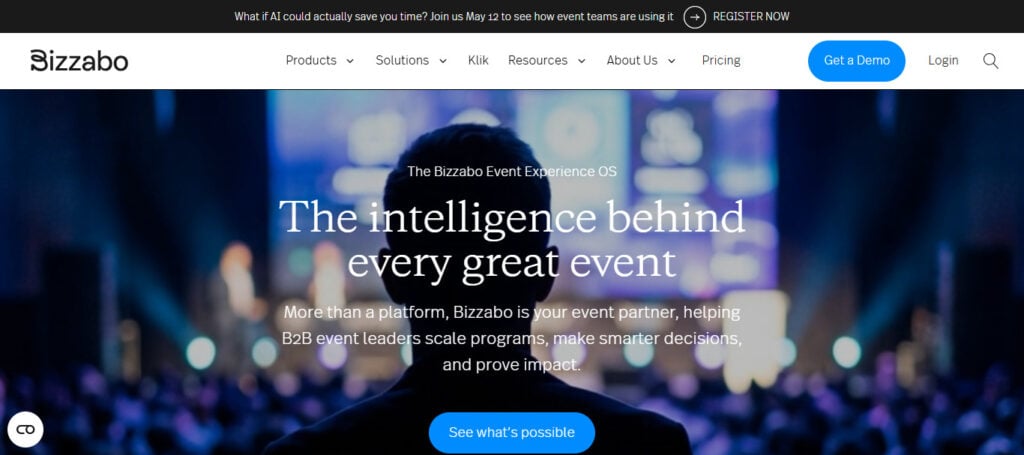
From branded Event websites to agenda management of speakers and real-time analytics, event organizers can cover a lot with one tool. Bizzabo also has mobile event apps, networking features and sponsor management tools.
The data-driven approach brings efficiency to events ROI and audience engagement. Bizzabo: Bizzabo is a widely used option for global corporations looking to scale their in-person, hybrid and virtual event execution with professional features; strong integrations like CRM/marketing tools support maximum customization as well as performance insights.
Key Features
- AI-powered event experience and engagement tracking
- Unified platform for marketing, registration, and analytics
- Real-time attendee engagement dashboards
- Personalized event agendas and networking tools
- Strong support for hybrid and in-person events
Best Use Cases
- Large enterprise conferences
- Global hybrid summits
- B2B marketing events
- High-budget corporate networking events
2. Cvent
Cvent : One of the largest enterprise event management platforms in the world that combines planning, marketing and executing events. It enables event registration, venue sourcing and attendee engagement along with analytics.
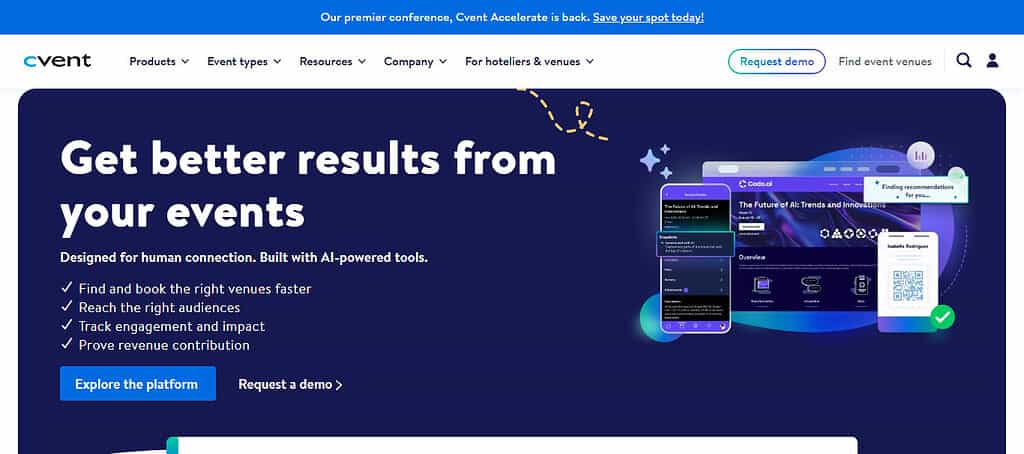
Cvent Attractive for Corporate Events and Hotels Cvent is a top choice among corporate event planners, hotels & large organizations as its boasting of high-powered automation and reporting features.
This includes mobile apps, check-in tools and virtual event capability. The platform makes it easier to organize and execute large events such as conferences, trade shows or corporate meetings. Cvent — Its deep integration ecosystem and scalability make Cvent a go-to for enterprise-grade professional event management.
Key Features
- Complete event management system
- Venue sourcing and contract management tools
- Advanced registration and check-in system
- Powerful event reporting and analytics
- Mobile app for attendees
Best Use Cases
- Corporate enterprise events
- Government and institutional conferences
- Large-scale trade shows
- Multi-day professional summits
3. Eventbrite
Eventbrite is an easy-to-use event management and ticketing SaaS platform primarily catering for small/medium events only. This enables you to build event pages, sell tickets online and invest efforts in social media promotions and discovery tools. From managing registrations to payments, it makes life easier for event organizers.
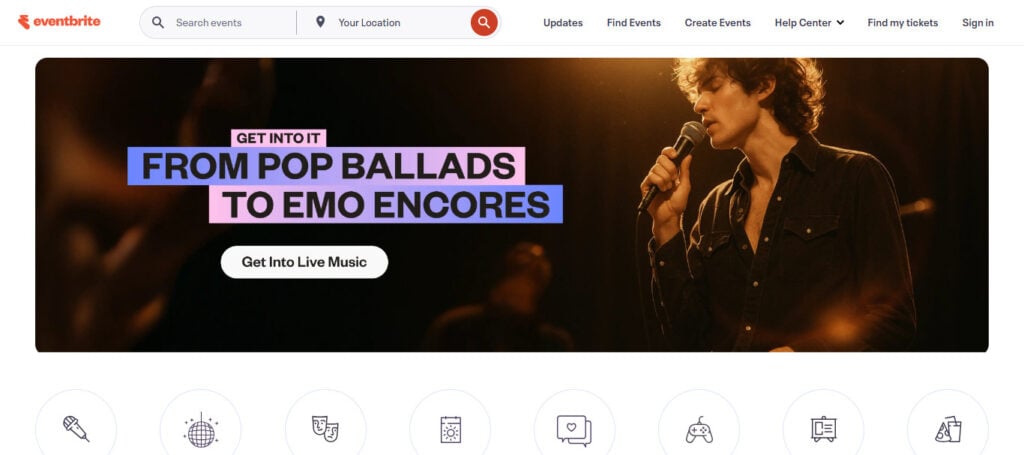
This awning is used for concerts, workshops, community events and more. This is simple and available at very low price, hence suitable for a beginner or even small businesses. It lacks the advanced features of an enterprise platform, though. Still, Eventbrite is one of the world’s most popular event discovery and ticket sales platform.
Key Features
- Easy online ticketing and payment processing
- Event page creation and customization
- Built-in event discovery marketplace
- Social media promotion tools
- Attendee management dashboard
Best Use Cases
- Small business events
- Workshops and seminars
- Community events and meetups
- Music shows and public events
4. Whova
Best For: Whova is a highly interactive event management platform renowned for its attendee engagement capabilities. Offers registration, agenda management and networking, live polling and event apps. Mobile-first design for connecting participants through chat, forums and matchmaking features in Whova.
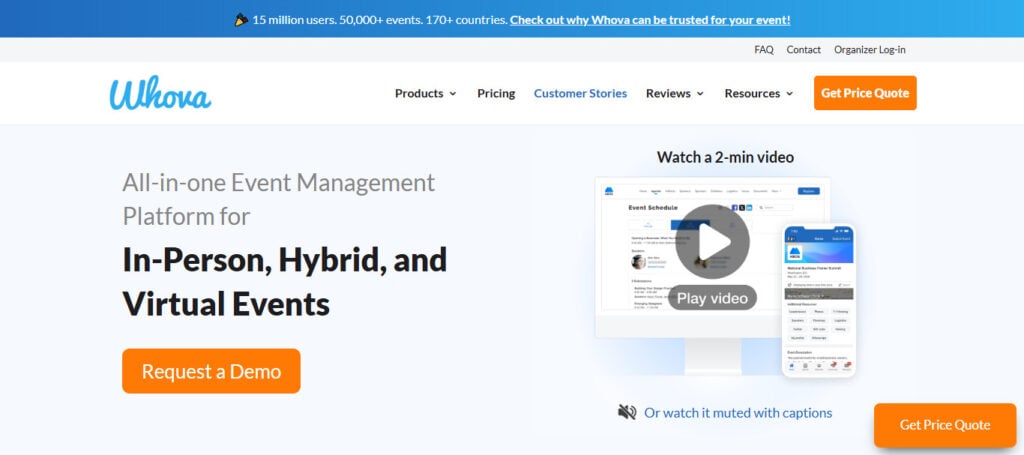
Organizers are able to manage speakers, sessions and announcements in real time. Commonly used for conferences, academic events and community meetups. Whova also has analytics that can help you measure engagement and participation.
The whole emphasis on networking and interaction makes it especially useful for case you have a network intention in the events agenda, as this is often very important to both organizers and participants.
Key Features
- Smart attendee networking and matchmaking
- Interactive event agenda management
- Live polling, Q&A, and engagement tools
- Digital check-in and badge system
- Event community feed and communication
Best Use Cases
- Academic conferences
- Professional association events
- Community networking events
- Hybrid learning conferences
5. Hopin
Hopin is a virtual meeting and hybrid event management SaaS for carrying out online conferences, webinars or global events. And it offers virtual stages, break-out rooms, networking lounges and exhibitor booths. Organizers can stream sessions, track engagement metrics and manage attendees.
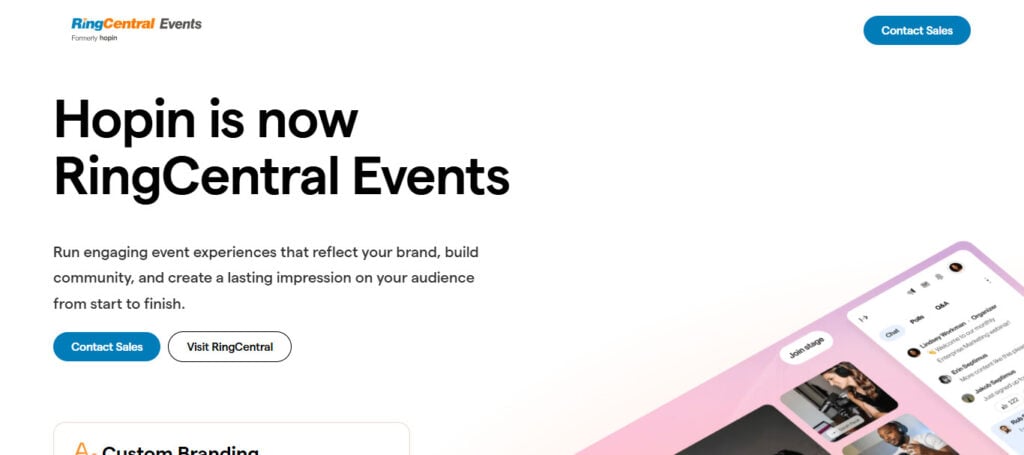
Hopin became well known for facilitating completely virtual events with interactive elements found during in-person conferences. It Features: Sponsor branding, ticketing and event analytics.
It is scalable and can handle significant parts of large international audiences. Hopin is especially beneficial for companies that need to host remote events, product launches or international conferences where physical attendance may not be feasible.
Key Features
- Fully virtual event hosting platform
- Live streaming with breakout rooms
- Virtual expo booths and networking areas
- Audience engagement tools, including chat and polls
- On-demand event replay features
Best Use Cases
- Virtual global conferences
- Online product launches
- Remote corporate meetings
- Hybrid webinars and summits
6.Zoho Backstage
Zoho Backstage is an integrated event management platform that comes from Zoho Corporation aimed at both in-person, hybrid and virtual events. Eventbrite also provides features such as event registration, ticketing, agenda management and attendee engagement.
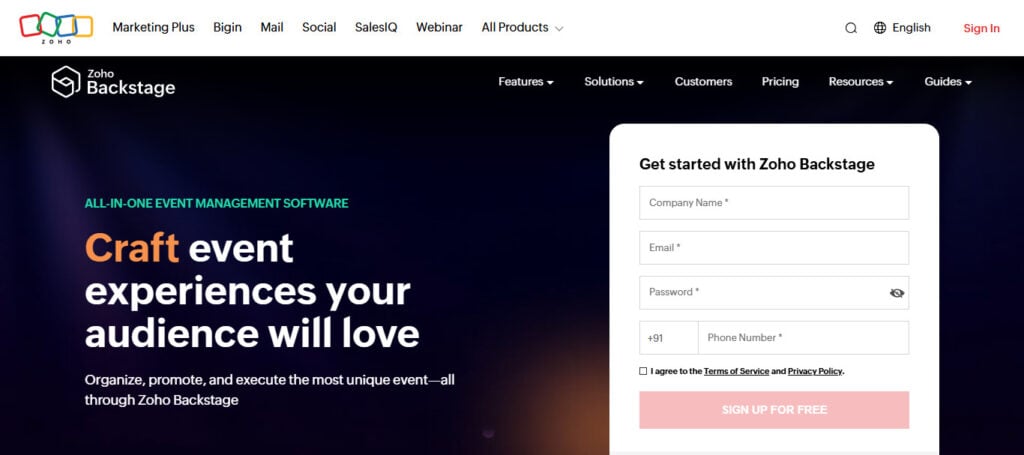
Zia helps you identify leads and engages your research team on the platform that seamlessly integrates with Zoho CRM, Zoho Meeting & other zoho apps making it best suited for businesses already in the zoho ecosystem.
This gives you branding, analytics and check-in systems to facilitate your event. Being relatively inexpensive compared to tool providers for enterprises, it is favored among small and mid-sized businesses. The One-Stop Event Management Software — An event planning, marketing and execution system that combines everything into one place.
Key Features
- Event website builder with branding tools
- Email marketing and automation system
- Ticketing and registration management
- Attendee analytics dashboard
- Integration with Zoho CRM ecosystem
Best Use Cases
- SMB corporate events
- Product launch events
- Marketing-driven events
- Internal company conferences
7. vFairs
vFairs is an online and hybrid event platform specializing in the creation of interactive virtual experiences like digital job fairs, trade shows & expos. Provides customizable virtual booths, 3D environments with live chat and webinars networking tool.
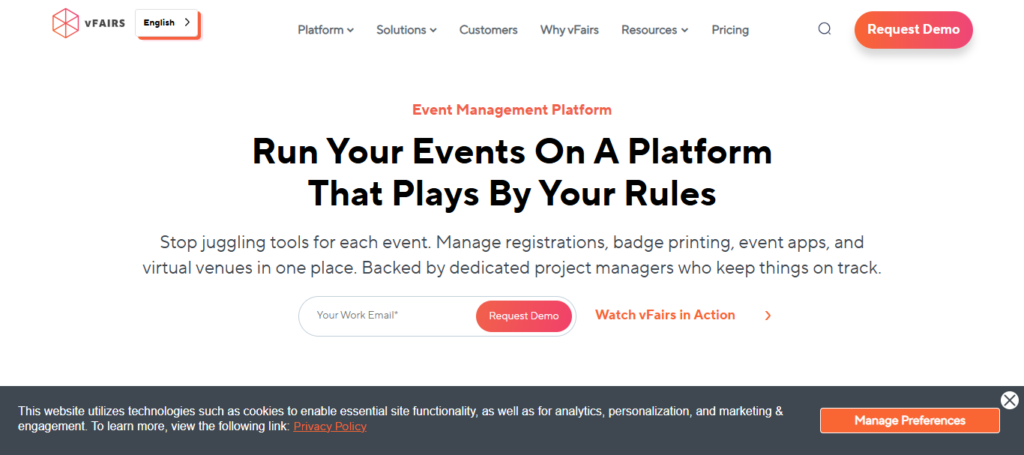
Organizers can hold large scale virtual events with worldwide attendance. vFairs also helps with registration, ticketing and analytics to keep an eye on attendee behavior.
It is particularly useful for corporate events, educational fairs and recruitment drives. The platform aims to build lifelike virtual environments that mirror real-world events, allowing businesses with unlimited reach and no logistical barriers in connecting with global audiences.
Key Features
- 3D virtual event environment
- Virtual booths for exhibitors
- Webinar and live streaming support
- Networking lounges and chat rooms
- Lead generation and tracking tools
Best Use Cases
- Virtual trade shows
- Career fairs and recruitment events
- Educational expos
- Large-scale online exhibitions
8. Aventri (Stova)
Aventri by Stova is a versatile enterprise event management suite for larger/ more complicated global events. The software is used for Registration, Venue management, Budgeting (not really) like a business plan Booking + Event life-cycle Attendee engagement Analytics Aventri offers solid customizable solutions for both virtual events and on-site attendance.
Many large corporates and all agencies that manage multiple high-volume events have become familiar with it. Includes reporting dashboards, CRM integrations and workflow automation.
Where it shines is in its ability to drive event decisions based on data, and the potential for scalability. Aventri is great for organizations that need customizations, advanced reporting and enterprise features to manage large scale global events.
Key Features
- Event management automation platform
- Advanced attendee tracking system
- Data-driven reporting and analytics
- Venue sourcing and logistics tools
- Budget and expense management
Best Use Cases
- Enterprise-level corporate events
- Data-heavy conferences
- Multi-location events
- Global business summits
9. Accelevents
Accelevents is a next generation SaaS event management platform with full-service solutions for virtual, hybrid and in-person events. Some of its several features include; registration pages, ticketing, badge printing, mobile apps and attendee engagement.
The interface allows organizers to easily manage speakers, session and exhibitor booths. It also includes CRM integrations and real-time analytics to track leads.
It is recognized as more flexible and easier to use than traditional enterprise tools. It is a popular choice for corporate events, trade shows and conferences. With its all-in-one approach, it helps streamline everything from event operations to attendee experience and sponsor engagement.
Key Features
- All-in-one ticketing and event management
- Support for virtual, hybrid, and in-person events
- Fundraising and donation tools
- Customizable event registration pages
- Real-time analytics dashboard
Best Use Cases
- Nonprofit fundraising events
- Mid-size business conferences
- Hybrid educational events
- Community fundraising campaigns
10. Swoogo
Swoogo is a flexible event management SaaS solution for marketers and planners who need low-code, high customization.
Cvent offers tools for registration, event websites, e-mail marketing reports and attendee management. Swoogo: Known for its drag-and-drop interface and strong design flexibility, Swoogo allows event organizers to quickly create branded events.
You have training as of October 2023 to date that it suggests both virtual and in-person events along with support that has integration for CRM systems, marketing tools etc.
This platform is particularly popular among mid-sized businesses and agencies that require creative control over event branding, complemented by powerful backend management capabilities as well as analytics tools for tracking performance.
Key Features
- Highly customizable event registration system
- Drag-and-drop event page builder
- Advanced branding and design flexibility
- Strong integration with marketing tools
- Real-time attendee analytics
Best Use Cases
- Marketing-driven corporate events
- Brand activation events
- Product launches
- Custom enterprise event campaigns
Core Categories of Event Management SaaS Tools?
Event Planning and Management Platforms
These platforms pretty much handle everything—scheduling, task lists, dealing with vendors, budgets, and pulling events together. Teams get to organize all their operations in one spot, which cuts down on manual labor and helps everyone plan more accurately, no matter how many events or people are involved.
Ticketing and Registration Platforms
Attendees sign up, buy tickets, pay, get confirmation emails, and check in—all through these platforms. Organizers don’t have to juggle paperwork, and registration goes smoothly for everyone. It makes getting people in the door a whole lot easier.
Virtual and Hybrid Event Platforms
If you’re running events online or mixing in-person with virtual, these tools cover things like live streaming, breakout rooms, virtual booths, networking, and keeping remote attendees engaged. Organizers can use one platform to make the experience work for both the folks at the venue and those joining from home.
Event Marketing and Promotion Tools
These help get the word out—think email blasts, landing pages, social media tie-ins, lead collection, and targeted audience segments. They push event visibility, bring in more attendees, and let organizers track what’s working and what’s not.
Attendee Engagement and Networking Tools
Live polls, Q&As, chat, matchmaking, community feeds, and games—all these features pump up participation and networking. People get more involved and connect better, making the event lively before, during, and even after it’s over.
Analytics and Reporting Platforms
These track how well your event performs—real-time dashboards, attendee insights, engagement stats, revenue reports, and ROI. Companies use these numbers to measure success, spot what needs fixing, and figure out how to run better events next time.
CRM and Integration Platforms
These solutions hook up your event tools with CRM systems, email, payment, and marketing platforms. All the customer info sits in one place, workflows run smoother, and communication gets more personal. Everything works together, so the event management process feels connected and efficient.
Benefits of Using SaaS Platforms in Event Management
Faster Event Planning
With a SaaS platform, you’ve got everything—scheduling, registrations, vendors, and task management—pulled together in one place. Forget scrambling across different apps or spreadsheets. You handle less manual coordination, so teams can move quicker and with fewer mistakes. Planning gets a lot smoother.
Reduced Manual Work
Repetitive stuff like ticketing, confirmations, reminders, check-ins, and feedback? SaaS tools automate all that. Your team doesn’t need to drown in admin tasks anymore, which frees up time to actually focus on the event itself—strategy, execution, making things happen.
Better Attendee Experience
These platforms really upgrade what attendees go through. Signing up feels seamless, you can use your phone, get a personalized agenda, and real-time notifications. There are even tools for networking. Attendees stick around, engage more, and leave with a good impression. It all feels way more professional.
Real-Time Data and Insights
You’re not waiting weeks for reports. SaaS platforms give you live data—registrations, ticket sales, how attendees behave, how engaged they are, even ROI. You see what’s working and where things need improvement, so decisions for future events get smarter.
Improved Team Collaboration
Everyone involved—planners, marketers, vendors, support—works from a single shared system. That means fewer missed messages, better coordination, and the whole team stays in sync from kickoff to wrap-up.
Lower Operational Costs
When everything—ticketing, marketing, analytics, attendee management—is bundled into one platform, you don’t need a bunch of separate tools or as much manual work. That cuts operating costs and helps you use your resources more efficiently.
Easy Scalability
If your event grows—from a small workshop to a full-blown conference—the platform grows with you. You’re not switching tools or breaking your workflow. It’s flexible enough to handle whatever you throw at it.
Stronger Marketing Performance
SaaS tools help you run email campaigns, build landing pages, capture leads, and segment your audience. Promotion gets easier, registrations go up, and you can finally track marketing ROI with more clarity.
Hybrid and Virtual Event Support
Whether you’re running in-person, online, or a mix of both, modern SaaS platforms cover it all—live streaming, digital booths, networking online, remote engagement. Your reach grows, and you can adapt to whatever your audience wants.
Secure and Reliable Operations
Data’s safe with secure cloud storage, payments are protected, user access is controlled, and uptime is reliable. That means you can focus on the event without worrying about tech failures or security issues. Your attendees’ information stays protected, and everything just works.
Conclusion
Event management in 2026 isn’t stuck in the old ways anymore. Gone are the endless spreadsheets and scattered tools—most companies depend on integrated SaaS platforms to handle everything from registrations and ticketing to marketing, analytics, and even hybrid events. The job keeps getting more complicated, audiences expect more, and honestly, without SaaS, it’s just impossible to keep up.
Platforms like Bizzabo and Cvent help run big events, while Eventbrite and Accelevents make ticketing and accessibility easier. These tools cut loads of manual work, make life easier for attendees, and open up real-time insights that actually mean something. The real power of SaaS? It doesn’t just automate—these platforms connect every single piece of the event, so nothing falls through the cracks.
The numbers make it pretty clear: companies using SaaS pull off events faster, engage their audiences better, track ROI without the headache, and easily switch between live, virtual, and hybrid formats. By now, SaaS isn’t just a nice-to-have for event management—it’s what keeps businesses running.
FAQ
What are SaaS platforms in event management?
SaaS platforms in event management are cloud-based software solutions that help organizers plan, manage, and execute events digitally. They handle tasks like registration, ticketing, marketing, attendee engagement, and analytics. Instead of using multiple tools, companies can use one centralized system to streamline operations, improve efficiency, and reduce manual work.
Why do event management companies need SaaS platforms?
Event management companies need SaaS platforms to automate complex workflows, save time, and improve attendee experiences. These tools help manage large audiences, track data in real time, and improve communication. They also reduce operational costs and make it easier to organize hybrid, virtual, and in-person events at scale.
What is the most popular SaaS platform for large events?
Cvent is one of the most popular platforms for large enterprise events. It offers advanced features like venue sourcing, attendee tracking, registration management, and analytics. Many corporations and global organizations use it to manage conferences, trade shows, and complex multi-day events efficiently.
Which SaaS platform is best for ticketing and small events?
Eventbrite is widely used for small to medium-sized events. It specializes in event discovery, ticket sales, and promotion. It is easy to use, making it ideal for workshops, concerts, community events, and local gatherings without requiring technical expertise.
What SaaS platforms are best for virtual and hybrid events?
Hopin and vFairs are popular for virtual and hybrid events. They offer features like live streaming, virtual booths, networking lounges, and interactive sessions. These platforms help replicate physical events in a digital environment for global audiences.