





In this article, I will cover the Best Spatial Design Tools for Immersive VR & AR Workspaces that are changing how designers of all kinds and enterprises build immersive environments.
From applications for real-time 3D collaboration to advanced XR visualization software, these solutions empower immersive working environments that drive higher creativity levels, remote team collaboration experiences, spatial planning explorations and next-gen virtual experience creation.
What Are Spatial Design Tools?
Spatial design tools are software (and hardware) platforms that allow creators to create, model and engage with digital worlds or environments in 3D space using virtual reality (VR), augmented reality (AR) and mixed-reality technologies.
Where traditional design software creates a 2D plan to visualize objects on paper, these new tools enable users to create immersive spaces in which objects exist at life-size proportions and can be encountered interactively.
They are predominantly used in fields like architecture, gaming and product development — enabling teams to simulate real-world scenarios through prototyping ideas or collaborate inside shared virtual environments during effective enterprise collaboration practices.
How to Choose the Right Spatial Design Tool
Define Your Use Case
Determine If you Are Designing For VR, AR, Or Mixed Reality (MR)
Consider industry goals:
- Architecture visualization
- Remote collaboration workspaces
- Training simulations
- *Digital twins/industrial mock-ups
Ease of Use & Learning Curve
- Use tools appropriate to your level of experience.
- **Drag-and-drop or No-Code Platforms: Ideal for Beginners.
- Advanced creators may wish to use tools that offer scripting, custom physics or SDK access.
Platform & Device Compatibility
Target Byte-Sizing: ensure support for target devices
- Meta Quest
- Apple Vision Pro
- HoloLens
- Mobile AR (iOS/Android)
- Cross-platform deployment reduces redevelopment for the future.
Real-Time Collaboration Features
Team collaboration is the backbone of modern immersive workspaces:
- Multi-user editing
- Shared virtual environments
- Cloud synchronization
- Remote design reviews in VR
Integration with Existing Workflows
Check compatibility with:
- Some 3D Modelling platform (for example: Blender, CAD tools)
- Game engines
- Cloud platforms
- AI or digital twin systems
Benefits of Using Spatial Design Tools
Enhanced Immersive Experience
Spatial designers use tools to build, connect with and traverse 3D environments in VR and AR that will make digital places feel just as real for users — like the physical.
Improved Collaboration
Teams can collaborate in shared immersive environments where they provide real-time feedback, brainstorm and conduct design reviews entire geographies apart.
Faster Design Prototyping
They help designers construct, test, and alter 3D models rapidly in real-time to minimize development cycles and accelerate project completion.
Better Spatial Understanding
Especially for architecture and product designers, since it allows viewers to experience designs at real world dimensions; thus helping them better understand depth and layout of the design including proportions with other potentially presented objects.
Cost Reduction in Development
Companies simulate environments digitally and this allows them to use little or no physical prototype, travel and onsite testing saving a bundle.
Remote Work Enablement
Spatial design tools allow companies with remote teams around the globe to create fully virtual workspaces designed for seamless collaboration similar to an in-person meeting.
High-Quality Visualization
They allow for real-time rendering and photorealistic graphics that enable stakeholders to understand design concepts before implementation.
Seamless Integration with Digital Tools
Other platforms connect with CAD software, game engines and cloud systems in a seamless fashion across design pipelines.
Key Point & Best Spatial Design Tools for Immersive VR & AR Workspaces
| Tool | Key Point |
|---|---|
| Unreal Engine XR Toolkit | Real-time photorealistic rendering and advanced interactive XR environment creation. |
| Autodesk Maya + XR Integration | Professional-grade 3D modeling and animation workflows optimized for VR/AR visualization. |
| Blender XR | Open-source XR creation tool supporting immersive modeling and real-time scene editing. |
| Varjo Reality Cloud | High-fidelity cloud streaming platform for ultra-realistic mixed reality collaboration. |
| NVIDIA Omniverse XR | AI-powered collaborative simulation platform for digital twins and immersive design reviews. |
| Microsoft Mesh | Enterprise mixed reality collaboration platform enabling shared virtual workspaces. |
| Adobe Substance 3D + Aero | Advanced material design and AR experience creation for immersive storytelling. |
| Epic Twinmotion XR | Fast architectural visualization tool with real-time VR walkthrough capabilities. |
| Cavrnus Spatial Collaboration Platform | Persistent virtual workspace platform designed for remote XR teamwork and training. |
| Glue Collaboration VR | Social VR collaboration environment focused on meetings, training, and spatial teamwork. |
1. Unreal Engine XR Toolkit
Unreal Engine XR Toolkit is a high fidelity framework to build out very powerful virtual/augmented realty environments that enables users and content creators using open source technology with tools founded from the Unreal /cebrid developers work on iterate potential ideas/content It allows developers, architects and simulation designers to create immersive experiences with realistic lighting effects, physics interactions as well as state-of-the-art spatial audio.
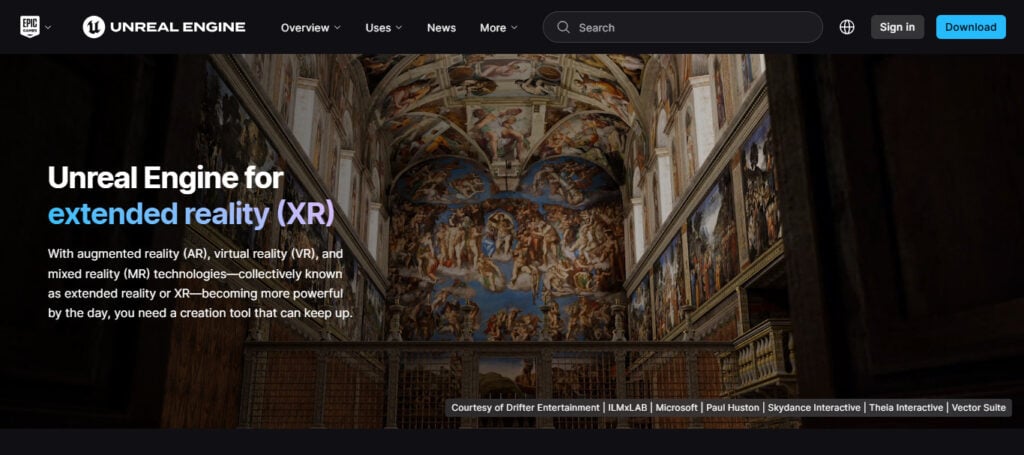
Combining established motion tracking and VR hardware, the toolkit simplifies rapid prototyping. For high-performance professional XR production workflows where realism and extensibility are critical, Unreal Engine is ideal for enterprise visualization, training simulations and digital twin applications: the preferred choice among any of these Best Spatial Design Tools for Immersive VR & AR Workspaces.
Unreal Engine XR Toolkit — Key Features
| Feature | Description |
|---|---|
| Real-Time Photoreal Rendering | High-fidelity graphics powered by real-time ray tracing and Nanite technology. |
| OpenXR Support | Cross-platform XR development for multiple VR/AR headsets. |
| Interactive Simulation | Physics-based interaction for training, gaming, and industrial visualization. |
| Blueprint Visual Scripting | No-code or low-code workflow for rapid immersive environment creation. |
| Multi-User Collaboration | Teams can co-design and review scenes simultaneously in VR spaces. |
2. Autodesk Maya + XR Integration
XR integration with Autodesk Maya enables high-quality modeling, animation and simulation for building complex models throughout immersive design workflows. Artists and engineers can use it to develop sophisticated 3D assets, character animations, and spatial environments that efficiently export as built for VR or AR.
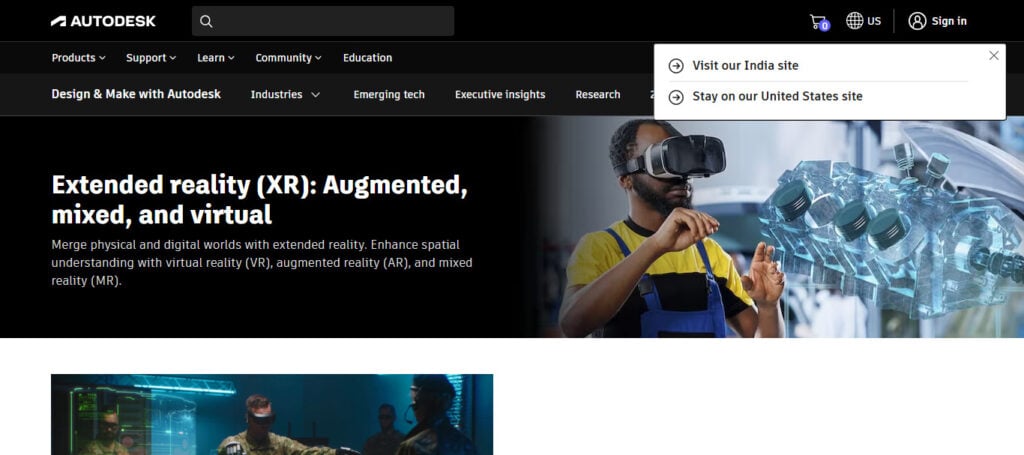
Its advanced rigging tools and procedural modeling offer game studios, film production, as well as metaverse projects the perfect software. Here’s why, in a section on Best Spatial Design Tools for Immersive VR & AR Workspaces, Maya rated so highly: teams can traditionally design assets and see them almost immediately visualized at scale within immersive environments — the collaborative power of this feedback loop has been transformative to how distributed teams collaborate, iterate faster than ever before through creative development.
Autodesk Maya + XR Integration — Key Features
| Feature | Description |
|---|---|
| Advanced 3D Modeling | Industry-leading animation, rigging, and modeling tools for XR assets. |
| XR Visualization Pipeline | Export directly to AR/VR engines for immersive previews. |
| Procedural Animation Tools | Motion simulation for realistic virtual environments. |
| High-End Asset Creation | Supports cinematic-quality spatial design workflows. |
| Pipeline Compatibility | Seamless integration with Unreal Engine and Unity ecosystems. |
3. Blender XR
Blender XR turns the widely popular open-source 3D software into an interactive modelling application for Virtual Reality — creators can create, edit and manipulate scenes seamlessly in VR. This level of interaction allows the designer to interact with objects at real scale improving spatial awareness and accuracy. And it will surely provide VR controllers, real-time rendering and much smoother export pipelines for game engines, AR platforms.
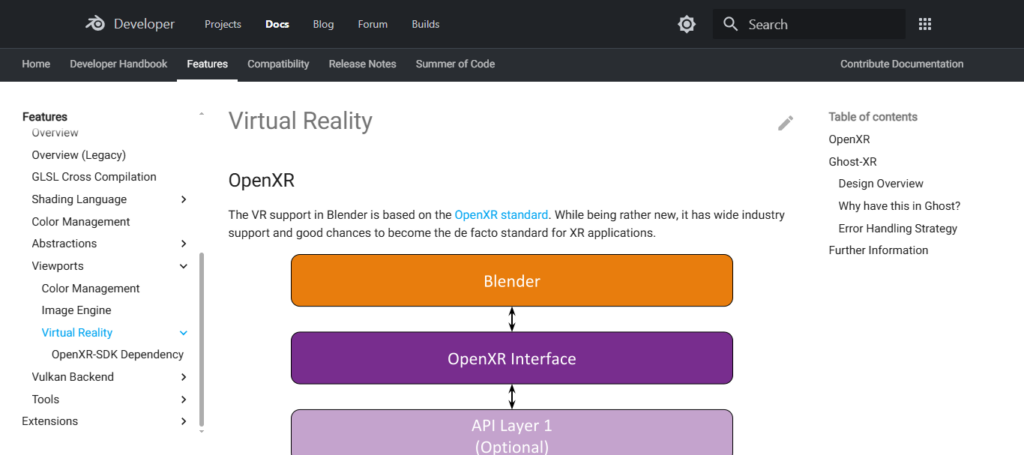
Blender XR has been highlighted in discussions regarding the Best Spatial Design Tools for Immersive VR & AR Workspaces, especially appreciated as an agnostic choice that blends a low barrier to entry, community support, and flexibility allowing independent creators / startups or educators to prototype immersive spatial design without high licensing costs.
Blender XR — Key Features
| Feature | Description |
|---|---|
| Native VR Scene Editing | Design and manipulate objects directly inside VR. |
| Open-Source Flexibility | Free customization for studios and independent creators. |
| Sculpting in VR | Intuitive 3D sculpting using motion controllers. |
| Cross-Platform XR Support | Works with OpenXR-compatible devices. |
| Real-Time Rendering | Eevee engine enables rapid immersive visualization. |
4. Varjo Reality Cloud
Streaming photorealistic environments directly from powerful cloud servers to XR devices streamlines immersive collaboration and gives a new meaning to ultra-high resolution with Varjo Reality Cloud. It does away with hardware restrictions and allows teams across the world to work together in shared mixed reality spaces.
Provided near-human-eye visual clarity and synchronized collaboration at a scale that engineers, designers, simulation specialists will be able to collaborate in real-time. Varjo Reality Cloud is one of the Best Spatial Design Tools for Immersive VR & AR Workspaces, ideal for enterprise deployment and perfect for remote design reviews, automotive visualizations, and defense simulations where visual accuracy paired with real-time collaboration can be critical to decision making in immersive workflows.
Varjo Reality Cloud — Key Features
| Feature | Description |
|---|---|
| Cloud XR Streaming | Stream high-resolution VR experiences from the cloud. |
| Ultra-High Visual Fidelity | Human-eye resolution visualization for enterprise design. |
| Remote Collaboration | Distributed teams share immersive environments globally. |
| Secure Enterprise Deployment | Designed for industrial and defense-grade workflows. |
| Low-Latency Performance | Optimized streaming for realistic spatial interaction. |
5. NVIDIA Omniverse XR
NVIDIA Omniverse XR is a new collaborative simulation environment equipped with ray tracing in real-time, an AI physics feature and universal scene description (USD) workflows. Within these immersive virtual spaces teams can develop digital twins and create simulations of real world environments, allowing them to work together in one dedicated space.
It connects several different design tools to enable creators to collaborate without the conversion of files. Omniverse XR is making a dramatic impact in the Best Spatial Design Tools for Immersive VR & AR Workspaces category, wherein it enables new workflows across industries (from manufacturing to architecture) and architecture while providing realistic simulations, predictive design testings and scalable immersive engineering pipelines via GPU acceleration.
NVIDIA Omniverse XR — Key Features
| Feature | Description |
|---|---|
| Real-Time Digital Twins | Simulate real-world environments collaboratively. |
| AI-Powered Simulation | Physics and AI acceleration for spatial workflows. |
| USD-Based Collaboration | Universal Scene Description enables multi-app integration. |
| RTX Ray Tracing | Cinematic lighting and realistic materials in XR. |
| Multi-User Design Reviews | Engineers collaborate live inside immersive spaces. |
6. Microsoft Mesh
Microsoft Mesh makes possible shared holographic experiences among multiple VR headsets, PCs and mobile devices that allow remote teams to work together as avatars within timeless virtual spaces.
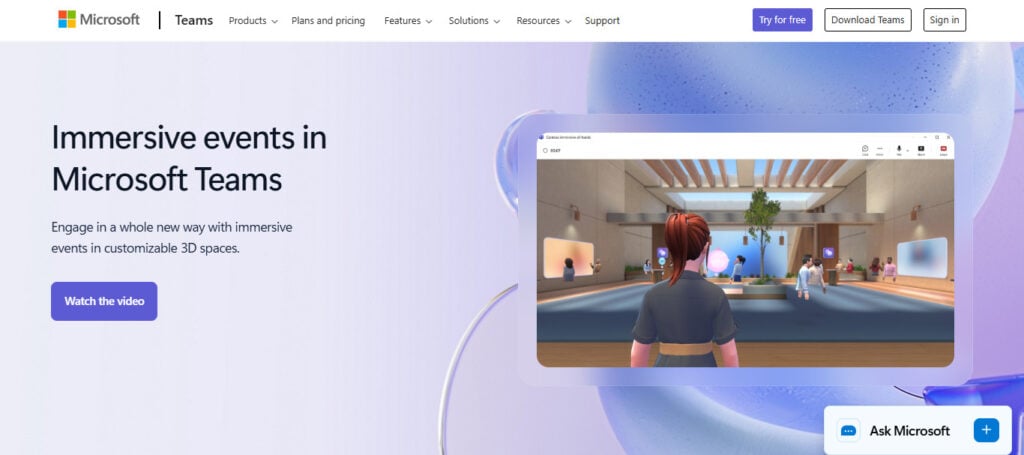
Particularly for meetings, training and collaborative design sessions further supported by the sense of spatial presence with real-time communication tools integrated with enterprise ecosystems. In the view for Best-Suited Spatial Design Tools for Immersive VR & AR Workspaces: In a world transitioning towards hybrid work models,
Microsoft Mesh has integrated productivity software with another layer of immersive collaboration where teams can stay socially connected even through failures and visualise data to prototype concepts together.
Microsoft Mesh — Key Features
| Feature | Description |
|---|---|
| Mixed Reality Meetings | Shared holographic collaboration environments. |
| Avatar-Based Presence | Realistic avatars enable remote teamwork. |
| Teams Integration | Works directly with Microsoft Teams ecosystem. |
| Cross-Device Access | VR headsets, PCs, and mobile devices supported. |
| Persistent Spaces | Maintain shared virtual workspaces over time. |
7. Adobe Substance 3D + Aero
Adobe Substance 3D paired with Adobe Aero brings you an ecosystem in developing realistic materials, textures and interactive augmented reality experiences The designers can have physically authentic surfaces, and they send those right into AR scenes with no code expertise required. This suite for marketing visualization, product design previews and immersive storytelling is widely used by creative professionals.
Ranked among the Best Spatial Design Tools for Immersive VR & AR Workspaces, this fusion connects creative design and spatial computing, allowing brands and creators to rapidly prototype experiences without having to worry about visual consistency across web, mobile Augmented Reality (AR), or immersive environments.
Adobe Substance 3D + Aero — Key Features
| Feature | Description |
|---|---|
| Advanced Material Creation | Physically accurate textures for immersive scenes. |
| AR Experience Authoring | Create interactive AR without coding. |
| Creative Cloud Integration | Smooth workflow with Photoshop and Illustrator. |
| Real-Time Asset Preview | Test materials instantly in AR environments. |
| Designer-Friendly Workflow | Ideal for creative professionals entering XR design. |
8. Epic Twinmotion XR
Notably, Epic Twinmotion XR caters specifically to real-time architectural and urban visualization by enabling designers to convert CAD or BIM models into immersive VR walkthroughs in a matter of minutes. It makes it easy to set-up lighting, environment and realistic render without any deep technical knowledge. Architects and planners can use them to demonstrate projects interactively to stakeholders prior construction.
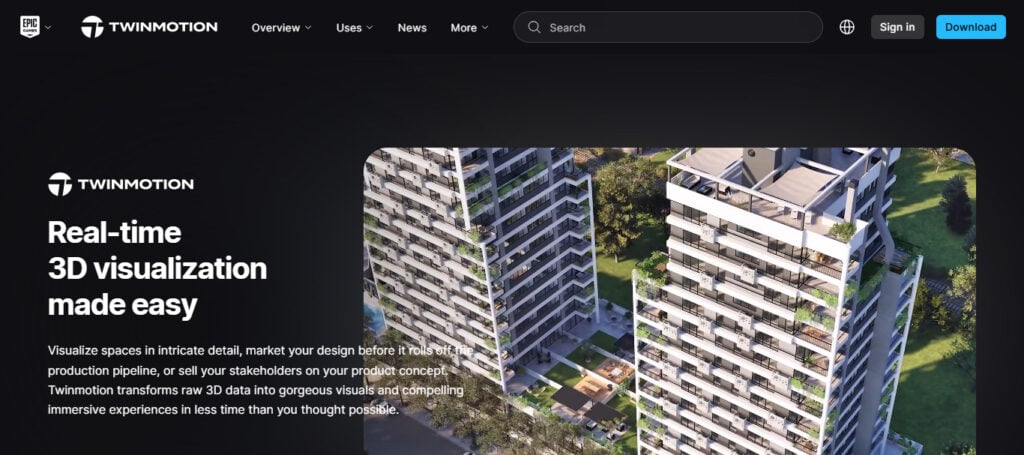
In the Best Spatial Design Tools for Immersive VR & AR Workspaces, Twinmotion XR came highly recommended due to its balance of speed and usability helping professionals articulate spatial concepts well while minimizing design changes through immediate client feedback gained via experiential visualization workflows.
Epic Twinmotion XR — Key Features
| Feature | Description |
|---|---|
| Architectural Visualization | Instant immersive walkthroughs for buildings. |
| Real-Time Rendering | Fast visualization without complex setup. |
| VR Presentation Mode | Clients explore projects interactively. |
| CAD/BIM Integration | Supports Revit, SketchUp, and BIM workflows. |
| Environmental Simulation | Realistic lighting, weather, and landscape tools. |
9. Cavrnus Spatial Collaboration Platform
Cavrnus Spatial Collaboration Platform enables teams to interact in an immersive venue that provides persistent virtual environments for objectives such as meetings, design sessions and training. Collaborators can import large datasets, 3D models, and simulations into shared spaces that are cross-XR compatible. The platform allows for enterprise security, scalability and long-term collaborative project.

Cavrnus is recognised for its ability to help organizations retain shared spatial context and continuity across many immersive work sessions, making it one of the Best Spatial Design Tools For Immersive VR & AR Workspaces especially in industrial training use cases including engineering reviews and remote operations planning.
Cavrnus Spatial Collaboration Platform — Key Features
| Feature | Description |
|---|---|
| Persistent Virtual Workspaces | Always-on collaborative 3D environments. |
| Enterprise XR Collaboration | Designed for large distributed teams. |
| Digital Twin Support | Real-world data visualization in XR. |
| Secure Cloud Infrastructure | Enterprise-grade privacy and control. |
| Multi-Platform Access | VR, desktop, and web participation supported. |
10. Glue Collaboration VR
Glue Collaboration VR is built exclusively for immersive meetings, workshops and collaborative learning environments. It provides an immersive experience where participants can engage in a natural way through avatars, collaborative whiteboards, spatial presentation and 3D content within virtual rooms.

It places a high value on human presence and engagement so it is designed to be more interactive than traditional video conferencing for remote work teams.
Glue Collaboration VR is also especially well suited for education, consulting and enterprise collaboration scenarios—where performance gain (including productivity benefits and knowledge sharing) from communication/CQ ability to engage/enjoy as a group/collaborate spatially are far more manifested in immersive environments.
Glue Collaboration VR — Key Features
| Feature | Description |
|---|---|
| Immersive Team Meetings | VR-first collaboration and training spaces. |
| Spatial Content Sharing | Upload and review 3D models together. |
| Custom Virtual Rooms | Tailored environments for organizations. |
| Avatar Interaction System | Natural communication inside VR. |
| Cross-Device Connectivity | Accessible from VR headsets and PCs. |
Comparison of Spatial Design Platforms
| Platform | Primary Strength | VR/AR Capability | Collaboration Features | Best Use Case |
|---|---|---|---|---|
| Unreal Engine XR Toolkit | Photorealistic real-time rendering & full customization | Advanced VR/AR with full interactivity | Multi-user via custom setups | Game development, simulations, high-end XR experiences |
| Autodesk Maya + XR Integration | Professional 3D modeling & animation | Export-based XR workflows | Limited native collaboration | Film, animation, asset creation for XR |
| Blender XR | Open-source immersive 3D creation | Native VR sculpting & editing | Community-based collaboration | Indie creators, prototyping, education |
| Varjo Reality Cloud | Ultra-high fidelity cloud XR streaming | High-end enterprise VR | Strong remote collaboration | Enterprise design reviews, simulation |
| NVIDIA Omniverse XR | Digital twins & AI-powered simulation | Full industrial XR support | Real-time multi-tool collaboration | Robotics, manufacturing, industrial design |
| Microsoft Mesh | Mixed reality collaboration ecosystem | VR/AR meeting environments | Strong enterprise team integration | Remote meetings, hybrid workspaces |
| Adobe Substance 3D + Aero | Material creation + AR experience design | AR-focused visualization | Limited real-time collaboration | Product design, branding, AR marketing |
| Epic Twinmotion XR | Fast architectural visualization | Strong VR walkthrough support | Basic collaboration features | Architecture, urban planning, presentations |
| Cavrnus Spatial Collaboration Platform | Persistent XR workspaces | Enterprise VR environments | Strong multi-user persistence | Industrial collaboration, training |
| Glue Collaboration VR | Immersive VR meetings | VR-first communication | Real-time avatar collaboration | Remote teamwork, workshops, training |
Conclusion
Spatial computing is changing the way teams design, collaborate and create in true 3D virtual and augmented environments as key milestones are achieved rapidly. Best of all, Immersive VR & AR Workspaces creators (as well as architects, engineers and enterprises) can now empower people to construct digital environments that are interactive in nature — scalable as need be; collaborative at a high level.
These tools are used to support immersive workflows that merge the boundaries between physical and digital spaces, from real-time rendering platforms like Unreal Engine 5 (after its April launch), through any cloud-enabled XR collaboration system.
Now that hybrid work is the reality and metaverse-ready infrastructure components are hitting their stride, few possessions will seem more necessary than spatial design platforms. Each tool serves a different purpose and it really depends on the project goals such as visualisation, simulation or some kind of collaborative experience that would allow you to not story tell in maybe ways.
These solutions will work together to define the future of these immersive generative frameworks, where ideas are no longer a representation on screens but rather experienced in an interactive 3D world.
FAQ
What are spatial design tools for VR and AR workspaces?
Spatial design tools are software platforms that allow creators to build, visualize, and collaborate within immersive 3D environments. These tools enable designers, architects, developers, and enterprises to create interactive virtual or augmented workspaces where users can interact with digital objects as if they exist in physical space.
Why are immersive VR & AR workspaces becoming important?
Immersive workspaces improve collaboration, reduce travel costs, accelerate design validation, and enhance remote teamwork. Companies use spatial computing to conduct virtual meetings, prototype products, simulate environments, and train employees in realistic digital scenarios.
Are spatial design tools only for large enterprises?
No. While enterprises benefit greatly, many platforms now support startups, freelancers, and educators. Open-source tools and subscription-based solutions make immersive workspace creation accessible to creators of all sizes.
How do VR and AR spatial design tools improve collaboration?
They allow users to work together inside shared virtual environments instead of traditional video calls. Teams can review models, annotate designs, and interact with 3D objects in real time, improving communication and decision-making.