


This article covers best practices for signing people up and increasing revenue for 2026. It explores practices for customer acquisition, activation, retention, and expansion. Building trust, lowering friction, and maximizing lifetime value are what Simplify Sign-Up Flow and Retention-Focused CRO strive for. With these methods, companies will get repeatable and sustainable growth and higher conversions. These methods give companies an advantage in the marketplace.
What Is Sign-Up and Revenue Optimization?
Sign-Up and Revenue Optimization maximizes user acquisition while enabling user sign-ups to result in revenue over the long term. Friction is reduced and conversions boosted in the acquisition stage when the Simplify Sign-Up Flow and Email-First Registration practices are implemented. Afterwards, when the user is activated, friction is reduced and the value is clear to the user with the practices of Frictionless Onboarding and Personalized Content.
Retaining the user and increasing the user’s lifetime value is achieved with CRO and Measure Funnel Quality. An increase in activation, an improvement in paid conversions and better customer loyalty across the funnel are benchmarks for achieving sustainable revenue.
Key Points
| Best Practice | Impact on Sign-Ups | Impact on Revenue |
|---|---|---|
| Simplify Sign-Up Flow | Reduces friction, boosts conversions | Neutral unless paired with onboarding |
| Email-First Registration | Faster entry, less drop-off | Improves lead quality downstream |
| Asynchronous Validation | Blocks fake accounts, preserves real users | Higher-quality leads for sales |
| Mobile-First Design | Optimized UX for mobile users | Expands global reach |
| Trust Signals | Builds confidence, reduces hesitation | Strengthens brand credibility |
| Segment Buyer Roles | Tailored messaging increases relevance | Higher paid conversion rates |
| Compelling Value Proposition | Clear ROI drives sign-ups | Stronger pricing justification |
| Frictionless Onboarding | Quick wins increase activation | Improves retention and upgrades |
| Intent Scoring | Prioritizes high-value sign-ups | Boosts sales efficiency |
| Personalized Content | Engages users with relevance | Increases upsell potential |
| SEO & Content Strategy | Attracts organic sign-ups | Sustains long-term acquisition |
| Automated Sales Outreach | Converts sign-ups into demos | Accelerates deal closures |
| Measure Funnel Quality | Identifies weak points in sign-ups | Improves lifetime value |
| Continuous CRO Experiments | Optimizes landing pages & CTAs | Increases conversion efficiency |
| Retention-Focused CRO | Moderate impact on sign-ups | Strong long-term revenue growth |
1. Simplify Sign-Up Flow
At the funnel stage, simplifying sign-up flow eliminates friction. Implementation involves a reduction of form fields to essentials (email + password or SSO) and the use of progressive profiling to capture additional fields later. The impact is an increase in form completion and a decrease in abandonment.

Benchmarks for 2026 show optimized flows resulting in a 20–30% increase in sign-ups over the use of multi-step forms. The target is to ensure the initial sign-up takes 20 seconds or less. Simplifying the sign-up flow captures more leads and helps businesses maintain the quality of new sign-ups. This ensures a valuable downstream onboarding process improves user profile completion without compromising user acquisition.
Features
- Short registration forms
- One-step sign-up
- Social login
- Clear CTA buttons
- Minimal required fields
Pros
- Simplified asynchronous registration
- Increased form completion
- Speedy first experience
- Mobile optimized
- Implements fast qualified sign-ups
Cons
- Less data capture
- Lower potential to qualify leads
- Increased likelihood of low intent sign-up
- Increased need for post sign-up segmentation
- Added security requirements can increase usability friction
2. Email-First Registration
At the funnel stage, email-first registration uses speed and simplicity. Implementation requires a user to enter an email address to receive a confirmation email. Once a user confirms their email address, they are able to add additional details.

This results in a higher quality lead persona. The conversion benchmark is a 15-25% increase in sign-up completion rates. The target is set at a 90%+ success rate for email confirmation. Using this method ensures balance between user acquisition and engagement. Marketing automation and onboarding will be able to personalize and improve engagement based on the validated data.
Features
- Email as the first field
- Progressive profile data capture
- Email confirmation
- Automated welcome messages
- Recovery of account using email
Pros
- First field simplification of the registration process
- Email communication is made possible
- Support of progressive profiling
- Lead identification made easier
- Reduction in form field friction
Cons
- Verification of email can disrupt sign-up
- Disposable emails can lead to poor quality leads
- Insufficient customer data
- Privacy can be a design limitation
- *Large email infrastructure is required
3. Asynchronous Validation
As users fill in registration forms, asynchronous validation validates emails in real time and continues to progress. Implementation: background checks for temporary email domains, syntax errors and spam traps.

Conversion impact: avoids the creation of false accounts while not interrupting the genuine users. Benchmarks: businesses using async validation decrease fake registrations by 40-60%. Goal: to have an email invalidation rate of 5% or less. This maintains the funnel quality, safeguarding downstream sales and retention metrics by targeting real users.
Features
- Real time field validation
- Background checking
- Inline error messages
- API verification
- Non-blocking form submission
Pros
- Registration is made easier
- Errors are identified quicker
- Reduces unnecessary form reloads
- Improved user feedback
- Greater completion rate
Cons
- More complex to design and implement
- Third party API can result in greater delay
- Integration failure leads to sign-up failure
- More complex to test
- Increased maintenance
4. Mobile-First Design
At the Acquisition Funnel, the use of///// Mobile-First design framework allows for sign-ups to happen easily on mobile devices. Implementation: use of responsive design, large target areas, autofills, and minimum scrolling.
Conversion impact: Increase of mobile completion rates, especially in developing countries where mobile internet usage is the most prevalent. Benchmarks: mobile optimized flows have reported 25-40% more conversions than desktop-first designs. Target: abandonment rate of 10% or less on mobile forms. This will increase accessibility of the forms globally.
Features
- Responsive registration
- Touch optimized
- Fast loading pages
- Optimized mobile forms
- Easy to navigate
Pros
- Implements mobile usability
- Eliminates unnecessary scrolls
- Encourages mobile traffic growth
- Incremental interactions
- Increases form completions
Cons
- More design testing required
- Complex forms remain difficult
- Limited space for displaying information
- Device compatibility is an issue
- Disparate mobile and desktop experiences
5. Trust Signals
At the Decision Stage, Trust Signals let users know that their data is secure. Implementation: Show compliance badges (GDPR, SOC2), SSL certificates, testimonials and clear privacy policy statements. Conversion impact: reduces apprehension, especially with corporate clients.

Benchmarks: trust signals lead to an 10-20% increase form in form fills. Target: Display 3 or more trust signals above the fold. This builds trust assuring users the form is safe to fill out.
Features
- Customer reviews
- Security badges
- Client logos
- Privacy statements
- Money-back or satisfaction guarantees
Pros
- Builds customer confidence
- Provides answers to purchasing obstructions
- Increases intention to convert
- Incrementally builds corporate trust
- Decreases the obstruction to lead conversion
Cons
- Damaging customer reviews can obstruct conversions
- Appearing Trust badges can detract trust
- Excess element clutters
- Increase of trust elements can increase the cost of business
- Damaging testimonials can detract trust
6. Segment Buyer Roles
In terms of targeting, segmenting buyer roles allows for messages to be targeted toward decision-makers or end-users. Implementation involves having the respective role-based splash pages, pricing plans, and case studies.

Conversion specifically addresses sign-ups and paid conversions. Funnel Personalization Benchmark: having 20 to 30% more paid conversions. Target: Create 3 to 5 role-specific journeys. This ensures messaging is aligned with the priorities of the buyer throughout the acquisition and sales funnels.
Features
- Role-based segmentation
- Industry categorization
- Company-size questions
- Use-case identification
- Persona-based messaging
Pros
- Enhances targeted communication
- Improves lead qualification
- Improves onboarding
- Prioritizes leads for sales
- Conversion quality improvement
Cons
- May create friction
- Accurate segmentation is important
- Privacy structure and customer data is important
- Quickly outdated
- Poorly targeted trust may create an irrelevant trust structure
7. Compelling Value Proposition
In the Awareness Phase, a clear value proposition is essential to showing the proposition and ROI above the fold. Implementation: value propositions related to speed, cost savings, or integrations should be emphasized. Conversion: more users will be inclined to sign up.

Benchmark: Optimizing value propositions leads to a 15 to 25% increase in sign-ups. Target: Ideally, value propositions should be apparent to the user 5 seconds after the page loads. This ensures value propositions are communicated to the user providing them with information prior to making a commitment, elevating the value proposition and promoting both acquisition and downstream revenue.
Features
- Clear customer outcome
- Benefit-focused headline
- Specific differentiators
- Supporting proof points
- Strong CTA
Pros
- Communicates value quickly
- Clarifies product positioning
- Improves purchase confidence
- Helps attract qualified users
- Supports conversion optimization
Cons
- Difficult to differentiate in crowded markets
- Overpromising can reduce trust
- Requires frequent testing
- Generic messaging can weaken impact
- Different audiences may need different propositions
8. Frictionless Onboarding
At the Activation Stage, successful user onboarding is achieved when new users can quickly realize the value of your product. Implementation: guided tour, tooltips, and interactive demos. Conversion: activation rates increase while churn decreases.

Benchmark: Effective onboarding increases activation of a user by 30 to 40%. Target: First value achieved in 5 minutes of signing up. This transforms your product from being solely focus on acquisition to retention value, providing immediate value to users, and giving them a reason to upgrade.
Features
- Progress guides
- Interactive checklists
- Product walkthroughs
- Contextual assistance
Pros
- Helps users adopt product/service faster
- Encourages feature adoption
- Improves activation
- Encourages retention
- Shortens time to value
Cons
- Annoying for experienced users
- Needs continuous optimization
- More onboarding required for complex product/services
- Walkthroughs that don’t fit the product/service cause more confusion
- Personalization may require more data
9. Intent Scoring
When we segment by the qualification stage, intent scoring focuses on high-value leads. AI-centered scoring utilizes behavior, demographic, and engagement data to drive scoring. The impact on conversion is that sales teams can develop a focus for leads that are likely to convert.

The benchmarks are focused on intent scoring leading to efficiency gains for sales teams of 20-35%. Ultimate goal is to achieve and maintain 70%+ accuracy in lead scoring. This means that we maximize the efficiency of our sales efforts while minimizing our customer acquisition costs.
Features
- Lead qualification
- Behavioral scoring
- Tracking engagement
- Product Usage signals
- Purchase intent signals
Pros
- Identifies high-intent users
- Prioritizes sales efforts
- Provides context for user behavior
- Efficient use of marketing efforts
- Connects the behavior to actual revenue potential
Cons
- Needs behavioral data
- Inaccurate scores
- Requires model updates
- Privacy implications
- Misleading scores for sales
10. Personalized Content
At the engagement stage of the user journey, personalized content is used based on user profiles, industries, and user behaviors. This is done by the creation of dynamic landing pages, making case studies accessible based on user profiles, and using adaptive pricing.
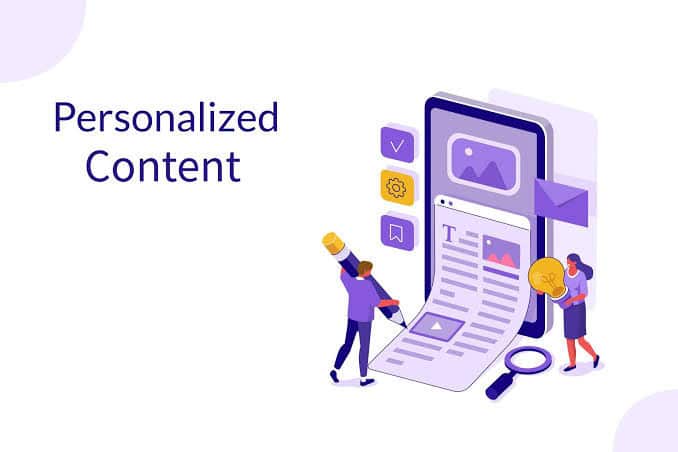
This increases the conversion of sign-ups and upsells. The benchmarks state a 25-40% increase in conversion when personalized content is employed. The goal is to tailor content to 80%+ of user traffic. This provides the maximum value from user acquisition while also maximizing customer retention and customer expansion.
Features
- Custom email campaigns
- Personalized landing pages
- Behavioral recommendations
- Industry specific content
- Persona-based messaging
Pros
- Increases engagement of users
- Improves conversion
- Enhances customer experience
- Increases revenue from upsells
- Improves customer relevancy
Cons
- Requires customer data
- Sophisticated content production
- Can be perceived as unwelcome
- Long-term testing required
- Quality of data impacts results
11. SEO & Content
At the top of the funnel, SEO and content are used to drive organic sign-ups. Sign-ups are driven by intent-based content and optimized landing pages. The conversion impact is an acquisition channel with a low customer acquisition cost.

Expected impact is that SEO driven funnels lead to sign-ups for 30-50% of SaaS businesses. Target is to rank in the top 3 search engine results pages for 20+ intent keywords This ensures customer acquisition for the business in the long term with lower ad spend.
Features
- SEO-centric content
- Topic clusters
- Product-led content
- Comparison pages
- Conversion goal-oriented CTAs
Pros
- Long term organic traffic builder
- Captures high intent searches
- Creates topical dominion
- Diminishes the dependence on paid acquisition
- Creates multiple conversion points
Cons
- Slow results
- Frequent content updates are needed
- tougher keywords
- No guarantee of revenue
- unqualified visits can occur by poorly written content
12. Automated Sales Outreach
At the conversion stage of the customer journey, automated sales outreach is employed to drive sign-ups to sales demo conversations. Conversion is achieved by behavior based triggered personalized outreach via email or chatbots. The benefit of this automated sales outreach is a faster closure of deals.

The benchmarks are automation driving a demo booking uplift of 20-30%. The goal is to drive a response rate of automated sales outreach of greater than 25%. This ensures successful progression of customer sign-ups to sales conversations.
Features
- Email automation
- CRM automation
- Sales cycle automation
- Multi-touch outreach
- CRM personalized sales alerts
Pros
- Initial reply time decreases
- Lead follow up time decreases
- Lead nurturing aid
- Helps scale sales
- Reengages previously unresponsive leads
Cons
- Over automation can result in lost sales
- excessive outreach can increase unsubscribes
- Based on the needs of the lead
- Poor personalization can make it worthless
- Integrating a CRM can be technical
13. Measure Funnel Quality
Calculating funnel quality during the analytics phase allows us to see the revenue impact for every sign-up. Implementation: track visitor to sign-up, sign-up to activation, and activation to paid ratios. Conversion impact: identifies weak points for optimization.

Benchmarks: Healthy SaaS funnels have 20–30% sign-up to activation and 5–10% activation to paid. Target: maintain even conversion ratios across all stages. This stops vanity metrics and guarantees that acquisition generates revenue.
Features
- Tracking funnel stages
- Conversion rate measurement
- Churn analysis
- Cohort analysis
- Return on Investment measurement
Pros
- Shows where in the funnel the conversion roadblock is
- Associates sign ups with revenue
- Brings focus to customer data
- increases understanding of user behavior
- helps in prioritizing optimization tasks
Cons
- Measuring attribution is difficult
- Too much measurement can cause confusion
- Data analysis can be complicated
- needs ongoing updates
- New tracking systems need to be set up if old tracking is removed
14. Continuous CRO Experiments
During the optimization phase, continuous CRO experiments improve landing pages, CTAs, and pricing. Implementation: A/B tests across devices and locations.
Conversion impact: incremental improvements compound over time. Benchmarks: CRO-focused firms reach 10–15% quarterly uplift. Target: run 3–5 experiments each month. This guarantees that acquisition strategies adjust with user behavior, thereby maximizing conversion efficiency.
Features
- A/B testing
- Call to action placement tests
- Landing page tests
- Value experiments
Pros
- User behavior can be observed
- mehr Eintritte
- Helps in prioritizing optimization
- insightful
Cons
- Metric overload
- Tracking systems need ongoing updates
- Data analysis can be complicated
- Measuring attribution is difficult
- Checkout or signup testing
15. Retention-Focused CRO
During the retention phase, CRO shifts its focus from sign-ups to long-term revenue. Implementation: optimize the flows for conversions to upsells, and for renewals, as well as reminder processes and loyalty programs. Conversion impact: Improved lifetime value and reduced churn.
Benchmarks: retention-focused CRO leads to an annual increase in revenue of 20–25%. Target: achieve 90-day retention of 60% or greater. This ensures that acquisition efforts grow in a sustained manner and improve the return on investment.
Features
- Churn tracking
- Retention marketing
- Health scoring for customers
- Re-engagement workflows
- Expandability opportunities
Pros
- Focuses on long term revenue
- Decreases customer churn
- Enhances customer lifetime value
- Enable upselling and expansion
- Is sustainable
Cons
- Retention results take time
- Requires ongoing customer analytics
- Churn causes can be hard to define
- Re-engagement efforts become repetitive
- Expansion may not meet customer expectations
Conclusion
To drive sign-ups and revenue in 2026, we must integrate acquisition, activation, retention, and expansion functions of the business in a coordinated manner. Various methods to address entry friction include the Simplify Sign-Up Flow, Email-First Registration and Mobile-First Design. Methods to build trust and motivate sign-ups include Trust Signals and Compelling Value Propositions.
Mid-funnel’s deal activation and relevance skills are addressed by Frictionless Onboarding, Intent Scoring, and Personalized Content. Long-term growth will depend on Measure Funnel Quality, Continuous CRO Experiments, and Retention-Focused CRO. Uniquely, these methods encourage balanced funnel growth, leading to constant and sustainable conversions and optimizing the lifetime value of customers.
FAQ
What is the most effective way to simplify sign-up flow?
Focus on reducing fields to essentials (email + password or SSO). Keep sign-up under 20 seconds to minimize drop-offs.
Why use email-first registration?
It speeds up entry, verifies leads early, and increases completion rates by 15–25%.
How does asynchronous validation help?
It blocks fake accounts in the background, reducing invalid sign-ups by 40–60% without frustrating real users.
Why prioritize mobile-first design?
Mobile dominates global traffic. Optimized mobile flows achieve 25–40% higher conversions.
What trust signals should be added?
Compliance badges, SSL, testimonials, and privacy assurances build confidence and reduce hesitation.