


In this article, I will discuss the Best AI NFT Games to Watch, showcasing innovative projects that combine artificial intelligence, blockchain technology, NFTs, and compelling gameplay. Find out about the next generation of gaming where AI agents, intelligent characters, digital ownership and Web3 economies are changing the game, and which key features and trends are making these AI NFT games worth keeping an eye on.
What Are AI NFT Games?
AI NFT games are games that are based on blockchain technology and incorporate artificial intelligence (AI), non-fungible tokens (NFTs) and interactive gameplay. Artificial intelligence can be used to create intelligent NPCs, autonomous agents, virtual companions, adaptive opponents, or AI-generated game content.
NFTs can be used to provide verifiable digital ownership of characters, items, cards, land, or other in-game assets. An AI NFT game differs from a traditional NFT game as the gameplay can be more dynamic and personalized, allowing some game elements to respond, learn or function with a higher level of autonomy. But not all Web3 games that mention AI are the real AI-powered games, so the actual role of AI needs to be evaluated before adding a project to this category.
How We Selected the 10 Best AI NFT Games
| Criteria | What We Evaluated | Why It Matters |
|---|---|---|
| AI Integration | How meaningfully AI is used in agents, NPCs, companions, content, or gameplay | Separates genuine AI gaming projects from AI-focused marketing |
| NFT Utility | Whether NFTs have practical uses such as characters, cards, assets, items, or agents | Measures the real value of NFTs within gameplay |
| Gameplay Quality | Game mechanics, genre, accessibility, and overall player experience | A strong game should remain interesting beyond its token economy |
| Blockchain Technology | Blockchain network, transaction infrastructure, and asset ownership | Helps assess the Web3 foundation of each project |
| Player Experience | Ease of entry, gameplay accessibility, and available features | Shows whether the game is suitable for newcomers and experienced players |
| Development Progress | Product releases, updates, roadmap execution, and ecosystem development | Helps identify projects that are actively progressing |
| Innovation | Original use of AI, NFTs, blockchain, or agent-based mechanics | Highlights projects introducing something different to Web3 gaming |
| Community & Ecosystem | Community activity, partnerships, creators, and ecosystem participation | Indicates broader interest and potential adoption |
| Token Utility | How the native token is used within the ecosystem, where applicable | Distinguishes functional tokens from purely speculative assets |
| 2026 Potential | Upcoming features, technological development, adoption opportunities, and overall relevance | Identifies games that have meaningful reasons to watch in 2026 |
| Transparency | Availability of official information about gameplay, NFTs, AI technology, and development | Reduces reliance on unverified claims |
| Risk Factors | Project maturity, NFT/token volatility, accessibility, and development uncertainty | Provides a more balanced view instead of presenting every project as guaranteed to succeed |
How AI Is Used in NFT Games in 2026
Autonomous AI Agents – AI agents have the ability to perform actions within the game, make decisions and interact with the environment and potentially with less player control.
Intelligent NPCs – AI will allow NPCs to react more appropriately to player actions, conversations, and changing game scenarios.
AI Virtual Companions – AI-powered characters can talk to players, create personalized interactions and offer companionship or help while playing.
Dynamic Gameplay AI is able to alter enemies, challenges or game experiences depending on how players act and perform.
AI-Powered Game Creation – Several Web3 platforms leverage AI to assist users in creating game concepts, mechanics, assets, or playable experiences sans traditional development workflows.
Smart NFT Characters – NFTs can be combined with AI capabilities and hence digital characters or agents can become interactive and not just as collectible assets.
Improved Player Experiences – AI can evaluate player behavior and provide more personalized characters, dialog, challenges or game experiences.
AI-Powered Game Economies – Certain experimental ecosystems enable autonomous agents to interact with blockchain-based assets and marketplaces, opening up new avenues for player-owned digital economies.
AI-Assisted Strategy – AI is able to make recommendations, analyze gameplay situations, or assist players in making decisions in strategy and competitive games.
On-Chain AI Agents – New projects are developing AI agents that can interact with blockchain assets and decentralized applications. This could enable agents to become active participants in Web3 gaming economies.
Key Points
| AI NFT Game / Project | AI Role | NFT / Blockchain Utility | Game Type |
|---|---|---|---|
| Altered State Machine (ASM) | AI agents can be created, trained and used across gaming experiences | Intelligent NFTs and ASTO-based ecosystem | AI Agent / Gaming Platform |
| Palio: Craft & Trade | AI agents power NPCs, customers and interactions; agents have memory, moods and autonomous decision-making | Blockchain-backed achievements and assets; $PAL connects the ecosystem | AI Simulation / Social Game |
| Delysium | AI Virtual Beings and autonomous AI agents interact with players and Web3 systems | Blockchain-based assets, NFTs and AGI ecosystem | Open-World / AI MMO |
| Sleepless AI | AI-powered virtual companions interact with players | NFTs include characters, clothing, accessories and other game items | AI Companion / Simulation |
| Alethea AI / AI Protocol | Generative AI creates interactive AI characters and gives NFTs an intelligence layer | Intelligent NFTs (iNFTs) can connect NFTs with AI capabilities | AI Character / NFT Ecosystem |
| Illuvium | AI-related automation and technology are part of its broader game ecosystem, but it should not be presented as a purely AI-agent game | Game objects are NFTs that can be owned and traded | RPG / Auto-Battler / Open World |
| Parallel | AI is not the game’s primary defining feature, so position it as an AI/NFT gaming watchlist candidate, not a pure AI game | NFT cards, Echos and PRIME ecosystem | Sci-Fi Trading Card Game |
| Delysium ONE | AI agents are the central participants in the ecosystem | Agent assets and blockchain-based economic infrastructure | AI Agent Economy / Game Ecosystem |
| ChainCraft | AI can generate game specifications, mechanics and assets through natural-language prompts | Items, cards, mechanics and skins are designed as on-chain assets | AI Game Creation / On-chain Gaming |
| Fireball / Gigaverse | AI agents can automate dungeon runs, fishing, quests and other game activities | Agents interact with NFT-based game assets and rewards | Agentic Gaming / RPG |
1. Altered State Machine (ASM)
Altered State Machine (ASM) is a Web3 AI-agent protocol for creating, training, owning and trading intelligent NFTs. Its AI agents can participate in games, arenas, metaverses and other applications. The ecosystem token is ASTO. ASM was not created as a regular single game, but as an AI-and-NFT platform.
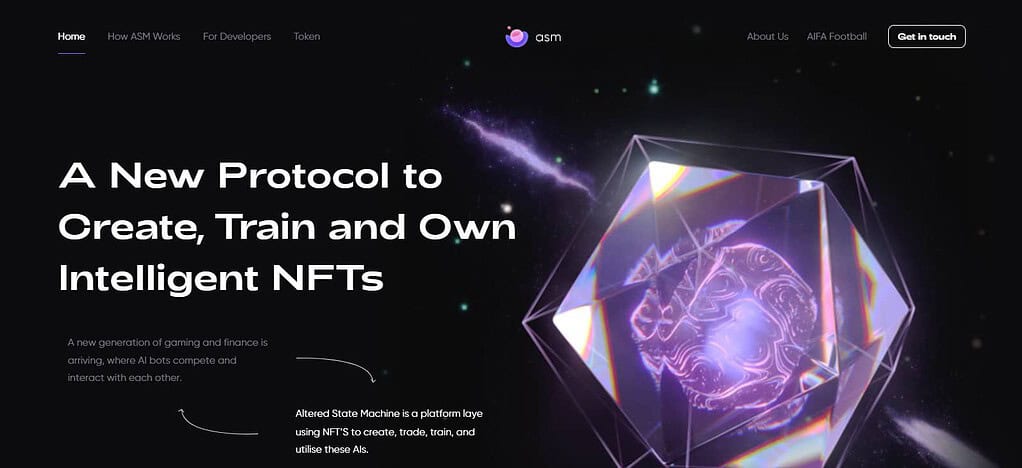
Its technology was built for autonomous agents and AI-powered gameplay. The project has also gained US$11 million in strategic funding from investors including AirTree Ventures. NFT utility is grounded in ownership and smart agents. Current player count, transaction count, and user cost are not publicly available.
Altered State Machine (ASM)
| Characteristic | Details |
|---|---|
| Project Type | AI-agent and Web3 gaming infrastructure rather than a single conventional game |
| Core AI Feature | AI agents are built from Brain, Memory and optional Form components, allowing agents to develop behavioral strategies and personalities. |
| NFT Utility | NFTs can represent intelligent agents, brains, memories and forms, giving digital assets functional rather than purely collectible utility. |
| AI Gameplay | Agents can be designed for games, competitions, virtual worlds and other interactive applications. |
| Blockchain | Ethereum-based Web3 infrastructure |
| Token | Historically ASTO; note that current naming/token status should be checked before publication because the ecosystem has undergone changes. |
| AI Training | AI-agent training and ecosystem functions have been connected with the token economy. |
| Unique Characteristic | Treats AI agents as composable digital assets that can have ownership and utility. |
| Best For | Readers interested in autonomous AI agents, intelligent NFTs and experimental Web3 gaming |
| 2026 Watch Factor | Its agent-based approach makes it relevant to the broader move toward autonomous AI characters in blockchain gaming. |
2. Palio: Craft & Trade
Palio: Craft & Trade is an AI-agent-driven social simulation game where shops, NPCs and customers are powered by AI agents with memory, moods and autonomous decision-making. Palio’s roadmap includes its first emotional-data experiments in 2024, a generative-AI NPC system in October 2024, a soft launch of Craft & Trade in March 2025 and its mainnet/token launch in June 2025.
$PAL powers the Emotional Layer, AI interactions, gameplay & on-chain rewards. It has a blockchain-backed model for ownership of assets, relationships and achievements. The exact funding, transaction volume, amount of current players and universal entry cost are not made public.
Palio: Craft & Trade
| Characteristic | Details |
|---|---|
| Project Type | AI-powered social simulation and crafting/trading game |
| Core AI Feature | Uses AI agents to power characters, interactions and game-world behavior |
| AI Characters | NPCs and other entities can have memory, personality and more dynamic interactions |
| Gameplay | Focuses on crafting, trading, social interaction and building relationships inside an AI-driven world |
| Blockchain | Blockchain is integrated with the game’s ownership and economic systems |
| Token | $PAL |
| NFT Utility | Digital assets can connect ownership with achievements, relationships and game progression |
| Unique Characteristic | Its emphasis is on AI-driven social behavior rather than simply using AI for automated opponents |
| Cost | Entry and asset costs can vary; no single permanent cost should be stated |
| Players/Transactions | A reliable current global player or transaction figure should not be presented without a dated source |
| 2026 Watch Factor | AI characters with persistent interactions make Palio particularly relevant to the development of AI-native social games |
3. Delysium
Delysium is an AI, blockchain and gaming powered Web3 ecosystem. The project went public with its community launch in 2022, offering AGI tokens in 2023 and building out its AI-agent network. Delysium has raised US$10 million in a strategic round of funding, led by Anthos Capital, with investors including Immutable, GSR and Blockchain Coinvestors.
Its ecosystem comprises AI-powered experiences, digital resources and the AGI token. When it announced its 2022 funding, it had more than 5,000 gamers in pre-alpha testing. Current player and transaction numbers are not always published.
Delysium
| Characteristic | Details |
|---|---|
| Project Type | AI-powered Web3 gaming and virtual-world ecosystem |
| Core AI Feature | Focuses heavily on autonomous AI agents and AI-powered digital characters |
| Gameplay | Combines gaming, virtual-world experiences and interactions with AI agents |
| AI Agents | Agents are intended to move beyond simple scripted NPC behavior and participate more independently |
| Blockchain | Web3/blockchain infrastructure supports its digital assets and economy |
| Token | AGI |
| NFT Utility | Digital assets can be connected to the game’s virtual-world and Web3 ecosystem |
| Funding/Backing | The project has received backing from Web3 and technology investors |
| Unique Characteristic | Combines AI agents with a broader virtual-world and blockchain ecosystem rather than treating AI as one isolated game feature |
| 2026 Watch Factor | Its autonomous-agent direction makes it relevant to the emerging agentic gaming category |
4. Sleepless AI
Sleepless AI is a Web3 gaming platform that combines AI companions and blockchain technology. It launched its flagship HIM and HER games in the fourth quarter of 2023, where players can interact with simulated companions that respond to player interaction with dialog and personalities.
The ecosystem runs on a $AI token which allows in-game purchases, discounts, governance and staking related functions. Players will receive companion-related blockchain assets including non-tradable Soul-Bound Tokens. The project raised $3.7 million in private token sales, supported by Binance Labs, Foresight Ventures and Folius Ventures. It’s free-to-play, but the precise number of players and transactions are not known.
Sleepless AI
| Characteristic | Details |
|---|---|
| Project Type | AI companion and Web3 gaming ecosystem |
| Core AI Feature | AI-powered virtual companions interact with players through conversational and personalized experiences |
| Games | The ecosystem includes HIM and HER, centered around virtual AI companions |
| Blockchain | Uses blockchain for ownership and digital game assets |
| Token | $AI |
| NFT Utility | Character NFTs and related digital assets can represent companions and in-game items |
| AI Personalization | Player interactions can influence the experience with virtual companions |
| Genre | AI companion / simulation / social gaming |
| Unique Characteristic | Focuses on emotional and conversational interaction instead of traditional combat-focused AI |
| Best For | Players interested in AI companions, character relationships and interactive digital personalities |
| 2026 Watch Factor | AI companions represent one of the clearest areas where generative AI can directly change the player experience |
5. Alethea AI / AI Protocol
Founded in 2019, Alethea AI was the first company to introduce the concept of intelligent NFTs (iNFTs) to the world, combining NFTs with interactive AI. The AI Protocol has pushed its tech evolution toward autonomous agents, generative AI, and decentralized AI infrastructure.
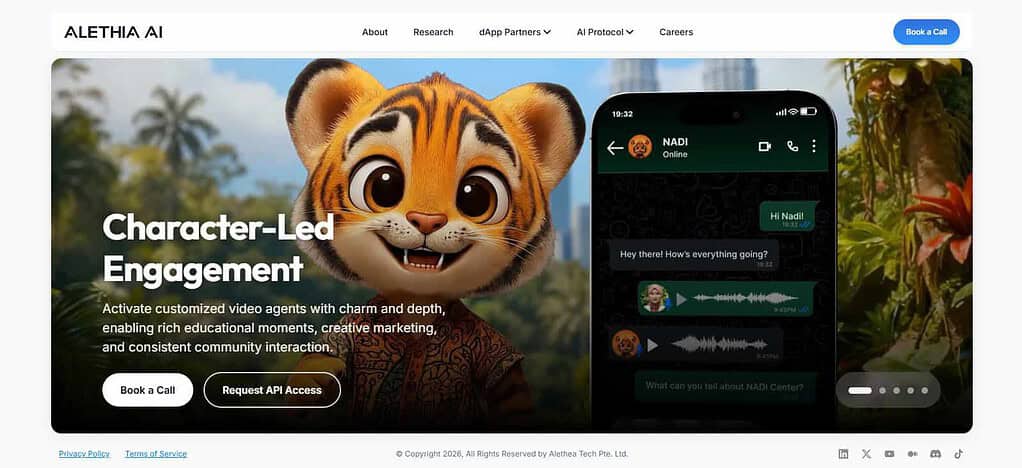
Alethea AI is more an AI and blockchain ecosystem that can enable interactive characters and agents than a traditional stand-alone game. Its NFT utility is to make digital characters smart and interactive. Its current work is on permissionless agentic AI and on-chain deployments. The company has teamed up with companies like AWS and Solana Mobile. Exact current players, transaction volume, game cost and funding totals are not disclosed publicly.
Alethea AI / AI Protocol
| Characteristic | Details |
|---|---|
| Project Type | Decentralized AI and intelligent-NFT infrastructure |
| Founded | Alethea AI was founded in 2019. |
| Core AI Feature | Combines generative AI, AI agents and blockchain-based ownership |
| iNFT Technology | Its Intelligent NFT model combines an NFT with an AI intelligence layer. |
| AI Characters | Character-based AI can provide interactive personalities and responses |
| Blockchain | Ethereum-based protocol infrastructure |
| Token | ALI is part of the AI Protocol’s token architecture. |
| NFT Utility | iNFTs can provide access to AI capabilities and interactive intelligence |
| Unique Characteristic | One of the earliest projects to explicitly combine NFTs with interactive AI |
| Current Direction | The project is increasingly focused on agentic AI and decentralized AI infrastructure. |
| 2026 Watch Factor | Its historical iNFT technology provides a foundation for today’s AI-agent/NFT convergence |
6. Illuvium
Illuvium is a blockchain gaming ecosystem built around an open world RPG, creature collection and strategic battles. It was announced in 2021 and opened to open beta in July 2024. The game runs on an Ethereum-based infrastructure, with NFTs representing Illuvials and in-game items accessible on Immutable X zkEVM.
The governance and revenue-sharing token of the ecosystem is ILV, while sILV2 is used as the in-game currency. NFT utility includes collectibles (creatures) and game items. Illuvium is not a totally AI-driven game, so the AI association has to be worded carefully. Numbers of current players, totals of transactions, and total development cost are not always reported.
Illuvium
| Characteristic | Details |
|---|---|
| Project Type | Blockchain gaming ecosystem |
| Main Genres | Open-world RPG, auto-battler and land/resource management |
| Core Gameplay | Players explore, collect Illuvials, battle and manage digital assets |
| AI Classification | Important: Illuvium should not be described as a pure AI-agent game; its main identity is NFT-based blockchain gaming |
| Blockchain | Ethereum-secured ecosystem with Layer-2 infrastructure |
| Token | ILV |
| NFT Utility | Illuvials and other game objects can function as blockchain-based digital assets |
| Launch | Illuvium announced its official universe launch for July 25, 2024. |
| Unique Characteristic | Large interconnected gaming ecosystem rather than a single isolated title |
| Best For | RPG, creature-collection and strategy players |
| 2026 Watch Factor | Its combination of multiple game modes and NFT ownership makes it relevant to the broader Web3 gaming sector |
7 Parallel
Parallel is a sci-fi trading-card game built around blockchain-based digital cards and a wider Web3 gaming ecosystem. It was publicly presented as an NFT card game on Ethereum and was well-funded, raising a US$50 million at a US$500 million valuation in a round led by Paradigm.
Its NFT cards form the core collectible and gameplay asset layer, with the wider ecosystem including the PRIME token. But Parallel should not be sold as a pure AI NFT game as AI is not its defining technology in the same way as ASM or Palio. Current player numbers, transaction totals and exact player costs are subject to change and should be confirmed separately.
Parallel
| Characteristic | Details |
|---|---|
| Project Type | Sci-fi NFT trading-card game |
| Genre | Trading Card Game / Strategy |
| Core Gameplay | Players build decks and compete using cards representing characters and objects |
| AI Feature | Parallel includes an AI Mode, but AI is not the primary defining technology of the project. |
| Blockchain | Ethereum |
| NFT Standard | Parallel digital collectibles use ERC-1155. |
| Token | PRIME |
| NFT Utility | Digital collectible cards can be used in gameplay and can provide opportunities to earn PRIME. |
| Entry Cost | Players do not necessarily need digital collectibles to play. |
| Unique Characteristic | Combines traditional competitive card-game mechanics with a blockchain collectible economy |
| 2026 Watch Factor | Worth monitoring as a major NFT-card-game ecosystem, but it should be categorized as an AI-adjacent NFT game, not a pure AI game |
8. Delysium ONE
Delysium ONE is not just another stand-alone game but the AI-agent infrastructure arm of the broader Delysium ecosystem. The emphasis is on creating a blockchain based network for AI agents to interact with digital resources, applications and economic systems. Delysium’s wider development went public in 2022, and its AI-agent infrastructure has been expanding through subsequent releases.
The ecosystem uses blockchain technology and the AGI token within its larger economy. It aims to take AI agents beyond scripted NPC behavior, into independent digital actors. Delysium ONE is a continuously evolving infrastructure ecosystem and therefore a separate verified player count, transaction total, fixed game price and stand-alone funding figure are not publicly established.
Delysium ONE
| Characteristic | Details |
|---|---|
| Project Type | AI-agent and Web3 infrastructure within the broader Delysium ecosystem |
| Core AI Feature | Focuses on autonomous AI agents capable of interacting with digital environments and blockchain-based systems |
| Agent Model | Designed around AI entities that can perform tasks and participate in digital economies |
| Blockchain | Web3/blockchain infrastructure |
| Token | Connected with the broader Delysium AGI ecosystem |
| NFT Utility | Digital assets can be used within the broader agent and gaming ecosystem |
| Gameplay Role | More infrastructure/agent-focused than a conventional standalone game |
| Unique Characteristic | Attempts to make AI agents participants in a digital economy rather than simply NPCs |
| Best For | Readers interested in autonomous agents and AI economies |
| 2026 Watch Factor | The shift from AI-controlled characters toward autonomous economic agents is its key area of interest |
9. ChainCraft
ChainCraft is an AI-enabled game-creation platform that enables users to create playable games through natural-language conversations with AI. Its current platform is based on Arbitrum with games, assets and mechanics being represented with on-chain infrastructure.
ChainCraft won a $24,000 Arbitrum Questbook grant and announced winning the Etherspace track, while also placing in the top 10 at the ETH Denver 2026 BUIDL Hackathon.
Its reported beta metrics were 62 active users over 30 days, 178 wallet connections, 75 games created, 17 published games and 734 game sessions. During the reported controlled beta, game creation was token gated to Data Drifter NFT holders and published games were publicly playable.
ChainCraft
| Characteristic | Details |
|---|---|
| Project Type | AI-powered multiplayer game builder and creator platform |
| Core AI Feature | Users describe their desired game to AI, which helps generate the game’s specification, mechanics and assets. |
| Game Creation | Designed to reduce the need for traditional coding and game-development skills |
| Blockchain | Arbitrum |
| NFT Utility | Items, cards, mechanics and skins can exist as on-chain assets. |
| Creator Economy | Creators can own, sell, trade and reuse assets across games |
| Genre | AI game creation / multiplayer Web3 infrastructure |
| Unique Characteristic | Instead of simply playing an AI-powered game, users can use AI to create games |
| Funding/Backing | Public materials highlight an Arbitrum Questbook Grant and 2026 hackathon achievements. |
| 2026 Watch Factor | AI-assisted game development could make game creation faster and more accessible |
10. Fireball / Gigaworld
Fireball is an agentic layer for Web3 and crypto-enabled games, and is currently most deeply integrated with Gigaverse. Fireball is not really a traditional standalone game, but rather a way for AI agents to automate repetitive gameplay activities.
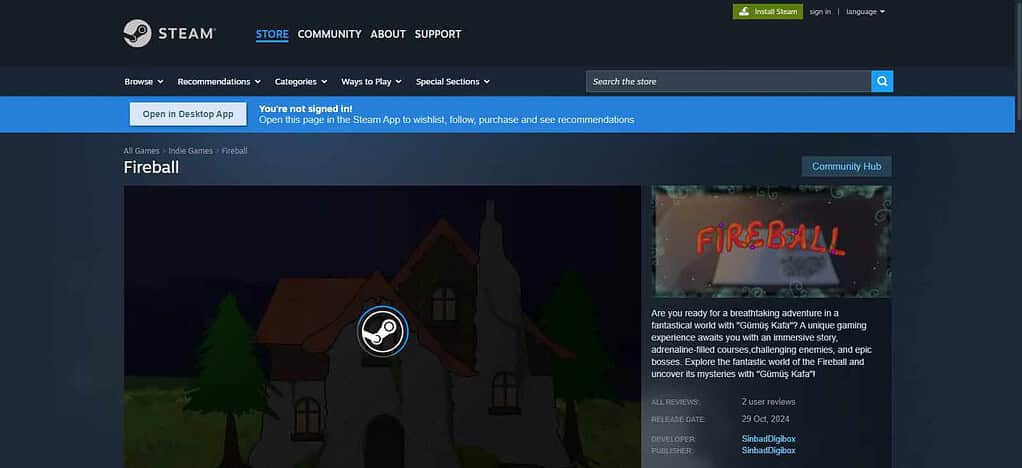
Players are focused on strategy, while agents can do dungeon combat, fishing, quests, crafting-related activities, NFT yield collection, and other routine activities.
NFT link is through the assets and activities of the integrated game ecosystem. Fireball’s documentation does not have a traditional launch year, fixed entry price, total funding figure, or confirmed global player count. Don’t hallucinate those numbers, its biggest 2026 angle is agentic automation for on-chain gaming.
Fireball / Gigaverse
| Characteristic | Details |
|---|---|
| Project Type | Agentic layer for Web3 and crypto-enabled games |
| Main Integration | Its deepest current integration is with Gigaverse. |
| Core AI Feature | AI agents can automate gameplay actions while the player focuses on higher-level strategy |
| Dungeons | Agents can automatically handle dungeon combat using different playstyle presets. |
| Fishing | Supports automated fishing and manual play with AI-powered hints |
| Other Automation | Can handle quests, item collection, pets, crafting-related activities and other routines |
| Blockchain | Gigaverse uses an Abstract wallet according to Fireball’s setup documentation. |
| NFT Utility | Fireball can interact with and collect yield from NFT-related game assets. |
| Unique Characteristic | Turns repetitive Web3 gameplay into an agentic/automated gaming experience |
| 2026 Watch Factor | Shows how AI agents can become active gameplay operators rather than conventional NPCs |
Conclusion
The realm of AI NFT gaming is broadening from simple digital collectibles to smart AI agents, interactive characters, blockchain ownership and dynamic gameplay mechanics. This list of 10 projects includes a variety of approaches, from ASM’s intelligent NFTs to Palio’s AI-driven characters to Delysium’s autonomous agents to Sleepless AI’s virtual companions to Illuvium’s NFT-based gaming ecosystem.
Looking ahead to 2026, players should look beyond token prices to real AI integration, NFT utility, quality of gameplay, development progress, activity of community and long-term ecosystem potential. These can help you figure out which AI NFT gaming projects are actually worth your time.
FAQ
What are AI NFT games?
AI NFT games combine artificial intelligence with blockchain-based gaming and NFTs. AI can power agents, NPCs, companions, game content, or automated gameplay, while NFTs can represent characters, cards, items, land, or other digital assets.
Which are the best AI NFT games to watch in 2026?
Some notable projects to watch include Altered State Machine (ASM), Palio: Craft & Trade, Delysium, Sleepless AI, Alethea AI, Illuvium, Parallel, ChainCraft, and Fireball/Gigaverse. However, their AI integration varies significantly.
How is AI used in NFT games?
AI can be used for autonomous game agents, intelligent NPCs, virtual companions, adaptive gameplay, AI-generated content, and automated in-game activities. The exact implementation differs from one project to another.
What is the role of NFTs in AI games?
NFTs can provide ownership of characters, creatures, cards, weapons, accessories, land, or other digital assets. In some ecosystems, NFTs can also represent intelligent or AI-enabled characters and agents.