



In this article, I will discuss the Best AI Agents for Vendor Contract Review Before Approval. Highlighting tools that help businesses identify risky clauses, missing provisions, check legal policies, and improve compliance. I’ll also look at their core features, contract analysis tools, approval workflows and strengths to help legal and procurement teams pick the best solution.
What Are AI Agents for Vendor Contract Review Before Approval?
Vendor Contract Review AI Agents Before Approval is an intelligent software tool that can evaluate vendor agreements, identify potential legal risks and assess contractual terms before the final approval stage.
They use artificial intelligence, natural language processing and machine learning to review clauses, identify missing provisions, compare contract language to internal legal policies and flag compliance issues.
They can look for key terms such as indemnification, limits on liability, confidentiality, conditions of termination, payment obligations and data protection requirements. Some platforms also offer suggested alternative clause language, redline generation, and automated approval workflows.
These AI agents help businesses improve review consistency, reduce manual workloads and make more informed vendor approval decisions while keeping final legal authority with human professionals by supporting legal and procurement teams with faster contract analysis.
Key Points
| AI Agent / Platform | Key Strength |
|---|---|
| Ironclad AI | Reviews vendor contracts against company playbooks, flags risky clauses, suggests redlines, and supports approval workflows within a full contract lifecycle management (CLM) platform. |
| Luminance | Uses AI to identify contract risks, analyze clauses, review obligations, and accelerate legal and procurement approvals. |
| LegalOn | Attorney-built AI review platform that compares vendor contracts against predefined legal |
| Spellbook | Microsoft Word-based AI assistant that reviews contracts, flags legal issues, and proposes revisions directly within Word. |
| Lawgeex | Automates contract review and approval by comparing vendor agreements against approved legal playbooks and policies. |
| LinkSquares | AI-powered contract analysis platform that extracts key terms, identifies risks, and supports vendor contract governance. |
| Icertis AI | Enterprise contract intelligence solution that evaluates contractual obligations, compliance requirements, and approval workflows. |
| Workday Contract Intelligence (Evisort AI) | Uses AI to analyze contracts, extract clauses, monitor compliance requirements, and support procurement approvals. |
| Kira Systems | AI-driven contract review platform widely used for clause extraction, due diligence, risk detection, and vendor agreement analysis |
| DocJuris | Reviews vendor contracts, automates redlining, enforces legal standards, and streamlines negotiation and approval processes. |
1. Ironclad AI
Ironclad AI assists legal and procurement teams in reviewing vendor contracts prior to approval by finding risky clauses, comparing vendor language against internal legal playbooks, and flagging deviations from approved contract terms. Its AI-powered review capabilities can help identify missing provisions related to indemnification, liability, confidentiality, termination and data protection.
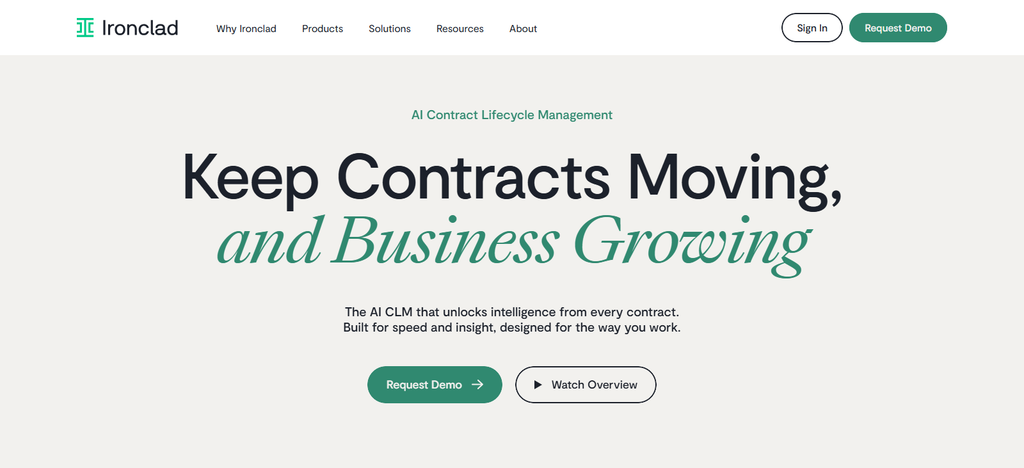
Legal teams can set required and restricted clauses to identify agreements needing extra review. Ironclad also offers suggested contract language, redlining, approval routing and workflow automation. Its contract lifecycle management features link initial review to negotiation, internal approvals, execution and storage, helping organizations maintain consistent legal controls in vendor contract management.
Best For
- Companies with high volumes of vendor contracts- Legal teams who need to design their own contract approval workflows.
Procurement departments are standardizing the review of supplier agreements. - Companies need a centralized contract lifecycle management.
- Businesses looking to automate contract review and negotiation processes.
Key Strengths
- Contract review, clause analysis based on AI.
- Customizable legal playbooks to standardize contract language.- Automated contract routing and approval process.
- Redlining contract and proposing language improvements.
- Contract lifecycle and document management centralized.
2. Brightness
Luminance applies AI to legal matters, reviewing vendor contracts, spotting odd language in agreements, and flagging possible legal issues before they get approved. Its contract analysis features assist reviewers in analyzing clauses regarding liability, indemnification, termination, confidentiality, and compliance obligations.
The platform can identify deviations from standard contract wording and compare terms across different agreements, which is useful for organizations that manage large vendor contract portfolios. Luminance can also analyze contracts, assist with negotiations and compare documents.
Its AI-powered insights help legal teams to investigate missing or inconsistent provisions, understand contractual obligations and prioritize agreements that need extra attention before human legal approval.
Best For
- Legal teams reviewing complex vendor contracts.
- Enterprises looking at large collections of legal documents.
- Businesses that notice funky contract language or deviations.
- Companies with a large number of supplier contracts.
- Legal departments requiring AI-enabled document analysis.
Key Strengths
- AI-based detection of unusual language in contracts.
- Automatic handling of complex legal documents.
- Insights at the contract and clause level.
- Identification of potential contractual risks and discrepancies.
- Reviewing and negotiating legal documentation.
3. LegalOn
LegalOn is targeting AI-based contract review, with legal playbooks, standardized criteria for review, and clause-level analysis. It enables legal teams to review vendor contracts for risky clauses, missing provisions and deviations from approved company positions.
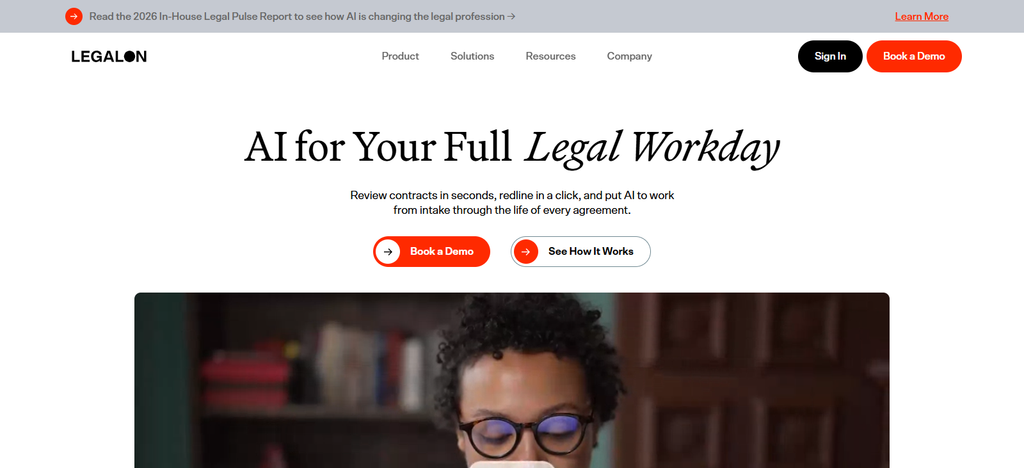
Reviewers can apply predefined or tailored playbooks to review key contractual provisions including indemnification, limitation of liability, confidentiality, data protection, termination and more. LegalOn can help with negotiations by explaining risks, suggesting changes, and offering other contract wording.
Its AI review capabilities ensure consistency across vendor agreements. Document redlining and review workflows allow legal professionals to review flagged issues, make corrections and complete the necessary approval process.
Best For
- Corporate legal teams using standardized review playbooks.- Companies review vendor contracts against internal policies.
- Lawyers needing risk analysis at the clause level.
- Organizations that desire consistent contract redlining.
- Teams struggling with constant commercial agreement reviews.
Key Strengths
- Using a playbook to review contracts and identify risks.
- Automatic detection of non-standard contractual clauses.- Explanations and suggested edits generated by AI.
- Uniform examination of important legal provisions.
- Help with contract redlining and negotiation.
4. Grimoire
Spellbook is an AI contract review and drafting assistance tool for legal professionals who use Microsoft Word and work with contract documents. Its review capabilities assist in identifying risky clauses, unusual wording, drafting inconsistencies and potentially missing contractual protections in vendor agreements.

Review instructions and playbook-based guidance can be used by legal teams to review provisions relating to indemnification, limitations of liability, confidentiality, termination, intellectual property, and data security.
Spellbook also helps with alternative language suggestions, redline generation and better contractual language. Reviewers can see suggested changes within their document workflow and accept or reject recommendations to help procurement and legal teams finalize vendor contracts for final human review.
Best For
- Lawyers negotiating and drafting vendor contracts.
- Teams that use Microsoft Word extensively.
- Businesses needing suggestions for contract clauses with AI.
- Lawyers drafting contract redlines and edits.
- All sizes of legal teams becoming more efficient in reviews.
Key Strengths
- AI-powered contract review in Microsoft Word.
- Detecting contract language that may be risky.AI-assisted drafting and rephrasing of clauses.
- Proposed alternative wording of contractual clauses.
- Speed up document review and negotiation prep.
5. Lawgeex
Lawgeex specializes in automated contract review, comparing incoming agreements against a series of predefined legal rules, company policies and approved contractual positions. Its approach allows organizations to identify risky clauses, non-standard provisions and missing contractual language before vendor agreements reach final legal approval.
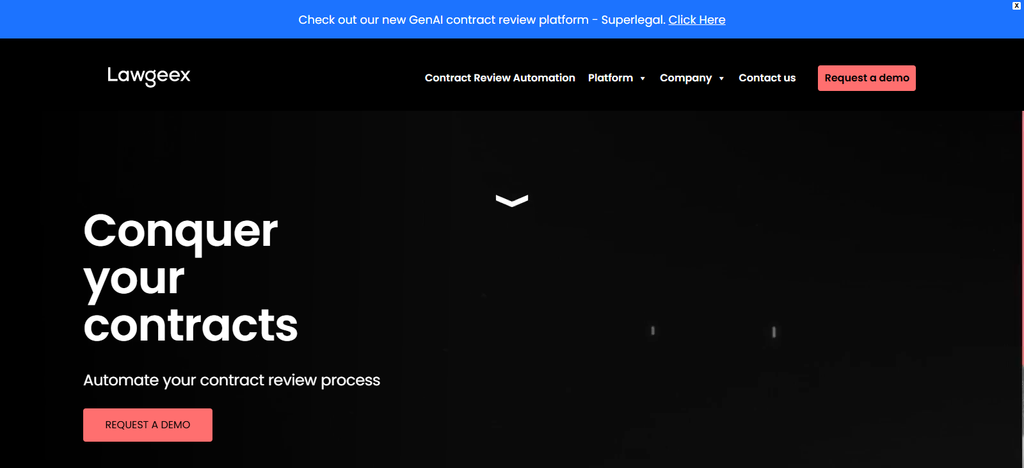
Legal departments can establish review parameters for key clauses such as indemnification, liability, confidentiality, governing law, termination and payment terms.
The system can flag deviations and advise whether provisions need to be corrected or escalated. Its automated review process is especially useful for repetitive, standardized contract reviews, enabling legal departments to reduce manual screening while retaining human supervision of important legal judgments.
Best For
- Organizations that are automating the repetitive contract review process.
- Legal teams using pre-defined rules for contract approval.
- businesses reviewing standard vendor agreements.- Procurement teams identifying non-standard contract language.
- Companies alleviating the pain of reviewing contracts manually.
Key Strengths
- Automatic contract checking against pre-defined legal rules.
- Identification of non-standard clauses in supplier contracts.
- Uniform application of internal legal policies.- Automatically analyze repetitive contract documents.
- Less manual effort needed for initial contract screening.
6. LinkSquares
LinkSquares combines contract lifecycle management with artificial intelligence-powered contract intelligence to help companies understand their contracts, identify key contract data and manage legal review workflows. The artificial intelligence can extract key terms, flag contract provisions and help reviewers locate information on renewal dates, termination rights, payment terms and other obligations.
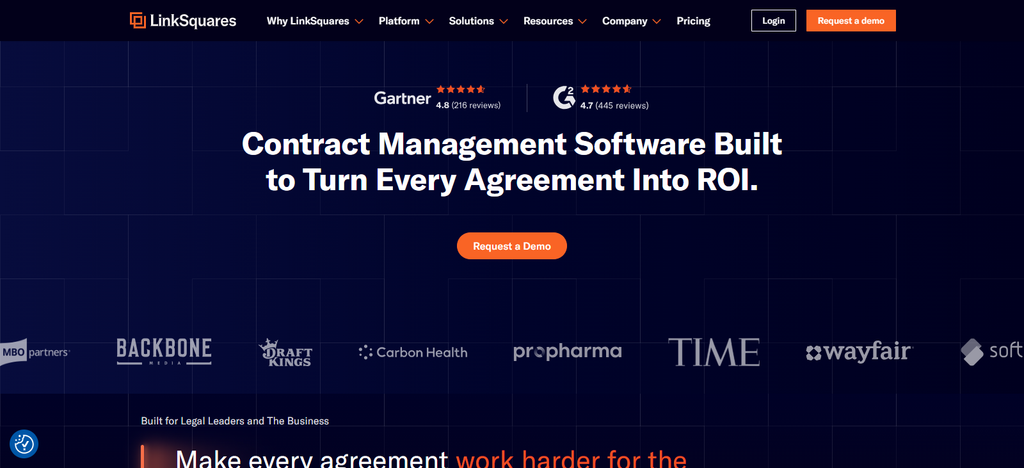
Teams may utilize its contract intelligence capabilities for vendor contract review to review existing agreements, compare contractual information and identify clauses that need further scrutiny.
LinkSquares also offers contract organization, reporting and workflow management capabilities, allowing legal departments to keep track of their vendor relationships. Its value is from the initial contract analysis to the ongoing agreement management and compliance monitoring.
Best For
- Legal teams with centralized repositories of contracts.- Businesses mining important data from vendor contracts.
- Organizations that are tracking supplier obligations and renewals.
- Contract reporting and analytics for legal teams.
- Companies that want more visibility into their contract lifecycle.
Key Strengths
- AI-based data extraction and analysis for contracts.
- Centralized contract storage and search.
- Improved insight into vendor commitments and conditions.
- Contract reporting and analytics for legal.
- Contract and workflow life-cycle management.
7. Icertis AI
Icertis AI enables enterprise contract intelligence by analyzing contractual information, extracting obligations and helping organizations manage complex vendor agreements. Its AI capabilities can help legal and procurement teams identify important clauses, review contractual deviations and understand obligations across supplier relationships.
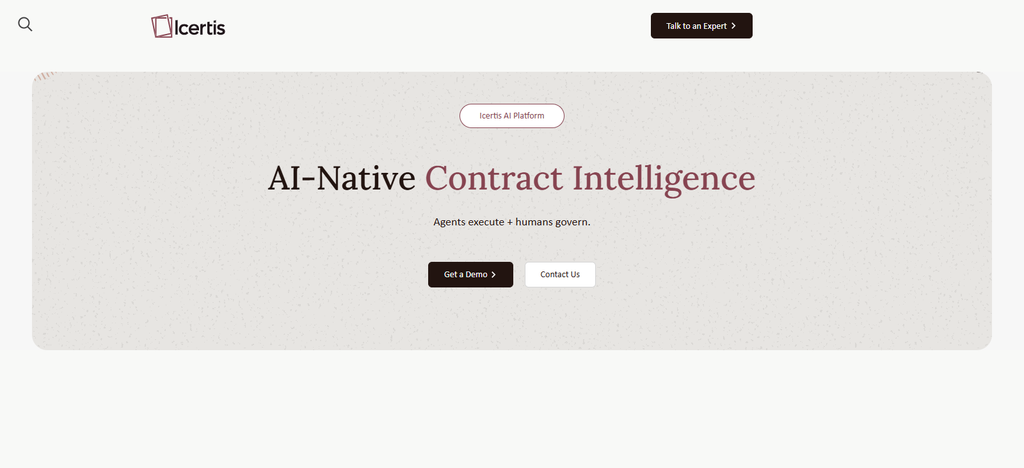
Organizations can use contract standards and structured review processes to examine liability, indemnification, pricing, service-level agreements, confidentiality and compliance requirements. Icertis also offers contract analytics and workflow tools for routing agreements to the right stakeholders for review and approval.
It’s geared toward enterprises, which is helpful if you’re an organization dealing with large supplier networks, multiple jurisdictions, complex contractual relationships and lots of compliance requirements.
Best For
- Large companies with complex supplier networks.
- Global procurement teams managing multiple vendor agreements.
- Organizations that need to standardize contracts across the enterprise.
- Businesses tracking contractual obligations and compliance requirements.
- Companies dealing with high-volume contract lifecycle processes.
Key Strengths
- Contract intelligence and analytics at the enterprise level.
- Identification of contractual obligations with AI assistance.
- Support of complex supplier agreements management.
- To standardize contracts in the business departments.
- automate contract review and approval workflows.
8. Workday Contract Intelligence (Evisort AI)
Workday Contract Intelligence (Evisort AI) applies AI-powered contract analysis to pull information from contracts, pinpoint key clauses, and provide greater visibility into vendor contractual obligations.
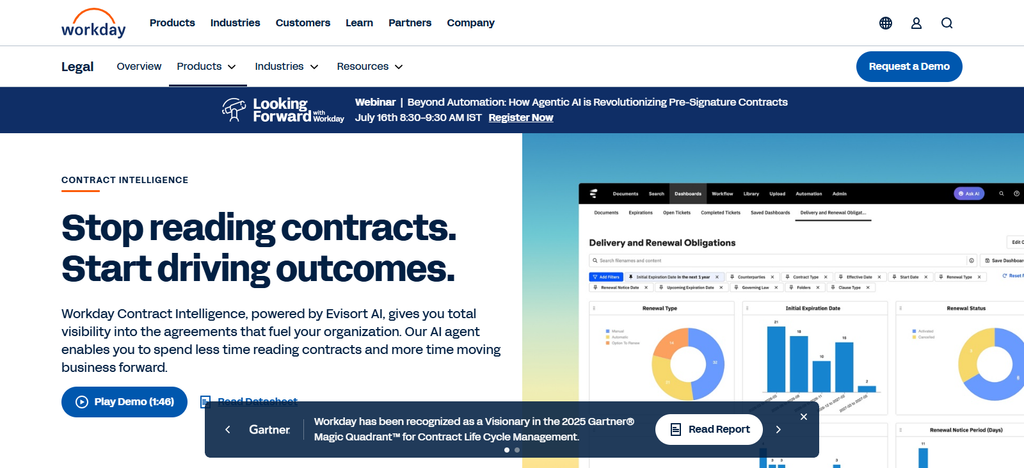
It’s capabilities enable organizations to analyze supplier agreements for payment terms, renewal conditions, termination rights, service commitments and other key provisions. Contract intelligence can help legal and procurement teams search for relevant clauses, identify missing information and review potential inconsistencies in contract documents.
The platform also enables contract search, data extraction, analytics and obligation tracking. These capabilities help businesses organize vendor contract information, track contractual requirements, and provide legal reviewers with relevant information before agreements move through the approval process.
Best For
- Businesses reviewing large volumes of contract documents.
- Legal teams pulling key vendor agreement information.
- Procurement departments tracking contractual obligations- Firms that keep track of renewal dates and termination terms.
- Enterprises needing AI-powered contract search and analytics.
Key Strengths
- Contract information extraction with AI.
- Automatic identification of critical contract terms.•
- Intelligent contract data and document search
- Transparency on renewal dates and contract requirements.
- Contract analytics for legal and procurement teams.
9. Kira Systems
Kira Systems by Litera specializes in AI-powered contract analysis, clause identification, and information extraction from large sets of legal documents. Machine-learning capabilities help legal teams pinpoint key contractual provisions, such as indemnification, limitation of liability, termination, assignment, confidentiality and change-of-control clauses.
Kira can help extract relevant information when reviewing vendor contracts, comparing contract provisions and identifying strange or inconsistent contract language that may warrant further investigation. This analytic capability is especially useful when you need to review complex supplier agreements or multiple documents at the same time. Lawyers can use extracted findings to investigate potential risks, evaluate contractual duties, and prepare documents for additional legal review.
Best For
- Law firms reviewing complex commercial contracts.
- Companies that look at large portfolios of contracts.
- Teams of lawyers removing certain contract provisions.
- Organizations that compare terms across several agreements.
- Professionals who carry out complete reviews of legal documents.
Key Strengths
- Identification of contract clauses using machine learning.- Extraction of key legal provisions from documents.
- Review of large quantities of agreements.
- Comparison of contractual terms among papers.
- complex legal documentation review assistance.
10. DocJuris
DocJuris is an AI-powered contract negotiation, document review and playbook-based risk analysis. It enables legal and procurement teams to review vendor contracts against established negotiation standards, flagging any clauses that differ from approved stances. Reviewers can examine the indemnification, liability, confidentiality, payment obligations, termination and other key contract terms.
The platform also offers contract redlining, suggested alternative language, clause comparison and review collaboration to help address identified issues. Its playbook-based approach can also help standardize contract negotiation and identify provisions that need escalation. These features allow for a more structured review of vendor contracts before final legal approval of agreements.
Best For
- Legal teams who are involved in vendor contract negotiations.
- Procurement professionals looking at supplier agreement terms.
- Companies with bespoke contract negotiation playbooks.- Organizations that need AI-assisted redlining and revisions.
- Teams standardizing contract review and negotiation workflows.
Key Strengths
- Contract negotiation and review with AI assistance.
- Identify contractual deviations via the playbook.
- Automated redlining of contracts and amendment of clauses.
- Suggestions for alternative wording for risky provisions.
- Joint workflows for reviewing and negotiating contracts.
Conclusion
Selecting the right AI agents to review vendor contracts before legal approval can help companies identify risky clauses, find missing provisions, maintain legal policies, and improve contract compliance. Ironclad AI, Luminance, LegalOn, Spellbook, Lawgeex, LinkSquares, Icertis AI, Workday Contract Intelligence, Kira Systems, and DocJuris are tools that provide a variety of features for contract analysis, risk assessment, redlining, and approval management.
Businesses should compare AI review capabilities, customization options, integration support and workflow automation before selecting a solution. AI contract review, combined with human legal oversight, enables organizations to make better decisions, reduce contract risks, and manage vendor contracts more effectively.
FAQ
What Are AI Agents for Reviewing Vendor Contracts Before Legal Approval?
AI agents for vendor contract review are software tools that analyze agreements, identify risky clauses, detect missing provisions, compare terms with company policies, and assist legal teams before final approval.
How Do AI Agents Identify Risky Vendor Contract Clauses?
They analyze contractual language to identify unfavorable liability terms, weak indemnification provisions, automatic renewal conditions, termination restrictions, data privacy concerns, and other clauses that may create business or legal risks.
Can AI Agents Detect Missing Clauses in Vendor Contracts?
Yes. Depending on their capabilities and configured legal playbooks, AI agents can flag missing provisions related to confidentiality, indemnification, liability limitations, data protection, termination, and intellectual property rights.
Can AI Agents Compare Vendor Contracts With Internal Legal Policies?
Yes. Playbook-based contract review tools can compare vendor terms against predefined company policies, approved clauses, negotiation standards, and acceptable fallback positions to identify contractual deviations.