


This article will cover the impact of AI Tools on Supply Chain & Logistics. New AI technology has started enabling advanced forecasting, operational automation, streamlined inventory management, improved shipment visibility, and the mitigation of supply chain risk.
These platforms allow for faster, smarter, and better decisions, and, therefore, logistics management is dramatically improved. Most importantly, these systems create modern, agile, and resilient supply networks for today’s businesses.
What Are AI Tools for Supply Chain & Logistics?
AI applications for supply chain and logistics are sophisticated software systems that utilize automation, predictive analytics, machine learning, and artificial intelligence to transform business workflow management.
AI applications process considerable data from transportation systems, suppliers, stock systems, and patterns in customer demand to make correct predictions and informed decisions.
Supply chain systems powered by AI help businesses streamline the automation of planning, inventory management, and tracking of shipments, and identify disruptions. AI tools transform business processes by decreasing the amount of manual work to build networks in the supply chain that are rapid and resilient.
How AI Tools Transform Supply Chain Operations
Step 1: Data Gathering
To evaluate the current conditions of the supply chain, AI systems pull data from many different sources including suppliers, warehouses, transportation, customer orders, market trends, and inventory. Being able to collect this data gives these systems a good sense of how the various parts of a business function.
Step 2: Data Analysis
Once data is collected, AI systems with machine learning and analytic abilities to analyze data start to work. These systems have the capacity to identify patterns that may be hidden from view, along with trends and inefficiencies. These systems may also help identify risk. Supply chain performance may be better understood and supply chains may be optimized with the aid of these systems.
Step 3: Demand Forecasting
AI supply chain tools have the ability to analyze data and make predictions regarding demand. These systems look at sales data, customer behavior, and trends, and analyze all of this along with the current state of the market, to make their predictions. With these demand forecasts, businesses are better positioned to optimize their inventory.
Step 4: Inventory Control
AI tools help businesses control how much inventory is held in warehouses. These systems suggest purchases and help companies avoid waste.
Step 5: Supply Optimization
AI supply chain tools create supply plans by evaluating demands and considering what supply is available from which sources. These tools help businesses better balance demand and supply.
Step 6: Availability and Tracking Shipments in Real Time
AI logistics platforms track shipments and delivery processes in real time. Businesses can stay informed and active during the transportation process and get updates on predicted delivery times and delays.
Step 7: Forecasting Risk and Managing Disruptions
With the integration of AI systems, business can stay informed of disruptions by analyzing changes in the market, suppliers, and logistics along with the weather. AI can also provide warnings on the risks of delayed suppliers and transportation and changes in demand.
Step 8: Automated Decisions
With the use of AI in systems and supply chain management, decisions regarding transportation, logistics, purchases, and the management of stock and resources, can be automated to an extent. This shift not only provides an ease of burden regarding repetitive and time consuming tasks on the supply chain teams but it also results in the increased velocity of decisions regarding the supply chain.
Step 9: Optimized Routes and Transportation
The optimization of logistics and transportation is possible with the analysis of the delivery locations, the cost of fuel, the current state of traffic, and transportation availability. All of this data is utilized to provide the best route to take, minimizing the cost of transportation and time taken to deliver.
Step 10: Ongoing Improvement through the Learning of AI Systems
AI systems are able to learn from data and outcomes of operations. This enables them to better refine operational research and offer outstanding recommendations. Businesses can implement AI systems to streamline supply chains and make them more flexible and intelligent.
Benefits of AI Tools in Supply Chain & Logistics
Enhanced Demand Prediction
With capability for proficient data analytics, AI tools examine and interpret all relevant data, from sales history and market trends to customer behaviors. Advanced analysis aids in the forecast of future demands. Organizations using AI tools to evaluate their predictive demands are more likely to carry optimal stock and are less likely to be over or under-stocked.
Enhanced Inventory Controls
The movement and future needs of inventory is easier to comprehend with the use of AI tools. Consequently, organizations are less likely to be over or under stocked. Inventory management eliminates storage costs and enhances the efficiency of warehousing.
Advanced Supply Chain Monitoring
Evaluating the status of inventories, shipments, suppliers, and all aspects of logistics is easier with the use of AI tools. Companies can monitor all phases of the supply chain, identify problems in a more timely manner, and take the necessary operational actions.
Lower Supply Chain Costs
All costs associated with supply chain management are lower, and overall efficiency is higher with the application of AI tools.
Efficient Supply Chain Management
Intelligent and swift analysis are the greatest advantages of AI tools. Supply chain managers are empowered to make optimal decisions regarding purchasing, production, transportation, and inventory.
Early Disruption Forecasting
AI tools help organizations detect and cope with disruptions in transportation, supply, and customer demand. Forecasting disruptions in the market helps organizations take the necessary precautions.
Enhanced Logistics and Deliveries
AI tools are better at optimizing all aspects of logistics, from planning the best routes to tracking shipments, scheduling deliveries, and minimizing delays. AI tools enhance logistics.
Enhanced Management of Suppliers
AI enables better selection of suppliers and improved relationships by measuring supplier performance, analyzing pricing, and assessing supplier reliability.
More Automation
AI makes all supply chain processes from forecasting and placing orders to tracking supplies and managing logistics automated. Automation leads to less need for manual work and improved efficiency in operations.
Improved Customer Experience
AI leads to deliveries that are precise and on time, along with greater visibility of orders and best service. The customer experiences improved service, speedy and precise updates, and best service.
Key Point & AI Tools Transforming Supply Chain & Logistics
| AI Supply Chain Tool | Key Points |
|---|---|
| Blue Yonder Luminate | • AI-powered supply chain planning and execution platform• Provides demand forecasting and inventory optimization• Uses machine learning for retail, manufacturing, and logistics operations• Enables real-time decision-making across supply networks• Improves fulfillment speed and reduces operational costs |
| o9 Solutions | • AI-driven integrated business planning platform• Combines demand planning, supply planning, and financial forecasting• Uses digital twins for supply chain simulation• Helps businesses analyze multiple scenarios quickly• Supports enterprise-wide collaboration and decision intelligence |
| Kinaxis RapidResponse | • AI-based supply chain orchestration and planning solution• Provides real-time visibility into supply chain disruptions• Enables scenario planning and predictive analytics• Helps balance demand, inventory, and production capacity• Improves response speed during market changes |
| SAP IBP AI | • AI-enhanced integrated business planning solution• Provides demand sensing and predictive forecasting• Connects supply chain data across enterprise systems• Supports inventory optimization and risk management• Helps organizations improve planning accuracy |
| Infor Nexus AI | • AI-powered global supply chain network platform• Provides real-time visibility across suppliers and logistics partners• Uses analytics for risk detection and predictive insights• Automates supply chain collaboration processes• Improves global trade and shipment management |
| Coupa Supply Chain AI | • AI-powered supply chain optimization platform• Helps manage suppliers, spending, and procurement decisions• Uses predictive analytics for risk and cost management• Improves supplier collaboration and visibility• Supports smarter sourcing strategies |
| Project44 AI | • AI-driven supply chain visibility and logistics platform• Provides real-time shipment tracking and predictive ETAs• Uses machine learning to detect transportation risks• Improves carrier performance monitoring• Helps businesses enhance delivery reliability |
| Llamasoft (Coupa AI) | • AI-based supply chain design and optimization solution• Creates digital models of supply networks• Helps optimize distribution, sourcing, and logistics strategies• Supports scenario analysis for better decisions• Reduces transportation and operational expenses |
| FourKites AI | • AI-powered real-time transportation visibility platform• Tracks shipments across multiple transportation modes• Provides predictive arrival times and disruption alerts• Improves logistics coordination and customer experience• Helps optimize freight operations |
| Elementum AI | • Cloud-based AI supply chain management platform• Provides real-time supply chain monitoring and analytics• Uses AI to identify risks and operational issues• Improves collaboration between supply chain teams• Enables faster responses to disruptions |
1. Blue Yonder Luminate
AI Tools Transforming Supply Chain & Logistics – Blue Yonder Luminate is a revolutionary AI-centric supply chain tool that enhances a business’ ability to plan, predict, and act. This platform is empowered by its machine learning capabilities, which analyze operational datasets of any size to provide precise demand predictions, optimize inventories, and streamline activities through automation.
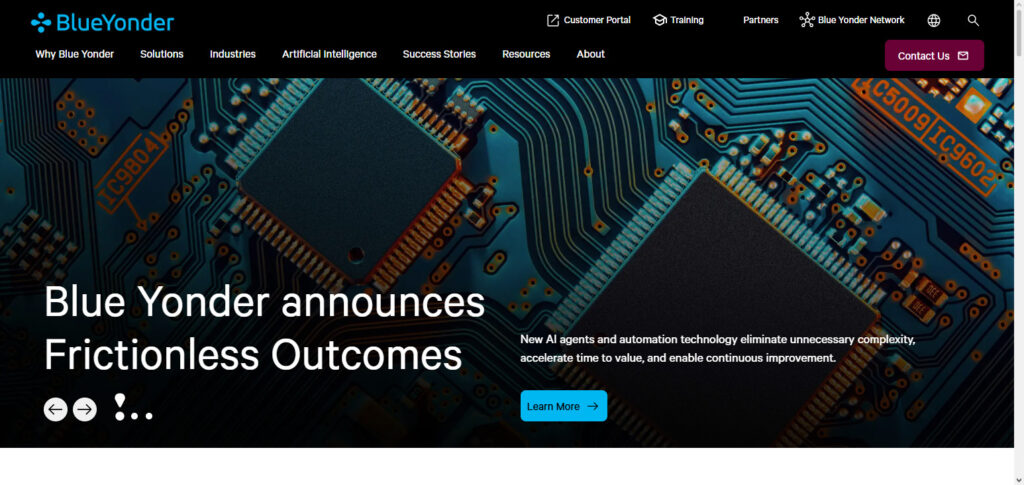
Retailers, Manufacturers, and Logistics operators alike use Blue Yonder to manage the complexity of their supply networks. At an operational level, Blue Yonder Luminate is capable of providing visibility to inventories, the flow of goods and services, and real-time demand.
The value of this AI solution is its ability to manage and mitigate uncertainty of a supply chain, improve overall responsiveness, and empower organizations to reduce operational costs, achieve and sustain supply chain satisfaction, and gain operational robustness.
Why It Matters: Blue Yonder Luminate
| Point | Why It Matters |
|---|---|
| AI-Based Demand Forecasting | Blue Yonder Luminate uses AI and machine learning to predict customer demand more accurately. This helps businesses avoid inventory shortages, reduce excess stock, and improve product availability. |
| Real-Time Supply Chain Visibility | It provides complete visibility across planning, inventory, and logistics operations, allowing companies to identify issues quickly and make faster decisions. |
| Inventory Optimization | The platform helps maintain the right inventory levels by analyzing demand patterns, reducing storage costs, and improving working capital efficiency. |
| Automation of Decisions | AI-driven recommendations reduce manual planning efforts and enable faster responses to supply chain changes. |
| Improved Customer Experience | Better forecasting and fulfillment capabilities help businesses deliver products faster and improve customer satisfaction. |
2. o9 Solutions
AI Tools Transforming Supply Chain & Logistics o9 Solutions offers an integrated and AI-led planning platform that aligns your supply chain, finance, and business operations. By leveraging advanced analytics, machine learning, and digital twin technologies, the o9 platform creates a virtual environment for the supply chain to model different scenarios and predict probable outcomes.

Demand forecasting, supply planning, inventory control, and risk assessment are all possible with the o9 platform. The creation of a single data environment for decision-making is a game-changer for inter-departmental collaboration. o9 Solutions also generates the insights necessary for enterprises to optimize their supply chain and plan with the agility and fluidity that current demand fluctuations require.
Why It Matters: o9 Solutions
| Point | Why It Matters |
|---|---|
| Integrated Business Planning | o9 Solutions connects supply chain, finance, and operational planning, helping organizations make coordinated and strategic business decisions. |
| Digital Twin Technology | It allows companies to simulate different supply chain scenarios before making decisions, reducing risks and improving planning accuracy. |
| Predictive Analytics | AI-powered insights help businesses forecast demand, identify trends, and prepare for future market changes. |
| Enterprise Collaboration | The platform creates a unified data environment where teams can collaborate efficiently across departments. |
| Supply Chain Agility | o9 Solutions helps companies quickly adapt to disruptions, changing customer demand, and market uncertainty. |
3. Kinaxis RapidResponse
AI Tools Transforming Supply Chain & Logistics Kinaxis RapidResponse is a supply chain orchestration platform that uses AI to carry out planning and forecasting while managing disruptions in real time. It incorporates AI, predictive analytics, and concurrent planning technology to deliver insights into supply chain operations.
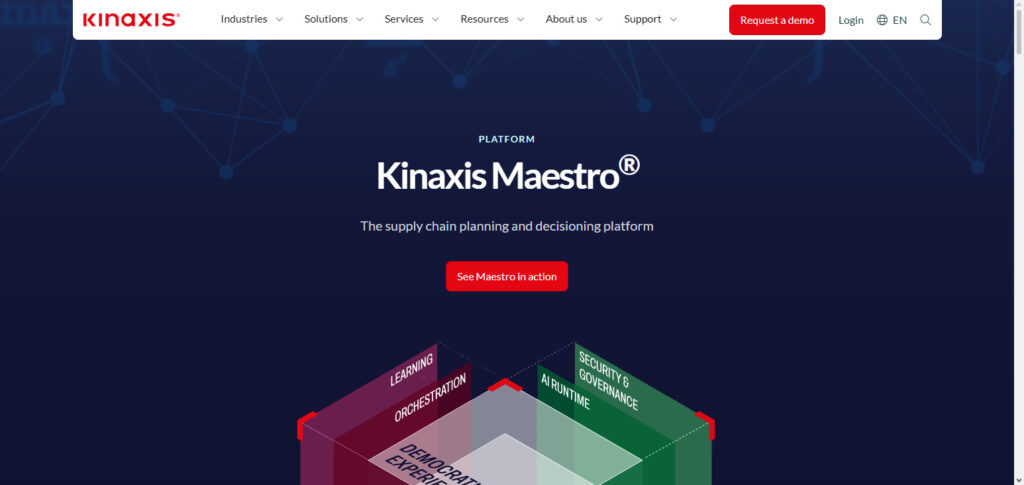
Organizations can test various scenarios, align demand to supply, and optimize decisions on production. Kinaxis RapidResponse allows companies to recognize disruptions before they affect operations and formulate remedies in a timely manner.
Through AI, this tool enhances visibility and engagement throughout the supply network to boost operational effectiveness, minimize disruptions, and sustain an adaptive supply network.
Why It Matters: Kinaxis RapidResponse
| Point | Why It Matters |
|---|---|
| Real-Time Planning | Kinaxis RapidResponse enables companies to analyze supply chain changes instantly and respond faster to operational challenges. |
| Scenario Simulation | Businesses can test multiple solutions before implementation, helping them choose the best strategy with lower risk. |
| Supply Chain Resilience | AI-powered insights help organizations identify disruptions early and develop effective recovery plans. |
| Demand and Supply Balancing | The platform helps match production capacity with customer demand, reducing delays and inefficiencies. |
| Faster Decision-Making | Real-time analytics improve collaboration and allow supply chain teams to make informed decisions quickly. |
4. SAP IBP AI
AI Tools Transforming Supply Chain & Logistics SAP IBP AI integrates AI into supply chain planning and business process planning. It improves demand and supply forecasting, inventory optimization and control, and automated response activities.
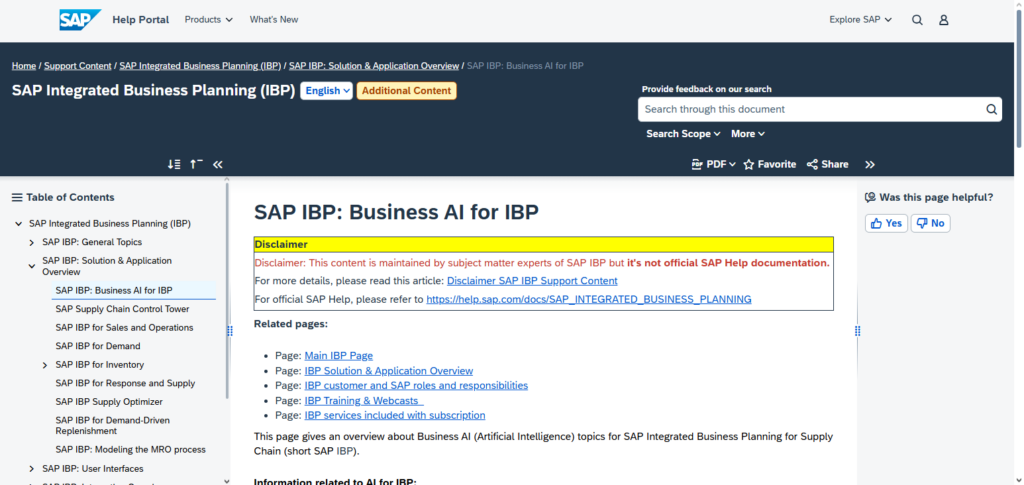
Using SAP IBP AI, companies manage supply chain operations and evaluate historical data, market dynamics, and business data to make accurate recommendations. The solution integrates various operational and support units of the business, streamlining and automating planning processes throughout the organization.
This eliminates excess stock while improving resource availability and optimizing supply chain operations. AI enhances SAP IBP for the creation of a more advanced supply chain for businesses.
Why It Matters: SAP IBP AI
| Point | Why It Matters |
|---|---|
| Accurate Demand Planning | SAP IBP AI improves forecasting accuracy by analyzing historical data, market trends, and business conditions. |
| Inventory Efficiency | It helps organizations optimize stock levels, reducing unnecessary inventory costs while maintaining product availability. |
| Enterprise Data Integration | SAP IBP AI connects different business systems, providing a complete view of supply chain performance. |
| Risk Management | AI-based predictions help businesses identify potential disruptions and prepare effective solutions. |
| Better Planning Decisions | Automated recommendations help supply chain managers make faster and smarter operational decisions. |
5. Infor Nexus AI
AI Tools Transforming Supply Chain & Logistics Infor Nexus AI is an advanced, adaptive, and intelligent global supply chain platform. With predictive analytics and real-time insight, Infor Nexus AI provides visibility across suppliers, manufacturers, and all logistics partners.
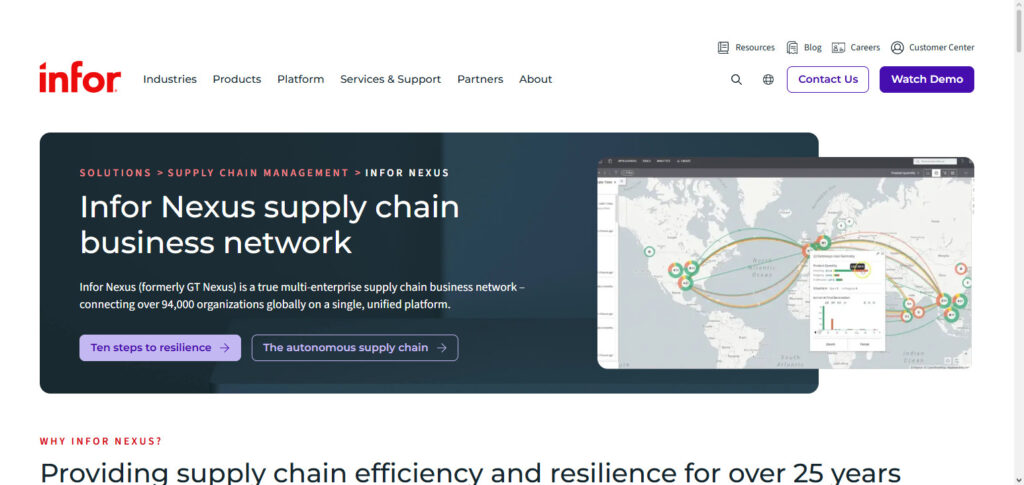
Infor Nexus AI integrates artificial intelligence to monitor supply chain activity and locate disruptions before they impact business operations. Infor Nexus AI also provides multiple functionalities required for the management of global trade.
Companies looking to gain the transparency needed to improve the control of their supply networks and reduce delays across a global network of suppliers can implement Infor Nexus AI to help achieve this goal.
From predictive analytics and actionable insights derived from connected supply chain data, companies can leverage this supply chain AI to achieve additional goals of resilient supply chain ecosystems that are highly efficient and collaborative.
Why It Matters: Infor Nexus AI
| Point | Why It Matters |
|---|---|
| Global Supply Chain Visibility | Infor Nexus AI provides real-time visibility across suppliers, shipments, and logistics partners, improving transparency. |
| Risk Detection | AI identifies potential supply chain problems early, allowing businesses to prevent delays and disruptions. |
| Supplier Collaboration | The platform improves communication between businesses and suppliers, creating stronger supply networks. |
| Trade Management Efficiency | It simplifies global trade operations by improving shipment tracking and compliance management. |
| Operational Optimization | AI insights help companies improve logistics performance and reduce supply chain costs. |
6. Coupa Supply Chain AI
AI Tools Transforming Supply Chain & Logistics Coupa Supply Chain AI relies on artificial intelligence for procurement and supply chain and supplier management decision optimizations. The platform evaluates patterns in spending and supplier performance along with market data to deliver predictive analytics.
Organizations of all types can sharpen their sourcing, identify and mitigate supply related risks, and better manage their costs with the insights derived from this AI. Coupa Supply Chain AI impacts supplier collaboration and purchasing and operational visibility within supply chain management.
Coupa Supply Chain AI is a combination of supply chain intelligence and spend management, and it creates a cost effective, clear, and durable supply chain network. Overall, Coupa Supply Chain AI positively impacts business operations and performance.
Why It Matters: Coupa Supply Chain AI
| Point | Why It Matters |
|---|---|
| Smart Procurement Decisions | Coupa Supply Chain AI analyzes purchasing data to help businesses improve sourcing and supplier decisions. |
| Cost Reduction | AI recommendations help organizations identify savings opportunities and control supply chain expenses. |
| Supplier Risk Management | The platform helps monitor supplier performance and detect possible supply disruptions. |
| Improved Spend Visibility | Businesses gain better control over procurement activities through AI-powered analytics. |
| Strategic Supply Planning | AI insights support smarter planning and improve overall supply chain efficiency. |
7. Project44 AI
AI Tools Transforming Supply Chain & Logistics Project44 AI specializes in predictive logistics intelligence and real-time transportation visibility. Using AI and machine learning, this platform monitors shipments, anticipates delivery and transportation disruptions, and connects carriers, shippers, and logistics providers in a visibility network.
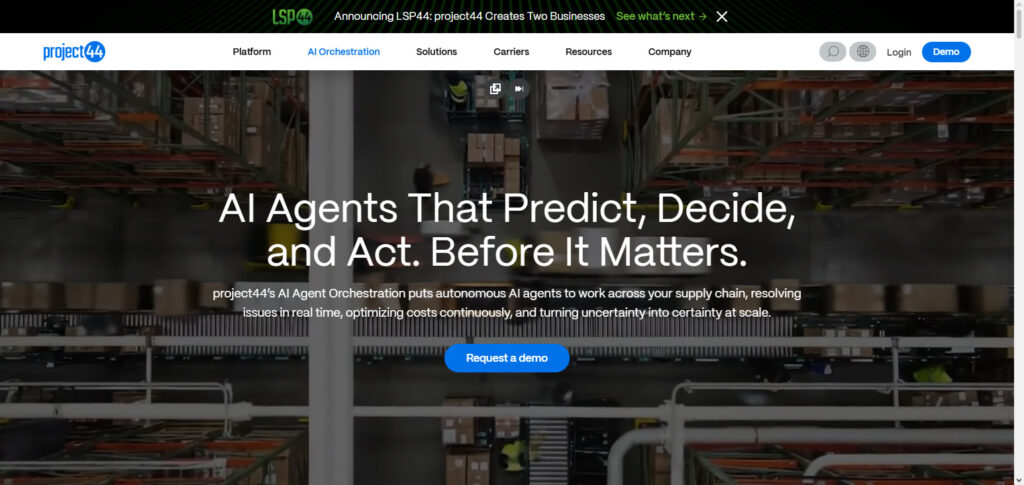
Project44 AI enables companies to view shipments globally and enhances the accuracy of deliveries. The platform helps businesses optimize transportation, improve customer experience, mitigate logistics concerns, and offers the supply chain and logistics networks of today the competitive edge to leverage advanced analytics and real-time data for ease of decision-making.
Why It Matters: Project44 AI
| Point | Why It Matters |
|---|---|
| Real-Time Shipment Tracking | Project44 AI provides live transportation visibility, helping companies monitor shipments and improve delivery performance. |
| Predictive Delivery Information | AI-powered estimated arrival predictions help businesses manage customer expectations and logistics planning. |
| Transportation Risk Management | The platform identifies delays, disruptions, and transportation issues before they impact operations. |
| Carrier Performance Optimization | Businesses can analyze carrier performance and improve logistics partnerships. |
| Customer Satisfaction Improvement | Better shipment visibility enables faster communication and more reliable deliveries. |
8. Llamasoft (Coupa AI)
AI Tools Transforming Supply Chain & Logistics Llamasoft (Coupa AI) is an AI solution for supply chain design with the agility to incorporate supply network strategies.
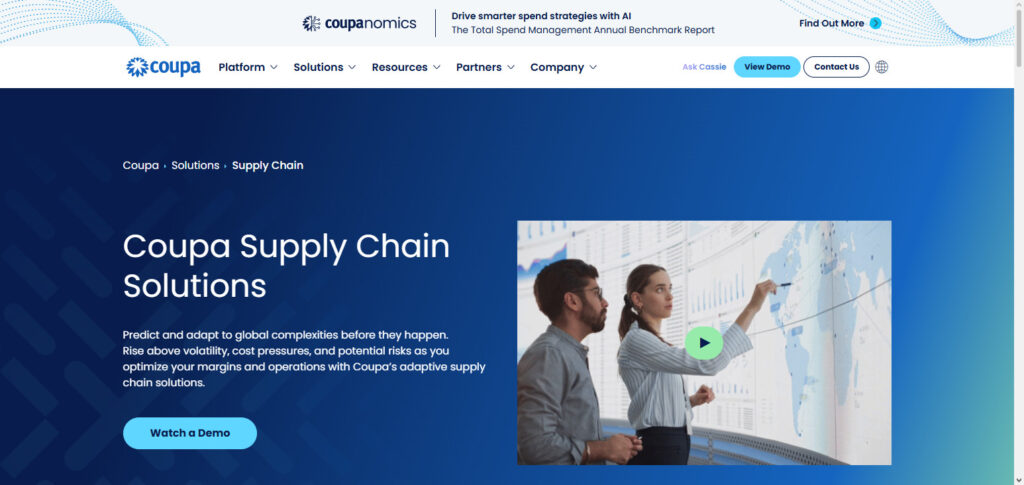
This platform leverages advanced analytics and modeling of simulations to optimize sourcing, manufacturing, inventory, and transportation decisions. Llamasoft empowers businesses to alter the shape of their supply chain and make it the most cost-effective and the most optimal.
Coupled with Coupa’s AI offerings, the platform also integrates automated suggestions for supply chain networks that are flexible, scalable, and robust to disruptions while balancing cost and service.
Why It Matters: Llamasoft (Coupa AI)
| Point | Why It Matters |
|---|---|
| Supply Chain Network Design | Llamasoft helps businesses create optimized supply chain structures by analyzing sourcing, production, and distribution options. |
| Scenario Analysis | Companies can evaluate different strategies before making major supply chain investments. |
| Cost Optimization | AI insights help reduce transportation expenses, operational costs, and resource waste. |
| Strategic Decision Support | The platform provides data-driven recommendations for long-term supply chain improvements. |
| Business Flexibility | It helps companies design adaptable supply networks that can handle market changes. |
9. FourKites AI
AI Tools Transforming Supply Chain & Logistics FourKites AI is a real-time, AI-driven logistics visibility platform that features ML-enhanced shipment tracking and predictive analytics for global transportation operations.
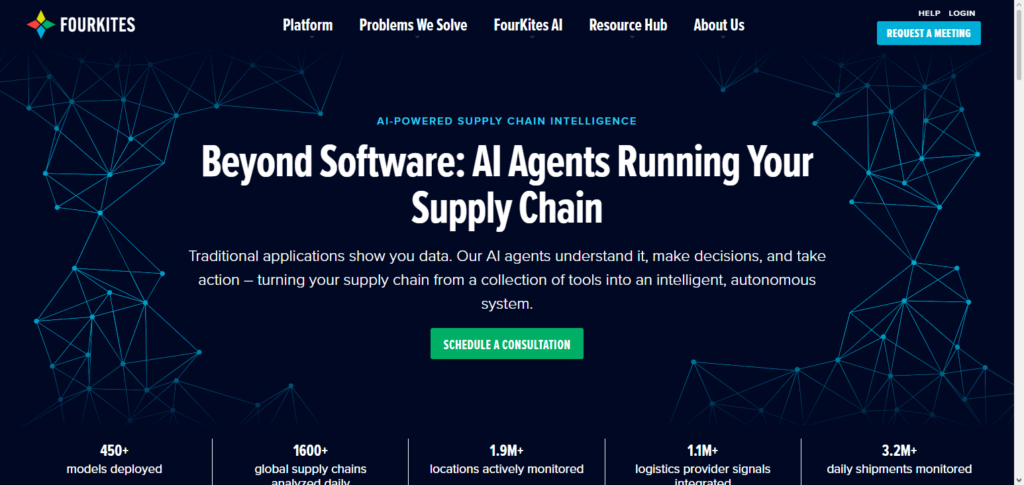
FourKites AI encompasses the entire logistics network by integrating shippers, carriers, and customers. Machine Learning is employed to fine-tune ETA and detect shipment delays. This platform helps mitigate operational disruption while improving communication with customers and enhancing transportation performance.
FourKites AI drapes your logistics network in a transparent shipment and supply chain visibility solution that offers companies the opportunity to make better business decisions and create optimized logistics processes faster.
Why It Matters: FourKites AI
| Point | Why It Matters |
|---|---|
| End-to-End Logistics Visibility | FourKites AI provides complete shipment visibility across transportation networks, improving operational control. |
| Predictive Analytics | AI predicts delays and delivery issues, allowing companies to take proactive actions. |
| Improved Transportation Efficiency | The platform helps optimize routes, reduce delays, and improve logistics performance. |
| Better Customer Communication | Accurate shipment updates improve transparency and customer satisfaction. |
| Supply Chain Coordination | FourKites connects carriers, suppliers, and businesses for smoother logistics operations. |
10. Elementum AI
Elementum AI is a cloud supply chain management solution utilizing AI to enhance operational intelligence. It enables businesses to assess supply chain performance in real time and identify and react to ever-evolving threats.
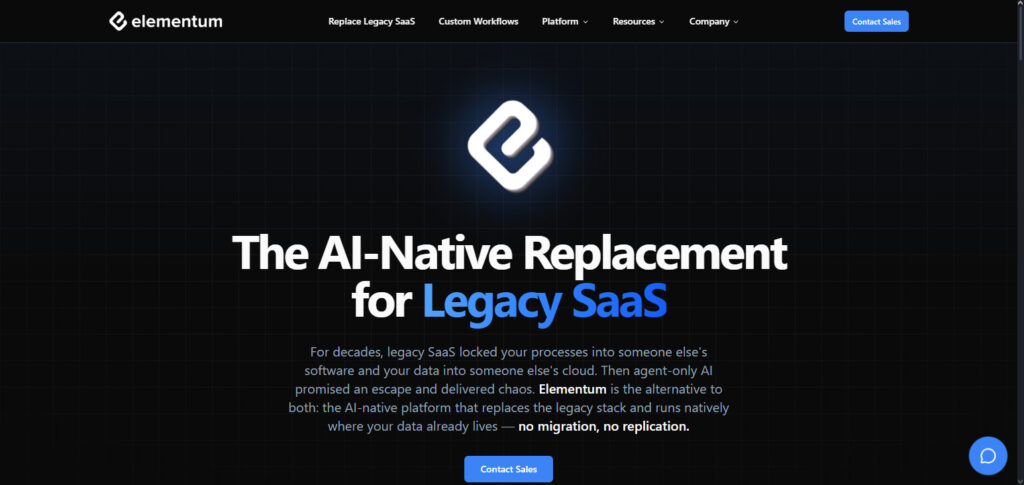
Elementum AI builds interconnectivity across various data silos to facilitate teamwork and partnerships. It aids in visibility and management for inventory, supply chain, and disruptions. AI analytics and automation fosters operational resilience against supply chain disruptions and volatility.
Why It Matters: Elementum AI
| Point | Why It Matters |
|---|---|
| Real-Time Supply Chain Monitoring | Elementum AI helps companies track supply chain activities and identify problems immediately. |
| Disruption Management | AI-powered alerts help businesses respond quickly to unexpected supply chain challenges. |
| Data-Driven Insights | The platform converts complex supply chain data into actionable recommendations. |
| Improved Team Collaboration | Elementum connects supply chain teams through a centralized cloud-based platform. |
| Operational Agility | AI capabilities help businesses adapt faster to changing customer demands and market conditions. |
AI Supply Chain Tools vs Traditional Supply Chain Software
| Category | AI Supply Chain Tools | Traditional Supply Chain Software |
|---|---|---|
| Decision Making | Uses artificial intelligence and predictive analytics to provide automated recommendations and smarter decisions. | Relies mainly on predefined rules, manual analysis, and human decision-making. |
| Data Processing | Processes large volumes of real-time data from multiple sources to identify patterns and insights. | Handles structured data with limited analytical capabilities and slower processing. |
| Demand Forecasting | Uses machine learning algorithms to predict future demand based on trends, customer behavior, and market changes. | Uses historical data and basic forecasting methods with lower prediction accuracy. |
| Automation Level | Automates planning, forecasting, inventory management, risk detection, and logistics operations. | Provides basic workflow automation but requires more manual intervention. |
| Supply Chain Visibility | Offers real-time visibility across suppliers, inventory, shipments, and operations. | Provides limited visibility based on available reports and periodic updates. |
| Risk Management | Predicts potential disruptions and provides proactive solutions before issues occur. | Usually identifies problems after they happen through manual monitoring. |
| Inventory Optimization | Uses AI recommendations to maintain optimal stock levels and reduce excess inventory. | Uses fixed inventory rules and historical data for stock management. |
| Route Optimization | Analyzes traffic, delivery data, and operational factors to recommend efficient transportation routes. | Uses basic route planning without advanced predictive capabilities. |
| Scalability | Easily adapts to changing business needs through AI learning and cloud-based technologies. | May require manual updates and additional systems to support business growth. |
| Real-Time Insights | Provides instant analytics, alerts, and predictive recommendations for faster decisions. | Generates scheduled reports with limited real-time analysis. |
| User Experience | Offers intelligent dashboards, AI assistants, and automated recommendations for users. | Requires users to analyze reports and manually interpret data. |
| Cost Efficiency | Reduces long-term costs through automation, optimization, and improved resource utilization. | May create higher operational costs due to manual processes and inefficiencies. |
| Future Readiness | Supports emerging technologies like digital twins, autonomous planning, and predictive supply chains. | Limited ability to support advanced AI-driven supply chain innovations. |
Conclusion
AI tools are incredibly beneficial in supply chain and logistics to modernize businesses by incorporating advanced forecasting, automation, real-time visibility, and predictive decision-making. Tools such as Blue Yonder Luminate, o9 Solutions, Kinaxis RapidResponse, and Project44 AI assist businesses in cost reduction, risk management, inventory optimization, and operational improvement.
Supply networks are perpetually increasing in complexity. Because of this, organizations will have to adopt AI-centric platforms to develop flexible, resilient, and intelligent supply chains in order to adapt to future hurdles.
FAQ
What are AI tools for supply chain and logistics?
AI tools for supply chain and logistics are intelligent software platforms that use artificial intelligence, machine learning, and predictive analytics to optimize planning, inventory management, transportation, forecasting, and operational decision-making. These tools help businesses automate processes, reduce costs, and improve supply chain efficiency.
How do AI tools improve supply chain management?
AI tools improve supply chain management by analyzing large amounts of data to predict demand, identify risks, optimize inventory levels, automate workflows, and provide real-time visibility. They help businesses make faster and more accurate decisions while improving overall operational performance.
Which are the best AI tools transforming supply chain and logistics?
Some leading AI tools transforming supply chain and logistics include Blue Yonder Luminate, o9 Solutions, Kinaxis RapidResponse, SAP IBP AI, Infor Nexus AI, Coupa Supply Chain AI, Project44 AI, Llamasoft, FourKites AI, and Elementum AI.
Can AI tools help with demand forecasting?
Yes, AI tools use historical sales data, market trends, customer behavior, and external factors to create accurate demand forecasts. This helps businesses maintain optimal inventory levels, reduce shortages, and avoid overstocking.
How does AI improve logistics operations?
AI improves logistics by optimizing delivery routes, predicting arrival times, tracking shipments in real time, identifying transportation risks, and improving carrier management. This leads to faster deliveries, lower fuel costs, and better customer experiences.