




Next-Generation Sequencing (NGS) offers extensive genomic data. Quick, accurate analyses of these datasets are imperative for both researchers and healthcare professionals. This article explores the Best NGS AI Tools for Faster Genomic Data Analytics.
These tools leverage artificial intelligence and machine learning to simplify the detection of variants and the interpretation of genomes, as well as the automation of workflows and application of precision medicine. These tools enable healthcare and research companies to streamline their work and incorporate advanced solutions for optimal governance.
What Are NGS AI Tools?
Next-Generation Sequencing (NGS) combined with Artificial Intelligence (AI) is revolutionizing health care and personalized medicine. AI tools integrated with NGS help clinicians and researchers process large and complex genomic datasets.
With NGS AI tools, genomic analysis and reporting becomes more efficient. NGS AI tools improve speed and accuracy and help identify genetic variants and biomarkers associated with disease. NGS AI tools help automate sequence alignment, variant calling, genomic interpretation, mutation detection, clinical reporting, and other time intensive manual genomic analysis.
NGS AI tools help organizations transform and simplify complex genomic sequencing instructions and reports into usable and actionable insights. NGS AI tools advance and help improve genomic medicine and healthcare, diagnostics, research and discovery.
These tools help researchers and clinicians analyze large amounts of genomic information quickly and accurately. NGS AI tools are essential in any biotechnological enterprise focused on health care, medicine and genomics.
Criteria for Selecting the Best NGS AI Tools
Speed and Performance – An AI tool should be able to complete analysis on huge sets of genomic data in a short enough time to make IT and R&D more productive.
Accuracy of Variant Calling – Detection of SNPs, Indels, CNVs, and SVs should be accurate.
AI and ML Applications – The tool should enhance the interpretation of the genomics data and automate the analysis workflow and the predictions.
Flexibility – Performance of the tool should be the same for small and large scale studies.
Cloud and On-Premises Solutions – Different models of deployment should be available for an organization to choose what is best for the company.
User Accessibility – An Intuitive User Interface of an AI tool should make data analysis easier for Researchers and Clinicians.
Tasks Automation – Automation of the analysis, variant calls and report generation should be incorporated to make the tool more productive.
Data Protection and Privacy – Genomic data is of a sensitive nature. An AI tool should make data protection of clients and privacy of Healthcare compliant data of a high standard.
Interoperability – The AI tool should have no restrictions to the Integration of sequencing hardware, Laboratory software and Bioinformatics.
Research and Clinical – A tool having a Research and Clinical focus is of a greater value.
Analysis of All Omics – An Omics tool should have the capability to analyze Genomics, Transcriptomics, and Proteomics data.
Productivity – A tool for analysis of Genomics data should enhance collaboration for Researchers with inbuilt secure data transfer.
Reporting and Visualization Tools** – Users interpret results more easily with advanced reporting and visualization tools.
Technical Support and Documentation – Successful implementation relies on consistent customer support, training, and good documentation.
Cost and Return on Investment (ROI) – Licensing costs, infrastructure, and what the platform offers in the future should be considered for cost versus value analysis.
Challenges of NGS AI Tools
| Challenge | Description | Impact |
|---|---|---|
| Data Privacy and Security | Genomic datasets contain highly sensitive personal and medical information that must be protected from unauthorized access. | Increases compliance requirements and cybersecurity costs. |
| High Computational Requirements | AI-powered genomic analysis often requires powerful CPUs, GPUs, and large storage resources. | Can increase infrastructure and operational expenses. |
| Data Quality Issues | Poor-quality sequencing data can reduce the accuracy of AI predictions and variant detection. | May lead to unreliable results and incorrect interpretations. |
| Complex Data Integration | Combining genomic, clinical, and multi-omics data from different sources can be challenging. | Slows analysis workflows and complicates decision-making. |
| Regulatory Compliance | Clinical genomic applications must comply with healthcare regulations and data protection standards. | Requires additional validation and documentation efforts. |
| Interpretation of Rare Variants | AI models may struggle to accurately classify uncommon or newly discovered genetic variants. | Can limit diagnostic confidence in rare disease cases. |
| Limited Training Data | Some AI algorithms require large, diverse datasets for optimal performance. | May reduce accuracy when analyzing underrepresented populations. |
| Model Transparency | Certain AI models function as “black boxes,” making their decision-making processes difficult to explain. | Creates challenges for clinical adoption and trust. |
| Integration with Existing Systems | Connecting AI tools with laboratory information systems and sequencing platforms can be difficult. | May require significant customization and technical support. |
| Cost of Implementation | Licensing fees, hardware investments, and maintenance costs can be substantial. | Can be a barrier for smaller laboratories and institutions. |
| Scalability Challenges | Rapid growth in sequencing data volumes can strain computational resources. | May impact performance and increase processing times. |
| Continuous Software Updates | AI tools require frequent updates to incorporate new genomic knowledge and algorithms. | Demands ongoing maintenance and user training. |
| Risk of False Positives and Negatives | AI systems can occasionally misclassify genetic variants or miss important findings. | May affect research outcomes and clinical decisions. |
| Shortage of Skilled Professionals | Effective use of NGS AI tools often requires expertise in bioinformatics, genomics, and AI. | Can slow adoption and limit platform effectiveness. |
| Ethical and Legal Concerns | The use of AI in genomics raises questions about data ownership, consent, and algorithmic bias. | May create legal risks and public trust issues. |
Key Point & Best NGS AI Tools for Faster Genomic Data Analytics List
- Illumina DRAGEN AI
- Google DeepVariant
- NVIDIA Clara Parabricks
- DNAnexus Apollo AI
- Seven Bridges AI Genomics
- QIAGEN CLC Genomics AI
- Fabric Genomics AI
- SOPHiA GENETICS AI
- PierianDx AI Genomics
- Genoox Franklin AI
10 Best NGS AI Tools for Faster Genomic Data Analytics
1. Illumina DRAGEN AI
Illumina DRAGEN AI combines the innovative flow of genomics with artificial intelligence, taking the speed and accuracy of the Next Generation Sequencing (NGS) analysis to a whole new level.
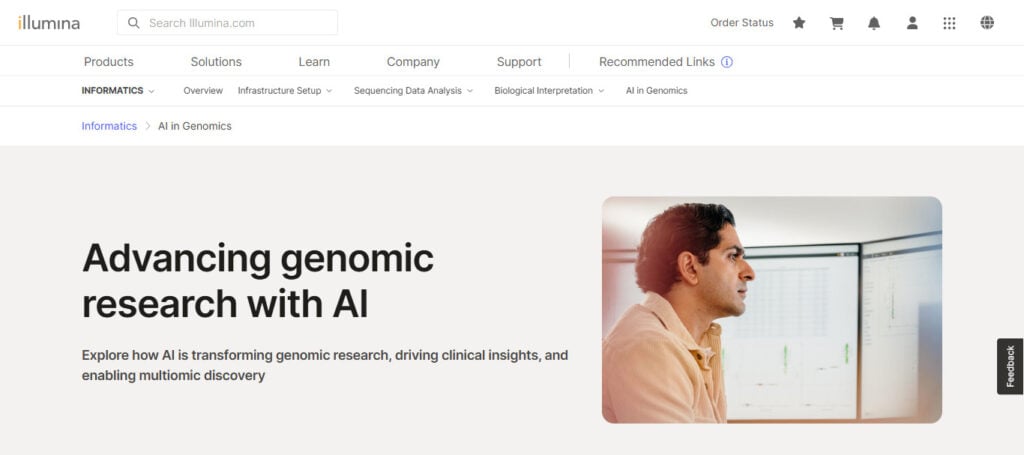
The advanced computing and hardware of DRAGEN AI provide researchers with sophisticated, scalable, and powerful tools to accelerate their research.
The platform of DRAGEN AI is integrated directly with Illumina sequencing systems, providing whole genome sequencing, exome sequencing, and targeted sequencing for precision medicine. As one of the Best NGS AI Tools for Faster Genomic Data Analytics, the DRAGEN AI platform is perfect for large-scale genomics research.
Why Illumina DRAGEN AI Matters
| Reason | Why It Matters |
|---|---|
| Ultra-Fast Processing | DRAGEN AI uses hardware-accelerated computing to analyze genomic data much faster than traditional software, reducing workflow bottlenecks. |
| High Variant Calling Accuracy | It improves detection of SNPs, indels, and structural variants, helping researchers generate more reliable genomic insights. |
| Clinical-Grade Performance | Healthcare organizations rely on DRAGEN AI for precision medicine applications where accuracy and speed are critical. |
| Scalable Genomics Workflows | Supports small laboratory projects as well as large population-scale sequencing studies. |
| Seamless Illumina Integration | Works directly with Illumina sequencing platforms, simplifying data management and analysis pipelines. |
2. Google DeepVariant
Google DeepVariant takes an innovative approach toward variant calling by employing an advanced computational model similar to those of artificial intelligence and deep learning. This method also distinguishes itself by representing sequencing analysis in a format similar to those of computer vision, where the inputs are pictures and the outputs are classifications.
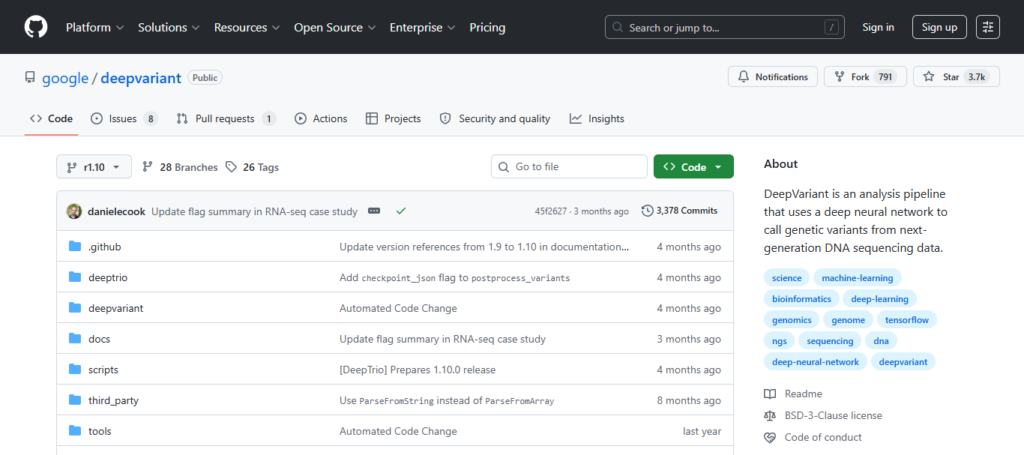
DeepVariant, one of the Best NGS AI Tools for Faster Genomic Data Analytics, has gained recognition for the increased precision of SNPs and Indels detection. DeepVariant is also commended for being open source, easy to use, and highly adaptable.
Why Google DeepVariant Matters
| Reason | Why It Matters |
| AI-Based Variant Detection | Uses deep learning models to identify genetic variants with exceptional accuracy. |
| Reduced False Positives | Improves confidence in genomic findings by minimizing incorrect variant calls. |
| Open-Source Accessibility | Researchers worldwide can adopt and customize DeepVariant for various genomic studies. |
| Supports Multiple Sequencers | Compatible with different sequencing technologies and datasets. |
| Trusted Research Tool | Widely used in genomics research, rare disease analysis, and population genetics projects. |
3. NVIDIA Clara Parabricks
NVIDIA Clara Parabricks exploits GPU technology to optimize workflows using NVIDIA apparatus. It speeds up processing for many NGS tasks, including analysis, alignment, variant calling, RNA-seq analysis, and germline workflows. NGS users praise Clara Parabricks as one of the Best NGS AI Tools for Faster Genomic Data Analytics because it can reduce the processing time to mere minutes, while still outputting the same results as other industry standard programs.
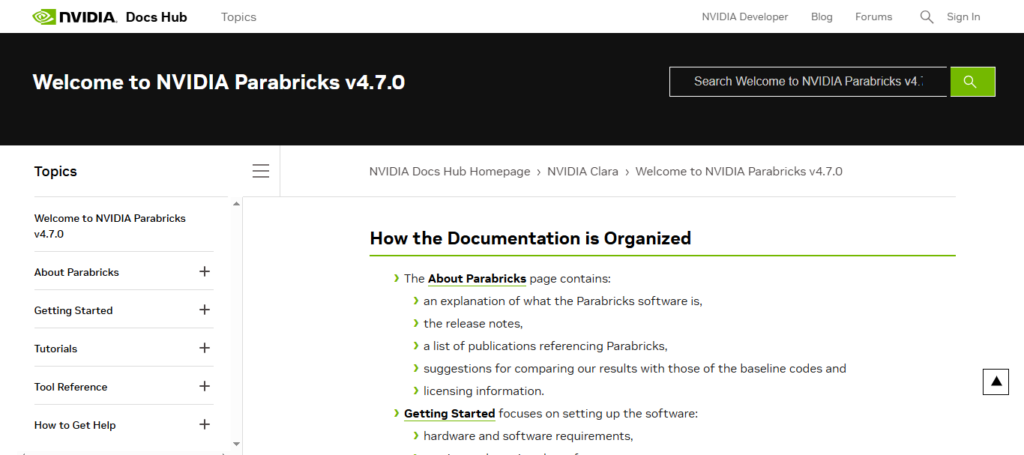
It is very adaptable to the cloud and hybrid environments. With the built-in AI and computing technology, research and large scale genomic datasets for precision medicine and biomedical research are more easily and rapidly analyzed.
Why NVIDIA Clara Parabricks Matters
| Reason | Why It Matters |
| GPU Acceleration | Uses NVIDIA GPUs to dramatically shorten genomic analysis times. |
| Faster Research Cycles | Scientists can process more samples in less time, accelerating discoveries. |
| Large-Scale Genomics Support | Ideal for institutions handling massive sequencing datasets. |
| Cloud and On-Premises Flexibility | Supports various deployment environments for maximum scalability. |
| Cost Efficiency | Faster computation reduces infrastructure and operational costs over time. |
4. DNAnexus Apollo AI
DNAnexus Apollo AI is a highly praised, state-of-the-art, AI-based cloud platform that focuses on the processing and analysis of large quantities of genomic data in a clinical setting. It automatically prioritizes variants and generates the necessary logic for the completion of tasks.
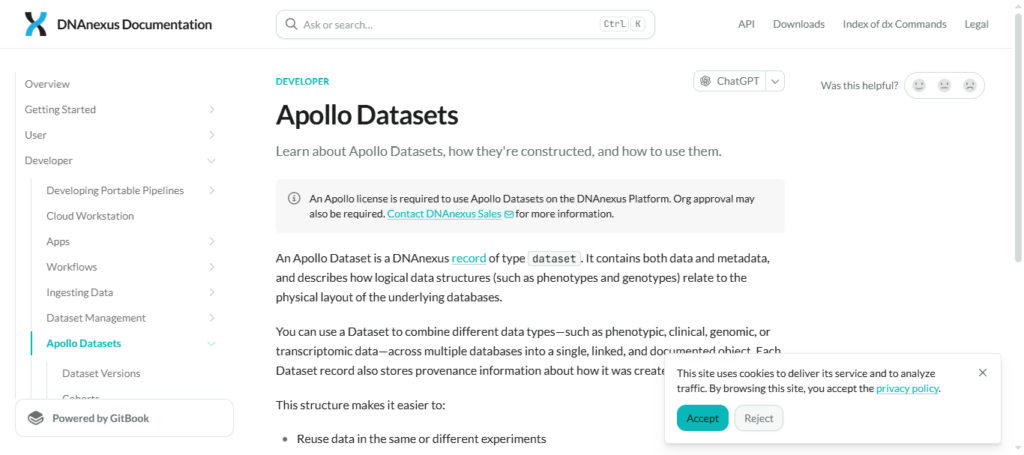
Apollo AI is described as one of the Best NGS AI Tools for Faster Genomic Data Analytics because it incorporates AI to help labs analyze complex genomic datasets while remaining compliant with the law.
It is especially useful for large-scale studies because it is highly adaptable to new sequencing technologies and is cloud-based. Built-in AI helps researchers and clinicians perform complex tasks and enhances the analytics of data streams in a timely and accurate manner.
Why DNAnexus Apollo AI Matters
| Reason | Why It Matters |
| Cloud-Native Platform | Enables secure genomic analysis without maintaining expensive infrastructure. |
| Automated Variant Prioritization | Helps researchers identify clinically relevant variants faster. |
| Collaborative Research | Multiple teams can access and analyze data within a unified platform. |
| Regulatory Compliance | Supports healthcare and research organizations with secure data governance. |
| Workflow Automation | Reduces manual bioinformatics tasks and increases productivity. |
5. Seven Bridges AI Genomics
Seven Bridges AI Genomics offers an integrated genomics platform combining cloud infrastructure, machine learning, and genomics. Users can quickly analyze and make sense of big data within the scope of their research.
Automation of workflows, AI-driven data interpretation, and multi-omics support make it one of the Best NGS AI Tools for Faster Genomic Data Analytics.
Seven Bridges is popular among precision medicine, cancer genomics, and drug research. A unique feature of Seven Bridges is its ability to let scientists collaborate to upload data and replicate analyses, allowing researchers to make new discoveries and advances more quickly while lessening the burden of computing and the need for more infrastructure.
Why Seven Bridges AI Genomics Matters
| Reason | Why It Matters |
| Multi-Omics Support | Enables analysis of genomics, transcriptomics, and other biological datasets. |
| AI-Powered Insights | Helps uncover patterns and relationships in complex biological data. |
| Research Collaboration | Facilitates secure data sharing among global research teams. |
| Reproducible Workflows | Standardized pipelines improve consistency across projects. |
| Scalable Infrastructure | Handles large datasets efficiently for precision medicine and drug discovery. |
6. QIAGEN CLC Genomics AI
QIAGEN CLC Genomics AI is a comprehensive, cutting-edge bioinformatics platform for analyzing NGS data. It was designed for both research and clinical applications and improves multiple bacterial, fungal, and plant genomics as well as transcript analysis via artificial intelligence and machine learning.
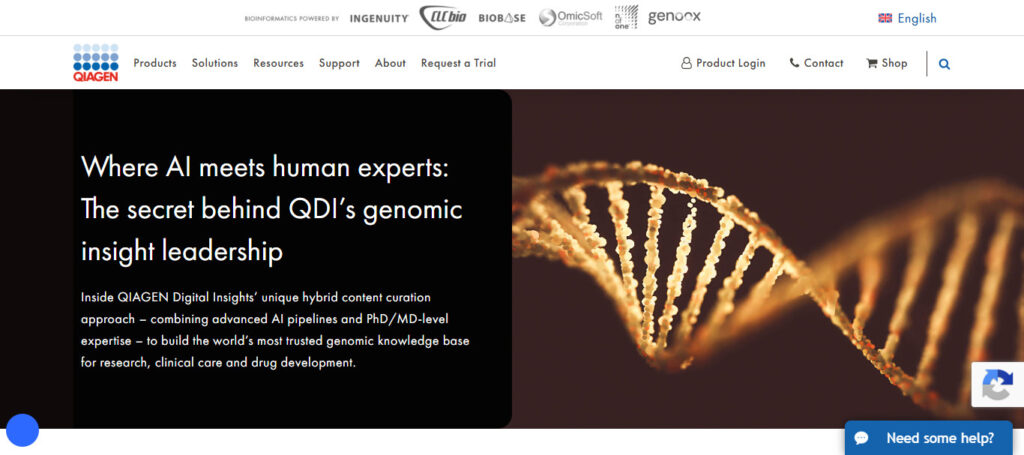
It is one of the Best NGS AI Tools for Faster Genomic Data Analytics. QIAGEN CLC Genomics AI helps researchers analyze DNA, RNA, and data related to epigenomics and metagenomics in one environment.
It has a user-friendly design that simplifies the analysis of complex genomics and transcriptomic data, thanks to the large number of automation features and customizable pathways. QIAGEN CLC Genomics AI designed with an integration of QIAGEN’s Genomic Knowledge Resources. These features facilitate scientific advancement and discoveries.
Why QIAGEN CLC Genomics AI Matters
| Reason | Why It Matters |
| User-Friendly Interface | Makes advanced genomic analysis accessible to both experts and beginners. |
| Comprehensive Analysis Tools | Supports DNA, RNA, metagenomics, and epigenomics workflows. |
| AI-Enhanced Interpretation | Improves the speed and accuracy of biological data analysis. |
| Workflow Customization | Researchers can tailor analysis pipelines to their specific needs. |
| Integrated Knowledge Resources | Connects genomic findings with biological and clinical information. |
7. Fabric Genomics AI
Fabric Genomics AI focuses on AI-based genomic interpretation to improve clinical diagnostics. Their platform targets machine learning to aid healthcare professionals interpret clinically relevant genetic findings by prioritizing disease-causing variants.
Fabric Genomics is awarded one of the Best NGS AI Tools for Faster Genomic Data Analytics as it enables laboratories to expedite diagnosis for cancer genomics and screening of hereditary conditions and other rare diseases.
Fabric Genomics aids laboratories by its algorithms that generate interpretative insights by analyzing genetic data and phenotypic data with supporting literature. This platform also aids laboratories to decrease the workload of interpretation and is more consistent and reproducible, thus valuable to clinical laboratories for reporting genomics data in a timely manner.
Why Fabric Genomics AI Matters
| Reason | Why It Matters |
| Clinical Variant Interpretation | Helps identify disease-causing genetic variants efficiently. |
| Rare Disease Diagnostics | Accelerates diagnosis for patients with complex genetic conditions. |
| Machine Learning Prioritization | Focuses attention on the most clinically relevant findings. |
| Reduced Manual Review | Saves valuable time for geneticists and clinicians. |
| Precision Medicine Support | Enables personalized treatment decisions based on genomic data. |
8. SOPHiA GENETICS AI
SOPHiA GENETICS AI is a cloud-centered, genomic analytics AI platform that enables clinical genomics and precision medicine. This platform aids researchers and clinicians in interpreting genetic variants by analyzing their data and drawing support from trained machine learning models on extensive genomic libraries.
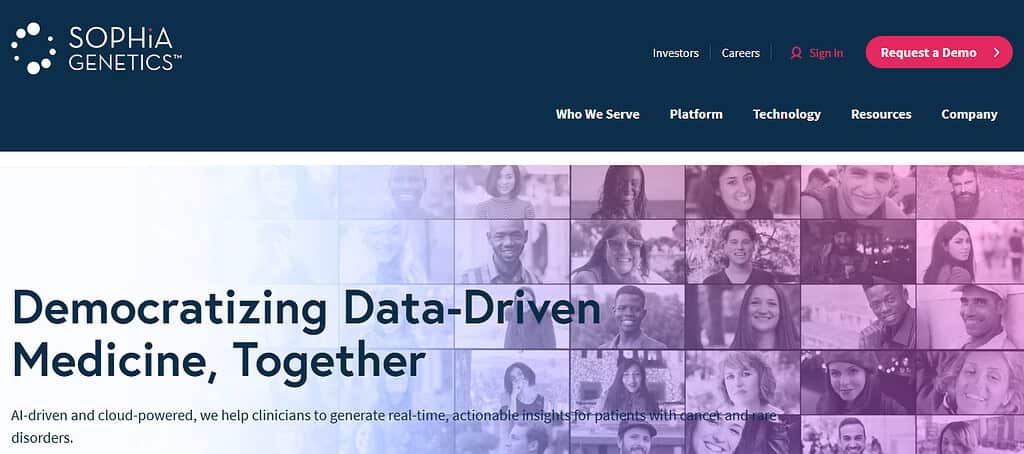
SOPHiA GENETICS is ranked one of the Best NGS AI Tools for Faster Genomic Data Analytics and provides assistance to hospitals and laboratories in the detection of clinically impactful alterations in the genomic sequence.
SOPHiA GENETICS fosters a collaborative environment by allowing data and research findings to be published by disparate research facilities, and leads the way in the fight against cancer and other rare hereditary diseases.
Why SOPHiA GENETICS AI Matters
| Reason | Why It Matters |
| Data-Driven Clinical Insights | Uses AI to improve interpretation of genomic sequencing results. |
| Oncology Applications | Supports cancer diagnostics and treatment planning. |
| Global Knowledge Network | Benefits from continuously expanding genomic datasets. |
| Improved Diagnostic Accuracy | Helps identify clinically significant variants with confidence. |
| Scalable Healthcare Deployment | Used by hospitals and laboratories worldwide. |
9. PierianDx AI Genomics
PierianDx AI Genomics is a platform for clinical genomics specializing in variant interpretation, reporting, and precision medicine workflows. Using AI, the platform simplifies the analysis of genomic data, and the interpretation of complex sequencing data for clinical applications.

Awarded as one of the Best NGS AI Tools for Faster Genomic Data Analytics, PierianDx focuses on cancer programs, hereditary disease testing, and molecular diagnostics. To maintain accurate interpretations,
PierianDx routinely refreshes its knowledge base by adding new literature and clinical updates. Automated reporting minimizes the turnaround time and provides greater consistency in the analyses of genomics. This leads to greater improvements in the analysis and planning of patient management and care.
Why PierianDx AI Genomics Matters
| Reason | Why It Matters |
| Clinical Reporting Automation | Simplifies the generation of genomic diagnostic reports. |
| Precision Oncology Support | Assists in identifying actionable cancer biomarkers. |
| Updated Knowledge Base | Continuously incorporates new genomic research findings. |
| Faster Turnaround Time | Delivers clinical results more quickly to healthcare providers. |
| Enhanced Decision-Making | Helps clinicians make informed treatment recommendations. |
10. Genoox Franklin AI
Genoox Franklin AI combines AI with community-based genomic knowledge in a cloud-based platform for genomic interpretation. In the analysis of genomic data, aid is provided for the classification and prioritization of genetic variants and the generation of diagnostic reports.
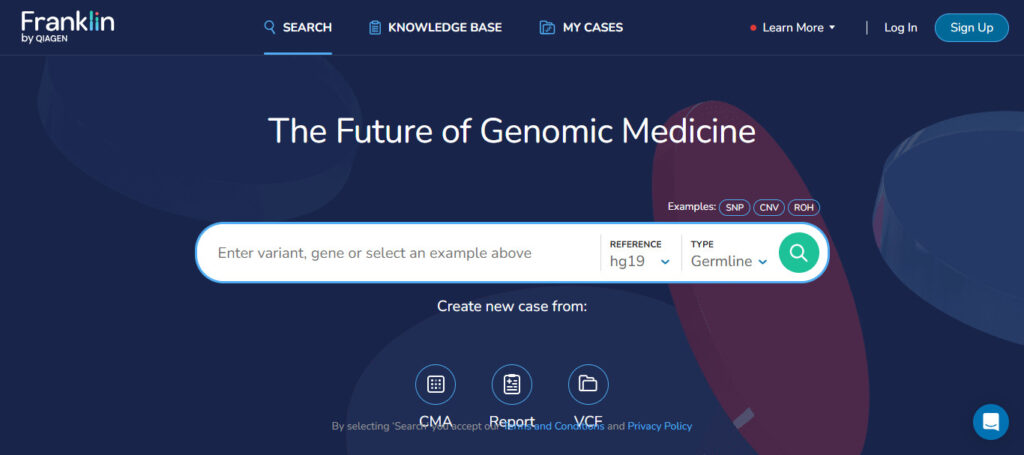
Awarded as one of the Best NGS AI Tools for Faster Genomic Data Analytics, Franklin AI facilitates the interpretation of variants by creating an integrated workflow of scientific publications, clinical queries, and data, and clinical phenotypes.
The interpretations of genomic data for rare disease diagnostics and analysis, and precision medicine, can be performed with greater efficiency. Its collaborative design dramatically decreases the time required for analysis and improves the accuracy of genomics interpretation betwixt the multitude of laboratories.
Why Genoox Franklin AI Matters
| Reason | Why It Matters |
| AI-Powered Variant Classification | Automates the interpretation of genetic variants. |
| Community-Driven Knowledge Sharing | Leverages insights from global genomics experts. |
| Rare Disease Investigation | Helps researchers uncover disease-causing mutations faster. |
| Centralized Genomic Evidence | Combines publications, databases, and phenotype information in one platform. |
| Improved Laboratory Efficiency | Reduces interpretation time while increasing diagnostic accuracy. |
Comparison Table of the Best NGS AI Tools
| Tool | Primary Focus | Key AI Capability | Deployment | Best For | Main Strength |
|---|---|---|---|---|---|
| Illumina DRAGEN AI | Genomic Data Processing & Variant Calling | AI-assisted variant detection and analysis | On-Premises, Cloud | Clinical genomics, whole-genome sequencing | Extremely fast and highly accurate genomic analysis |
| Google DeepVariant | Variant Calling | Deep learning-based variant identification | Cloud, Local Deployment | Research genomics, rare disease studies | Exceptional variant-calling accuracy |
| NVIDIA Clara Parabricks | Accelerated Bioinformatics Pipelines | GPU-powered AI computation | Cloud, On-Premises | Large-scale genomic projects | Dramatically reduces analysis time |
| DNAnexus Apollo AI | Genomic Interpretation & Data Management | AI-driven variant prioritization | Cloud-Based | Clinical laboratories, research organizations | Secure and scalable cloud workflows |
| Seven Bridges AI Genomics | Multi-Omics Analytics | Machine learning-powered genomic insights | Cloud-Based | Precision medicine and pharmaceutical research | Strong collaboration and workflow automation |
| QIAGEN CLC Genomics AI | Comprehensive Genomic Analysis | AI-enhanced sequence and variant analysis | Desktop, Server, Cloud | Academic and clinical research | User-friendly interface with extensive tools |
| Fabric Genomics AI | Clinical Genomic Interpretation | Machine learning-based variant prioritization | Cloud-Based | Rare disease and inherited disorder diagnostics | Advanced clinical interpretation capabilities |
| SOPHiA GENETICS AI | Clinical Decision Support | AI-powered genomic interpretation | Cloud-Based | Oncology and precision medicine | Large genomic knowledge network |
| PierianDx AI Genomics | Clinical Reporting & Precision Medicine | Automated genomic reporting and interpretation | Cloud-Based | Molecular diagnostics and cancer genomics | Strong clinical reporting workflows |
| Genoox Franklin AI | Variant Classification | AI-assisted variant interpretation | Cloud-Based | Genetic testing laboratories | Collaborative genomic knowledge sharing |
Quick Feature Comparison
| Tool | Variant Calling | Clinical Diagnostics | Cloud Support | Workflow Automation | Multi-Omics Support |
|---|---|---|---|---|---|
| Illumina DRAGEN AI | ✅ | ✅ | ✅ | ✅ | Limited |
| Google DeepVariant | ✅ | Limited | ✅ | Limited | ❌ |
| NVIDIA Clara Parabricks | ✅ | ✅ | ✅ | ✅ | Limited |
| DNAnexus Apollo AI | ✅ | ✅ | ✅ | ✅ | Limited |
| Seven Bridges AI Genomics | ✅ | ✅ | ✅ | ✅ | ✅ |
| QIAGEN CLC Genomics AI | ✅ | ✅ | ✅ | ✅ | ✅ |
| Fabric Genomics AI | Limited | ✅ | ✅ | ✅ | ❌ |
| SOPHiA GENETICS AI | ✅ | ✅ | ✅ | ✅ | Limited |
| PierianDx AI Genomics | Limited | ✅ | ✅ | ✅ | ❌ |
| Genoox Franklin AI | Limited | ✅ | ✅ | ✅ | ❌ |
Best Choice by Use Case
| Use Case | Recommended Tool |
|---|---|
| Fastest NGS Analysis | Illumina DRAGEN AI |
| Highest Variant Calling Accuracy | Google DeepVariant |
| GPU-Accelerated Genomics | NVIDIA Clara Parabricks |
| Secure Cloud Genomics Platform | DNAnexus Apollo AI |
| Multi-Omics Research | Seven Bridges AI Genomics |
| Beginner-Friendly Genomics Analysis | QIAGEN CLC Genomics AI |
| Rare Disease Diagnostics | Fabric Genomics AI |
| Precision Medicine Programs | SOPHiA GENETICS AI |
| Clinical Reporting Automation | PierianDx AI Genomics |
| Variant Interpretation and Classification | Genoox Franklin AI |
Conclusion
The ideal combination of NGS and AI tools are being integrated into the analytics of genomic data processing and interpretation. This means a company, researcher, or clinical practitioner needs access to fewer tools to run the same processes.
When used in conjunction with AI, ML, and HPC, combinations such as DNAnexus Apollo AI or Illumina DRAGEN AIs simplify the precision and complex scalability of genomic analytics. These tools and others facilitate the automation of clinical interpretations, data management, variant calling, and clinical reporting, as well as a plethora of other laborious tasks.
The combination of tools runs analytics faster, and therefore takes the mind of redundant tasks and allows researchers to work on more of the innovative sides of drug discovery research and development as well as precision medicine and disease research and discovery.
FAQ
What are NGS AI tools?
NGS AI tools are software platforms that use artificial intelligence and machine learning to analyze Next-Generation Sequencing (NGS) data. They help automate tasks such as sequence alignment, variant calling, genomic interpretation, and clinical reporting, making genomic analysis faster and more accurate.
Why are AI-powered NGS tools important?
AI-powered NGS tools improve the speed, accuracy, and efficiency of genomic data analysis. They can identify genetic variants more effectively, reduce manual workload, and help researchers and clinicians make data-driven decisions for precision medicine and disease diagnosis.
Which is the best NGS AI tool for variant calling?
Google DeepVariant, Illumina DRAGEN AI, and NVIDIA Clara Parabricks are among the most popular tools for highly accurate variant calling. These platforms use advanced AI algorithms to detect genetic mutations with excellent precision.
Can NGS AI tools be used in clinical diagnostics?
Yes. Many NGS AI platforms, including SOPHiA GENETICS AI, Fabric Genomics AI, and PierianDx AI Genomics, are specifically designed to support clinical diagnostics, rare disease identification, oncology testing, and personalized treatment planning.
How does AI improve genomic data analytics?
AI improves genomic analytics by automating complex bioinformatics workflows, prioritizing relevant genetic variants, reducing analysis errors, and uncovering patterns in large datasets that may be difficult to identify manually.