
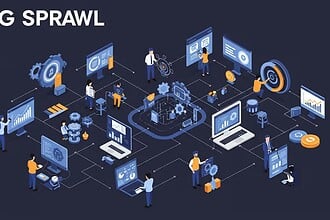


In this article, I will talk about how Multi-Agent AI will Transform Modern Workplaces. I will explain how they automate, cooperate and make decisions to improve business processes.
These complex systems employ multiple specialized agents to increase workflow, productivity and process optimization to improve workplace efficiency. I will analyze various leading solutions and their advantages to explain why they are becoming mandatory tools for modern businesses.
What Are Multi-Agent AI Systems?
Multi-Agent AI Systems are frameworks for artificial intelligence that include multiple agents operating in a collaborative way to accomplish a set of goals.
The contrast to conventional AI frameworks is that, while many of these systems essentially provide a single assistant with more features, multi-agent systems assign different roles and responsibilities to each agent. Some of these roles include data analysis, task management, customer support, research, and even decision making.
The agents are able to communicate and share information with each other throughout the task they are coordinating. In the context of a contemporary workplace, multi-agent systems are being used to automate processes and improve inter-departmental collaboration, while speeding up decisions and getting more work done.
How Multi-Agent AI Systems Work
Role Assignment
A leading system divides tasks among AI agents by choosing the agent best suited for the job. Each AI agent gets a segment of the overall workflow to manage.
Role Assignment Among Agents
For each agent, multiple roles exist, such as support functions, data functions, research functions, content functions, planning functions, and functions related to final decision functions. Having many functions helps the system operate more efficiently.
Communication Among Agents
To keep everyone aware of the status of the project, agents are constantly sending and receiving messages.
Data and Insight Capture
Agents collect data, often from disparate systems and applications. They analyze the data and then provide findings to their corresponding agents.
Workflow Synchronization
The flow and order of tasks among agents are managed by a leading agent or orchestration layer.
Analysis and Recommendation
Agents evaluate the data as it comes in. Based on criteria, ML models, and other frameworks, the agent will recommend or make a decision.
Cross-System Collaboration
To analyze and evaluate data, Multi-Agent AI Systems connect with a variety of enterprise software.
Self Improvement
Agents can also be improved with greater results-based feedback and historical data.
Actions Based on Decisions
From the various roles of the system, many agents can perform functions like updating, alerting, or reporting to complete a task or set of tasks.
Human Oversight and Control
Staff can oversee the agents, analyze their suggestions, sanction important steps, and manage the automated systems.
Key Benefits of Multi-Agent AI Systems in the Workplace
Enhanced Employee Productivity
After the introduction of Multi-Agent AI Systems, a huge number of mundane and repetitive tasks were automated. This provides employees the opportunity to shift their focus to strategic and value-generating tasks.
Quicker Decisions
With the ability to analyze extensive datasets in real-time, AI agents provide insights that assist organizations in arriving at decisions in a shorter timeframe.
Seamless Collaboration
AI systems deployed in agents work in synergy to promote communication and manage cross-departmental tasks.
Optimized Business Operations
When Multi-Agent AI Systems take over the performance of routine business tasks, process delays and systems blockages will be eradicated.
Reduced Business Operation Costs
Reduced routine task manual performance and optimized resource utilization are the two major cost cutting mechanisms of automation.
Improved Customer Satisfaction
Automation of AI agents lead to quicker, personalized, and 24/7 support that enhances customer satisfaction.
Improved Scalability
Wants of more customers and greater workloads can be met without the need to increase head count.
Increased Precision
Human error in routine business activities are virtually eliminated with the advent of AI systems.
Workflow Automation
AI systems deployed in agents work in synergy to promote communication and manage cross-departmental tasks.
Knowledge Management
AI systems deployed in agents work in synergy to promote communication and manage cross-departmental tasks.
Experience of Employees
Employee performance of routine tasks that will not add value to the business will be automated hence employees will focus on the value-adding tasks.
Key Point & Multi-Agent AI Systems Transforming Modern Workplaces
| Platform | Key Points |
|---|---|
| Microsoft Copilot for Workflows | Automates business workflows, integrates with Microsoft 365, supports document creation, meeting summaries, task management, and enterprise collaboration. |
| OpenAI Enterprise Agents | Performs research, data analysis, report generation, workflow automation, and connects with enterprise tools for complex multi-step tasks. |
| Anthropic Claude Teams | Provides collaborative AI assistance, document analysis, knowledge management, long-context processing, and secure team productivity features. |
| Google DeepMind Gemini Agents | Supports multimodal AI capabilities, analyzes text and images, integrates with Google Workspace, and automates enterprise decision-making. |
| IBM Watson Orchestrate | Automates HR, procurement, finance, and customer support workflows while coordinating multiple AI agents across business processes. |
| Salesforce Einstein GPT Agents | Enhances CRM operations, automates customer interactions, generates personalized content, and improves sales and marketing productivity. |
| UiPath AI Agents | Combines AI with robotic process automation (RPA), automates repetitive tasks, processes documents, and streamlines enterprise operations. |
| SAP Joule Agents | Assists with finance, supply chain, procurement, and HR workflows through intelligent automation and real-time business insights. |
| ServiceNow AI Agents | Automates IT services, HR operations, customer support, and workflow management while improving service delivery and efficiency. |
| Oracle Digital Assistant Agents | Provides conversational AI, automates business transactions, supports enterprise applications, and enhances employee and customer experiences. |
1. Microsoft Copilot for Workflows
Microsoft integrates productivity, communication, and enterprise applications into its expanding Copilot ecosystem. Microsoft Copilot for Workflows deploys an array of AI agents to automate tasks, including document generation, meeting and task tracking, and data analysis. These systems transform workplace collaboration whilst minimizing manual effort.
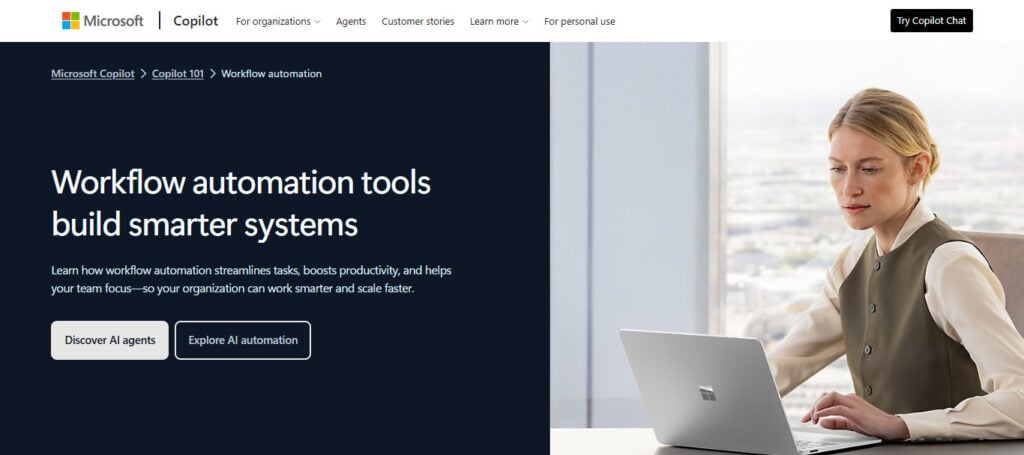
Microsoft 365 users are empowered to initiate workflows within the productivity suite, improving corporate agility and employee productivity. Workflows are safe and context-specific because the system connects directly to enterprise data.
Microsoft Copilot for Workflows Why It Matters
| Why It Matters | Details |
|---|---|
| Improves Productivity | Automates repetitive tasks within Microsoft 365 applications, reducing manual work. |
| Enhances Collaboration | Connects Teams, Outlook, Word, Excel, and SharePoint workflows seamlessly. |
| Saves Time | Generates documents, summaries, and action items automatically. |
| Supports Decision-Making | Analyzes business data and provides actionable insights. |
| Enterprise Integration | Works with existing Microsoft ecosystems used by millions of businesses. |
2. OpenAI Enterprise Agents
OpenAI Enterprise Agents enable cross-functional automation of knowledge work. OpenAI agents are able to research, analyze, draft, and augment multi-step tasks by interacting with other AI agents. As workplace systems, Enterprise Agents reduce repetitive work and enhance the productivity of the workforce.
Custom agents can be deployed by enterprise users and connected to internal databases, customer relationship management systems, and productivity tools. Agents possess advanced reasoning, a high degree of enterprise privacy and security, and are able to operate within corporate ecosystems of unlimited size.
OpenAI Enterprise Agents Why It Matters
| Why It Matters | Details |
|---|---|
| Automates Knowledge Work | Handles research, reporting, and information synthesis tasks. |
| Advanced Reasoning | Solves complex business problems with multi-step planning. |
| Customizable Workflows | Can be tailored for specific enterprise use cases. |
| Scalable Operations | Supports large teams and enterprise-wide deployments. |
| Productivity Gains | Reduces employee workload while increasing efficiency. |
3. Anthropic Claude Teams
Anthropic Claude Teams provides organizations with collaborative AI assistants that support team productivity and knowledge management. Claude is able to summarize large documents and various other content. Additionally, Claude can assist with project planning and answer company specific questions.
Claude Teams is an evolving system in the category of Multi-Agent AI Systems Transforming Modern Workplaces. With the ability to process large context windows and maintain conversational continuity, it stands out from the competition.
Multiple AI agents are capable of gathering information, structuring tasks, and providing suggestions to various teams. Additionally, it allows enterprises to enjoy faster collaboration and streamlined decision-making while dealing with the information overload, all within the boundaries of security and compliance.
Anthropic Claude Teams Why It Matters
| Why It Matters | Details |
|---|---|
| Large Context Handling | Processes lengthy documents and conversations efficiently. |
| Knowledge Management | Helps teams organize and retrieve critical information. |
| Team Collaboration | Enables multiple departments to work more effectively. |
| Enhanced Accuracy | Strong reasoning capabilities improve output quality. |
| Enterprise Security | Designed with privacy and governance features in mind. |
4. Google DeepMind Gemini Agents
Google DeepMind Gemini Agents feature advanced reasoning and multimodal tasks with automated workflows within Google’s enterprise environment.
These AI agents are capable of processing text, images, and spreadsheets while conducting automation across the multiple functions of a business. As a result, Gemini Agents, an example of a sophisticated Multi-Agent AI System Transforming Modern Workplaces, can be used in research and customer service, as well as for the management of projects and the planning of strategies.
The integration of Google Workspace allows users to automate tasks and derive insights from the enterprise data. It has the capability of improving the companies efficiency, maximizing innovation and simplifying operations on a day to day basis with the collaboration of various users.
Google DeepMind Gemini Agents Why It Matters
| Why It Matters | Details |
|---|---|
| Multimodal Intelligence | Understands text, images, documents, and data together. |
| Google Workspace Integration | Works naturally with Gmail, Docs, Sheets, and Drive. |
| Faster Insights | Analyzes information and provides recommendations quickly. |
| Innovation Support | Assists research, planning, and creative workflows. |
| Enterprise Scalability | Supports large organizations with complex operations. |
5. IBM Watson Orchestrate
IBM Watson Orchestrate is a system designed to automate business processes using AI digital workers. Organizations can leverage this system to create agents that specialize in tasks within HR, Procurement, Customer Support, and Finance.
Watson Orchestrate is different from many systems within the trend of Multi-Agent AI Systems Transforming Modern Workplaces as it is particularly adept at managing an array of agents throughout a complex business process. It also automates tasks across business systems while facilitating compliance and governance.
Employees can free up time by outsourcing operations to AI agents, enabling more focus on enterprise strategies that bolster growth and efficiency across business units.
IBM Watson Orchestrate Why It Matters
| Why It Matters | Details |
|---|---|
| Business Process Automation | Streamlines HR, procurement, and finance workflows. |
| Multi-Agent Coordination | Connects specialized AI agents for task execution. |
| Operational Efficiency | Reduces bottlenecks and manual intervention. |
| Enterprise Governance | Supports compliance and business controls. |
| Employee Empowerment | Frees staff to focus on strategic activities. |
6. Salesforce Einstein GPT Agents
Salesforce Salesforce Einstein GPT Agents use generative AI and enterprise data to improve customer relationship management. Sales, customer service, operations, and marketing agents get support through the automation of intelligent processes and the prediction of insights.
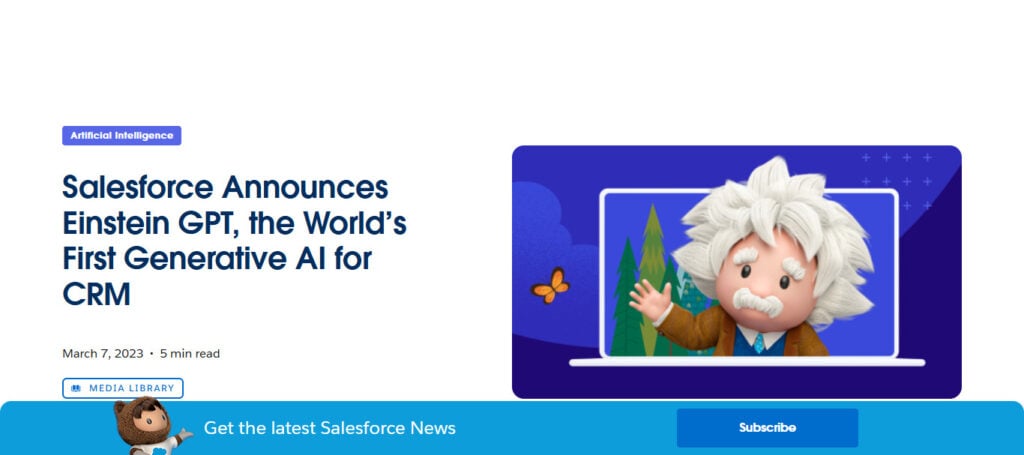
As Multi-Agent AI Systems Transforming Modern Workplaces, Einstein GPT Agents partner with other Salesforce tools to automate customer engagement, create tailored messages, and streamline workflows.
Salesforce customers see a huge increase in positive engagement and profitable opportunities. Not only does the platform connect directly to Salesforce CRM, ensuring relevance, but it also meets the security and compliance requirements of enterprise customers.
Salesforce Einstein GPT Agents Why It Matters
| Why It Matters | Details |
|---|---|
| CRM Optimization | Enhances sales, marketing, and customer service operations. |
| Personalized Customer Experiences | Generates tailored communications and recommendations. |
| Revenue Growth | Helps identify and convert sales opportunities faster. |
| Automated Customer Support | Reduces response times and service costs. |
| Data-Driven Decisions | Leverages CRM data for intelligent insights. |
7. UiPath AI Agents
As a combination of sophisticated AI and robotic process automation, UiPath AI Agents automate comprehensive business workflows. These AI agents can understand documents, make decisions, initiate automated actions, and work with other digital agents.
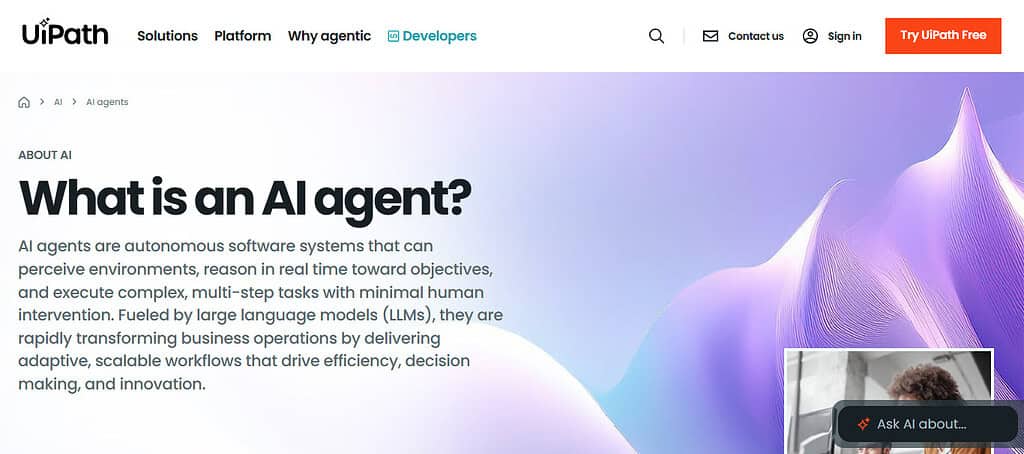
As part of the advancement of Multi-Agent AI Systems Transforming Modern Workplaces, UiPath helps businesses take the leap from ordinary automation to intelligent choices.
The platform is used by businesses to process invoices, onboard employees, perform customer service, and manage regulatory compliance. By coordinating many AI agents and automation bots, UiPath assists clients in lowering costs, improving precision, and speeding up digital transformation.
UiPath AI Agents Why It Matters
| Why It Matters | Details |
|---|---|
| Intelligent Automation | Combines AI with robotic process automation (RPA). |
| Reduced Costs | Minimizes repetitive manual work across departments. |
| Faster Workflow Execution | Accelerates document processing and approvals. |
| Increased Accuracy | Reduces human errors in routine operations. |
| Digital Transformation | Helps organizations modernize business processes. |
8. SAP Joule Agents
The business operations covered by finance, supply chain, procurement, and human resources in the SAP enterprise software ecosystem are supported by the SAP SAP Joule Agents. These AI agents interpret enterprise data, make recommendations, and automate repetitive tasks.
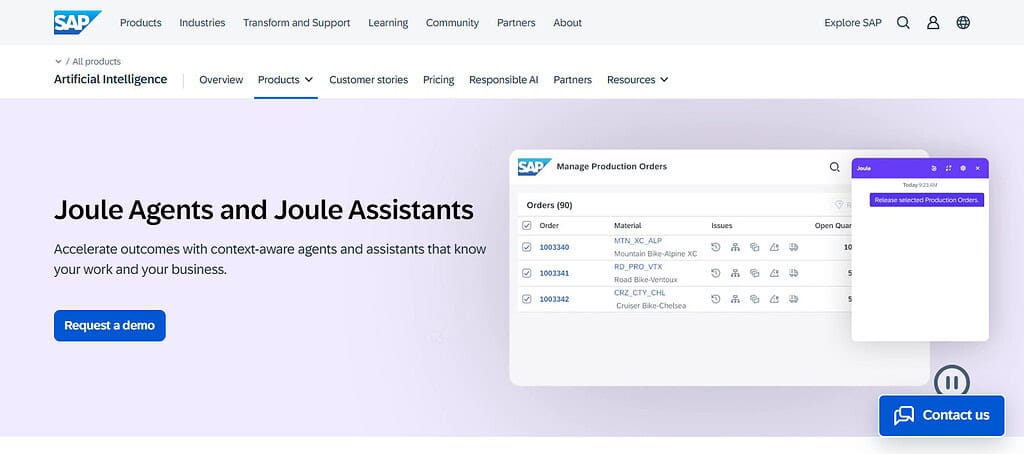
SAP Joule Agents are AI systems that work together to solve sophisticated problems by carrying out tasks that traverse multiple corporate departments and disparate applications. Because of their sophisticated architecture and design, SAP Joule Agents are extremely effective business process tools.
With Joule Agents, organizations can improve their business processes by gaining real-time insights that help them make faster and more effective business decisions based on higher levels of resource and process management.
SAP Joule Agents Why It Matters
| Why It Matters | Details |
|---|---|
| ERP Optimization | Enhances SAP business applications and workflows. |
| Real-Time Insights | Provides immediate recommendations from enterprise data. |
| Supply Chain Efficiency | Improves planning, procurement, and logistics operations. |
| Financial Management | Assists budgeting, forecasting, and reporting. |
| Enterprise Productivity | Automates routine SAP-related business tasks. |
9. ServiceNow AI Agents
These AI Agents are part of ServiceNow’s automated systems that help manage IT, business, and user services. ServiceNow AI agents can independently resolve user requests and problems. They can also work in unison with other agents to solve even more complex problems.
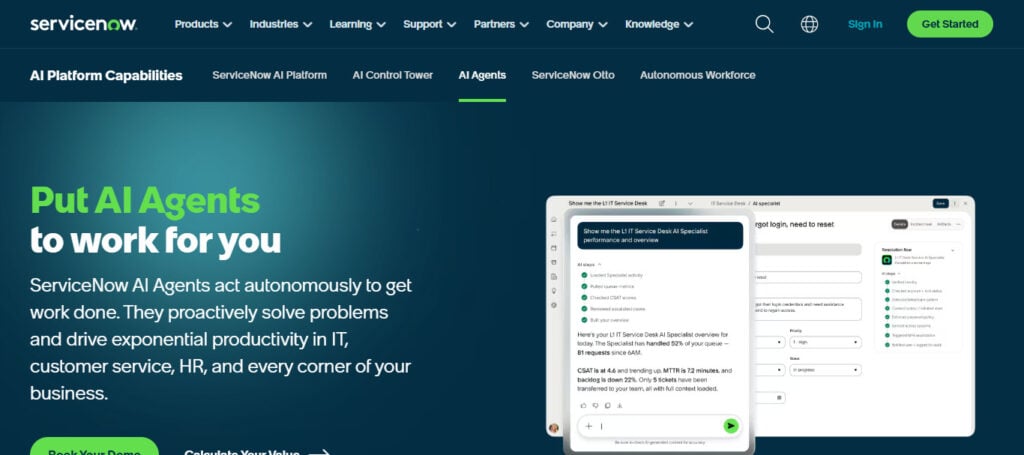
In the context of Multi-Agent AI Systems Transforming Modern Workplaces, ServiceNow makes it easy for organizations to manage enterprise workflows without operational roadblocks by allowing them to generate multiple, custom AI agents that work collectively across various corporate functions.
This creates a collaborative AI system that helps improve the quality of services, increases user satisfaction, and enhances the organization’s ability to grow and diversify its operations.
ServiceNow AI Agents Why It Matters
| Why It Matters | Details |
|---|---|
| Service Automation | Streamlines IT, HR, and customer service operations. |
| Faster Issue Resolution | Handles requests and incidents automatically. |
| Improved Employee Experience | Reduces waiting times and manual processes. |
| Workflow Efficiency | Coordinates tasks across departments effectively. |
| Scalable Service Delivery | Supports growing enterprise service demands. |
10. Oracle Digital Assistant Agents
Oracle Digital Assistant agents integrate AI powered virtual assistants within enterprise business systems and applications. These assistants enhance employee and customer interactions by providing real-time answers to queries and automating tasks and workflow processes.
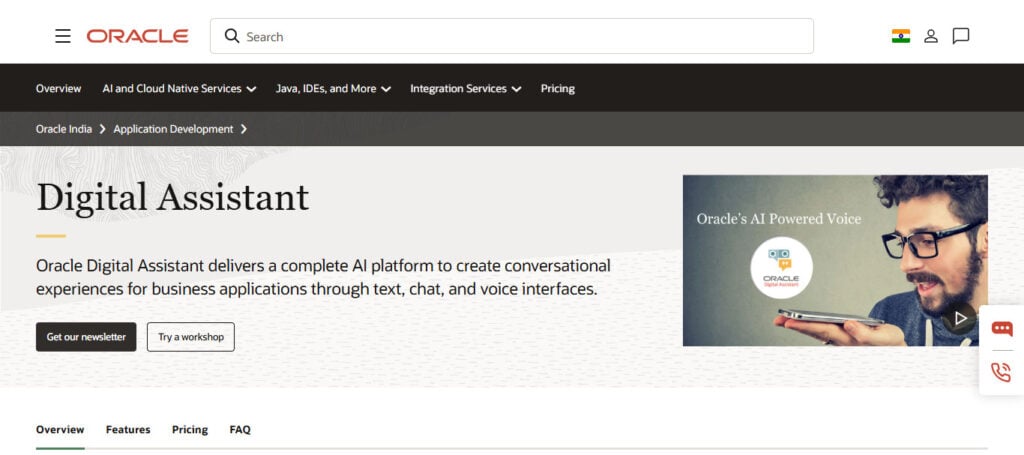
In the ever-growing field of Multi-Agent AI Systems Transforming Modern Workplaces, Oracle’s agents integrate and work collaboratively within the corporate functions of HR, Finance, Procurement, and Customer Services.
When combined with Oracle’s Cloud applications, businesses can gain the value of automated processes that operate in real time with an accessible view of business data. This greatly improves business operations, reduces administrative tasks, and enhances the overall user experience while leveraging enterprise-grade security and data governance.
Oracle Digital Assistant Agents Why It Matters
| Why It Matters | Details |
|---|---|
| Conversational AI Support | Provides natural-language interactions for users. |
| Enterprise Application Access | Connects with Oracle Cloud business systems. |
| Transaction Automation | Automates HR, finance, and procurement activities. |
| Enhanced User Experience | Simplifies access to business information and services. |
| Scalable Enterprise Operations | Supports large organizations with secure automation capabilities. |
Challenges of Implementing Multi-Agent AI Systems
Multi-Agent AI Systems are advantageous to the organization, but there are challenges to the organization that are noteworthy. A business application, database, or workflow of a business may not be compatible with the agents that the organization is trying to implement.
The integration of AI agents into business applications, databases, and workflows may be painstaking. The quality of data impacts the decisions agents make, particularly the timeliness and completeness of the data. An organization will have to ensure data meets quality standards.
Legal and regulatory burdens will require reinforcing standards of privacy and security of data. A trained workforce that is receptive to change is pivotal to the desired productive partnership between humans and AI systems.
There will also be the cost of deployment, maintenance of the systems, governance, and monitoring. An organization will need to devise a plan that integrates AI into their systems with consideration of the challenges and the impacts of implementing their plan.
Conclusion
Today, Multi-Agent AI Systems are becoming popular in modern workplace automation as they allow several intelligent agents to work together in support of human decisions.
Examples include Microsoft Copilot for Workflows, OpenAI Enterprise Agents, Anthropic Claude Teams, Google DeepMind Gemini Agents, IBM Watson Orchestrate, Salesforce Einstein GPT Agents, UiPath AI Agents, SAP Joule Agents, ServiceNow AI Agents, and Oracle Digital Assistant Agents.
These systems enable process automation, resource optimization, and cost reduction for the organizations. There will be more advancements in AI in the future and more use of multi-agent systems to optimize business resource systems, support staff, and give a competitive edge in an evolving digital workspace.
FAQ
Are Multi-Agent AI Systems secure for enterprise use?
Leading enterprise AI providers offer security features such as encryption, access controls, compliance management, audit logs, and data governance tools. These measures help organizations protect sensitive business information while deploying AI solutions.
What challenges do companies face when implementing Multi-Agent AI Systems?
Common challenges include integration complexity, employee training requirements, data quality issues, governance concerns, implementation costs, and ensuring compliance with regulatory requirements. Proper planning can help overcome these obstacles.
Will Multi-Agent AI Systems replace human employees?
Rather than replacing employees entirely, these systems are primarily designed to augment human capabilities. They automate repetitive and time-consuming tasks, allowing workers to focus on creativity, strategy, problem-solving, and customer relationships.
What is the future of Multi-Agent AI Systems in workplaces?
The future is expected to involve more autonomous agents, deeper enterprise integrations, advanced collaboration between AI systems, and greater use of real-time decision-making. As technology evolves, Multi-Agent AI Systems will become a core component of digital transformation strategies across industries.