





This article covers the Best AI Search APIs for Websites & Applications, designed for businesses and developers who wish to implement more effective, faster, and intelligent search experiences for their users.
AI Search solutions augment search using machine learning, natural language processing, and semantic search to facilitate the discovery of information and improve user experience by serving relevant results in context, whether it is on a website, mobile application, or enterprise platforms.
What Are AI Search APIs?
AI Search APIs enable the ability for websites or applications to build powerful smart search capabilities using artificial intelligence. In comparison to classic search APIs that mainly depend on keyword referencing, AI Search APIs are considerably more advanced.
They concern themselves with the view and intent of the user, the context surrounding the data, as well as the data relationship. AI Search APIs are designed to enhance a business’s search and information discovery (among other helpful features). AI Search APIs can enable voice and even conversational search features. These make platforms much quicker and smarter.
How to Choose the Right AI Search API
Know Your Search Preferences
Select an AI Search API by identifying your site or app’s specific search preferences. What type of search will you need? Keyword? Semantic? Vector? Conversational? Product Discovery? Enterprise Knowledge search? More clarity on your needs will help provide the optimal solution.
AI Abilities and Search Evaluation
Check what APIs provide as their AI features. Do they provide Natural Language Processing? Machine Learning ranking? Autocomplete? Personalization? Typo correction? Semantic understanding? A competent AI Search API should deliver context-aware results based on an accurate understanding of user intent.
Data and Scalability
Choose APIs that fit the volume of data you have now and in the future. Applications that deploy at the enterprise level and serve millions of documents and users may need search solutions like Elasticsearch, Amazon Kendra, or Google Cloud Discovery Engine. Smaller projects may be served well by Meilisearch.
Integration and Developer Ease
Choose APIs that integrate well. Look for documentation, SDKs, and developer tools. A good API will reduce the time your developers will need to add sophisticated search capabilities to your site or app.
Search Speed Evaluation
The speed of a search is critical to a good user experience. Choose an AI Search API that is able to provide low latency, fast indexing, and user searches that are up to date.
Benefits of Using AI Search APIs
More Accurate Search Results
AI Search APIs harness multiple tech fields like machine learning, natural language processing (NLP), and others to enhance their search accuracy. By identifying user intent, these APIs can yield better results than traditional methods that solely rely on keyword searches.
Improved Experience for Users
There are numerous AI-driven enhancements (e.g., faster results, autocomplete, typo suggestions and corrections, personalized recommendations, and a chatbot-style search) that collectively optimize the user’s experience.
Faster Search and Discovery
AI Search APIs can quickly identify a user’s desired product, document, answer, or resource by automatically filtering through large data stores and returning relevant results.
Customized Search Results
AI Search APIs significantly enhance the user search experience through a higher degree of customization by using and understanding user patterns and preferences. This form of personalization directly correlates to higher customer satisfaction and greater engagement.
Enhanced Semantic Search Support
AI Search APIs can complement search functions by understanding the intent and context of most user queries, rather than simply matching the words. This makes APIs particularly effective for search queries of a complex or conversational nature.
Greater Engagement and Conversion
By using AI Search to enhance knowledge bases, chatbots, and support platforms, businesses can significantly improve their overall customer service by decreasing case resolution time and increasing self-service opportunities. Search APIs are uniquely able to highlight content and/or services that a user may have otherwise been unaware of, thereby increasing conversions. In the eCommerce and content publishing industries, this correlates to higher retention and a greater degree of customer satisfaction.
Best AI Search APIs for Websites & Applications & Key Point
| AI Search API | Key Points |
|---|---|
| Algolia Search API | • Fast, typo-tolerant search experience• Provides AI-powered relevance ranking• Supports autocomplete and instant search features• Easy integration with websites and mobile apps• Offers analytics to improve search performance |
| Elasticsearch API | • Powerful open-source search and analytics engine• Supports full-text, semantic, and vector search• Handles large-scale data indexing efficiently• Provides customizable ranking and filtering options• Widely used for enterprise search solutions |
| Microsoft Azure Cognitive Search API | • AI-powered cloud search service by Microsoft• Supports semantic search and machine learning enrichment• Integrates with Azure AI services and data sources• Provides advanced indexing and query capabilities• Suitable for enterprise applications |
| Amazon Kendra API | • Intelligent enterprise search powered by machine learning• Understands natural language queries and user intent• Connects with multiple business data sources• Provides accurate document and knowledge discovery• Designed for customer support and workplace search |
| Google Cloud Discovery Engine API | • AI-powered search and recommendation platform• Uses Google-quality search technologies• Supports conversational and semantic search• Helps improve website and app discovery experiences• Integrates with Google Cloud data services |
| Lucidworks Fusion API | • Enterprise AI search and discovery platform• Provides advanced NLP and machine learning capabilities• Supports personalized search experiences• Offers powerful data ingestion and indexing tools• Designed for large organizations and complex data environments |
| Yext Search API | • AI-driven search solution for websites and digital platforms• Creates accurate answers from structured data• Supports voice and conversational search experiences• Improves customer engagement through relevant results• Provides analytics for search optimization |
| Coveo AI Search API | • AI-powered search and personalization platform• Uses machine learning for better relevance ranking• Supports customer service and e-commerce search• Provides recommendations based on user behavior• Helps businesses deliver personalized experiences |
| Meilisearch API | • Lightweight and developer-friendly search engine• Provides fast and typo-tolerant search results• Easy setup with simple API integration• Supports filters, ranking rules, and indexing• Suitable for startups and modern applications |
| Pinecone Vector Search API | • Specialized vector database for AI semantic search• Enables similarity search using embeddings• Supports retrieval-augmented generation (RAG) applications• Provides scalable high-performance vector indexing• Ideal for AI assistants and knowledge-based applications |
1. Algolia Search API
Algolia Search API is an exemplary AI-centric search engine with a significant focus on speed, efficiency, and ease of engagement with search tools on web and app interfaces.
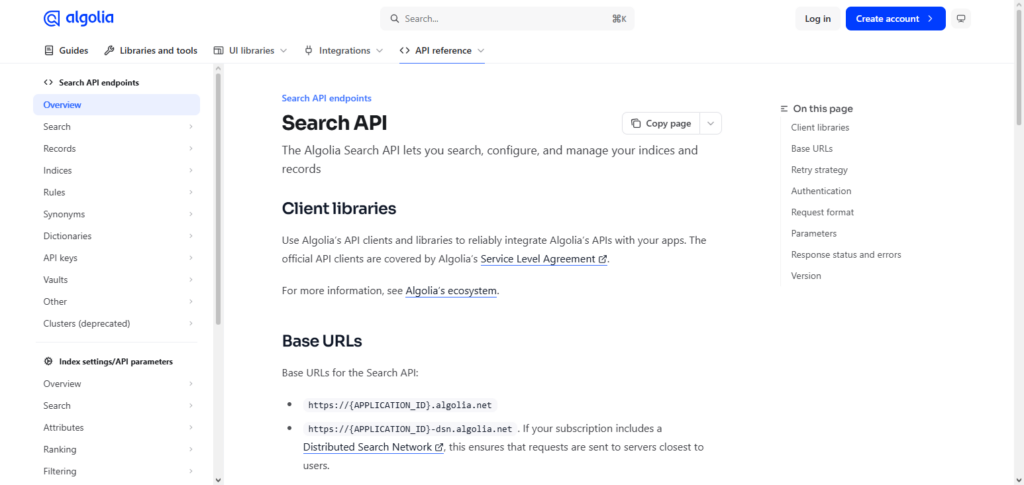
Having powerful ranking, typo tolerance, and autocomplete and filtering features, Algolia eases users’ search experience. Among the best AI search engine APIs for websites and applications, Algolia is recognized for its developer-friendly interface and low-latency responsiveness.
Algolia improves search and engagement relevance for eCommerce, SaaS, and content websites. Its analytical tools foster businesses to refine their search and engagement functionality with the aim of maximizing conversion and customer satisfaction.
Algolia Search API Quality
- Optimized for Speed: Renders results in milliseconds.
- AI Relevance Ranking: Searches are more intelligent with machine learning.
- Autocomplete/Instant Search: Results are determined-as-you-type.
- Faceting and Filtering: Results can be customized with advanced preference settings.
- Search Analytics: Gauges searches for improvement.
Why Algolia Search API Matters
| Key Point | Details |
|---|---|
| Improves User Search Experience | Algolia helps websites and applications deliver fast and accurate search results, allowing users to find products, content, or information quickly without frustration. |
| Boosts Conversion Rates | Its AI-powered ranking and personalization features help users discover relevant results, improving engagement and increasing sales opportunities. |
| Provides Faster Performance | Algolia’s low-latency search technology ensures instant results even for applications with millions of records. |
| Supports Scalable Applications | Businesses can easily scale search functionality as their data, users, and traffic grow. |
| Simplifies Developer Integration | Easy APIs and SDKs allow developers to quickly add advanced search features to websites and mobile apps. |
2. ElasticSearch API
Elasticsearch API is a search and analytics engine that has many modern capabilities such as full-text, semantic, and vector search. Elastic Stack allows developers to search and analyze a lot of structured and unstructured data.
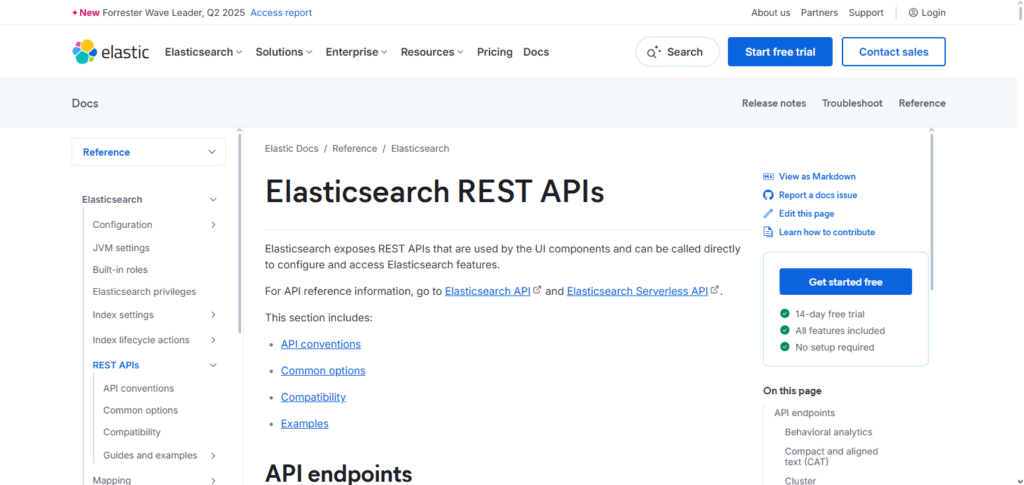
Elasticsearch is one of the Best AI Search APIs for Websites and Applications because of its advanced filtering, ML capabilities, and customization. Elasticsearch is used for many applications such as enterprise search, AI applications, log analytics, and recommendation systems.
Because Elasticsearch is NLP and vector-database friendly, organizations can build search solutions that return highly relevant results on intelligent search.
Elasticsearch API Quality
- Full-Text Search: Searches are keyword-based and can be performed on very large data sets.
- Semantic or Vector Search: Searches can be meaning-based with the incorporation of ML and embeddings.
- Indexing Large Data Sets: Large sets of both structured and unstructured data can be indexed.
- Custom Filtering & Ranking: Influencing result order and relevance is possible.
- Advanced Data Analytics: Analytics that go beyond the basics.
Why Elasticsearch API Matters
| Key Point | Details |
|---|---|
| Handles Large-Scale Data Search | Elasticsearch enables organizations to search and analyze massive amounts of structured and unstructured data efficiently. |
| Improves Search Accuracy | Advanced indexing, relevance ranking, and AI capabilities help users find more meaningful results. |
| Supports Enterprise Applications | It is widely used for enterprise search, analytics platforms, monitoring systems, and data discovery solutions. |
| Enables Real-Time Search | Elasticsearch provides fast indexing and real-time updates, making it suitable for dynamic applications. |
| Offers Flexible Customization | Developers can customize search algorithms, filters, and ranking rules based on business requirements. |
3. Microsoft Azure Cognitive Search API
Microsoft Azure Cognitive Search API is a cloud-based search technology that builds intelligent search capabilities at the application and web levels for businesses. It brings together search indexing and Azure AI to pull insights from really any type of data such as written documents or images.
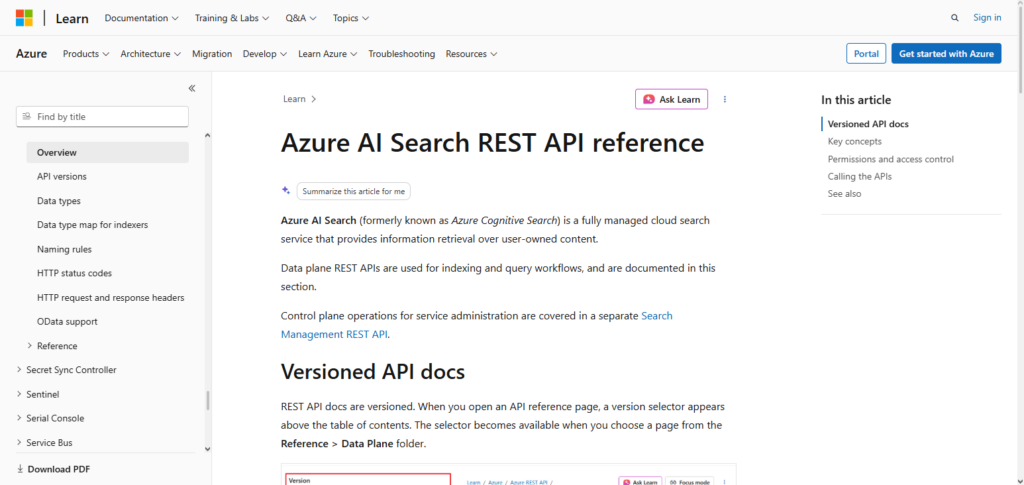
It is regarded as one of the most reliable AI search engines designed for web applications. It is enriched with AI, enterprise integration, and supported by deep natural language search.
This API lets developers assemble and combine numerous data sources into one, more meaningful search alternative. This especially helps companies that use the ecosystem of Microsoft Azure, or use customer portals and enterprise content discovery frameworks.
Microsoft Azure Cognitive Search API Quality
- AI Search Enhancements: Enriching results and improving searches is possible with Azure AI.
- AI Semantic Search: Searches can be contextualized and user intent can be factored in.
- AI Data Processing: Documents and images can be scanned for insights.
- Cloud Security: Fully integrated with Microsoft Azure and secure for enterprise use.
- Custom Indexing: Flexible options exist for data indexing.
Why Microsoft Azure Cognitive Search API Matters
| Key Point | Details |
|---|---|
| Adds AI Intelligence to Search | Azure Cognitive Search uses AI models to understand content, extract insights, and improve search relevance. |
| Improves Enterprise Knowledge Discovery | Organizations can quickly find information from documents, databases, and business systems. |
| Supports Semantic Search | It understands user intent and context instead of depending only on keyword matching. |
| Integrates with Azure Ecosystem | Businesses using Microsoft services can easily connect data sources and build secure search solutions. |
| Enhances Data Accessibility | AI enrichment makes complex information easier for users to discover and understand. |
4. Amazon Kendra API
The Amazon Kendra API provides intelligent search capabilities in an enterprise setting. Using machine learning and natural language processing, Amazon Kendra API allows users to get accurate answers from extensive collections of documents and data sources.
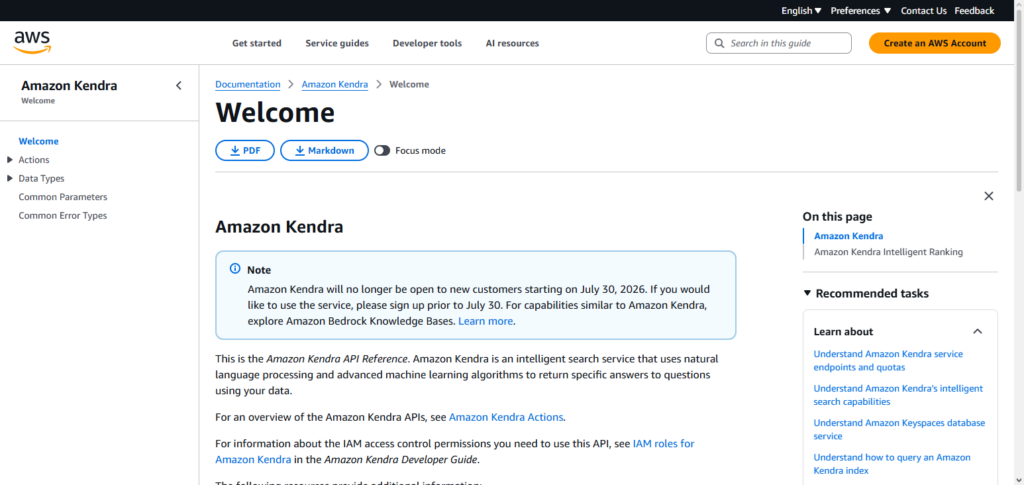
Amazon Kendra API is one of the best websites and applications AI search APIs due to its ability to improve information discovery by understanding the context of user queries rather than relying on keywords.
It is able to integrate many content repositories, has an advanced relevance-ranking algorithm, and has question-and-answer capabilities. Amazon Kendra is accessible for customer support, for business knowledge management, and for search platforms for employees to provide information access quicker and more accurately.
Amazon Kendra API Quality
- ML Search Improvements: Powered by ML processes and model trainings, query understanding, and relevance have greatly improved.
- Natural Language Understanding – Answers user questions accurately.
- Enterprise Data Integration – Integrates with various content and business systems.
- Intelligent Ranking – Ranks information based on usefulness to the user.
- Question-Answer Search – Enables users to quickly locate answers within documents.
Why Amazon Kendra API Matters
| Key Point | Details |
|---|---|
| Provides Intelligent Enterprise Search | Amazon Kendra helps employees and customers quickly find accurate information from multiple business sources. |
| Understands Natural Language Queries | It allows users to ask questions in normal language and receive relevant answers. |
| Improves Customer Support | Businesses can create AI-powered support systems that reduce response times and improve service quality. |
| Connects Multiple Data Sources | Kendra integrates with documents, databases, websites, and enterprise applications. |
| Uses Machine Learning Models | AI-based ranking improves search accuracy and delivers more relevant information. |
5. Google Cloud Discovery Engine API
Google Cloud Discovery Engine API is an AI-based service designed to bring Google-level discovery experiences to websites and applications. Using powerful machine learning algorithms, the API is able to analyze user queries, content associations, and search-related activities.
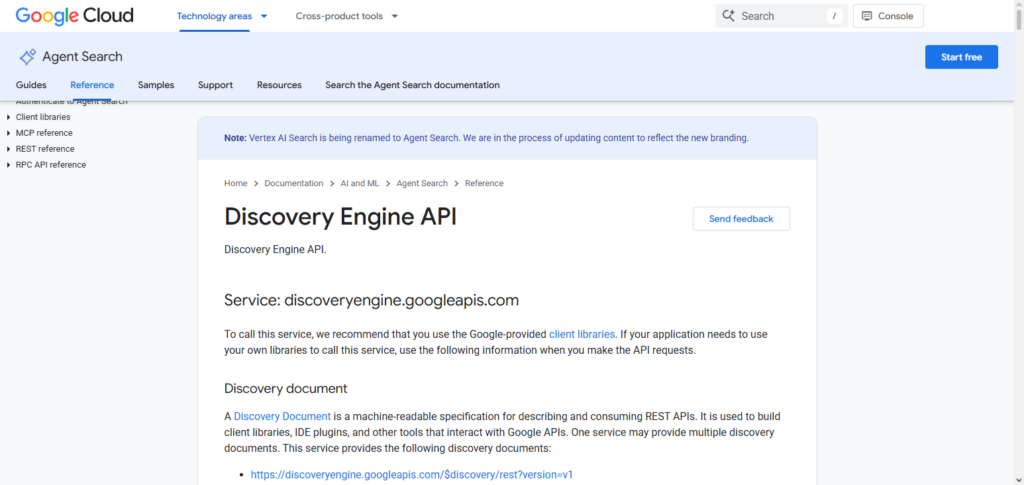
One of the best AI Search APIs, it allows for semantic and conversational searches as well as tailored recommendations.
The Discovery Engine makes improvements to digital experiences for eCommerce, media and enterprise applications. Because of its Cloud infrastructure, Google Discovery Engine scales with loads, and has powerful, state-of-the-art, automated rankings with frictionless data sourcing.
Google Cloud Discovery Engine API Quality
- Google Standard AI Search – This allows Google-level intelligent search.
- Conversational Search Support – This provides easier natural language search.
- Semantic Understanding – The system can go beyond keyword searches and understand more context.
- AI Recommendations – This supplies user-defined content and product recommendations.
- Cloud Scalability – Even large applications can have efficient searches.
Why Google Cloud Discovery Engine API Matters
| Key Point | Details |
|---|---|
| Delivers Advanced AI Search Experiences | Google Cloud Discovery Engine helps businesses create intelligent search and discovery platforms using AI technology. |
| Improves Content Discovery | It helps users find relevant products, documents, and information faster. |
| Supports Conversational Search | Users can interact with search systems using natural language questions. |
| Provides Personalization | AI recommendations improve user engagement by delivering customized results. |
| Scales for Large Applications | Google Cloud infrastructure supports high-volume search requirements for businesses. |
6. Lucidworks Fusion API
Lucidworks Fusion API makes intelligent application search easier for businesses with its powerful search platform. By integrating AI, NLP, and ML, Lucidworks Fusion enables businesses to provide relevant search results. Lucidworks Fusion is one of the most advanced AI search APIs because it utilizes personalized search and analytics to cater to demanding data environments and architectures.
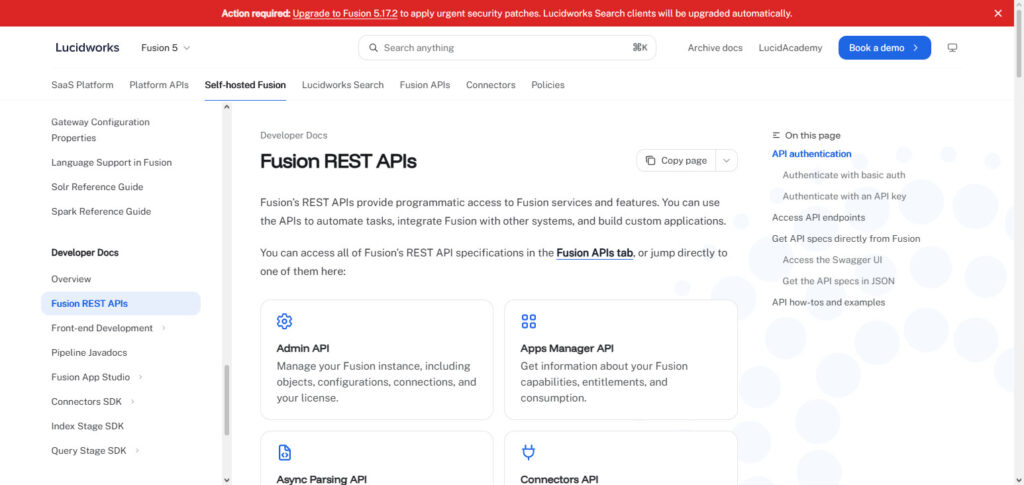
It permits businesses to connect numerous data environments to tailor search experiences. Given its expertise in critical data environments, Lucidworks Fusion is widely adopted in health, finance, retail, and government sectors.
Lucidworks Fusion API Quality
- Enterprise AI Search Platform: Advanced search features geared towards enterprise customers.
- Machine Learning Ranking: AI-optimized ranking models to ensure search relevancy.
- Advanced Data Processing: Enhanced support for diverse data ingestion.
- Personalized Search Experiences: Custom search results based on user engagement.
- Search Analytics & Insights: Empowers firms to analyze and enhance search.
Why Lucidworks Fusion API Matters
| Key Point | Details |
|---|---|
| Enhances Enterprise Search | Lucidworks Fusion helps organizations manage and search complex business data efficiently. |
| Uses AI-Based Ranking | Machine learning improves search relevance by analyzing user behavior and content relationships. |
| Supports Multiple Data Sources | Businesses can combine information from different systems into one intelligent search platform. |
| Improves Personalization | AI capabilities allow organizations to provide customized search experiences. |
| Provides Better Data Insights | Analytics features help businesses understand search patterns and optimize results. |
7. Yext Search API
Yext Search API is a search solution that helps enterprises build custom and precise search interfaces across their digital properties, including websites and apps. Powered by AI, Yext uses structured data and provides direct answer search results instead of conventional keyword search results.
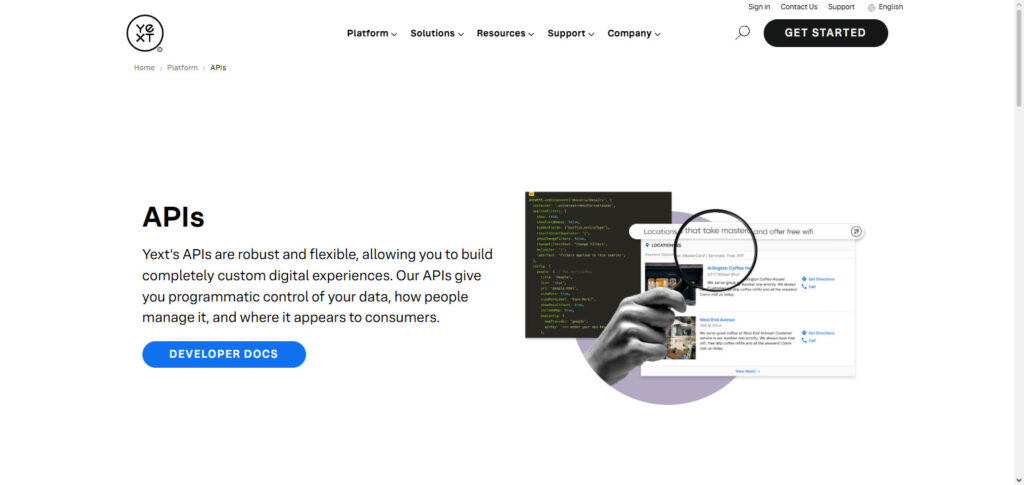
Yext is ranked among the Best AI Search APIs for Websites and Applications. Yext promotes customer engagement via conversational and voice search, as well as recommendations.
Enterprises can consolidate and manage information across various sources, and ensure users receive factually correct results. Numerous companies leverage this technology for their customer service portals, corporate websites, and for localized and enterprise search implementations.
Yext Search API Quality
- AI-Powered Answer Search: Provides answers as search results instead of typical search results.
- Knowledge Graph Integration: Structures business data to ensure correct findings.
- Natural Language Search: Processes conversational queries.
- Multi-Platform Search Support: Enables search capabilities across web, app, and other digital conduits.
- Search Analytics Dashboard: Monitors user search and optimizes search.
Why Yext Search API Matters
| Key Point | Details |
|---|---|
| Creates Answer-Based Search Experiences | Yext helps websites provide direct answers instead of forcing users to browse multiple results. |
| Improves Customer Engagement | Accurate information delivery helps businesses build trust and improve user satisfaction. |
| Supports Voice and Conversational Search | Yext enables modern search experiences across different digital channels. |
| Maintains Data Accuracy | Its knowledge management features ensure users receive updated business information. |
| Helps Businesses Manage Digital Presence | Organizations can control and distribute information across websites, apps, and platforms. |
8. Coveo AI Search API
Coveo AI Search API is one of the advanced options in the AI search category. Coveo fuses machine learning and search to offer an intelligent content discovery platform. ML algorithms allow Coveo to assess user behavior to a larger extent and deliver differential content search.
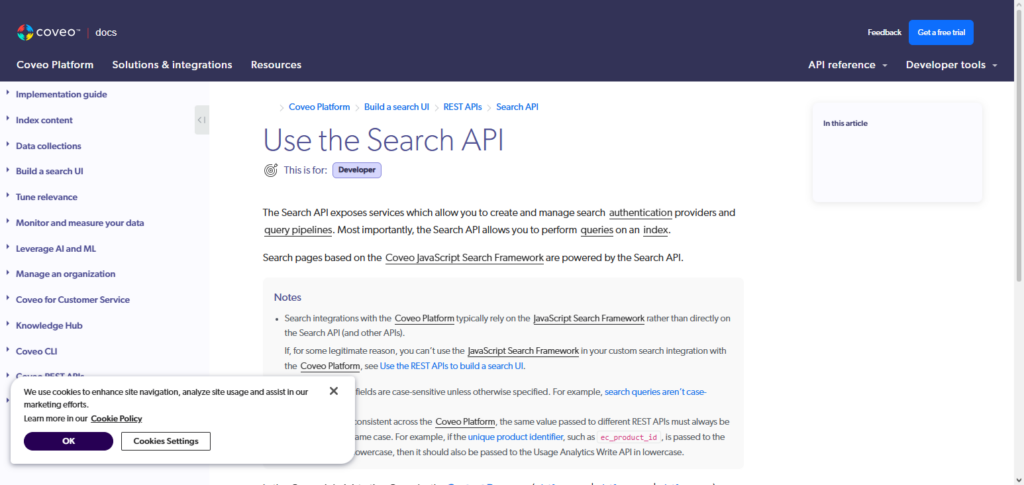
Part of the Best AI Search APIs for Websites & Applications, Coveo employs AI recommendations, semantic search, and predictive insights to help businesses optimize user engagement.
Applications span eCommerce, customer support, and enterprise solutions. Coveo’s power enables businesses to aggregate points-of-information and provide users with quicker access to more relevant content and search results.
Coveo AI Search API Quality
- AI-Powered Personalization: Results customized to user engagement.
- Machine Learning Relevance Ranking: Interaction-based learning for improved accuracy.
- Semantic Search Capabilities: Learns the meaning and context behind search queries.
- Recommendation Engine: Offers likely relevant products, content, or solutions.
- Enterprise Integration Support: Integrates into CRMs, CMSs, and other business apps.
Why Coveo AI Search API Matters
| Key Point | Details |
|---|---|
| Provides Personalized Search Results | Coveo uses AI to deliver results based on user behavior, preferences, and context. |
| Improves Customer Experience | Businesses can offer faster and more relevant information discovery. |
| Supports AI Recommendations | Coveo helps suggest products, content, and solutions to users. |
| Enhances Enterprise Productivity | Employees can quickly access important documents and internal knowledge. |
| Uses Continuous Learning | Machine learning improves search performance by analyzing user interactions. |
9. Meilisearch API
The Meilisearch API is a great example of a lightweight, developer-friendly open search engine. Being open-source, lightweight, and easy to implement makes Meilisearch a great search engine for modern applications, and a favorite choice for search engines among developers.
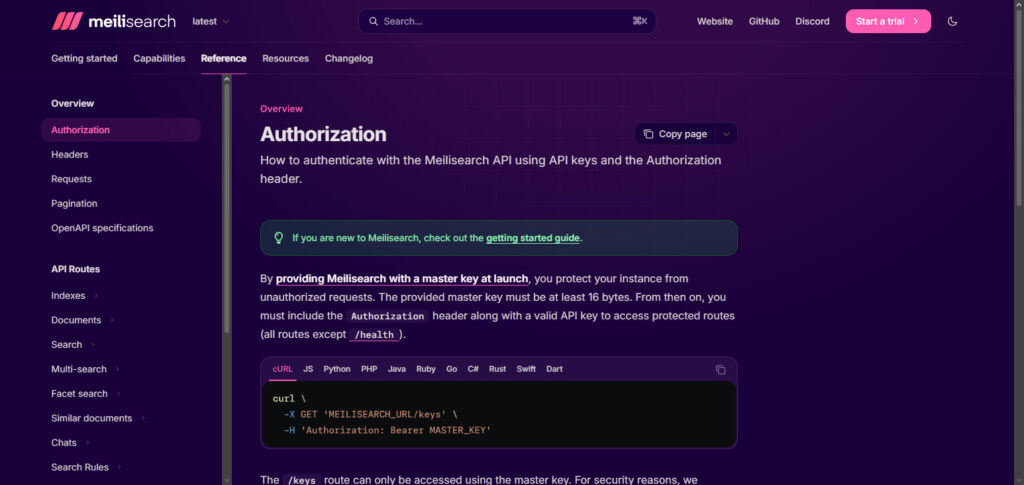
Meilisearch out of the box offers typo tolerance, instant searches, and the ability to filter and customize the ranking of your searches. Meilisearch is a great search engine for improving the user experience.
Because of its fast results and accuracy, many businesses including eCommerce, SaaS, and various content driven applications, use Meilisearch to implement searching functionalities.
Meilisearch API Quality
- Fast Instant Search: Quick and responsive search.
- Typo Tolerance: Spelling correction improves search results.
- Developer Friendly API: Easy to setup and integrate.
- Custom Ranking Rules: Prioritize search results.
- Lightweight Open Source Architecture: Compatible with Startups and Modern Apps.
Why Meilisearch API Matters
| Key Point | Details |
|---|---|
| Offers Simple AI Search Integration | Meilisearch allows developers to quickly add search functionality without complex setup. |
| Provides Fast Search Results | Its lightweight architecture delivers responsive search experiences for applications. |
| Improves User Satisfaction | Features like typo tolerance and instant search help users find information easily. |
| Supports Startups and Developers | Open-source flexibility makes it suitable for smaller projects and growing businesses. |
| Allows Search Customization | Developers can control ranking, filters, and search behavior according to needs. |
10. Pinecone Vector Search API
The Pinecone Vector Search API, as a more advanced AI search solution, allows semantic searching via vector embeddings and ML models. This API assists applications in understanding the meaning of input queries rather than constraining its functionality to literal keyword-matching.
The Pinecone API is a widely popular choice of the Best AI Search APIs for Websites & Applications for AI assistants, recommendation systems, and retrieval-augmented generation (RAG) applications. Pinecone offers an efficient framework of scalable vector storage, rapid similarity search, and efficient data retrieval.
Thus, it is no wonder that developers prefer using Pinecone to build driven AI applications that are extremely useful for suggesting highly contextual recommendations and precise knowledge discovery from large data sets.
Pinecone Vector Search API Quality
- AI Vector Based Search: ML embeddings for semantic search.
- High-Speed Similarity Search: Related data retrieval is fast and extensive.
- Retrieval Augmented Generation (RAG) Support: Facilitates AI Assistants and Knowledge Apps.
- Highly Scalable Vector Database: Billions of vectors supported.
- Dynamic Indexing: Indexed data is constantly updated to reflect real time.
Why Pinecone Vector Search API Matters
| Key Point | Details |
|---|---|
| Powers Modern AI Applications | Pinecone enables advanced semantic search for AI assistants, chatbots, and recommendation systems. |
| Understands Meaning Instead of Keywords | Vector search helps applications identify relationships and context between data points. |
| Supports Generative AI Solutions | It plays an important role in Retrieval-Augmented Generation (RAG) applications. |
| Handles Large AI Data Workloads | Pinecone provides scalable infrastructure for storing and searching billions of vectors. |
| Improves AI Accuracy | Better contextual search helps AI systems provide more relevant and useful responses. |
Conclusion
AI Search APIs are amazing tools that provide advanced searches, mad fast. Websites and applications can provide a better overall searches, smarter and more personal, themed searches.
AI search APIs are divided into two main categories: enterprise solutions and developer-friendly platforms. Elasticsearch, Amazon Kendra, and Microsoft Azure Cognitive Search are all examples of APIs that are enterprise solutions.
Algolia, Meilisearch, and Pinecone are examples of developer-friendly platforms. There are a lot of factors that go into choosing the best API for a company, such as the price, the API enterprise features, and how many people will use it. A good API will help the company find better content faster, and will help the customers be much more satisfied.
FAQ
What are AI Search APIs for Websites and Applications?
AI Search APIs are software interfaces that use artificial intelligence, machine learning, natural language processing (NLP), and vector search technologies to provide smarter search experiences. They help websites and applications understand user intent, deliver relevant results, support semantic search, and improve information discovery.
Why should businesses use AI Search APIs?
Businesses use AI Search APIs to improve search accuracy, reduce user effort, increase engagement, and provide personalized results. These APIs help users quickly find products, documents, answers, and services while enhancing customer experience across websites and applications.
Which are the Best AI Search APIs for Websites & Applications?
Some of the best AI Search APIs include Algolia Search API, Elasticsearch API, Microsoft Azure Cognitive Search API, Amazon Kendra API, Google Cloud Discovery Engine API, Lucidworks Fusion API, Yext Search API, Coveo AI Search API, Meilisearch API, and Pinecone Vector Search API.
Which AI Search API is best for eCommerce websites?
Algolia Search API, Elasticsearch API, Yext Search API, and Coveo AI Search API are popular choices for eCommerce websites. They provide features like instant search, product recommendations, filtering, personalization, and AI-powered ranking to improve product discovery and conversions.
What is the difference between traditional search and AI-powered search?
Traditional search mainly depends on keyword matching, while AI-powered search understands context, user intent, and relationships between data. AI search can provide semantic results, conversational answers, personalized recommendations, and better accuracy even when users use complex queries.