


I will cover the Best AI Research Assistant APIs for Developers in this article. They enable the creation of smart apps for data analysis, information discovery, document processing, and automated research workflows.
These APIs allow developers to create efficient research assistants for academia and businesses. They leverage the latest AI technology and knowledge sources. This will be useful in 2026 for business and enterprise customers.
What Are AI Research Assistant APIs?
AI Research Assistant APIs enable developers to construct cutting-edge research applications by incorporating artificial intelligence, research databases, and sophisticated data processing into their applications.
This set of APIs employs technologies, such as Natural Language Processing (NLP), machine learning, semantic search, and large language models (LLMs). These technologies allow applications to undertake myriad tasks such as document analysis, information summarization, and even automation of complicated, time-consuming research tasks.
AI Research Assistant APIs can be deployed within academic and enterprise application solutions, knowledge management systems, and AI agents in order to augment the information discovery capabilities of the application. Additionally, these APIs optimize the manual research processes undertaken by end-users.
Why Developers Need AI Research Assistant APIs?
Research Automation
The API can automate tasks and workflows that take a lot of time, like data collection, document analysis and summary, and information retrieval. AI applications can analyze a lot of research documents and provide insights without the need for tedious manual content review.
Data Analysis
This API is useful for developing applications that analyze a lot of research data, academic papers, and business and technical documents. Many AI models/algorithms are capable of temporal and spatial analysis, document data, and information retrieval and are far more superior than traditional methods.
AI Application Development
Virtual Research Assistants, AI search engines, knowledge and analysis automation tools, among other applications, can be developed using the API. The API provides advanced capabilities of AI, and developers no longer need to create complex machine-learning models.
Enhanced Search
Many traditional search assistants rely on keyword matching to provide search results. This makes research a lot more difficult. The API improves search by semantic understanding. Developers can build applications that provide research results based on concepts, rather than keywords.
Improved ROI
The AI Research Assistant APIs increase developers’ productivity due to the complex algorithms, data processing, and model training capabilities. Development resources can be focused elsewhere and research automation tools can be deployed much sooner.
More Advanced Document Processing
Document processing includes analyzing reports, research papers, and contracts; document processing APIs provide advanced options like summarization, classification, Q/A, and data extraction, among others. These options provide a mechanism to process unstructured data.
Retrieval-Augmented Generation
A range of AI Research Assistant APIs supports RAG technology, allowing applications to merge the power of AI with external databases and private/in-house data. This technology helps ensure accurate results and answers are based on relevant and trusted data.
Benefits of Using AI Research Assistant APIs
Quick Access to Information
AI Research Assistant APIs enable users to discover relevant information from big datasets, research papers, documents, and other knowledge sources with ease. Leveraging AI-powered search and semantic comprehension, these APIs provide research answers much quicker compared to traditional methods.
Automation of Research Tasks
This set of APIs can automate various mundane and repetitive research tasks (i.e., document analysis, data extraction, summarization, and content structuring and organization). Developers can create research-intensive applications that automate most of the manual tasks that research processes require.
Effective Data Analysis
AI Research Assistant APIs excel at analyzing both structured and unstructured data of virtually any size. They can detect anomalies and glean important insights and information. This capability is invaluable for data-driven decision making.
Increased Research Precision
Providing APIs that combine advanced AI modeling with reputable data sources is a great way to decrease the margin of error and increase the relevance of research output. Developers can create applications that provide context and answer research questions with cited and logic-supported answers.
Advanced Document Comprehension
Research Assistant APIs offer the ability to read and comprehend a wide array of documents and provide the pertinent information contained within. These tools also offer the ability to summarize, classify, and respond to queries regarding the contents of the document.
Save Time and Money
The use of AI APIs eliminates the need to build AI models and reduces the manual effort to conduct research. As a result, developers can build advanced research capabilities within their applications with minimal effort and at a reduced cost.
Custom AI Assistant Development
Education, healthcare, finance, technology, and even scientific research can benefit from industry-specific AI research assistants made by developers using the available APIs. Such assistants can deliver any relevant or specific information needed by the user.
Demand-Optimized Research Solutions
AI Research Assistant APIs allow organizations to modify their research and analytical tools based on the rising volume of data and the growing number of users. The APIs, being cloud-based, eliminate the need for users to bear the brunt of costly investments to optimize their research tools.
Enhanced Knowledge Retrieval
By integrating AI models with databases and documents, and using external information sources, retrieval of knowledge gets a serious boost with the APIs. Retrieval-Augmented Generation (RAG) technology is one example that enables more accurate and reliable answers in applications.
Facilitating AI-Based Research
An example of the next-gen applications the APIs can help realize are research agents that can work on their own. Other highly advanced applications that can be developed include search solutions that are smart and research-based, and systems that use automated knowledge management. The APIs help speed research-based solutions for every field.
Challenges of AI Research Assistant APIs
| Challenge | Explanation |
|---|---|
| 1. Data Accuracy and Reliability | AI Research Assistant APIs may sometimes generate incorrect, incomplete, or outdated information. Developers need to verify AI-generated results and connect applications with trusted data sources to improve reliability. |
| 2. High API Usage Costs | Advanced AI research APIs often charge based on requests, data processing, or token usage. Large-scale applications may face increasing operational costs when handling high volumes of research queries. |
| 3. Integration Complexity | Integrating AI Research Assistant APIs with existing applications, databases, and workflows can require technical expertise. Developers may need to manage authentication, data pipelines, API limitations, and system compatibility. |
| 4. Data Privacy and Security Risks | Research applications often process sensitive documents and proprietary information. Developers must ensure proper security measures, encryption, access controls, and compliance with data protection regulations. |
| 5. Limited Domain Knowledge | General AI models may not always understand specialized fields such as advanced science, medicine, or engineering. Developers may need to customize models or connect APIs with domain-specific databases. |
| 6. API Dependency and Availability Issues | Applications built around third-party AI APIs depend on external providers. Service outages, API changes, or pricing updates can impact application performance and long-term stability. |
| 7. Handling Large Research Data | Processing massive datasets, academic papers, and complex documents can require significant computing resources. Developers need efficient data management strategies to maintain performance. |
| 8. Lack of Real-Time Information | Some AI Research Assistant APIs may not have access to the latest information unless connected with real-time databases or search systems, which can affect research accuracy. |
| 9. Complex Prompt and Workflow Management | Developers need to design effective prompts, AI workflows, and retrieval systems to achieve high-quality results. Poor configuration can lead to irrelevant or low-quality outputs. |
| 10. Ethical and Bias Concerns | AI models can reflect biases present in training data, which may influence research results. Developers must implement responsible AI practices and evaluate outputs carefully. |
Best AI Research Assistant APIs for Developers List
- Dimensions API
- IBM Watson Discovery Research API
- AWS Bedrock Research API
- Microsoft Azure AI Research API
- OpenAI Research Assistant API
- Anthropic Claude Research API
- LangChain Research Agent
- LlamaIndex Research API
- Scopus API
- Elsevier ScienceDirect API
10 Best AI Research Assistant APIs for Developers in 2026
1. Dimensions API
The Dimensions API is a powerful AI research assistant API. With this API, developers can access a vast repository of scientific literature, grants, patents, clinical trials, datasets, and researcher profiles. The Dimensions API enables developers to build research applications that utilize semantic searches, citation analyses, and the extraction of trends and academic data.
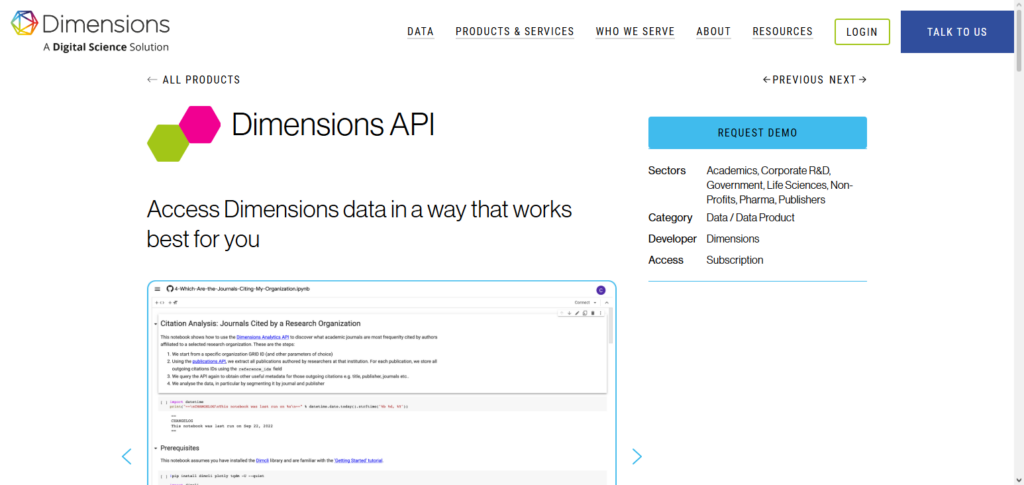
The Dimensions API can be integrated into knowledge platforms and AI research assistant analytics to help detect relationships between scientific concepts. The AI capabilities of the API also help perform literature reviews and gather evidence quickly. Because of its structured metadata and fully recorded research, the Dimensions API is an excellent research solution for universities and enterprises.
Why Dimensions API Matters
| Point | Details |
|---|---|
| Advanced Research Discovery | Dimensions API matters because it provides access to millions of scientific publications, patents, grants, clinical trials, and datasets, helping developers build powerful research discovery applications. |
| AI-Powered Knowledge Extraction | It enables AI systems to identify research patterns, extract important insights, and connect related scientific information for faster decision-making. |
| Citation & Impact Analysis | Developers can use citation data and researcher information to create platforms that measure academic influence and track emerging research trends. |
| Supports Intelligent Applications | Dimensions API helps build AI research assistants, academic search engines, and knowledge management platforms with reliable scientific data. |
| Trusted Research Data | Its structured and verified database improves the accuracy of AI-generated research insights and recommendations. |
2. IBM Watson Discovery Research API
The IBM Watson Discovery Research API is an AI research assistant API that is enterprise-oriented. This API is designed for developers to extract meaning from large, unstructured datasets. Developers can construct research tools that analyze data, summarize documents, answer questions, and draft research reports.
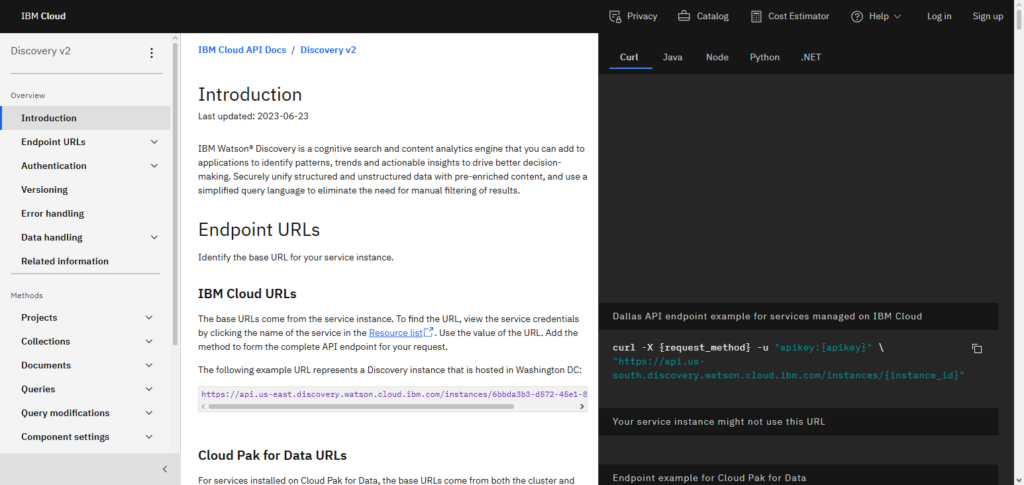
The IBM Watson Discovery Research API uses NLP, machine learning, and intelligent search to provide and support the research of multiple data sources. Because of its enterprise security features, this API is designed for large organizations that need AI research capabilities to provide information for decision-making.
Why IBM Watson Discovery Research API Matters
| Point | Details |
|---|---|
| Enterprise Information Analysis | IBM Watson Discovery API matters because it helps organizations analyze large amounts of unstructured data, including documents, reports, and research materials. |
| Intelligent Search Capabilities | It improves information discovery through AI-powered search that understands user intent rather than relying only on keywords. |
| Document Understanding | Developers can build applications that summarize, classify, and extract valuable information from complex documents. |
| Business Decision Support | It helps enterprises convert large data collections into actionable insights for better strategic decisions. |
| Secure AI Research Solutions | Watson Discovery provides enterprise-grade security features, making it suitable for organizations handling sensitive information. |
3. AWS Bedrock Research API
For applications centered around research assistance, the AWS Bedrock Research API offers developers the accessibility of foundational AI models. Within the scope of research assistance, models built on the AWS infrastructure allow developers the capability of integrating large language models optimized for the tasks of document analysis and summarization, as well as question answering and knowledge discovery.
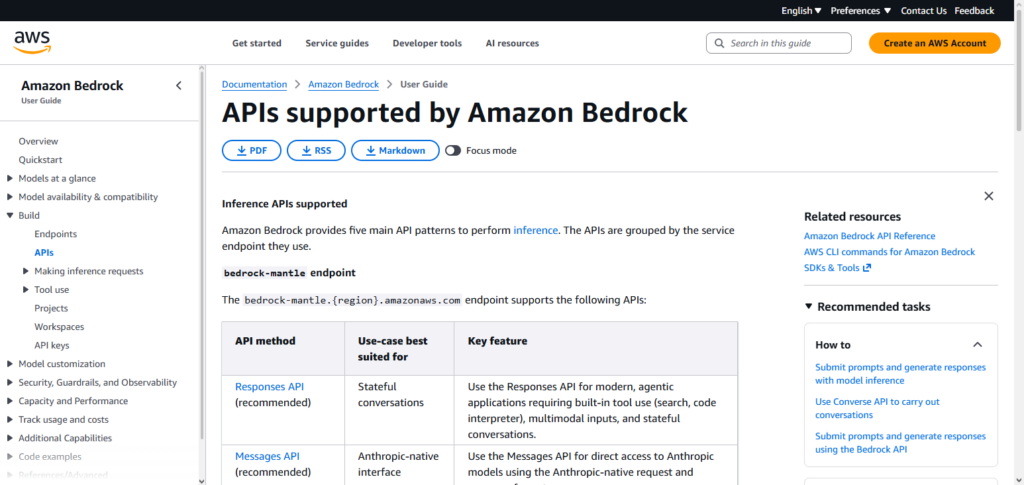
Assisting in the construction of tailored research assistants, developers can use Bedrock models along with private datasets in the retrieval-augmented generation (RAG) framework. With the provision of enterprise security and extensive AI deployment monitoring, AWS Bedrock Research API is designed to serve developers and businesses that are constructing highly advanced and intelligent research frameworks.
Why AWS Bedrock Research API Matters
| Point | Details |
|---|---|
| Access to Multiple AI Models | AWS Bedrock matters because developers can use different foundation AI models through a single platform to create customized research assistants. |
| Scalable AI Infrastructure | It allows businesses to deploy AI research applications on AWS cloud infrastructure with high scalability and reliability. |
| Private Data Integration | Developers can connect company data sources with AI models to generate accurate, context-based research results. |
| Faster AI Development | Bedrock reduces development time by providing ready-to-use AI capabilities for summarization, analysis, and question answering. |
| Enterprise Security | It supports secure AI deployments with AWS compliance and cloud security features. |
4. Microsoft Azure AI Research API
The Microsoft Azure AI Research API provides users with a complete framework and tools to build AI-driven research assistants using machine learning and language models. Among the tools provided are intelligent search, document understanding, analysis, and knowledge extraction.
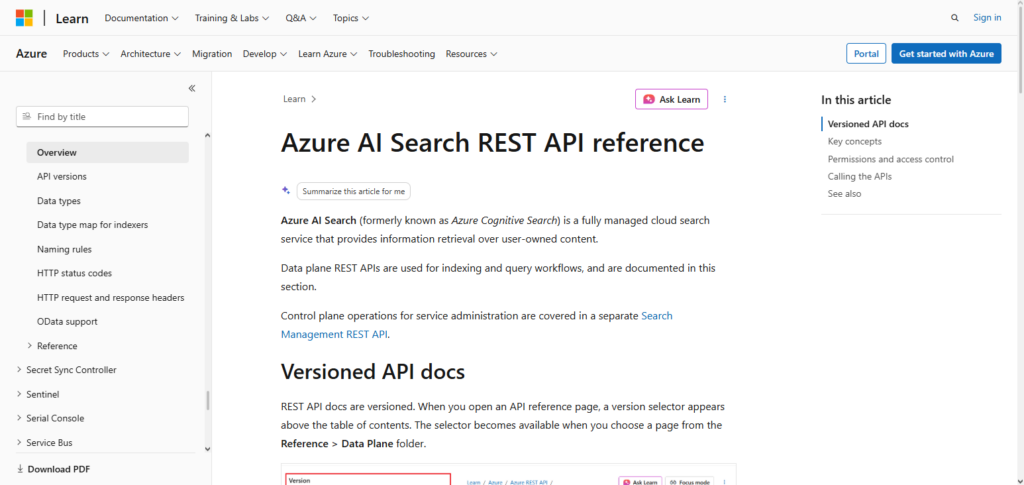
Azure AI can be incorporated into research workflows by integrating it with enterprise databases and research documents and the APIs can be deployed into cloud applications.
Given the research, analysis, and search features, the system helps users discover and extract the information needed in a timely manner. The Azure AI Research API provides the security, compliance, and integration options of Microsoft services and is appropriate for academia and enterprises.
Why Microsoft Azure AI Research API Matters
| Point | Details |
|---|---|
| Enterprise AI Development | Azure AI Research API matters because it provides developers with tools to create secure and scalable AI-powered research applications. |
| Intelligent Data Processing | It helps analyze documents, extract information, and generate insights from large amounts of business and research data. |
| Microsoft Ecosystem Integration | Developers can easily connect AI research solutions with Microsoft products, cloud services, and enterprise systems. |
| Advanced Search Technology | Azure AI improves research workflows through semantic search and natural language understanding. |
| Reliable Cloud Performance | Its global cloud infrastructure supports high-performance AI applications for organizations worldwide. |
5. OpenAI Research Assistant API
OpenAI Research Assistant API offers the ability for developers to build complex research applications utilizing advanced research-related models. It can automate tasks for a literature review, summarize documents, interpret data or research questions, and find research-related information.
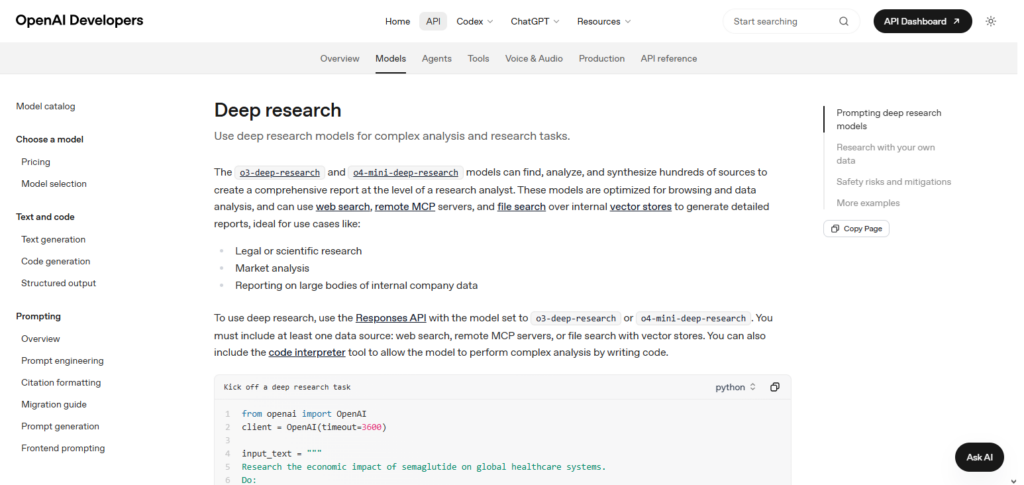
Developers can use tools to construct AI research assistants by combining the API with external databases, private documents, and custom search engines. OpenAI Research Assistant API’s advanced reasoning can help simplify large quantities of data and create structured insights.
OpenAI Research Assistant API can also create research-related productivity tools and educational research applications. It is useful for scientific research and enterprise knowledge management solutions.
Why OpenAI Research Assistant API Matters
| Point | Details |
|---|---|
| Advanced AI Reasoning | OpenAI Research Assistant API matters because it enables developers to build applications capable of understanding complex research questions and generating detailed responses. |
| Automated Research Workflows | It helps automate literature reviews, document analysis, summarization, and knowledge extraction processes. |
| Human-Like Interaction | Developers can create conversational research assistants that provide natural and intelligent user experiences. |
| Flexible Integration | The API can connect with databases, documents, and external tools to create customized research platforms. |
| Faster Knowledge Discovery | It reduces the time required to collect, analyze, and organize information from multiple sources. |
6. Anthropic Claude Research API
Anthropic Claude Research API gives developers the tools needed to build research assistants utilizing models with advanced reasoning, analysis, and longer context capabilities. These research assistants can work with large quantities of data to summarize large documents, studies, and surveys, and even answer complex research-related questions.
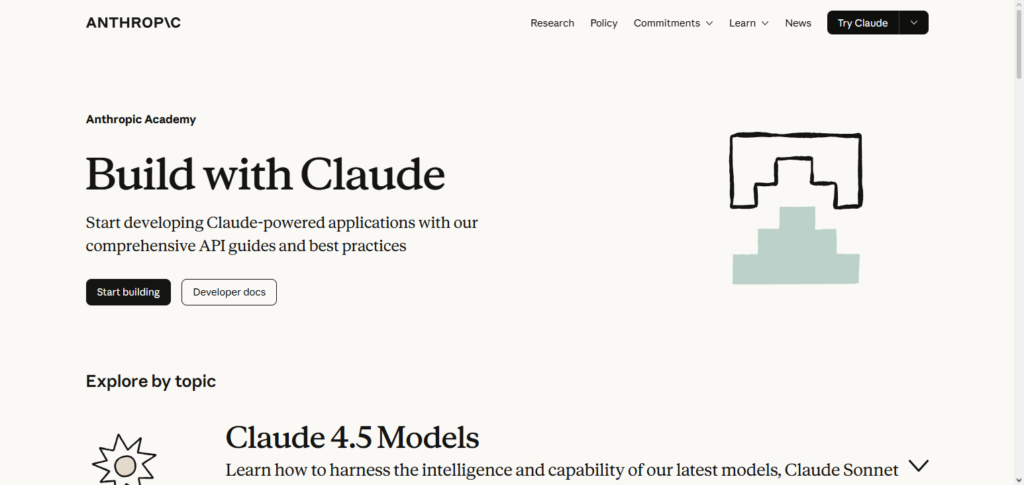
The API has a large focus on safe and reliable use, and the accuracy of the answers it provides makes it perfect for more professional research settings. This means that developers can build tools and use Claude for various knowledge management systems and research-related academic and professional tools.
Why Anthropic Claude Research API Matters
| Point | Details |
|---|---|
| Long Document Analysis | Claude Research API matters because it can process large amounts of text, making it valuable for analyzing research papers, reports, and datasets. |
| Accurate AI Responses | It focuses on generating reliable and context-aware answers for professional research applications. |
| Complex Reasoning Support | Developers can build applications that handle advanced analysis and multi-step research tasks. |
| Safe AI Development | Claude emphasizes responsible AI practices, making it suitable for sensitive research environments. |
| Professional Research Assistance | It helps organizations create AI tools for knowledge management, analysis, and decision support. |
7. LangChain Research Agent
The LangChain Research Agent provides a way to build custom AI research assistants. The framework connects language models to tools, APIs, databases, and document sources. Compared to a standard API, LangChain provides the components needed to build intelligent agents to search for, analyze, and perform multi-step research tasks.
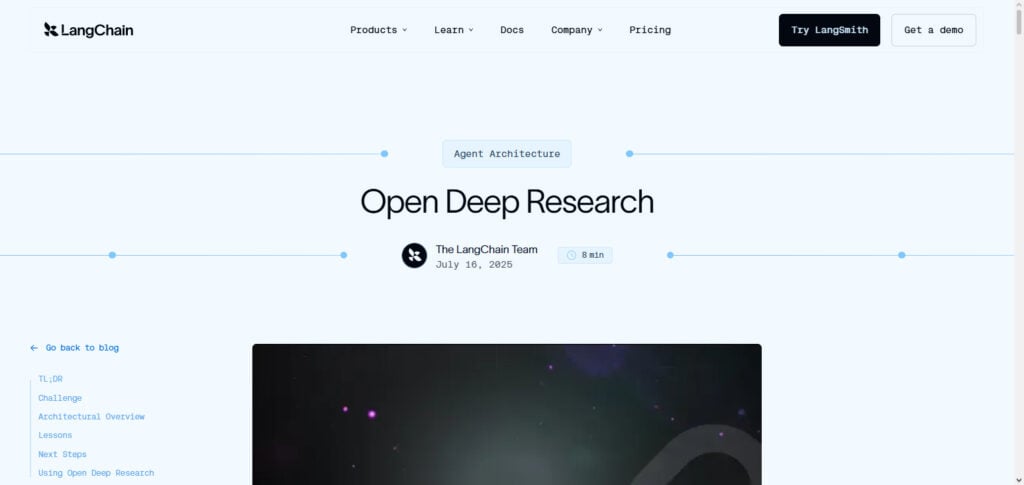
The framework provides the building blocks to combine AI models, vector databases, and retrieval systems to create a sophisticated research workflow. Furthermore, LangChain is known for RAG, automated reasoning, and tool-using actions. The framework is famous for building flexible research assistants and AI agents, and knowledge-based applications.
Why LangChain Research Agent Matters
| Point | Details |
|---|---|
| Custom AI Agent Creation | LangChain matters because it allows developers to create customized research agents that connect AI models with external tools and databases. |
| Flexible Architecture | Developers can combine different models, APIs, and data sources to build specialized research workflows. |
| Retrieval-Augmented Generation | It improves AI accuracy by allowing applications to retrieve information from trusted sources before generating responses. |
| Automation of Research Tasks | LangChain enables AI agents to perform searches, analyze information, and complete multi-step tasks automatically. |
| Developer-Friendly Framework | Its extensive ecosystem makes AI research application development faster and more flexible. |
8. LlamaIndex Research API
The LlamaIndex Research API offers data indexing and paves the way for the development of AI research assistants based on large language models by providing tools to connect private and external data sources. It focuses on data retrieval and knowledge management and provides AI systems access to pertinent information.
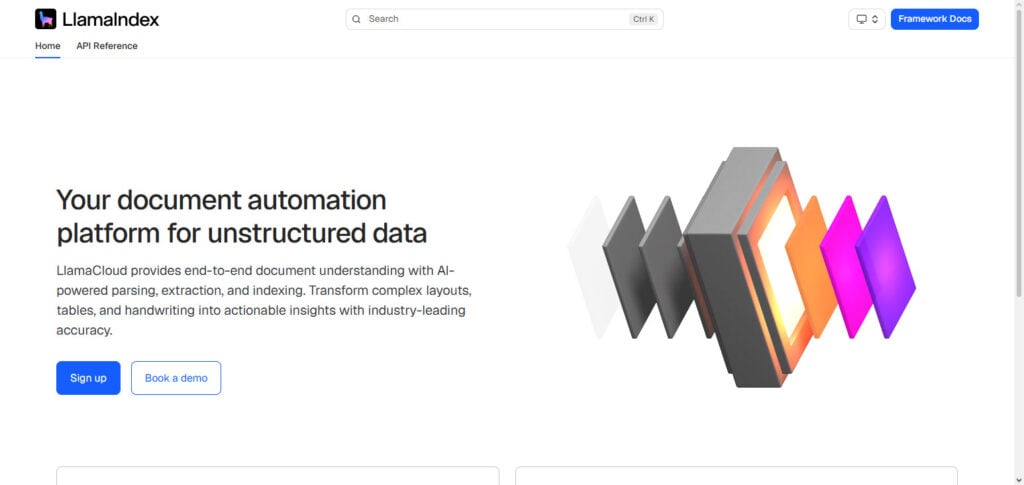
The framework is valuable for the development of systems that perform document analysis, scientific research, enterprise search, and automated reporting. LlamaIndex augments generation and retrieval by embedding context in trusted data sources, thus improving the accuracy of AI systems in responding to queries.
The framework is flexible and provides the developer tools to build research platforms that require intelligent search and context-based search responses.
Why LlamaIndex Research API Matters
| Point | Details |
|---|---|
| Efficient Data Connection | LlamaIndex matters because it connects large language models with private and external data sources for better AI research performance. |
| Improved Knowledge Retrieval | It helps AI applications find relevant information from large document collections quickly and accurately. |
| Custom Research Assistants | Developers can create domain-specific AI assistants using organizational documents and specialized datasets. |
| Better AI Accuracy | LlamaIndex reduces incorrect responses by grounding AI outputs with reliable information sources. |
| Simplified Data Management | It provides tools for indexing, organizing, and retrieving information efficiently. |
9. Scopus API
The Scopus API allows developers to access citation data as part of one of the largest databases of abstracts and citations. This API allows developers to incorporate search capabilities for articles and authors, as well as citation metrics and research trends. Developers have used the Scopus API to create research and citation tools and automate the search for literature.

This API serves a wide audience including universities, research institutions, and organizations who want to analyze research and track trends in research. The Scopus API has great potential to be incorporated to AI research assistants because of its vast coverage of academic literature.
Why Scopus API Matters
| Point | Details |
|---|---|
| Academic Research Access | Scopus API matters because it provides developers access to a large database of scholarly articles, citations, and researcher profiles. |
| Research Trend Analysis | It enables applications to identify scientific trends, publication growth, and emerging research areas. |
| Citation Tracking | Developers can create tools that analyze research impact and academic performance. |
| Trusted Scientific Data | Scopus provides verified academic information that improves the reliability of AI research applications. |
| Supports Education & Innovation | It helps universities and organizations develop advanced research analytics platforms. |
10. Elsevier ScienceDirect API
Elsevier ScienceDirect API offers access to millions of articles, journals, and dissertations. This API offers developers the ability to build AI research tools by offering the ability to obtain the metadata and abstracts of articles and the scientific content.
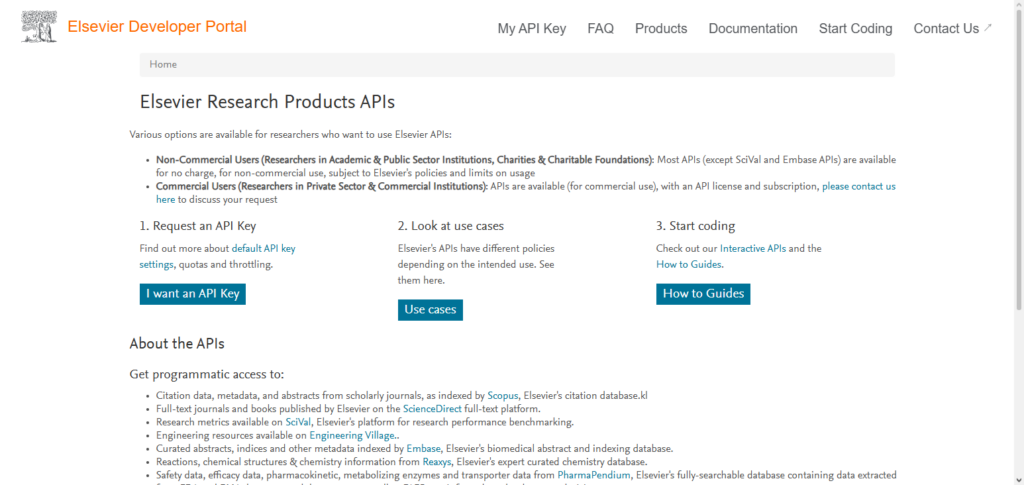
ScienceDirect API can be integrated into systems that assist literature reviews, academic searching, and knowledge discovery. This API supports an automated research workflow by assisting AI research assistants in quickly finding the scientific content they need.
Given the availability of vetted scholarly content, it positively impacts the API research assistants generated content and suggestions. ScienceDirect API is a go to for many researchers and universities and organizations that are focused on research and the advancement of academic solutions and scientific information.
Why Elsevier ScienceDirect API Matters
| Point | Details |
|---|---|
| Access to Scientific Literature | ScienceDirect API matters because it provides access to millions of peer-reviewed scientific articles across different research fields. |
| AI Literature Review Support | Developers can build applications that automate paper discovery, summarization, and research analysis. |
| Reliable Knowledge Source | It provides trusted academic content that improves AI-generated research recommendations. |
| Research Automation | The API helps automate scientific workflows and reduces manual effort in finding relevant studies. |
| Supports Innovation | ScienceDirect API enables developers to create advanced research platforms for scientists, students, and organizations. |
Comparison Table: Best AI Research Assistant APIs for Developers
| AI Research Assistant API | Best For | Key Features | AI Capabilities | Data Sources | Developer Support |
|---|---|---|---|---|---|
| Dimensions API | Academic research, scientific discovery, research analytics | Publications search, citation analysis, grants, patents, clinical trials, researcher data | Semantic search, research insights, trend analysis, knowledge discovery | Scientific papers, patents, datasets, grants, clinical research data | API documentation, developer access, structured research data |
| IBM Watson Discovery Research API | Enterprise research and document intelligence | Intelligent search, document analysis, data extraction, content understanding | NLP, AI search, summarization, classification, question answering | Business documents, reports, internal knowledge bases, research content | Enterprise APIs, SDKs, cloud integration support |
| AWS Bedrock Research API | Building scalable AI research applications | Foundation models, custom AI assistants, RAG support, cloud deployment | Generative AI, document analysis, reasoning, automated insights | Private databases, enterprise data, connected knowledge sources | AWS SDKs, developer tools, cloud infrastructure support |
| Microsoft Azure AI Research API | Enterprise AI solutions and cloud-based research tools | Semantic search, AI services integration, document intelligence, data processing | NLP, machine learning, AI summarization, knowledge extraction | Enterprise data, documents, databases, cloud storage | Azure SDKs, documentation, Microsoft developer ecosystem |
| OpenAI Research Assistant API | General AI research assistants and intelligent applications | Text analysis, AI conversations, summarization, reasoning, tool integration | Large language models, natural language understanding, content generation | User data, connected databases, external tools, documents | APIs, SDKs, developer documentation, AI platform support |
| Anthropic Claude Research API | Complex document analysis and advanced reasoning | Long-context processing, document understanding, AI assistance | Advanced reasoning, summarization, contextual analysis, knowledge extraction | Documents, research papers, business data, user-provided information | API documentation, developer tools, model integration support |
| LangChain Research Agent | Custom AI agents and workflow automation | AI agent framework, tool connections, RAG pipelines, workflow building | Agent-based AI, reasoning, retrieval, multi-step automation | APIs, databases, vector stores, private documents | Open-source community, integrations, developer frameworks |
| LlamaIndex Research API | Data-connected AI applications | Data indexing, retrieval systems, knowledge management, RAG development | Information retrieval, AI search, contextual responses | Documents, databases, APIs, private organizational data | Developer libraries, integrations, open-source resources |
| Scopus API | Academic research platforms and citation analysis | Article search, author profiles, citation tracking, research metrics | Research analytics, publication discovery, academic insights | Scholarly articles, journals, citations, researcher records | API documentation, academic developer resources |
| Elsevier ScienceDirect API | Scientific literature applications | Research article access, metadata retrieval, literature discovery | AI-assisted search, content analysis, research automation | Peer-reviewed journals, scientific publications, academic articles | Developer APIs, documentation, research ecosystem support |
Conclusion
The arrival of AI Research Assistant APIs for developers changes how apps handle and process information. Advanced reasoning and automation coupled with APIs retrieval features like OpenAI Research Assistant API, Anthropic Claude Research API, AWS Bedrock, LangChain, and LlamaIndex assist developers in building smart research tools.
Scopus, ScienceDirect, and Dimensions are examples of academic-oriented APIs. Scalable research solutions can be found in enterprise platforms like IBM Watson Discovery and Microsoft Azure AI. Based on business, educational, and innovation-related scientific research API, developers can create more effective AI-driven research assistants.
FAQ
What are AI Research Assistant APIs?
AI Research Assistant APIs are developer tools that provide access to artificial intelligence models, databases, and research capabilities to build applications that can analyze information, summarize documents, answer questions, and automate research workflows.
Why should developers use AI Research Assistant APIs?
Developers use AI Research Assistant APIs to reduce manual research time, automate information discovery, process large datasets, generate insights, and create intelligent applications with advanced search and reasoning capabilities.
Which is the best AI Research Assistant API for developers in 2026?
The best API depends on the use case. OpenAI Research Assistant API, Anthropic Claude Research API, AWS Bedrock, LangChain, and LlamaIndex are popular for building general AI research applications, while Scopus and ScienceDirect are ideal for academic research.
Can AI Research Assistant APIs analyze scientific papers?
Yes, many AI Research Assistant APIs can analyze scientific papers, extract key information, summarize studies, and identify research trends. APIs like Dimensions, Scopus, and ScienceDirect provide access to academic publications.