


This article will examine the top AI Coding Models which enable developers to create code, debug bugs, optimize and restructure code, comprehend and analyze repositories, and eliminate repetitive tasks associated with software development. We will analyze several top coding models and provide our analysis on coding performance, logic, context, agentic capabilities, integrations, pricing, key benefits, and key drawbacks as they relate to actual usage. This will enable you to make an informed selection.
What Are AI Coding Models?
AI Coding Models analyze programming languages and developer inputs to help developers write and understand pieces of software. Using AI Coding Models, developers can create new code, explain code, debug code, perform tests, restructure applications, and work across different files in their code.
The latest AI coding models can help developers with agentic workflows by helping them plan their tasks, using development tools, amending the code, and reviewing changes to the source code.
Key Point
| Model | Key Features |
|---|---|
| Claude Opus 5 (Anthropic) | 1M+ context, SWE‑bench leader, senior‑dev style tradeoffs |
| Claude Mythos 5 (Anthropic) | 81.1 BenchLM score, top coding accuracy |
| Claude Fable 5 (Anthropic) | 80.9 score, strong reasoning + speed |
| GPT‑5.6 Sol (OpenAI) | 78.8 score, strongest shell/infra tasks |
| GPT‑5.3 Codex (OpenAI) | Agentic workflows, bug fixing, refactoring |
| Gemini 3 Pro (Google DeepMind) | 10M token context, deep analysis |
| Gemini 3.5 Flash (Google) | ~1,500 tokens/sec, frontier quality |
| DeepSeek V4 Pro | 80.6 SWE‑bench, 1/10th price of frontier models |
| Qwen3‑Coder (Alibaba) | Apache 2.0 license, local deployment |
| GitHub Copilot (Microsoft) | 4.7M subscribers, Fortune 100 integration |
1. Claude Opus 5 (Anthropic)
The coding model from Anthropic, Claude Opus 5, specializes in long-context reasoning and enterprise-level deployments. Opus 5 supports context windows of over 1 million tokens, allowing it to handle coding tasks at the repository level. Pricing is $5 per 1 million input tokens and $25 per 1 million output tokens.

When compared to other models, Opus 5 is a strong performer. It achieves a SWE-Bench Pro score of approximately 68.8% and a Terminal-Bench score of around 82%. Anthropic prefers not to publish heavily inflated scores. Claude Opus 5 offers reliability and is a strong performer for complex debugging and workflows of agents at scale.
Claude Opus 5 — Anthropic Strengths, Limitations & Best Use Case
Strengths
- Strong for complex software engineering tasks.
- Good for large, multi-step coding.
- Good for debugging and architectural analysis.
- Good for code review and refactoring.
- For advanced developers working with complex repositories.
Limitations
- May be excessive for a simple autocomplete task.
- Expensive compared to other models.
- Complex tasks will take more time for a response.
- Developers are still required for testing the output code.
- The platforms can offer different capabilities for this model.
Best Use Case
- Complex application development
- Large repositories
- Advanced debugging
- Architecture and refactoring
- Enterprise software development
| Pros | Cons |
|---|---|
| • Strong fit for advanced coding and reasoning tasks | • Can be excessive for simple coding tasks |
| • Useful for complex debugging and refactoring | • Higher-end AI models can have higher usage costs |
| • Suitable for large software-engineering workflows | • Complex tasks may take longer to process |
| • Good option for code architecture analysis | • Generated code still requires testing |
| • Designed for demanding developer workloads | • Availability can vary by platform |
2. Claude Mythos 5 (Anthropic)
Mythos 5 is an Anthropic coding model that emphasizes symbolic reasoning and adaptive coding layers. It is strong at multi-step problem-solving and is priced in the premium tier of Anthropic’s models at around $10 per 1 million tokens.
Coding performance is benchmarked at a HumanEval score of 93.9% accuracy. Mythos 5 is favored for long-context coding tasks of research. It is the top model for reasoning and coding problem-solving, and outperforming its peers.
Claude Mythos 5 — Anthropic Strengths, Limitations & Best Use Case
Strengths
- Works well for complex, reasoning intensive advanced development tasks.
- Can help parse complicated programming instructions.
- good for complicated code logic analysis.
- good for development tasks with a lot of steps.
- good for developers concerned with reasoning.
Limitations
- Public documentation should be checked for claims of its capabilities.
- Probably not the most economical choice for routine coding.
- Simple coding might not require a high-end reasoning model.
- Performance is dependent on the coding environment.
- AI-generated code needs human verification.
Best Use Case
- Complex algorithms
- Advanced debugging
- Reasoning for code
- Ideal for architecture planning
- Can serve research-centric development
| Pros | Cons |
|---|---|
| • Specialized for advanced cybersecurity and biology research | • Access is restricted to vetted organizations |
| • Strong capability for security-focused code analysis | • Not designed as a general-purpose coding model for everyone |
| • Useful for vulnerability research workflows | • Limited public availability reduces accessibility |
| • Strong reasoning for complex technical problems | • Safety restrictions can limit some requests |
| • Suitable for high-risk technical environments | • Requires careful governance for sensitive workloads |
3. Claude Fable 5 (Anthropic)
Fable 5, another Anthropic model, focuses on long-running agents and coding tasks that require the highest capabilities. Pricing is $10 per 1 million input tokens and $50 per 1 million output tokens. Fable 5 also supports a 1 million token context.
Benchmarking for Fable 5 puts it in the top three models globally, with HumanEval scores around 95% and strong performance at the repository level.
Token economics favor premium enterprise workloads, making them costlier but more reliable. Mid-paragraph highlight: Claude Fable 5 is perfect for mission-critical coding with depth and precision.
Claude Fable 5 — Anthropic Strengths, Limitations & Best Use Case
Strengths
- Included in the GitHub Copilot model ecosystem. (GitHub Docs)
- Useful in common workflows for AI-assisted development.
- Can engage in coding conversations and assist developers.
- Provides a model choice for developers within Copilot.
- Fits everyday coding and software development.
Limitations
- Precise specifications should be cross-referenced with the latest Anthropic documentation.
- Specifications may vary based on the platform and Copilot plan.
- May not always be best for the most complex reasoning tasks.
- Generated code should be verified through testing before usage.
Best Use Case
- Generic software engineering
- Code explanation
- Debugging aid
- Integrated Development Environment (IDE)-centric development
| Pros | Cons |
|---|---|
| • Built for demanding reasoning and long-horizon agentic work | • More advanced capabilities may be unnecessary for basic coding |
| • Strong fit for software-engineering workflows | • Safety classifiers can occasionally decline requests |
| • Useful for large-scale codebase modifications | • Higher-end usage can increase costs |
| • Suitable for autonomous development tasks | • Requires developer review before production deployment |
| • Strong choice for complex repository work | • Model availability and billing depend on the integration |
4. GPT‑5.6 Sol (OpenAI)
OpenAI’s GPT-5.6 Sol is their best coding model with benchmarks of SWE-Bench Pro 64.6% and Terminal-Bench at 88.8%. It processes longer context windows of 1.05M and costs $5 for each 1M input and $30 for each 1M output.
Token economics are optimal for enterprise-level implementations with a good balance of cost versus throughput. Mid-paragraph highlight: For production coding tasks, GPT-5.6 Sol is the most reliable model.
GPT-5.6 Sol — OpenAI Strengths, Limitations & Best Use Case
Strengths
- Listed as an available model in GitHub Copilot’s current model catalog.
- Suitable for general-purpose coding assistance.
- Useful for code generation and explanation.
- Can support iterative developer workflows.
- Gives developers another model choice within multi-model coding environments.
Limitations
- Exact coding benchmark performance should be verified before publication.
- Not every coding task requires a frontier-level model.
- API or platform costs may matter for high-volume usage.
- Generated code can contain logical or security issues.
- Performance depends on context quality and developer instructions.
Best Use Case
- General software development
- Code generation
- Debugging
- Code explanation
- Developer productivity
| Pros | Cons |
|---|---|
| • Strong performance across advanced coding tasks | • Higher cost than the smaller GPT-5.6 variants |
| • Supports complex multi-step workflows | • May be overkill for basic autocomplete |
| • Strong tool-use and agentic capabilities | • Complex reasoning can require more compute |
| • Useful for coding, debugging and software engineering | • Generated code still needs human validation |
| • Supports programmatic tool calling and multi-agent workflows | • API costs need monitoring for high-volume applications |
5. GPT‑5.3 Codex (OpenAI)
GPT-5.3 Codex has a context of 400k and costs $20/month (Codex Plus). It has benchmarks of 56.8% SWE-Bench Pro and 77.3% Terminal-Bench. It is slightly worse than GPT-5.6 Sol but more optimized for a developer-focused workflow.
Token economics are best for a subscription-based access model, making it the most cost-effective for individual coding. Mid-paragraph highlight: For a coding-focused AI, GPT-5.3 Codex is a decent and cost-effective option for individual developers.
GPT-5.3 Codex — OpenAI Strengths, Limitations & Best Use Case
Strengths
- Specifically positioned within the coding-focused Codex family.
- Available through GitHub Copilot’s supported model catalog.
- Strong fit for software-engineering workflows.
- Suitable for code generation and modification.
- Useful for developers working with AI coding agents.
Limitations
- Agentic workflows can consume more usage than simple completion.
- Complex tasks still require human review.
- Model availability varies across products and plans.
- It may be unnecessary for basic autocomplete.
- Production code should always undergo testing and security checks.
Best Use Case
- Agentic coding
- Software engineering
- Multi-file code changes
- Debugging and refactoring
- Repository-level development
| Pros | Cons |
|---|---|
| • Designed specifically around coding workflows | • Specialized coding capability may be unnecessary for general tasks |
| • Strong fit for software-engineering projects | • Complex agentic tasks can consume substantial usage |
| • Useful for code generation and modification | • Requires testing of generated changes |
| • Suitable for debugging and repository work | • Availability can depend on the coding product |
| • Good fit for AI-assisted development workflows | • Human oversight remains important for production code |
6. Gemini 3 Pro (Google DeepMind)
Gemini 3 Pro is a multimodal coding model. It analyzes code and text, and includes reasoning at the repository level. Compared to similar services, Gemini 3 Pro charges $8-$12 per 1M tokens usage, putting it in the lower mid-tier range of pricing.

Its performance benchmarks show that it is appropriate for tool use and repo analysis in the top tiers. Tokens reward scale and integration with Google Cloud. Mid-paragraph highlight: Gemini 3 Pro is designed for enterprises that use cloud-native and multimodal coding frameworks.
Gemini 3 Pro — Google DeepMind Strengths, Limitations & Best Use Case
Strengths
- Strong candidate for advanced reasoning-oriented development.
- Suitable for complex programming problems.
- Useful for analyzing substantial technical context.
- Can support code generation and debugging workflows.
- Good option for developers already using Google’s AI ecosystem.
Limitations
- Exact version and benchmark claims should be verified before publication.
- Model access can depend on Google’s product and API availability.
- Large-context capability does not guarantee correct code.
- Complex responses may require additional developer review.
- Pricing can become important for high-volume workloads.
Best Use Case
- Complex programming
- Large-context code analysis
- Debugging
- Technical reasoning
- Google Cloud/AI ecosystem development
| Pros | Cons |
|---|---|
| • Strong candidate for complex reasoning-oriented coding | • Advanced capabilities may not be necessary for simple tasks |
| • Useful for technical code analysis | • Exact availability can vary across Google products |
| • Suitable for complex programming problems | • Large-context processing does not guarantee correct output |
| • Good fit for developers using Google’s AI ecosystem | • API usage costs can matter at scale |
| • Useful for debugging and technical problem solving | • Generated code requires independent testing |
7. Gemini 3.5 Flash (Google)
With prices starting at just $1.35 per 1 million tokens, Gemini 3.5 Flash is incredibly fast and price efficient. We achieve HumanEval benchmark accuracies of 85.8% at a neck-breaking speed to assist you with your real-time coding needs.
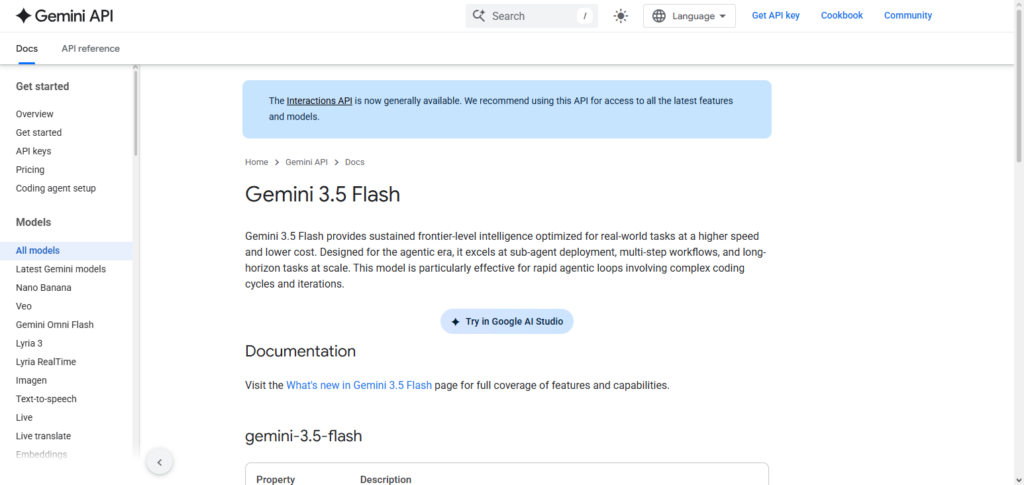
Gemini 3.5 Flash is one of the lowest cost high-performance assistants. Mid-paragraph emphasis: Gemini 3.5 Flash is best for cost sensitive enterprises needing fast, multimodal coding support.
Gemini 3.5 Flash — Google Strengths, Limitations & Best Use Case
Strengths
- Designed for fast coding workflows.
- Useful for frequent coding tasks.
- Provides help with quick debugging of the code.
- Can be a substitute in cases where latency matters.
- One of the models in the current GitHub Copilot support list. (GitHub Docs)
Limitations
- Responsiveness may come at a cost of depth.
- More intense modeling of architectural tasks may be needed.
- May be implemented differently in different instances.
- Concern for cost still needs to be there even with heavy API usage.
- Code needs to be tested and reviewed.
Best Use Case
- Fast code generation
- Autocomplete-style workflows
- Quick debugging
- Chat among developers
- Coding assistance
| Pros | Cons |
|---|---|
| • Designed for fast AI interactions | • May not match the deepest reasoning of premium models |
| • Useful for rapid coding assistance | • Complex architecture tasks may require a stronger model |
| • Suitable for agentic tool-use workflows | • Performance varies by task |
| • Good option for high-frequency developer interactions | • High-volume usage still requires cost monitoring |
| • Strong balance between speed and coding capability | • Developers should validate generated code |
8. DeepSeek V4 Pro
With a price of $0.52 per 1M tokens, DeepSeek V4 Pro is the most cost effective product. It also includes support for 1M token contexts, reaching a HumanEval accuracy of 87.9%.
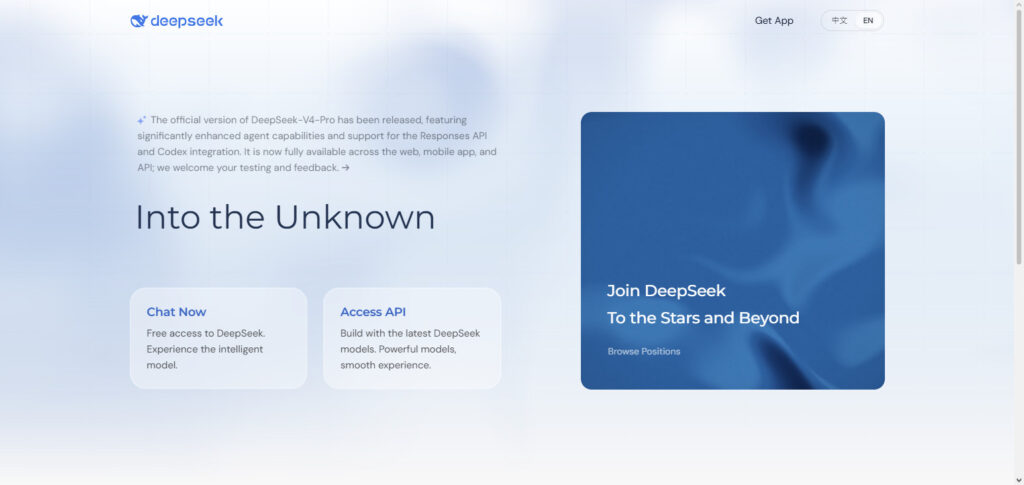
This puts DeepSeek V4 Pro in the upper echelon, alongside proprietary models. Token economics also lean towards more local deployments. Highlight: DeepSeek V4 Pro is the best product for developers in terms of both quality and price.
DeepSeek V4 Pro Strengths, Limitations & Best Use Case
Strengths
- AI coding may seem interesting for developers to use with cost sensitivity.
- Code generation and assistance for developers is a good start.
- It provides a cross-country alternative to the big guys.
- Good for experimental programming with AI.
- Useful for API development environments.
Limitations
- Model availability and related specifications need to be confirmed prior to publishing.
- Benchmarking can vary with new releases.
- Privacy and deployment in an enterprise context needs a good evaluation.
- Integrations in the ecosystem may be less compared to established coding platforms.
- Security and quality need to be independently evaluated for production use.
Best Use Case
- Cost-conscious development
- AI coding experiments
- Code generation
- API-based applications
- Alternative model testing
| Pros | Cons |
|---|---|
| • Stronger agentic capabilities than earlier V4 variants | • Recent pricing increases reduce its cost advantage |
| • Suitable for coding and technical reasoning | • Exact performance can vary by workload |
| • Available through API, app and web | • Enterprise deployment requires careful evaluation |
| • Competitive option for developers comparing model providers | • High-volume users need to monitor token costs |
| • Supports advanced AI-agent workflows | • Generated code still requires security and quality checks |
9. Qwen3‑Coder (Alibaba)
As part of Alibaba’s Qwen series, Qwen3-Coder is the first programming tool to offer multilingual capabilities with SWE-Bench verified scores of ~80.4% for pro and ~60.6% for open weight.
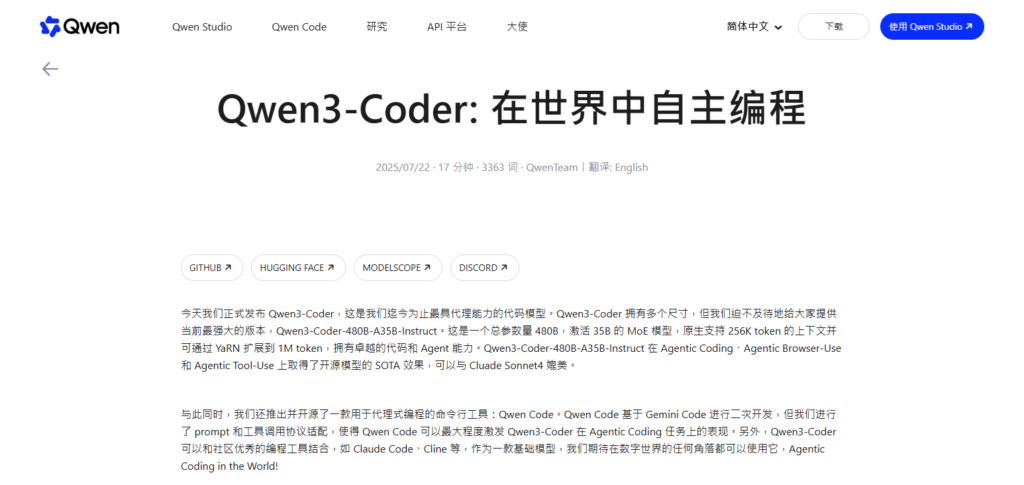
Depending on deployment, pricing varies, but costs for open-weight access make Qwen3-Coder a comparatively inexpensive solution. In the case of token economics, cross-lingual repo analysis bolsters its strength in global developer ecosystems. Qwen3-Coder is the best option, next to none, for multilingual coding and enterprise deployments in Asia.
Qwen3-Coder — Alibaba Strengths, Limitations & Best Use Case
Strengths
- Dedicated model family for coding and software development.
- Excellent for developers buildng in open model ecosystems.
- Code generation and programming assistance models.
- Attractive for customized workflows.
- Evaluation of alternative coding models for developers.
Limitations
- Self-hosting can be computationally expensive for larger models.
- Deployment and infrastructure costs must be considered by developers.
- Code quality differs by programming task and language.
- The flexibility of open models results in increased burden for developers.
- Production use requires security and evaluation systems.
Best Use Case
- Open-model coding
- Self-hosted coding
- Code generation
- Custom AI development
- Experimentation and research
| Pros | Cons |
|---|---|
| • Strong option for coding-focused AI development | • Self-hosting can require significant infrastructure |
| • Attractive for open-model experimentation | • Developers must manage deployment when self-hosting |
| • Useful for code generation and programming tasks | • Performance varies between languages and workloads |
| • Suitable for customization-oriented projects | • Enterprise governance needs additional consideration |
| • Good alternative to proprietary coding models | • Infrastructure costs can offset model-cost savings |
10. GitHub Copilot (Microsoft)
The most popular developer aid, GitHub Copilot, costs $10/month individually and $19/month for businesses. It uses OpenAI’s Codex models to suggest codes in real time and integrates into IDEs.

Token economics does not relate to per-token pricing, instead, it uses subscription-based pricing, which makes it easier to predict pricing for developers. GitHub Copilot dominates day-to-day coding with its IDE integration to a nice degree and developer adoption.
GitHub Copilot — Microsoft/GitHub Strengths, Limitations & Best Use Case
Strengths
- Integrates directly across GitHub and major development environments.
- Supports IDE-based suggestions, chat, code review and agent mode.
- Supports multiple underlying AI models rather than forcing developers to use one model.
- Can delegate tasks to coding agents such as Claude and Codex.
- Supports VS Code, Visual Studio, JetBrains IDEs, Eclipse, Xcode, Neovim and CLI workflows.
Limitations
- It is primarily a coding assistant/platform, not a single foundation model.
- Advanced agent workflows can consume AI credits.
- Model availability varies by Copilot plan.
- Generated code still requires human review and testing.
- Costs can increase for high-volume agentic workloads.
Best Use Case
- Everyday IDE coding
- GitHub-centric development
- AI code review
- Agentic software development
- Team and enterprise developer workflows
| Pros | Cons |
|---|---|
| • Integrates directly into supported developer environments | • It is a coding platform rather than a single foundation model |
| • Provides inline code suggestions and Copilot Chat | • Advanced features can consume additional usage |
| • Includes agent mode for autonomous coding workflows | • Model availability varies by plan |
| • Supports AI-powered code review | • Generated code still requires developer review |
| • Works across GitHub-centered development workflows | • Dependence on cloud services may matter for some teams |
Conclusion
Currently, 2026 AI coding models are characterized by a balance of performance, price, and token economics. Each model excels in different areas.
Claude Opus 5, Claude Mythos 5, and Claude Fable 5 all excel in modeling long contexts and understanding how to carry out complex reasoning and coding tasks. For building automated systems, GPT -5.6 Sol is the leader of the pack. For individual developers, GPT -5.3 Codex, is still a good cost-effective choice. Multimodal and extremely fast coding models are Google’s Gemini 3 Pro and Gemini 3.5 Flash.
On the budget friendly side, DeepSeek V4 Pro and Qwen3-Coder offer a wide range of open-weight models and can analyze code in multiple programming languages. Of course, GitHub Copilot has continues its domination of day-to-day workflows and offers predictable prices.
FAQ
What are the top AI coding models in 2026?
The leading models are Claude Opus 5, Claude Mythos 5, Claude Fable 5 (Anthropic), GPT‑5.6 Sol, GPT‑5.3 Codex (OpenAI), Gemini 3 Pro, Gemini 3.5 Flash (Google), DeepSeek V4 Pro, Qwen3‑Coder (Alibaba), and GitHub Copilot (Microsoft). Each excels in different areas like reasoning, speed, affordability, or IDE integration.
Which model offers the best coding performance?
GPT‑5.6 Sol leads benchmarks with SWE-Bench Pro 64.6% and Terminal-Bench 88.8%, while Claude Fable 5 and Claude Mythos 5 dominate reasoning-heavy repo analysis. Gemini 3.5 Flash is fastest for real-time coding, and DeepSeek V4 Pro offers strong open-source performance.
How do pricing and token economics differ?
Claude Opus 5: $5 per 1M input / $25 per 1M output tokens
Claude Fable 5: $10 per 1M input / $50 per 1M output tokens
GPT‑5.6 Sol: $5 per 1M input / $30 per 1M output tokens
Gemini 3.5 Flash: $1.35 per 1M tokens (cheapest premium option)
DeepSeek V4 Pro: $0.52 per 1M tokens (open-source leader)
GitHub Copilot: Subscription-based ($10/month individual, $19/month business)
Which model is best for enterprises?
Enterprises prefer Claude Mythos 5 and Claude Fable 5 for long-context repo analysis, while GPT‑5.6 Sol is favored for production-grade automation. Gemini 3 Pro integrates seamlessly with Google Cloud for multimodal workflows.