



Open Source AI Models Challenges Closed AI Giants and how open innovation is changing the landscape of artificial intelligence. Leveraging transparency, flexibility and cost-effectiveness while democratizing access to advance AI development solutions by enabling developers,
business and researchers around the globe with powerful large language models as well as efficient customizable systems — open source artificial intelligence is quickly competing against proprietary platforms.
Why Open Source AI Models Challenging Closed AI Giants
Greater Transparency
Open source AI provides developers with the tools to look inside of model architecture training methods and performance behavior. This transparency not only builds trust but also allows researchers to iterate systems way faster than closed models.
Lower Cost of Adoption
Open models can be run by an organization without incurring substantial license fees. This allows startups, universities, and individual developers to utilize advanced AI.
Customization & Fine-Tuning
Unlike the closed systems that have limited flexibility, open models can be adapted to a particular domain like healthcare, finance, education or customer service.
Avoiding Vendor Lock-In
Instead of relying upon a single proprietary provider, companies retain full control over data, infrastructure and AI workflows.
Rapid Community Innovation
The open models are updated by developer communities globally, who make sharing in collaborative work on fixes and breakthroughs.
Faster Technological Progress
Having open ecosystems creates the opportunity for experimentation to occur at unprecedented speeds, which boils down to having more and better features faster.
Better Data Privacy Control
Companies have the option of running AI locally or on their own private servers, safeguarding sensitive data.
Hardware Flexibility
The best open source AI solutions allow deployment across multiple cloud vendors, local GPUs in a data center or the edge and into enterprise environments.
Key Point & Open Source AI Models Challenging Closed AI Giants
| AI Model | Parameters | Key Points |
|---|---|---|
| Qwen 3.6 Plus (397B) | 397B | High-performance multilingual reasoning model, strong coding ability, optimized for enterprise and research workloads. |
| Llama 4 Maverick (400B) | 400B | Advanced open AI model focused on efficiency, long-context understanding, and strong open-source ecosystem support. |
| Mistral Large (675B) | 675B | Powerful reasoning and coding model with strong inference efficiency and competitive performance against proprietary systems. |
| DeepSeek V3.2 (685B) | 685B | Expert-level reasoning, math, and programming capabilities with highly optimized cost-efficient training architecture. |
| Gemma 4 (27B–109B) | 27B–109B | Lightweight yet capable model family designed for local deployment, research flexibility, and efficient scaling. |
| MiniMax M2.5 (230B) | 230B | Balanced multimodal AI system offering strong conversational intelligence and efficient large-scale inference. |
| Nemotron Ultra (253B) | 253B | NVIDIA-optimized enterprise model focused on reasoning, coding, and GPU-accelerated deployment environments. |
| Nemotron Super (49B) | 49B | Mid-size model delivering strong performance with lower compute cost, ideal for production AI applications. |
| Nemotron Nano (30B) | 30B | Lightweight and efficient model built for edge AI, fast inference, and scalable deployment. |
| MiMo‑V2 Flash (309B) | 309B | Fast multimodal AI optimized for real-time reasoning, vision-language tasks, and high-speed inference workloads. |
1. Qwen 3.6 Plus (397B)
The 397B-parameter Qwen 3.6 Plus is a dense language model trained for advanced reasoning, multilingualism and enterprise AI deployment at scale With solid coding, math’s and long-context understanding competencies baked in it effectively competes directly with premium proprietary systems whilst also remaining accessible to developers and researchers.
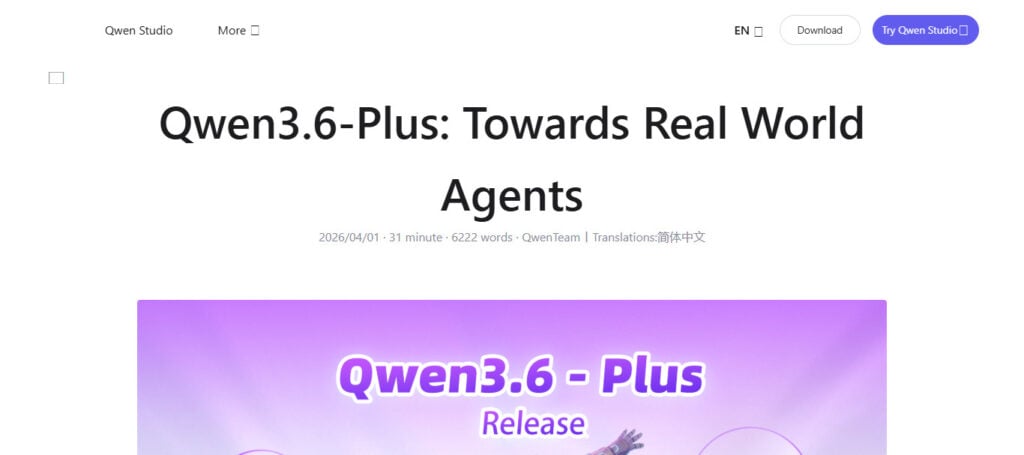
It is designed for efficiency, providing organizations with a way to customize workflows without being fully tied into any closed ecosystem. By opening up countless new possibilities for innovation, Qwen 3.6 Plus enables an unprecedented level of transparency and flexible fine-tuning critical to the diverse needs of developers collaborating on rapid experimentation across every sector — from enterprises through academia down to AI startups worldwide as part of the expanding activity within Open Source AI Models Challenging Closed-Lid For-Profit Artificial Intelligence Giants or simply OpenSourceAI vs CloseLid51s (PDF).
Qwen 3.6 Plus (397B)—Features
- Deep multi-lingual comprehension across the languages of the world
- Ability to reason programmatically and solve mathematical problems well
- Long context processing for complex enterprise workflows
- Efficient fine-tuning and customization support
- Research, Develop and Deploy: High-performance AI
Qwen 3.6 Plus (397B)
| Pros | Cons |
|---|---|
| Excellent multilingual reasoning | Very high hardware requirements |
| Strong coding and math performance | Expensive to deploy at scale |
| Enterprise-grade AI capabilities | Complex setup for beginners |
| Customizable for research use | Requires powerful GPU clusters |
| Competitive with closed models | Large energy consumption |
2. Llama 4 Maverick (400B)
The next-generation, performance-optimized large-scale open AI models. It has roughly 400 billion parameters, providing excellent conversational intelligence and depth of reasoning as well as great long-context processing for research and enterprise use cases. Developers have vast tooling available for them, community support and integration with different platforms.
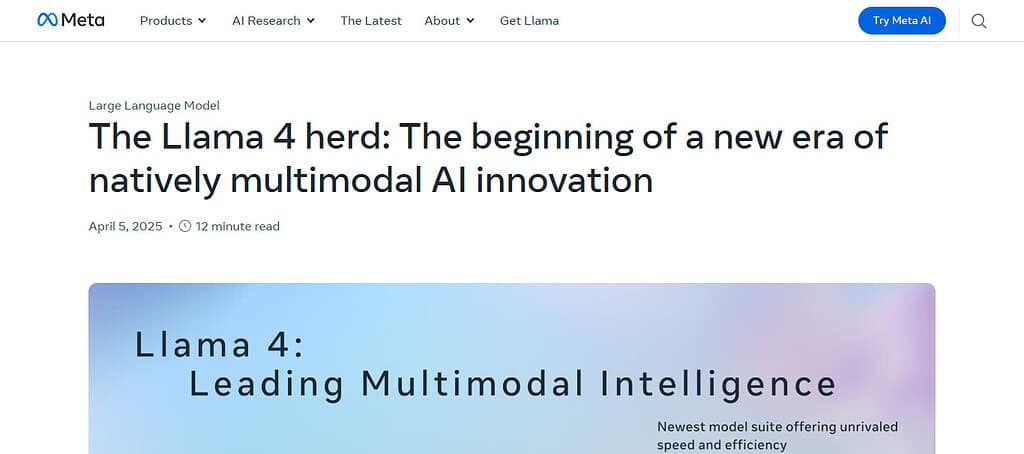
The model shows how Open Source AI Models Challenging Closed AI Giants are transforming the very notion of accessibility in Ai by allowing organizations to leverage next gen intelligence without vendor lockin. Its training optimizations also drastically lower compute requirements, unlocking those capabilities for teams of all sizes to build globally.
Llama 4 Maverick (400B) — Features
- Create great conversational intelligence and natural dialog generation
- Architecture designed to optimize for training/inference speed
- Support a large developer ecosystem and open research
- Improved long-context memory handling
- Deployment Flexibility over cloud and local environments
Llama 4 Maverick (400B)
| Pros | Cons |
|---|---|
| Large open developer ecosystem | Still resource intensive |
| Strong conversational abilities | Requires optimization expertise |
| Flexible deployment options | Performance varies by tuning |
| Good long-context understanding | Enterprise setup can be complex |
| Open innovation support | Needs strong infrastructure |
3. Mistral Large (675B)
Mistral Large is a 675-billion-parameter model designed for high-level reasoning, excellent coding capabilities and enterprise automation tasks. It’s famed for its inference speed and high benchmark scores; this shows that up-to-date open models can compete with proprietary baselines in terms of accuracy/latency.
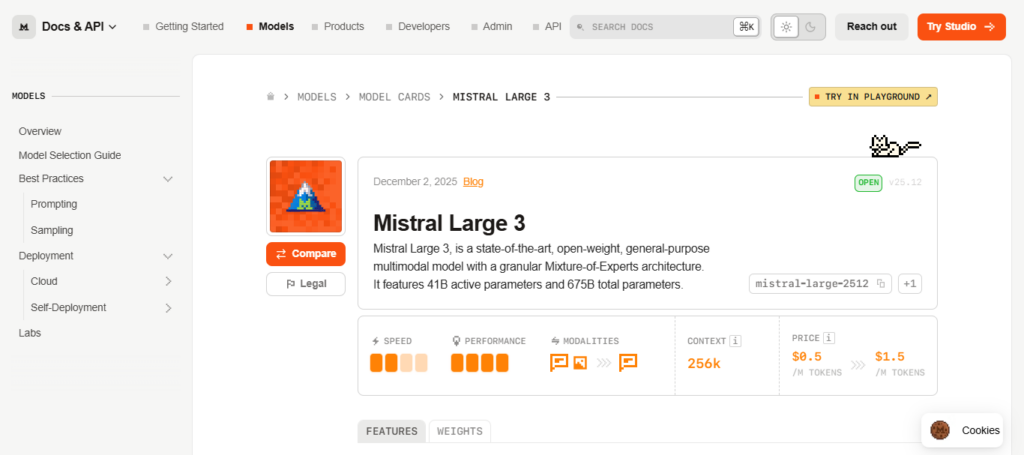
The architecture emphasizes token efficiency, faster output and scalable runtime environments. In the context of a wider trend for Open Source AI Models to Take on Closed AI Titans Mistral Large lets organizations take control over their data whilst still enjoying access to world leading capabilities. Flexible licensing and a developer-friendly ecosystem encourage innovation in finance, healthcare analytics, software engineering.
Mistral Large (675B) — Features
- High-level reasoning and analytical performance
- Great coding and software development support
- Highly optimized token efficiency for fast inference
- Enterprise-ready scalability and performance tuning
- By David Kuchta, AIA I Similar to leading-edge proprietary AI models
Mistral Large (675B)
| Pros | Cons |
|---|---|
| High reasoning accuracy | Extremely large compute demand |
| Excellent coding assistance | High operational costs |
| Fast inference optimization | Not ideal for small teams |
| Enterprise scalability | Requires advanced deployment skills |
| Strong benchmark performance | Limited edge deployment capability |
4. DeepSeek V3.2 (685B)
DeepSeek V3. 2, which is one of the largest open models with about 685 billion parameters tuned to optimally perform reasoning, mathematics and programming tasks in addition to research workloads.
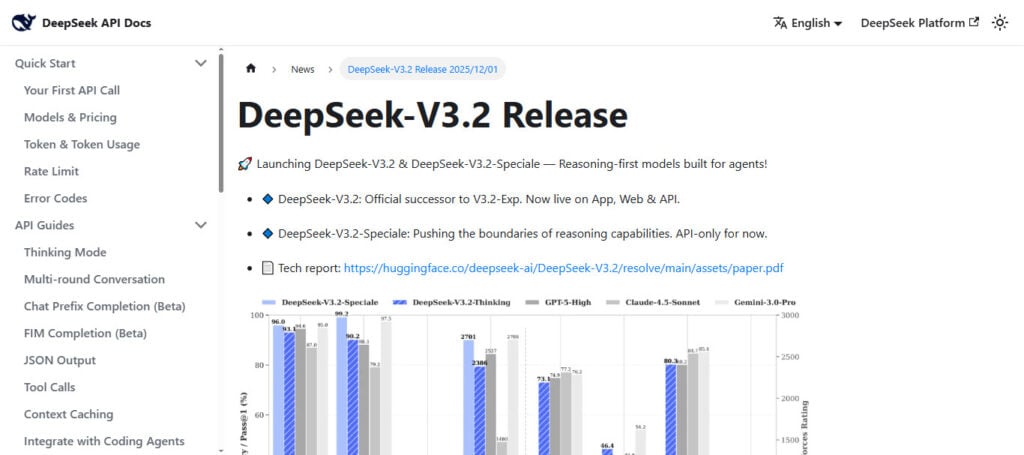
This model provides new efficiencies in training that allow us to reduce the cost of operation by orders of magnitude compared with similarly powerful closed systems. Thanks to its strong performance in coding tasks and logical reasoning benchmarks, it’s one of the best open AI competitors available today.
DeepSeek V3 is part of the wave of Open Source AI Model Taking on Closed Ai Giants Version 2 provides unrestricted developer access to inspect, refine and customize intelligence systems — accelerating experimentation and supporting open AI research across universities, startups and enterprise settings.
DeepSeek V3. 2 (685B) – Features
- Have outstanding numerical and logical reasoning skills
- Advanced programming and debugging intelligence
- Cost-efficient training architecture design
- Especially in technical and research tasks, high precision
- Flexible tailoring for educational and commercial creativity
DeepSeek V3.2 (685B)
| Pros | Cons |
|---|---|
| Outstanding math and logic reasoning | Very large model size |
| Efficient training architecture | High memory requirements |
| Strong programming performance | Setup complexity |
| Cost-efficient compared to peers | Needs expert management |
| Highly customizable | Infrastructure heavy |
5. Gemma 4 (27B–109B)
Offering up to 109 billion parameters in a modular family from gemma4Ge does this for you with its flexible model family designed for local and e edge infrastructures. In contrast to ultra-large models that demand all the compute, Gemma emphasizes accessibility, light footprint and safe AI. It encourages experimentation, customization and rapid prototyping for developers in need of elastic solutions.
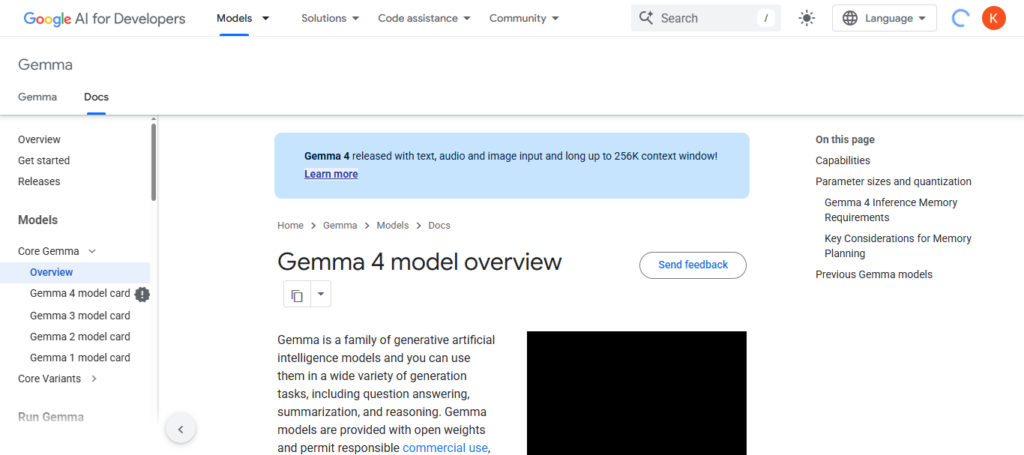
In the context of Open Source AI Models Challenging Closed AI Giants, Gemma 4 demonstrates that smaller, optimized models can not only compete but outcompete on efficiency and safety alignment with non-fixed codes via flexible formatting. This extends AI usage to more startups and educators or groups with smaller compute budgets.
Gemma 4 (27B–109B): Features
- Family of lightweight models for easy deployment
- Developed for Local and Edge AI Applications
- Safety First Approach and High Anchorage of Safe AI
- Heat-scalability across varying levels of hardware
- Best suited for Startups, Research labs and Developers
Gemma 4 (27B–109B)
| Pros | Cons |
|---|---|
| Lightweight deployment options | Less powerful than mega models |
| Works on smaller hardware setups | Limited extreme reasoning tasks |
| Developer-friendly design | May require fine-tuning |
| Efficient performance scaling | Smaller context window possible |
| Good for startups and research | Not ideal for massive enterprise tasks |
6. MiniMax M2.5 (230B)
MiniMax M2. 5 is a 230-billion-parameter model optimized for conversational intelligence, multimodal interaction and enterprise-scale production. The architecture strikes a balance between performance and efficiency to power modern applications like assistants, customer support automation and content generation platform.
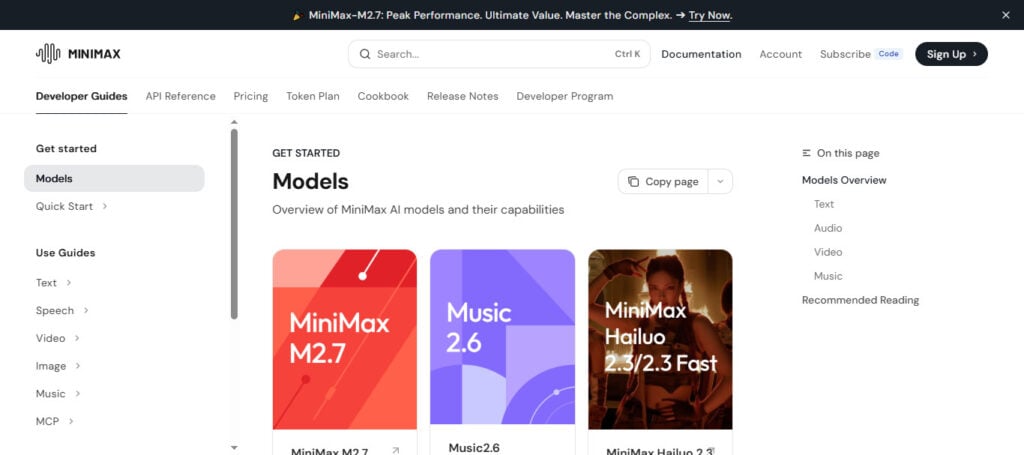
The model incorporates sophisticated reasoning with better contextual understanding, allowing businesses to implement AI systems alongside commercial counterparts.
Its evolution embodies the ever-pressing fortitude of Open Source AI Models Challenging Closed AI Giants, where accessibility + community collaboration = innovation. MiniMax M2 help minimize reliance on centralized providers. 5 facilitates user imagination, experimentation and also cost-effective AI application across a wide spectrum of sectors.
MiniMax M2. 5 (230B) – Features
- Multimodal conversational AI capabilities
- Balanced performance and compute efficiency
- Real-time interaction and response optimization
- Enterprise automation and integrations with assistants
- Pluggable architecture for large production systems
MiniMax M2.5 (230B)
| Pros | Cons |
|---|---|
| Balanced performance and efficiency | Requires strong compute resources |
| Multimodal interaction support | Deployment complexity |
| Good conversational intelligence | Smaller ecosystem support |
| Enterprise automation ready | Needs optimization for best results |
| Scalable architecture | Higher infrastructure cost |
7. Nemotron Ultra (253B)
Nemotron Ultra is a specialized model for supercomputing environments with 253 billion parameters trained on some of the most demanding enterprise AI workloads. Designed for reasoning, coding assistance and research tasks, it uses advanced hardware acceleration to be deployed at scale. Powerful performance for organizations where data privacy and customization workflows can be under their control.
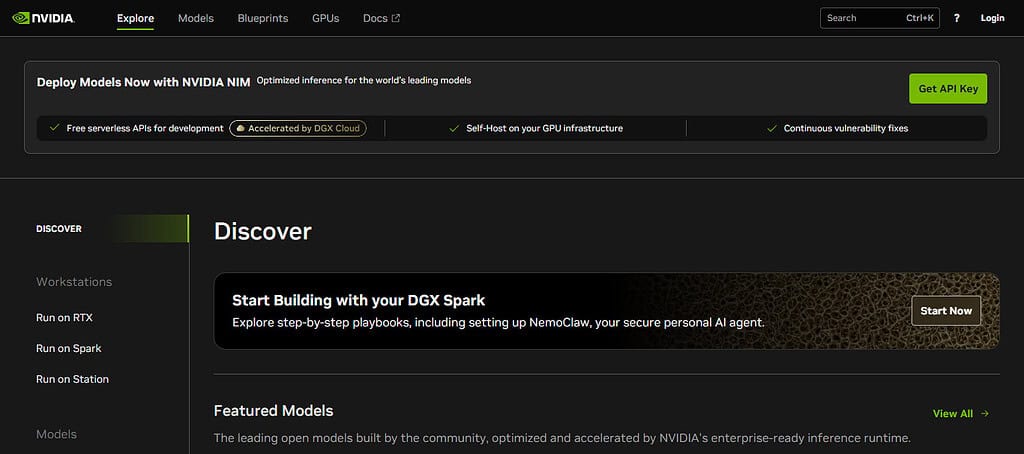
Among the open source AI models challenging closed ai giants, Nemotron Ultra also showcases how hardware optimization in open ecosystems can compete with proprietary pillars of offerings. It has architecture that allows the use cases on a large scale in production, analytics automation (in which you automate data retrieval and analysis), software development assistance or even intelligent enterprise agents.
Nemotron Ultra (253B) Features
- GPU-optimized architecture for high-performance computing
- Advanced reasoning and coding assistance
- Enterprise-grade deployment capabilities
- Good fit with AI acceleration hardware
- Suitable for performance intensive analytics and automation workloads
Nemotron Ultra (253B)
| Pros | Cons |
|---|---|
| GPU-optimized performance | Dependent on specialized hardware |
| Strong enterprise integration | High deployment cost |
| Excellent reasoning abilities | Requires NVIDIA ecosystem familiarity |
| Efficient large-scale processing | Less accessible for beginners |
| Reliable enterprise AI workloads | Hardware investment needed |
8. Nemotron Super (49B)
Nemotron Super – a mid-size AI with about 49 billion parameters is balanced giving it an impressive reasoning ability without the extensive infrastructure heaviness of more hardware-demanding languages. Best suited for Production deployments when speed, efficiency and operational cost are to be considered.
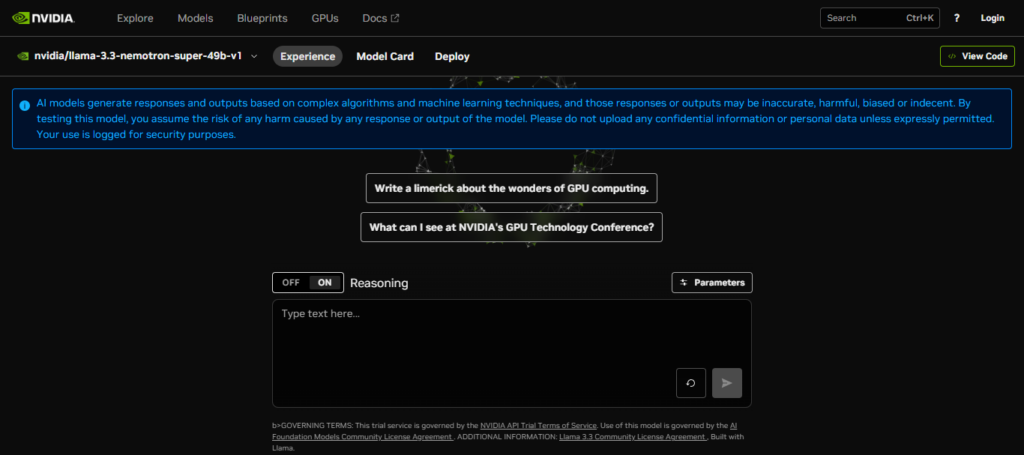
It enables developers to adapt it for domain-specific duties while achieving performance on par with bigger proprietary systems. Using the Nemotron Super to Overcome an Era of Open Source AI Models Challenging Closed AI Giants With mid-scale models optimized, businesses can deploy advanced solutions faster. It is a good fit for SaaS platforms, automation pipelines, enterprise applications etc due to its scalability.
Nemotron Super (49B) – Features
- An outgoing-generation performance mid-size good value model
- Higher throughput for production workloads
- Efficient fine-tuning for domain-specific tasks
- Reduced infrastructure needs compared to larger models
- Best suited for automation tools and SaaS platforms
Nemotron Super (49B)
| Pros | Cons |
|---|---|
| Balanced size and performance | Less powerful than larger models |
| Faster inference speed | Limited advanced reasoning |
| Lower infrastructure cost | May need task-specific tuning |
| Ideal for production deployment | Smaller context capability |
| Efficient enterprise applications | Reduced multimodal capability |
9. Nemotron Nano (30B)
Nemotron Nano is a tiny 30-Billion Parameter model optimized for edge, light-weight deployments and real-time AI applications. Tools like this do an excellent job in providing conversational ability and efficient inference that is good for mobile devices, embedded systems as well as private on premise machines even with the smaller size.
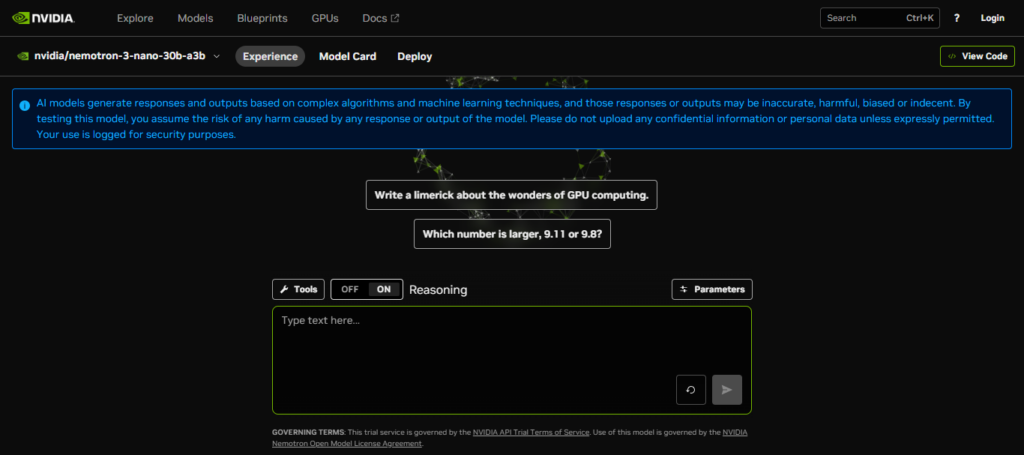
This model represents a paradigm shift in efficient AI, showing that high performance is not necessarily correlated with large parameter counts. Driven by the tenets of Open Source AI models beating Closed Giants, Nemotron Nano allows organizations to deploy embedded intelligent systems on-site while honoring data privacy, minimizing latency and infrastructure cost — all enabling more widespread access to AI.
Nemotron Nano (30B) – Features
- An AI designed to run at the edge that is very light
- Low-latency real-time response performance
- Running on modest hardware resources (but doing so efficiently)
- Good Conversationalization although smaller in size
- Ideal for mobile, embedded and private AI systems
Nemotron Nano (30B)
| Pros | Cons |
|---|---|
| Lightweight and fast deployment | Lower reasoning depth |
| Works on limited hardware | Not suited for complex tasks |
| Low latency responses | Limited enterprise-scale performance |
| Ideal for edge computing | Smaller training capacity |
| Cost-efficient AI solution | Fewer advanced features |
10. MiMo‑V2 Flash (309B)
MiMo-V2 Flash has 309 billion parameters and is a multimodal model that has been optimized for fast reasoning, vision-language understanding as well as enabling real-time interaction. With support for text, image and contextual processing it is suited to both advanced assistants as well as analytics tools and creative applications.
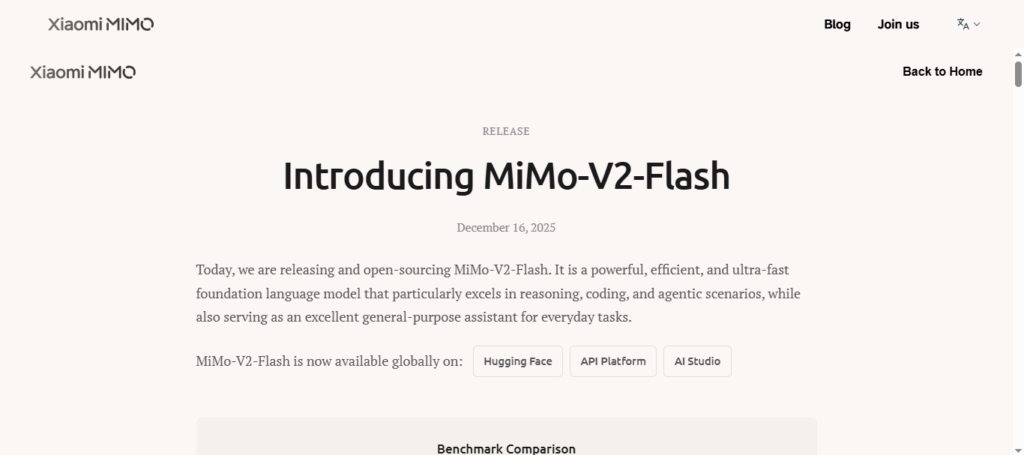
Its architecture focused on low-latency performance, and the reasoning capabilities are still excellent. In the broader landscape of Open Source AI Models Challenging Closed AI Giants, MiMo-V2 Flash provides a direct alternative to proprietary OpenAI multimodal systems.
The model empowers customization and transparent development, which helps innovation in education technology solutions, media production tools, and intelligent automation solutions faster than ever.
MiMo-V2 Flash (309B) Features
- Multimodal processing for understanding text and visuals
- Real-time Applications Supported By High-Latency Inference
- Great contextual reasoning and interactive abilities
- Optimized to Run AI Assistants and Creative Workflows
- Deployment at Scale in Enterprise Ecosystems of AI
MiMo-V2 Flash (309B)
| Pros | Cons |
|---|---|
| Strong multimodal capabilities | Large compute requirements |
| High-speed inference | Deployment complexity |
| Real-time interaction performance | Higher operational cost |
| Advanced contextual understanding | Needs optimization expertise |
| Competitive with proprietary models | Infrastructure heavy |
Conclusion
Open source artificial intelligence is rapidly evolving and changing the world of AI globally! Model Name: Qwen 3.6 Plus, Llama 4 Maverick, Mistral Large and DeepSeek V3 2 prove that closed ecosystems with tight control by several leading companies are no longer the only way to innovate.
Open models now compete with their proprietary cousins in reasoning, coding systematism your custom business case(s) showing how to scale and the efficiency of transparency.
Open Source AI Models Challenging Closed AI Giants — A New Era of Democratized Technology It allows developers, startups, researchers and enterprises to develop powerful AI solutions without costly licensing costs or vendor lock-in. Such openness speeds experimentation, fosters collaboration and accelerates global innovation.
Open models are getting better and safer, as well opening up to multiple modalities over time; keeping open vs closed AI systems in a competition. Instead of completely replacing closed models, open source AI is helping to curate an environment in which accessibility meets innovation deciding who controls our future generations.
FAQ
What are open source AI models?
Open source AI models are artificial intelligence systems whose architecture, weights, or training methods are publicly available for developers and researchers. Unlike proprietary systems, they allow customization, modification, and local deployment without strict licensing restrictions. Examples include Llama 4 Maverick and Gemma 4, which promote transparent innovation.
Why are open source AI models challenging closed AI giants?
Open models provide flexibility, transparency, and lower operational costs compared to closed platforms. Organizations can fine-tune models, control data privacy, and avoid vendor lock-in. High-performance systems like Mistral Large and DeepSeek V3.2 now match or exceed proprietary model capabilities in many benchmarks.
Are open source AI models as powerful as closed models?
Yes, many modern open models deliver comparable performance in reasoning, coding, and language understanding. Large-scale systems such as Qwen 3.6 Plus demonstrate enterprise-level intelligence while remaining customizable and adaptable for different industries.
What advantages do businesses gain from open AI models?
Businesses benefit from reduced costs, data ownership, customizable workflows, and scalable deployments. Models like Nemotron Ultra allow enterprises to deploy AI securely on their own infrastructure while optimizing performance for specific use cases.
Are open source AI models safe to use?
Safety depends on implementation and governance. Many open models include alignment techniques, moderation tools, and responsible AI frameworks. Organizations must still apply monitoring and ethical guidelines when deploying AI systems in production environments.