




This article analyzes the emerging trends associated with the integration of machine learning within the tokenization of real-world assets (RWAs).
The use of machine learning is optimizing the tokenization of real-world assets through improved fraud detection, automated compliance, and the forecasting of liquidity, in addition to dynamic evaluation of assets. This makes tokenized assets more secure and scalable, enabling organizations to build more optimal tokenized asset systems.
What Is RWA Tokenization?
RWA (Real-World Asset) Tokenization is when rights to physical (or traditional) financial assets are turned into digital tokens and recorded on the blockchain. These physical assets can be anything from real estate, bonds, commodities, stocks and art, to any other asset of value.
Each token can be a share of the asset and represents ownership of the asset, and therefore can be more readily bought, sold, moved, and digitally traded. RWA Tokenization creates opportunities to invest in traditional assets in a more cost efficient and less complex manner by improving asset liquidity, transparency and reducing costs of transactions.
Moreover, RWA Tokenization even allows for fractional ownership in an asset, which further democratizes access.
Why Machine Learning Is Important for RWA Tokenization
More Accurate Asset Valuations
Machine learning is able to analyze massive amounts of data from both the market and history to provide more accurate and more up-to-date valuations of assets.
Improved Fraud Detection
Before a financial loss occurs, abnormal behavior and suspicious transactions can be classified and predicted by AI.
Automation of Compliance
Machine learning can assist with the automation of KYC and AML, as well as other compliance-related tasks, and reduce the risk associated with compliance.
Improved Risk Management
Advanced algorithms assist with the evaluation of market, credit, and operational risks, and allow better decision-making by both investors and organizations.
Faster Decision Making
Since Machine Learning continuously processes data, it can be used to make more informed decisions with respect to market conditions and the performance of assets.
Liquidity Prediction
Machine learning algorithms can forecast liquidity on different blockchain networks to help improve trading and capital placement.
Asset Verification
The verification of documents, images, and ownership records are completed by machine learning, and allow the verification of a Tokenized Asset.
Increased Efficiency
The reduction of administrative tasks thanks to automation reduce operational costs and help streamline management of assets.
Deeper Market Analysis
Machine learning assists with the forecasting of market movements by analyzing investor behavior.
Scalability
Improvements brought by machine learning generate a more efficient RWA Tokenization and a greater capacity to handle a larger number of assets, users, and transactions.
Key Benefits of Machine Learning in RWA Tokenization
Constant Asset Evaluation
Tokenized asset evaluations can be accurate and current because machine learning incorporates new market and asset data as soon as they become available.
More Effective Fraud Safeguards
AI systems can identify patterns that signify abnormal behavior and/or attacks. This can help secure investors, and the platform, from many different kinds of threats.
Simplified Regulatory Process
Monitoring and reporting regulatory obligations, KYC, and AML is done with little human intervention, which helps minimize regulatory exposure.
More Accurate Risk Analysis
Lending and investment decisions can be made with higher confidence thanks to a more precise measurement of credit, market, and operational risks.
Enhanced Clarity
AI can help track and audit asset ownership and reserve histories, and transaction histories.
Improved Speed
The rapid processing capabilities of machine learning can analyze and interpret new and changing data, allowing more immediate responsiveness to new market conditions and investment opportunities.
Enhanced Liquidity
Predictive machine learning is used to analyze and interpret shifting liquidity, and to create an optimal trading strategy.
Minimal Business Costs
The end-to-end coverage of verification, valuation, and compliance and audit requirements reduces the need for human intervention, which yields lower costs of doing business.
Superior Verification
Machine learning can help assess the validity of documents, records, images, and other related information regarding ownership and assets.
Challenges and Considerations
Quality of Data and Accuracy
Data quality impacts the performance of ML models. Inaccurate, partial, or old asset data will yield bad predictions and valuations.
Lack of Clear Regulations
RWA tokenization regulations are still being written. Because regulations differ from one country to another, this lack of clear regulations creates compliance issues for international platforms.
Data Protection and Security
Sensitive information pertaining to tokenized assets and their related finances will necessitate data protection and security to prevent cyber-attacks and data breaches.
Substantial Investment
A high level of investment in both technology and human capital will be required for the development, training, and maintenance of sophisticated ML systems.
Bias and Fairness
Risk and lending valuations may be biased if conducted using ML systems trained on insufficient or unbalanced data.
Integration Challenges
The technical demands of integrating ML systems with blockchain, conventional financial systems, and other data systems will be considerable.
Lack of Sufficient Data
The infancy of many tokenized asset markets means that there will be insufficient data to meet the requirements for the training of reliable models.
Lack of Transparency
Many ML models will be impenetrable “black boxes,” creating a lack of transparency for the regulators and investors.
Limitations on Scalability
The ML systems will be required to balance performance and the accuracy of predictions and valuations even as the volume of tokenized assets and transactions increases.
Cyberattacks
ML systems will be at risk of a loss of confidence from data breaches and attacks involving the manipulation of adversarial AI.
Key Point & New Machine Learning Demands in RWA Tokenization Trends
| Topic | Key Points |
|---|---|
| Dynamic Asset Valuation Models | • Provides real-time asset pricing• Uses market and historical data• Improves valuation accuracy• Reduces manual assessment errors• Supports transparent token pricing |
| Fraud Detection ML Layers | • Identifies suspicious transactions• Detects abnormal user behavior• Enhances security monitoring• Reduces financial fraud risks• Enables automated threat alerts |
| Cross-Chain Liquidity Prediction | • Forecasts liquidity across blockchains• Improves asset transfer efficiency• Reduces trading slippage• Supports better capital allocation• Enhances market stability |
| Regulatory Compliance AI | • Automates compliance checks• Monitors regulatory updates• Reduces legal risks• Simplifies reporting processes• Supports global compliance standards |
| Credit Risk Scoring Models | • Evaluates borrower reliability• Uses alternative data sources• Improves lending decisions• Reduces default risks• Enables faster approvals |
| Multi-Modal Asset Verification | • Combines documents, images, and data• Verifies asset authenticity• Reduces verification fraud• Improves trust in tokenized assets• Supports automated validation workflows |
| Proof-of-Reserves ML Audits | • Continuously monitors reserves• Detects reserve discrepancies• Enhances transparency• Supports investor confidence• Enables automated audit processes |
| Market Sentiment Analysis | • Tracks investor sentiment trends• Analyzes news and social media• Predicts market movements• Supports investment decisions• Improves risk management |
| Federated Learning for RWA Data | • Protects sensitive data privacy• Enables collaborative model training• Reduces data-sharing risks• Improves model performance• Supports decentralized ecosystems |
| AI-Driven Treasury Optimization | • Optimizes asset allocation strategies• Predicts cash flow requirements• Improves liquidity management• Reduces operational costs• Maximizes treasury performance |
1. Dynamic Asset Valuation Models
Dynamic Asset Valuation Models utilize machine learning algorithms to provide a continual assessment of the value of various real-world assets (like real estate, commodities, invoices, and bonds). Traditional valuation methods are usually based on periodic reviews.
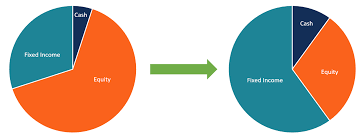
These, however, proactively incorporate market data, economic data, the histories of transactions, and pertinent data to an industry to provide valuation of an asset in real time. Amid the increasing New Machine Learning Demands in RWA Tokenization Trends, investors are looking for valuation models that automatically (or dynamically) set the token price.
The introduction of a dynamic asset valuation model improves token price transparency and lessens price discrepancies, while simultaneously enhancing liquidity of a tokenized asset, and allowing the tokenized asset to maintain a market equilibrium. Furthermore, it promotes better investment decisions in a decentralized financial realm.
Dynamic Asset Valuation Models Capabilities
| Feature | Description |
|---|---|
| Real-Time Pricing | Continuously updates asset values using live market data. |
| Predictive Analytics | Forecasts future asset prices using historical trends and AI models. |
| Automated Valuation | Eliminates manual appraisal processes. |
| Market Data Integration | Combines economic, financial, and industry-specific datasets. |
| Risk Adjustment | Factors market volatility into valuation calculations. |
| Scalability | Supports large portfolios of tokenized assets. |
| Accuracy Enhancement | Reduces valuation errors through machine learning. |
| Dynamic Updates | Adjusts values instantly when market conditions change. |
| Investor Transparency | Provides clear and data-driven pricing insights. |
| Liquidity Support | Helps maintain fair trading prices for tokenized assets. |
2. Fraud Detection ML Layers
Fraud Detection ML Layers are rapidly becoming a prerequisite for RWA tokenization platforms. They allow the identification of potentially harmful activities in the finance space due to their ability to analyze transaction data and various forms of consumer data (like behavioral data) and identify anomalies that are indicative of fraudulent or manipulative behavior.

Within the context of the New Machine Learning Demands in RWA Tokenization Trends, a majority of organizations are leaning toward advanced security systems that can function autonomously and perpetually. These intelligent layers inhibit the transfer of assets and harmful activity while protecting the tokenized assets from the rapidly evolving predatory attacks.
Fraud Detection ML Layers Capabilities
| Feature | Description |
| Anomaly Detection | Identifies unusual transaction behaviors. |
| Real-Time Monitoring | Tracks activities continuously across networks. |
| Behavioral Analysis | Studies user and wallet interaction patterns. |
| Threat Prediction | Predicts potential fraud attempts before execution. |
| Automated Alerts | Generates instant security notifications. |
| Transaction Screening | Reviews transactions for suspicious indicators. |
| Adaptive Learning | Improves detection accuracy over time. |
| Identity Verification | Supports fraud prevention through identity checks. |
| Risk Scoring | Assigns risk levels to transactions and users. |
| Compliance Support | Assists AML and fraud compliance efforts. |
3. Cross‑Chain Liquidity Prediction
Cross-Chain Liquidity Prediction applies machine learning to gauge liquidity across different blockchain networks. Real-world assets on multiple chains make it imperative to know where liquidity will be present in order to trade and move assets.
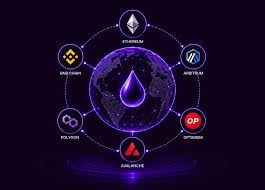
In light of the New Machine Learning Demands in RWA Tokenization Trends, liquidity forecasting enables investors to reduce slippage, refine the timing of transactions, and implement better utilization of constrained financial resources.
This is accomplished through the processing of trading data, market data, data on the use of bridging, and data on historical liquidity. The networks enhance the accessibility of tokenized assets and market equilibrium and provide better and easier interoperation between blockchain networks and DeFi liquidity.
Cross-Chain Liquidity Prediction Capabilities
| Feature | Description |
| Liquidity Forecasting | Predicts available liquidity across blockchains. |
| Trading Optimization | Helps traders choose optimal transaction routes. |
| Slippage Reduction | Minimizes trading inefficiencies. |
| Multi-Chain Analysis | Evaluates liquidity on multiple networks simultaneously. |
| Volume Tracking | Monitors historical and current trading volumes. |
| Capital Allocation | Supports efficient fund distribution. |
| Bridge Activity Analysis | Assesses cross-chain transfer behaviors. |
| Market Trend Detection | Identifies liquidity shifts early. |
| Automated Recommendations | Suggests optimal liquidity pathways. |
| Network Efficiency | Improves overall trading performance. |
4. Regulatory Compliance AI
Regulatory Compliance AI is concerned with meeting the regulatory needs of the jurisdictions in which the tokenization platforms operate. Various machine learning models support the monitoring of transactions, verification of identity, tracking of regulations, and the automated and expected generation of compliance reports.

With the introduction of new regulations on digital assets, the New Machine Learning Demands in RWA Tokenization Trends has to a great extent focused on compliance and the reduction of operational challenges. The systems are capable of self-reporting violations and generating reports that assist in audits, and are a support for KYC and AML technologies.
By providing automated compliance, an organization enhances the ease of doing business and the legal exposure is greatly reduced. Furthermore, it ensures that the tokenized real-world assets remain compliant with financial regulations while retaining investors’ trust.
Regulatory Compliance AI Capabilities
| Feature | Description |
| Automated KYC | Verifies customer identities automatically. |
| AML Monitoring | Detects suspicious financial activities. |
| Regulatory Tracking | Monitors changing regulations globally. |
| Compliance Reporting | Generates automated compliance reports. |
| Risk Assessment | Evaluates legal and regulatory risks. |
| Transaction Screening | Reviews transactions against compliance rules. |
| Audit Trail Creation | Maintains detailed compliance records. |
| Violation Detection | Identifies potential regulatory breaches. |
| Multi-Jurisdiction Support | Adapts to regional legal requirements. |
| Workflow Automation | Streamlines compliance operations. |
5. Credit Risk Scoring Models
Relying on machine learning, Credit Risk Scoring Models assess both the creditworthiness of borrowers and the issuers of financial assets in tokenized ecosystems.
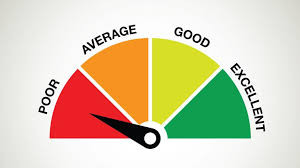
Leveraging traditional finance data integrated with alternative data (i.e. transaction data, payment data, and market data), the models determine credit risk. Under the scope of New Machine Learning Demands in RWA Tokenization Trends, risk assessment is critical for lending, financing, and investing in tokenized assets.
The risk assessment models take a dynamic approach, as they continuously reassess risk with the influx of new data. The enhanced prediction of risk enables lenders and investors to make rational, educated decisions, and minimizes the risk of default and ensures a more optimal distribution of capital across various tokenization of real-world asset projects.
Credit Risk Scoring Models Capabilities
| Feature | Description |
| Borrower Analysis | Evaluates financial reliability. |
| Alternative Data Usage | Uses non-traditional data sources for scoring. |
| Real-Time Updates | Continuously refreshes risk profiles. |
| Default Prediction | Estimates likelihood of repayment failure. |
| Automated Decision Making | Speeds up lending approvals. |
| Financial Behavior Tracking | Monitors spending and payment patterns. |
| Portfolio Risk Analysis | Evaluates risks across multiple assets. |
| Machine Learning Optimization | Improves prediction accuracy over time. |
| Dynamic Risk Ratings | Adjusts risk scores as conditions change. |
| Investment Support | Assists investors in evaluating opportunities. |
6. Multi‑Modal Asset Verification
Within the scope of the New Machine Learning Demands in RWA Tokenization Trends, Multi-Modal Asset Verification refers to a technology that combines the use of machine learning with documents, photographs, videos, IoT data, and blockchains, in order to establish the proof of a tokenized asset.

This technology helps create a bridge and guarantees that a tokenized asset represents the actual physical or financial asset. Organizations increasingly require such systems to analyze a multiplicity of data formats in order to identify inconsistencies.
Intelligent Multi-Modal verification systems enhance transparency and trust among investors, and decrease the costs of verification. By simplifying validation processes, Multi-Modal verification technologies increase the safety and scalability of RWA tokenization, leading to greater reliability for institutional and retail market participants.
Multi-Modal Asset Verification Capabilities
| Feature | Description |
| Document Analysis | Reviews legal and ownership documents. |
| Image Verification | Validates asset images and photographs. |
| Video Authentication | Confirms visual asset evidence. |
| IoT Data Integration | Uses sensor data for asset verification. |
| Blockchain Cross-Checking | Matches off-chain and on-chain records. |
| Fraud Detection | Identifies forged or manipulated information. |
| Automated Validation | Speeds up verification procedures. |
| Ownership Confirmation | Verifies rightful ownership. |
| Data Consistency Checks | Ensures information accuracy. |
| Transparency Enhancement | Builds trust among stakeholders. |
7. Proof‑of‑Reserves ML Audits
Proof-of-Reserves ML Audits are an application of ML technology to the ongoing monitoring and auditing of reserve backing for tokenized assets. Traditional audits are time-consuming and performed periodically. ML systems will validate and identify anomalies on an ongoing basis.

The growing New Machine Learning Demands in RWA Tokenization Trends places pressure on investors to substantiate claims of tokenized assets being backed with actual reserves. These models will identify discrepancies in reserve balances, transactions, and supporting documentation.
Continuous audits build trust and accountability while decreasing the risk of reserve mismanagement. Automated proof-of-reserve audits will be integral to financial transparency and the protection of stakeholders as the tokenized markets continue to grow.
Proof-of-Reserves ML Audits Capabilities
| Feature | Description |
| Continuous Monitoring | Tracks reserve assets in real time. |
| Reserve Verification | Confirms backing assets exist. |
| Anomaly Detection | Identifies reserve discrepancies. |
| Automated Auditing | Reduces manual audit requirements. |
| Financial Transparency | Improves visibility into reserves. |
| Historical Analysis | Reviews reserve trends over time. |
| Risk Identification | Detects potential reserve shortages. |
| Compliance Support | Helps satisfy regulatory standards. |
| Investor Assurance | Strengthens confidence in tokenized assets. |
| Data Integrity Validation | Confirms accuracy of reserve records. |
8. Market Sentiment Analysis
Market Sentiment Analysis applies ML to the analysis of news articles, social media, forums, and financial statements to assess the sentiment and mood of the market to uncover latent trends in advance of the more traditional leading market indicators.
Within the context of the New Machine Learning Demands in RWA Tokenization Trends, analysis of market sentiment helps token issuers, traders, and investors gain insights into market dynamics.
By identifying shifts in market sentiment, organizations are better positioned to adapt, mitigate, and refine their strategies and decisions. As market dynamics evolve rapidly in the tokenized asset ecosystem, this enhances the overall investment confidence and market activity.
Market Sentiment Analysis Capabilities
| Feature | Description |
| Social Media Monitoring | Tracks public discussions and opinions. |
| News Analysis | Evaluates market-related news content. |
| Sentiment Scoring | Measures positive, neutral, or negative sentiment. |
| Trend Prediction | Anticipates market movements. |
| Investor Behavior Insights | Understands market psychology. |
| Real-Time Analysis | Processes information instantly. |
| Risk Identification | Detects negative sentiment shifts early. |
| Decision Support | Assists trading and investment strategies. |
| Multi-Source Data Collection | Aggregates information from various channels. |
| Market Intelligence | Provides actionable insights. |
9. Federated Learning for RWA Data
Using Federated Learning means companies can jointly construct machine learning models without actually exchanging critical data. Each participant constructs the model at their own site, and the model’s updates are shared.

Privacy standards are becoming more demanding, and the New Machine Learning Demands in RWA Tokenization Trends are concentrating more on privacy-driven, secure AI services. Federated Learning empowers confidentiality for the data of banks, asset managers, and financial organizations, while enabling the use of combined data intelligence.
This method impacts model privacy, regulatory demands, and threat reduction positively. It enables more participants in the tokenization sector to build excellent, safe AI-driven systems on the market.
Federated Learning for RWA Data Capabilities
| Feature | Description |
| Privacy Preservation | Keeps sensitive data decentralized. |
| Collaborative Training | Enables joint AI model development. |
| Data Security | Reduces risks associated with data sharing. |
| Regulatory Compliance | Supports privacy-focused regulations. |
| Distributed Intelligence | Learns from multiple institutions. |
| Improved Accuracy | Benefits from larger collective datasets. |
| Reduced Data Transfer | Minimizes data movement requirements. |
| Scalable Learning | Supports large ecosystem participation. |
| Secure Model Updates | Shares model improvements safely. |
| Institutional Collaboration | Encourages cross-organization innovation. |
10. AI‑Driven Treasury Optimization
AI-Driven Treasury Optimization uses learning to refine the management of treasury, liquidity, and planning of treasury systems of tokenized assets. These systems are continually learning to assess the market and suggest treasury strategy systems based on the market’s cash flow, investment opportunities, and risk assessment.

In the context of the growing New Machine Learning Demands in RWA Tokenization Trends, companies are looking for smart systems to optimize the returns on the investments while holding the liquidity and reducing the risks.
Federated models work best in these situations to support more effective investments and flexibility in the management of the assets and liquidity in the treasury. AI systems work to automate these services and help organizations to grow token-based asset services safely and more profitably.
AI-Driven Treasury Optimization Capabilities
| Feature | Description |
| Liquidity Forecasting | Predicts future cash requirements. |
| Capital Allocation | Optimizes investment distribution. |
| Cash Flow Analysis | Monitors treasury inflows and outflows. |
| Risk Management | Reduces exposure to financial risks. |
| Portfolio Optimization | Improves asset allocation strategies. |
| Automated Decision Making | Recommends treasury actions automatically. |
| Market Intelligence | Uses market data for planning. |
| Cost Reduction | Minimizes operational inefficiencies. |
| Yield Optimization | Maximizes returns on treasury assets. |
| Strategic Planning | Supports long-term financial objectives. |
Comparison Table
| Technology | Primary Purpose | Key Benefit | Data Sources Used | Main Use Case |
|---|---|---|---|---|
| Dynamic Asset Valuation Models | Real-time asset pricing | Accurate valuations | Market data, economic indicators, transaction history | Asset pricing and valuation |
| Fraud Detection ML Layers | Detect suspicious activities | Enhanced security | Transaction records, user behavior, wallet activity | Fraud prevention |
| Cross-Chain Liquidity Prediction | Forecast liquidity availability | Better trading efficiency | Trading volumes, liquidity pools, blockchain data | Liquidity management |
| Regulatory Compliance AI | Automate compliance processes | Reduced legal risks | KYC data, AML records, regulatory databases | Compliance monitoring |
| Credit Risk Scoring Models | Assess borrower risk | Better lending decisions | Financial records, payment history, alternative data | Credit evaluation |
| Multi-Modal Asset Verification | Verify asset authenticity | Increased trust | Documents, images, videos, IoT data | Asset validation |
| Proof-of-Reserves ML Audits | Verify reserve backing | Greater transparency | Reserve balances, audit records, blockchain data | Reserve monitoring |
| Market Sentiment Analysis | Analyze investor sentiment | Improved market predictions | Social media, news articles, forums | Investment intelligence |
| Federated Learning for RWA Data | Enable secure AI collaboration | Enhanced privacy | Distributed institutional datasets | Privacy-preserving analytics |
| AI-Driven Treasury Optimization | Optimize treasury operations | Improved capital efficiency | Cash flow data, market trends, portfolio data | Treasury management |
Feature Comparison Matrix
| Technology | Automation Level | Security Impact | Compliance Support | Predictive Capability | Scalability |
|---|---|---|---|---|---|
| Dynamic Asset Valuation Models | High | Medium | Low | Very High | High |
| Fraud Detection ML Layers | Very High | Very High | High | High | High |
| Cross-Chain Liquidity Prediction | High | Medium | Low | Very High | High |
| Regulatory Compliance AI | Very High | High | Very High | Medium | High |
| Credit Risk Scoring Models | High | Medium | Medium | Very High | High |
| Multi-Modal Asset Verification | High | High | Medium | Medium | Medium |
| Proof-of-Reserves ML Audits | Very High | High | High | Medium | High |
| Market Sentiment Analysis | High | Low | Low | Very High | High |
| Federated Learning for RWA Data | Medium | Very High | High | High | Very High |
| AI-Driven Treasury Optimization | Very High | Medium | Medium | Very High | High |
Conclusion
New machine learning applications are changing the way real-world assets are valued, verified, managed, and traded digitally in light of RWA tokenization trends. In the tokenization ecosystem, machine learning is improving transactional efficiency, transparency, and security.
This encompasses everything from real-time asset valuation and fraud detection to predicting cross-chain liquidity and optimizing treasuries using AI. As the market increasingly adopts tokenization, more sophisticated AI solutions will address issues like compliance and risk, as well as asset verification and the integrity of investors.
The tokenization platforms of the future will be more scalable, verifiable, and based on RWA, for the companies that implement the emerging machine learning technology first.
FAQ
What is RWA tokenization?
RWA (Real-World Asset) tokenization is the process of converting ownership rights of physical or financial assets such as real estate, commodities, bonds, or invoices into digital tokens on a blockchain. This allows assets to be traded, transferred, and managed more efficiently.
Why is machine learning important for RWA tokenization?
Machine learning helps automate asset valuation, fraud detection, compliance monitoring, risk assessment, and liquidity forecasting. It improves decision-making, reduces operational costs, and increases trust in tokenized asset ecosystems.
What are Dynamic Asset Valuation Models?
Dynamic Asset Valuation Models use machine learning algorithms to continuously analyze market conditions, economic indicators, and asset performance data to generate real-time valuations for tokenized assets.
How does machine learning help detect fraud in RWA platforms?
Machine learning identifies unusual transaction patterns, suspicious wallet activities, and abnormal user behavior. These systems can detect potential fraud in real time and help prevent financial losses.
What is Cross-Chain Liquidity Prediction?
Cross-Chain Liquidity Prediction uses AI and machine learning to forecast liquidity availability across different blockchain networks, helping investors optimize trading strategies and reduce transaction inefficiencies.